
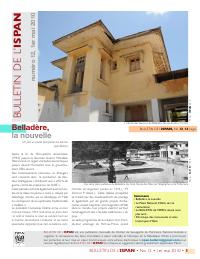
Bulletin of the ISPAN, No. 12: Belladère, the New Town
Summary: Belladère as a built record of the Lescot years: after the end of the American Occupation in 1934 and up to the Second World War, Haiti saw a return of economic activity and of national and foreign investment, and the new town was one result. The cover is the boys' school, the École Anténor Firmin.
Key Findings
- The bulletin presents Belladere as a planned border town created during a period of economic revival and state prestige projects after the American occupation.
- It links Belladere to the Estime government's effort to modernize Haiti's external frontiers and to assert a new post-colonial territorial order.
- The town plan and public buildings are attributed to Haitian public-works architects and engineers, including Franck Jeanton, Rene Villejoint, Paul Pereira and Clement Paultre.
- The issue also argues that Belladere declined under Francois Duvalier's militarized border policy and depopulation of the frontier zone.
- Its post-earthquake heritage chronicle documents losses and emergency advocacy, including the destruction of Saint-Joseph church despite only partial damage observed by ISPAN technicians after the earthquake.
- The bulletin also records outreach in Washington focused on Haitian built heritage damaged or destroyed by the 12 January 2010 earthquake.
Full Description
Belladère as a built record of the Lescot years: after the end of the American Occupation in 1934 and up to the Second World War, Haiti saw a return of economic activity and of national and foreign investment, and the new town was one result. The cover is the boys' school, the École Anténor Firmin. One issue of the Bulletin de l'ISPAN, the monthly bulletin of Haiti's Institut de Sauvegarde du Patrimoine National, which ran from June 2009 to at least November 2011 and documented one monument, site or historic center per issue.
How to cite
Institute for the Protection of National Heritage (ISPAN), 2010, Bulletin of the ISPAN, No. 12: Belladère, the New Town, https://www.haiti.org/