
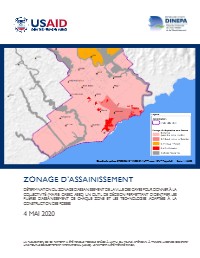
Zoning of Sanitation: Determination of Sanitation Zoning for the City of Les Cayes
- The city of Les Cayes faces significant constraints in implementing sanitation technologies due to the shallow water table, high soil permeability, low economic capacity, and high population density.
- The zoning analysis recommends tailored sanitation solutions for different areas, including AIR with retention in slum areas and septic tanks with soakaways in less dense areas.
- The study emphasizes the need for a participatory approach involving local stakeholders in the zoning process.
- The report highlights the importance of aligning sanitation zoning with existing conditions, such as the presence of a water supply system.
- The study recommends that the zoning plan be used as both a communication tool and a planning tool, to inform the public and guide investments.
The report focuses on determining sanitation zoning for Les Cayes, Haiti, as part of the USAID Water and Sanitation Project. The project, initiated in December 2017, aims to sustainably increase access to water and sanitation services in urban areas of Cap Haitien, Mirebalais, Croix-des-Bouquets (Canaan), Les Cayes, and Jérémie. This zoning project seeks to assist the DINEPA in establishing advisory services in collaboration with municipalities, a key aspect of its national sanitation strategy. The study assesses soil suitability for traditional systems, culminating in communal sanitation zoning plans, delineating areas for collective and non-collective sanitation, and measures to manage stormwater runoff.
How to cite
United States Agency for International Development (USAID); DAI, 2020, Zoning of Sanitation: Determination of Sanitation Zoning for the City of Les Cayes, accessed via HaitiDocs, https://www.haitidocs.org/doc/usaid-2020-zoning-sanitation-determination