
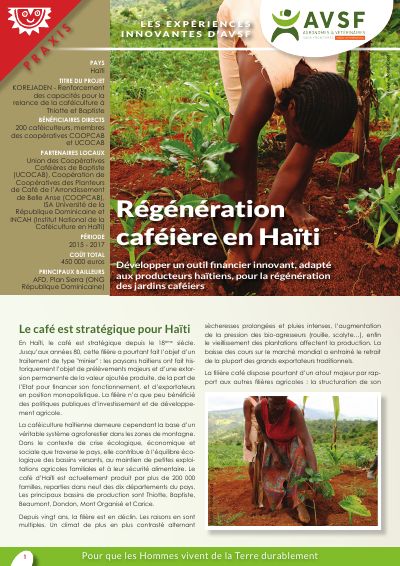
Coffee regeneration in Haiti: the KOREJADEN credit and advisory scheme (AVSF innovation sheet, 2017)
- KOREJADEN lends to growers through cooperative networks: 5-year loans averaging USD 1,500, regenerating an average 0.7 ha.
- More than 133 ha regenerated by March 30, 2017, with about USD 173,000 invested for 200 growers in UCOCAB and COOPCAB.
- Regenerating one hectare cost USD 1,300 under KOREJADEN 2, up from USD 1,000.
- Repayment was 80 to 90% in 2016 for the first phase, with about 90% expected in 2017.
- Four community nurseries produced more than 50,000 rust-tolerant seedlings, nine model gardens were set up and fifteen professionals were trained.
- Scale and durability depend on bringing financial institutions in while cooperative networks keep grower selection and technical advice.
The sheet describes the project "Renforcement des capacités pour la relance de la caféiculture à Thiotte et Baptiste" (KOREJADEN 2), carried out from 2015 to 2017 at a total cost of EUR 450,000 with funding from the AFD and Plan Sierra. It places the project in a sector that it says has declined for twenty years because of climate, pests such as rust and coffee borer, aging plantations and falling world prices, with formal exports down from more than 400,000 bags in 1984 to under 30,000 bags. It notes that coffee is grown by more than 200,000 families in nine of the ten departments and that earlier national projects had little effect on production.
KOREJADEN lends to coffee growers through their cooperative networks (UCOCAB, COOPCAB and APKAB): loans run for five years, average USD 1,500 and regenerate an average of 0.7 ha, and growers commit to training and to sharing technical and economic data. KOREJADEN 2 added an advisory service of technicians trained by the ISA university of the Dominican Republic. As of March 30, 2017, more than 133 ha had been regenerated, about USD 173,000 had been invested for 200 growers, four community nurseries had produced more than 50,000 rust-tolerant seedlings, nine model gardens had been set up and fifteen professionals had been trained. The cost of regenerating a hectare rose from USD 1,000 to USD 1,300. Repayment was 80 to 90 percent in 2016 for the first phase.
The sheet states that scaling and sustainability depend on bringing financial institutions into the mechanism while the cooperative networks keep grower selection, financial mediation and technical advice, and on keeping outside funding for the advisory service until the networks can pay for it. It adds that no Haitian financial institution had yet developed products for coffee.
From the document
Text extracted from the original document. It may contain character recognition errors.
How to cite
Agronomes et Vétérinaires Sans Frontières (AVSF), Coffee regeneration in Haiti: the KOREJADEN credit and advisory scheme (AVSF innovation sheet, 2017), https://www.avsf.org/app/uploads/2023/12/fiche_innovation_avsf_re-ge-ne-ration_cafe-_hai-ti_2017_vf.pdf
- Rights holder
- Agronomes et Vétérinaires Sans Frontières (AVSF)