
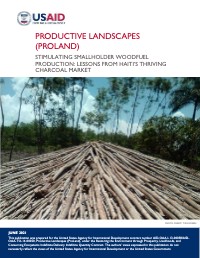
Stimulating Smallholder Woodfuel Production: Lessons from Haiti’s Thriving Charcoal Market
- Haiti has developed a thriving woodfuel sector based on smallholder cultivation despite the absence of enabling conditions.
- Scarcity of alternative energy sources and livelihood options drives smallholders to produce woodfuel.
- The charcoal value chain is inclusive and provides income for a large number of smallholders and entrepreneurs.
- Smallholder farmers have integrated tree cultivation into their agricultural systems as a fundamental livelihood strategy.
- Government regulation and formal land title are not necessarily critical for the development of a sustainable woodfuel market.
This case study examines Haiti's successful smallholder woodfuel production, particularly charcoal, despite the absence of typical enabling conditions like government regulation and formal land titling. It explores how scarcity of alternative energy sources and livelihood options, combined with a strong charcoal market, have incentivized smallholder farmers to integrate tree cultivation into their farming systems. The study provides recommendations for donor investments supporting sustainable tree cropping and reduced harvesting of natural forests, emphasizing inclusive markets, customary land tenure, and matching design with smallholder resources.
How to cite
United States Agency for International Development (USAID), 2021, Stimulating Smallholder Woodfuel Production: Lessons from Haiti’s Thriving Charcoal Market, accessed via HaitiDocs, https://www.haitidocs.org/doc/usaid-2021-stimulating-smallholder-woodfuel