Texte Intégral du Document
Texte extrait du document original pour l'indexation.
PRODUCTIVE LANDSCAPES
(PROLAND)
STIMULATING SMALLHOLDER WOODFUEL
PRODUCTION: LESSONS FROM HAITI’S THRIVING
CHARCOAL MARKET
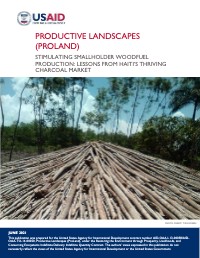
PHOTO CREDIT: YVES GOSSIN
JUNE 2021
This publication was prepared for the United States Agency for International Development contract number AID -OAA-I-13-00058/AID-
OAA-TO-14-00050, Productive Landscapes (ProLand), under the Restoring the Environment through Prosperity, Livelihoods, and
Conserving Ecosystems Indefinite Delivery Indefinite Quantity Contract. The authors’ views expressed in this publication do not
necessarily reflect the views of the United States Agency for International Development or the United States Government.
PROLAND CASE STUDY: STIMULATING SMALLHOLDER WOODFUEL PRODUCTION:
LESSONS
FROM HAITI’S THRIVING CHARCOAL MARKET | 1
In countries that rely heavily on woodfuel, overharvesting often threatens remaining natural forests. Governments
of these countries use a variety of strategies to reduce this practice, protect forests, and increase national tree
cover. They promote alternative energy sources and energy-efficient stoves. They regulate actors in the value
chain, confer forest stewardship to local institutions, and launch afforestation campaigns. They also—usually with
less intentionality—create the conditions for the commercial production of woodfuel by individuals. In Haiti these
conditions appear to have been met without deliberate government policy. Sustainable smallholder production of
charcoal flourishes on the island.
So that other countries may draw lessons from Haiti’s experience, this case study explores the reasons why
hundreds of thousands of Haitian smallholders invest their limited resources to produce woodfuel. A strong
market stimulates production of woodfuel, especially charcoal. Scarcity and poverty also contribute to this
practice: a paucity of natural forest, a lack of alternative forms of energy, shortages in labor, and the absence of
more lucrative sources of farm and off -farm income motivate smallholder farmers to embrace this livelihood.
Through our review of Haiti’s experience, we provide recommendations to inform the design of donor
investments supporting sustainable tree cropping and reduced harvesting of natural forest for woodfuel. We
highlight the importance of inclusive markets that meet smallholders’ needs for income and flexibility; the
potential of customary land tenure institutions, local technical skills, and available tree species; and the need to
match design with smallholder productive resources and livelihood strategies. Our conclusions also provide insights
into the broader topic of interest in the development community: how to leverage economic incentives to protect
and restore natural resources.
Authors: Dr. Glenn Smucker & Dr. David Miller
INTRODUCTION: GREEN ENERGY OVERTAKES HAITI BY
STEALTH
1
For a country commonly characterized as ravaged by political instability, economic dysfunction and
environmental collapse, Haiti is surprisingly self-sufficient in energy. Imported energy, all petroleum
products, makes up only a quarter of what Haiti consumes. Most of the balance, over 90 percent of the
country’s domestically sourced energy, is produced by
smallholder farmers (IEA, 2020; Bureau des Mines et de
l’Energie, 2005).
2 The surge of tree cultivation that
accounts for this success story was unforeseen even a
few decades ago. Observers of the process have long
portrayed the woodfuel market as the primary cause of
tree cover loss in Haiti (ESMAP, 2007), and warned that
overharvesting would bring deforestation followed by
ecological disaster (Voltaire, 1979; Angelier, 2005;
1
The ProLand Woodfuel Case Studies draw on peer-reviewed research and fieldwork to illustrate design principles relevant to USAID
programming in the sustainable cultivation and management of trees harvested for the commercial production of woodfuel. The Haiti field
research team included Glenn Smucker, a cultural anthropologist, and two field agronomists, Yves Gossin and Odibert Cothiere. Fieldwork
was conducted in August and September 2019 and March 2020. ProLand has also conducted case studies on this topic in Senegal and
Madagascar.
2
Hydropower and sugarcane produce the remaining 8 percent (4.2 percent and 3.8 percent respectively) (IEA, 2020; Bureau des Mines et de
l’Energie, 2005).
Haitians meet most of their domestic energy
needs not through the felling of primary
forests but through sustained charcoal
production on tree-covered land including
secondary forests, woodlands, woodlots, and
arboreal fallow.
- Wampler et al., 2019
PROLAND CASE STUDY: STIMULATING SMALLHOLDER WOODFUEL PRODUCTION:
LESSONS
FROM HAITI’S THRIVING CHARCOAL MARKET | 2
MTPTC, 2006). It is thus astonishing that, in contrast to many countries dependent on woodfuel, Haiti
replaces woodfuel almost as quickly as it is consumed.
3
Concerns regarding the environmental impact of woodfuel in the 1970s and 1980s made intuitive sense.
Demand for woodfuel was strong and rising, and the country’s forests were disappearing. The
population was growing rapidly, and almost all the households in the country cooked with woodfuel
(Larsen & Pierre, 2017). Rural households used firewood, as did small and medium urban enterprises
such as bakeries, dry cleaners, limestone kilns, and distilleries. But it was charcoal demand by urban
households that caused the greatest concern. Between 1960 and 1980, the population of Haiti’s cities
nearly doubled, rising from 603,000 to 1,160,000.
4
Observers also noted that urban households were
not reducing demand by transitioning to other sources of energy as expected. The higher cost of using
alternatives, such as charcoal’s main rival, Liquified Petroleum Gas (LPG), prevented their widespread
adoption.
5
The second concern of those sounding the alarm in the 1970s and 1980s was also true: the country was
rapidly losing its natural forests. Studies testify to a precipitous decline in natural tree cover from 60
percent in 1923 to 1 or 2 percent in 1989 (Burns, 1954; OAS, 1972; USAID, 1979; World Bank, 1982;
Ehrlich et al., 1985; ESMAP, 2007; Smucker et al., 2007). The dire warnings, however, were based on a
false assumption of causality. Harvesting for woodfuel did not lead to Haiti’s deforestation. Estimates of
forest impact based on woodfuel demand proved inaccurate. Since the colonial period, loggers have
clear-cut Haiti’s forests for timber export (Bellande, 2015), while smallholders have cleared the land,
even steep mountainous slopes, for crop and livestock production. Together, the timber industry and
agricultural expansion depleted Haiti’s natural forest (Tarter et al., 2016).
Haiti has lost its natural forests, so it is surprising that charcoal prices have risen no faster than those of
alternative fuels (ESMAP, 2007), and that woodfuel supply continues to meet rising urban demand. As
the natural forests disappeared, smallholders, especially those in the country’s dry agroecological zones,
began cultivating trees and shrubs largely unobserved by research (Tarter, 2016). Overall, tree cover
remains sparse in the country but reaches a much greater extent than once was believed, far exceeding
the projections of recent years. Recent estimates of national level tree cover using satellite imagery
range from 9 to 36 percent ( Tarter et al., 2018), with the differences mainly attributed to varying
definitions of tree cover. A reas of high charcoal production in particular, such as between Fonds des
Blancs and Cote de Fer (Zone 1 in Figure 1) and the Anse à Pitre region (Zone 6), show tree cover
regrowth (Hansen et al., 2013; CIRAD , 2016). On the island of La Gonave, where charcoal production is
practiced by over 50 percent of farmers, shrub coverage in agricultural and eroded lands increased by
87.4 percent between 1990 and 2010 (White et al., 2013).
This is a case study of Haiti’s forest transition and the forces that have driven it.
3
In a “business as usual” scenario, stocks of above-ground woody biomass would decline by approximately 4 percent between 2017 and
2027 (Ghilardi et al, 2018).
4
The growth has continued, and by 2019, it had jumped to 6.3 million, over ten times the 1960 number (Macrotrends).
5
Both LPG burners and the gas they use were considered costly. This situation continues today, and o nly when sold in small retail
quantities—amounts in which bottled LPG are not sold—do charcoal prices rival or exceed those of LPG (ESMAP, 2007; ProLand
fieldwork, 2020).
PROLAND CASE STUDY: STIMULATING SMALLHOLDER WOODFUEL PRODUCTION:
LESSONS
FROM HAITI’S THRIVING CHARCOAL MARKET | 3
WHAT THIS PAPER IS ABOUT: LESSONS FROM SCARCITY
Haiti has done what few other countries dependent on woodfuel have been able to do: develop a
thriving woodfuel sector based on woodfuel cultivation by smallholders. Perhaps more remarkably, Haiti
has achieved this success despite the absence of enabling conditions commonly assumed necessary to
create a robust and sustainable woodfuel sector. The central government provides no regulation of the
sector and has not created an accessible land titling option. Few farmers hold valid titles to their land.
Further, the government and its development partners provide virtually no technical assistance or inputs
to woodfuel producers.
Government action did not foster Haiti’s sustainable woodfuel sector. Instead, the sector has been
stimulated by scarcity. Urban residents have scarce access to affordable energy alternatives and thus
continue to purchase charcoal. Woodfuel producers have scarce access to natural forests and thus rely
on planted trees. Smallholders have scarce livelihood options and thus integrate woodfuel production
into their farming systems alongside annual food crops and livestock. Haiti’s case is far from ideal; its
overall success derives from conditions that other countries would not choose to emulate. Yet there
are elements of success in Haiti’s renewable woodfuel sector from which we can draw lessons to inform
governments and development practitioners investing in other c ountries’ woodfuel sectors.
This paper describes why Haiti’s smallholders dedicate their limited resources to cultivate trees and
produce charcoal. It explores the advantages the charcoal market and woodfuel agroforestry provide to
smallholders. In doing so, it leads us to question conditions commonly assumed essential to creating a
sustainable woodfuel market system, such as the provision of technical assistance and improved tree
stock, regulated markets, and formal tenure. Haiti is not the only country unable to provide these inputs
and establish these conditions. How can others tap into the dynamism of the private sector to generate
widespread income growth and sustainably supply energy?
Through our review of Haiti’s experience, we provide recommendations to inform the design of donor
investments supporting sustainable tree cropping and reduced harvesting of natural forest for woodfuel.
METHODS: HOW WE RESEARCHED HAITI’S FOREST TRANSITION
To produce this case study, the ProLand research team reviewed data and literature relevant to Haiti’s
woodfuel sector and conducted site-based observation and inquiry. Documentary research included
recent studies of land-use shifts over time based on comparative remote sensing data; major studies of
the agricultural sector; the agricultural census of 2012; reports on the production and marketing of
charcoal and woodfuel; and recent studies of charcoal transport to major urban areas.
ProLand researchers also conducted field site visits in the
North and Northeast Departments of Haiti.
The team had initially targeted three other regions of the country for field interviews; however, the time
frame for fieldwork coincided with a severe political crisis that virtually locked down the country, along
with growing security risks that inhibited safe access to field sites.
The study focused on the North-Northeast region because:
• It is the primary source of supply for charcoal for Cap-Haïtien and other urban areas of the
northern tier.
• It produces charcoal and other wood products from contrasting agroecological zones, including
both humid and dry climatic areas.
• Qualitative field interviews for this study also complement a recent USAID study of charcoal
entering Cap-Haïtien from the North and Northeast Departments.
PROLAND CASE STUDY: STIMULATING SMALLHOLDER WOODFUEL PRODUCTION:
LESSONS
FROM HAITI’S THRIVING CHARCOAL MARKET | 4
• There are sizeable blocks of state land
occupied by leaseholders and other occupants
deeply vested in charcoal harvesting.
• It includes sustainable and unsustainable
practices in charcoal and wood production.
• It is marked by a significant flow of
undocumented charcoal coming into Haiti from
the Dominican Republic, a subject of
controversy and limited field-based
information.
• Sizeable stands of mangroves on the north
coast offer an opportunity to study illicit
charcoal harvesting in a protected area.
The team carried out qualitative interviews with 49
farmers, charcoal makers, and other actors in the
charcoal value chain in the Northeast Department,
and 14 in the North. Researchers also interviewed
representatives of donor and NGO project
personnel, local elected officials, and Ministry of
Agriculture field personnel. An interview guide
served to orient semi-structured interviews with
key informants. Interview questions were tailored
to the specific profile of respondents, who included woodlot owners and wood sellers; charcoal makers
and wood buyers; charcoal traders; cross-border charcoal key workers; project staff; and local officials.
Researchers undertook interviews with individuals and small groups at sites noted in the text box
above. Interviewees included tree farmers and charcoal workers on both private and state land, as well
as charcoal workers in a mangrove protected area.
Field Site Interviews
Northeast Department
Fort-Liberté Ouanaminthe
Dérac Charcoal market
Dumas Deppé (Dilaire)
Loiseau
Acul Samedi
Carice & nearby
border areas
Terrier Rouge Savane Sal
Fond Blanc mangroves
Caracol
Bois Poux
North Department
Limonade Bahon (Montagne
Noire)
Dondon
St. Raphael
Bois Neuf
Gad Bet charcoal market
Grande Rivière du
Nord
Cap-Haïtien
charcoal market
THE OUTLINE: HOW WE PRESENT OUR CASE STUDY
We break our explanation down to three “stories” that have led to this transformation:
The Governance Story: Intervention limited to local government. We begin by presenting the
limited role government has played in providing an institutional framework for Haiti’s woodfuel sector.
The effective absence of regulation has enabled the growth of an informal and inclusive woodfuel
market.
The Market Story: How an inclusive value chain engages rural smallholder participation. We
then turn to a description of the charcoal market system that provides incentives for smallholder
farmers in Haiti to cultivate trees. Haiti’s charcoal value chain motivates thousands of smallholders and
entrepreneurs to sell wood and produce charcoal to generate income and reduce livelihood risk.
The Production Story: How smallholder farmers have made tree cultivation fundamental to their
livelihood strategies. We conclude by presenting how smallholder farmers respond to the market by
integrating tree cultivation into their agricultural systems. The section includes a description of the
methods farmers use to produce woodfuel, and a discussion of why they have dedicated valuable
resources to integrate tree cultivation alongside their other crops.
PROLAND CASE STUDY: STIMULATING SMALLHOLDER WOODFUEL PRODUCTION:
LESSONS
FROM HAITI’S THRIVING CHARCOAL MARKET | 5
THE GOVERNANCE STORY: INTERVENTION LIMITED TO LOCAL
GOVERNMENT
The government has not created a context supportive of enterprises generally, nor of woodfuel
specifically. The World Bank’s 2020 ease of doing business assessment ranks Haiti at 179 out of 190
countries (World Bank, 2019). Statutes have been promulgated to regulate wood harvest and
commerce, but no laws specifically regulate charcoal production and sale. Only local governments
appear to engage in the sector, using their limited resources to protect the trees valued by their
communities and to set some conditions for tree felling and the charcoal trade.
Although Haiti’s unstable and under-resourced national government has done little to prevent
overharvesting for woodfuel, promote afforestation, or regulate the value chain, it did lay the legal
groundwork. Since the mid-1950s, Haiti has promulgated numerous laws and administrative orders to
regulate the woodfuel sector. R estrictions on tree harvesting are found in laws of 1955, 1958, and 1972,
and in the Rural Code of 1962. Laws passed in 1955 and 1987 regulate the sale of woodfuel. Other
decrees from 2005 and 2006 provide an institutional framework for managing natural areas. The country
also developed a draft national energy sector plan for 2007 through 2017. The draft included commonly
accepted approaches to managing the woodfuel sector, such as incentives for transition to alternative
fuels and improved cookstoves. It also called for afforestation efforts, the creation of woodlots, and
increased imports of charcoal, and proposed the passage of laws to prevent unauthorized wood
harvesting (MTPTC, 2006). National decrees as far back as the 1970s announce that taxes will be levied
on the woodfuel sector to fund national reforestation.
These numerous pronouncements have had little impact as they are poorly enforced. The national
government does not regulate tree harvesting, charcoal production, woodfuel transport or its sale. It
administers no permits, fees, or fines. Nor does the government create incentives. It provides neither
subsidies nor technical assistance for tree cultivation and the creation of woodlots. The 2007–2017
energy plan was never adopted as policy and the Bureau of Energy (BME) receives no revenue from the
sector. ProLand interviews with Ministry of Agriculture representatives in Ft. Liberté illustrated this
condition. Departmental agricultural officials decried the uncontrolled harvest of charcoal while at the
same time reporting that over 90 percent of area farmers cut down trees for charcoal. Smallholders
harvest trees and produce, transport, and sell charcoal unhindered by government agents except for
limited efforts by decentralized bodies.
6
The absence of central governmental regulation of the woodfuel sector has created a vacuum that local
authorities have only partially filled. Local governments have made sporadic efforts to regulate woodfuel,
including limited measures to protect fruit trees, mangroves, and tree felling on slopes. Some local
bodies have also sought to mitigate conflict over local charcoal production and trade. ProLand fieldwork
confirmed an earlier finding that local elected officials play the most tangible role in the regulation of
charcoal and wood harvesting (USAID, 2014). In the northern region, local elected officials have
supported the creation of surveillance brigades to monitor mangroves in Bas-Limbé, Caracol, Limonade,
and Ft. Liberté, and to protect stands of upland pine in Bois Poux and Mont Organisé. Further examples
include the rural Communal Sections of Dumas (Ft. Liberté). In Dumas, the elected council (conseil
d’administration de la section communale, or CASEC) undertakes limited regulatory functions. To deter
theft, the CASEC has instituted a pass system to verify ownership of charcoal being transported. The
CASEC also monitors harvesting to protect trees with public utility, such as roadside shade or adjoining
6
The recent 10-year strategy from the Ministry of Environment targets reforestation and energy production. As with previous policy, the
test will be in its implementation (MDE, 2021).
PROLAND CASE STUDY: STIMULATING SMALLHOLDER WOODFUEL PRODUCTION:
LESSONS
FROM HAITI’S THRIVING CHARCOAL MARKET | 6
springs, and issues permits to authorize tree cutting for charcoal. It also mediates disputes over tree
sales.
THE MARKET STORY: HOW AN INCLUSIVE VALUE CHAIN
ENGAGES RURAL SMALLHOLDER PARTICIPATION
Farmers grow trees to meet household
needs, but it is income generation from
the charcoal value chain that has led to
the great expansion of tree cover in
Haiti. At an estimated value of $400
million, charcoal ranks as Haiti’s second
most valuable agricultural commodity
after mangos. It contributes almost 5
percent to the national economy (Tarter
et al., 2018). The dry agroecological
zones where production is concentrated
cover some 60 percent of the landscape (Figure 1 below).
7
I earn more from charcoal than field gardens. Charcoal educated my
eight children. Today one is a lawyer and another a nurse. My lawyer
son is now the mayor of Caracol. I am very grateful to charcoal.
—RP, a farmer & 40-year career charcoal maker, Caracol
Trees are the source of my life. Trees educated my children. I paid for the weddings of my three daughters with charcoal revenues.
—
LP, a 30-year career charcoal maker who plants trees,
Loiseau (Ft. Liberté)
Ge
ographically diffuse and
socially inclusive, Haiti’s charcoal
value chain enables hundreds of
thousands of smallholders to
earn an attractive level of
revenue. It also provides income
for small and medium
entrepreneurs across the
country. The charcoal value
chain, excluding tree cultivation,
is estimated to employ over a
quarter million people. In all,
woodfuel generates an estimated
10 to 15 percent of rural
incomes (CIRAD, 2016; ESMAP,
2017; Tarter et al., 2018).
The impact of charcoal on the
economy is so great that, far
from a last resort coping strategy
for poor households, it is an
important source of income for
virtually all income levels in
charcoal producing rural areas.
This includes middle- and upper-
income households (FEWS-NET,
2005). In the zones of highest
charcoal production, medium
7
Th -Pastoral Zones (Zones 1, 4, and 5) and the Dry Agriculture and Fishing Zone in coastal areas (Zone 6).
Figure 1. Agroecological zones of rural livelihood (USAID, 2005)
PROLAND CASE STUDY: STIMULATING SMALLHOLDER WOODFUEL PRODUCTION:
LESSONS
FROM HAITI’S THRIVING CHARCOAL MARKET | 7
income households gain a greater portion (40 percent) of their incomes from charcoal than do poor
households (10 percent). One case study in Central Haiti, where 45 percent of the households produce
charcoal, found that charcoal-producing households on average were more wealthy than non-producers
in their communities, and held more land, planted more trees, and farmed a greater diversity of crops
(Kennedy, 2015).
According to government agricultur al maps, over 50 percent of dry zone farmers produce charcoal.
8 In
some areas, over 90 percent of households engage in the practice (ProLand interviews). Charcoal
production also takes place in the humid mountain zones, but on a much smaller scale and primarily
during the slack season for annual crops.
Research has found no evidence of consolidation by large urban elites in this unusually inclusive market,
although there is a range of large and small traders. In other countries, the revenue generated by
charcoal has attracted large enterprises that dominate the sector (Miller et al., 2020). In Haiti, ProLand
interviews found the sector to be highly decentralized, engaging thousands of widely scattered small
farms, small producers, and traders. Even charcoal transported in large trucks to major markets is
owned by many different traders, each paying separately for their bags to be transported.
Farmers who own trees may choose to convert them to charcoal themselves, sometimes hiring paid
labor, or they may sell the trees to charcoal producers or traders. ProLand found smallholders sell trees
for 21 to 48 percent of the price of charcoal sold on-site. Producers hire labor to fell trees; chop the
wood to size; transport and stack it at the kiln site; prepare and oversee carbonization as the kiln burns
day and night; and rake and sack the charcoal. Field operations observed by ProLand field researchers
invested a little more than two person-days of labor per sack of charcoal produced. Interviews in high-
charcoal-production areas of the N ortheast found scales of production of up to 300 sacks per
operation.
The charcoal market both allows for widespread participation and enables benefit sharing. Much of the
income generated through charcoal production stays in rural areas. In an illustration of the charcoal
value chain conducted for this study (see Table 1), the charcoal producer purchased and harvested one
hectare of trees in Dérac (Ft. Liberté), which he transformed into 220 sacks of charcoal, and then sold
to a wholesaler on site. The wholesaler transported the stock to Cap-Haitien and resold it in lots of 10
to 20 sacks to smaller wholesalers. This second tier of wholesale traders in turn sold individual sacks to
retailers which they resold to consumers in smaller units (mamit). Upon final sale, the value had
increased to more than eight times the initial sale of trees. 60 percent of value added remained at the
rural production site. This includes tree sale, labor, and on-site sale to charcoal buyers.
Table 1. Distribution of value added by each link in the charcoal value chain, an example
Value chain actor
Value
added (%)
Notes
Tree seller 12 1.0 ha of trees sold for 35,000 gourdes ($388.89)
Tree buyer, charcoal maker 11 Raised money, hired labor, cut trees, made charcoal
Labor input 18 87 person/days, G43,000 ($477.78)
Wholesaler, 1
st
tier buyer 18 On-site purchase, 220 sacks of charcoal, G500/sack
Transport Dérac/Cap-Haitien 13 220 sacks @ G100 /sack
Wholesalers, 2
nd
tier buyers 6 Resold in lots of 10-20 sacks @ G900/sack
Retailers, 3
rd
tier buyers 22 Purchase by the sack @ G1,000 g, resale by mamit @ G60,
equivalent to G1,320/sack (USD$14.67)
Total 100 Estimated total value of consumer sales G290,400 ($3,226.67 USD)
8
Terrier Rouge and Fort-Liberté in the Northeast region; Pointe à Raquette and Anse à Galets on Gonâve Island in the West; Petit Trou de
Nippes in Nippes; Bombardopolis in the Northwest; Terre-Neuve in Artibonite; and Anse d'Hainault in Grand’Anse (Joseph, M., 2012).
PROLAND CASE STUDY: STIMULATING SMALLHOLDER WOODFUEL PRODUCTION:
LESSONS
FROM HAITI’S THRIVING CHARCOAL MARKET | 8
Other studies confirm that rural areas retain an important percentage of the income generated by
charcoal production in Haiti. Estimates vary, and differences in the cost of transportation, the number of
intermediary traders, and prices in the end market all influence the percentage kept locally. Researchers
have found retention rates of 30 percent (BME, n.d., based on 1990s data); 20 percent (ESMAP, 2007)
and 35 percent (CIRAD, 2016).
THE PRODUCTION STORY: HOW SMALLHOLDER FARMERS
HAVE MADE TREE CULTIVATION FUNDAMENTAL TO THEIR
LIVELIHOOD STRATEGIES
WOODFUEL HAS BECOME A CROP ALONGSIDE
OTHERS
The dramatic expansion of woodfuel production in Haiti has
required a transformation of smallholder agricultural systems at a
fundamental level. Throughout the country’s dry agro-ecological
zones, farmers have reduced investment in food crops to
dedicate their limited land and precious time to woodfuel
production (RGA, 2012; CIRAD, 2016). Farmers in developing
countries rarely adopt expert recommendations regarding
agroforestry (Rahman et al., 2017), yet the integration of
woodfuel trees into farming systems has come to play an essential
role in the survival of hundreds of thousands of households in
Haiti, many with no direct assistance from experts.
Haiti’s roughly one million small farms are formed of two or three noncontiguous parcels of land and
average a half hectare. Together they include at least 400,000 woodlots and an estimated 35 million
trees (RGA, 2012; Philius, 2013) that provide a range of services and products. Farmers plant trees in
living fences, woodlots, and orchards. They also harvest trees and shrub cover they allow to naturally
regenerate on fallow land. Virtually all the yards of houses in rural Haiti include trees and shrubs.
The highly varied agroecological zones of Haiti’s
mountainous landscape influence how farmers integrate
trees into their agricultural systems. In drier areas, they
rely more heavily on regrowth during extended periods
of fallow and use trees to enrich soils and provide
fodder. Over time, these farmers have become
increasingly reliant on species that produce wood
suitable for charcoal, particularly drought-tolerant,
native, and exotic species that will regrow when
repeatedly cut down to the stump, a process called
“coppicing.” ProLand field research identified the
following five basic ways in which farmers in Haiti’s dry
zones integrate trees into their cropping patterns.
On-farm Tree Census 2009
36,173,483 trees
30,023,990 productive trees
%
Plantains and bananas 34
Mangos 12
Timber 12
Citrus 8
Coffee 7
Avocados 6
Coconut 5
Breadfruit 4
Source: RGA (2012)
In Loiseau, farmers without trees spend scarce
cash to purchase acacia seed. To establish a
tree garden, they scatter acacia seed onto the
land, then burn off the grassy ground cover.
Clearing the land with fire causes scarification
of seed and enhances germination. Newly
emergent acacia benefit from weeding and
animal control efforts to protect an initial
harvest of food crops before acacia seedlings
grow tall. The fast-growing acacia eventually
shade the land and are ready for an initial
harvest of biomass by the end of the second
year.
PROLAND CASE STUDY: STIMULATING SMALLHOLDER WOODFUEL PRODUCTION:
LESSONS
FROM HAITI’S THRIVING CHARCOAL MARKET | 9
Stands of managed forest. Farmers in the
Northeast manage blocks of naturally reforested
land and trees on open range grazing land, where
seeds are dispersed by grazing animals. They
coppice the trees—largely acacia, mesquite, and
campeche—for charcoal, while protecting their
live stumps and root systems with a view to
regrowth. Harvest cycles tend to be two or
three years, but acacia rotations may be as short
as eight to 12 months.
Stands of planted trees. Farmers plant
woodlots of densely spaced trees in fields
previously dedicated to annual crops. Tree
species include fast-growing tropical hardwoods
introduced by projects 30 years ago, particularly
acacia, Venezuelan mahogany, and neem.
Rotations of trees and annual crops. Farmers
cultivate trees and annual crops in rotation on
the same land. After clear-cutting woodlots for
charcoal, they cultivate food crops such as
sorghum and peanuts until trees shade over the
land.
Rotations of trees and pasture. Farmers collect mesquite seeds and plant them in fields to provide
forage for grazing livestock. This may be done in association with food crops.
Managing fallow for charcoal. Farmers with a shortage of labor allow fields to lie in fallow well
beyond the one or two years commonly practiced. They may then harvest the trees and shrubs that
have regrown for woodfuel rather than burning them off, the traditional practice.
Farmers in Haiti’s humid agroecological zones also include trees in their farming systems. Predominantly
shaded tree crops and fruit trees, woodfuel production is not the primary objective of their cultivation.
These zones have nevertheless produced a rising amount of charcoal in recent years following the
decline in coffee production due to disease and insect predations. As farmers have shifted from tree
crops to annual food crops, they have harvested the shade trees previously used in coffee cultivation
(ProLand interviews). The wood of the mango trees common in humid regions is highly valued for use as
charcoal due to its density, although trees are harvested only after they are no longer productive.
PA, a woodlot owner and farmer in Acul Samedi
harvested 4-year-old acacia, leaving live stumps in the
ground. He planted peanuts, rice, sweet manioc, and
yams for a single harvest cycle. He expects acacia
regrowth will shade over garden space by the end of
the first year. At the end of the second year, he plans
to selectively harvest trees to open up space for
smaller trees to thrive.
Figure 2. Mesquite & Food Crop Rotation
PHOTO CRE
DIT:
GLENN SMUCKER
WOODFUEL IS A HIGH VALUE COMMODITY RELATIVE TO THE OPTIONS
Farmers have integrated tree cultivation deeply into their systems partly because of the deterioration of
alternative sources of income. As Haiti’s economy has stagnated over the past sixty years, its agriculture
sector has dropped off precipitously. In 2015, the country’s gross national product (GNP) was smaller
than in 1960 (World Bank, 2021a). Agriculture, which represented half of the GNP in 1957 (Riordan et
al., 1997), now provides less than a fifth of GNP (World Bank, 2021b). Decades of limited public
investment in agriculture have left the sector struggling, while low tariffs on imported food commodities
since the 1980s have undercut local production by propping up cheap imports. Currently, Haiti imports
at least half of the food consumed on the island (Associated Press, 2010; CIRAD, 2016). The production
factors that increase risk and further constrain crop cultivation include progressive soil degradation,
PROLAND CASE STUDY: STIMULATING SMALLHOLDER WOODFUEL PRODUCTION:
LESSONS
FROM HAITI’S THRIVING CHARCOAL MARKET | 10
advanced erosion on unprotected slopes, and a high risk of natural disaster exacerbated by climate
change variation and extremes, including hurricanes, severe flooding, and extended drought.
As cultivating food crops has become less remunerative, farmers have increasingly invested in cultivating
trees and woody shrubs (RGA, 2012; CIRAD, 2016). Remote sensing analysis has captured this
transition in land use. Between 1990 and 2010, ground cover on the island of La Gonave, a major
charcoal zone, showed an 87 percent increase in shrub coverage on agricultural land (White et al.,
2013). More recently, between 2000 and 2013, the dry agricultural zones on the S outhern coast saw
tree cover expand. They now serve as a key source of charcoal (Hansen et al., 2013).
WOODFUEL IS A GOOD MATCH FOR AVAILABLE RESOURCES AND INCOME
STRATEGIES
As farmers have seen their other options drop off, they have taken up tree cultivation because its
production requirements match available resources. Farmers have the inputs, labor, technical skills, and
land required to cultivate trees. They use tree cultivation to diversify their crop portfolio and reduce
risk, and they appreciate the options it provides for saving capital and engaging in the charcoal value
chain.
Matching Available Resources
Suitable tree species. Woodfuel producers in Haiti’s dry
zones prefer trees with a high wood density, drought
tolerance, and the ability to grow rapidly in local soils that
are often fast-drying, saline, and of low fertility. They also
prize the capacity to regenerate when coppiced. Trees with
these characteristics are now widespread in Haiti’s dry
zones. Examples include campeche, acacia, and lignum vitae,
as well as naturalized exotics including acacia species and
mesquite. Trees and other perennials and semi-perennials
are also a more sustainable production strategy on
unprotected slopes compared to erosion-intensive annual
crops.
Low demand on labor. The methods that Haiti’s
smallholder farmers use to cultivate woodfuel (described
above) require low maintenance and little labor, less than for
crop cultivation. This is particularly important for the many
households whose younger members have migrated out of
rural areas.
Figure 3. Coppice from live stump
PHOTO CRE
DIT:
GLENN SMUCKER
PROLAND CASE STUDY: STIMULATING SMALLHOLDER WOODFUEL PRODUCTION:
LESSONS
FROM HAITI’S THRIVING CHARCOAL MARKET | 11
Silvicultural skills. Over time, the technical skills necessary to cultivate trees have become widespread
throughout farming communities. In addition to coppicing, farmers have mastered planting trees through
direct seeding, transplanting volunteer seedlings, and transplanting seedlings from backyard nurseries.
They understand how to weed young trees due to their cultivation in association with food crops, and
know how to thin and prune the trees
they have planted.
Available land. No matter how well
tree cultivation fits into the small-farm
agricultural system, insecure tenure can
easily undermine the integration of
trees into livelihood strategies. Farmers
need assurance of long-term rights to
the trees in which they invest their
resources. This condition has been met
in Haiti through a combination of
formal and informal forms of tenure.
Over 82 percent of rural land parcels in Haiti are individual private holdings, yet this includes inherited
land (RGA, 2012). Most rural land is worked without updated title (FAO/INARA, 1997). As a result,
farmers must rely heavily on kinship ties, informal agreements, and personal stocks of social capital to
protect their rights to land (Smucker et al., 2000). Farmers also sharecrop or rent an estimated one in
ten parcels, and lease approximately 2 percent of all agricultural parcels from the state (RGA, 2012).
Leaseholders of state lands tend to manage their land as if it is private property; lease rights are bought,
sold, rented, sharecropped, and inherited.
Haiti’s farmers weigh tenure against other considerations when they plant trees. They plant trees more
often when they have a formal title, but still cultivate trees surprisingly often on land for which they have
only informal title or time-limited forms of tenure (Kennedy, 2015; Smucker, 1988). Customary tenure,
government leases, and even sharecropping arrangements are not necessarily a barrier to planting and
harvesting trees for woodfuel. Rights in trees are never absolutely secure, yet many of Haiti’s
smallholders have decided that the potential benefits from mature trees outweigh the small risk of losing
rights to the trees they cultivate.
Farmers Retained Practices from Technical Assistance
In the 1980s and 1990s, USAID and other donors promoted on-
farm tree cropping of fast-growing, multiple-use hardwoods.
Projects introduced new species, backyard nurseries, and
enhanced agroforestry associations. Farmers in these old project
zones are currently more likely to prepare tree nurseries and
actively manage their tree gardens compared to other areas
where farmers rely primarily on naturally occurring stands of
scrub forest. In dry agroecological zones, farmer adoption of
tree cropping promoted by projects transformed whole
landscapes. (ProLand interviews)
Opt
ions for income from woodfuel
Risk management. When farmers add woodfuel as a new source of income they lower overall
household risk because different production and market risks affect tree crops than food crops or
livestock production. By increasing the different types of risk to which they are vulnerable they limit the
potential for any one hazard to cause catastrophic damage. Climate extremes and pest outbreaks raise
production risk. Price variations from political instability and changes in government policy create
market risk. F armers that cultivate trees for woodfuel reduce their overall risk because the relevant tree
species tolerate a wide range of climate and environmental hazards, and woodfuel prices are stable and
demand is growing.
PROLAND CASE STUDY: STIMULATING SMALLHOLDER WOODFUEL PRODUCTION:
LESSONS
FROM HAITI’S THRIVING CHARCOAL MARKET | 12
Store wealth. Farmers appreciate trees because,
similar to livestock, they can be used as a form of
savings. Because they are less liquid than cash,
crops, or livestock, farmers can store value in trees
as one would use a bank. They may also use
standing trees as collateral against loans (Smucker &
Timyan, 1995; ProLand interviews).
Flexible use. Farmers may also add value to
varying degrees. They may sell standing trees,
harvest the trees and sell woodfuel, or use their
trees as an input to on- farm charcoal production.
Charcoal is the principal source of income for families
here. All households without exception profit from
charcoal as wood sellers, charcoal producers or
workers. Charcoal generates enough income for
Loiseau families to build or buy second homes in the
city of Ft. Liberté so they can send their children to
better schools.
—HA, tree planter and charcoal maker,
Loiseau (Ft. Liberté)
CONCLUSIONS AND RECOMMENDATIONS
The story of Haiti’s expanding tree cover casts doubt on several conditions commonly assumed to be
critical to the development of a sustainable woodfuel market.
Formal Markets. Despite its informality, the sector generates substantial economic growth and has not
caused the loss of natural forests. Haiti’s woodfuel market is not formalized in the ways understood to
provide for economic growth. The businesses are informal and not incorporated, and their capital
investments are small. Banks and other formal financial institutions do not provide credit.
Regulation. The Haitian government does not enforce
laws promulgated to regulate where and how woodfuel
may be harvested, and how it should be processed,
transported, or stocked. It also does not enforce
regulations regarding the sale of woodfuel or impose
quality standards on the product, nor does it generate
revenue from the sector. There are no fees, taxes, or
permits. Although the absence of regulation has left
natural forests unprotected, overharvesting for woodfuel
was not the primary cause of the country’s deforestation.
Technical assistance. Despite an absence of technical assistance, a large segment of Haiti’s smallholder
farmers cultivates trees. With little assistance from donors and the government, they mastered methods
appropriate to their resources to meet a growing urban demand for woodfuel. Networks of nurseries,
seed certification, and reforestation campaigns were not required.
Formal land title. Despite a lack of private land titles, farmers withdraw resources from annual food
crops to invest in the longer investments required for tree cultivation. Government-led land-titling
campaigns were not necessary to provide sufficient security for tree cultivation by individuals.
Charcoal is not a bad thing as such. It all depends
on what trees you cut down. The community here
does not see the harvest of watapana (Acacia
farnesiana) as an environmental problem, unlike
the mangroves. The environmental fragility of
charcoal is the mangroves.
—RP, Mayor of Caracol
RECOMMENDATIONS
It is unlikely that other countries would be able, or even desire, to reproduce all the conditions related
to scarcity and poverty that have fostered the rise in tree cultivation by smallholder farmers in Haiti.
These include a paucity of natural forest, a lack of alternative forms of energy, shortages in labor, and
the absence of more lucrative sources of income. Nevertheless, governments and their partners
planning to support the development of sustainable woodfuel markets should take into consideration
the factors that have created incentives for Haiti’s smallholders to engage in the sector. The Haiti
PROLAND CASE STUDY: STIMULATING SMALLHOLDER WOODFUEL PRODUCTION:
LESSONS
FROM HAITI’S THRIVING CHARCOAL MARKET | 13
example suggests approaches for other countries to create more inclusive markets that provide
smallholders, producers, and traders with returns that compete favorably with those of other
agricultural products, especially when the secondary benefits of woodfuel production are taken into
consideration. These include product flexibility, ecosystem services, stocked value, and risk mitigation.
Based on the lessons from Haiti’s experience, we recommend the following:
Support more inclusive markets
• Undertake campaigns to promote farm forestry and sustainable harvesting of fast-growing trees that
produce a range of wood products, including poles, planks, fuelwood, and charcoal.
• Motivate smallholders to plant trees and invest in efficient charcoal kilns through differential taxation
and other forms of government fiscal incentives; and “green” branding, certifi cation, or other means
to increase prices.
• Improve market access. This could consist of improved diffusion of market information, as well as
infrastructure improvements, including upgrading roadways and neighborhood charcoal markets.
• Encourage organizational measures that increase the market position of smallholders. Producers
leverage economies of scale through grower/producer associations or cooperatives. By organizing,
they may reduce costs and strengthen negotiation through aggregation and more direct access to
markets. Although vulnerable to hijacking by elites, associations in Haiti have been successful in
increasing smallholder access to kilns, and jointly held land for tree planting.
Reduce regulatory burdens
• Remove or ease fiscal or administrative burdens on smallholder-produced woodfuel products.
• Reduce government imposed bureaucratic and financial requirements—such as management plans,
harvesting permits, or transportation fees—for small producers and traders. Support policy that
favors inclusive markets and prevents consolidation.
Facilitate adoption of sustainable woodfuel practices
• Target agroecological zones of declining productivity in traditional crops, especially slopes. Promote
tree cultivation on dryer agro -ecological zones affected by climate change.
• Focus on adaptation to local systems, on the trees and bushes already present in existing stands of
productive trees and woody shrubs that regenerate naturally. As in a Farmer Managed Natural
Regeneration (FMNR) approach, target simple upgrading of patterns of regrowth. Use the five
approaches Haitians have used to integrate trees into cropping patterns, or similar approaches
found elsewhere, to inform design.
• Diffuse technical approaches that build on local skills and use existing resources. Examples include
methods of direct seeding, transplanting volunteer seedlings, selecting high-quality stumps, improved
pruning techniques, protection from fire and animal predation, and improved silvo-pastoral
strategies.
Support tenure practices that incentivize investment
• Rather than targeting private land titles, develop a “good- enough” approach to land tenure. Identify
current local arrangements of customary and formal institutions that together provide sufficiently
stable rights in land for tree cultivation. Explore land certificates and better-regulated customary
systems.
PROLAND CASE STUDY: STIMULATING SMALLHOLDER WOODFUEL PRODUCTION:
LESSONS
FROM HAITI’S THRIVING CHARCOAL MARKET | 14
• Where land titling exists, support procedures that facilitate smallholder capacity to update titles.
This may include the elimination of onerous tax burdens.
• Protect smallholder investment in tree crops by strengthening public sector capacity to prevent
illicit harvest of fuelwood and other wood products in protected areas.
Figure 4. Forested landscape protected by sustainable charcoal production, Fonds des Blancs
PHOTO CREDIT:
GLENN SMUCKER
PROLAND CASE STUDY: STIMULATING SMALLHOLDER WOODFUEL PRODUCTION:
LESSONS
FROM HAITI’S THRIVING CHARCOAL MARKET | 15
REFERENCES
Álvarez-Berríos, N. L., Redo, D. J., Aide, T. M., Clark, M. L., & Grau, R. (2013). Land change in the
Greater Antilles between 2001 and 2010. Land, 2, 81–107.
Angelier, J. P. (2005). Analyse de la substitution entre combustibles dans le secteur résidentiel en Haïti.
Commission Economique pour l’Amérique Latine et les Caraïbes (CEPALC).
Associated Press (2010, March 20). With cheap food imports, Haiti can't feed itself. Boston Globe.
http://archive.boston.com/news/world/latinamerica/articles/2010/03/20/with_cheap_food_import
s_haiti_cant_feed_itself/
Aubé, M., & Caron, L. (2001). The mangroves of the north coast of Haiti. Wetlands Ecology and
Management, 9, 281–289. https://doi.org/10.1023/A:1011173226724
Bannister, M. ( 1998). The relationship of plot characteristics to agroforestry adoption and management.
Findings of the 1995 PADF/PLUS Impact Survey. PADF/PLUS Working Paper No. 2. Pan American
Development Foundation. Mimeo.
Bellande, Alex. ( 2015). Haïti déforestée, paysages remodelés. CIDIHCA.
Bureau des Mines et de l ’Energie (BME). (2005). Brochure version number 3, Energie en Chiffres,
covering the period 1998 to 2003, PNUD. BME. Retrieved August 10, 2020 from
http://www.bme.gouv.ht/enenchif/EEC.pdf
Bureau des Mines et de l ’Energie (BME ). (n.d.). Présentation du bilan énergétique d’Haïti. BME.
Retrieved August 10, 2020 from http://www.bme.gouv.ht/energie/diagnost.html
Bureau pour le Développement de la Production Agricole (BDPA). (1982). Cartographie thématique
d'Haïti, Port-au-Prince. Paris & Secretairerie d'État du Plan (DATPE).
Burns, L. V. (1954). Report to the Government of Haiti on forest policy and its implementation. Report
Number 349. FAO. Rome.
Cohen, W. B. (1984). Environmental degradation in Haiti: An analysis of aerial photography. Report prepared
for USAID, PAP, Haiti.
Churches, C., Wampler, P., Sun, W. , & Smith A. J. (2014). Evaluation of forest cover estimates for Haiti
using supervised classification of Landsat data. International Journal of Applied Earth Observations and Geoinformation, 30, 203–216. https://doi.org/10.1016/j.jag.2014.01.020
CIRAD. (2016). Une étude exhaustive et stratégique du secteur agricole/rural haïtien et des
investissements publics requis pour son développement. Version finale 29 Juin 2016. Convention
CO0075-15 BID/IDB.. Montpellier: CIRAD, 624 p. http://agritrop.cirad.fr/580373/
DARNDR. (1975). Plan du secteur forestier: 1976– 1981. Service de Conservation du Sol, des Forets et de
la Protection de la Faune and CONADEP, Département de l'Agriculture, des Ressources
Naturelles et du Développement Rural.
Ehrlich, M., Conway, F., Adrien, N., LeBeau, F., Lewis, L., Lauwersyen, H., Lowenthal, I., Mayda, Y.,
Paryski, P., Smucker, G., Talbot, J., & Wilcox, E. (1985). Haiti country environmental profile: A field
study. Cooperative Agreement, USAID-IIED No. DAN -5517-A-00-2066-00.
PROLAND CASE STUDY: STIMULATING SMALLHOLDER WOODFUEL PRODUCTION:
LESSONS
FROM HAITI’S THRIVING CHARCOAL MARKET | 16
ESMAP. (2007). Stratégie pour l’allègement de la pression sur les ressources ligneuses nationales par la
demande en combustibles. Energy Sector Management Assistance Program. ESMAP Technical
paper. World Bank.
FEWS- NET, 2005, Livelihood Profiles in Haiti. USAID, Coordination Nationale de la Sécurité
Alimentaire (CNSA).
Food and Agriculture Organization of the United Nations/Institut National de la Reforme Agraire.
(FAO/INARA). (1997). Definir une politique agro-fonciere pour Haiti: Elements d’orientation. TCP-
HAI-4553. Mimeo.
Ghilardi, A.,Tarter, A., & Bailis, R. (2018). Potential environmental benefits from woodfuel transitions in
Haiti: Geospatial scenarios to 2027. Environ. Res. Lett. 13 035007. International Journal of Applied
Earth Observation and Geoinformation, 30, 203–216.
Hansen, M. C., Potapov, P. V., Moore, R., Hancher, M., Turubanova, S. A., Tyukavina, A., Thau, D.,
Stehman, S. V., Goetz, S. J., Loveland, T. R., Kommareddy, A., Egorov, A., Chini, L., Justice, C. O.,
& Townshend, J. R. G. (2013). High-resolution global maps of 21st-century forest cover change.
Science, 342(6160), 850–853. https://10.1126/science.1244693
Hedges, S. B ., Cohen, W. B., Timyan, J., & Yang, Z. (2018). Haiti’s biodiversity threatened by nearly
complete loss of primary forest. Proceedings of the National Academy of Sciences , 115(46), 11850–
11855. https://doi.org/10.1073/pnas.1809753115
IEA. (2020). World energy statistics and balances, Haiti. IEA. https://www.iea.org/data-and-statistics/data-
tables?country=HAITI
IHSI. (2015). Population Totale de 18 ans et plus, Ménages et densités estimé en 2015 . Ministère de
l’Économie et des Finances, Institut Haïtien de Statistique et de l’Informatique.
Jean-Jumeau, R. ( 2010, June 18). Pour une politique énergétique renouvellée. [MTPTC, PPT Presentation].
Colloque de CIAT.
Joseph, M. (2012). Atlas agricole d’Haïti. PPT. RGA. MARNDR.
Kramer, P., Atis, M., Schill, S., Williams, S. M., Freid, E., Moore, G., Martinez-Sanchez, J. C., Benjamin, F.,
Cyprien, L. S., Alexis, J. R., Grizzle, R., Ward, K., Marks, K., Grenda, D. (2016). Baseline ecological
inventory for Three Bays National Park, Haiti. The Nature Conservancy: Report to the Inter -
American Development Bank.
Larsen, B., & Pierre, A. V. D. (2017). Benefits and costs of cooking options for household pollution control.
Haiti Priorise, Copenhagen Consensus Center. License: Creative Commons Attribution CC BY
4.0.
Lucky, M., Auth, K., Ochs, A., Fu-Berteaux, X., Weber, M., Konold, M., & Lu, J. (2014). Feuille de route
pour un système énergétique durable en Haïti: exploiter les ressources énergétiques nationales pour
mettre en place un système électrique fiable, abordable et adapté aux changements climatiques.
Worldwatch Institute. https://dx.doi.org/10.13140/rg.2.1.2647.2565
MEF. (1990). Gestion des ressources naturelles en vue d’un développement durable en Haiti. Rapport final.
BDPA-SCETAGRI pour le Ministère de Économie et des Finances.
Microtrends. Haiti urban population 1960– 2020. World Bank. Retrieved November 11, 2020 from
http://www.macrotrends.net
PROLAND CASE STUDY: STIMULATING SMALLHOLDER WOODFUEL PRODUCTION:
LESSONS
FROM HAITI’S THRIVING CHARCOAL MARKET | 17
Ministère de l’Environnement, Haiti ( MDE). (1999). Haiti plan d’action pour l’environnement. Ministère de
l’Environnement, Secrétariat du Plan d’Action pour l’Environnement (PAE), Commission
Interministerielle sur l’Environnement.
Ministère de l’Environnement, Haiti ( MDE). (2021). Programme stratégique décennal 2021–2030.
«PLANTE AK REKÒLTE DLO » Un manteau vert durable pour nos montagnes châteaux d’eau.
Miller, D., Dennison, S., & Faye, P. (2020). Lessons from regulating urban woodfuel markets: The case of
Senegal. Produced for USAID by Tetra Tech.
Mollins, J. (2020). Under fire: Five myths about woodfuel in sub-Saharan Africa. Forest News . Center for
International Forestry Research (CIFOR). https://forestsnews.cifor.org/66346/under-fire-five-
facts-about-wood-fuel-in-sub-saharan-africa?fnl=en
MTPTC/BME/EDH. (2006). Plan de développement du secteur de l’energie 2007–2017. Ministère des
Travaux Publics, Transport et Communications (MTPTC), Bureau des Mines et de l’Énergie
(BME), Electricité d’Haïti (EDH).
Murray, G. F., & Bannister. M. (2004). Peasants, agroforesters, and anthropologists: A 20-year venture in
income-generating trees and hedgerows in Haiti. Agroforestry Systems , 61, 383–397.
Njenga, M. ( 2020). Transforming Kenya’s invasive ‘mathenge’ bushes into charcoal farms. Forest News.
Center for International Forestry Research (CIFOR).
https://forestsnews.cifor.org/65644/transforming-kenyas-invasive-mathenge-bushes-into-
charcoal-farms?fnl=en
OAS. (1972). Haiti mission d’assistance technique intégrée. Secrétariat Général, Organisation des États
Américains.
Oriol, M. (1993). La mauvaise gestion des terres de l’état. In G. Barthélemy & C. Girault (Eds.), La
République Haitienne, e tat des lieux et p erspectives. ADECKARTHALA.
Oriol, M. (1996). Structure foncière, réforme agraire et agro-foncière: Concepts et réalités. Le
développement rural en Haiti. Conjonction No. 200 . L’Institut Français en Haiti.
Philius, R. ( 2013, June 10– 12). The census of agriculture in Haiti. Overview Workshop for the Caribbean
by the FAO/UNFPA. Port of Spain, Trinidad and Tobago.
Rahman, S. A., Jacobsen, J. B., Healey, J. R., Roshetko, J. M., & Sunderland, T. (2017). Finding alternatives
to shifting agriculture: does agroforestry improve livelihood options and reduce pressure on
existing forest? Agroforestry Systems, 91(1), 185–199.
RGA, (2012). Synthèse nationale des résultats du recensement général de l'agriculture 2008/2009. Port -au-
Prince. Ministry of Agriculture (MARNDR), Unité d'Étude et de Programmation, Composante de
Statistiques Agricoles.
Riordan, J., van Haeflen, R., Locher, U., Augustin, A., Blemur, M., Guengant, J-P. (1997). USAID strategy to
improve food security in Haiti: A proposal. LAC/Tech, USAID/Haiti.
Sims, R. E. H., Maiava, T. G., & Bullock , B. T. (2000). Short rotation coppice tree species selection for
wood biomass production in New Zealand. Biomass and B ioenergy, 20, 329–335.
www.elsevier.com/locate/biombioe
Smucker, G. R. (1981). Trees and c harcoal in Haitian p easant economy: A f easibility study of r eforestation.
USAID.
PROLAND CASE STUDY: STIMULATING SMALLHOLDER WOODFUEL PRODUCTION:
LESSONS
FROM HAITI’S THRIVING CHARCOAL MARKET | 18
Smucker, G. R. (1988). Decisions and motivations in peasant tree farming: Morne-Franck and the PADF cycle of
village studies. Proje Pyebwa. Pan American Development Foundation. Mimeo.
Smucker, G. R. (2001). Farm to market: Conservation farming in Haiti. PADF-PLUS. PADF Haiti.
Smucker, G. R., & Timyan, J. C. (1995). Impact of tree planting in Haiti, 1982–1995.
Haiti Productive Land
Use Systems Project, South-East consortium for International Development and Auburn
University. Mimeo.
Smucker, G. R., Bannister, M., D’Agnes, H., Gossin, Y., Portnoff, M., Timyan, J., Tobias, S., & Toussaint,
R. (2007). Environmental Vulnerability in Haiti: Findings and Recommendations. USAID, US
Forest Service, Chemonics International.
Smucker, G. R., T. White, A., & Bannister, M. (2000). Land tenure and the adoption of agricultural
technology in Haiti. CAPRi Working Paper Number 6. International Food Policy Research
Institute (IFPRI).
Smucker, G. R., Noel, M. A., & Victor, J. A. (2007). Environmental risks and opportunities in Haiti: A
background analysis. USAID/Haiti.
Tarter, A. (2016, May 19). Haiti Is covered with trees. EnviroSociety.
www.envirosociety.org/2016/05/haiti- is-covered-with-trees.
Tarter, A. M., Freeman, K. K., & Sander, K. (2016). A History of landscape-level land management efforts in
Haiti: Lessons learned from case studies spanning eight decades. World Bank.
Tarter, A. M., Freeman, K. K., Ward, C., Sander, K., Theus, K., Coello, B., Fawaz, Y., Miles, M., & Ahmed,
T. T. G. (2018). Charcoal in Haiti: A national assessment of charcoal production and consumption
trends. World Bank. http://hdl.handle.net/10986/31257
Tarter, A., Cicciretti, R., Théus, K., & Miles, M. (2019). Charcoal and fuelwood trends in northern Haiti: An
analysis of charcoal production and supply in Cap-Haitien. US Forest Service, International
Programs, USDA.
UNEP. (2013). Haiti and Dominican Republic: Environmental challenges in the border zone. United Nations
Environment Programme. https://www.unep.org/resources/assessment/haiti-and-dominican-
republic-environmental-challenges-border- zone
USAID. (1979). Draft environmental report on Haiti. Prepared by the Science And Technology Division,
Library Of Congress, Washington, D.C. AID/DS/ST Contract No, Sa/Toa 1-77 with U.S. Man
And the Biosphere Secretariat, Department of State.
USAID. (2005). Livelihood Profiles in Haiti. USAID FEWS NET. Coordination Nationale de la Sécurité
Alimentaire du Gouvernement d’Haïti (CNSA).
USAID. (2012). Cook stoves market analysis: Rapport final de l’etude. Improved Cooking Stove Technology
Program (Recho Pa’w). Intel Consult. Chemonics International, Inc.
Voltaire, K. ( 1979). Charcoal in Haiti. USAID Haiti.
Wampler, P., Tarter, A., Bailis, R., Sanderd, K., & Sune, W. March 19, 2019. Discussion of forest
definitions and tree cover estimates for Haiti. Proccedings of the National Academy of Sciences,
116(12), 5202–5203. https://doi.org/10.1073/pnas.1901163116
White, J., Shao, Y., Kennedy, L. M., & Campbell, J B. (2013). Landscape d ynamics on the island of La
Gonave, Haiti, 1990–2010. Land, 2, 493–507.
PROLAND CASE STUDY: STIMULATING SMALLHOLDER WOODFUEL PRODUCTION:
LESSONS
FROM HAITI’S THRIVING CHARCOAL MARKET | 19
White, T.A., & Runge, C. F. (1995). The emergence and evolution of collective action: Lessons from
watershed management in Haiti. World Development , 23(10), 1683–1698.
World Bank. ( 1982). Staff appraisal report: Haiti: Forestry project . Projects Department, Latin America and
the Caribbean Regional Office Report No. 3376a-HA.
World Bank. ( 1982). Haiti: Issues and options in the energy sector. Report No. 3672- HA. Report of the
Joint UNDP/World Bank Energy Sector Assessment Program.
World Bank. (2019). Doing business 2020. The World Bank.
http://documents1.worldbank.org/curated/en/688761571934946384/pdf/Doing-Business-2020-
Comparing-Business-Regulation-in-190-Economies.pdf
World Bank. (2021a). GDP per capita (constant 2010 US$) – Haiti.
https://data.worldbank.org/indicator/NY.GDP.PCAP.KD?locations=HT
World Bank. (2021b). Agriculture, forestry, and fishing, value added (% of GDP) – Haiti.
https://data.worldbank.org/indicator/NV.AGR.TOTL.ZS?locations=HT