
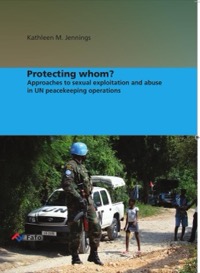
Protecting Whom? The UN Zero-Tolerance Policy on Sexual Exploitation and Abuse in Peacekeeping
- The UN's allegation counts understate the problem: 111 Sri Lankan peacekeepers were repatriated from Haiti in 2007 while only 19 allegations were recorded against MINUSTAH personnel for the whole year.
- Substantiation rates are low, with 21 of 371 allegations substantiated in 2006.
- The policy's internal focus on discipline sits uneasily with protection of the affected population, which is the report's title question.
- Haitian perceptions of the mission are shaped by these cases, captured in the local saying that MINUSTAH are tourists.
A Fafo policy report by Kathleen M. Jennings examining the preliminary impact and implications of the UN's zero-tolerance policy on sexual exploitation and abuse, using MINUSTAH in Haiti and UNMIL in Liberia as its two cases. Haiti is treated at length rather than as a country row in a global survey. The report is notable for showing how the UN's own allegation statistics understate the problem: the mass repatriation of Sri Lankan peacekeepers from Haiti in 2007 appears in the record as a handful of allegations because a whole group's cases were counted once.
How to cite
Fafo Institute for Applied International Studies, 2008, Protecting Whom? The UN Zero-Tolerance Policy on Sexual Exploitation and Abuse in Peacekeeping, https://fafo.no/publikasjoner/fafo-rapporter/protecting-whom