
PARE Baseline Report
- The majority of households in the baseline sample (78%) keep goats/sheep, followed by cattle (56%) and poultry (52%).
- Drought was identified as one of the most significant challenges livestock producers face in all departments.
- Very few producers (3% of cattle, 3% of goat/sheep and 1% of poultry) have accessed formal training or extension services in the past year.
- Overall annual sales from target livestock commodities averaged $205 USD per household.
- Out of a list of 21 shocks, households experienced an average of 7.8 in the past year, with the most common being a sharp increase in the price of food (94%) and increase in agricultural inputs (87%), as well as youth unemployment (80%).
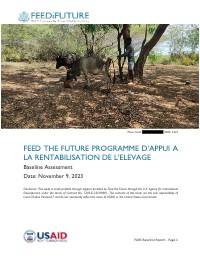
The PARE Baseline Report presents findings from a comprehensive assessment conducted in Haiti's Northern and Southern Resilience Focus Zones (RFZs). The study, implemented by Land O’Lakes Venture37 in partnership with AGIRED, utilizes a mixed-method approach to analyze the current status of livestock producers, focusing on cattle, goat/sheep, and poultry value chains. The assessment aims to document management practices, yields, sales, and household resilience capacities, providing recommendations for refining program targets and identifying potential areas of intervention to support producers and communities. Key findings cover livestock distribution, management practices, yield and sales, major constraints, access to services and inputs, and household resilience.
How to cite
United States Agency for International Development (USAID), 2023, PARE Baseline Report, accessed via HaitiDocs, https://www.haitidocs.org/doc/usaid-2023-pare-baseline-report