Full Document Text
Extracted text from the original document for search indexing.
Public Disclosure Authorized
Public Disclosure Authorized
Public Disclosure Authorized
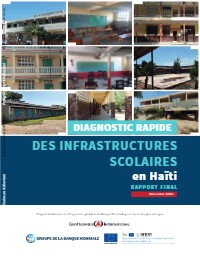
DIAGNOSTIC RAPIDE
DES INFRASTRUCTURES
SCOLAIRES
en Haïti
Public Disclosure Authorized
RAPPORT FINAL
Décembre 2020
Préparé à l’attention du Programme global de la Banque Mondiale pour des écoles plus sûres par
UNION EUROPÉENNE
�� DIAGNOSTIC RAPIDE
DES INFRASTRUCTURES
SCOLAIRES
en Haïti
RAPPORT FINAL
30 décembre 2020
�Ce diagnostic rapide a été cofinancé dans le cadre du Programme Afrique Caraïbes et Pacifique
(ACP) – Union européenne (UE) de prévention des risques de catastrophes naturelles, une initia-
tive du Groupe des pays ACP, financé par l’Union européenne et géré par la Facilité mondiale
pour la prévention des catastrophes et le relèvement (GFDRR) dirigée par la Banque mondiale.
GeoHazards International a préparé ce rapport pour la Banque mondiale en vertu du contrat nº
7194993. GeoHazards International, les institutions ainsi que les personnes figurant ci-dessous
conservent la totalité de leurs droits, titres et intérêts sur toute propriété intellectuelle préexistante
utilisée dans le présent document.
Photographie de couverture Janise Rodgers, GeoHazards International.
L’équipe du projet est composée des personnes suivantes :
Dr. Janise Rodgers, GeoHazards International, Chef d’équipe
Dr. Garmalia Mentor-William, GeoHazards International,
Chef de liaison avec les parties prenantes
Delka Espinal, GeoHazards International
Jean-Brunel Pierre, GeoHazards International
Gefthé Dévilmé, GeoHazards International
Veronica Cedillos, GeoHazards International
Abraham Lynn, Degenkolb Engineers
Martin Hammer, Architecte
Janise Rodgers a dirigé le travail de rédaction et l’étude documentaire avec l'aide de Garma-
lia Mentor-William et Delka Espinal. Garmalia Mentor-William a mené les consultations des
parties prenantes avec l'aide de Janise Rodgers, Delka Espinal et Gefthe Dévilmé. Jean-Brunel
Pierre, Garmalia Mentor-William, et Gefthe Dévilmé ont réalisé les visites des lieux avec l’aide
de Delka Espinal. Delka Espinal et Heidi Stenner ont fourni le soutien du système d'information
géographique (SIG). Veronica Cedillos s'est chargée de la révision et Julie Jomo de l’édition.
Windy Previl a aidé à la préparation de ce rapport.
Les auteurs du rapport tiennent à exprimer leur gratitude quant aux contributions des critiques
suivants : Rebecca Laberenne, Laisa Daza Obando, Claudia Soto et Elena Roseo de la Banque
mondiale.
Cet ouvrage a été produit par GeoHazards International et ses consultants associés. Les résultats,
interprétations et conclusions exprimés dans cet ouvrage ne reflètent pas nécessairement les vues
du Groupe de la Banque mondiale, de son Conseil d'administration ou des gouvernements qu'ils
représentent.
Le Groupe de la Banque mondiale ne garantit pas l'exactitude des données comprises dans cet
ouvrage. Les frontières, couleurs, dénominations et autres informations figurant sur les cartes
de cet ouvrage n'impliquent aucun jugement de la part du Groupe de la Banque mondiale ou
de GeoHazards International concernant le statut juridique de tout territoire ou l'approbation
ou l'acceptation de ces frontières. La responsabilité de cette publication relève entièrement de
ses auteurs. L'Union européenne n'est pas responsable de l'utilisation qui pourrait être faite des
informations qui y figurent.
� RAPPORT FINAL iii
Sommaire exécutif
Ce rapport présente les résultats du Diagnostic rapide des basés ailleurs. Compte tenu du peu d’informations re-
infrastructures scolaires en Haïti, réalisé par GeoHazards cueillies et de l’échantillon restreint d’écoles visitées -qui
International (GHI) dans le cadre du Programme global par conséquent n’est pas représentatif de l’ensemble des
pour des écoles plus sûres de la Banque mondiale. Les édifices scolaires- ce diagnostic ne donne donc pas une
principaux objectifs du diagnostic sont de (a) développer image complète de l’état actuel des infrastructures sco-
une compréhension éclairée de la vulnérabilité des in- laires en Haïti. C’est d’autant plus vrai pour les écoles
frastructures scolaires existantes et proposées aux catas- privées qui constituent la majorité des écoles d’Haï-
trophes naturelles et des impacts du changement clima- ti. Tout en reconnaissant ces handicaps, les principales
tique ; et (b) identifier les facteurs de risque associés afin constatations et recommandations suivantes émanent de
d’éclairer l’élaboration d’un plan stratégique global pour ce diagnostic.
améliorer la sécurité et la résilience des édifices scolaires.
GHI a étudié les informations existantes sur les aléas ; Constatations
les documents provenant du Ministère de l’éducation na-
tionale et de la formation professionnelle (MENFP) sur principales
les normes, standards et directives pour la construction
Observations générales sur
d’écoles, les plans pour le secteur de l’éducation et les do-
cuments stratégiques ; ainsi que les études antérieures sur
l’état actuel des infrastructures
les infrastructures scolaires en Haïti. GHI a également scolaires
consulté le gouvernement, le secteur privé et les parties Plus de 6,900 écoles, soit plus de 35 pourcent des écoles
prenantes internationales, a effectué des visites sur le du pays, ont été endommagées ou détruites lors de trois
terrain et a interviewé les proviseurs/directeurs des 15 grandes catastrophes naturelles survenues au cours des 15
écoles sélectionnées. dernières années - les cyclones tropicaux et inondations
de 2008, le tremblement de terre de 2010 et l’ouragan
En raison de la pandémie de COVID-19, les consulta-
Matthew en 2016 - ce qui prouve que le parc scolaire haï-
tions auprès des parties prenantes ont été réalisées par
tien est hautement vulnérable aux dommages causés par
téléphone et visioconférence, ce sont tenues moins de
les catastrophes naturelles. De nombreuses écoles sont en
consultations que ce qui avait été initialement prévu. Les
mauvais état, elles opèrent dans des bâtiments qui n’ont
visites des lieux ont été effectuées en utilisant un modèle
pas été conçus à cet effet ou au grand air. Conformément
hybride dans lequel les membres de l’équipe locale ont
aux objectifs nationaux du gouvernement haïtien en ma-
visité 15 écoles afin de recueillir des informations qui ont
tière d’accès à l’éducation et à l’équité, le MENFP a mis
ensuite été interprétées par des ingénieurs en structure
�iv Diagnostic rapide des infrastructures scolaires en Haïti
en place des normes qui régissent la construction de nou- construction d’écoles à l’avenir. Les urbanistes et les dé-
velles écoles dans des endroits sûr, résistantes aux trem- cideurs en Haïti manquent de cartes de risques détail-
blements de terre et au vent, des plans de construction en lées et actualisées lorsqu’il s’agit de risques clés comme
accord avec ces normes ont aussi été conçus. Néanmoins, les inondations (côtières, fluviales, pluviométriques), de
seulement 420 nouvelles écoles en conformité avec les glissements de terrain et tsunamis. Ces cartes sont néces-
normes de résistances aux aléas ont été construites afin saires lorsqu’il s’agit de prendre des décisions concernant
de remplacer les écoles détruites par les catastrophes de- la réduction des risques pour ce qui est du portefeuille
puis 2008. d’infrastructures scolaires existantes ainsi que l’emplace-
ment des futures écoles.
Constatations sur les données et
évaluations Constatations sur les
Environ 15 pourcent des 19 500 écoles maternelles, pri- caractéristiques des
maires et secondaires d’Haïti sont des écoles publiques. infrastructures scolaires et
Bien que les écoles privées éduquent la grande majorité l’environnement de construction
des enfants haïtiens, peu d’informations ont été recueil-
La plupart des bâtiments publiques scolaires ont un à
lies sur les établissements scolaires privés, principalement
deux étages et sont bâtis en maçonnerie non armée/ non
parce que les écoles privées sont gérées par des organi-
chaînée, en maçonnerie chaînée ou en béton armé. Basé
sations nombreuses et diverses. En se basant sur les in-
sur le système structurel et l’âge des bâtiments (la majori-
formations disponibles, il est probable que de nombreux
té ont été construits avant qu’Haïti n’ait un code national
édifices dans lesquels opèrent les écoles privées soient vul-
de construction), il est probable que bon nombre de ces
nérables aux séismes. Les évaluations d’infrastructure des
bâtiments soient vulnérables aux séismes. De nombreuses
écoles publiques sont plus nombreuses mais les données
écoles sont couvertes de toits légers, lesquels sont vulné-
sont incomplètes et ont été collectées en utilisant des mé-
rables aux dommages causés par le vent pendant les ou-
thodologies incompatibles.
ragans. Parmi les écoles publiques et privées, il existe un
petit nombre d’édifices plus grands en maçonnerie ou en
Constatations sur l’emplacement
béton armé particulièrement vulnérables, qui pourraient
et l’exposition aux aléas contribuer à alourdir considérablement le nombre de vic-
Un certain nombre d’écoles sont situées dans des zones times dans le cas où ils seraient occupés durant un séisme.
exposées aux risques d’inondations par tsunami, dont
De nombreuses écoles ont des carences en eau, assainis-
320 écoles à plusieurs rotations d’étudiants (certaines
sement et hygiène, y compris un accès limité à une eau
écoles fonctionnent plus d’une rotation par jour) dans
non potable, un nombre de toilettes insuffisantes et mal
la seule région du Cap-Haïtien. Les cartes de risques
entretenues, des dispositifs de lavage des mains inadé-
d’inondation disponibles identifient environ 3 900 écoles
quats. La plupart des écoles consomment peu d’électrici-
situées dans des zones inondables à travers tout le pays,
té, sont refroidies passivement et dépendent de la lumière
avec des écoles à risque dans tous les départements. De
du jour. Peu d’écoles répondent aux normes d’accessibili-
nombreuses écoles publiques situées dans des zones à
té qui aident les élèves handicapés. Les écoles n’ont géné-
risque devront être déplacées ; ce qui rend la sécurisa-
ralement pas d’alarmes d’incendie.
tion foncière un point important en ce qui concerne la
� RAPPORT FINAL v
L’accès à des matériaux de construction de qualité est Observations liées à la COVID-19
un défi majeur, en particulier dans les zones rurales.
Les installations d’eau et de lavage des mains ainsi que les
Les nouveaux projets de construction réalisés par des
espaces intérieurs et extérieurs disponibles dans la plu-
contracteurs locaux ont été couronnés de succès grâce
part des écoles ne sont pas adaptés pour appliquer les
à la mise en place de solides systèmes de réalisation qui
précautions recommandées contre la COVID-19. Ce-
comprennent la supervision, l’inspection, la formation et
pendant, la plupart des étudiants feraient également face
la participation communautaire. Les documents du plan
à des obstacles dans le cadre de l’enseignement à distance
national indiquent que les priorités nationales en ma-
en raison de vastes défis dans les domaines de production
tière d’infrastructure scolaire comprennent la construc-
d’électricité et de télécommunications.
tion de nouvelles écoles plus sûres et plus fonctionnelles
ainsi qu’un accès accru à l’éducation publique grâce à
la construction de nouvelles écoles. La vulnérabilité des Recommandations
infrastructures scolaires existantes aux catastrophes na-
Les infrastructures scolaires en Haïti nécessitent un pro-
turelles est principalement traitée par le remplacement
gramme d’investissement substantiels, à long terme pour
et /ou le déménagement, plutôt que par le renforcement.
garantir la sécurité des enfants et atteindre les objectifs de
Constatations sur l’éducation nationale en matière d’accès et d’équité. Ce
qui suit est un résumé des recommandations développées
l’environnement financier
dans le chapitre 7.0 de ce rapport. Dans le but de faci-
Le financement public pour le secteur de l’éducation aug- liter l’élaboration d’un plan d’action coordonné, les re-
mente en proportion des dépenses publiques globales, commandations sont organisées en fonction des grandes
bien que les sources internationales continuent de faire phases de la Feuille de route de la Banque mondiale pour
des contributions importantes au secteur, surtout pour des écoles plus sûres et résilientes (RSRS)1: diagnostic,
l’amélioration des infrastructures et la qualité de l’éduca- analyse, planification et exécution. Le RSRS utilise un
tion. Les familles haïtiennes financent une grande partie processus holistique d’analyses basées sur les risques et de
de l’éducation via les frais de scolarité des écoles privées, planification afin de prioriser et séquencer les interven-
malgré le lancement de programmes qui combinent un tions qui visent au fil du temps à améliorer la sécurité, la
financement public et international permettant de cou- fonctionnalité et l’efficacité des infrastructures scolaires.
vrir ces frais pour les étudiants issus de familles à faible Un ensemble de recommandations spécifiques à la CO-
revenu. Le Fonds national de l’Éducation est désormais VID-19 est également inclus.
opérationnel et constitue une source nationale durable de
financement pour les investissements dans les infrastruc- A. Diagnostic
tures scolaires.
A.1 Créer et maintenir un inventaire des établissements
publics scolaires afin de faciliter la prise de décision
au niveau du portefeuille, en compilant les informa-
tions concernant l’évaluation des bâtiments existants
1 Développé par le Programme mondial pour des écoles plus sûres, le (RSRS) est disponible sur : https://gpss.worldbank.org/
en/roadmaps/roadmap-safer-and-resilient-schools-rsrs
�vi Diagnostic rapide des infrastructures scolaires en Haïti
Illustration i.
Les premières étapes de la Feuille de route de la Banque mondiale pour des écoles plus
sûres et résilientes (RSRS)
dans une base de données unique, en uniformisant une évaluation de la demande étudiante existante
les approches d’études d’infrastructures utilisées par et projetée à travers le pays en vue de planifier en
les organisations partenaires et en mettant à profit le connaissance de cause les investissements liés à l’em-
recensement scolaire annuel du MENFP afin de réu- placement et à la taille des nouvelles écoles ainsi que
nir les informations de base sur la construction et les l’acquisition de terrains indispensables.
édifices.
B. Analyse
A.2 Améliorer la compréhension de la vulnérabilité et
B.1 Améliorer la caractérisation et la cartographie des
des conditions d’infrastructure des écoles privées en
dangers, surtout pour les risques d’inondations, de
inventoriant un échantillon représentatif de bâti-
glissement de terrain et de tsunami, afin d’aider le
ments, soit en élargissant le recensement des écoles
MENFP à mettre en œuvre sa politique qui consiste à
pour englober les infrastructures des écoles privées
ne pas implanter d’écoles dans les zones dangereuses.
ou en coordination avec les réseaux d’écoles privées
d’Haïti. B.2 Effectuer des analyses de coûts des solutions de ren-
forcements normatifs pour les typologies de bâtiments
A.3 Renforcer les mécanismes de coordination pour les
représentatifs (type de structure, matériau, nombre
agences internationales œuvrant dans le domaine des
d’étages) afin de déterminer si les programmes de ren-
infrastructures scolaires en Haïti, spécifiquement sur
forcement sont une alternative rentable au remplace-
le thème de la collecte de données et évaluation des
ment de certains édifices scolaires. Lors de ces études
risques. L’ONAPE (Office National de Partenariat en
de coûts, prendre en compte d’autres améliorations
Éducation) du MENFP devrait avoir un rôle impor-
essentielles aux installations en eau et assainissement
tant dans cette coordination.
ainsi que les renforcements qui s’imposent en fonction
A.4 En s’appuyant sur les efforts de la BID qui a élabo- des priorités entendues avec le gouvernement.
ré la Carte scolaire de quatre départements, réaliser
� RAPPORT FINAL vii
B.3 Déterminer si certaines écoles plus anciennes se propagation de maladies transmissibles, y compris la
trouvent dans des bâtiments qui peuvent avoir une COVID-19.
valeur patrimoniale et devraient être préservés.
C.5 Prendre des mesures au niveau national pour ré-
soudre les problèmes fonciers identifiés pour les écoles
C. Planification
publiques, en particulier celles qui sont situées dans
C.1 Élaborer une stratégie d’intervention et un plan d’in-
des zones urbaines denses, notamment en dévelop-
vestissement sur le long terme pour les infrastructures
pant une approche claire et limitée dans le temps afin
scolaires afin de traduire les objectifs du Plan Décen-
de désigner des terrains pour les sites scolaires.
nal en matière d’équité en éducation et d’accès ainsi
que ceux du plan de réduction des risques de catas- C.6 Envisager de jumeler les programmes de subventions
trophe du secteur de l’éducation (PSRVD) en actions des frais de scolarité existants pour que les étudiants
coordonnées, limitées dans le temps et financées / fi- à faible revenu puissent fréquenter les écoles privées
nançables pour améliorer les infrastructures scolaires. qui adhèrent aux exigences d’amélioration de la sé-
Une stratégie coordonnée et un plan d’investissement curité des bâtiments scolaires comme exigence po-
pour les infrastructures scolaires permettront de ca- tentiel permettant de remédier à la vulnérabilité des
naliser plus efficacement les fonds internationaux infrastructures des écoles privées.
pour appuyer et accroître les objectifs du gouverne-
ment pour ce qui est de l’éducation et la réduction des D. Réalisation
risques de catastrophe. D.1 Accélérer le rythme de construction de nouvelles
infrastructures scolaires, nécessitant peu d’entretien,
C.2 Identifier, pour une intervention à court terme, les
résistantes aux catastrophes en encourageant ou en
écoles qui sont particulièrement vulnérables aux
rendant obligatoire l’utilisation de l’ensemble de
tremblements de terre, aux tsunamis et qui comptent
plans standard du MENFP tout en développant des
un grand nombre d’élèves. Utiliser l’analyse coûts-bé-
approches de construction décentralisées telles que
néfices pour prioriser ces interventions dans le cadre
décrites dans le Guide Pratique du MENFP.
d’une stratégie d’investissement échelonnée et à long
terme des infrastructures scolaires. D.2 Améliorer l’apprentissage et l’environnement inté-
rieur des bâtiments scolaires en veillant à ce que les
C.3 Intégrer des améliorations fonctionnelles et sécuri-
nouveaux projets de construction d’écoles incluent la
taires dans les interventions sur les infrastructures,
participation d’un architecte à la conception, même
notamment des améliorations sur le plan de l’accessi-
dans les cas où des plans d’écoles modèles sont uti-
bilité afin de répondre aux besoins des étudiants han-
lisées.
dicapés ; amélioration des conditions sanitaires et la
fourniture de systèmes d’alarme incendie. D.3 Poursuivre les approches durables actuelles de
conception d’écoles qui minimisent la consomma-
C.4 En tant que programme autonome pour les écoles
tion d›électricité, réduisent les coûts d›exploitation et
non priorisées pour remplacement, renforcement ou
d›entretien et diminuent la dépendance aux services
déménagement améliorer les installations d’appro-
publics hors site.
visionnement en eau et assainissement ainsi que les
mesures d’hygiène pour garantir la santé et réduire la
�viii Diagnostic rapide des infrastructures scolaires en Haïti
D.4 Améliorer les mécanismes et les sources destinés à tastrophes naturelles, comme en témoigne les milliers
financer l’entretien et rendre les nouveaux investisse- d’écoles qui ont déjà été endommagées ou détruites
ments scolaires plus intéressants. par les tremblements de terre, les cyclones tropicaux et
les inondations depuis 2008. Des milliers d’enfants font
D.5 Élaborer et mettre en œuvre un plan de préparation
leurs études dans ces établissements vulnérables. Outre
aux situations d’urgence et organiser des exercices
les infrastructures scolaires en Haïti viennent s’ajouter
d’urgence.
des défis additionnels tels que les mauvaises conditions
ainsi que le mode de fonctionnement de plusieurs écoles
E. Mesures de réponse et
existantes, les contraintes en termes de ressources finan-
d’adaptation à la COVID-19 cières, un inventaire considérable d’établissements sco-
E.1 S’assurer que le personnel dispose du matériel né- laires privés appartenant à diverses organisations et les
cessaire à la désinfection, d’équipement de protection problèmes de disponibilité de terrains. Malgré tout cela,
individuelle (EPI) et d’articles connexes. des étapes faisables, tangibles décrites dans ce diagnostic
rapide ainsi que la feuille de route pour des écoles plus
E.2 Mener des programmes de sensibilisation afin que les
sûres et résilientes peuvent aider à améliorer la sécurité
élèves et les enseignants sachent comment se protéger
scolaire et l’environnement d’apprentissage peu à peu à
de la COVID-19.
travers l’élaboration et la mise en œuvre d’une stratégie
E.3 Envisager d’utiliser les espaces extérieurs pour four- exhaustive d’investissement dans les infrastructures sco-
nir temporairement un espace adéquat aux élèves afin laires (C.1) afin de guider les efforts à la fois sur le court
qu’ils puissent se distancer physiquement et diminuer et le long terme. Des actions à court terme telles que le
l’encombrement dans les salles de classe. remplacement, le renforcement ou le déménagement
de grands édifices scolaires situés dans des zones à haut
E.4 Utiliser la pandémie comme une opportunité qui
risque ou dans des zones inondables par tsunami (C.2), la
permet de développer des approches d’apprentissage
fourniture de matériels, la tenue de formations en protec-
à distance efficaces qui peuvent être mises en applica-
tion civile et l’addition d’installations WASH pour contri-
tion durant les fermetures d’établissements scolaires à
buer à l’hygiène et réduire la propagation de maladies
l’avenir afin d’assurer la continuité de l’enseignement.
transmissibles, y compris la COVID-19 (C.4, E.1-E.3),
E.5 Améliorer les infrastructures énergétiques et de télé- apporteront des bénéfices immédiats en matière de sé-
communications afin de permettre l’apprentissage à curité. L’investissement continu dans les infrastructures
distance. scolaires par le gouvernement haïtien ainsi que celui des
partenaires internationaux financiers et techniques sera
Conclusion capital pour atteindre les objectifs d’équité et d’accès, ain-
si qu’un soutien à la sécurité et la résilience des écoles.
Un grand nombre d’écoles publiques et privées en Haï-
ti risquent d’être endommagées ou détruites par des ca-
� Sommaire
SOMMAIRE EXÉCUTIF . . . . . . . . . . . . . . . . . . . . . . . . . . . . . . . . . . . . . . . . . . . . . iii
ACRONYMES . . . . . . . . . . . . . . . . . . . . . . . . . . . . . . . . . . . . . . . . . . . . . . . . . . . . . 4
1. INTRODUCTION . . . . . . . . . . . . . . . . . . . . . . . . . . . . . . . . . . . . . . . . . . . . . . . . 8
2. CONTEXTE PAYS . . . . . . . . . . . . . . . . . . . . . . . . . . . . . . . . . . . . . . . . . . . . . . . 11
3. APERÇU DE LA MÉTHODOLOGIE . . . . . . . . . . . . . . . . . . . . . . . . . . . . . . . . . . 15
3.1 Composition de l’équipe et expertise . . . . . . . . . . . . . . . . . . . . . . . . . . . . . . . . . . . . . . 16
3.2 Étude documentaire . . . . . . . . . . . . . . . . . . . . . . . . . . . . . . . . . . . . . . . . . . . . . . . . . . . . . 16
3.3 Visites de sites et consultations des parties prenantes . . . . . . . . . . . . . . . . . . . . . . . 17
3.4 Méthodes d’analyse . . . . . . . . . . . . . . . . . . . . . . . . . . . . . . . . . . . . . . . . . . . . . . . . . . . . . . 18
4. CONSTATS - ALÉAS . . . . . . . . . . . . . . . . . . . . . . . . . . . . . . . . . . . . . . . . . . . . . 19
4.1 Risques sismiques et tsunamis . . . . . . . . . . . . . . . . . . . . . . . . . . . . . . . . . . . . . . . . . . . . 20
4.2 Dangers hydrométéorologiques et climatiques . . . . . . . . . . . . . . . . . . . . . . . . . . . . . 24
4.3 Épidémies et pandémies . . . . . . . . . . . . . . . . . . . . . . . . . . . . . . . . . . . . . . . . . . . . . . . . . 27
4.4 Événements historiques pertinents . . . . . . . . . . . . . . . . . . . . . . . . . . . . . . . . . . . . . . . . 28
5. CONSTATS - ENVIRONNEMENT FAVORABLE
AUX INFRASTRUCTURES SCOLAIRES . . . . . . . . . . . . . . . . . . . . . . . . . . . . . . . . 30
5.1 Politique de l’éducation . . . . . . . . . . . . . . . . . . . . . . . . . . . . . . . . . . . . . . . . . . . . . . . . . . 31
5.1.1 Autorité éducative et parties prenantes . . . . . . . . . . . . . . . . . . . . . . . . . . . . . . . . 31
5.1.2 Systèmes et organisation de l’éducation . . . . . . . . . . . . . . . . . . . . . . . . . . . . . . . 35
5.1.3 Politiques, plans et stratégies pour le secteur de l’éducation . . . . . . . . . . . . . 37
5.1.4 Gestion des données . . . . . . . . . . . . . . . . . . . . . . . . . . . . . . . . . . . . . . . . . . . . . . . . 38
5.1.5 Gestion des risques de catastrophes dans les écoles . . . . . . . . . . . . . . . . . . . . 39
�5.1.6 Variations et considérations régionales . . . . . . . . . . . . . . . . . . . . . . . . . . . . . . . . . . . . . 40
5.2 Environnement financier . . . . . . . . . . . . . . . . . . . . . . . . . . . . . . . . . . . . . . . . . . . . . . . . . 41
5.2.1 Financement national et international pour l’éducation . . . . . . . . . . . . . . . . . 41
5.2.2 Financement des écoles privées . . . . . . . . . . . . . . . . . . . . . . . . . . . . . . . . . . . . . . 46
5.3 Environnement de la construction . . . . . . . . . . . . . . . . . . . . . . . . . . . . . . . . . . . . . . . . 47
5.3.1 Normes pour la construction d’écoles et ensembles de plans standards . . 47
5.3.2 Environnement de conception/ingénierie/construction . . . . . . . . . . . . . . . . . 51
6. CONSTATS - CARACTÉRISTIQUES DES INFRASTRUCTURES SCOLAIRES . . 55
6.1 Caractéristiques et vulnérabilités structurelles . . . . . . . . . . . . . . . . . . . . . . . . . . . . . 56
6.1.1 Études existantes sur les infrastructures scolaires . . . . . . . . . . . . . . . . . . . . . . 56
6.1.2 Typologies structurelles communes et éléments de construction . . . . . . . . 56
6.1.3 Vulnérabilités sismiques . . . . . . . . . . . . . . . . . . . . . . . . . . . . . . . . . . . . . . . . . . . . . 59
6.1.4 Autres vulnérabilités des constructions/structures aux risques naturels . . . 61
6.1.5 Qualité de la Construction . . . . . . . . . . . . . . . . . . . . . . . . . . . . . . . . . . . . . . . . . . . 61
6.1.6 Stratégies existantes de renovation . . . . . . . . . . . . . . . . . . . . . . . . . . . . . . . . . . . 62
6.2 Caractéristiques des systèmes de construction
et de l’environnement d’apprentissage . . . . . . . . . . . . . . . . . . . . . . . . . . . . . . . . . . . . . . . 62
6.2.1 Alimentation électrique, refroidissement et efficacité énergétique . . . . . . . 62
6.2.2 Eau, assainissement et hygiène (« WASH ») . . . . . . . . . . . . . . . . . . . . . . . . . . . . . 63
6.2.3 Qualité de l’environnement intérieur et environnement d’apprentissage . . 63
6.2.4 Caractéristiques du programme, y compris pour COVID-19 . . . . . . . . . . . . . . 64
6.2.5 Accessibilité et voies de sortie . . . . . . . . . . . . . . . . . . . . . . . . . . . . . . . . . . . . . . . . 64
6.2.6 Conditions extérieures du site, programmation et sécurité . . . . . . . . . . . . . . 65
6.3 Fonctionnement et entretien . . . . . . . . . . . . . . . . . . . . . . . . . . . . . . . . . . . . . . . . . . . . . 65
6.3.1 Protocoles de préparation aux catastrophes . . . . . . . . . . . . . . . . . . . . . . . . . . . 65
6.3.2 Fonctions/personnel clés pour les opérations et l’entretien . . . . . . . . . . . . . . 65
6.3.3 Utilisation des écoles comme abris . . . . . . . . . . . . . . . . . . . . . . . . . . . . . . . . . . . 65
6.3.4 Rôle de la communauté dans les écoles . . . . . . . . . . . . . . . . . . . . . . . . . . . . . . . 67
6.3.5 Modes de transport pour les étudiants . . . . . . . . . . . . . . . . . . . . . . . . . . . . . . . . 67
6.3.6 Considérations opérationnelles pour COVID-19 . . . . . . . . . . . . . . . . . . . . . . . . . 67
�7. RECOMMANDATIONS . . . . . . . . . . . . . . . . . . . . . . . . . . . . . . . . . . . . . . . . . . . 69
8. CONCLUSIONS . . . . . . . . . . . . . . . . . . . . . . . . . . . . . . . . . . . . . . . . . . . . . . . . 76
ANNEXES . . . . . . . . . . . . . . . . . . . . . . . . . . . . . . . . . . . . . . . . . . . . . . . . . . . . . . 78
Annexe A - Liste des principaux documents examinés . . . . . . . . . . . . . . . . . . . . . . . . . . . 79
Annexe B - Informations techniques supplémentaires sur les aléas
et l’emplacement des écoles . . . . . . . . . . . . . . . . . . . . . . . . . . . . . . . . . . . . . . . . . . . . . . . . . 84
Annexe C - Liste des parties prenantes consultées. . . . . . . . . . . . . . . . . . . . . . . . . . . . . . 87
Annexe D - Documentation sur la visite des écoles . . . . . . . . . . . . . . . . . . . . . . . . . . . . . . 88
D.1 Écoles visitées . . . . . . . . . . . . . . . . . . . . . . . . . . . . . . . . . . . . . . . . . . . . . . . . . . . . . . . . 88
D.2 Tableaux récapitulatifs des réponses au formulaire
scolaire de l’appli GLOSI . . . . . . . . . . . . . . . . . . . . . . . . . . . . . . . . . . . . . . . . . . . . . . . . . . 90
D.3 Tableaux récapitulatifs des réponses au formulaires
scolaires de l’appli GLOSI . . . . . . . . . . . . . . . . . . . . . . . . . . . . . . . . . . . . . . . . . . . . . . . . . 95
D.4Résumés individuels des bâtiments scolaires . . . . . . . . . . . . . . . . . . . . . . . . . . . 100
�4 Diagnostic rapide des infrastructures scolaires en Haïti
Acronymes
ACEQH Augmenter l’accès à une éducation de BMPAD Bureau de monétisation des programmes
qualité en Haïti d’aide au développement
AGCID Agencia Chilena de Cooperación Internacional BUGEP Bureau de gestion de l’éducation présco-
para el Desarrollo (Agence chilienne de coo- laire
pération internationale pour le développe-
BUNEXE Bureau national des examens d’État
ment)
CASAS Commission de l’adaptation scolaire et
AMOPERE Programme d’appui à la mise en œuvre
d’appui social
du plan sectoriel de l’éducation et de la ré-
forme éducative en Haïti CAT DDO Catastrophe Deferred Drawdown Option (Op-
tion de tirage différé en cas de catastrophe)
APEP-FEV Association professionnelle d’écoles pri-
vées CDG Cabinet du directeur général
ARSE Programme d’appui à la reconstruction du CEEC Commission épiscopale pour l’éducation
secteur de l’éducation catholique
BA Béton armé CLIO Cadre de liaison inter-organisations
BAEH Bureau anglican de l’éducation en Haïti CM Cabinet du ministre
BEMHEG Bureau des églises méthodistes d’Haïti CNBH Code national du bâtiment d’Haïti
pour l’éducation générale
CNHCU Commission nationale haïtienne de coo-
BCOM Bureau de communication pération avec l’UNESCO
BDS Bureau de district scolaire CNIGS Centre national de l’information géo-spa-
tiale
BID Banque Interaméricaine de développe-
ment CNRC Commission nationale de réforme curri-
culaire
BIZ Bureau d’inspection de zone
CONFEPIH Confédération des écoles privées indépen-
BM Banque mondiale
dantes d’Haïti
� RAPPORT FINAL 5
COSPE Consortium des organisations du secteur DPCE Direction de la planification et coopéra-
privé de l’éducation tion externe
COVID-19 Maladie du coronavirus 2019 DRH Direction des ressource humaines
CRECH Consortium pour le renforcement de DSS Direction sanitaire scolaire
l’éducation chrétienne en Haïti
EAHMS Eau, assainissement et hygiène en milieu
CRS Catholic Relief Services (ONG/Secours Ca- scolaire
tholique)
EFA Education for All (Éducation pour tous)
DAA Direction des affaires administratives
EMIS Education Management Information System
DAEPP Direction d’appui à l’enseignement privé (Système d’information et de gestion de
et du partenariat l’éducation)
DAJ Direction des affaires juridiques ENSO phénomène d’oscillation australe El Niño
DCQ Direction du curriculum et du contrôle de ENST École nationale supérieure de technologie
qualité
EPGC École publique à gestion communautaire
DDC Direction du développement et de la coo-
FAES Fonds d’assistance économique et sociale
pération suisse
FENAMH Fédération Nationale des Maires Haïtiens
DDE Direction départementale de l’éducation
FEPH Fédération des écoles protestantes d’Haïti
DEF Direction de la formation et du perfection-
nement FONHEP Fondation haïtienne de l’enseignement
privé
DES Direction d’éducation secondaire
FNE Fonds national de l’éducation
DESRS Direction de l’enseignement supérieur et
de la recherche scientifique GLOSI Global Library of School Infrastructure (Biblio-
thèque mondiale des infrastructures sco-
DFP Direction de la formation professionnelle
laires)
DGPC Direction Générale de la Protection Civile
GoH Gouvernement d’Haïti
DGS Direction du génie scolaire
GFDRR Global Facility for Disaster Reduction and Re-
DINEPA Direction nationale de l’eau potable et de covery (Facilité mondiale pour la réduction
l’assainissement des catastrophes et le relèvement)
DPC Direction de la protection civile GPSS Global Program for Safer Schools (Programme
mondial pour des écoles plus sûres)
�6 Diagnostic rapide des infrastructures scolaires en Haïti
GSE Groupe sectoriel de l’éducation PDNA Post Disaster Needs Assessment (Évaluation des
besoins post-catastrophe)
HCE Haut conseil de l’éducation
PEQH Pour une éducation de qualité en Haïti
HRF Haiti Reconstruction Fund (Fonds de recons-
truction d’Haïti) PIU Project Implementation Unit (Unité de mise en
œuvre des projets)
IGS Inspection générale scolaire
PROSGATE Programme spécial de gratuité de l’éduca-
IHSI Institut haïtien de statistiques et d’infor-
tion
matique
PSRVD Plan Sectoriel de Réduction de Vulné-
INGO Organisation internationale non gouver-
rabilité aux Désastres dans le Secteur de
nementale
L’Education
JICA Japan International Cooperation Agency (Agence
PSUGO Programme de scolarisation universelle
de coopération internationale du Japon)
gratuite
LAC Amérique latine et les Caraïbes
RDH République d’Haïti
MAST Ministère des affaires sociales et du travail
RSRS Roadmap for Safer and Resilient Schools (Feuille
MC Maçonnerie chaînée de route pour des écoles plus sûres et rési-
lientes)
MEF Ministère de l’économie et des finances
RTE Radio télé éducative
MENFP Ministère de l’éducation nationale et de la
formation professionnelle SABER Approche Systémique pour de Meilleurs
Résultats Educatifs
MPTPC Ministère des travaux publics, transports
et communications SDC Swiss Development and Cooperation Agency
(Agence suisse pour le développement et
MSPP Ministère de la santé publique et de la po- la coopération)
pulation
SEA Secrétairerie d’État à l’alphabétisation
NOAA United States National Oceanic and Atmosphe-
ric Administration (Administration nationale SEFP Secrétairerie d’État à la formation profes-
océanique et atmosphérique des États- sionnelle
Unis)
SEMANAH Service maritime et de navigation d’Haïti
OB Ossature du Bois
SMC Comité de Gestion des Ecoles
ONAPE Office National de Partenariat en Éduca-
SNA-EPT Stratégie nationale d’action pour l’éduca-
tion
tion pour tous
� RAPPORT FINAL 7
SPM Secrétairerie de passation des marchés UPM Unité de passation de marchés
SMC School Management Committee (Comité de USAID Agence des États-Unis pour le développe-
gestion scolaire) ment international
TWP Tuition Waiver Program (Programme USGS Service géologique des États-Unis
d’exemption des frais de scolarité)
USI Unité du système d’information
UCP Unité de coordination des projets
UTE Unité technique d’exécution
UEP Unité d’études et de programmation
UTI Unité information technologie
UHM Unité hydrométéorologique d’Haïti
UTICE Unité de technologie de l’information et
UNESCO Organisation des Nations Unies pour de la communication en éducation
l’éducation, la science et la culture
WASH Eau, hygiène et assainissement
UNICEF Fonds des Nations Unies pour l’enfance
WB World Bank (Banque mondiale)
UNOPS Bureau des Nations unies pour les services
d’appui aux projets
� 1
Introduction
� RAPPORT FINAL 9
Une série de catastrophes naturelles au cours des 15 der- sion de préparation de ce financement, en juillet 2019,
nières années, notamment des tremblements de terre et la Banque mondiale et le gouvernement haïtien (GoH)
des ouragans, a fortement endommagée les infrastruc- ont identifié plusieurs actions préalables nécessaires pour
tures scolaires d’Haïti, détruisant complètement plusieurs renforcer la capacité d’Haïti à gérer ses multiples risques
écoles. L’étendue des dégâts démontre la vulnérabilité de catastrophes. Les parties ont également discuté de la
des infrastructures scolaires du pays aux catastrophes na- possibilité pour le gouvernement haïtien (GoH) de rece-
turelles ainsi que les impacts du changement climatique. voir une assistance technique dans le cadre de leurs efforts
Haïti est vulnérable à un large éventail d’aléas naturels pour améliorer la sécurité et la résistance des infrastruc-
récurrents et induits par le climat qui pourraient menacer tures scolaires. Ce Diagnostic rapide des infrastructures
la sécurité des élèves, contrecarrer les acquis éducatifs et scolaires en Haïti est la première étape de cette assistance
mettre les écoles hors service à un moment où le pays technique.
s’efforce d’accroître l’accès équitable à l’éducation. Le
L’un des cadres qui a été utilisé et adapté au contexte
secteur de l’éducation haïtien reçoit un soutien important
haïtien pour le diagnostic rapide est la feuille de route
de plusieurs bailleurs pour aider le gouvernement haïtien
de la Banque mondiale pour des écoles plus sûres et ré-
à atteindre ses objectifs, tels qu’énoncés dans une série de
silientes (RSRS)3 ainsi qu’un outil de collecte de données
documents préparés par le Ministère de l’éducation nationale
utilisé dans ce cadre appelé GLOSI (Bibliothèque mon-
et de la formation professionnelle (MENFP), y compris le do-
diale des Infrastructures Scolaires). Tous deux ont été
cument stratégique clé sur 10 ans pour le secteur, le Plan
développés par la Banque dans le cadre du Programme
Décennal d’Éducation et de Formation 2020-2030.
mondial pour des écoles plus sûres (GPSS) lancé en 2014
Au cours des 15 dernières années, la Banque mondiale a par le Fonds mondiale pour la réduction des catastrophes
octroyé plus de 265 millions de dollars au secteur éduca- et le relèvement (GFDRR). Par le biais de ce programme
tif haïtien, via des projets financés par l’Association in- mondial, le GFDRR appuie les programmes de sécurisa-
ternationale de développement (IDA) et en mobilisant les tion d’établissements scolaires dans les pays où le gouver-
ressources de partenaires tels le Canada, le Partenariat nement s’est résolument engagé dans une réforme ou un
mondial pour l’éducation et la Banque de développement programme d’investissement dans le secteur de l’éduca-
Caribéenne.- Ces ressources visaient à améliorer l’accès tion. L’objectif du GFDRR est de stimuler et de faciliter
et l’équité à l’enseignement primaire, à fournir des repas des investissements avisés, à grande échelle dans la sécuri-
scolaires, à améliorer les résultats des écoles primaires, à té et la résilience des infrastructures scolaires nouvelles et
se remettre des catastrophes et à édifier les capacités pour existantes qui sont exposées aux risques naturels, contri-
améliorer la gouvernance du système éducatif. En outre,
2
buant ainsi à la qualité de l’environnement d’apprentis-
la Banque mondiale prépare une riposte à la COVID-19 sage et à l’amélioration du bien-être de la population. Le
et une opération visant à développer une politique de ré- GPSS met en œuvre des activités à l’échelle mondiale
silience en Haïti (initialement préparée en tant que CAT et fournit un encadrement pays à travers quatre piliers :
DDO). Dans le cadre du dialogue entamé lors de la mis- (1) contribuer à un redressement vigoureux du secteur de
2 The World Bank and Global Partnership for Education, https://www.globalpartnership.org/where-we-work/haiti HFA 2 Pro-
gram completion report.
3 World Bank, Roadmap for Safer and Resilient Schools https://gpss.worldbank.org/en/roadmaps/roadmap-safer-and-resi-
lient-schools-rsrs
�10 Diagnostic rapide des infrastructures scolaires en Haïti
l’éducation ; (2) investir efficacement dans la résilience sion éclairée de la vulnérabilité aux catastrophes natu-
des infrastructures scolaires ; (3) mobiliser les finance- relles, aux impacts du changement climatique ainsi que
ments pour la résilience des infrastructures scolaires et (4) les déficiences fonctionnelles des infrastructures scolaires
le renforcement des capacités pour mettre en œuvre des existantes et proposées en Haïti ; (2) identifier les facteurs
interventions à grande échelle. de risque associés afin d’éclairer l’élaboration d’un plan
stratégique détaillé pour améliorer la sécurité et la rési-
Conformément au programme GPSS, les objectifs du
lience des établissements scolaires.
diagnostic rapide sont : (1) développer une compréhen-
� 2
Contexte du pays
�12 Diagnostic rapide des infrastructures scolaires en Haïti
Les écoles d’Haïti ont été confrontées à une série de défis notamment un besoin pour l’enseignement à distance,
durant ces deux dernières décennies. Pour diverses rai- la distanciation sociale, le lavage, le nettoyage et la dé-
sons qui ont été discutées et débattues par des historiens, sinfection des mains accru. Le MENFP a réalisé des in-
des économistes, des politologues et sociologues dans de vestissements substantiels dans les outils et plateformes
nombreux ouvrages , les difficultés auxquelles Haïti a été
4
d’apprentissage numériques, ainsi que dans l’enseigne-
confrontées au 20 ème
siècle et auparavant, ont eu des ré- ment par radio.6 Néanmoins, l’infrastructure numérique
percussions qui s’étalent jusqu’aux premières décennies en Haïti confronte présentement des défis énormes pour
du 21 ème
siècle ainsi que sur sa population actuelle de 11 ce qui est de l’apprentissage à distance à grande échelle.
millions de personnes, dont environ 4,6 millions d’enfants Des défis continus dans les secteurs de l’énergie électrique
âgés de 18 ans ou moins. Ces défis comprennent des ni-
5
et des communications, des pénuries de carburant qui li-
veaux de pauvreté obstinément élevés, un environnement mitent la production d’électricité ainsi que la lenteur du
dégradé, une fragilité politique et des systèmes nationaux débit et la bande passante de la connexion internet dans
d’éducation et de santé aux ressources insuffisantes. de nombreux endroits, signifient que l’enseignement en
présentiel est encore le moyen le plus viable d’éduquer la
À partir de 2018, Haïti a connu une crise politique et
majorité des étudiants haïtiens.
économique prolongée qui s’est traduite par de violentes
manifestations de rue et une paralysie totale des activités Haïti compte actuellement plus de 4,1 millions d’élèves
dans tout le pays (« peyi lok »), une incertitude politique, qui fréquentent 19 500 écoles publiques et privées, pri-
une dévaluation de la monnaie, l’inflation et une grave maires et secondaires dans tout le pays.7 De ces écoles,
pénurie de carburant. En 2019, les fermetures d’écoles plus de 3 000, ou approximativement 15 pourcent, sont
étaient devenues un fait divers, dont la plus grave a été la des écoles publiques.8 Le MENFP est responsable du
fermeture prolongée de la plupart des écoles qui avaient système de l’éducation nationale en Haïti, y compris
débuté en septembre car la nouvelle année académique des infrastructures scolaires, dont une partie importante
venait de commencer. À la mi-décembre 2019, la situa- a été construite avec le soutien financier de donateurs
tion s’est détendue et les écoles ont commencé à rou- internationaux. Depuis au moins quatre décennies, les
vrir, pour être obligées de fermer à nouveau lorsque la services scolaires publics et les infrastructures scolaires
pandémie de COVID-19 a atteint Haïti en mars 2020. sont insuffisants pour répondre à la demande des familles
La COVID-19 a créé de nouveaux défis pour les écoles, haïtiennes en matière d’éducation fondamentale, ce qui a
4 Par exemple, Wesner Emmanuel, Histoire période Nationale, 1804-2004, Saint Domingue redevient Haïti, 2007 ; Dantès Belle-
garde, Histoire du peuple Haïtien, 1492-1952, Port au Prince, 1953 ; Philippe Girard, Haïti: The Tumultuous History - From Pearl
of the Caribbean to Broken Nation, St. Martin's Publishing Group, 2010 ; Robert Debs Heinl et Nancy Gordon Heinl, Written in
Blood : The Story of the Haitian people, 1492-1995, University Press of America, 1996.
5 Institut Haïtien de Statistiques et Informatique (IHSI), Projections démographiques 2015.
6 Voir PRATIC et d'autres outils disponibles sur le site du MENFP à l'adresse https://menfp.gouv.ht/#/ressources ; également
abordés dans des articles de presse tels que : https://www.haitilibre.com/en/news-30433-haiti-education-distance-educa-
tion-for-all-clarification.html
7 Recensement scolaire 2015-2016, MENFP, tel que rapporté au MENFP, Plan Décennal d'Éducation et de Formation2020 –
2030, 2020. Ce recensement comprend les écoles publiques et privées, avec 2788 écoles publiques niveau-fondamentaleset
260 lycées/collèges publics.
8 Ibid.
� RAPPORT FINAL 13
conduit à la prolifération des écoles privées.9 Une grande Aggravant le manque d’accès, les infrastructures sco-
partie des élèves du primaire et du secondaire du pays, laires publiques d’Haïti ont subi des dommages impor-
estimée à près de 80 pourcent, étudie dans des écoles
10
tants causés par une série de catastrophes survenues ces
privées de différents types, notamment celles qui sont deux dernières décennies, plus particulièrement pendant
construites et gérées par des organisations religieuses, à les ouragans et inondations de 2008, le tremblement de
but non lucratif et à but lucratif. terre de 2010 et l’ouragan Matthew en 2016. Près de
1,500 écoles ont été détruites lors de ces catastrophes et
De nombreuses familles prennent en charge la plus grande
plus de 5,400 ont été endommagées.14 Le tremblement
partie des frais de scolarité de leurs enfants. Les données
de terre de 2010 a été particulièrement destructeur dans
disponibles indiquent que les ménages pourvoient 60 à 70
le Département de l’Ouest, là où il a endommagé (2,582)
pourcent du financement total des études,11 des enquêtes
ou détruit (1,315) totalisant 3,897 écoles, dont plus de 80
antérieures et d’autres études montrent que les familles,
pourcent des écoles publiques du Département. Le Dé-
en particulier les plus pauvres, consacrent 10 à 25 pour-
partement de l’Ouest a été la zone la plus secouée et 40
cent de leurs revenus à l’éducation de leurs enfants.12 Le
pourcent de la population y résidait alors, principalement
manque de places dans les écoles publics et l’appui finan-
dans la zone métropolitaine de Port-au-Prince avec envi-
cier limité, ont pour conséquence qu’un grand nombre
ron 50 pourcent de la population scolaire et universitaire
d’enfants se retrouvent dans l’incapacité d’aller à l’école
d’Haïti.15 Des écoles ont également été endommagées
ou ils deviennent trop âgés par rapport à la classe dans
dans les Départements du Sud-Est et des Nippes, mais
laquelle ils devraient être placée car ils ont manqué plu-
en raison de secousses moins fortes, le nombre d’écoles
sieurs années académiques par le passé. Des efforts tels
endommagées (196 dans le Sud-Est, 138 dans les Nippes)
que le PSUGO (Programme de scolarisation universelle gratuite)
et détruites (30 dans le Sud-Est, 7 dans les Nippes) dans
et le Programme d’exemption des frais de scolarité ont
chacun de ces Départements était beaucoup moins élevé
permis à un plus grand nombre d’enfants d‘aller à l’école,
que dans le Département de l’Ouest.16 Si le tremblement
en accordant des fonds à des écoles privées sélectionnées
de terre avait eu lieu pendant les heures de classe au lieu
afin de permettre l’inscription gratuite des élèves issus de
de 4h53 PM (Heure locale), il est probable que plusieurs
familles modestes. Toutefois, ces programmes ont été ré-
duits ces dernières années.13
9 B. Hadjadj, Education for All in Haiti Over the Last 20 Years : Assessment and Perspective, partiede l’Éducation pour Tous dans
les Caraïbes : Évaluation 2000 MonographieSéries18 ; Rédacteur des Séries: L. Quamina-Aiyejinas, UNESCO, 2000.
10 MENFP2020, Plan Décennal d'Éducation et de Formation 2020-2030.
11 Selon le MENFP, Plan Décennal d'Éducation et de Formation2020 - 2030, 2020 et le brouillon de travail, 2018, et d'autres
études du MENFP, Programme d'Interventions Prioritaires en Éducation (PIPE) 2013-2016, 2013.
12 Ibid ; PNUD, 2015 et Banque mondiale, 2012.
13 World Bank, Éducation for All Project Phase 2 Completion Report, disponible à l'adresse suivante :http://documents.wor-
ldbank.org/curated/en/897111547132546193/pdf/icr00004083-01072019-636826680424945096.pdf
14 Évaluations des besoins post-catastrophe pour les ouragans et inondations de 2008, le tremblement de terre de 2010 et
l'ouragan Matthew.
15 Gouvernement de la République d’Haïti, PDNA du tremblement de terre d'Haïti : Évaluation des dommages, des pertes, des
besoins généraux et sectoriels, 2010.
16 Ibid.
�14 Diagnostic rapide des infrastructures scolaires en Haïti
milliers de vies d’étudiants et du personnel auraient été construction de 285 nouvelles écoles publiques seulement
perdues. afin de remplacer celles qui avaient été détruites par les
sinistres. Les récents efforts pour reconstruire, renfor-
Avant le tremblement de terre de 2010, Haïti n’avait pas
cer et construire de nouvelles écoles publiques sont en
de code de construction propre édictant la conception
cours et doivent être considérablement intensifiés afin
structurelle antisismique. En plus des dégâts subis par les
d’atteindre les objectifs du gouvernement en matière
écoles, le tremblement de terre de 2010 a endommagé ou
d’accès à l’éducation et à l’’équité, y compris l’inclusion
détruit de nombreux bâtiments publics et de nombreux
universelle et l’augmentation du nombre de places dans
membres du personnel ainsi que des fonctionnaires ont
les écoles publics. Formulés dans une série de documents
perdu la vie. Les bâtiments se sont effondrés en grand
de politique et de plan18 à partir des années 1990, ces
nombre dans la zone urbaine tentaculaire de Port-au-
objectifs alignent Haïti avec les nombreux efforts inter-
Prince et dans les villes voisines, qui s’étaient développées
nationaux visant à offrir l’éducation pour tous, y compris
de manière incontrôlée sans construction antisismique, et
avec les objectifs de développement durable (ODD) des
dans des endroits peu sûrs tels que des collines abruptes et
Nations unies.
déboisées. Les estimations officielles chiffrent le nombre
de morts à plus de 220,000 et les pertes économiques à Malgré la proportion élevée d’écoles privées en Haïti
plus de 7 milliards de dollars. 17
comparé aux écoles publiques, les informations dispo-
nibles sur les infrastructures des écoles privées demeurent
L’ampleur des dégâts causés lors de ces trois catastrophes
limitées. Les écoles privées sont gérées par un éventail
relativement récentes indique que les infrastructures
d’organisations, pour cette raison, les données compilées
scolaires d’Haïti sont très vulnérables aux catastrophes
ou centralisées sont très restreintes. En raison de voies
naturelles. En outre, la plupart des écoles présentent
plus directe d’engagement et d’intervention sur les écoles
des déficiences fonctionnelles, notamment le manque
publiques en partenariat avec le MENFP, les efforts d’éva-
d’eau potable et d’installations sanitaires, les espaces ou-
luation par le passé, spécialement sur la vulnérabilité des
verts sont insuffisants ainsi que l’accès et la sécurité qui
établissements scolaires aux catastrophes naturelles, se
sont inadéquats. Les récentes normes de conception et
sont concentrés principalement sur les écoles publiques.
l’ensemble des plans-généraux des écoles publiques du
L’insuffisance d’informations sur les installations dans les-
MENFP (voir Chapitre 5.3.1), élaborées après le séisme
quelles la majorité des enfants haïtiens apprennent consti-
de 2010, pallient aux vulnérabilités sismiques et aux vents
tue un défi tant pour ce Diagnostic rapide que pour les
violents ainsi qu’à de nombreuses déficiences fonction-
efforts ultérieurs visant à améliorer la sécurité des écoles
nelles. Cependant, ces normes ont été utilisées dans moins
haïtiennes dans leur ensemble. Un plus grand effort pour
de la moitié des nouvelles écoles publiques construites
obtenir les données sur les écoles privées et leur vulnéra-
depuis 2008, et leur adoption par les différentes orga-
bilité aux aléas, qui dépasse la portée de ce Diagnostic
nisations qui construisent des écoles publiques a tardé.
rapide, sera nécessaire pour accéder aux données de ré-
Les efforts visant la construction d’écoles depuis 2008, y
férence qui permettront d’intervenir, en connaissance de
compris les investissements internationaux considérables
cause, à l’avenir dans les écoles privées.
suite au tremblement de terre de 2010, ont abouti à la
17 Ibid.
18 Voir l’analyse dans MENFP, Plan Décennal d'Education et de Formation 2017-2027, 2018 et Hadjaj, 2000.
� 3
Aperçu de la méthodologie
�16 Diagnostic rapide des infrastructures scolaires en Haïti
3.1 Composition de secteur de l’éducation ainsi que des documents de poli-
tiques, d’études antérieures portant sur les infrastructures
l’équipe et expertise scolaires en Haïti et l’environnement propice. L’annexe
A fourni la liste complète des références consultée par
Les membres de l’équipe de GeoHazards International
l’équipe. il convient de noter qu’un grand nombre de
(GHI) étaient haïtiens ou avaient travaillé sur des pro-
cartographies ou d’évaluations du type examen préalable
jets de réduction de risques de catastrophes impliquant
des écoles haïtiennes a été réalisé au cours de la dernière
des écoles haïtiennes. L’équipe compte à la fois des pro-
décennie, couvrant principalement les écoles publiques
fessionnels du bâtiment et des professionnels en gestion
de différents catégories, les zones géographiques et spé-
de catastrophes qui ont participé aux efforts visant à
cificités. Veuillez-vous reporter au paragraphe 6.1.1 pour
apprendre des leçons des catastrophes passées en Haïti,
une analyse de ces études.
notamment le tremblement de terre de 2010 et le séisme
de magnitude 5,9 de Port-de-Paix qui a eu lieu en 2018. Les données sur les aléas pour Haïti varient en qualité
L’équipe de GHI basé en Haïti était constituée de : Gar- et en résolution, avec très peu de cartes de risques dispo-
malia Mentor-William, responsable de la liaison avec les nibles et certains aléas mal limités ; voir l’analyse sur les
parties prenantes, ingénieur Jean-Brunel Pierre et Gef- aléas au paragraphe 4 pour plus de renseignements. La
the Dévilmé, agent de terrain. Le reste de l’équipe GHI plupart des données des cartes des risques ne sont pas
comprenait la directrice technique Janise Rodgers, ingé- disponibles dans les SIG. Les données sur les aléas pro-
nieur Delka Espinal et Veronica Cedillos, directrice de viennent du US Geological Survey et d’une bibliographie
programme, toutes trois ingénieurs en structure avec une annotée de GHI pour les tremblements de terre, de la
solide expérience dans le domaine de l’évaluation des éta- Banque mondiale pour les inondations, de l’UNESCO
blissements scolaires. L’équipe comprenait deux conseil- et de chercheurs à titre individuel pour les tsunamis et de
lers externes ayant travaillé sur des projets d’infrastruc- HaitiData.org. Les données sur les catastrophes passées
ture et de construction d’écoles en Haïti : Dr. Abraham proviennent du portail Banque mondiale de connais-
Lynn, ingénieur en structure et Martin Hammer, archi- sances sur les changements climatiques, d’une bibliogra-
tecte. phie annotée de GHI pour les tremblements de terre et
les tsunamis ainsi que de la « NOAA » Administration
3.2 Étude nationale océanique et atmosphérique des États-Unis (
National Oceanic and Atmospheric Administration ) pour les cy-
documentaire clones tropicaux.
GHI a examiné les documents et les données fournies Le MENFP effectue un recensement annuel des écoles
par la Banque mondiale ainsi que les documents obte- publiques et privées19 qui réunit des données sur les ins-
nus par des contacts professionnels et les données dispo- criptions mais elles n’étaient pas disponibles pour l’équipe
nibles en ligne provenant de sources fiables. Il s’agissait du projet au moment de la rédaction du rapport. Le
notamment d’informations existantes sur les aléas ; les MENFP ne dispose pas d’une base de données SIG com-
normes du MENFP, de critères et de documents d’orien- plète et actualisée des écoles du pays, bien qu’une base
tation dédiés à la construction d’écoles, de plans pour le de données nationale datant de 2016, élaborée en utili-
19 The World Bank, Republic of Haiti Education Management Information Systems, SABER Country Report, 2017.
� RAPPORT FINAL 17
sant les données du recensement scolaire du MENFP, soit édifices de grandes dimensions réalisées par les agences
disponible auprès du Centre national de l’information internationales (UNICEF/Miyamoto en 2016, UNES-
géo-spatiale (CNIGS), et a été utilisée pour les débats sur CO VISUS en 2017) se sont axées sur les écoles pu-
les dangers auxquels sont exposés les écoles. Cette base bliques ; il en sera question au paragraphe 4.3. L’effort de
de données comprend tant les écoles publiques que pri- cartographie de la BID pour produire la Carte scolaire vise
vées à l’échelle nationale, elle inclut les emplacements et les écoles privées mais ne fournit qu’une photo par école
les caractéristiques de base, y compris la catégorie d’école et un minimum d’information de base sur les édifices. Les
(urbaine/rurale et publique/privée/type de privée), ce- sondages de l’UNOPS sur plus de 2500 écoles publiées
pendant elle ne comporte pas d’informations sur le parc en 2020 traitent uniquement des écoles publiques et
immobilier(nombre et type structurel de bâtiments) ou couvrent les caractéristiques de base telles que le nombre
d’autres spécificités des écoles telles que l’inscription ou de salles de classe, le type et l’état de l’installation, l’accès
la disponibilité du réseau électrique. Le CNIGS et la à l’électricité et à l’eau ainsi que le système sanitaire, la
Banque mondiale ont également une base de données localisation SIG et la proximité aux rivières/zones inon-
d’abris provisoires (dont beaucoup sont des écoles) pour dables, le milieu urbain/rural, l’accessibilité par la popu-
trois Départements (Grand’Anse, Nippes et Sud) qui lation (distance de la maison à l’école, pas d’accès pour
contient quelques informations sur l’inventaire immobi- les handicapés). En raison du manque d’informations sur
lier. Les efforts de cartographies des écoles de la BID en les établissements scolaires privés, les constatations sur la
2017 ont permis la réalisation de La Carte scolaire pour 54 vulnérabilité sismique issues de l’étude documentaire, se
municipalités dans quatre Départements (Centre, Nord, concentrent sur les écoles publiques.
Nord-Est et Nord-Ouest) elle contient des informations
sur les catégories d’écoles (publiques/privées/type de
privées), les inscriptions, la rétention, le coût des écoles 3.3 Visites de sites
privées, les ratios élèves/enseignants, le nombre d’élèves et consultations des
par classe, la demande scolaire (la population d’âge sco-
laire prévue) et les projections d’infrastructures scolaires parties prenantes
nécessaires pour répondre à la demande. À cause de la pandémie de la COVID-19, y compris
les épidémies aux États-Unis et en Haïti, il n’a pas été
Au moment de la préparation de ce rapport, très peu de
possible de mener la mission sur le terrain qui serait la
renseignements systématiquement collectés étaient dis-
manière habituelle de procéder pour un Diagnostic ra-
ponibles en ce qui concerne les établissements scolaires
pide. GHI et l’équipe de travail de la Banque mondiale
privés, notamment s’agissant de leur profil de vulnérabi-
ont plutôt modifié les méthodes utilisées pour mener les
lités face aux séismes et ouragans. Un travail a été effec-
consultations des parties prenantes et les visites sur place,
tué en ce sens afin de documenter certaines spécificités
lesquelles fournissent des informations supplémentaires
des écoles catholiques après le tremblement de terre de
et aident à évaluer l’exactitude, théoriquement plutôt que
201020, bien que les catégories de bâtiments n’aient pas
statistiquement, des résultats de l’examen des documents.
été intégrées. Les études de vulnérabilité portant sur les
Les consultations des parties prenantes ont été réalisées
20 Secours Catholique, Commission Épiscopale d’Éducation Catholique et l’Université de Notre Dame, Final Report of The
National Survey of Catholic Schools in Haiti, 2012.
�18 Diagnostic rapide des infrastructures scolaires en Haïti
par appel téléphonique, visioconférence ou par sondage formulaires de l’application d’évaluation GLOSI et ont
écrit. GHI a élaboré une liste de questions pour chaque recueilli des informations additionnelles en utilisant un
organisation des parties prenantes, qui a été partagée protocole de terrain développé par GHI. Le protocole de
avant tout appel téléphonique ou vidéoconférence. Dans terrain énumère les photos et mesures nécessaires aux in-
certains cas, GHI a demandé des réponses écrites aux génieurs en structure de GHI pour répondre à distance
questions, si les horaires des parties prenantes ne permet- aux questions de l’application GLOSI ainsi que des ques-
taient pas un appel. Les consultations avec les parties pre- tions supplémentaires sur l’environnement fonctionnel et
nantes ont été affectées par les problèmes de connectivité les mesures COVID-19 qui ne sont pas comprises dans
et la disponibilité limitée des fonctionnaires à cause de la l’application GLOSI. L’annexe D contient les résumés
nécessité pour le gouvernement de mettre l’accent sur la des constatations résultant des visites de site.
riposte à la pandémie COVID-19 ainsi que la relance de
l’enseignement en présentiel dans les écoles. L’annexe C
énumère la liste des parties prenantes consultées. 3.4 Méthodes d’analyse
GHI a synthétisé les constatations de la consultation des
GHI a effectué des visites de sites dans 15 écoles, situées
parties prenantes avec les conclusions de l’examen des
principalement dans les Départements du Nord, Nord-
documents, en y ajoutant l’examen d’un nombre modeste
Est et des Nippes car les écoles de ces régions étaient plus
de sources complémentaires que les parties prenantes ont
accessibles aux membres de l’équipe locale, étant donné
identifiées durant les consultations. GHI a comparé les
les impératifs de sécurité et la COVID-19 sous lesquelles
résultats des visites de sites pour avoir une idée des prin-
les visites ont été effectuées. Le MENFP a sélectionné 15
cipales faiblesses et déficiences fonctionnelles. En raison
écoles à partir d’une liste initiale de 30 écoles que GHI
de l’échantillonnage réduit, non représentatif des écoles
a développé pour couvrir la gamme générale des types
visitées par GHI, les remarques sur la prévalence d’une
d’édifices observés dans l’étude documentaire. En raison
multitude de vulnérabilités sont qualitatives. L’analyse
des priorités du MENFP, l’échantillon est biaisé en faveur
quantitative de la prévalence de différentes vulnérabi-
des écoles publiques et des écoles de grande dimension
lités nécessiteraient l’évaluation d’un échantillon plus
qui peuvent être plus vulnérables aux dommages causés
large comprenant un nombre nettement plus important
par les séismes. Les 15 écoles ne sont pas censées être sta-
d’écoles privées. Tel que mentionné précédemment,
tistiquement représentatives de tout l’ensemble des bâti-
cela nécessiterait de meilleures informations, comme un
ments scolaires haïtiens, étant donné que le cas des écoles
inventaire ou une base de données des écoles privées,
privées n’est pas bien compris ou défini.
par rapport aux informations actuellement disponibles.
Le personnel local de GHI a effectué les visites sur Les catastrophes naturelles auxquelles sont exposées les
place avec le soutien à distance des ingénieurs en struc- écoles ont été estimées en utilisant des superpositions SIG
ture de GHI basés en République Dominicaine et aux des quelques cartes de risques disponibles avec la base
États-Unis. Dans le cadre de cette approche hybride, les de données géo spatiales des écoles du CNIGS datant de
membres du personnel local ont rempli des parties des 2016.
� 4
Constats - Aléas
�20 Diagnostic rapide des infrastructures scolaires en Haïti
Graphique 1.
Personnes touchées par les catastrophes naturelles en Haïti de 1986 à 2018
Source : Banque mondiale, Por tail de connaissances sur les changements climatiques - Statistiques sur les aléas naturels
Haïti est exposé à un certain nombre de risques naturels 2008. Les cyclones tropicaux Fay, Gustav, Hannah, Ike
différents, notamment des risques géologiques tels que et Matthew ont dégradé ou anéanti environ 2600 écoles
les tremblements de terre, les glissements de terrain pro- au total, tandis que les tremblements de terre de 2010
voqués par des séismes et les tsunamis; des événements et 2018 ont abîmé ou démoli plus de 4300 écoles, avec
hydrométéorologiques tels que les cyclones tropicaux, les le tremblement de terre de 2010 causant la majorité des
inondations, les glissements de terrain provoqués par les destructions (voir le Tableau 1 à la fin de ce chapitre pour
précipitations et les sécheresses ; Les épidémies, notam- plus de détails).
ment la COVID-19, la dengue, le paludisme et le choléra.
Comme le montrent ces chiffres, Haïti est confronté à des 4.1 Risques sismiques
risques naturelles variés avec des milliers de personnes
affectées chaque année. Les inondations et les cyclones et tsunamis
tropicaux sont les aléas les plus fréquents, bien que le
Risque sismique
tremblement de terre de 2010 démontre que des événe-
ments moins fréquents peuvent avoir des effets dévasta- Le risque sismique en Haïti est lié à l’interaction des
teurs. Malgré les cyclones tropicaux qui se produisent plaques tectoniques Caribéenne et Nord-Américaine.
chaque année, causant des dégâts considérables qui ont Toute la région des Caraïbes est active sur le plan sis-
endommagé et détruit des écoles en 2008 et 2016, depuis mique et est sujette à des tremblements de terre dévasta-
2008, les tremblements de terre ont détérioré ou rava- teurs. L’île d’Hispaniola se trouve dans une zone sismique
gé un nombre d’écoles beaucoup plus important depuis hautement active, avec les frontières des deux plaques et
� RAPPORT FINAL 21
Graphique 2.
Moyenne annuelle de la fréquence des aléas depuis 1900. Les inondations et les tempêtes sont
les aléas les plus répandus.
Source : Banque mondiale, Por tail de connaissances sur les changements climatiques - Statistiques sur les aléas naturels
les failles Caribéenne et Nord-Américaine s’adaptant à de Port-au-Prince, Cap-Haïtien et Port-de-Paix sont si-
la déformation au sein de la plaque Caribéenne, comme tuées à proximité de ces failles. Davantage de recherches
illustré à la figure 3. scientifiques s’imposent afin de mieux cerner le risque
sismique, dont les périodes de retour et les estimations
Les principaux systèmes de failles en Haïti sont : a) la faille
d’intensité potentielle des secousses. Les cartes nationales
d’Enriquillo-Plantain Garden le long de la péninsule sud ;
initiales pour l’instabilité des sols causées par les secousses
b) la faille d’Hispaniola Nord au large du nord ; c) la faille
(liquéfaction et glissements de terrain) ont été préparées
Septentrionale juste au large de la côte nord ; d) la fosse
après le tremblement de terre de 2010.21
de Muertos et la faille Matheux-Neiba. Haïti possède
d’autres failles dont on ne sait pas grand-chose. L’USGS Parmi les événements majeurs survenus en Haïti, citons
a préparé la carte des aléas sismiques en Haïti Graphique le tremblement de terre de magnitude 7 près de Port-au-
4. Les cartes probabilistes de risques sismiques élaborées Prince en 2010, le tremblement de terre du nord-ouest
par l’USGS sont intégrées dans le Code national du bâtiment d’Hispaniola en 1887, le tremblement de terre du nord
actuel d’Haïti, (CNBH) 2012. Le CNBH comprend des d’Haïti en 1842 (Peut-être de magnitude 7 ½ à 8), le
cartes de risques des valeurs d’accélération maximale du tremblement de terre de Port-au-Prince en 1770 et le
sol avec 2 pourcent de probabilité de dépassement en 50 tremblement de terre de Port-au-Prince en 1751.22 (Les
ans. Les niveaux d’aléas les plus élevés se situent le long failles génératrices ainsi que la magnitude des séismes
de la faille Enriquillo-Plantain Garden dans le sud et de pré-instruments de mesure en Haïti sont extrêmement
la faille Septentrionale dans le nord. Les grandes villes incertaines). Haïti a aussi été secoué par de séismes
21 République d’Haïti, Analysis of Multiple Natural Hazards in Haiti (NATHAT), 2010.
22 Stenner, H., Hispaniola Seismic and Tsunami Hazard Annotated Bibliography,document de travail, GHI (non publié).
�22 Diagnostic rapide des infrastructures scolaires en Haïti
Graphique 3.
Principales failles à l’intérieur et à proximité d’Hispaniola
Source : USGS fichier ouver t 2010-1067, U.S. Geological Survey (USGS).
moyens mais dévastateurs, notamment le tremblement de provoqués par des failles maritimes (p. ex., la faille de che-
terre de 2018 de magnitude 5.9 à Port-de-Paix. Un cer- vauchement du Nord-Hispaniola). Les récits historiques
tain nombre de tremblements de terre survenus en Répu- relatent des descriptions des tsunamis provoqués par des
blique dominicaine après 1500 ont été ressentis en Haïti, tremblements de terre en Haïti.23 Le plus notoire est le
mais la majorité n’a pas causé de dommages importants. tremblement de terre de 1842, qui a provoqué un tsuna-
mi meurtrier qui a frappé le Cap-Haïtien, Port-de-Paix et
Tsunamis d’autres parties de la côte nord.
Haïti et d’autres pays voisins de la Caraïbes sont extrême-
Les études sur les inondations pour le nord d’Haïti24
ment vulnérables aux tsunamis, lesquels sont étroitement
montrent un délai d’arrivée de vagues d’un tsunami au
liés aux activités sismiques ; c.-à-d., des mouvements du
Cap-Haïtien environ 15 minutes après un futur tremble-
sol locaux ou éloignés, notamment les tremblements de
ment de terre tsunamigène, ce qui expose les quartiers
terre, les éruptions volcaniques ou les glissements de ter-
côtiers de faible altitude à un risque élevé. La base de
rain sous-marins. Les zones côtières de faible altitude, en
données sur les écoles du CNIGS pour 2016 répertorie
particulier le long de la côte nord d’Haïti, sont très expo-
320 écoles ou rotation de groupes d’étudiants (certaines
sées aux tsunamis générés par les tremblements de terre
écoles font plus d’une rotation). L’annexe B contient des
23 Ibid.
24 Ces études comprennent Gailler, A., Calais, E., Hébert, H., Roy, C., Okal, E., 2015. Tsunami scenarios and hazard assessment
along the northern coast of Haiti. Geophys J Int 203, 2287–2302 ; and Artelia, 2014. Évaluation des risques liés aux Tsunami
sur le Nord d’Hispaniola Tome 2 - Site de Cap Haïtien, Rapport Final, préparé pour l’UNESCO.
� RAPPORT FINAL 23
Graphique 4.
Car tes des aléas sismiques d’Haïti.
Source : USGS fichier ouver t 2010-1067.
�24 Diagnostic rapide des infrastructures scolaires en Haïti
cartes montrant les écoles du Cap-Haïtien et l’étendue 842. L’ouragan Matthew, à son tour, a détérioré ou dé-
modélisée d’une inondation déclenchée par un tsunami. moli 1670 écoles.Les événements récents pertinents sont
Le risque de tsunami dans le sud d’Haïti est mal compris, les suivants : Gordon (tempête tropicale, 1994), Georges
mais des failles existent au large, le tremblement de terre (catégorie 1, 1998, touché terre), Jeanne (tempête tropi-
de magnitude 7 de 2010 a occasionné un petit tsunami. cale, 2004), Fay (tempête tropicale, 2008, touché terre),
Une cartographie supplémentaire est nécessaire pour Gustav (catégorie 1, 2008, touché terre), Hanna (tempête
identifier les zones d’inondation par tsunamis. tropicale, 2008), Ike (catégorie 5, 2008)et Matthew (caté-
gorie 4, 2016, touché terre). Les catégories énumèrent les
tempêtes qui se trouvaient en Haïti ou à proximité, selon
4.2 Dangers les données de suivi historique de NOAA.
hydrométéorologiques Les vents violents émanant de cyclones tropicaux peuvent
et climatiques soumettre les immeubles à de fortes pressions. Le Code na-
tional du bâtiment d’Haïti 2012 trace la carte de la zone des
Cyclones tropicaux vents illustrée au graphique 6. La référence de vitesse des
Haïti est particulièrement sensible aux événements hy- vents pour chaque zone est issue de la norme américaine
drométéorologiques tels que les tempêtes tropicales et les ASCE 7-05 (American Society of Civil Engineers). Ces
ouragans. La saison cyclonique débute en juin et s’inten- vitesses de vent, qui sont utilisées lors de la conception de
sifie entre octobre et novembre. Chaque année, le pays bâtiments, sont les suivantes :
est exposé au risque d’être directement frappé par un cy- • Zone I : 100 mi/h, 45 m/s
clone. Les vents connexes abîment les édifices, les ondes
de tempête entraînent des inondations côtières et les • Zone II : 110 mi/h, 49 m/s
pluies diluviennes provoquent des inondations fluviales et • Zone III : 120 mi/h, 54 m/s
des glissements de terrain. À cause de la déforestation,
les pluies torrentielles peuvent causer des dommages im- • Zone IV 130 mi/h, 58 m/s
portants même si la tempête n’est pas un ouragan puis-
sant selon l’échelle de Saffir-Simpson et même dans le
Inondations
cas où elle n’atteint pas les côtes. Par exemple, en 2008, Les inondations représentent un grave danger en Haï-
la tempête tropicale Fay a causé des dégâts généralisés. ti, en particulier dans les vallées, les plaines basses et les
Elle a été la première d’une série de tempêtes qui se sont zones côtières. Les principales catégories d’inondations
produites en août et septembre 2008, elle a été suivie par qui touchent le pays sont 1) les inondations fluviales
trois ouragans - Gustav, Hanna et Ike - dont seul Gustav a dues au débordement des ruisseaux et des rivières ; 2) les
touché terre. Fait l’historique de la trajectoire des cyclones inondations urbaines et les crues soudaines causées par
tropicaux, avec une estimation pour ceux qui ont précé- de fortes pluies qui s’accumulent dans des zones où les
dé l’ère présatelitaire. L’ouragan récent le plus puissant à pluies ne peuvent pas s’infiltrer dans le sol ou être éva-
avoir touché terre en Haïti a été Matthew en 2016, il a cuées adéquatement par un système de drainage ; 3) les
frappé les Départements du Sud et de la Grand’Anse en inondations côtières provoquées par l’eau de mer qui
tant qu’ouragan de catégorie 4. Combinés, Fay, Gustav, inonde des terres normalement sèches à cause des ondes
Hannah et Ike ont démoli 122 écoles et ravagé environ de tempête, de forts vents sur le rivage, glissements de
� RAPPORT FINAL 25
Graphique 5.
Historique de la trajectoire des cyclones tropicaux pour Haïti, 1851-2019
Source : US National Oceanic and Atmospheric Administration, Por tail de données sur l’historique de la trajectoire des cyclones. Note :
Seules les trajectoires des tempêtes traversant Haïti (en rose) sont comprises.
Graphique 6.
Zones de vent pour Haïti
Source : Code national du bâtiment d’Haïti (CNBH) 2012.
�26 Diagnostic rapide des infrastructures scolaires en Haïti
terrains à l’intérieur des terres ou tsunamis. Un endroit l’implantation des écoles (1:10 000 ou mieux). L’annexe B
spécifique peut être sujet à plusieurs types d’inondation, comprend une carte nationale des écoles situées dans les
voire aux trois types simultanément dans certaines villes zones inondables, selon la carte des aléas disponible et une
côtières de basse altitude. Les changements climatiques estimation du nombre d’écoles par Département.
peuvent exacerber chaque type d’inondation en raison
Des inondations se produisent chaque année en Haïti,
de l’élévation du niveau de la mer associés à des chan-
tuant des personnes et des animaux causant des dom-
gements dans le régime des pluies et l’évolution des tem-
mages et des perturbations localisées. Au cours des vingt
pêtes. Dans les zones urbaines, l’érosion et la mauvaise
dernières années, il y a eu un certain nombre d’inonda-
gestion des déchets solides peuvent entraîner un remplis-
tions graves, plus particulièrement en 2004 en raison de
sage partiel des canaux de drainage par des sédiments
pluies torrentielles et de l’ouragan Jeanne et en 2008 à
et des débris, ce qui contribue aux inondations urbaines.
cause des cyclones tropicaux Fay, Gustav, Hanna et Ike.
La saison des pluies en Haïti dure généralement d’avril
à novembre, avec des pics de précipitations au début et
Glissements de terrain
à la fin de la saison.25 Les inondations se produisent tout
Des pluies modérées ou diluviennes dans les zones mon-
au long de l’année, dont la moitié environ se produisent
tagneuses ou vallonnées provoquent de fréquents glisse-
en dehors de la saison des pluies et sont dissociées de l’ac-
ments de terrain, en particulier dans les zones déboisées,
tivité des tempêtes tropicales. Les pluies diluviennes, le
où les terres deviennent facilement saturées et instables.
déboisement et d’autres facteurs contribuent aux crues
Un événement sismique peut déclencher plusieurs glis-
soudaines.
sements de terrain en même temps. Les efforts de car-
Le Code national de la construction en Haïti, le CNBH tographie de risques de glissements de terrain semblent
2012, traite de la construction dans les zones inondées. s’être concentrés à Port-au-Prince et dans ses environs
Les dispositions sont tirées des codes des États-Unis, qui dans les zones touchées par le tremblement de terre de
s’appuient sur une cartographie détaillée des dangers. La 2010. Le Code national de construction, le CNBH 2012
mesure dans laquelle des informations suffisantes sur les fournit principalement des orientations conceptuelles sur
risques d’inondation sont disponibles en Haïti pour cor- le choix des sites afin d’éviter les zones susceptibles d’être
roborer la conformité n’est pas claire actuellement. Le touchées par des glissements de terrain. Les glissements
CNBH lui-même ne possède pas de cartes des zones inon- de terrain importants se sont le plus souvent produits lors
dables. Les futures cartes d’inondation devraient prendre de tempêtes tropicales ou d’ouragans, notamment lors de
en compte la montée attendue des eaux du niveau de la tempête tropicale Gordon (1994) et lors des tempêtes
la mer. L’équipe de projet n’a pu obtenir que des cartes de 2008. Les décès et autres impacts des glissements de
de base des risques d’inondation pour une seule zone. 26
terrain qui se produisent pendant les cyclones tropicaux
Il semble que des cartes détaillées de risques d’inonda- et les tremblements de terre sont généralement rapportés
tion doivent être préparées pour de nombreuses régions comme faisant partie des désastres, ce qui rend difficile
du pays, à une échelle adéquate pour être utilisée pour
25 De GFDRR, 2011, Haiti’s Climate Risk and Adaptation Country Profile: Vulnerability, Risk Reduction, and Adaptation to Climate
Change; https://climateknowledgeportal.worldbank.org/sites/default/files/2018-10/wb_gfdrr_climate_change_country_
profile_for_HTI.pdf
26 Haïti Zones Inondables, Catalogue de données de la Banque mondiale, 2017 ; également dans le rapport NATHAT, 2010.
� RAPPORT FINAL 27
l’obtention de statistiques sur les impacts des glissements tures élevées et les pénuries d’eau affectent la production
de terrains. agricole et la sécurité alimentaire ainsi que la disponibili-
té générale de l’eau, y compris pour les écoles. Les tempé-
Changements climatiques ratures élevées contribuent également à une dégradation
Toutes les îles des Caraïbes sont particulièrement vulné- accrue de l’environnement, notamment la désertifica-
rables aux effets des changements climatiques, dont les tion. De graves sécheresses ont touché le pays dans son
changements dans la pluviosité, l’augmentation de la ensemble en 1986 et en 2014.
température des océans et l’élévation du niveau de la mer.
À chaque nouvelle saison cyclonique, la fréquence et l’in-
tensité des tempêtes tropicales et des ouragans semblent
4.3 Épidémies et
augmenter. Des changements dans le régime des pluies pandémies
peuvent mener tout aussi bien à des inondations qu’à la
sécheresse. Les variations de pluviosité peuvent entraî- COVID-19
ner des inondations ainsi que de la sécheresse. D’autres Les cas de COVID-19 en Haïti et une importante épi-
problèmes liés au changement climatique en Haïti sont démie en République dominicaine ont entraîné des res-
la déforestation et la dégradation des terres, la salinisa- trictions de santé publique à partir de mars 2020. Ces
tion, la destruction des récifs coralliens et de la diversité restrictions comprenaient la fermeture des écoles, des res-
marine. Les indices mondiaux classent Haïti comme l’un trictions sur les rassemblements et les voyages internatio-
des pays au monde les plus vulnérables aux changements naux, des demandes à la population de rester à la maison
climatiques. L’indice de vulnérabilité aux changements et la fermeture de la frontière avec la République domini-
climatiques 2017, classe Haïti troisième au rang de risque caine pendant un certain temps. Haïti a connu une épidé-
maximal au monde et l’indice de risque mondial aux mie modeste en comparaison à de nombreux autres pays,
changements climatiques le classe au quatrième rang des néanmoins les répercussions socio-économiques n’en de-
pays les plus touchés par les catastrophes climatiques de meurent pas moins importantes et les tests ne sont pas
1998 à 2017 . 27
généralisés. Les écoles ont repris l’enseignement en pré-
sentiel en août 2020. La crise sanitaire causée par la pan-
Sécheresses démie COVID-19 prouve que les épidémies doivent être
En Haïti, les sécheresses découlent de facteurs combi- prises en considération dans le cadre de l’analyse d’autres
nés et complexes, notamment des bilans hydriques dé- risques naturels. Les améliorations apportées pour la CO-
ficitaires pendant des périodes prolongées, un manque VID-19 dans les domaines de l’eau, de l’assainissement et
de précipitations suffisantes, les températures et cycles de l’hygiène, aussi bien que dans la communication et la
atmosphériques El Niño/ENSO.28 Souvent, les tempéra- préparation aux risques, peuvent contribuer aux efforts
permettant de gérer d’autres épidémies.
27 VeriskMaplecroft, Indice de vulnérabilité aux Changements Climatiques 2017; D. Eckstein, M. Hutfils and M. Winges, Global
Climate Risk Index 2019 : Who Suffers Most From Extreme Weather Events ? Weather-related Loss Events in 2017 and 1998 to
2017, Germanwatch, 2019.
28 NATHAT report, 2010.
�28 Diagnostic rapide des infrastructures scolaires en Haïti
Autres flambées de maladies 4.4 Événements
Dans la plupart des pays de la Caraïbes, les épidémies de
maladies infectieuses, de maladies vectorielles et de ma-
historiques pertinents
ladies hydriques sont associées à certains événements hy- Le Tableau 1 montre les catastrophes pertinentes en Haï-
drométéorologiques et géologiques. En Haïti, chaque an- ti sur lesquelles il y a des données sur les incidences. Ce
née, les cas de dengue et de leptospirose augmentent avec tableau n’inclut pas les ouragans antérieurs à la moitié du
certaines inondations. Certaines épidémies, comme l’épi- XXème siècle, bien que de nombreuses tempêtes de ce type
démie de choléra de 2010 en Haïti, sont le résultat d’ac- se soient produites. Les magnitudes des tremblements de
tions humaines plutôt que d’un manque d’assainissement terre pré-instrumentaux en Haïti sont très incertaines et
faisant suite à des catastrophes naturelles. Ces exemples ne sont pas répertoriées.
montrent que le pays doit adopter des mesures pour se
préparer et réagir non seulement en cas de catastrophes
sismiques et climatiques, mais aussi pour les risques biolo-
giques tels que les épidémies et les pandémies.
Tableau 1.
Catastrophes historiques per tinentes en Haïti avec les données sur les incidences disponibles
Total Est. Dommage Incidences sur
Année Type Sous-type Nom/localisation Morts
affecté (Millions USD) les écoles
Fermetures à
2020 Biologique Épidémie COVID-19 232† 9079†
l’échelle nationale
Tremblement de Magnitude 5,9 Port- 79 endommagées
2018 18
terre de-Paix ou détruites
Cyclone de 1670 endomma-
2016 Cyclone tropical Matthew 600 2 000 000 2778
catégorie 4 gées ou détruites
2010 Biologique Épidémie Choléra 3597 340 000
8000
1 352 détruites ;
Tremblement de Magnitude 7 près de (479,4 dans les
2010 222 570* 3 700 000 2 916 endomma-
terre Port-au-Prince écoles, 41,7 pu-
gées
bliques, 437,7
privées)
Cyclone de
2008 Cyclone tropical Ike (au large)
catégorie 5
Tempête tro-
2008 Cyclone tropical Hanna (au large) **897,4 (29,05 122 détruites
picale
dans les écoles,
**793 **800 000 842 endomma-
14,6 publiques,
Cyclone de
2008 Cyclone tropical Gustav 14,45 privées) gées
catégorie 1
Tempête tro-
2008 Cyclone tropical Fay
picale
Tempête tro- 5,7 dans les 6 détruites; 74
2004 Cyclone tropical Jeanne (au large) 2 754 297,926
picale écoles endommagées
� RAPPORT FINAL 29
Total Est. Dommage Incidences sur
Année Type Sous-type Nom/localisation Morts
affecté (Millions USD) les écoles
1998 Cyclone tropical Cyclone Georges 242 167 500
Tempête tro-
1994 Cyclone tropical Gordon (au large) 1 122 1 587 000 50
picale
Cyclone de
1980 Cyclone tropical Allen (au large) 220 1 165 000 400
catégorie 5
Cyclone de
1979 Cyclone tropical David
Catégorie 3
Cyclone de
1966 Cyclone tropical Inez 480 20,35
catégorie 4
Cyclone de
1964 Cyclone tropical Cleo 192 5
catégorie 4
Cyclone de
1963 Cyclone tropical Flora 5000 180
catégorie 4
Cyclone de
1954 Cyclone tropical Hazel 410 0,5
catégorie 3
Tremblement de
1887 Région de l’ouest Aucun n’a été signalé
terre
Tremblement de Cap-Haïtien et Côte
1842 > 5 000
terre et tsunami Nord
Tremblement de
1770 Port-au-Prince > 250
terre
Tremblement de
1751 Port-au-Prince Inconnu
terre
† à compter du 7 novembre 2020
* selon les données gouvernementales
** Fay, Gustav, Hanna et Ike combinés.
� 5
Constatations -
Environnement favorable aux
infrastructures scolaires
� RAPPORT FINAL 31
Graphique 7.
Acteurs du secteur de l’éducation en Haïti, avec les fonctions liées aux infrastructures codées
par couleur
Ce chapitre traite des aspects de politiques, de réglemen-
tations, de construction, de finances et de l’environne-
5.1 Les politiques en
ment technique dans lequel les établissements scolaires matière d’éducation
sont planifiés, conçus, construits et entretenus. L’orga-
nigramme 7 identifie les principaux acteurs en matière 5.1.1 Autorité scolaire et parties
d’infrastructures scolaires ainsi que leurs champs d’au- prenantes
torité ou d’influence, tant pour les écoles publiques que Le secteur de l’éducation en Haïti est sous la tutelle du
privées. Les unités du MENFP sont commentées dans le MENFP et compte un grand nombre de parties pre-
chapitre suivant, les acronymes sont précisés à la page 8. nantes additionnelles, notamment des agences gouver-
nementales, des agences internationales et en raison de
la taille ainsi que la complexité de l’écosystème de l’en-
�32 Diagnostic rapide des infrastructures scolaires en Haïti
Graphique 8.
L’organigramme du MENFP, avec les infrastructures et les autres responsabilités codées par
couleur
Notes : La conception et la construction comprennent également l’évaluation des édifices existants. Voir page 8 pour les acronymes
utilisés dans cette illustration.
seignement privé, de nombreux réseaux d’écoles et une l’autorité en matière de planification, de conception, de
multitude d’organisations non gouvernementales, reli- construction, d’entretien, d’exploitation et de réduction
gieuses et organisations à but lucratif. des risques dans les établissements scolaires, ainsi que les
activités nécessaires au bon fonctionnement du système
Parties prenantes du gouvernement éducatif telles que l’enseignement, les normes et le conte-
En vertu de la loi organique de l’éducation nationale nu des programmes, les ressources humaines, la collecte
(1956, modifiée par la suite), le MENFP a la responsa- et la gestion des données sur l’éducation et la gestion
bilité et l’autorité légale sur le système de l’éducation financière. Le MENFP a des bureaux départementaux
nationale, du préscolaire au secondaire, ainsi que les dans chacun des dix Départements d’Haïti, en plus du
instituts de formation professionnelle et d’enseignement bureau échelon national à Port-au-Prince. Le graphique
supérieur. Pour les écoles publiques, cela comprend 8 montre la structure organisationnelle du MENFP avec
� RAPPORT FINAL 33
les fonctions associées aux infrastructures scolaires. La vé et du partenariat (DAEPP), s’occupe principalement
planification, la conception et la construction, l’entretien, de la supervision et de la réglementation des écoles pri-
le financement et les services opérationnels sont mis en vées, elles sont censées avoir un permis d’exploitation. La
exergue par couleur. DAEPP ne s’occupe pas de surveiller ou de superviser les
constructions car c’est le rôle de la DGS (pour les écoles
Les principales unités au sein du MENFP chargées des in-
privées comme pour les écoles publiques). La DAEPP tra-
frastructures scolaires sont la Direction du génie scolaire
vaille également à la création de structures participatives
(DGS), la Direction de la planification et de la coopéra-
- comités de gestion des écoles et comités de parents - afin
tion externe (DPCE) et l’Unité d’études et de program-
de renforcer les fonctions des écoles et d’intégrer les com-
mation (UEP). La DGS assure la direction technique pour
munautés. Le FNE supervise le programme PROSGATE
la conception et la construction des écoles et est chargée
dans lequel les frais de scolarité sont payés directement
d’établir les normes de conception et de construction des
aux écoles privées qui permettent ensuite aux enfants de
installations scolaires (y compris les écoles privées), de su-
familles à faibles revenus de suivre gratuitement des cours
perviser les programmes de construction d’écoles et de
dans ces écoles privées.
réaliser des études sur la vulnérabilité des bâtiments sco-
laires. Les fonds destinés à la construction d’écoles sont Le MENFP a réuni l’Alliance pour l’eau, l’assainissement
contrôlés par d’autres unités telles que le Fonds national et l’hygiène en milieu scolaire (EAHMS) avec des parte-
de l’éducation (FNE). La DPCE et l’UEP sont impliqués naires tels que le MSPP, la DINEPA, l’UNICEF, l’OMS,
dans la planification des infrastructures scolaires, comme USAID et d’autres organisations non gouvernementales
la détermination des besoins en édifices et la collecte de nationales et internationales, qui ont aidé à préparer les
données qui devraient guider la prise de décision sur consignes nationales sur l’hygiène dans les écoles.29 La Di-
les infrastructures scolaires. La DPCE est responsable rection nationale de l’eau potable et de l’assainissement
du recensement scolaire couvrant les écoles publiques (DINEPA) est responsable de l’approvisionnement en
et privées. Les décisions relatives à l’implantation des eau potable des écoles, tandis que les infrastructures hy-
écoles doivent tenir compte des questions foncières et drauliques à l’intérieur des écoles, telles que les réservoirs
du contexte politique local ; le poids relatif des données de stockage, la plomberie et les installations sont sous la
dans le processus décisionnel n’est pas clair. La Direction responsabilité du MENFP.30 Les écoles individuelles sont
des affaires administratives (DAA) assure le contrôle fis- responsables de l’entretien des infrastructures hydrau-
cal. L’Office national de partenariat en éducation, qui est liques sur place, quoique la DINEPA devrait former le
devenu opérationnel vers 2016, est chargé de la coordi- personnel d’entretien des écoles et offrir des services de
nation avec les partenaires de développement internatio- réparation pour les infrastructures WASH dans les éta-
naux y compris le système des Nations unies. La coordi- blissements scolaires.
nation s’effectue principalement par le biais du groupe
sectoriel de l’éducation. Parties prenantes internationales
Les organisations internationales, dont la Banque mon-
Le MENFP dispose d’une direction concentrée sur les
diale, la Banque interaméricaine de développement, la
écoles privées, la Direction d’appui à l’enseignement pri-
29 MENFP, Directives pour la Promotion de l’Hygiène en Milieu Scolaire, 2012.
30 Rapport à la DINEPA par l’Office International de l’Eau, Actualisation du Plan Stratégique Sectoriel Rapport Diagnostic, 2014.
�34 Diagnostic rapide des infrastructures scolaires en Haïti
Banque de développement des Caraïbes, différentes séisme. Le rapport des parties prenantes et la multiplici-
agences des Nations unies et des agences de dévelop- té des différents projets d’évaluation et de construction
pement bilatérales, telle la Coopération suisse, JICA et d’écoles (commentés au chapitre 6) semblent confirmer
USAID, apportent leur soutien au gouvernement dans que peu de coordination efficace a eu lieu entre les dona-
le secteur de l’éducation, notamment pour les infrastruc- teurs internationaux en ce qui concerne l’évaluation et la
tures scolaires. Ces organisations apportent des fonds, un construction des infrastructures scolaires.
soutien à la mise en œuvre des projets et une assistance
technique. Elles travaillent généralement par l’intermé- Les parties prenantes des écoles
diaire du ministère des finances pour les grands projets, privées
bien que les agences de développement bilatérales tra-
Les écoles privées en Haïti sont gérées par une variété
vaillent aussi directement avec le MENFP.
de parties prenantes différentes, y compris des fondations
En plus des pays avec des agences de développement bi- nationales et des organisations de la société civile, des
latérales, d’autres pays ont contribué aux programmes de ONG internationales de différentes tailles, des organisa-
reconstruction scolaire après le séisme, notamment par tions confessionnelles /religieuses et des compagnies pri-
le biais du Fonds de reconstruction d’Haïti, qui comptait vées. Beaucoup sont gérés par différentes dénominations
18 pays donateurs.31 Par exemple, l’agence de dévelop- chrétiennes ; de celles-ci, le système scolaire de l’Église
pement du Chili et des partenaires privés ont reconstruit catholique est le plus vaste. Les écoles privées se sont or-
l’École nationale République du Chili, une école pu- ganisées en plusieurs réseaux et consortiums et plusieurs
blique pour filles à Port-au-Prince.32 Parmi les autres par- grandes confessions chrétiennes ont des bureaux pour
ties prenantes figurent des organisations non gouverne- l’éducation. Le Tableau 2 fournit une liste non exhaustive
mentales internationales (ONGI) dont la taille varie, en des différents réseaux, bureaux et consortiums d’écoles
passant par de très grandes ONGI mondiales à de petites privées ; ce sont des parties prenantes importantes en rai-
organisations basées dans des pays à revenu élevé, princi- son du grand nombre d’écoles privées. Les écoles privées
palement la France, les États-Unis et le Canada. Ces der- collaborent avec le gouvernement dans le cadre des pro-
nières sont examinées ci-dessous. Le paragraphe suivant grammes qui paient les frais de scolarité des étudiants à
du rapport, 5.3.2 commente les contributions des parties revenu modeste, ainsi que dans des initiatives de qualité
prenantes internationales à la construction, la réhabilita- de l’éducation et d’autres programmes. Les données ne
tion, la réparation et le rétablissement des écoles suite au sont disponibles que pour les écoles catholiques.
31 Liste disponible à l’adresse suivante : https://www.haitireconstructionfund.org/members
32 Cette nouvelle école a été construite selon les normes sismiques chiliennes. http://us.americasolidaria.org/informate/pre-
sentamos-el-documental-de-la-reconstruccion-de-la-escuela-republica-de-chile-en-haiti/
� RAPPORT FINAL 35
Tableau 2.
Réseaux d’écoles privées sélectionnées, bureaux pour l’éducation des églises et consor tiums
d’organisations/réseaux d’écoles privées
Nom Membres No. d’écoles
Fondation haïtienne de l’enseignement privé (FONHEP) CEEC, FEHP, CONFEPIH Voir ci-dessous
Consortium des organisations du secteur privé de l’éducation 13 réseaux et organisations dont la FONHEP, Voir ci-dessous
(COSPE) les PECO, la FEHP et la BAEH
Confédération des écoles privées indépendantes d’Haïti (CONFEPIH) Écoles privées indépendantes 800 plus 1342 affiliés
Consortium pour le renforcement de l’éducation chrétienne en Haïti 61 organisations et écoles évangéliques et pro- 457
(CRECH) testantes
Commission épiscopale d’éducation catholique (CEEC) Les écoles de l’Église catholique 2301
La Fédération des écoles protestantes d’Haïti (FEPH) Plus de 300 églises et organisations protestantes 3000 (approx)
Bureau des églises méthodistes d’Haïti pour l’éducation générale Les écoles de l’église méthodiste 100
(BEMHEG)
Bureau anglican de l’éducation en Haïti (BAEH) Les écoles de l’Église anglicane 60 (approx)
Cadre de liaison inter-organisations (CLIO)* 66 organisations nationales et internationales Ne s’applique pas
Sources des données : Banque mondiale, RTI International, sites web des réseaux et Kloe 33
*CLIO est au service d’organisations dans de multiples secteurs humanitaires, dont l’éducation
Une convention signée en 1913 entre le gouvernement rarement dans la pratique en raison de contraintes de
haïtien et l’Église catholique, périodiquement renouvelée capacité). Un représentant de la CEEC participe géné-
depuis lors, a confié à l’Église la responsabilité de super- ralement aux réunions mensuelles du groupe sectoriel de
viser les écoles presbytériennes dans les zones rurales, qui l’éducation. La CEEC dispose d’un bureau décentralisé,
desservent généralement les familles à faibles revenus. Le appelé Bureau diocésain de l’éducation, dans chacun des
contrat le plus récent entre la Commission épiscopale dix Départements d’Haïti.
d’éducation catholique (CEEC) et le MENFP accorde à
la CEEC une responsabilité plus opérationnelle pour ces 5.1.2 Systèmes éducatifs et
écoles. La CEEC travaille en étroite collaboration avec le organisation
MENFP sur diverses initiatives, notamment en matière
Le secteur de l’éducation formelle est organisé en cinq ni-
d’alphabétisation et dans les situations d’urgence. La
veaux, comme le montre le Tableau 3. L’éducation fonda-
DGS du MENFP est responsable de la conception des
mentale est structurée en trois cycles depuis les réformes
écoles catholiques, qui sont construites par des entrepre-
Bernard dans les années 1970 et au début des années
neurs supervisés par la CEEC. (La DGS est censée su-
1980, selon la constitution Haïtienne de 1987 (amendée)
perviser également la construction, mais cela se produit
33 Banque mondiale 2006, Social Resilience and State Fragility in Haiti: A Country Social Analysis; RTI International revu en 2014,
Tout Timoun Ap Li - ToTAL (All Children Reading), Report on recommendations for MENFP and education partner post-activity
nationwide rollout of early grade reading program,; Marika de Kloe, Coopération inter-organisationnelle des ONG haïtiennes
dans le domaine de l’éducation, Une perspective haïtienne, M.S. Thesis, The Open University.
�36 Diagnostic rapide des infrastructures scolaires en Haïti
Tableau 3.
Niveaux d’éducation formelle en Haïti.
Nombre d’écoles
Niveau Âges Obligatoire
(Publiques et privées) *
Plus de 11 759 (896 sont uniquement
Éducation préscolaire De 3 à 5 ans Non
des écoles maternelles)
Éducation Fondamentale (3 cycles, total de 9
18 544
niveaux)
Fondamental 1 De 6 à 9 ans Oui
Fondamental 2 De 10 à 11 ans Oui
Fondamental 3 De 12 à 14 ans Oui
Éducation secondaire De 15 à 18 ans Non 3933
Formation technique et professionnelle Plus de 15 ans Non 447
Enseignement supérieur Plus de 18 ans Non 219
* Le recensement scolaire 2015-2016 du MENFP énumère 19 505 écoles au total offrant un enseignement préscolaire, fondamentale
et secondaire. Cer taines écoles offrent plusieurs niveaux et sont comptées dans chaque catégorie correspondante dans le tableau, ce
qui signifie que la somme des entrées dans la colonne du nombre d’écoles sera supérieure à 19,505.
Source : Données du recensement scolaire 2015-2016 réalisé par la Direction de la Planification et de la Coopération Externe du MEN-
FP (DPCE, Direction de la Planification et de la Coopération Externe), repor tées dans Plan Décennal d’Education et de Formation 2020-
2030 et la première ébauche de travail 2017-2027. 34
elle est obligatoire et gratuite, du moins en théorie. Dans laire (BUGEP) sont essentiellement privés, bien que des
la pratique, les capacités limitées des écoles publiques et efforts soient en cours pour étendre l’éducation publique
le manque de ressources gouvernementales pour couvrir de la petite enfance à 15 pourcent des places préscolaires
entièrement les coûts de l’éducation publique indiquent d’ici 2027, contre 5.4 pourcent à compter de 2015-16.35
que les familles doivent consentir, malgré tout à certains Le MENFP s’oriente désormais vers des écoles “9+2”
coûts tels que les uniformes, même dans les écoles pu- qui contiennent les neuf niveaux de l’enseignement fon-
bliques. 34 damental (trois cycles, totalisant 9 niveaux/années), plus
deux années de préscolaire. Le plan actuel standard éta-
Haïti compte 3,048 écoles publiques- soit 15,6 pourcent
bli pour les établissements scolaires prévoit des établisse-
du total des 19,505 écoles du pays- dont 2,788 écoles pu-
ments scolaires, commentés dans le paragraphe 5.3.1, qui
bliques de niveau fondamental (écoles nationales) et 260
s’adaptent à la configuration des écoles “9+2”.
écoles secondaires. Les écoles publiques fondamentales
représentent 15,1 pourcent du total des écoles fondamen- À compter de 2012, Haïti avait 2,205 écoles catholiques,
tales du pays, tandis que les écoles secondaires publiques faisant de ce système l’un des plus importants d’Haïti.
ne représentent que 6,6 pourcent de toutes les écoles se- Des rapports plus récents montrent qu’il y a plus de 2 300
condaires. Les établissements préscolaires, qui sont cha- écoles catholiques, avoisinant les chiffres du système sco-
peautés par le Bureau de gestion de l’éducation présco- laire public.36 Le système scolaire catholique comprend
34 Les réformes de l’éducation au niveau national portent le nom de Joseph Bernard, ministre de l’Éducation.
35 MENFP 2020, Plan Décennal d›Education et de Formation 2020- 2030, p.104.
36 Catholic Relief Services et al. 2012; RTI, 2014.
� RAPPORT FINAL 37
Tableau 4.
Catégories et nombre d’écoles catholiques en Haïti.
Nombre
Catégorie Description %
d’écoles
Peut faire partie de cette catégorie si l’école répond à deux exigences : prépara-
774 36%
tion des enfants à recevoir les sacrements et enseignement du catéchèse
Catholique autonome
Officiellement reconnue par l’Église 592 27%
Non reconnue officiellement par l’Église 182 8%
Congrégation Affiliée à une congrégation 316 15%
Publique congrégation Financée par le gouvernement 117 5%
Non-publique (privée) affiliée à
Non-financée par le gouvernement 199 9%
une congrégation
Presbytérale Affiliée à une paroisse et à un pasteur 1040 49%
Presbytérale Affiliée à une paroisse et à un pasteur mais pas « sous-traitée » 962 44%
Presbytérale affiliée à une
La gestion est « sous-traitée » à une congrégation religieuse 43 2%
congrégation
Presbytérale nationale École paroissiale financée par le gouvernement 35 2%
Pas de réponse Non-inclus dans les pourcentages précédents 75 3%
Total 2205 100%
Source : Catholic Relief Services et al. 2012.
des écoles dans trois catégories, selon la manière dont à 1998, la Stratégie nationale d’action pour l’éducation pour tous
elles sont administrées, comme le montre le Tableau 4. (SNA-EPT) de 2007 et le Plan opérationnel de 2010-2015.
Certaines écoles catholiques sont financièrement assistées
L’un des principaux problèmes auxquels est confronté le
par le gouvernement.
secteur de l’éducation en Haïti est la capacité d’accueil
des salles de classe. Avec un nombre insuffisant de places
5.1.3 Politiques, plans et
dans les salles de classe publiques, de nombreuses écoles
stratégies pour le secteur de ont des rotations (double) matin et l’après-midi qui des-
l’éducation servent deux groupes d’élèves. D’ici 2030, le Plan Dé-
Le plan national d’éducation pour Haïti est le Plan dé- cennal vise à ajouter plus de 600 unités préscolaires (3
cennal d’éducation et de formation 2020-2030, préparé par salles de classe chacune), à construire plus de 760 nou-
le MENFP. Ce document de 2020 succède à plusieurs velles écoles fondamentales de neuf salles de classe et à
autres plans et documents stratégiques du MENFP, dont construire plus de 160 nouvelles unités d’enseignement
le Plan national d’éducation et de formation (PNEF) qui remonte secondaire de quatre salles de classe chacune. Le Plan
décennal envisage aussi de réhabiliter tous les bâtiments
scolaires en mauvais état37. Ces objectifs d’infrastructure
37 Voir p. 108 du Plan décennal. Le chapitre sur les leçons pratiques du Guide Pratique 2020 note qu’une accélération signi-
ficative de la construction d’écoles, supérieure au rythme des cinq dernières années, sera nécessaire pour atteindre cet
�38 Diagnostic rapide des infrastructures scolaires en Haïti
scolaire sont basés sur les résultats des évaluations de la qui sont moins susceptibles d’utiliser les plans-standards.
Carte Scolaire des écoles existantes et des projections de
38
En ce qui concerne les écoles privées, le Plan décennal vise
scolarisation dans quatre Départements, développés au à renforcer la gouvernance du secteur non public lequel
paragraphe 6.1.1. Le Plan Décennal inclut comme objectif devrait respecter les normes de construction pour les
la réalisation des évaluations de la Carte Scolaire pour les écoles du MENFP.
autres départements. Il aborde également la formation
des enseignants, les programmes et la gouvernance. 5.1.4 Gestion des données
Le MENFP effectue un recensement annuel des écoles,
Les problèmes fonciers sont très importants pour la
qui comprend tant les écoles publiques que privées.40
construction d’écoles à l’avenir. Une analyse récente
Cependant, les données sont limitées, comme détaillé au
des terrains disponibles dans 254 écoles publiques des
paragraphe 3.2. Présentement, le recensement ne com-
Départements du Centre, du Nord, du Nord-est et du
prend pas de questions sur les infrastructures scolaires,
Nord-Ouest39 qui sont ciblés pour le remplacement ou
mais se focalise plutôt sur les informations de base et les
la reconstruction révèle que seulement 18 pourcent de
inscriptions dans le but d’éclairer les décisions de pla-
ces écoles disposent de terrains suffisants pour s’agran-
nification. En 2017, la Banque mondiale a évalué les
dir par rapport aux normes actuelles du MENFP. Pour
systèmes de gestion des données scolaires en Haïti et a
les 82 pourcent restants, il faudrait acquérir des terrains
consigné ses conclusions dans un rapport pays nommé
additionnels, déplacer l’école ou la reconstruire sur un
SABER (Approche Systémique pour de Meilleurs Résul-
nouveau site. La plupart des écoles existantes ont été
tats Educatifs).41 À l’époque, le MENFP ne disposait pas
construites sur des parcelles de terrain dimensionnées
d’un système de stockage des données unifiées et certains
pour une maison, ou étaient à l’origine des écoles beau-
autres ministères, institutions et organisations avaient des
coup plus petites qui nécessitaient moins de terrain que
données différentes ou des fichiers individuels. La valida-
les écoles « 9+2 » actuellement prévues. Il sera très im-
tion des données et les liens avec les parties prenantes de
portant d’éviter une surcharge dangereuse et imprévue
l’éducation se sont avérés être un défi, les résultats n’ont
des sites scolaires existants, cela arrive lorsque des étages
pas été disponibles suffisamment rapidement pour infor-
supplémentaires vulnérables aux séismes sont ajoutés ou
mer les décisions de planification dans la mesure où ils
de nouveaux bâtiments à plusieurs étages sont construits,
le pouvaient. Sur la base de ces conclusions, la Banque
ce qui augmenter le risque pour les étudiants en cas de
mondiale a aidé le MENFP à développer un système
tremblement de terre. Les plans standards de construction
amélioré d’information sur la gestion de l’éducation
sont conçus pour éviter cela. Une surcharge dangereuse
(EMIS). Ce processus comprend un plan d’action EMIS
est davantage une préoccupation pour les écoles privées
objectif.
38 BID, 2017.
39 BID 2018. Réhabilitation/reconstruction des écoles publiques du pays : Brève analyse croisée des données des premières cartes
scolaires et des objectifs du Plan décennal d’Education 2017-2027 (document de travail).
40 Banque mondiale, République d’Haïti Systèmes d’information sur la gestion de l’éducation, SABER Country Report, 2017.
41 Ibid.
� RAPPORT FINAL 39
et l’élaboration d’une stratégie de collecte de données ac- Le projet de Carte scolaire de la BID et du MENFP, dont il
tualisée.42
est question au paragraphe 6.1.1, cherchait aussi a élabo-
ré une base de données géo référencées des écoles.
Le Centre national de l’information géo-spatiale
(CNIGS) utilise les données du recensement scolaire pour
5.1.5 Gestion des risques de
développer une base de données nationale d’informa-
tions scolaires élémentaires. La version 2016 de la base
catastrophes dans les écoles
de données du CNIGS était la dernière disponible au Dans le cadre de la contribution du secteur de l’éducation
moment de la préparation de ce rapport. Cette base de au Plan national de gestion des risques et des catastrophes
données comprend le gouvernement et les écoles privées (2001, mis à jour en 2009),44le MENFP et la Direction
pour tout le pays. Les caractéristiques essentielles de cette de Protection Civile (DPC) ont produit conjointement le
base de données comprennent le nom des écoles, leur Plan Sectoriel de Réduction de Vulnérabilité aux Désastres dans le
localisation, leurs coordonnées, le type d’école (rurale/ Secteur de l’Éducation (PSRVD) pour 2019-2024.
urbaine/ public/privée/religieuse) l’année de création de
L’objectif fondamental du PSRVD est d’améliorer la sé-
l’école. Les données de localisation peuvent être utilisées
curité des enfants qui vont à l’école, tant dans les locaux
afin d’identifier les écoles situées dans les zones à risques,
scolaires que dans le milieu environnant. Il a une mission
malgré que le manque de couches de données sur les
en trois volets, qui consiste à : (1) produire un cadre d’in-
aléas pose une contrainte majeure. La base de données
tervention harmonisé pour toutes les parties prenantes du
ne contient pas d’information sur le nombre et le type de
secteur ; (2) mobiliser des fonds autour d’un objectif com-
structure des bâtiments, ou sur d’autres aspects des écoles
mun ; et (3) permettre au secteur d’intégrer la gestion des
tels que la disponibilité de l’eau courante ou de l’électrici-
risques de catastrophes dans les politiques et programmes
té du réseau. Elle ne saisit pas non plus si un campus sco-
du MENFP. Le plan comporte un cadre stratégique avec
laire comporte plusieurs édifices sur le site, lesquels sont
quatre axes prioritaires :
peut-être de types ou d’âges différents, ils peuvent aussi
présenter des faiblesses différentes en cas d’inondation, • Axe I : Renforcer la résilience des infrastructures et
de cyclone ou de séisme. Le CNIGS manque de données services scolaires
sur la COVID-19, au moment de la préparation de ce
• Axe II : Améliorer la gestion des situations d’urgence
rapport le centre n’avait pas obtenu de financement pour
dans les écoles
inclure de telles données. 43 Une base de données plus
récente sur les abris d’urgence, dont 80 pourcent sont des • Axe III : Institutionnaliser l’apprentissage de la ré-
écoles, est disponible pour les Départements du sud. duction des risques de catastrophes et de la résilience
dans les programmes scolaires
42 Banque mondiale, Providing an Education of Quality in Haiti (PEQH) (P155191) Implementation Status & Results Report, octo-
bre 2020.
43 Consultations par parties prenantes.
44 Ministère de l’intérieur et des collectivités territoriales, Direction de la Protection Civile, Plan National de Gestion des Risques
et des Désastres, 2001.
�40 Diagnostic rapide des infrastructures scolaires en Haïti
• Axe IV : Améliorer la gouvernance du secteur en ment par le remplacement et les nouvelles constructions.
termes de gestion intégrée des risques en milieu sco- La version rendue disponible à l’équipe du projet n’a pas
laire identifié de sources de financement, peut-être en raison
de la nécessité de rechercher des financements externes
Pour les infrastructures scolaires (Axe I), le plan comporte
pour un certain nombre d’initiatives.
quatre objectifs spécifiques, avec des délais et des parties
responsables identifiés entre parenthèses : Le PSRVD priorise les activités d’atténuation des risques
pour la construction de nouvelles écoles et la relocalisa-
• Mettre à jour l’évaluation des établissements scolaires
tion d’écoles situées dans des zones à haut risque. À ce
publics du pays (2-3 ans ; DGS, DDE, partenaires) ;
jour, Il n’y a pas eu de programmes de renforcement sis-
• Augmenter le nombre d’écoles qui répondent aux mique à grande échelle. Les activités de reconstruction
normes et standards de sécurité du MENFP (5 ans ; et de réparation post-catastrophe visant à « reconstruire
DGS, DDE, partenaires) ; en mieux » ont permis d’atténuer les risques à la fois en
construisant de nouveaux bâtiments qui résistent aux
• Réduire progressivement le nombre d’écoles situées
aléas et en rendant les édifices renforcés plus sûrs, par
dans les zones à haut-risque (5 ans ; DGS, DDE, par-
exemple en ajoutant des connexions positives entre la
tenaires) ;
charpente du toit et les murs pour résister au soulèvement
• Assurer le suivi de la sécurité des installations scolaires par le vent.
publiques et non publiques selon les Plans d’amélio-
ration des écoles45 élaborés par les parties prenantes 5.1.6 Variations et considérations
scolaires (5 ans ; DGS, DDE, partenaires). régionales
Le PSRVD prévoit des objectifs spécifiques dans le cadre Le MENFP a un niveau de décentralisation dans ses opé-
des autres axes prioritaires. Cependant, le plan n’a pas rations, il dispose d’une direction basée dans chaque Dé-
de valeurs cibles pour ses objectifs, ce qui rend le suivi partement qui comprend les mêmes fonctions que l’on
plus difficile, et il y a un manque de détails sur certains retrouve au niveau central. Le personnel niveau dépar-
points, comme la manière dont les zones inondables sont temental joue un rôle plus direct dans la supervision des
déterminées. La définition des « zones à haut risque » constructions, et un rôle relativement modeste dans l’éla-
est basée sur les Normes de construction du MENFP datant boration des normes et des politiques nationales.
de 2013, et se base sur la distance par rapport à la côte
Une grande partie du pays est rurale et ces régions
ou aux rivières, plutôt que sur les seules cartes des aléas.
comptent plus d’écoles publiques et d’écoles catholiques
Les efforts de cartographie de La Carte scolaire (voir para-
presbytérales assistées par le gouvernement que d’écoles
graphe 6.1.1) ont utilisé ces normes pour aider à situer
privées, tandis que c’est la situation inverse dans les villes.
les écoles dans certaines zones à risque mais pas dans
Les stratégies pour aborder ces écoles seront probable-
d’autres zones (le risque de glissement de terrain n’est pas
ment très différentes des approches adoptées pour les
mentionné). Le plan d’action dresse des stratégies appro-
écoles urbaines, en raison des différentes parties pre-
priées afin de réduire les risques que courent les élèves
nantes impliquées et du contexte rural.
dans les établissements scolaires vulnérables, principale-
45 Plans élaborés localement pour remédier aux infrastructures ou autres déficiences des écoles.
� RAPPORT FINAL 41
5.2 Environnement d’Amérique latine et des Caraïbes (ALC) à faible revenu
et à revenu intermédiaire.48La taille relativement petite de
financier l’économie haïtienne (environ 8 milliards de dollars US)
signifie clairement que le gouvernement haïtien dispose
5.2.1 Financement national et d’un budget global plus restreint duquel il peut puiser.49
international de l’éducation
Les dépenses totales en éducation dans le pays sont bien
Des données récentes46 indiquent qu’Haïti consacre plus élevées que ce que les dépenses gouvernementales
19,17 pourcent du total des dépenses publiques à l’éduca- révèlent, car la majorité des élèves fréquentent des écoles
tion, ce qui correspond à la moyenne des pays partenaires privées dont les frais de scolarité sont payés par les fa-
en développement du Partenariat mondial pour l’éduca- milles. L’évaluation de la Carte scolaire par la BID inclut
tion (GPE), et supérieur d’un point et demi à la moyenne les coûts estimés pour envoyer un enfant dans une école
des États partenaires fragiles ou touchés par un conflit. publique et une école privée dans différentes régions du
Cette proportion a considérablement augmenté depuis pays.50Ce ne sont pas toutes les familles dont les enfants
2014, année où 11,98 pourcent des dépenses publiques fréquentent des écoles privées qui paient des frais de scola-
ont été consacrées à l’éducation,47 bien que les montants rité ; voir l’examen ci-dessous sur PSUGO, PROSGATE
des dépenses soient similaires, comme le montre le Ta- et le Programme d’exemption des frais de scolarité pour
bleau 5. Les dépenses publiques totales, qui comprennent obtenir des informations sur les programmes qui paient
les transferts de sources internationales, étaient nette- les frais de scolarité pour les familles à faible revenu. Des
ment plus élevées en 2014 qu’en 2015 et 2016. Les pour- estimations récentes51 indiquent que les ménages haïtiens
centages des dépenses publiques totales dans l’éducation fournissent environ 60 - 70 pourcent du financement to-
sont inférieurs à la moyenne des pays d’Amérique latine tal du secteur de l’éducation. Voir une analyse plus ap-
et des Caraïbes (ALC) à faible et moyen revenu, mais si- profondie au paragraphe 5.5.2 ci-dessous. Pour ce qui est
milaires à la moyenne des États fragiles et touchés par de l’éducation publique, on estime que l’État contribue
des conflits. Les dépenses publiques consacrées à l’édu- à hauteur de 70 pourcent du financement, les familles à
cation se situent entre 2,45 pourcent et 3,16 pourcent du hauteur de 24 pourcent et les sources internationales à
PIB, ce qui est également inférieur à la moyenne des pays
46 Global Partnership for Education, Données Nationales du Cadre de résultats du GPE, République d’Haïti, 2019.
47 Portail des données sur l’éducation de la Banque mondiale disponibles à l’adresse suivante : https://data.worldbank.org/
topic/education?locations=HT
48 Ibid.
49 Le PIB par habitant d’Haïti représente environ un quart de la moyenne des économies à revenu moyen de la région Amé-
rique latine et Caraïbes (ALC) telle que définie par la Banque mondiale, selon les données de l’UNESCO, Haïti est définie
comme une économie à faible revenu.
50 BID, 2017.
51 MENFP 2013. Programme d’interventions prioritaires en éducation (PIPE) 2013-2016, https://www.globalpartnership.org/
sites/default/files/2013-12-GPE-PIPE201316.pdf) ; le Plan décennal d’éducation et de formation 2017-2027, estimation à 70
pourcent. Le Plan Décennal d’Education et de Formation 2020-2030 final approuvé, p.40, estime les contributions annuelles
de la famille à environ le double du budget annuel du MENFP (et donc à peu près les deux tiers du total) et dans la même
fourchette de 60 à 70 pourcent de dépenses totales d’éducation.
�42 Diagnostic rapide des infrastructures scolaires en Haïti
Tableau 5.
Dépenses récentes du gouvernement haïtien en matière d’éducation
Année
Catégorie
2014 2015 2016 2017 2018
Dépenses publiques en matière d’éducation en millions de USD† 265,41 275,46 195,25 226,17 268,56
Dépenses publiques en matière d’éducation en pourcent des dépenses pu-
11,98 14,57 13,11 15,37 19,17
bliques totales†
Moyenne pour la région LAC (pays à haut revenu exclus) 16,22 17,57 17,89 17,04
Moyenne pour les états fragiles et touchées par un conflit 15,66
Dépenses publiques en matière d’éducation en pourcent du PIB† 3,02 3,16 2,45 2,69 2,78
Moyenne pour la région LAC (pays à haut revenu exclus) 5,26 5,00 4,28 4,52
Moyenne pour les nations fragiles et touchées par un conflit 3,79
Sources des données : Institut de statistique de l’UNESCO, por tail de données sur l’éducation de la Banque mondiale.
†Total des dépenses générales (locales, régionales et centrales) dépenses publiques dans l’éducation (courantes, investissement et
transfer ts) comprend les dépenses financées par les transfer ts de sources internationales vers le gouvernement.
hauteur de 6 pourcent.52 Les sources de données sur le financement public de l’éducation en Haïti a montré que
financement de l’éducation, telles que l’Institut de statis- le budget du MENFP ne fait pas de délimitations claires
tique de l’UNESCO, ne disposent pas de données53 pour entre le budget de fonctionnement et d’investissement
Haïti sur les dépenses en capital du secteur de l’éduca- ainsi qu’entre les catégories budgétaires standards telles
tion, et ces données ne semblent pas avoir été compilées que l’enseignement fondamental et secondaire.55 Par
au niveau national. exemple, le PSUGO a été catégorisé sous la rubrique «
investissement » tandis que la majorité des fonds envoyés
Le budget du MENFP pour l’exercice 2019-2020 s’élève
aux écoles dans le cadre du programme, couvraient les
à 18.6 milliards de gourdes, soit 9,4 pourcent du budget
dépenses de fonctionnement. En outre, certaines dé-
national de 198.7 milliards de gourdes et un montant in-
penses liées à l’éducation, telles que les dépenses destinés
férieur à près de 20 pourcent du budget 2018-2019.54 Le
au transport des écoliers à l’école, sont financées par les
budget est déterminé dans le cadre du processus d’éla-
budgets d’autres ministères. Une série d’estimations plus
boration du budget national. Une ventilation du budget
anciennes (basées sur les données 2010-2013)56 a mon-
actuel par grandes catégories de dépenses n’était pas
tré que les salaires représentent jusqu’à 80 pourcent des
disponible au moment de la préparation du présent rap-
dépenses du MENFP (programme PSUGO exclu). Les
port. Une analyse financée par USAID en 2018 sur le
52 MENFP, rapport PIPE, Tableau 5.
53 Les données disponibles de l’Institut de statistique de l’UNESCO sur l’éducation peuvent être téléchargées à l’adresse sui-
vante : http://data.uis.unesco.org/
54 https://lenouvelliste.com/article/217130/le-budget-2019-2020-finance-a-151-par-la-brh-consacre-856-a-la-lutte-contre-
la-covid-19
55 Résonance, Financement public de l›éducation en Haïti, 2010-2018, Rapport de l›USAID, 2018.
56 MENFP, rapport PIPE 2013-2016.
� RAPPORT FINAL 43
autres catégories de dépenses importantes étaient les exa- fonds d’urgence (11 pourcent). Le FNE a commencé à
mens d’état et les subventions pour les manuels scolaires financer des investissements dans les infrastructures sco-
ainsi que les cantines scolaires. L’étude du PIPE a aussi laires. Les projets actuels comprennent la construction de
pris en compte les investissements de l’État dans les in- 25 nouvelles écoles publiques pour un coût total estimé
frastructures y compris les contributions internationales. à plus d’un milliard de gourdes (plus de 15 millions de
Ceux-ci étaient très variables d’année en année, principa- dollars US),61 dont la construction a commencé en juillet
lement en raison des impacts de la reconstruction après la 2020 ; le renforcement de 8 écoles supplémentaires et des
catastrophe, entre 3 et 8 pourcent du total des dépenses améliorations aux cantines scolaires.62 Le fonds contribue
publiques, ce qui se situe entre 15 et 47 pourcent des dé- également aux salaires et à la formation des enseignants,
penses publiques dans l’éducation. 57
En comparaison, les subventions aux étudiants venant de familles à faibles
certains pays d’Amérique latine ont consacré aux in- revenus, le mobilier et le matériel scolaire ainsi que le
frastructures de 16 à 20 pourcent des dépenses totales en soutien à un programme national de cantines scolaires.63
éducation58 pour cette période. Le FNE fournit une source de financement durable et
nationale pour effectuer des investissements dans les in-
En 2018, Haïti a opérationnalisé le Fonds national de
frastructures scolaires.
l’éducation (FNE), qui est sous la tutelle du MENFP. Le
FNE gère certains fonds attribués aux dépenses en édu- Le Bureau de monétisation des programmes d’aide au
cation du gouvernement, y compris les frais de scolarité développement (BMPAD) a financé la construction de
et les droits d’inscription, les projets et les études visant 21 écoles secondaires pour la période 2011-2014 et a
à faire progresser l’éducation ainsi que la construction continué à construire un plus petit nombre d’écoles.64Le
et l’amélioration des infrastructures scolaires.59 Les re- BMPAD obtient son financement des programmes de
cettes du FNE proviennent des taxes sur les appels té- monétisation, il comprenait autrefois PetroCaribe et il
léphoniques internationaux (environ 30 pourcent des comprend actuellement un programme avec le gouverne-
recettes) et des virements bancaires (70 pourcent des re- ment Japonais, qui fournit du riz que le BMPAD moné-
cettes). Le budget 2019-2020 était de 2.96 milliards de tise. Le BMPAD a également appuyé le Fonds d’assistan-
gourdes, comprenant approximativement 249 millions ce économique et sociale (FAES), qui a été un partenaire
de gourdes de fonds non dépensés de l’année précé- d’exécution du gouvernement pour les programmes de
dente. Des fonds sont prévus pour les investissements
60
construction d’écoles financés au niveau national et in-
(76 pourcent), les opérations du FNE (13 pourcent) et un ternational.
57 Ibid, Figure 1, en utilisant des données jusqu’en 2012 (les valeurs de 2013 étaient des projections). Ce rapport a été achevé
plusieurs années après le tremblement de terre de 2010 et traite de l’afflux ultérieur de fonds des donateurs pour aider à la
reconstruction des écoles. Les pourcentages les plus élevés ont été enregistrés pendant la période de reconstruction post-
séisme.
58 Obando et Priale, 2019. Les pays de comparaison sont le Pérou, la Colombie, le Mexique, le Brésil, l’Argentine et l’Uruguay.
59 https://fne.gouv.ht/mission/
60 https://fne.gouv.ht/previsions-budgetaires/
61 En utilisant un taux de change de 63,4 HTG = 1 USD, obtenu le 11/6/20 auprès de xe.com
62 Neuf écoles sont présentées dans le cadre de rénovations. https://fne.gouv.ht/projets-fne/
63 Bulletin d’information du FNE, janvier 2020.
64 Quatre autres écoles en construction ou récemment achevées ont été mentionnées pendant la consultation.
�44 Diagnostic rapide des infrastructures scolaires en Haïti
Haïti a reçu un soutien international important pour les PSUGO, PROSGATE et le programme
infrastructures scolaires ces 4065 dernières années, tant
d’exemption des frais de scolarité
pour la construction de nouvelles écoles que pour le ren-
forcement ou le remplacement d’écoles endommagées ou L’ensemble de flux financiers essentiels du secteur de
détruites par des catastrophes. Depuis le tremblement de l’éducation en Haïti vient du gouvernement et de la com-
terre de 2010, les organisations internationales et fonda- munauté internationale. Le flux vers les écoles privées
tions ont construit ou sont en train de construire environ est acheminé par le biais de programmes qui prennent
265 écoles publiques et plus de 160 écoles privées.66 Ces en charge le paiement des frais de scolarité pour les
projets faisaient partie de plus de 580 millions de dollars étudiants à faible revenu ; le flux destiné aux écoles pu-
US investis dans le secteur de l’éducation par 20 parte- bliques couvre les frais de nécessités telles que les uni-
naires techniques et financiers de 2010 à 2015.67 Comme formes. Comme il n’y a pas assez de places disponibles
indiqué dans le Tableau 6, des programmes de grande dans les écoles publiques, ces subventions pour écoles
envergure de la BID, de la Banque mondiale, de la Fon- privées visent à exploiter la capacité du secteur privé à
dation Digicel, de la Coopération suisse, de la JICA et éduquer les élèves. Cette approche a été un élément clé
d’autres ont investi des dizaines de millions de dollars de la stratégie d’Haïti afin améliorer l’accès et l’équité
dans de nouvelles, permanentes infrastructures scolaires dans l’éducation. Elle offre aux enfants issus de familles
depuis 2008. Des fonds supplémentaires substantiels, humbles un chemin immédiat vers l’école et complé-
aussi bien nationaux qu’internationaux, ont été dépensés mente les stratégies à plus long terme visant à augmenter
sur des salles de classe temporaires et semi-permanentes le nombre de places dans les écoles publiques en construi-
à la suite des catastrophes survenues au cours des 15 der- sant de nouvelles écoles publiques.
nières années. Le Programme de scolarisation universelle gratuite (PSU-
Des agences telles que la Banque mondiale utilise une GO), financé par l’État, a démarré en 2011 et a été récem-
unité de mise en œuvre de projets (PIU) pour gérer les ment remplacé par le Programme spécial de gratuité de
fonds des projets. Cette unité est basée au MENFP et se l’éducation (PROSGATE). Le Programme de subvention
rapporte au directeur général, cependant elle est dirigée (TWP), Programme d’exemption des frais de scolarité fi-
par un consultant engagé par le projet plutôt que par le nancé par la Banque mondiale et des co-financeurs, dont
personnel du MENFP. le Partenariat mondial pour l’éducation, a commencé en
2007.68 Le PSUGO a accordé des subventions modestes
aux écoles privées (4 500 gourdes annuel par élève ) et des
montants beaucoup plus petits aux écoles publiques (250
gourdes annuel par élève).69 Plusieurs évaluations des
65 Almeida et al. 1980 ; Hadjadj, 2000.
66 Présentation de la BID, 2017, disponible dans le dépôt de documents en ligne : http://menfp.gouv.ht/#/documents/official
67 Résonance, 2018, à partir des données d›une étude de l›UNESCO réalisée en 2015 par Logiste.
68 Banque mondiale, Augmenter l’accès en supprimant les frais de scolarité : Preuve d’Haïti, Document de réflexion sur les
recherches de politiques, 2015.
69 UNESCO, IIEMémoires de recherches, Improving school financing: The use and usefulness of school grants, Haiti, 2018.
https://unesdoc.unesco.org/ark:/48223/pf0000246712_eng
� RAPPORT FINAL 45
dépenses de PSUGO ont constaté qu’environ 78 pour- plus censés être payés par PROSGATE à partir de 2019,
cent des fonds ont été versés à des écoles privées pour bien qu’il soit difficile de savoir quand le paiement des
subventionner les frais de scolarité des élèves. Les écoles
70
salaires sera supprimé dans la pratique.73
privées consacrent la majorité de ces fonds aux dépenses
Dans le cadre du programme d’exemption des frais de
de fonctionnement, telles que les salaires des enseignants,
scolarité, les fonds sont transférés sur un compte bancaire
les fournitures consommables, les services de cantine et
dédié dans les écoles participantes et gérés par un comité
le soutien aux élèves défavorisés et la partie restante aux
de gestion scolaire ( SMC ) composé du directeur d’éta-
réparations et à l’entretien des installations.71
blissement, du président du comité des parents et de re-
En 2019, dans le cadre de PROSGATE, le FNE a accor- présentants des enseignants.74 Le proviseur de l’école et le
dé des subventions de 50 millions de gourdes, 40 millions président du SMC ont l’autorité pour utiliser les fonds à
de gourdes et 10 millions de gourdes, respectivement, l’une des dix fins autorisées (selon un manuel opération-
pour aider les étudiants à faibles revenus et améliorer la nel)dont le paiement du salaires des enseignants, de petits
qualité de l’enseignement dans les écoles presbytériennes projets de réhabilitation et d’entretien et les programmes
catholiques, les écoles protestantes relevant de la FEPH d’alimentation scolaire. La taille des subventions est mo-
(Fédération des églises protestantes d’Haïti) et les écoles deste, de sorte que le programme aide principalement les
de l’Église épiscopales. 72
L’année précédente, les sub- écoles qui desservent les familles pauvres. Dans le cadre
ventions de 40 millions de gourdes aux écoles presbyté- du projet Éducation pour tous (EFA) 2 de la Banque mon-
riennes et de 30 millions de gourdes à la FEPH avaient diale, 482 000 subventions ont été accordées à plus de 1
touché 20 500 élèves dans 490 écoles, et 11 000 élèves 000 écoles en Haïti.75 Le soutien se poursuit dans le cadre
dans 450 écoles, respectivement (les écoles de l’Église de l’actuel programme PEQH (Pour une éducation de
épiscopale ont été financées pour la première fois en qualité en Haïti).
2019). Les résultats n’étaient pas disponibles pour les 10
Les programmes nationaux et internationaux qui four-
millions de gourdes accordées aux écoles communau-
nissent des fonds aux écoles privées constituent un point
taires par l’intermédiaire de la Fédération Nationale des
d’entrée potentiel pour les interventions visant à amélio-
Maires Haïtiens (FENAMH). Au cours des années pré-
rer les bâtiments peu sûrs ou fonctionnellement défec-
cédentes, PROSGATE et son prédécesseur PSUGO ont
tueux. À travers ces programmes, l’État place les élèves
pris en charge non seulement les frais de scolarité des
dans des établissements d’écoles privées qui peuvent être
écoles privées pour les élèves à faibles revenus, mais aussi
plus anciens, qui ne pourront probablement pas résis-
les salaires des enseignants, l’entretien des écoles et les
ter aux aléas, ou sur des sites exposés aux dangers. Cela
fournitures scolaires. Les salaires des enseignants ne sont
fournit une justification et une voie pour appuyer l’atté-
70 Ibid ; rapport PIPE Tableau 7 ; Résonance, 2018.
71 UNESCO, Mémoire de recherche de l’IIPE, 2018.
72 Publication du FNE sur Facebook : https://www.facebook.com/notes/fonds-national-de-l%C3%A9ducation-fne/100-
millions-de-gourdes-du-fne-pour-la-scolarit%C3%A9-des-%C3%A9l%C3%A8ves-de-parents-%C3%A0-faible-/527266-
188024329/?_rdc=1&_rdr
73 UNESCO, 2018.
74 Banque mondiale, 2015.
75 https://www.worldbank.org/en/results/2019/05/06/education-for-all-in-haiti
�46 Diagnostic rapide des infrastructures scolaires en Haïti
nuation des risques dans ces écoles privées particulières. tionales) et un financement de donateurs externes pro-
Étant donné les réalités économiques des écoles privées venant d’organisations internationales et de la société
qui participent à ces programmes, une aide financière civile, notamment Adveniat, Misereor, Kinder Mission,
sera probablement nécessaire pour les évaluations, les la Commission d’éducation Italienne, BID, UNICEF, USAID,
mesures de renforcement et les mises à niveau fonction- Université de Notre Dame (Indiana, États-Unis) et le Ca-
nelles. (Des mandats non financés pour se conformer aux tholic Relief Services (CRS). Le soutien récent de USAID
codes et aux normes devraient être possibles pour les nou- 77
concerne principalement les programmes de lecture,
velles constructions, mais il est peu probable qu’ils soient le matériel et les autres dépenses liées à l’enseignement.
fructueux pour les évaluations ou les renforcements). Après le cyclone Matthew, USAID a fourni du matériel
pédagogique et du mobilier scolaire, elle a également
Financement lié à la COVID-19 aidé pour les frais de nettoyage, la décontamination et les
L’UNICEF Haïti a récemment reçu 7 millions de dollars réparations mineures dans les écoles touchées. D’autres
US du Partenariat mondial pour l’éducation afin de sup- écoles reçoivent aussi des fonds de donateurs au sein de
porter l’enseignement à distance, la formation des ensei- leur réseau et par le biais des programmes de subven-
gnants et pour fournir un soutien d’urgence aux étudiants tions et d’exemptions des frais de scolarité. Les familles
vulnérables et aux familles touchées par la crise de la CO- assument encore, de loin, la plus grande partie du finan-
VID-19 en Haïti. 76 cement des écoles privées, estimée à 79 pourcent, tandis
que l’État en fournit 10 pourcent et que les donateurs en
5.2.2 Financement des écoles financent 11 pourcent.78
privées De nombreuses écoles privées fonctionnent dans des bâti-
Les écoles privées obtiennent leur frais de fonctionne- ments loués, ce qui signifie que le propriétaire devrait être
ment des frais de scolarité et des droits d’inscription, responsable des dépenses en capital et des réparations
de dons de bienfaisance, de fonds fournis dans le cadre importantes. Comme nous l’avons vu plus haut, certains
de programmes de subventions gouvernementales et fonds provenant des programmes d’exemption des frais
d’exemption des frais de scolarité, ainsi que du soutien de scolarité sont consacrés à des projets d’entretien et de
de leurs fondateurs institutionnels (comme une église ou réparation, bien que ce montant soit généralement peu
une confession). Les bailleurs de fonds externes diffèrent élevé.79 Certaines écoles privées qui sont propriétaires
selon le type d’école privée. Les écoles catholiques, l’un de leurs installations contractent des emprunts pour
des plus grands groupes d’écoles privées, reçoivent un construire, améliorer ou renforcer leurs bâtiments.80
financement externe du gouvernement (y compris pour
les salaires des enseignants des écoles presbytérales na-
76 Partenariat Mondial pour l’Éducation https://www.globalpartnership.org/where-we-work/haiti and https://www.glo-
balpartnership.org/sites/default/files/document/file/2020-07-COVID-19%20AFF%20Request%20Haiti.pdf
77 https://www.usaid.gov/sites/default/files/documents/1862/USAID_Haiti_Education_Fact_Sheet_-_January_2020.pdf
78 MENFP, PIPE rapport Tableau 5.
79 UNESCO, IIEP Mémoire de Recherche, 2018.
80 Par exemple, cette petite école des Gonaïves a obtenu un prêt de microfinance : https://finca.org/blogs/the-value-of-edu-
cation-a-case-study-from-haiti/
� RAPPORT FINAL 47
5.3 Environnement de dans des ravins), à des glissements de terrain (pentes supé-
rieures à 15 pourcent, près des sommets de collines et de
la construction montagnes, plusieurs autres zones instables), à des failles
actives (à moins de 100 m d’une ligne de faille active), des
5.3.1 Normes pour la construction sols liquéfiables, des tsunamis et des ondes de tempête (à
d’écoles et ensemble de plans- 800 m de la côte), sous les lignes électrique et de grands
standards arbres ou près de sites présentant des risques d’explosion.
Les Normes de construction fournissent également une liste
Suite au tremblement de terre de 2010, le MENFP a pré-
détaillée des zones dangereuses ou insalubres à éviter lors
paré une série de normes pour les nouvelles écoles avec
de l’implantation d’une école, y compris les zones pré-
le soutien technique de la direction Suisse pour le déve-
sentant des dangers d’accès pour les élèves qui se rendent
loppement et la coopération (DDC), la BID et d’autres
à l’école à pieds (comme le fait de devoir traverser une
agences. Ces normes préconisent la sécurité structurelle,
rivière ou une autoroute) ; les zones dans un rayon de
le choix d’un emplacement sûr et un milieu d’appren-
400 m du bruit, des odeurs, de la poussière ou d’installa-
tissage favorable. Le MENFP a publié un décret mi-
tions qui génèrent la pollution ou de l’énergie électrique;
nistériel en 2014 stipulant que ces normes doivent être
dans un rayon de 100 m des hôpitaux, des décharges
suivies et que les nouveaux bâtiments scolaires doivent
ou d’autres sites insalubres. Ces normes d’implantation
être conformes au Code national du bâtiment d’Haïti de 2012
sont nettement plus contraignantes que celle des zones à
(CNBH). Les nouvelles normes publiées pour les écoles
risque pour l’immobilier en général dans le CNBH. Les
comprennent :
Normes de construction prévoient des mesures normatives
• Normes de construction des bâtiments scolaires (2013) basées pour la résistance aux tremblements de terre et aux ou-
sur le CNBH 2012 ;81 ragans, telles que des plans d’étages réguliers, des toits en
croupe avec de petits surplombs et éviter des colonnes
• Directives pour la promotion de l’hygiène en milieu scolaire
courtes dans les bâtiments en béton armé. Les exigences
(2012) ;
du CNBH pour des conceptions qui peuvent résister aux
• Sélection des sites scolaires : Vers une stratégie concertée (2012) ; accélérations du sol et aux vitesses du vent telles que pres-
crites dans le code ne sont pas abordées explicitement
Le MENFP a fait sortir le Petit Guide Pratique, un guide
dans les Normes de construction mais sont mandatées dans le
d’application pratique, actualisé dans Guide Pratique
décret ministériel de 2014.
(2020) ensuite. Ces normes, qui rendent obligatoire la
construction d’écoles résistantes aux séismes et aux cy- Les Normes de construction couvrent également un grand
clones sur des sites sécuritaires, représentent un pro- nombre d’aspects fonctionnels et architecturaux, y com-
grès significatif vers des écoles plus sûres. Les Normes de pris :
construction de 2013 fournissent une liste de zones à risque
• Le nombre maximum d’élèves par classe (40, par rap-
où la construction est interdite, notamment les sites ex-
port à 50 dans les normes précédentes) ;
posés à des vents violents (falaises, cols de montagne), à
des inondations (p.ex., à moins de 300 m des cours d’eau,
81 MPTPC, 2013.
�48 Diagnostic rapide des infrastructures scolaires en Haïti
• La distance maximale de marche pour les élèves en • Autres normes de sécurité (alarmes, matériel de lutte
zone rurale (1,5 km/ 23 min en terrain vallonné ou contre les incendies, vitrage de sécurité, surfaces
rocheux, et 3 km/ 45 min en terrain plat) ; de marche extérieures, verrouillage des produits
chimiques, aménagement paysager avec des plantes
• Les exigences pour les terrains des écoles rurales et
non toxiques, sécurité des panneaux électriques, val-
urbaines (respectivement 25 m2 et 12.5 m2 par élève,
ves à gaz) ;
et 15-20 m2 par élève pour les écoles maternelles, plus
un espace supplémentaire pour les terrains de jeux) ; • L’eau et les normes sanitaires (eau potable, eau par
élève, par jour (4 L), 1 fontaine d’eau par 30 élèves, 1
• L’approvisionnement en eau (raccordement de tuyau-
toilette par salle de classe et 1 pour chaque 10 adultes,
terie pour eau courante, puit ou récupération de l’eau
lavabos pour laver les mains /jets) ;
de pluie) ;
• Les normes d’accessibilité (accès extérieur et intérieur,
• L’alimentation en électricité (réseau électrique, géné-
toilettes, mobilier)
ratrice ou panneaux solaire) ;
• Les normes d’équipement et de mobilier (pour la qua-
• Le programme et les éléments requis pour les 3 cycles
lité, les pupitres des étudiants et les espaces de travail).
d’enseignement fondamental et préscolaire (p.ex., le
nombre de salles de classe, les toilettes, l’infrastructure Pour appuyer la mise en œuvre des nouvelles normes,
d’approvisionnement en eau, clôture) ; plusieurs plans de construction de nouvelles écoles, inté-
grant les critères antisismiques et de résistance aux vents
• Taille des salles de classe (50 m2) taille et éléments
ont été préparés, avec des dessins détaillés, des spécificités,
des autres espaces optionnels (p.ex., cantine, biblio-
des modèles d’estimation des coûts et d’autres documents
thèque) ;
sont disponibles gratuitement sur le site web du MENFP.
• Les critères architecturaux et structurelles, y compris Ces plans répondent aux normes récentes du MENFP
les éléments résistants aux tremblements de terre et en matière d’infrastructures scolaires et d’enseignement
aux ouragans ; pourvu, résumés dans le Guide pratique et sont conformes
avec le CNBH 2012. Ces conceptions d’écoles suivent la
• Les normes d’éclairage (p.ex., les niveaux minimums
disposition classique des salles de classe individuelles, de
d’éclairage, l’éclairage naturel et artificiel) ;
taille standards et rectangulaires. Les édifices sont modu-
• Les normes de confort acoustique (p.ex., bruit am- laires et plusieurs bâtiments sont généralement disposés
biant sur le site < 60 dB, dispositions en matière de sur un même site pour obtenir le nombre de salles de
contrôle du bruit) ; classe nécessaire à une école « 9+2 » englobant les trois
niveaux fondamentaux d’éducation et de maternelle. Les
• Normes de confort thermique (p.ex., orientation des
plans-standards sont un pas important vers l’améliora-
façades, couverture de toiture, ventilation naturelle) ;
tion de la sécurité et de la qualité des écoles publiques
• Les normes relatives aux voies d’évacuation/de sortie haïtiennes. Les plans-standards suivants sont disponibles :
(p.ex., les sorties, les escaliers, le nombre et la largeur
• Modèle BA (Béton Armé) construction à murs de ci-
des portes et des couloirs, les rampes et les balus-
saillement en béton armé, variantes de deux et trois
trades) ;
� RAPPORT FINAL 49
Illustration 6.
Modèle BA (Béton Armé, ou mur de cisaillement en béton armé) bâtiment de 6 salles de classe,
construit selon les plans-types de 2014.
Photo cour toisie de BID
étages avec six à neuf salles de classe (Photo courtoisie en béton armé typiques en Haïti, qui ont des murs de
de BID ) ; remplissage en maçonnerie qui peuvent se fissurer même
en cas de tremblement de terre modéré. Le modèle MC,
• Modèle MC (Maçonnerie Chaînée) bâtiment d’un
est conçu pour résister aux tremblements de terre et pos-
étage en maçonnerie confinée avec deux à trois salles
sède un toit à fermes métalliques conçu pour résister au
de classe
soulèvement par le vent. Les dommages et les pertes en
• Modèle OB (Ossature en Bois) bâtiment de plain-pied toitures semblent avoir été l’un des types de dommages
à ossature en bois rempli de maçonnerie les plus courants infligés aux écoles lors de l’ouragan
Matthew.82
La nouvelle conception des écoles devrait améliorer
considérablement les performances en cas de tremble- Depuis la publication du plan-type en 2014, plus de 100
ments de terre et de vents violents. Le modèle BA (Photo écoles ont été construites en s’inspirant de ces plans.83 Se-
courtoisie de BID ) comporte de nombreux murs de ci- lon la BID, les coûts unitaires (construction uniquement)
saillement en béton armé et une dalle de toit en béton pour les bâtiments modèles BA et MC sont respective-
armé. Le choix d’un système structurel de murs de ci- ment d’environ 550 et 400 dollars US par mètre carré.
saillement a été un excellent choix car il est moins sujet à Les coûts unitaires n’étaient pas disponibles pour le mo-
des dommages coûteux que les bâtiments à cadre rigide dèle OB. Davantage de bâtiments scolaires du type MC,
82 Haïti-Futur, 2016.
83 C. Ubertini, BID, communication personnelle juin 2020.
�50 Diagnostic rapide des infrastructures scolaires en Haïti
Illustration 7.
Modèle MC (Maçonnerie Chaînée, ou maçonnerie confinée) bâtiment de 3 salles de classe,
construit selon les plans-types de 2014
Photo cour toisie de BID
plus petits et moins onéreux, ont été construits, en parti- accommoder 50 élèves par classe. Par conséquent, la plu-
culier dans les zones rurales, tandis que très peu d’édifices part des écoles construites en Haïti avant 2010, à moins
du modèle OB ont été construits. Le nouvel ensemble de qu’elles n’aient été construites pour résister aux aléas se-
plans standards ainsi que le matériel associé dans le Guide lon les exigences des agences de bailleurs, n’ont pas été
Pratique constituent un outil de mise en œuvre précieux conçues pour résister aux tremblements de terre et n’ont
et devraient s’avérer très utile pour améliorer la sécurité peut-être pas été conçues pour résister au vent. Dans les
des écoles. régions du pays autres que le Département de l’Ouest,
ces écoles plus anciennes constituent toujours la majeure
Un ensemble de normes et de standards antérieurs daté
partie du parc immobilier. (Le tremblement de terre de
de 2009 ne comprenait pas les normes standards de ré-
2010 a endommagé ou détruit de nombreuses écoles du
sistance aux catastrophes, mais priorisait les recomman-
Département de l’Ouest, dont un certain nombre ont été
dations et les conseils sur les aspects architecturaux, no-
remplacées par des édifices permanents antisismiques ou
tamment le nombre d’élèves par classe (50), la taille et la
fonctionnent encore à partir de bâtiments semi-perma-
hauteur des classes, l’eau et les installations sanitaires, la
nents résistants aux tremblements de terre). Les écoles
ventilation, les portes, l’éclairage (naturel et artificiel), les
privées sont encore moins susceptibles que les anciennes
installations de la cuisine / cantine et les finitions. Avant
écoles publiques d’avoir été construites pour résister aux
l’élaboration des normes et standards de 2009, le seul
ouragans ou aux tremblements de terre. Les documents
conseil qui semble avoir été dispensé semble être tiré des
d’orientation actuels du MENFP ne traitent pas du ren-
recommandations d’un rapport de l’UNESCO datant
forcement des écoles, bien qu’il existe des directives na-
de 1980 préconisant que les écoles soient conçues pour
� RAPPORT FINAL 51
tionales84 tant pour le renforcement aux séismes qu’aux L’UTE, le BMPAD et FAES ne sont responsables que
ouragans/cyclones. Un nombre limité d’écoles ont été de la construction. Ils remettent les écoles achevées au
renforcées pour résister aux séismes, comme décrit au MENFP et ne sont pas impliqués dans leur maintien.
paragraphe suivant.
Des entreprises de construction nationales et internatio-
nales ont construit des écoles en Haïti, bien que les entre-
5.3.2 Environnement de
prises nationales aient construit davantage d’écoles. Les
conception/ingénierie/ projets financés par des fonds internationaux font géné-
construction ralement l’objet d’une procédure de passation de marché
La DGS (Direction de l’ingénierie scolaire) du MENFP internationale ouverte aux entreprises nationales et inter-
est responsable de la conception et de la supervision de nationales. L’agence qui a construit le plus grand nombre
la construction des écoles publiques et privées, en vertu de nouvelles écoles, la BID, a attribué presque tous les
d’un décret gouvernemental de 1974. La DGS utilise les contrats à des entreprises locales. La BID a successive-
plans standards établis de 2014 plutôt que de passer des ment amélioré les processus de passation de marchés
contrats avec des architectes et des ingénieurs en struc- et contractuels durant le cours de ses programmes. Les
ture individuels pour concevoir des écoles, ou de conce- premiers programmes de construction d’écoles après le
voir les écoles eux-mêmes. Le MENFP encourage toutes tremblement de terre de 2010 ont utilisé l’approche « clé
les agences qui construisent des écoles en Haïti à utili- en main », dans laquelle les firmes de construction étaient
ser les plans-standards et de plus en plus de donateurs censées à la fois de concevoir et construire 10 écoles par
les adoptent. Certaines agences de donateurs utilisent adjudication. Cette approche visait à réduire la charge de
encore leurs propres plans en conformité aux codes ou gestion des contrats pour la BID mais elle n’a pas bien
engagent leurs propres concepteurs pour imaginer des fonctionné, car les entreprises locales ne disposaient pas
écoles adaptées aux normes du MENFP. Même avec des capacités de conception architecturale adéquates. De
des plans standards établis, il est nécessaire d’adapter les plus, les processus de passation de marché et de construc-
plans au site et d’aménager les édifices et les services en tion pour 10 écoles s’étaient révélés difficile à gérer pour
conséquence, donc un apport modeste à la conception est les firmes locales, particulièrement parce que les sites se
encore nécessaire. trouvaient dans des zones rurales peu accessibles. L’intro-
duction de plans-types a aidé à minimiser les risques de
Les projets de construction d’écoles, qu’ils soient finan-
mauvaise conception et d’erreurs. Toutefois, le contrac-
cés au niveau national ou international, peuvent être pris
tant devait encore adapter la conception au site, ce qui
en charge par des unités d’exécution gouvernementales
a entraîné certains problèmes d’aménagement du site.
telles que l’Unité technique d’exécution (UTE) sous la tu-
Finalement, la BID a commencé à attribuer des contrats
telle du Ministère de l’économie et des finances (MEF),
distincts pour la planification du site et la construction,
le BMPAD (Bureau de Monétisation des Programmes d’Aide au
elle a aussi réduit les lots de soumission à 1-2 écoles pour
Développement) ; ou le FAES (Fonds d’Assistance Économique et
améliorer les performances.
Sociale). Ces agences procurent des services de construc-
tion et gèrent les contrats avec les firmes de construction.
84 Ministère des Travaux Publics Transports et Communication (MPTPC), Guide de Renforcement Parasismique et Paracyclo-
nique des Bâtiments, 2013.
�52 Diagnostic rapide des infrastructures scolaires en Haïti
La Banque mondiale a suivi un processus d’apprentissage tion inspectent les travaux, l’unité d’exécution engage
progressif similaire lors de l’élaboration de son approche généralement une entreprise de supervision externe. Le
communautaire de la construction d’écoles rurales, en bailleur effectue des visites imprévues sur le site, les ingé-
adaptant un modèle d’exécution de projet utilisé à l’ori- nieurs du MENFP, qu’ils soient du niveau départemen-
gine en Afrique. La Banque a constaté qu’il était très tal (les DDE) ou de la DGS centrale effectuent aussi des
important d’impliquer complètement les membres de inspections sur le site s’ils disposent de fonds pour leur
la communauté dans la prise de décision sur l’emplace- voyage. Dans la pratique, les inspections par le gouver-
ment et la construction, notamment en les autonomisant nement dans de nombreuses écoles privées peuvent être
à traiter avec les superviseurs de construction engagés en limitées ou inexistantes. De nombreuses écoles privées
dehors de la communauté. Les projets de construction fonctionnent à partir d’installations louées qui n’ont peut-
réussis ont eu des systèmes de mise en œuvre solides en être pas été construites à l’origine pour être des écoles. De
place, qui comportaient la supervision, l’inspection, la plus, les contraintes de capacité au sein de la DGS, qui
formation et la participation communautaire. La Banque dispose d’un personnel et d’un budget réduits, peuvent
a utilisé des modèles de construction avec une forte im- l’empêcher de s’acquitter des responsabilités d’inspection
plication de la communauté dans les zones rurales et éloi- de construction. Les autorités municipales, en particulier
gnées pendant le projet EFA 2, qui a permis de tirer des le bureau du maire, sont principalement responsables des
leçons et approches importantes pour les constructions permis de construire et de l’inspection des bâtiments pri-
qui se feront à l’avenir dans les zones rurales d’Haïti. La vés, bien que la mise en œuvre soit entravée par d’impor-
BID a aussi de l’expérience avec les constructions rurales tantes contraintes de ressources et de capacités.
et elle recommande d’utiliser des contracteurs locaux
Le MENFP ne dispose pas de dossiers officiels ou de
compétents pour construire de plus petits édifices dans
plans pour toutes les nouvelles écoles construites, qu’elles
des écoles existants déjà, ainsi que de centraliser l’achat
soient publiques ou privées depuis 2008. Le Tableau 6
des matériaux, afin de relever le défi que représente la
fournit des estimations sur la construction de nouvelles
construction en zone rurale.
écoles, en spécifiant si les plans standards de 2014 ont été
Les écoles construites dans le cadre de programmes fi- utilisés. Ces estimations sont basées essentiellement sur
nancés par des fonds internationaux - en général des les données pour les écoles publiques compilées par la
écoles publiques - ont plusieurs niveaux de surveillance et BID, elles sont étoffés par des informations additionnelles
d’inspection. L’unité d’exécution et la firme de construc- provenant des analyse documentaire.
� RAPPORT FINAL 53
Tableau 6.
Estimation des nouvelles écoles construites depuis 2008
Nombre de
Financement Plans
Principal bailleur
Programme (en millions de Départements standards du
de fonds Salles de
Écoles dollars USD) MENFP 2014
classe
Écoles publiques
MENFP/BID ARSE‐AMOPERE† 770 70 73 Tous Certains
A,C,G-A,Ni,
ACEQH‐APREH 275 23 19 Oui
O,S,S-E
Banque mondiale 120 60 Tous Certains
Fondation Digicel1 Plus de 341 43 Voir ci-dessous Tous Non
FAES/BMPAD 2
Plus de 200 21 Tous Non
UNICEF 176 16 O Non
Coopération Suisse 130 12 Oui
Croix Rouge Espagnole 77 7 Non
JICA3 90 12 A, C Non
AGCID, partenaires4 10 1 2,8 O Non
Autres 5
180 22 Non
Sous total d’écoles pu-
Plus de 2 359 287 Tous Plus de 100
bliques
Écoles privées6
68.9 (comprenant
Fondation Digicel1 Inconnu 130 Tous Non
les écoles publiques)
BuildOn Inconnu 178 Non
Sous total d’écoles
Plus de 308
privées
Total Plus de 595
Notes du tableau : Abréviations des Dépar tements : A : Ar tibonite, C: Centre, G-A : Grand’Anse, Ni: Nippes, No: Nord, N-E: Nord-Est, N-O:
Nord-Ouest, O: Ouest, S: Sud, et S-E: Sud-Est
† Autres bailleurs de fonds du programme ARSE-AMOPERE incluaient (montants en millions de dollars US indiqués entre parenthèses)
: ACDI Canada (20), Haïti Reconstruction Fund (8,7) Southcom (4,2), Finlande (3,6), First Citizens Bank Trinidad & Tobago (1), Chili
(0,9), HHF (0,6)
Sources (Estimations BID sauf indication contraire) :
1. Rappor t décennal de la Fondation Digicel, 2018 et rappor ts annuels 2017-2019, sur digicelfoundation.org
2. Présentation, 2014 à l’adresse http://www.bmpad.gouv.ht/ct-menu-item-34.html
3. https://www.ht.emb-japan.go.jp/itpr_fr/00_000426.html
4. Agence chilienne d’aide au développement international (AGCID), Komatsu, et Université catholique pontificale du Chili, http://
us.americasolidaria.org/informate/presentamos-el-documental-de-la-reconstruccion-de-la-escuela-republica-de-chile-en-haiti/
5. Estimé par C. Uber tini, BID, 2008-2018, comprend Southcom (8), Banque de développement des Caraïbes
(4), Taiwan, Islamic Relief.
6. Ces estimations sont incomplètes, car de nombreuses écoles privées ont reconstruit leurs édifices en de-
hors des grands programmes.
�54 Diagnostic rapide des infrastructures scolaires en Haïti
La période de reconstruction actuelle a commencé avec la construction d’écoles permanentes suite du tremble-
les cyclones tropicaux et les inondations de 2008. Depuis ment de terre de 2010, ce pourquoi peu de bâtiments
lors, près de 300 écoles publiques permanentes et plus de scolaires permanents ont été reconstruits après l’ouragan
130 écoles privées permanentes ont été construites, com- Matthew. Les réparations, les remplacements de toits et
paré aux 2,300 écoles détruites ou partiellement détruites les bâtiments semi-permanents étaient plus courants. La
lors des tempêtes/inondations de 2008 et du tremblement fatigue des donateurs s’est peut-être atténuée dans l’inter-
de terre de 2010. (Le PDNA pour l’ouragan Matthew fait valle, mais un nombre limité de projets de construction
état des écoles endommagées et détruites ensemble, par d’écoles permanentes semble se profiler à l’horizon. Le
conséquent le nombre d’école détruites n’est pas dispo- FNE construit actuellement 25 à 30 nouvelles écoles fon-
nible). À la suite du tremblement de terre de 2010, en damentales et la Fondation Digicel ainsi que le gouver-
plus des écoles du tableau 6, des bâtiments scolaires se- nement du Japon sont parmi les seuls grands donateurs à
mi-permanents de grande qualité ont été construits par avoir des programmes de construction d’écoles en cours.
l’UNICEF (196) et USAID (76, avec plus de 200 salles
Notez que les informations sur la construction de nou-
de classe), dont un certain nombre sont toujours utilisés.
velles écoles privées sont très incomplètes, en raison de
Après l’ouragan Matthew en 2016, la Banque mondiale a
la nature fragmentée de l’écosystème des écoles privées
réparé/réhabilité 30 écoles et financé des immeubles se-
en Haïti, qui comprend les grands systèmes scolaires tels
mi-permanents dans 61 écoles additionnelles, construites
que les écoles catholiques, les grands et petits réseaux et
principalement par les communautés grâce à des subven-
les écoles gérées par des opérateurs individuels. Aucun de
tions de 5,000 dollars.85 En outre, approximativement
ces groupes ne semble avoir compilé de données sur la
3,000 tentes et autres structures temporaires ont été
construction de nouvelles écoles depuis 2008. Les infor-
construites ou fournies après le tremblement de terre de
mations actuelles de la Fondation Digicel montrent qu’ils
2010.86 Il est clair que les efforts actuels de reconstruction
ont construit 173 écoles uniques et six ajouts à des écoles
ou de construction d’établissements scolaires permanents
qu’ils avaient construites antérieurement. Généralement
sont insuffisants pour remplacer les écoles détruites par
c’était des bâtiments de remplacement pour des écoles
les récentes catastrophes, encore moins de progresser
publiques, des écoles catholiques financées par des fonds
vers les objectifs du gouvernement en matière d’équité
publics et privés et d’autres écoles privées. En plus des
et d’accès à l’éducation. La construction d’écoles devrait
efforts de la fondation Digicel, les écoles privées indivi-
être considérablement intensifiée afin d’atteindre les ob-
duelles, en particulier dans la région de Port-au-Prince,
jectifs du Plan décennal.
ont construit de nouveaux bâtiments pour remplacer
Cela peut toutefois s’avérer difficile. Les parties pre- ceux qui avaient été endommagés lors du séisme de 2010.
nantes rapportent une fatigue des donateurs à financer
85 Banque mondiale, EFA II (Education for All Phase II) Project Implementation Completion and Results Report, 2018 et consulta-
tions avec l’équipe d’implémentation.
86 Consultations avec les parties prenantes ; les structures temporaires comprennent des salles de classe en bois construites
par le FAES et financées par la BID.
� 6
Constatations -
Caractéristiques des
infrastructures scolaires
�56 Diagnostic rapide des infrastructures scolaires en Haïti
6.1 Caractéristiques 6.1.2 Typologies structurelles
et éléments de construction
et vulnérabilités
communs
structurelles Selon les informations disponibles, la majorité des écoles
6.1.1 Études existantes sur les publiques d’Haïti sont des édifices d’un ou deux étages
(rez-de-chaussée plus un étage) construits avec des struc-
infrastructures scolaires
tures renforcées en béton armé avec remplissage en ma-
GHI a examiné la documentation de sept différentes éva- çonnerie, ou avec des murs de maçonnerie chaînée ou
luations de type cartographie ou examen des infrastruc- non chaînée (non armée). Les écoles rurales comportent
tures scolaires d’Haïti, énumérées dans le Tableau 7, qui généralement un seul étage. Dans les grandes villes, cer-
étaient à la disposition de l’équipe. Il n’existe pas d’in- taines écoles ont trois ou quatre étages. Bien que de nom-
ventaire complet des établissements scolaires, que ce soit breuses études87 aient permis d’élaborer des typologies
pour les écoles publiques ou privées. Les études dispo- d’établissements scolaires, seul le rapport Build Change (qui
nibles couvrent différents types d’écoles et leurs spécifi- ne couvre que les écoles publiques) contient des détails.
cités, ainsi que différentes régions du pays. À noter que Leur typologie comprend les types suivants :
les études qui ont évalué ou examiné les bâtiments en
fonction des risques sismiques ou d’exposition aux vents • Maçonnerie non chaînée (c.-à-d., non armée), types
n’incluaient généralement que les écoles publiques ou les divers
écoles privées aidées par le gouvernement. Ces études ont • Maçonnerie chaînée
utilisé différentes méthodes de dépistage ou d’évaluation
et ont souvent été financées par différentes agences inter- • Cadre rigide en béton armé avec remplissage en ma-
nationales. Ces études ne semblent pas avoir été guidées çonnerie
par un mécanisme de coordination solide visant à réduire • Cadre métallique en maçonnerie
les chevauchements et à assurer la cohérence. Les don-
nées d’évaluation n’ont pas été systématiquement compi- • Structures temporaires
lées ou conservées dans un répertoire central. • Structures endommagées (de types différents, regrou-
De plus, GHI a préparé un inventaire partiel non publié pées ensemble)
de 35 écoles publiques et privées du Cap-Haïtien, en Build Change a constaté, à partir des écoles qu’ils ont éva-
mettant l’accent sur celles qui sont situées dans la zone luées, que la maçonnerie chaînée était le type de bâti-
d’inondation du tsunami, pour les projets en cours finan- ment le plus courant des écoles du pays, à travers le pays,
cés par USAID et par des fonds privés. tandis que Miyamoto (2016) a trouvé que le béton armé
Dans chaque commune des quatre Départements, l’éva- prévalait dans le département de l’Ouest. Les données
luation de la Carte scolaire de la BID a identifié des écoles scolaires de WB/MPTPC /CNIGS (2019) de l’évalua-
publiques de niveau fondamental en mauvais état qui de- tion des abris provisoires dans trois Départements du sud
vaient être réparées ou reconstruites. montrent que la majorité des bâtiments scolaires utilisés
87 Miyamoto 2016, UNESCO 2017, Build Change 2018.
� RAPPORT FINAL 57
Tableau 7.
Évaluation de la vulnérabilité, examen préalable, car tographie ou étude d’inventaire des
bâtiments scolaires d’Haïti
Écoles évaluées
Bailleur Type d’évaluation et
Réalisée par Année
de fonds sujets couverts
Nombre Type Localisation
Publiques
Cartographie ; risque
(uniquement Tous les
UNOPS, MENFP USAID 2019 d’inondation, condition 2,572
niveau Départements
architecturale et WASH
fondamental)
Évaluation des abris (dont 681
beaucoup sont des écoles), du
(568 publiques,
système structurel, du type de
BM, MPTPC, 113 privées) Publiques + Sud, Nippes,
BM 2019 toitures, examen préalable de
CNIGS privées Grande Anse
résistance aux vents, séismes, Plus 46auditoriums
accès, sécurité, WASH, scolaires, 7 autres
électricité installations
71 écoles
Examen préalable avec les
383 bâtiments
Build change, outils de Build Change ; Tous les
BID 2018 Publique
MENFP sismique, vent, non structurel, (24 écoles dans le Départements
architectural, WASH Département de
l’Ouest)
UNESCO, Univ. Publiques
Examen préalable en utilisant
d’Udine, MENFP, + privées
UNESCO 2017 VISUS ; sismique, vent, 101 Nord, Nord-Est
Université d’État soutenues par le
inondation, incendie
d’Haïti-Limonade gouvernement
1 113 publiques
Cartographie de la Carte sur 54 cartes
scolaire ; disponibilité de scolaires ; 254 ont Centre, Nord,
Publiques +
BID BID 2017 terrains pour l’expansion fait l’objet d’une Nord-Est, Nord-
privées
des écoles, état, finances, vérification de Ouest
projections des inscriptions disponibilité des
terrains
Miyamoto, MENFP UNICEF 2016 Analyse de risque ; sismique 131 Publique Ouest
Nord, Nord-Est
Publiques +
GHI PNUD 2013 Examen préalable ; sismique 15
privées Nord-Ouest
Catholic Relief
Enquête ; architecture, Catholique
Services (CRS), Tous les
CRS 2012 état et WASH ; finances, 2315 (privées +
CEEC, Univ. de départements
gouvernance gouvernementales)
Notre Dame
�58 Diagnostic rapide des infrastructures scolaires en Haïti
Graphique 8.
Types d’édifices scolaires utilisés comme abris provisoires dans les Dépar tements du Sud, de la
Grand’Anse et des Nippes
Source des données : Banque mondiale, MPTPC et CNIGS, 2019.
comme abris provisoires sont en maçonnerie chaînée, eux avaient été construits bien avant le tremblement de
suivis par le béton armé, comme le montre l’. 83 pour- terre de 2010 et n’ont probablement pas été conçus pour
cent des écoles utilisées comme abris provisoires sont des résister aux séismes et même ceux construits plus récem-
écoles publiques. ment n’ont peut-être pas été construits selon les normes
sismiques.
Certaines études antérieures88 ont révélé qu’une fraction
importante des bâtiments scolaires, y compris les écoles L’évaluation de risques des écoles publiques du dépar-
privées, sont des en maçonnerie non armée, notamment tement de l’Ouest89 montre qu’un petit nombre d’écoles
en briques, pierres et blocs de maçonnerie, lesquels sont dans des édifices de grandes dimensions, en maçonnerie
plus à risque de s’effondrer lors d’un séisme car ils sont de trois à quatre étages en béton armé avec des irrégu-
très vulnérables. Un certain nombre d’écoles privées, y larités verticales sont sismiquement vulnérables sont sus-
compris des écoles catholiques historiques, fonctionnent ceptibles de causer un nombre important de victimes lors
dans des bâtiments plus anciens, dont certains ont plus de de séismes à l’avenir. L’enquête initiale de GHI des écoles
100 ans ; il s’agit souvent de maçonneries partiellement du Cap-Haïtien a révélé que le centre-ville compte aussi
ou totalement non armées (dans certains cas, il y a eu des plusieurs bâtiments scolaires vulnérables en maçonnerie
ajouts ultérieurs). Des observations et données limitées de trois et quatre étages. Ces résultats indiquent la néces-
indiquent également que les bâtiments en béton armé sité d’attirer l’attention sur le nombre relativement faible
sont courants dans les écoles privées ; nombre d’entre d’écoles de grande dimension, vulnérables aux séismes
88 Build Change 2018, Miyamoto 2016, GHI 2013.
89 Miyamoto 2016.
� RAPPORT FINAL 59
Illustration 9.
Ancien bâtiment scolaire en maçonnerie de pierre à l’école Notre Dame de Sacré-Cœur à Gros
Morne, endommagé suite au tremblement de terre de magnitude 5,9 de 2018 à Por t-de-Paix
Remarquez le sceau rouge de la MPTPC sur le mur de façade. À l’École Saint Gabriel, située à proximité, un bâtiment scolaire plus
récent en maçonnerie de blocs et en béton non ductile, s’est effondré lors d’une réplique le lendemain du choc principal ; il n’y avait
personne à l’intérieur. Photo : Janise Rodgers, GHI
qui peuvent contribuer de manière significative au risque écoles visitées. Ces résultats concordent avec les graves
global, plutôt que de se concentrer uniquement sur les dégâts constatés dans les écoles situées dans les zones for-
types d’édifices les plus courants. tement secouées par le tremblement de terre de 2010,90
ainsi que les dommages importants subis par les écoles
En plus de ces types de bâtiments, un nombre modeste de
observées par GHI et la DPC à la suite du séisme mo-
nouvelles écoles ont été construites en utilisant les plans-
déré de magnitude 5,9 de 2018 à Port-de-Paix.91GHI a
types évoqués précédemment au paragraphe 5.3.
effectué des visites de sites dans plusieurs écoles en ma-
çonnerie non armée, ces types d’écoles vont de bâtiments
6.1.3 Vulnérabilités sismiques
d’un étage en blocs de béton à des bâtiments de quatre
Toutes les études antérieures d’évaluation de la vulnéra-
étages (rez-de-chaussée plus trois étages) en maçonnerie
bilité sismique examinées par GHI ont révélé des vulné-
de briques. Les observations antérieures sur le terrain et
rabilités sismiques importantes dans les écoles plus an-
les visites actuelles de GHI ont permis de constater que
ciennes qui n’ont pas été construites selon les nouveaux
certaines écoles, principalement des écoles privées, sont
plans-types ou d’autres conceptions conformes au code
situées dans des bâtiments nettement plus anciens, dont
qui sont destinés à fournir une bonne performance sis-
certains ont plus de 100 ans. Ces types de bâtiments en
mique en assurant au moins la sécurité des personnes.
maçonnerie plus ancienne comprennent la maçonnerie
Les visites sur le terrain confirment l’existence de vul-
en moellons, la maçonnerie en moellons « chaînée » par
nérabilités sismiques importantes dans plusieurs des 15
90 Gouvernement d’Haïti, Évaluation des besoins post-catastrophe lors du tremblement de terre de 2010.
91 GHI, Initial Lessons from the Port-de-Paix Earthquake of October 6,2018, Rapport à l’USGS et à « USAID », 2018.
�60 Diagnostic rapide des infrastructures scolaires en Haïti
une maçonnerie en briques non armées autour des ou- • Configuration irrégulière des Étages rigides/résistants
vertures et dans les coins, et la maçonnerie en briques.
• Cadres incomplets
Ces bâtiments ont généralement des diaphragmes de
plancher en bois. Certains de ces bâtiments peuvent avoir • Construction mixte et progressive
une valeur patrimoniale et nécessiteraient une attention
• Absence de détails ductiles et mauvaise (ou aucune)
spéciale dans le cadre des programmes de modernisation
conception parasismique, spécialement dans les im-
des infrastructures scolaires.
meubles construits avant 2010
La plupart des bâtiments scolaires publics en béton armé
• Faible remplissage des blocs, en théorie basé sur des
ont été construits avant que les codes de conception para-
informations antérieures concernant la qualité et la
sismique ne soient rendus obligatoires pour la construc-
disponibilité des matériaux
tion des écoles suite au tremblement de terre de 2010, et
n’ont donc pas été construits avec des précisions ductiles Les écoles publiques et privées peuvent fonctionner dans
anti sismique. L’absence de précisions ductiles en soi peut des bâtiments qui n’ont pas été conçus à l’origine pour
rendre les édifices vulnérables et des études précédentes être des écoles, ou sous des tonnelles. Au niveau de l’ensei-
(p.ex., Miyamoto) ont identifié des irrégularités verticales gnement fondamental, 31 pourcent des écoles publiques
dans les bâtiments à ossature en béton armé. Comme il sont logées dans des églises, 16 pourcent dans des maisons
en sera question ci-après, la plupart des écoles disposent résidentielles et 9 pourcent sous des tonnelles92. Sur la
d’un système de refroidissement passif par ventilation base d’informations limitées,93les écoles privées semblent
naturelle plutôt que par climatisation et dépendent de plus susceptibles que les écoles publiques à fonctionner
la lumière naturelle pour l’éclairage, ce qui signifie que dans des installations non-standards, par conséquent elles
les grandes ouvertures de fenêtres sont courantes. Ces peuvent être plus vulnérables aux risques ; 40 pourcent
ouvertures peuvent créer de courtes colonnes dans les des écoles catholiques rurales fonctionnent dans de tels
bâtiments à charpente en béton ou rendre les bâtiments établissements. Les écoles catholiques sont systématique-
en maçonnerie faibles dans leur sens longitudinal, en ment les plus organisées parmi les écoles privées (en vertu
raison de l’absence de solides piliers pleins à hauteur du CEEC) ; les autres types d’écoles privées sont encore
complète. Les données détaillées des études d’évaluation plus sujettes à loger dans des bâtiments non standards.
précédentes, nécessaires pour quantifier la présence de
La diversité dans la propriété et les origines des écoles
ces vulnérabilités ainsi que d’autres à l’échelle nationale,
privées semblent se traduire par une plus grande variété
n’étaient pas disponibles pour l’équipe lors de la prépara-
de configurations et de structures de bâtiments que dans
tion de ce rapport.
les écoles publiques, bien qu’il faille disposer de plus de
Lors des visites sur le terrain, GHI a observé les vulnéra- données sur les types de bâtiments des écoles privées afin
bilités sismiques suivantes dans des écoles en béton armé : de prendre une décision concluante. Le peu de visites sur
le terrain confirment que les écoles privées présentent
• Colonnes captives ou « courtes » causées par des murs
des vulnérabilités communes aux bâtiments privés d’Haï-
de remplissage en maçonnerie de hauteur partielle
ti, notamment un manque apparent de conception sis-
92 UNOPS, 2020.
93 Comme CRS et al., 2012.
� RAPPORT FINAL 61
mique, des problèmes de configuration et des irrégula- inondations, en particulier, peuvent éroder ou ramollir les
rités verticales, des conditions problématiques et des murs des bâtiments construits en blocs de béton fragiles,
matériaux fragiles ou de mauvaises qualité. prouvant que même si les inondations ne sont pas catas-
trophiques, elles peuvent causer des dommages coûteux.
6.1.4 Autres vulnérabilités de
construction/structures aux 6.1.5 Qualité de la Construction
risques naturels D’après les visites et les consultations sur le terrain, la
qualité des constructions semble variable, dépendant de
La plupart des bâtiments scolaires d’un seul étage sont
l’âge du bâtiment, du degré de supervision et de l’accès
couverts par un toit léger en tôle ondulée avec de larges
aux matériaux de qualité. Les zones rurales ont des diffi-
débords pour couvrir le passage adjacent, soutenu par
cultés d’accès et d’approvisionnement, et les contracteurs
des fermes de toit et une ligne de poteaux à l’extérieur
qui construisent ou réparent les écoles peuvent avoir des
du passage. La charpente et la couverture du toit peuvent
difficultés à obtenir des matériaux de construction de
ne pas être suffisamment ancrées/fixées pour résister aux
qualité, notamment des matériaux de toitures anticyclo-
vents violents. Ces bâtiments sont vulnérables aux dom-
niques. Certaines écoles sont entièrement situées en de-
mages causés aux toits ou à la perte de leur toit lors de
hors du réseau routier, ajoutant ainsi des défis addition-
tempêtes tropicales ou de cyclones, ce qui entraîne l’in-
nels pour ce qui est de la construction et de la logistique.
trusion d’eau et des dommages à l’intérieur. L’évaluation
Les écoles situées dans les Départements plus ruraux et
des besoins post-catastrophe (PDNA) pour l’ouragan
moins accessibles ont une plus grande partie de leurs
Matthew en 2016 avait des données incomplètes sur les
écoles en mauvais état.95 Ces installations scolaires sont
dommages subis par les écoles, mais a rapporté que plus
donc plus susceptibles d’avoir besoin d’être remplacées et
de 1 600 écoles avaient été abîmées. D’autres rapports94
sont moins susceptibles d’être éligibles au renforcement.
indiquent que les dommages aux toits étaient fréquents.
Les nouveaux plans standards ont des toits résistants aux En se basant sur les constats d’utilisation très répandu de
ouragans avec des fermes de toit beaucoup plus solides, blocs de béton de mauvaise qualité après le tremblement
des raccords entre le toit et les murs, et des revêtements de terre de 2010, il faut supposer que de nombreuses
de toit beaucoup mieux fixés. écoles plus anciennes ont été construites avec des blocs
fragiles. Certains bâtiments peuvent être construits avec
Les écoles situées dans les zones à risque de tsunami,
du béton moulé sur place, avec structure alvéolée et à
d’inondation et de glissement de terrain sont vulnérables
faible résistance. Les écoles construites progressivement
à de graves dommages ou à un effondrement si de tels
- un problème plus important pour les écoles privées -
événements se produiraient. Les inondations de 2008
peuvent également présenter des problèmes de corro-
résultant des fortes pluies des quatre cyclones tropicaux
sion ou être en mauvais état résultant de l’exposition des
(Fay, Gustav, Hanna et Ike) ont endommagés ou dé-
éléments structurels aux intempéries entre les phases de
truits de nombreuses écoles ; 964 ont été endommagées
construction.
ou détruites dans le cadre de la catastrophe globale, qui
comprenait d’autres impacts des cyclones tropicaux. Les
94 Par exemple, Haïti-Futur, 2016 fait état de dégâts importants sur les toits.
95 UNOPS, 2020.
�62 Diagnostic rapide des infrastructures scolaires en Haïti
6.1.6 Stratégies existantes de Une analyse des coûts sera probablement nécessaire pour
Haïti dans le but de déterminer si les programmes de
renforcement
renforcements sont faisables ou seront plus économiques
Quelques projets de renforcement parasismique de bâti- comparés au remplacement. Les projets sélectionnés de
ments scolaires individuels ont été réalisés, principalement renforcement d’écoles réalisés à ce jour, dont certains par
dans les écoles privées des zones touchées par le tremble- l’un des membres de l’équipe de projet, pourraient four-
ment de terre de 2010. Néanmoins, il n’y a pas eu de pro- nir des informations utiles à de telles analyses, en utilisant
grammes de renforcement parasismique à grande échelle les couts actuels.
à ce jour. L’accent a été mis sur la construction de nou-
velles écoles résistantes antisismiques et anticycloniques.
Les parties prenantes consultées dans le cadre de cette
6.2 Caractéristiques
étude avaient des opinions divergentes sur la viabilité des systèmes de
des programmes de renforcement parasismique sco-
laire à grande échelle en Haïti. Les consultants en in-
construction et de
génierie structurelle pensaient que les programmes de l’environnement
renforcement étaient viables et devaient être entrepris.
En revanche, d’autres participants aux programmes de
d’apprentissage
construction d’écoles estiment que le renforcement pa- L’annexe D fournit des détails sur les caractéristiques des
rasismique n’est peut-être pas un bon investissement en édifices et des sites pour l’échantillon d’écoles dans les-
raison du mauvais état général des bâtiments scolaires quelles GHI a effectué des visites sur place.
existants et de l’expérience limitée des contracteurs dans
les projets de renforcement. Les renforcements paracy-
6.2.1 Alimentation,
cloniques, dans lesquels seulement le toit est remplacé, refroidissement et efficacité
peuvent laisser ces bâtiments peu sûrs lors de tremble- énergétique
ments de terre. Les renforcements peuvent aussi entrai-
La plupart des écoles ne sont pas climatisées et dé-
ner le besoin de réparations et de mises à niveau des revê-
pendent de fenêtres ou de murs en blocs perforés pour la
tements architecturaux pour la « gestion de la réputation
ventilation transversale. En raison du climat tropical, le
» - l’agence de financement devra répondre à des ques-
chauffage n’est pas nécessaire. En outre, de nombreuses
tions si l’établissement renforcé a l’air vétuste ou délabré
écoles utilisent la lumière naturelle plutôt que l’éclairage
- ces coûts doivent être pris en compte durant l’analyse
électrique. La plupart des écoles publiques (76 pourcent
des coûts. Les responsables des programmes de construc-
au total et plus de 90 pourcent dans les zones rurales)
tion d’écoles étaient confiants dans la capacité des entre-
fonctionnent sans électricité.96Il en résulte que les écoles
preneurs haïtiens à construire de nouveaux bâtiments
haïtiennes sont plutôt efficaces sur le plan énergétique,
scolaires de bonne qualité, moyennant une supervision
beaucoup d’entre elles n’utilisent que peu ou pas d’éner-
et une formation adéquate et que la taille des projets soit
gie pour le refroidissement ou l’éclairage. Les écoles que
adaptée à la taille de la firme de construction.
GHI a visitées mise sur l’éclairage naturel et aucune
96 UNOPS, 2020.
� RAPPORT FINAL 63
n’était climatisées. L’alimentation électrique est intermit- toilettes ne serait probablement suffisant. La plupart des
tente, mais en raison de la faible consommation d’éner- écoles disposent de toilettes pour les élèves de sexe fémi-
gie, les écoles visitées par GHI étaient bien adaptées à nin (10/15), mais plus de la moitié des écoles (8/15) ont
cette situation. indiqué que les élèves de sexe féminin ne se sentaient pas
en sécurité dans les toilettes, ou que des incidents avaient
6.2.2 Eau, assainissement et été signalés. Un tiers des écoles (5/15) ont relaté des in-
hygiène (WASH) cidents dans d’autres domaines. Le manque de fonds
pour l’entretien (et l’eau) a aussi été rapporté. Aucune des
Les données sur l’eau et l’assainissement sont disponibles
écoles visitées n’étaient équipées de toilettes ou de lavabos
et elles proviennent d’enquêtes menées auprès de deux des
accessibles aux étudiants handicapés.
plus grands systèmes scolaires du pays, les écoles publiques
niveau fondamental et les écoles catholiques. D’après La majorité des écoles de l’échantillon a accès à l’eau pour
l’enquête de l’UNOPS (2019) sur les écoles publiques du se laver les mains. Cependant, l’eau n’est disponible que
pays, la majorité des écoles se trouve dans les zones rurales, 2 à 4 jours par semaine. En moyenne, et presque toutes
seulement 45 pourcent environ ont accès à l’eau potable. les écoles ont déclaré que la quantité d’eau est insuffi-
Seulement 13,5 pourcent ont accès à l’eau fournie par la sante pour répondre aux besoins fonctionnels. Les écoles
DINEPA, tandis que 13,1 pourcent puisent l’eau d’un puit disposent généralement de réservoirs de stockage d’eau.
et 15,4 pourcent de la récupération des eaux de pluie. Au L’équipe n’a trouvé aucune information sur la qualité de
niveau national, seulement 17 pourcent disposaient de toi- l’eau, mais on suppose qu’elle n’est pas potable car les
lettes en état de marche et 20 pourcent n’avaient pas de élèves apportent leur propre eau potable à l’école. Une
toilettes du tout ; les carences en matière d’assainissement enquête sur les écoles catholiques a révélé que 57 pour-
étaient les plus importantes dans les Départements de l’Ar- cent de ces écoles manquent d’accès à l’eau potable et 38
tibonite, de la Grand-Anse et du Sud-Est. Les toilettes sont pourcent n’ont pas accès à l’eau traitée adéquate pour le
généralement des toilettes à chasse d’eau avec une fosse lavage des mains. L’ensemble de données sur l’eau et l’as-
septique ouverte ou des latrines à fosse. Les premières ne sainissement n’était pas disponible pour les autres écoles
fonctionnent pas bien sans eau adéquate, mais sont plus privées.
souhaitables que les latrines à fosse qui sont considérées
Le manque d’eau, d’installations pour le lavage des mains
comme très indésirables par les écoles. Malgré tout, un
et de toilettes adéquates dans de nombreuses écoles en
certain nombre d’écoles, même dans les zones urbaines,
Haïti est particulièrement problématique compte tenu de
ont des latrines à fosse. Comme solution, les écoles re-
la pandémie de la COVID-19, et il est important de dis-
quièrent souvent des fosses septiques fermées, qui néces-
poser d’une eau convenable pour prévenir la propagation
sitent pompage et entretien, qui peut s’avérer difficile sur
d’autres maladies infectieuses.
le long terme à financer pour les écoles.
Des écoles visitées par GHI, la plupart dans des zones 6.2.3 Qualité de l’environnement
urbaines et périurbaines, équipées de toilette, mais la plu- intérieur et milieu
part (13/15) sont en mauvais état ou sale, En outre, la
d’apprentissage
plupart ne répondent pas à la norme du MENFP, à sa-
La plupart des écoles visitées par GHI ont fait état d’un
voir une toilette par classe. Avec le nombre élevé d’élèves
éclairage naturel adéquat (14/15), de températures
dans chaque salle de classe, même le nombre standard de
�64 Diagnostic rapide des infrastructures scolaires en Haïti
confortables dans les salles de classe pendant la saison informatiques. La plupart des écoles avaient une cour
fraîche (15/15) et d’une acoustique adéquate (11/15). (à l’exception de certaines écoles du centre-ville du Cap
Aucune école ne disposait de climatisation et était plutôt Haïtien), les cours d’école sont souvent petites et peuvent
refroidie par ventilation naturelle ; les personnes interro- être en terre battue dans les zones rurales ou en asphalte
gées ont indiqué que la température des salles de classe dans les zones urbaines. Plusieurs écoles disposaient de
était trop élevée l’été (14/15). La plupart des écoles n’ont terrains de jeux ou de sport et plusieurs écoles avaient
pas de vitrage, mais des grilles métalliques, des blocs de aussi des auditoriums. Les écoles plus anciennes ne com-
béton perforés ou des cadres en bois dans les fenêtres, prennent généralement pas tous les éléments de la liste
pour permettre la lumière naturelle et la circulation de standard des caractéristiques des Normes de construction de
l’air. Comme peu d’écoles disposent d’une alimentation 2013.
électrique fiable, l’éclairage naturel est essentiel. L’ouver-
Le manque d’espace ouvert et l’encombrement des salles
ture nécessaire des salles de classe signifie que les niveaux
de classe rendent difficile d’offrir aux élèves une distance
de bruit sont plus élevés, bien que moins d’un tiers des
physique suffisante. La majorité des écoles ont de petits
écoles (4/15) jugent l’acoustique mauvaise.
patios ou cours. Certaines écoles disposent d’auditoriums
La plupart des écoles du pays ont été construites selon et d’espaces ouverts pour aider à répartir les classes,
des normes plus anciennes spécifiant 50 élèves par salle bien que ces espaces supplémentaires ne soient pas assez
de classe plutôt que la norme actuel de 40 élèves. Dans grands pour que les écoles puissent respecter les directives
les zones urbaines, plus de 50 élèves peuvent être entas- du MENFP en matière d’éloignement physique afin de
sés dans une seule salle de classe. Seules quatre écoles prévenir la propagation de la COVID-19.
sur 15 répondaient aux normes du MENFP, à savoir 40
élèves par classe, et une école supplémentaire répondait 6.2.5 Accessibilité et voies de
à l’ancienne norme de 50 élèves. La plupart des écoles sortie
comptent 51-60 (4/15), 61-80 (3/15) ou plus d’élèves
Les écoles plus anciennes, en particulier les écoles à plu-
(3/15). L’école la plus fréquentée (une école secondaire
sieurs étages, sont susceptibles d’avoir des portes de sor-
publique) a rapporté une moyenne de 180 élèves par
tie, des couloirs et des escaliers inadéquats. La plupart des
classe. Cela crée un environnement d’apprentissage dif-
écoles à plusieurs étages ont des couloirs extérieurs sur
ficile. Les écoles n’ont pas rapporté de personnalisation
un côté et les anciennes salles de classe ont généralement
dans les salles de classe. Toutes les écoles ont des configu-
une seule porte. Le nombre élevé d’élèves dans la plupart
rations de salles de classe traditionnelles, avec des rangées
des salles de classe signifie que l’évacuation par une seule
de pupitres/bancs d’élèves et un enseignant à l’avant.
porte crée des risques de comportement de masse dange-
reux, si une évacuation rapide serait nécessaire.
6.2.4 Caractéristiques
programmatiques, y compris pour Très peu d’écoles sont conçues pour être accessibles aux
personnes handicapées. Même les salles de classe situées
la COVID-19
au rez-de-chaussée peuvent ne pas être accessibles. La
Un certain nombre d’écoles visitées par l’équipe dispo- plupart des écoles n’ont pas de toilettes accessibles. Les
sait d’une bibliothèque mais peu d’autres éléments pro- passerelles n’ont pas de revêtement adéquat ni de carac-
grammatiques tels que des cantines ou des laboratoires téristiques permettant l’accessibilité.
� RAPPORT FINAL 65
6.2.6 Conditions extérieures du ter en cas de tremblement de terre à l’école, telles que «
baissez-vous, couvrez-vous et tenez-vous bien » (DCHO).
site, programmation et sécurité
Cependant, ces mesures « universelles » peuvent ne
De nombreux sites scolaires étaient à l’origine dimen- pas prendre en compte la fragilité du mobilier scolaire,
sionnés pour un bâtiment scolaire standard de 6 salles de le nombre d’étages, le type de construction, le nombre
classes ou ont été construits sur des terrains dimensionnés excessif d’élèves par classe, le nombre insuffisant de sor-
pour construire une résidence, ce qui signifie qu’il n’y a ties ainsi que l’environnement bâti. La plupart des écoles
pas beaucoup d’espace pour les terrains de jeux ou de n’ont pas d’alarme d’incendie, ni aucun type de système
sport, ou pour construire des bâtiments supplémentaires d’alerte précoce pour les inondations ou les tsunamis.
au fur et à mesure que les inscriptions scolaires augmen-
tent. De nombreuses écoles en zone rurale n’ont pas de Certaines organisations internationales ont mené des
clôtures de délimitation ou de murs en bon état. La plu- projets visant à améliorer la préparation aux catastrophes
part des écoles urbaines ont des murs de délimitation, dans les écoles. La plupart des écoles du Cap-Haïtien si-
mais ceux-ci peuvent ne pas être en bon état. Certains tuées dans les zones cartographiées comme zones d’inon-
murs sont en maçonnerie non armée et sont susceptibles dation par tsunami (selon l’UNESCO) ont été entrainées
de s’effondrer ou de causer des dégâts, ce qui produit des à évacuer. Deux exercices de simulation ont été réalisés
chutes de débris lors d’un tremblement de terre, ce qui au Cap-Haïtien (2012 et 2016) impliquant l’évacuation
peut s’avérer dangereux pour les personnes se trouvant à des écoles et autres installations critiques. Néanmoins, ces
proximité. Dans les zones urbaines plus denses, l’édifice exercices doivent se tenir plus régulièrement afin d’être
de l’école lui-même peut s’étendre jusqu’au trottoir ou à efficace.
la rue, sans mur de délimitation séparé ; beaucoup de ces
installations ont une cour centrale.
6.3.2 Fonctions/personnel clés
pour les opérations et l’entretien
Le MENFP n’a pas de budget spécifique dédié à l’en-
6.3 Fonctionnement et tretien. Certains programmes de construction d’écoles
entretien financés par des fonds internationaux, comme ceux de
la Banque mondiale dans le cadre de l’EFA 2, accordent
6.3.1 Protocoles de préparation aux écoles une allocation d’entretien. Les fonds du pro-
aux catastrophes gramme PROSGATE et du programme d’exemption des
frais de scolarité peuvent être dépensés pour des projets
Malgré plusieurs catastrophes qui ont affecté les in-
d’entretien, qui sont la responsabilités de l’école,
frastructures scolaires, il reste beaucoup à faire pour as-
surer la sécurité des écoliers face aux catastrophes. La
6.3.3 Utilisation des écoles
(DGPC) direction de la protection civile a mis en place
des programmes de formation et de préparation pour les comme abris
écoles, mais la plupart des écoles n’ont pas mis en place Le Ministère des affaires sociales et du travail (MAST) est res-
des exercices réguliers, lesquels sont un élément essen- ponsable de la gestion des écoles en tant que refuges.
tiel de la préparation des écoles. La DGPC a publié des Les écoles utilisées comme refuges sont évaluées par le
recommandations sur les mesures de protection à adop- MENFP, le délégué et le maire. Une étude de 2019 de la
�66 Diagnostic rapide des infrastructures scolaires en Haïti
Graphique 10.
Types d’installations utilisées comme refuges dans les Dépar tements du Sud, de la Grand’Anse et
des Nippes
Source des données : Banque mondiale, MPTPC et CNIGS, 2019.
Banque mondiale, du MPTPC et du CNIGS sur les abris peu plus. Elles peuvent être endommagées de manière
dans les Départements du Sud, de la Grand’Anse et des significative lors d’un séisme de niveau de référence.
Nippes a révélé que plus de 70 pourcent des abris sont
Les écoles utilisées comme abris pour les catastrophes
des écoles, comme le montre le graphique 13.
qui ont lieu pendant l’actuelle pandémie COVID-19 sus-
L’utilisation des écoles comme refuges soulève des in- citent un certain nombre de préoccupations supplémen-
quiétudes quant à la continuité de l’enseignement dans taires. De nombreuses écoles utilisées comme abris ont
le cas où une catastrophe laisserait un nombre important des déficiences en matière de WASH, ce qui complique
de personnes sans abri. La possibilité d’utiliser les écoles les efforts visant à prévenir la propagation des maladies.
comme abris suppose qu’elles ne seront pas gravement Selon une étude de 2019,97 seulement 73 pourcent des
endommagées durant une catastrophe, ce qui peu pro- écoles utilisées comme abris ont de l’eau disponible sur
bable à moins que l’école n’ait été construite pour résister place, et seulement 20 pourcent ont de l’eau potable. De
aux ouragans et aux tremblements de terre. En cas de plus, des protocoles de distanciation physique devront
tremblement de terre, la plupart des écoles sont conçues être mis en place, ce qui signifie qu’il faudra plus d’espace
selon les codes typiques de niveaux de performance, ce sur les terrains d’écoles pour abriter les gens.
qui, pour les écoles, est la sécurité des personnes ou un
97 Banque mondiale, MPTPC et CNIGS, 2019.
� RAPPORT FINAL 67
6.3.4 Rôle de la communauté dans 6.3.6 Considérations
les écoles opérationnelles pour la COVID-19
La Banque mondiale a construit un certain nombre La COVID-19 a nécessité un certain nombre de nou-
d’écoles dans des communautés éloignées dans le cadre velles procédures dans les écoles. Le MENFP a publié99
de projets qui utilisaient des méthodes communautaires.98 un ensemble de protocoles qui devaient être suivi lors de
En raison des nombreuses contraintes dur les visites de la réouverture des écoles en août 2020, dont :
terrain, l’équipe de GHI n’a pas pu visiter ces écoles.
• Des écoles propres, notamment avec de l’eau chlorée,
Les consultations avec le personnel de la Banque impli-
en particulier si les écoles avaient tenu des réunions ;
qué dans le programme de construction montrent que
le rôle de la communauté est très important, en particu- • Fournir des stations de lavage des mains composées
lier dans les projets de construction en milieu rural. Par de points d’eau et de savon ;
exemple, l’acceptation par la communauté des terrains
• Demander aux élèves de se laver les mains au début
désignés pour la construction des écoles est impérative, et
de la journée, à la sortie de l’école, après avoir quitté
les membres de la communauté, s’ils sont suffisamment
les toilettes et après la récréation
autonomisés, peuvent aider à suivre le déroulement de
la construction) et à entretenir les installations scolaires. • Utiliser des masques et des visières autant que pos-
sible, bien qu’ils ne soient pas nécessaires si la distan-
Dans un certain nombre d’écoles visitées par l’équipe,
ciation physique est respectée
la communauté utilise les cours, les terrains de jeux, les
terrains de sport et les auditoriums disponibles après les • Garder une distance physique d’un mètre entre les
heures de cours. Dans deux des écoles visitées, la commu- élèves, ainsi qu’entre les élèves et les enseignants ;
nauté se servait des terrains d’école pour se garer après
• Organiser les récréations de manière séquentielle, soit
les heures de cours.
par groupes de classes, soit par classes
6.3.5 Modes de transport pour les • Tester les élèves soupçonnés d’avoir la COVID-19,
étudiants avec des résultats confidentiels et un soutien psycholo-
gique si nécessaire
Dans les zones urbaines, la plupart des élèves prennent les
transports publics pour se rendre à l’école. Dans les zones • Utiliser les bus mis à disposition par le gouvernement
rurales, la plupart des élèves marchent à pied. Durant la pour aller à l’école et en revenir, toujours porter des
COVID-19, les transports publics ont posé des problèmes masques dans ces bus et dans les autres transports pu-
supplémentaires, car la distanciation physique est difficile blics.
et les élèves doivent porter des masques.
98 Ces écoles ont été assistées à la fois dans le cadre de l’EPT II et du projet PEQH actuel, selon les consultations.
99 Rapport Alterpresse du communiqué de presse du MENFP, https://www.alterpresse.org/spip.php?article25950#.X6pBe-
vNKjIV
�68 Diagnostic rapide des infrastructures scolaires en Haïti
Les inspecteurs scolaires du MENFP doivent veiller au est très difficile à appliquer, étant donné les conditions
respect de ces règles, avec le soutien des partenaires. Le de surpopulation des salles de classe dans de nombreuses
protocole du MENFP ne prévoit pas d’éducation sani- écoles et le manque d’espaces extérieurs. Le port du
taire ciblée, ni de soutien aux populations vulnérables et masque est irrégulier et à des niveaux moins que souhai-
le soutien psychosocial peut être insuffisant. table, les enseignants et les directeurs d’école portaient
principalement des masques plutôt que les élèves. Les
Lors des visites sur place, GHI a observé des contrôles
écoles sont nettoyées et désinfectées quotidiennement,
de température à l’entrée des écoles. Les élèves qui ont la
parfois par des membres de la communauté. L’appren-
fièvre sont renvoyés chez eux et ne sont pas autorisés à ac-
tissage à distance est très difficile en raison du manque de
céder dans l’enceinte de l’école, cependant les procédures
connectivité, d’alimentation électrique fiable et d’appa-
pour signaler ces cas potentiels de la COVID-19 aux au-
reils électroniques pour les élèves, par conséquent l’ensei-
torités de santé publique pour un suivi sont généralement
gnement se fait en présentiel.
absentes. Il a été observé que la distanciation physique
� 7
Recommandations
�70 Diagnostic rapide des infrastructures scolaires en Haïti
Graphique 14.
Les principales étapes de la Feuille de route de la Banque mondiale pour des écoles plus sûres et
résilientes (RSRS)
Sur la base des constatations documentées dans les cha- sur les constructions et les établissements. Exploiter
pitres précédents du rapport, ce chapitre fournit un en- les évaluations existantes y compris l’effort de Carte
semble de recommandations pour améliorer la sécurité, scolaire financé par la BID, coordonner les évaluations
la fonctionnalité et la résilience des infrastructures sco- à venir (voir A.3 ci-dessous) et convenir d’approches
laires publiques et privées en Haïti. Les recommanda- d’évaluation standard. Pour les écoles avec des in-
tions sont organisées selon les étapes de la Feuille de route formations manquantes, obtenir de simples données
de la Banque mondiale pour des écoles plus sûres et ré- d’inventaire en demandant des photos de chaque édi-
silientes (Diagnostique, Analyse, Planification) et sa mise fice sur site au directeur, et en obtenant des informa-
en œuvre, afin de faciliter l’élaboration d’une stratégie tions de base par le processus de recensement scolaire
coordonnée, holistique, éclairée par les données et basée sur annuel du MENFP. Le formulaire de recensement
les risques. Voir Graphique 14. Un ensemble supplémen- scolaire annuel doit être revu pour déterminer si et
taire de recommandations spécifiques à la COVID-19 est comment inclure au mieux un module ou une partie
également inclus. pour réunir des renseignements de base sur les in-
frastructures scolaires.
A. Diagnostic A.2 Améliorer la compréhension de la vulnérabi-
lité et de la condition des infrastructures des
A.1 Créer et maintenir un inventaire des établis-
écoles privées en inventoriant un échantillon
sements scolaires publics pour faciliter la
représentatif des établissements, soit en élar-
prise de décision au niveau du portefeuille : (i)
gissant le recensement des écoles pour englo-
en compilant les informations d’évaluation des bâti-
ber les infrastructures des écoles privées, soit
ments existants dans une base de données unique; (ii)
en coordination avec les réseaux d’écoles pri-
en uniformisant les approches d’enquête sur les in-
vées d’Haïti. Très peu d’informations sont dispo-
frastructures utilisées par les organisations partenaires
nibles sur les constructions des écoles privées. Recueil-
; et(iii) en tirant parti du recensement scolaire annuel
lir des données sur les types de constructions des écoles
du MENFP pour collecter les informations de base
privées, l’âge de l’établissement et d’autres spécificités
� RAPPORT FINAL 71
principales. Évaluer une quantité importante d’éta- ne sont pas implantées dans les zones à risque.
blissements sur leur vulnérabilité aux catastrophes En particulier, des cartes des risques d’inondation à
naturelles dans un échantillonnage représentatif afin une échelle adéquate doivent être préparées/ache-
d’éclairer une stratégie de politiques d’investissements vées (un nouvel ensemble de cartes de risques d’inon-
dans les infrastructures des écoles privées. dation était en préparation au moment de la rédac-
tion de ce rapport, mais n’était pas disponible pour
A.3 Renforcer les mécanismes de coordination
examen). Les cartes actuelles des zones inondables de
des agences internationales travaillant sur le
la Banque mondiale montrent un nombre important
thème des infrastructures scolaires en Haïti,
d’écoles situées dans ces zones, mais ne fournissent
en particulier sur le thème de la collecte de
pas d’informations détaillées sur les risques. Les cartes
données et d’évaluations des risques. De nom-
de risques d’inondation, en particulier dans les zones
breuses évaluations ont été encadrées par différentes
côtières, devraient tenir compte de la montée prévue
organisations internationales, apparemment avec peu
du niveau de la mer. Des cartes de risques de glis-
de coordination. Les données d’évaluation ne sont
sement de terrain doivent aussi être préparées. Des
pas systématiquement compilées ou conservées dans
efforts supplémentaires doivent être consenti dans
un référentiel central. L’ONAPE (Bureau national des
des études sur les risques de tsunami, la modélisation
partenariats en éducation) du MENFP devrait jouer
des inondations ainsi que la cartographie des zones
un rôle solide dans la coordination des évaluations
d’inondation dans d’autres zones côtières afin de dé-
d’infrastructures scolaires, la collecte de données et
terminer combien d’écoles sont à risque.
les interventions.
B.2 Effectuer des analyses de coûts des solu-
A.4 En s’appuyant sur les efforts de la BID dans
tions de renforcement normatives pour les
le cadre de la Carte scolaire dans quatre Dé-
typologies d’établissements communes et re-
partements, procéder à une évaluation de la
présentatives (type de structure, matériaux,
demande étudiante existante et projetée à
nombre d’étages) afin de déterminer si les
travers le pays pour éclairer la planification
programmes de renforcement sont une al-
des investissements liés à l’emplacement, à
ternative rentable au remplacement de cer-
la taille des nouvelles écoles et à l’acquisition
tains édifices scolaires. Des expériences et des
de terrains nécessaires. L’effort de la Carte scolaire,
opinions divergentes en ce qui concerne la faisabilité
qui produit des projections sur la démographie et la
des programmes de renforcement sismique en Haï-
scolarisation, une estimation des besoins en terrains
ti indiquent que davantage d’études sont nécessaires
au niveau des communes, devrait être complété pour
pour déterminer leur faisabilité. Les solutions de
le reste du pays. Les évaluations terminées pour les
renforcement normatives pour les écoles publiques
quatre Départements devraient aussi être actualisées en
peuvent être rentables pour la maçonnerie confinée,
utilisant les informations démographiques actuelles.
et potentiellement pour les édifices en béton armé
avec des colonnes captives qui sont, jusqu’à preuve
B. Analyse du contraire, en condition adéquate à bonne. Les ren-
forcements peuvent être plus faisables dans les zones
B.1 Améliorer la caractérisation et la cartogra-
urbaines en raison d’un meilleur accès à des contrac-
phie des dangers pour s’assurer que les écoles
�72 Diagnostic rapide des infrastructures scolaires en Haïti
teurs formés ; les études devraient analyser les diffé- scolaires. Une stratégie coordonnée et un plan d’in-
rences rurales-urbaines. Les édifices privés peuvent vestissement pour les infrastructures scolaires permet-
être trop variés pour que les renforcements normatifs tront de canaliser plus efficacement les fonds interna-
soient utiles. Les études devraient également inclure tionaux pour appuyer et augmenter les objectifs du
des analyses des coûts des renforcements provoqués gouvernement en matière d’éducation et de réduction
par les ouragans sur les bâtiments à toit léger, en plus des risques de catastrophe.
des renforcements sismiques. Les études devraient in-
C.2 Identifier, pour des interventions à court
clure les coûts des améliorations nécessaires en instal-
terme, les écoles qui sont particulièrement
lations d’eau et assainissement, ainsi que les remises
vulnérables aux tremblements de terre et aux
en état indispensables pour résoudre les problèmes
tsunamis et qui comptent un grand nombre
restants (mineurs) de condition et d’accessibilité, sur
d’élèves. Utiliser l’analyse coûts-avantages
la base des priorités entendues avec le gouvernement.
pour prioriser ces interventions dans le cadre
B.3 Déterminer si certaines écoles plus anciennes d’une stratégie d’investissement échelon-
se trouvent dans des bâtiments qui peuvent née des infrastructures scolaires sur le long
avoir une valeur patrimoniale et devraient terme. Les évaluations initiales indiquent qu’un
être préservés. On a remarqué que le Cap Haïtien nombre relativement modeste d’écoles ajoute énor-
et d’autres régions du nord d’Haïti avaient des édifices mément au risque de tremblement de terre. Il en va
scolaires vieux de plus de 100 ans. Il est fort probable probablement de même pour les écoles de grande
que ces bâtiments soient construits en maçonnerie non dimensions situées dans les zones inondables par tsu-
renforcée, un type d’édifice réputé pour être vulné- nami. Une évaluation exhaustive des risques accompagnée
rable aux séismes. Ces établissements peuvent avoir un d’un processus de priorisation doit être entreprise afin
traitement particulier dans le cadre des programmes d’identifier et prioriser les écoles les plus exposées aux
de renforcement ou de remplacement d’écoles, car tremblements de terre et/ou tsunamis afin d’être dé-
certains peuvent avoir une valeur patrimoniale. Un placées, soumises à un renforcement sismique ou être
changement dans la vocation de ces bâtiments, en dé- relocalisées. Les écoles de grande dimension situées
plaçant l’école vers un nouveau bâtiment résistant aux dans les zones inondables par tsunami doivent être
risques, est une option à considérer. évaluées pour la faisabilité de leur utilisation comme
structures d’évacuation verticale après renforcement
ou remplacement, ou relocalisées hors de la zone
C. Planification d’inondation vers de nouveaux bâtiments résistants
C.1 Élaborer une stratégie d›intervention à long aux risques. Ce problème est particulièrement aigu au
terme dans les infrastructures scolaires et Cap-Haïtien qui compte 320 écoles ou des rotations
un plan d’investissement. Traduire les objectifs d’étudiants dans des zones modélisées comme inon-
du Plan décennal en matière d’éducation, d’équité et dables en cas de tsunami majeur ; Des temps d’arrivée
d’accès ainsi que le plan de réduction des risques de de l’ordre de 15 minutes signifient que la plupart des
catastrophes du secteur de l’éducation (PSRVD) en étudiants n’auront pas le temps de se réfugier dans les
actions coordonnées, limitées dans le temps et finan- hauteurs.
cées/finançables afin d’améliorer les infrastructures
� RAPPORT FINAL 73
C.3. Intégrer des améliorations fonctionnelles lisés pour l’hygiène et l’élimination des déchets. Les
et sûrs durant les interventions dans les in- puits peuvent être appropriés dans certaines régions.
frastructures scolaires telles que : Installez un nombre suffisant de stations de lavage des
mains et s’assurer que du savon soit disponible pour
• Accès pour les personnes en situation de
un lavage convenable des mains.
handicaps : les nouvelles constructions doivent
respecter strictement les normes d’accessibilité C.5 Prendre des mesures au niveau national
du MENFP issus du 2013 Normes de Construction. pour résoudre les problèmes fonciers identi-
Lorsque des interventions sont entreprises dans fiés pour les écoles publiques, en particulier
des écoles existantes, permettre l’accès au moins celles des zones urbaines denses, notamment
aux salles de classe du rez- de -chaussée et une en développant une approche claire et limitée
toilette accessible par genre. Les visites sur place dans le temps pour designer des terrains pour
ont révélé seulement 2 élèves avec des besoins les sites scolaires. Comme démontré dans l’effort
spéciaux sur 15 écoles, probablement en partie de cartographie scolaire de la Carte Scolaire, de nom-
parce que ces écoles ne disposent pas de toilettes breuses écoles ne disposent pas de terrains suffisants
ou d’installations pour eux. pour agrandir ou construire de nouveaux bâtiments
conformes aux normes du MENFP. Un plan d’action
• Amélioration des installations WASH : de
pour pallier aux problèmes majeurs de l’acquisition
nombreuses écoles n’ont pas de toilettes adéquates
foncière a été élaboré lors d’un atelier organisé en fé-
ou ont des toilettes en mauvais état. Prévoir suffi-
vrier 2012 par le MENFP sur la Côtes-Des-Arcadins. Ces
samment de toilettes pour chaque genre. Fournir
questions comprennent des accords nationaux sur la
des installations adéquates d’élimination des dé-
manière de sélectionner des terrains pour bâtir des
chets solides (bennes à ordures, etc.).
écoles publiques et l’engagement des dirigeants lo-
• Systèmes d’alarme incendie : la plupart caux pour identifier et rendre disponible des terrains
des écoles n’en ont pas. Les systèmes doivent être pour construire les écoles dans un délai déterminé.
simples et nécessiter peu d’entretien et ne de-
C.6 Envisager de jumeler les programmes d’ap-
vraient pas dépendre de l›électricité du réseau.
pui aux frais scolaires existants afin que les
C.4 Dans les écoles qui ne sont pas immédiate- étudiants à faible revenu aillent dans des
ment priorisées pour le remplacement, le ren- écoles privées avec des exigences visant l’amé-
forcement ou la relocalisation, entreprendre lioration de la sécurité des établissements sco-
un programme autonome pour améliorer les laires, comme voies potentielles pour remé-
installations WASH ainsi que les pratiques dier aux vulnérabilités des infrastructures des
d’hygiène pour réduire la propagation des écoles privées. Les programmes de soutien aux frais
maladies transmissibles, y compris la CO- de scolarité tels que PROSGATE et le programme de
VID-19. De nombreuses écoles manquent d’eau, de dispense des frais de scolarité placent souvent les élèves
stations de lavage des mains et d’autres installations dans des établissements scolaires privés vulnérables et
sanitaires adéquates. Encourager les systèmes de col- fonctionnellement déficients. Les évaluations et inter-
lecte d’eau de pluie et de stockage d’eau potable (avec ventions de renforcement/mise à niveau nécessiteront
des composants de purification) qui peuvent être uti- probablement un financement national ou internatio-
�74 Diagnostic rapide des infrastructures scolaires en Haïti
nal supplémentaire. Les interventions pour les écoles construction et accélérer le rythme de construction
privées devraient être étudiées, en examinant la faisa- d’écoles. Différentes approches peuvent être requises
bilité et les coûts du renforcement par rapport au rem- dans les zones rurales et urbaines.
placement, l’importance de l’école en tenant compte
D.2 Améliorer l’apprentissage et l’environne-
des écarts de couverture, et le risque de ne rien faire.
ment intérieur des bâtiments scolaires en veil-
lant à ce que les nouveaux projets de construc-
D. Mise en œuvre tion d’écoles incluent la participation à la
conception d’un architecte, même dans les
D1 Accélérer le rythme de la construction de nou-
cas où des conceptions d’écoles modèles sont
velles infrastructures scolaires à faible entre-
utilisées, afin de réduire les problèmes évitables tels
tien, résistantes aux aléas en encourageant
que la mauvaise ventilation et trop d’exposition au so-
ou en rendant obligatoire l’utilisation des en-
leil. Les nouveaux plans standards traitent de la quali-
sembles de plans standard du MENFP et en
té du milieu d’apprentissage mais doivent être mis en
élargissant les approches décentralisées de
œuvre de manière satisfaisante.
construction décrites dans le Guide pratique
du MENFP. Haïti n’atteindra pas les objectifs du Plan D.3 Poursuivre les approches pérennes actuelles
décennal à moins qu’il y ait des améliorations signifi- dans la conception d’écoles qui diminuent
catives dans l’ampleur et l’efficacité des méthodes de la consommation d’électricité, réduisent les
construction d’écoles. Chaque catastrophe qui détruit coûts d’exploitation et d’entretien ainsi que la
des écoles mettra le pays encore plus en retard, car le dépendance envers les services publics hors
rythme actuel de construction n’a toujours pas rem- site. Le refroidissement passif, la ventilation natu-
placé les écoles perdues lors de catastrophes survenues relle, l’éclairage naturel et les sources d’eau locales
au cours des 15 dernières années. Des conceptions réduisent les coûts et augmentent la pérennité des
d’écoles modèles qui répondent au code national du établissements scolaires. Continuer à favoriser les ap-
bâtiment et aux exigences fonctionnelles sont dispo- proches qui ne reposent pas sur le fonctionnement des
nibles, ainsi que des outils de mise en œuvre tels que systèmes d’infrastructures externes (électricité, appro-
des tableurs d’estimation de la quantité et des coûts, visionnement en eau, égouts centralisés) qui peuvent
en dépit du fait que ces ensembles de plans standardisés ne sont subir des interruptions de service. Parce que les fonds
pas régulièrement utilisés par les écoles privées ou un certain pour l’entretien sont généralement très limités, les
nombre d›organisations internationales finançant la construc- systèmes de construction devraient nécessiter un entretien
tion de nouvelles écoles. Il s’avère utile d›identifier les obstacles aussi minime que possible.
restants à l›adoption et à la mise en œuvre ainsi que de trouver
D.4 Améliorer les mécanismes de financement
les moyens de les surmonter. En termes de construc-
de l’entretien. Les investissements dans de nou-
tion d’écoles, le Guide Pratique propose une approche
velles écoles seront plus durable au fil du temps et
décentralisée qui inclut un groupe beaucoup plus
plus attrayant pour les bailleurs de fonds s’il y a plus
large de firmes régionales de construction (plutôt que
d’assurance que les installations seront correctement
seulement les grandes compagnies nationales à Port-
entretenues. Des sources de financement durables
au-Prince), ce qui pourrait améliorer la capacité de
doivent être identifiées et partagées avec les écoles
� RAPPORT FINAL 75
dans le cadre d’un plan d’investissement à long terme doit être élaborée avant de divulguer tout message.
dans les infrastructures scolaires. Les messages doivent être complets et provenir d’une
source fiable tout en envisageant un changement de
D.5 Élaborer et mettre en œuvre un plan de pré-
comportement à long terme. Plus précisément, des af-
paration aux situations d›urgence et orga-
fiches montrant le lavage des mains approprié doivent
niser des exercices d›urgence. Peu d’écoles ont
être placées dans les salles de classe et en particulier
actuellement des programmes de préparation aux
dans les postes de lavage des mains.
catastrophes en cours. Les écoles devraient créer une
unité d’urgence/un plan d’urgence scolaire impli- E.3 Prévoir temporairement un espace suffisant
quant des enseignants formés, des élèves et des pa- pour que les élèves puissent physiquement se
rents pour aider à répondre aux incidents dans l’école distancer et réduire l’encombrement dans les
ou catastrophes. salles de classe. Envisager d’utiliser temporaire-
ment les espaces extérieurs à des fins d’enseignement.
E. Mesures de réponses E.4 Tirer parti de la COVID-19 comme une op-
portunité de développer des approches d’ap-
et d’adaptation à la prentissage à distance efficaces qui peuvent
COVID-19 être mises en œuvre lors de fermetures d’éta-
blissements scolaires à l’avenir pour assurer
E.1 S’assurer que le personnel est préparé et dis-
la continuité de l’éducation. Le MENFP a inves-
pose de matériels nécessaires. En plus des plans
ti dans des plates-formes d’apprentissage à distance
de préparation aux situations d’urgence évoqués
ainsi que dans des stratégies radiophoniques pilotées
ci-dessus, la préparation à la COVID-19 comprend
par le MENFP, des écoles catholiques, l’UNICEF et
la présence de trousses sanitaires et de thermomètres
d’autres. Ces programmes devraient être testées pour
infrarouges pour le contrôle de la température dans
s’assurer de leur efficacité, corrigées si nécessaire, et
chaque école. Des procédures standards devraient
être prêts à être mis en œuvre et à s›étendre si des crises de santé
être mise en place afin de dépister la COVID-19 dans
publique ou d’autres urgences à l’avenir rendent la fréquen-
les écoles. Les écoles devraient avoir un protocole de
tation scolaire en personne à nouveau difficile. Des ajustements
santé en place pour faire le suivi des cas potentiels
dans les programmes et un tutorat pour aider les étudiants
de la COVID-19 ainsi que d’autres maladies respi-
peuvent être nécessaires. L’apprentissage à distance ne de-
ratoires/épidémies. Les produits devraient être dis-
vrait pas reposer sur la connectivité internet, elle de-
ponibles pour permettre une désinfection fréquente
vrait être disponible sur des supports abordables tels
des installations scolaires, les équipements, les outils
que la radio.
pédagogiques ne devraient pas être partagé.
E.5 Fournir un soutien pour améliorer l’énergie
E.2 Mener des programmes de sensibilisation
et les infrastructures en télécommunications.
afin que les élèves et les enseignants sachent
La capacité, la fiabilité et les limites de service dans
comment se protéger. Ceux-ci devraient inclure
ces secteurs sont l’un des facteurs qui rendent plus dif-
l’éducation sanitaire et environnementale des éco-
ficile l’apprentissage à distance généralisé.
liers. Une stratégie de communication segmentée
� 8
Conclusions
� RAPPORT FINAL 77
Plus de 6,900 écoles, soit plus de 35 pourcent des écoles écoles rasées par les catastrophes et pour répondre aux
du pays, ont été endommagées ou détruites lors de trois objectifs nationaux d’accès à l’éducation et d’équité.
catastrophes naturelles majeures au cours des 15 der-
Les recommandations du paragraphe précédent énu-
nières années - les cyclones tropicaux et les inondations
mèrent les étapes détaillées, gérables et tangibles visant à
de 2008, le tremblement de terre de 2010 et l’ouragan
améliorer la sécurité scolaire et le milieu d’apprentissage
Matthew en 2016 - démontrant que le parc immobilier
au fil du temps grâce au développement et à la mise en
scolaire haïtien est très vulnérable aux dégâts causés par
œuvre d’une stratégie globale d’investissement dans les
les catastrophes naturelles. De nombreuses écoles sont
infrastructures scolaires. (C.1) Des actions à court terme
vétustes et en mauvais état, manquent d’installations
telles que le remplacement, le renforcement ou la relo-
sanitaires ou opèrent dans des bâtiments non conçus à
calisation des écoles de grande dimensions placées dans
l’origine pour être des écoles, ou sous des tonnelles à l’ex-
des zones à haut risque ou dans les zones inondables par
térieur. Les récentes normes du MENFP qui exigent la
tsunami (C.2), fournir du matériel, des séances de for-
construction de nouvelles écoles parasismiques et para-
mation en préparation de catastrophes et l’installation
cycloniques sur des sites protégés ainsi que l’ensemble de
d’ infrastructures WASH additionnelles pour favoriser
plans standards qui répondent aux normes du MENFP,
l’hygiène et réduire la propagation de maladies transmis-
représentent un progrès significatif vers des écoles plus
sibles, y compris la COVID-19 (C.4, E.1-E.3), offriront
sûres dans un meilleur milieu d’apprentissage pour les
des bénéfices immédiats. L’investissement continu dans
élèves. Cependant, avec les approches de mise en œuvre
les infrastructures scolaires par le gouvernement haïtien
actuelles, trop peu de nouvelles écoles permanentes - en-
et les partenaires financiers et techniques internationaux
viron 420 construites selon des normes de résistance aux
sera indispensable pour appuyer la sécurité des écoles et la
aléas depuis 2008 - ont été construites pour remplacer les
résilience ainsi que la réalisation des objectifs d’équité et d’accès.
�78 Diagnostic rapide des infrastructures scolaires en Haïti
Annexes
ANNEXE A - LISTE DES PRINCIPAUX DOCUMENTS EXAMINÉS
ANNEXE B - INFORMATIONS TECHNIQUES SUPPLÉMENTAIRES SUR
LES ALÉAS ET L’EMPLACEMENT DES ÉCOLES
ANNEXE C - LISTE DES PRINCIPALES PARTIES PRENANTES CONSULTÉES.
ANNEXE D - DOCUMENTATION SUR LES VISITES SUR SITE DES ÉCOLES
� RAPPORT FINAL 79
Annexe A - Liste des principaux documents
consultés
No. Document Année Fourni par
Informations existantes sur les évaluations effectuées en Haïti relatives aux catastrophes naturelles et climatiques
A
applicables.
Frankel, A. et. al., Initial Seismic Hazard Maps for Haiti, Open-file Report 2010-1067, U.S. Geological Recherche de
A.1 2010
Survey. GHI
Stenner, H., Hispaniola Seismic and Tsunami Hazard Annotated Bibliography, working draft document, Geo- Recherche de
A.2 2019
Hazards International (inédit). GHI
Miyamoto International, Earthquake Loss Estimates for Northern Haiti
A.3 2016 R.Laberenne
A report to the United Nations Development Programme (UNDP).
Gailler, A., Calais, E., Hébert, H., Roy, C., Okal, E.. Tsunami scenarios and hazard assessment along Recherche de
A.4 2015
the northern coast of Haiti. Geophys J Int 203, 2287–2302. GHI
Artelia, Évaluation des risques liés aux Tsunami sur le Nord d’Hispaniola Tome 2 – Site de Cap Recherche de
A.5 2014
Haïtien, Rapport Final, préparé pour l’UNESCO. GHI
Recherche de
A.6 United Nations Environment Programme (UNEP), GeoHaiti 2010, State of the Environment Report 2010. 2010
GHI
Recherche de
A.7 Climate Change Vulnerability Index 2017, Verisk Maplecroft. 2017
GHI
Eckstein, D., Hutfils M. and Winges, M., Global Climate Risk Index 2019: Who Suffers Most From Extreme Recherche de
A.8 2019
Weather Events? Weather-related Loss Events in 2017 and 1998 to 2017, Germanwatch. GHI
Recherche de
A.9 BRGM, Atlas des menaces naturelles en Haiti. 2017
GHI
University of Fondwa, Haiti, The History of Natural Disasters in Haiti, online report, ufondwa.org/histo- Recherche de
A.10 2018
ry-natural-disasters-haiti/ GHI
A.11 République d’Haïti, Analysis of Multiple Natural Hazards in Haiti (NATHAT) 2010 R.Laberenne
Ensembles de données et Portails de données
Banque mondiale, Portail de connaissances sur le changement climatique - Statistiques sur les aléas Recherche de
A.12 2020
naturels GHI
Recherche de
A.13 Trajectoires historiques des ouragans, U.S. National Oceanic and Atmospheric Administration 2020
GHI
Zones d’inondations en Haïti, Catalogue de données de la Banque mondiale https://datacatalog. Recherche de
A.14 2017
worldbank.org/dataset/haiti-flood-zones GHI
B Existence de dessins d’infrastructures scolaires/ écoles modèles en Haïti
MENFP, Les plans-types, dossiers techniques contenant un ensemble complet de dessins pour les types
B.1 2014 DGS
de bâtiments modèles.
B.2 MENFP, Construction des Écoles du Cycle Fondamental, Cahier des Spécifications Techniques. 2017 R.Laberenne
B.3 MENFP, Cadre de devis type Construction, Feuille de calcul Excel 2014 R.Laberenne
B.4 MENFP, Cadre de devis type Mobilier, Feuille de calcul Excel 2014 R.Laberenne
B.5 BID, présentation sur les plans-types de 2014 2015 R.Laberenne
MENFP, Plans-types DGS, pdf des dessins d’architecture de la norme 2009 de conception fondamentale C. Ubertini
B.6 2009
des écoles (IDB)
�80 Diagnostic rapide des infrastructures scolaires en Haïti
No. Document Année Fourni par
C Construction locale/conseils pour le renforcement comprenant les directives et normes pertinentes
C.1 MENFP, Normes de Construction des Bâtiments Scolaires. 2013 R.Laberenne
C.2 MENFP, Directives pour la Promotion de l’Hygiène en Milieu Scolaire. 2012 R.Laberenne
C.3 MENFP, Sélection des sites scolaires : Vers une stratégie concertée. 2012 R.Laberenne
C.4 MENFP, Petit Guide Pratique. 2013 R.Laberenne
C. Ubertini
C.5 MENFP, Guide Pratique, Normes, plans-types et recommandations pour la construction d’écoles en Haïti. 2020
(IDB)
C.6 MENFP, Décision ministérielle, Fixation des normes en matière d’infrastructures scolaires. 2014 R.Laberenne
C.7 CBM, Guide Pratique d’Accessibilité Universelle. 2014 R.Laberenne
CARICOM, Lignes Directrices Régionales de CARICOM Pour le Développement des Politiques, Règlements et
C.8 2008 R.Laberenne
Normes de Services de Développement de la Petite Enfance.
C. Ubertini
C.9 MENFP, Le Manuel de Critères du Domaine Scolaire. 2009
(IDB)
Ministère des travaux publics transports et communication (MPTPC), Guide de Renforcement Parasismique Recherche de
C.10 2013
et Paracyclonique des Bâtiments. GHI
Build Change, Retrofit Picture Guide, Visual Aid in the Execution of Seismic Retrofits, disponible à l’adresse Recherche de
C.11 2013
suivante : buildchange.org. GHI
Recherche de
C.12 Build Change, Sekre pou Bati Kay Masonri Chene, disponible à l’adresse suivante : buildchange.org 2016
GHI
Évaluation des Informations sur le nombre, l’emplacement, le type de construction des établissements scolaires
D
et sur la capacité des écoles
Catholic Relief Services, The Episcopal Commission for Catholic Education, and The University of Recherche de
D.1 2012
Notre Dame, Final Report of The National Survey of Catholic Schools in Haiti. GHI
Moresco, J., Initial Survey of School Buildings in Northern Haiti for Prescriptive Retrofit Solutions, GHI internal
D.2 2013 GHI
report.
Miyamoto Relief, Reducing Child Fatalities in Schools in Haiti: Seismic and Structural Risk Assessment of Schools
D.3 2016 UNICEF
in the Western Department of Haiti, Final Report.
D.4 UNESCO, VISUS Évaluation de la sécurité des structures éducatives en Haïti, Rapport Collectif. 2017 R.Laberenne
BID, rapports individuels de la Carte scolaire pour 54 communes des départements du Centre, du Nord, C. Ubertini
D.5 2017
du Nord-Est et du Nord-Ouest. (IDB)
Build Change, Programme de Diagnostic Technique des Infrastructures Scolaires, Phase I: Renforcement des capacités
D.6 des ingénieurs DDE, Développement des outils de diagnostic et première campagne de diagnostic de 170 écoles, Rapport 2018 R.Laberenne
Final.
Document de travail de la BID Réhabilitation/reconstruction des écoles publiques dupays : Brève analyse croisée des C. Ubertini
D.7 2018
données des premières cartes scolaires et des objectifs du Plan décennal d’éducation 2017-2027. (IDB)
Mentor, G. and Pierre, J.B., Rapport De L’évaluation des Bâtiments Scolaires au Centre-Ville du Cap-Haïtien et à
D.8 2019 GHI
la Petite-Anse, rapport interne de GHI (non publié).
University of Udine, UNESCO Guidelines for Assessing Learning Facilities in the Context of Disaster Risk Re-
Recherche de
D.9 duction and Climate Change Adaptation, Volume 1 - Introduction to learning facilities assessment and to the VISUS 2019
GHI
methodology.
D.10 UNOPS, Recensement des écoles nationales en Haïti : présentation des données. 2020 R.Laberenne
Ensembles de données :
Recherche de
D.11 Institut Haïtien de Statistiques et Informatique (IHSI), 2015 Projections démographiques 2015
GHI
� RAPPORT FINAL 81
No. Document Année Fourni par
D.12 Base de données SIG des écoles haïtiennes, CNIGS 2016 R.Laberenne
D.13 Base de données SIG des abris haïtiens, Banque mondiale, MPTPC et CNIGS 2019 R.Laberenne
Feuilles de calcul Excel ReliefWeb avec les dégâts causés aux écoles par le tremblement de terre de Recherche de
D.14 2012
2010 GHI
Documents relatifs aux impacts historiques sur les infrastructures scolaires suite à des catastrophes antérieures
E
(séismes, ouragans, inondations)
Recherche de
E.1 Banque mondiale, ONU, UE, Rapport d’évaluation des besoins après désastre Cyclones Fay, Gustav, Hanna et Ike. 2008
GHI
Gouvernement d’Haïti, PDNA du tremblement de terre d’Haïti : Évaluation des dommages, des pertes, des besoins
E.2 2010 R.Laberenne
généraux et sectoriels.
Gouvernement de la République d’Haïti, ONU, UE, BID, et la Banque mondiale, Évaluation des
E.3 2017 R.Laberenne
besoins post catastrophe pour le Cyclone Mathieu.
GHI, Les premières leçons du tremblement de terre de Port-de-Paix du 6 octobre 2018, Rapport à l’USGS et à
E.4 2018 GHI
l’USAID.
F Planification Nationale et Normes de Construction (y compris le Code de Construction)
Recherche de
F.1 MPTPC, Code National du Bâtiment d’Haïti (CNBH) 2012. 2013
GHI
Croix-Rouge haïtienne et FICR, Comment la législation et la réglementation soutiennent la réduction des risques de Recherche de
F.2 2015
catastrophes, rapport d’étude de cas sur Haïti. GHI
G Plans National du Secteur Éducatif et Documents de Politique et Examens de Politique
G.1a MENFP, Plan Décennal d’Education et de Formation 2020-2030. 2020 R. Laberenne
MENFP, Plan Décennal d’Education et de Formation 2017-2027. Note : C’est une version préliminaire, la Recherche de
G.1b 2018
version officielle sortie en décembre 2020. GHI
B. Hadjadj, Education for All in Haiti Over the Last 20 Years: Assessment and Perspective, part of Education for
Recherche de
G.2 All in the Caribbean: Assessment 2000 Monograph Series 18; Series Editor: L. Quamina-Aiyejinas, 2000
GHI
UNESCO.
Initiative de mise en œuvre accélérée de l’éducation pour tous (IMOA), Évaluation de la stratégie
G.3 nationale d’action pour l›éducation pour tous de la République d’Haïti et de son plan de mise en 2008 R.Laberenne
œuvre.
Cuenin, S. and Fillion, P., Haïti Rapport d’évaluation technique du programme d’interventions prioritaires en éduca-
G.4 2013 R.Laberenne
tion (PIPE) 2013 – 2016.
G.5 MENFP, Pacte national pour une éducation de qualité. 2015 R.Laberenne
C. Ubertini, Réflexions préliminaires vers une politique du développement du parc scolaire public en Haïti basée sur les C. Ubertini
G.6 2016
expériences et les leçons apprises, Note pour consultation, IADB. (IDB)
G.7 Banque mondiale, Republic of Haiti Education Management Information Systems, SABER Country Report 2017 R.Laberenne
Global Partnership for Education (GPE), Annonce de contribution de HAÏTI pour la période 2017-
G.8 2018 R.Laberenne
2020.
G.9 GPE, Données Nationales du Cadre de résultats du GPE, République d’Haïti. 2019 R.Laberenne
G.10 GPE, site web pour Haïti. 2020 R.Laberenne
MENFP et Direction de Protection Civile (DPC), Plan sectoriel de réduction de vulnérabilité aux désastres dans
G.11 2020 R.Laberenne
le secteur de l’éducation (2019-2024), ébauche.
Ministère de l’intérieur et des collectivités territoriales, Direction de la Protection Civile, Plan National Recherche de
G.12 2001
de Gestion des Risques et des Désastres. GHI
�82 Diagnostic rapide des infrastructures scolaires en Haïti
No. Document Année Fourni par
Banque mondiale, Social Resilience and State Fragility in Haiti: A Country Social Analysis, Caribbean Country
Management Unit, ESSD Sector Management Unit Recherche de
G.13 2006
GHI
Latin America and the Caribbean Region
Reid, J. Sélection des sites scolaires : Vers une stratégie concertée, Actes de l’atelier organisé sur la Côtes-Des-Ar- C. Ubertini
G.14 2012
cadins par le MENFP. (IDB)
Recherche de
G.15 MENFP, Programme d’Interventions Prioritaires en Education (PIPE) 2013-2016 2013
GHI
Recherche de
G.16 World Bank, Increasing Access by Waiving Tuition: Evidence from Haiti, Policy Research Working Paper 2015
GHI
Office Internationale de l’Eau, Actualisation du Plan Stratégique Sectoriel Rapport Diagnostic, report to DINE- Recherche de
G.17 2016
PA. GHI
Recherche de
G.18 UNESCO, IIEP Research Brief, Improving school financing: The use and usefulness of school grants, Haiti 2018
GHI
MENFP, Plan de réponse du secteur de l’éducation par rapport au COVID-19 Recherche de
G.19 2020
GHI
Version II, April 2020
MENFP et UNICEF, Appui au système éducatif Haïtien et aux enfants les plus vulnérables en ré-
ponse à la crise de la Covid-19, Proposition de programme soumis au Partenariat mondial pour l’édu- Recherche de
G.20 2020
cation pour un financement d’un montant de 10 millions de dollars américains, Juin 2020- Novembre GHI
2021
Alterpresse, Éducation/Covid-19 : Dispositions de protocole sanitaire, adoptées pour la réouverture Recherche de
G.21 2020
des classes du 10 août 2020 en Haïti, Juillet 27 GHI
Rapports sur l’historique de la construction des infrastructures scolaires actuelles ou prévues/programmes de
H
renforcement
R. Almeida, O. Dellicour, P. Faucher, Haïti : Constructions Scolaires, Analyse des normes d’espaces et couts de Recherche de
H.1 1980
construction, UNESCO. GHI
Recherche de
H.2 UNICEF, Dessine-moi une école (Re)construire les écoles d’Haïti. 2011
GHI
Van de Velde, P., 2012 Haiti: Evaluation of the Post-Earthquake Semi-Permanent School Reconstruction Project in Recherche de
H.3 2012
Haiti, for UNICEF. GHI
Recherche de
H.4 UNICEF, Children Of Haïti: Two Years After. 2012
GHI
JICA, Projet de Construction d’Écoles Fondamentales des Départements du Centre et de I’Artibonite Recherche de
H.5 2014
en République d’Haïti, Rapport de I ’étude préparatoire. GHI
H.6 IDB, IDB School List, Excel spreadsheet. 2015 R.Laberenne
Recherche de
H.7 C. Ubertini, Presentation by IDB, available from MENFP’s online document repository: 2017
GHI
Recherche de
H.8 Digicel Foundation, Creating a world where no one gets left behind, 10th Anniversary Report. 2017
GHI
Recherche de
H.9 Haïti-Futur, Réhabilitation des écoles après le cyclone Matthew d’octobre 2016, article sur le site web. 2017
GHI
Build Change, Successes in Haiti, From Post-Earthquake Recovery To Sustainably Improving Community Resilience Recherche de
H.10 2018
To Natural Disasters, Achievements from 2010 to 2018 (and beyond). GHI
H.11 World Bank, EFA II (Education for All Phase II) Project Implementation Completion and Results Report 2018 E. Roseo
Miyamoto International, Building the Future: 34 Schools in Haiti, article sur le site web, miyamotore- Recherche de
H.12 2020
lief.org GHI
� RAPPORT FINAL 83
No. Document Année Fourni par
Miyamoto Relief, The Restoration of Cite Soleil’s Only Public High School, article sur le site web, Recherche de
H.13 2020
miyamotorelief.org/schools/ GHI
I Autres documents
Fonds d’Assistance Économique Et Sociale (FAES) Programme d’urgence de Reconstruction des Recherche de
I.1 2009
Établissements Scolaires (PURES), Manuel d’Operations du Projet GHI
Paul, E., Déterminants de la performance des écoles secondaires en Haiti: le cas du département du centre, Mémoire Recherche de
I.2 2010
de maîtrise, Université des Antilles et de la Guyane. GHI
Istituto Internazionale Maria Ausiliatrice (IIMA), Le droit à l’éducation en Haïti, ONG dotée du statut
consultatif auprès de l’ECOSOC. Recherche de
I.3 2011
GHI
De Kloe, M., Inter-organisational cooperation of Haitian NGOs in education : A Haitian perspective, MSc (Deve- Recherche de
I.4 2011
lopment Management) Programme TU874 Project Report, The Open University GHI
Gelting, R., Bliss, K., Patrick, M. Lockhart, G. and T. Handzel, Water, Sanitation and Hygiene in Recherche de
I.5 2013
Haiti: Past, Present, and Future, Am. J. Trop. Med. Hyg., 89(4), 665–670. GHI
RTI International, RTI International, Tout Timoun Ap Li – ToTAL (All Children Reading), Report
Recherche de
I.6 on recommendations for MENFP and education partner post‐activity nationwide rollout of early grade reading program, 2014
GHI
REVISED
Recherche de
I.7 Resonance, Public Financing of Education in Haiti, 2010-2018, USAID Report 2018
GHI
Recherche de
I.8 Obando, L.D. and Priale, M. Financing Strategy: Peru National School Infrastructure Plan (PNIE) 2019
GHI
Recherche de
I.9 International Monetary Fund, Haiti Selected Issues, IMF Country Report No. 20/122 2020
GHI
Recherche de
I.10 UNICEF, WHO and IFRC, Key Messages and Actions for COVID-19 Prevention and Control in Schools 2020
GHI
�84 Diagnostic rapide des infrastructures scolaires en Haïti
Annexe B - Informations techniques
supplémentaires sur les aléas et l’emplacement
des écoles
I l l u st r a t i o n B -1 .
Les écoles du Cap-Haïtien dans la zone inondée par le tsunami généré par le séisme de M8.1 de
la faille de chevauchement d’Hispaniola du Nord. Scénario catastrophe modélisé par Gailler et al.
2015. Image par Heidi Stenner, GeoHazards International.
Sources des données : CNIGS, 2016; Gailler et al. 2015.
Écoles situées dans les zones notamment à Port-de-Paix, Fort-Liberté et dans la zone
du parc industriel de Caracol. L’image ci-dessous montre
vulnérables aux tsunamis
320 écoles ou rotations d’élèves (certaines écoles gèrent
Haïti possède un vaste littoral exposé aux tsunamis, plus d’une rotation ou plus d’un programme) situées
quoique le danger est mal circonscrit dans de nombreux dans la zone inondée modélisée pour un tsunami généré
endroits. Seuls les endroits à haut risque le long de la côte par un séisme de magnitude 8,1 sur la faille de chevau-
nord font l’objet d’études de modélisation des inonda- chement d’Hispaniola du Nord, au large d’Hispaniola.
tions provoquées par des tsunamis. Parmi ces endroits, Pourtant, ce n’est pas le pire des cas ; vraisemblablement
il est entendu que le Cap-Haïtien est celui qui compte une plus grande partie de la faille pourrait se rompre lors
le plus grand nombre de personnes et d’écoles exposées, d’une catastrophe importante de magnitude 8,7, selon
bien qu’un risque de tsunami important existe aussi dans Gailler et al, 2015.
les zones de faible altitude tout le long de la côte nord,
� RAPPORT FINAL 85
Écoles dans les zones inondables Banque mondiale. Les Départements de l’Artibonite, de
l’Ouest, du Nord, et du Sud comptent un nombre impor-
La carte ci-dessous montre les écoles selon la base de
tant d’écoles dans les zones inondables. Tous les dépar-
données des écoles 2016 disponible au CNIGS, avec
tements ont au moins un petit nombre d’écoles dans les
les zones inondables issues du portail de données de la
zones inondables.
Illustration B-2.
Écoles haïtiennes dans les zones inondables. Image par Delka Espinal, GeoHazards International.
Sources des données : CNIGS, 2016 ; Zones inondables d’Haïti , 2017, Por tail de données de la Banque mondiale.
�86 Diagnostic rapide des infrastructures scolaires en Haïti
Le Tableau B-1 présente le nombre d’écoles dans les
zones inondables, par Département.
T a b l e a u B -1 .
Nombre d’écoles dans les zones inondables
Département Nombre d’écoles (estimatif)
Artibonite 1 200
Centre 255
Grand’Anse 190
Nippes 95
Nord 775
Nord-Est 210
Nord-Ouest 130
Ouest 435
Sud-Est 255
Sud 385
Total 3 930
� RAPPORT FINAL 87
Annexe C - Liste des parties prenantes
consultées.
Date Institution Nom Poste/Titre
Bayard Lapommeray Directeur, UEP
27 fév. 2020 MENFP (UEP, DPCE, DGC) Patrick Saint Victor Ingénieur, DGS
Jean Henri Thelemaque Représentant de l’Éducation, DGPC
23 juin 2020 BID Christian Ubertini Spécialiste en infrastructure scolaire
Elena Roseo Officier des opérations
12 juin 2020 Banque mondiale
Yves Jantzem Spécialiste en éducation
Jean Luc Tondreau
25 sept. 2020 UNESCO Non disponible
Prophète Panaroty
2 oct. 2020 UNICEF Brice Saintil Spécialiste en éducation
Kit Miyamoto PDG
Miyamoto (a rejoint l’équipe de
2 oct. 2020 Guilane Victor Directeur de pays en Haïti
consultation de l’UNICEF)
Mark Broughton Ingénieur en structure
25 oct. 2020 CEEC T. Pierrot Responsable des projets
27 oct. 2020 DGPC J.-H. Petit CTD, Nord
4 nov. 2020 CNIGS Boby Emmanuel Piard Directeur général
9 nov. 2020 BMPAD Saarhann Eugène Représentant
11 nov. 2020 DAEPP Volvick G. Charles Représentant DAEPP
11 nov. 2020 UTE, MEF Pierre Michel Joassaint Directeur exécutif, UTE
13 nov. 2020 MSPP Pascalle Duvivier BM/MSPP
�88 Diagnostic rapide des infrastructures scolaires en Haïti
Annexe D - Documentation sur les visites sur
place des écoles
Cette annexe résume les informations obtenues lors des 3. Tableaux récapitulatifs des réponses au formulaire
visites sur site que le personnel local de GHI en Haïti a ef- scolaire de l’appli GLOSI
fectué dans 15 écoles, avec le soutien à distance des ingé-
4. Résumés des questions supplémentaires sur l’environ-
nieurs en structure de GHI basés en République domini-
nement fonctionnel et la COVID-19
caine et aux États-Unis. Dans le cadre de cette approche
hybride, les membres du personnel local ont rempli 5. Résumés individuels des bâtiments scolaires
certaines parties des formulaires de l’appli d’évaluation
L’appli GLOSI dispose d’un formulaire d’évaluation des
GLOSI, et ont recueilli des informations supplémentaires
édifices avant la catastrophe qui consigne les spécificités
en utilisant un protocole de terrain que GHI a développé.
structurelles et sismiques, qui est rempli pour chaque bâ-
GLOSI analyse actuellement les vulnérabilités sismiques
timents d’enseignement d’une école, ainsi qu’un formu-
ainsi que les déficiences fonctionnelles. Le protocole de
laire d’évaluation des écoles avant la catastrophe qui est
terrain énumère les photos et les mesures nécessaires aux
rempli pour toute l’école afin de documenter les caracté-
ingénieurs en structure de GHI pour répondre à distance
ristiques fonctionnelles et celles du site.
aux questions de l’appli GLOSI et elle comprend des
questions additionnelles sur l’environnement fonction-
D.1 Écoles visitées
nel, mais la COVID-19 n’est pas incorporée dans l’appli
Les membres de l’équipe locale ont visité les écoles sui-
GLOSI. Cette annexe contient :
vantes. En raison de la COVID-19 et de mesures de sé-
1. Les écoles visitées curité, les écoles se trouvent dans les Départements du
Nord, du Nord-Est et des Nippes. Les informations dis-
2. Tableaux récapitulatifs des réponses du formulaire de
ponibles indiquent que des établissements scolaires simi-
construction de l’appli GLOSI, avec les définitions
laires sont présents dans d’autres régions du pays.
des paramètres primaires et secondaires
� RAPPORT FINAL 89
T a b l e a u D -1 .
Écoles où des visites de site ont été réalisées
# École Niveau Zone Secteur Localisation Coordonnées
Péri-urbaine/ Trou du Nord, 19°37’21.66”N
1 Lycée Henry Christophe Primaire/Lycée Publique
rurale Nord est 72°01’37.35”W
École Presbytérienne Cœur Terrier Rouge, 19°37’59.99”N
2 Primaire/Lycée Rurale Privée
Immaculé Nord est 71°57’0” W
Anse-a-Veau, 18°29’45.20»N73°
3 École Nationale Primaire Mixte Primaire Péri-urbaine Publique
20’31.41”W
Nippes
Anse-a-Veau, 18°30’08.45» N
4 Lycée Boirsrond Tonnerre Lycée Urbaine Publique
73°20’33.88”W
Nippes
Cap-Haïtien, 19°45’54.56»N
5 Lycée National Philippe Guerrier Primaire/Lycée Urbaine Publique
72°11’59.58”W
Nord
Cap-Haïtien, 19°45’39.15”N
6 Collège Modèle «9+2» Urbaine Privée
72°12’00.00”W
Nord
Cap-Haitïen, 19°45’53.13”N
7 Collège Presbytérien Saint Denys Primaire/Lycée Urbaine Privée
72°12’00.00”W
Nord
Cap-Haitïen, 19°45’37.23”N
8 Lycée de Jeunes Filles Primaire/Lycée Urbaine Publique
72°11’58.99”W
Nord
Cap-Haitïen, 19°45’17.07”N
9 École Nationale Mixte Lafossette Primaire Urbaine Publique
72°12’13.05”W
Nord
Cap-Haitïen, 19°45’12.98”N
10 École Nationale Félix Box Primaire Urbaine Publique
72°12’14.86”W
Nord
Cap-Haitïen, 19°45’ 03.24”N
11 Collège Saint Esprit Primaire/Lycée Urbaine Privée
72°12’37.66”W
Nord
Cap-Haitïen,
Publique/ 19°45’40.79”N
12 Collège Regina Assumpta «9+2» Urbaine
privée 72°11’48.79”W
Nord
Cap-Haitïen, 19°45’41.19”N
13 Collège Christ Roi Primaire/Lycée Urbaine Privée
72°1205.71”W
Nord
Cap-Haitïen, 19°45’52.93”N
14 Collège L’essor Primaire/Lycée Urbaine Privée
72°11’46.95”W
Nord
Cap-Haitïen, 19°45’43.49”N
15 Centre Classique Féminin Primaire/Lycée Urbaine Privée
72°11’52.12”W
Nord
�90 Diagnostic rapide des infrastructures scolaires en Haïti
D.2 Tableaux récapitulatifs Format, (Manuel pour l’utilisation du format de collecte
des données préalables aux catastrophes) 2018 contient
des réponses au formulaire de
des informations supplémentaires, notamment des pho-
construction de l’appli GLOSI tographies et des descriptions plus détaillées des para-
Les tableaux suivants résument les réponses de la version mètres primaires et secondaires. Le manuel GLOSI est
1.2 des formulaires de l’application d’évaluation GLO- disponible à l’adresse suivante https://gpss.worldbank.
SI. GLOSI collecte des informations sur les paramètres org/en/glosi/data-collection
primaires, qui sont considérés par ses développeurs
comme ayant une plus grande influence relative sur la D.2.1 Paramètres primaires
performance sismique, et sur les paramètres secondaires Les principaux paramètres de GLOSI sont : le système
qui dépendent du type de système structurel primaire. Le structurel principal, l’intervalle de hauteur et le niveau de
manuel GLOSI Manual for Using Pre-Disaster Data Collection conception sismique.
Tableau D-2.
Résumé des résultats du formulaire d’évaluation des bâtiments, paramètres primaires GLOSI
Intervalle de
Système structurel Niveau de conception
# École hauteur
principal sismique
(no. d’étages)*
1 Lycée Henry Christophe RC3 2 Mauvais niveau de conception
2a École Presbytérienne Cœur Immaculé (bloc 1) UCM-URM7 1 Mauvais niveau de conception
2b École Presbytérienne Cœur Immaculé (bloc 2) UCM-URM7 1 Mauvais niveau de conception
3 École Nationale Primaire Mixte CM 1 Niveau de conception moyen
4 Lycée Boirsrond Tonnerre RC3 2 Niveau de conception moyen
5 Lycée National Philippe Guerrier CM 2 Mauvais niveau de conception
6 Collège Modèle RC2 3 Niveau de conception médiocre
7 Collège Presbytérien Saint Denys RC5 3 Niveau de conception médiocre
8 Lycée de Jeunes Filles UCM-URM7 3 Mauvais niveau de conception
9 École Nationale Mixte Lafossette UCM-URM4 2 Mauvais niveau de conception
10 École Nationale Félix Box RC3 2 Niveau de conception médiocre
11 Collège Saint Esprit RC2 4 Niveau de conception médiocre
12 Collège Regina Assumpta RC3 3 Niveau de conception médiocre
13 Collège Christ Roi RC2 3 Mauvais niveau de conception
14a Collège L’essor (bloc 1) UCM-URM4 2 Mauvais niveau de conception
14b Collège L’essor (bloc 2) RC2 3 Niveau de conception médiocre
15 Centre Classique Féminin UCM-URM4 4 Mauvais niveau de conception
Le nombre d’étages comprend le rez-de-chaussée.
� RAPPORT FINAL 91
Principales définitions des systèmes structurels qui peut ne pas être la même dans tous les étages. Les
dalles sont généralement constituées d’une dalle solide
utilisées (extrait de GLOSI)
ou à solives unidirectionnelles sans poutres ni poutrelles.
UCM-URM4: Structures en maçonnerie porteuse ( LBM )
Les éléments structurels peuvent ne pas être conformes
constituées de blocs rectangulaires (briques d’argile brû-
aux cadres rigides standards. Les cloisons et les façades
lée) en mortier de boue.
sont généralement construites avec une maçonnerie non
UCM-URM7: Structures LBM constituées de blocs rec- armée en contact avec les éléments structurels, ce qui leur
tangulaires (briques d’argile cuites ou bloc en béton) en confère une certaine rigidité initiale apparente.
mortier de ciment.
Définitions des niveaux de conception sismique
MC : Bâtiments en maçonnerie chaînée, constitués prin-
utilisés (extrait de GLOSI)
cipalement de murs en maçonnerie (briques d’argile
cuites ou bloc de béton dans du mortier de ciment) chaî- Mauvaise conception : Non conçu ou conçu uniquement
nés par de petites colonnes et poutres en béton armé (BA) pour le chargement par gravité/ construction de mau-
(appelées colonnes et poutres de liaison). La taille des élé- vaise qualité.
ments de chainage en béton armé est généralement égale Conception médiocre : Conçu selon un code sismique
à l’épaisseur du mur. basé sur la force / construction de faible qualité.
RC2: Cadres rigides en béton armé avec des murs ri- Conception moyenne : Conçu selon un code sismique
deaux comme élément de raidissement non isolé de la basé sur la force / qualité moyenne de la construction /
structure en béton. mesures de renforcement sismique.
RC3: Cadres rigides en béton armé résistant avec des
murs de remplissage en maçonnerie de hauteur partielle
D.2.2. Paramètres secondaires
en contact avec la structure. Les murs en maçonnerie Les paramètres secondaires du GLOSI sont : le type de
comportent des ouvertures uniformes dans le sens lon- diaphragme, l’irrégularité structurelle, l’épaisseur des
gitudinal du bâtiment, ce qui peut entraîner une défail- murs, la taille des éléments et des piliers, le type de fon-
lance de type colonne captive. dation, le risque de martèlement sismique, le réaména-
gement sismique, l’état de santé de la structure et les élé-
RC5: Structure en béton armé sans ingénierie. Elle com-
ments non structurels. Certains paramètres secondaires
prend généralement une certaine répartition des colonnes
ne s’appliquent pas aux bâtiments en maçonnerie.
�92 Diagnostic rapide des infrastructures scolaires en Haïti
Tableau D-3.
Paramètres secondaires Par tie 1
Irrégularité Épaisseur Dimensions des Type de
# École Type de diaphragme
structurelle de la paroi1 cadres rigides fondation
Colonnes 0,35 m x
Colonne
1 Lycée Henry Christophe Dalle solide en BA 0,35 m poutres 0,35 m ND
captive
x 0.45 m
Toit : Couverture de
Fondations
École Presbytérienne Cœur structure en bois en tôle
2a Aucun 0,15 m de bandes de
Immaculé (bloc 1) d’acier ondulée galvanisée
pierres
Plancher : Ciment
Toit : Couverture de
Fondations
École Presbytérienne Cœur structure en bois en tôle
2b En forme de L 0,15 m de bandes de
Immaculé (bloc 2) d’acier ondulée galvanisée
pierres
Plancher : Ciment
Toit : Couverture de
École Nationale Primaire structure en acier en tôle
3 Aucun 0,15 m ND
Mixte d’acier ondulée galvanisée
Plancher : Ciment
Colonne 0,35 m x
Lycée National Boirsrond
4 Dalle solide en BA En forme de U 0,35 m poutre 0,35 m ND
Tonnerre
x 0,45 m
Toit : Couverture de
structure en bois en tôle
Lycée National Philippe
5 d’acier ondulée galvanisée Aucun 0,20 m ND
Guerrier
Plancher : Dalle solide en
BA
Colonne 0,30 m x
6 Collège Modèle Dalle solide en BA En forme de L 0,30 m poutre 0,30 m ND
x 0,45 m
Collège Presbytérien Saint
7 Dalle solide en BA Étages faibles 0,20 m ND
Denys
8 Lycée de Jeunes Filles Dalle solide en BA Aucun 0,15 m ND
Toit : Couverture de
structure en bois en tôle
École Nationale Mixte d’acier ondulée galvanisée
9 Aucun 0,15 m ND
Lafossette Plancher : bois
Colonne 0,30 m x
Colonne
10 École Nationale Félix Box Dalle solide en BA 0,30 m poutre 0,30 m ND
captive
x 0,45 m
Toit : Couverture de
Colonne 0,30 m x
structure en bois en tôle
11 Collège Saint Esprit En forme de L 0,30 m poutre 0,30 m ND
d’acier ondulée galvanisée
x 0,50 m
Plancher : Dalle solide
Colonne 0,30 m x
Colonne
12 Collège Regina Assumpta Dalle solide en BA 0,30 m poutre 0,30 m ND
captive
x 0,50 m
Colonne 0,30 m x
13 Collège Christ Roi Dalle solide en BA Étages faibles 0,30 m poutre 0,30 m ND
x 0,50 m
� RAPPORT FINAL 93
Irrégularité Épaisseur Dimensions des Type de
# École Type de diaphragme
structurelle de la paroi1 cadres rigides fondation
Toit : Couverture de
Variation de
structure en bois en tôle
14a Collège L’essor (bloc 1) la hauteur des 0,15 m ND
d’acier ondulée galvanisée.
étages
Plancher : bois
Toit : Couverture de
Colonne 0,30 m x
structure en bois en tôle
14b Collège L’essor (bloc 2) Aucun 0,30 m poutre 0,30 m ND
d’acier ondulée galvanisée.
x 0,45 m
Sol : Dalle solide en BA
Toit : Couverture de
structure en bois en tôle
15 Centre Classique Féminin d’acier ondulée galvanisée. Torsion 0,20 m ND
Plancher: Dalle solide en
BA
1. Le paramètre 6 de GLOSI est appelé longueur du panneau mural ou longueur de por tée, mais l’épaisseur des murs est la précieuse
contribution pour les bâtiments en maçonnerie. Les valeurs de cette colonne concernent les édifices en maçonnerie. L’application
requier t des photos pour les autres éléments.
2. Le paramètre 7 de GLOSI est appelé ouver tures de mur ou type de pilier, mais les dimensions des éléments sont des contributions
utiles pour les bâtiments en béton armé. Les valeurs de cette colonne concernent les bâtiments en béton armé. Ce paramètre n’est
pas requis pour les bâtiments en maçonnerie
ND = Non disponible
Tableau D-4.
Paramètres secondaires Par tie 2
Renforcement
Éléments non
État de santé
Risque de efficace de la
résonnance/ protection structurels
structurelle
vibration contre les
École sismique séismes vulnérables
#
1 Lycée Henry Christophe Non Non Efflorescence de la maçonnerie Escaliers à l’entrée, cloisons
École Presbytérienne Cœur Qualité médiocre de construction des Couvertures de toit, cloisons,
2a Non Non
Immaculé (bloc 1) éléments de plancher et de toit pignons
École Presbytérienne Cœur
2b Non Non Bonne Couvertures de toit, cloisons
Immaculé (bloc 2)
Pignons, cloisons, couvertures
3 École Nationale Primaire Mixte Oui Non Couverture et fissuration du plâtre
de toit
Lycée National Boirsrond Ton-
4 Non Non Bonne Parapets, cloisons
nerre
Parapets, surplombs, pla-
Lycée National Philippe Guer- Corrosion des barres d’acier, fissura-
5 Non Non fonds, cloisons, couvertures
rier tion des structures
de toit
Qualité médiocre des matériaux des
6 Collège Modèle Oui Non Parapets, plafonds, cloisons
éléments de plancher et de toit
Collège Presbytérien Saint Fissuration des structures. Qualité
7 Non Non Parapets, étagères, cloisons
Denys médiocre de construction
Qualité médiocre de construction des Parapets, plafonds, cloisons,
8 Lycée de Jeunes Filles Oui Non
éléments de plancher et de toit couvertures de toit
�94 Diagnostic rapide des infrastructures scolaires en Haïti
Renforcement
Éléments non
État de santé
Risque de efficace de la
résonnance/ protection structurels
structurelle
vibration contre les
École sismique séismes vulnérables
#
Fissuration du revêtement ou du
École Nationale Mixte Lafos- Pignons, couvertures de toit,
9 Oui Non plâtre, qualité médiocre de construc-
sette cloisons
tion
Couverture des joints de dilatation Parapets, étagères, cloisons,
10 École Nationale Félix Box Non Non
avec du plâtre équipements
Fissuration mineure des structures,
11 Collège Saint Esprit Oui Non Parapets, cloisons
qualité médiocre de construction
Parapets, plafonds, cloisons,
12 Collège Regina Assumpta Oui Non Bonne
étagères
Corrosion des barres d’armature en
13 Collège Christ Roi Oui Non acier, fissuration des structures, qualité Plafonds, étagères, cloisons
médiocre de la construction
Fissuration structurelle, fissuration/
Parapets, couvertures de toit,
14a Collège L’essor (bloc 1) Non Non détachement du revêtement ou du
plafonds, cloisons
plâtre
Couvertures de toit, plafonds,
14b Collège L’essor (bloc 2) Non Non Bonne
cloisons
Couvertures de toit, sur-
15 Centre Classique Féminin Non Non Efflorescence de la maçonnerie
plombs, plafonds, cloisons
� RAPPORT FINAL 95
D.3 Tableaux récapitulatifs des réponses au formulaires scolaires de
l’appli GLOSI
Cette section résume les caractéristiques WASH, l’efficacité énergétique et d’autres caractéristiques fonctionnelles des
écoles visitées.
Tableau D-5.
Eau, assainissement et caractéristiques de l’hygiène tirées des formulaires scolaires GLOSI
Des éviers pour le
Système d’approvi-
L’eau est-elle four-
Type d’évacuation
Propreté et fonc-
Approvisionne-
Réservoirs pour Toilettes dispo-
lavage des mains
ment en eau est-il
tionnalité des ins-
nie à l’intérieur de
suffisant pour les
sionnement en eau
sont-ils disponibles
des eaux usées
tallations « WASH besoins de base
l’édifice ? ? stocker l’eau ? nibles ?
lorsqu’il est fonc-
École ? »? tionnel ?
#
Lycée Henry
1 Autre Oui Oui Non Oui Autre Médiocre Non
Christophe
École Pres. Cœur Fosse
2 Autre Non Oui Non Oui Médiocre Non
Immaculé septique
École Nationale Fosse
3 Centralisé Non Oui Oui Oui Médiocre Non
Primaire Mixte septique
Lycée Boirsrond Fosse
4 Centralisé Non Oui Oui Oui Médiocre Non
Tonnerre septique
Lycée National Réservoir de
5 Oui Oui Oui Oui Autre Médiocre Non
Philippe Guerrier stockage
Fosse
6 Collège Modèle Autre Oui Oui Oui Oui Médiocre Non
septique
Collège
7 Presbytérien Saint Autre Non Oui Non Oui Autre Médiocre Non
Denys
Lycée de Jeunes Puits ou
8 Non Non Non Oui Autre Médiocre Non
Filles source
École Nationale Puits ou
9 Non Non Non Oui Autre Médiocre Non
Mixte Lafossette source
École Nationale Fosse
10 Pompe Oui Oui Oui Oui Médiocre Non
Félix Box septique
Collège Saint Puits ou Fosse
11 Oui Oui Oui Oui Médiocre Non
Esprit source septique
Collège Regina Fosse
12 Autre Oui Oui Oui Oui Adéquat Non
Assumpta septique
Puits ou
13 Collège Christ Roi Oui Oui Oui Oui Autre Médiocre Non
source
Puits ou
14 Collège L’essor Oui Non Oui Oui Autre Médiocre Non
source
Centre Classique Puits ou Fosse
15 Oui Non Oui Oui Médiocre Non
Féminin source septique
�96 Diagnostic rapide des infrastructures scolaires en Haïti
Tableau D-6.
Caractéristiques de l’efficacité énergétique tirées des formulaires scolaires « GLOSI »
Électricité Éclairage
Quelle est la Temps de
# École Comment À quelle Type de Éclairage des fonctionnement
source d’appro- fréquence Sources de
l’énergie est-
salles de classe
fonctionne- luminaires/ quotidien
elle fournie ? visionne-ment ? secours ?
t-elle par
semaine ? ampoules (heures)
Lycée Henry Chris- Lumière naturelle
1 Autre Aucun Non Fluorescent 9
tophe pour la plupart
École Presbytérienne Moins de 2 Lumière naturelle
2 Sur le site Solaire Non 9
Cœur Immaculé jours pour la plupart
École Nationale Lumière naturelle
3 Sur le site Solaire 5-7 jours Non Fluorescent 9
Primaire Mixte pour la plupart
Lycée Boirsrond Moins de 2 Lumière naturelle
4 Centralisé Réseau Non Fluorescent 9
Tonnerre jours pour la plupart
Lycée National Moins de 2 Lumière naturelle
5 Autre Autre Non Incandescent 11
Philippe Guerrier jours pour la plupart
Lumière naturelle
6 Collège Modèle District Réseau 2-4 jours Oui Incandescent 10
pour la plupart
Collège Presbytérien Lumière naturelle
7 Autre Réseau 2-4 jours Non Incandescent 10
Saint Denys pour la plupart
Lycée de Jeunes Moins de 2 Lumière naturelle
8 Autre Aucun Non Incandescent 8
Filles jours pour la plupart
École Nationale Lumière naturelle
9 Autre Réseau 2-4 jours Non Incandescent 8
Mixte Lafossette pour la plupart
École Nationale Félix Lumière naturelle
10 Sur le site Solaire 5-7 jours Oui Incandescent 10
Box pour la plupart
Lumière naturelle
11 Collège Saint Esprit District Réseau 2-4 jours Non I/F 7
pour la plupart
Collège Regina Lumière naturelle
12 District Réseau 5-7 jours Oui I/F 8
Assumpta pour la plupart
Lumière naturelle
13 Collège Christ Roi District Réseau 2-4 jours Oui Fluorescent 9
pour la plupart
Lumière naturelle
14 Collège L’essor District Réseau 2-4 jours Oui I/F 8
pour la plupart
Centre Classique Moins de 2 Lumière naturelle
15 District Réseau Non Fluorescent 9
Féminin jours pour la plupart
� RAPPORT FINAL 97
Tableau D-7.
Considérations sur le milieu d’apprentissage à par tir des formulaires scolaires « GLOSI »
Moyenne
Température Température
# École d’étudiants Acoustique Éclairage
d’hiver d’été
par classe
1 Lycée Henry Christophe 75 Assez bonne Trop chaud Médiocre Assez bonne
2 École Pres. Cœur Immaculé 45 Assez bonne Trop chaud Médiocre Assez bonne
3 École Nationale Primaire Mixte 25 Assez bonne Trop chaud Adéquat Assez bonne
4 Lycée Boirsrond Tonnerre ND Assez bonne Trop chaud Adéquat Assez bonne
5 Lycée National Philippe Guerrier 180 Assez bonne Trop chaud Médiocre Assez bonne
6 Collège Modèle 60 Assez bonne Trop chaud Adéquat Assez bonne
7 Collège Presbytérien Saint Denys 40 Assez bonne Trop chaud Adéquat Assez bonne
8 Lycée de Jeunes Filles 100 Assez bonne Trop chaud Adéquat Assez bonne
9 École Nationale Mixte Lafossette 60 Assez bonne Assez bonne Adéquat Assez bonne
10 École Nationale Félix Box 65 Assez bonne Trop chaud Adéquat Assez bonne
11 Collège Saint Esprit 65 Assez bonne Trop chaud Adéquat Assez bonne
12 Collège Regina Assumpta 40 Assez bonne Trop chaud Adéquat Trop brillante
13 Collège Christ Roi 55 Assez bonne Trop chaud Adéquat Assez bonne
14 Collège L’essor 40 Assez bonne Trop chaud Adéquat Assez bonne
15 Centre Classique Féminin 55 Assez bonne Trop chaud Médiocre Assez bonne
Tableau D-8.
Considérations de sécurité fondées sur le genre à par tir des formulaires scolaires « GLOSI »
Toilettes pour les Préoccupations et incidents liés à
Signalés dans
# École élèves du sexe la sécurité des filles et des femmes
d’autres zones ?
féminin ? dans les toilettes ?
1 Lycée Henry Christophe Inconnu Oui Non
2 École Pres. Cœur Immaculé Inconnu Oui Non
3 École Nationale Primaire Mixte Oui Non Non
4 Lycée Boirsrond Tonnerre Oui Non Non
5 Lycée National Philippe Guerrier Inconnu Non Non
6 Collège Modèle Inconnu Oui Non
7 Collège Presbytérien Saint Denys Inconnu Non Oui, vestiaires
8 Lycée de Jeunes Filles Oui Oui Non
9 École Nationale Mixte Lafossette Oui Non Oui, couloirs
10 École Nationale Félix Box Oui Oui Non
�98 Diagnostic rapide des infrastructures scolaires en Haïti
Toilettes pour les Préoccupations et incidents liés à
Signalés dans
# École élèves du sexe la sécurité des filles et des femmes
d’autres zones ?
féminin ? dans les toilettes ?
11 Collège Saint Esprit Oui Oui Oui, vestiaires
12 Collège Regina Assumpta Oui Non Oui, vestiaires
13 Collège Christ Roi Oui Non Oui, vestiaires
14 Collège L’essor Oui Oui Non
15 Centre Classique Féminin Oui Oui Non
Tableau D-9.
Considérations de sécurité additionnelles
Écoles Chemins Salles de classe Sorties Escaliers
Les Installations
du rez-de- Surface intérieure Largeur de toutes
% de Pentes du
chaussée sont-elles Hauteur des Profondeur de
No. de sorties
de la salle de Hauteur du les portes de
# accessibles par un
chemin en terre contremarches la bande de
chemin classe (m2) plafond (m) sorties (m) Largeur Rampes
battue à partir de
Nom l’entrée du site (cm) roulement
Lycée Henry
1 Oui <5% 112.00 3.00 1 1.20 0.95 17 30 2 côtés
Christophe
École Pres. Cœur
2a Immaculé Oui <5% 100.00 3.20 2 1.20 N/A N/A N/A N/A
(Bloc 1)
2b (Bloc 2) Oui <5% 100.00 3.00 2 1.20 N/A N/A N/A N/A
École Nationale
3 (EN) Primaire Oui <8% 70.00 3.00 2 1,20 N/A N/A N/A N/A
Mixte
Lycée Boirsrond
4 Oui <7% 80.00 4.00 1 1.50 1.50 24 60 1 côté
Tonnerre
Lycée National
5 Oui <5% 52.50 3.00 2 1.20 1.20 17 50 1 côté
Philippe Guerrier
6 Collège Modèle Oui <5% 48.00 3.00 2 1.20 1.60 17 65 2 côtés
Collège Pres. Saint
7 Non <5% 30.00 2.40 1 1.40 1.60 18 55 1 côté
Denys
Lycée de Jeunes
8 Non <5% 48.00 3.00 1 1.20 1.40 18 60 1 côté
Filles
EN Mixte Lafos-
9 Non <5% 24.00 3.25 2 1.40 1.20 18 60 1 côté
sette
10 EN Félix Box Oui <5% 80.00 3.00 2 1.10 1.20 18 60 1 côté
Collège Saint
11 Oui <5% 31.80 2.40 2 1.20 1.20 18 40 1 côté
Esprit
Collège Regina
12 Oui <5% 80.00 2.80 2 1.20 1.50 19 35 1 côté
Assumpta
� RAPPORT FINAL 99
Écoles Chemins Salles de classe Sorties Escaliers
Les Installations
du rez-de- Surface intérieure Largeur de toutes
% de Pentes du
chaussée sont-elles Hauteur des Profondeur de
No. de sorties
de la salle de Hauteur du les portes de
# accessibles par un
chemin en terre contremarches la bande de
chemin classe (m2) plafond (m) sorties (m) Largeur Rampes
battue à partir de
Nom l’entrée du site (cm) roulement
13 Collège Christ Roi Oui <5% 90.00 2.40 1 1.10 1.10 19 45 N/A
Collège L’essor
14a Oui <5% 33.00 5.00 1 1.10 1.10 17 50 1 côté
(Bloc 1)
14b (Bloc 2) Oui <5% 30.00 3.00 1 1.10 1.10 19 50 2 côtés
Centre Classique
15 Non <5% 56.00 5.00 1 1.40 1.4 19 45 1 côté
Féminin
Les écoles n’ont pas d’extincteur de feu ni d’accès à Internet.
�100 Diagnostic rapide des infrastructures scolaires en Haïti
D.4 Résumés individuels des 3. Niveau de conception sismique : Mauvais niveau
de conception
établissements scolaires
Notez que les paramètres 6 et 7 de l’application GLOSI 4. Type de diaphragme : Dalle solide en BA
conservent leurs noms d’origine dans l’application, bien 5. Irrégularité structurelle : Colonne captive
que la saisie de texte demandée (et le résultat fourni par
l’application) soit un élément de dimension. Les para- 6. Longueur du panneau mural : Non disponible
mètres niveaux scolaires ont été fournis dans l’applica- 7. Ouverture du mur : Colonne 0,35 m x 0,35 m
tion GLOSI mais ils sont trop nombreux pour être inclus poutre 0,35 m x 0,45 m
ici. Les informations sur les considérations de sécurité
supplémentaires présentées ici, qui ne figurent pas dans 8. Type de fondation : Cette information n’est pas dis-
l’application GLOSI, ont été recueillies à l’aide de ques- ponible
tions supplémentaires développées par Martin Hammer, 9. Risque de vibration sismique : Non
un membre de l’équipe.
10. Renforcement efficace de la protection contre
Dans les résumés suivants, N/A = non applicable, et n.m. les séismes : Non
= non disponible.
11. État de santé structurelle : Efflorescence de la
1. Lycée Henry Christophe maçonnerie
12. Éléments non structurels : Escaliers à l’entrée,
cloisons
Commentaires : Des colonnes captives sont présentes.
Les murs en maçonnerie ne sont pas bien renforcés et la
structure peut présenter une défaillance hors plan.
Considérations de sécurité
supplémentaires
1. Protections environnementales et sociales
1.1 Les Installations du rez-de-chaussée sont-elles acces-
1. Système structurel principal : RC3 - Cadres
sibles par un chemin en dur à partir de l’entrée du site ?
rigides résistants en béton armé avec des murs de rem-
Oui
plissage en maçonnerie en contact avec la structure. Les
murs en maçonnerie comportent des ouvertures uni- 1.2 Pourcent pente du (des) chemin (s) : <5%
formes dans le sens longitudinal du bâtiment, ce qui peut
1.3 largeur du (des) chemins (s) : n.d.
entraîner une défaillance de type colonne captive.
2. Opérations et entretien (Pour chaque édifice)
2. Nombre d’étages du bâtiment : 2
� RAPPORT FINAL 101
2.1 Y a-t-il un extincteur de feu à chaque étage ? Non 4.3 Balustrade (aux balcons, galeries, escaliers / paliers,
2.2 Surface du plancher desservie par l’extincteur (m ) ? 2
terrasses, avec risque de chute> 1 m)
Non
4.3.1 Est-ce qu’ils ont présents partout ? Oui
3. Apprentissage et milieu intérieur
4.3.2 Hauteur du rail supérieur (m) : n.d.
3.1 L’établissement scolaire a t’il accès à l’internet ? Non
4.3.3 y a-t-il des barres Intermédiaires ? Mur
Les Salles de classe 4.3.4 Espace entre les barres Intermédiaires (cm) : N/A
3.2 Surface au sol (intérieure m ) : 112.00
2
2a. École Presbytérienne Cœur
3.3 Hauteur du plafond (m) : 3.00
Immaculé (bloc 1)
4. Sécurité des personnes (Non-structurelle)
(Nouvelle section) (Pour chaque bâtiment)
4.1 Les Sorties (à partir des salles et de l’étage du bâtiment vers la
cour ou la voie publique)
4.1.1 À partir des salles
4.1.1.1 Nombre de sorties (portes) et leur largeur (m) 1 :
sortie, 1.0
4.1.2 A partir des étages du bâtiment
4.1.2.1 surface du plancher desservie (m2) : n.d.
1. Système structurel principal : UCM-URM7 -
4.1.2.2Nombre d’escaliers (des)Niveau(x)supérieur(s) : 1 Structure de maçonnerie portante constituées de blocs
rectangulaires (briques d’argile cuites ou bloc de béton)
4.1.2.3 Largeur du chemin de sortie (m)
en mortier de ciment.
4.1.2.4 Largeur de toutes les portes de sortie : 1.20 m
2. Nombre de niveaux du bâtiment : 1
4.2 Escaliers
3. Niveau de conception sismique : Mauvais niveau
4.2.1 Largeur(m) : 0.95 de conception
4.2.2 Hauteur des contremarches (cm) : 17 4. Type de diaphragme : Toit : Couverture de struc-
ture en bois en tôle d’acier ondulée galvanisée. Plancher
4.2.3 profondeurs de la bande de roulement (cm) : 30
: ciment.
4.2.4 Rampes : 2 côtés
5. Irrégularité structurelle : Non
4.2.5 Les escaliers extérieurs sont-ils recouverts d’un toit ?
6. Longueur du panneau mural : Épaisseur du mur
Non
0,15 m
�102 Diagnostic rapide des infrastructures scolaires en Haïti
7. Ouverture du mur : Non disponible 3.3 Hauteur du plafond (m) : 3.20
8. Type de fondation : Fondations de bandes de pierres 4. sécurité des personnes (Non-structurelle)
(Nouvelle section) (Pour chaque bâtiment)
9. Risque de martèlement sismique : Non
4.1 Les Sorties (à partir des salles et de l’étage du bâtiment vers la
10. Renforcement efficace de la protection contre
cour ou la voie publique)
les séismes : Non
4.1.1 À partir des salles
11. État de santé structurelle : Qualité médiocre de
construction des éléments de plancher et de toit 4.1.1.1 Nombre de sorties (portes) et leur largeur : 2 sor-
ties
12. Éléments non structurels : Couvertures de toit,
cloisons et pignons 4.1.2 À partir de l’étage du bâtiment
Commentaires : Les coins du bâtiment ont des co- 4.1.2.1 Surface du plancher desservie (m2) : n.d.
lonnes de liaison ; il peut s’agir de maçonnerie semi-chaî-
4.1.2.2 Nombre d’escalier du (des) Niveau(x) supérieur (s) :
née.
N/A
Considérations de sécurité 4.1.2.3 Largeur du chemin de sortie (m) : n.d.
supplémentaires 4.1.2.4 Largeur de toutes les portes de sortie : 1.20 m
1. Protections environnementales et sociales
4.2 Escaliers
1.1 Les Installations du rez-de-chaussée sont-elles acces-
4.2.1 Largeur(m) : N/A
sibles par un chemin en dur à partir de l’entrée du site ?
Oui 4.2.2 Hauteur des contremarches (cm) : N/A
1.2 Pourcent pente du (des) chemin (s) : <5% 4.2.3 profondeurs de la bande de roulement (cm) : N/A
1.3 largeur du (des) chemins (s) : n.d. 4.2.4 Rampes : N/A
2. Opérations et entretien (Pour chaque bâti- 4.2.5 Les escaliers extérieurs recouvert t’ils d’un toit ?
ment) N/A
2.1 Y a-t-il un extincteur à chaque étage ? Non 4.3 Balustrade (aux balcons, galeries, escaliers / paliers,
terrasses, avec risque de chute> 1 m)
2.2 Surface du plancher desservie par l’extincteur (m2) ?
Non 4.3.1 Présent partout ? N/A
3. Apprentissage et environnement intérieur 4.3.2 Hauteur du rail supérieur (m) : N/A
3.1 L’établissement scolaire a-t-il accès à l’internet ? Non 4.3.3 est ce qu’il y a des barres Intermédiaires ? N/A
Les Salles de classe 4.3.4 Espace entre les barres Intermédiaires (cm) : N/A
3.2 Surface intérieure de la salle (m2) : 100.00
� RAPPORT FINAL 103
2b. École Presbytérienne Cœur 12. Éléments non structurels : Couvertures de toit,
cloisons
Immaculé (bloc 2)
Commentaires : Preuve de la mauvaise qualité des
matériaux dans la construction des murs et des fonda-
tions.
Considérations de sécurité
supplémentaires
1. Protections environnementales et sociales
1.1 Les Installations du rez-de-chaussée sont-elles acces-
sibles par un chemin en dur à partir de l’entrée du site ?
Oui
1. Système structurel principal : UCM-URM7 - 1.2 Pourcent pente du (des) chemin (s) : <5%
Structure de maçonnerie portante constituées de blocs
1.3 largeur du (des) chemins (s) : n.d.
rectangulaires (briques d’argile cuites ou bloc de béton)
en mortier de ciment. 2. Opérations et entretien (Pour chaque bâti-
ment)
2. Nombre de niveaux du bâtiment : 1
2.1 Chaque étage est-il pourvu d’un extincteur ? Non
3. Niveau de conception sismique : Mauvais niveau
2.2 Surface du plancher desservie par l’extincteur (m2) :
de conception
Non
4. Type de diaphragme : Toit : Couverture de struc-
3. Apprentissage et milieu intérieur
ture en bois en tôle d’acier ondulée galvanisée. Plancher
: ciment. 3.1 L’établissement scolaire est-il connecté à l’internet ?
Non
5. Irrégularité structurelle : Mineure en forme de L
6. Longueur du panneau mural : Épaisseur du mur Les Salles de classe
0,15 m 3.2 Surface intérieure de la salle (m2) : 100.00
7. Ouverture du mur : Non disponible 3.3 Hauteur du plafond (m) : 3.20
8. Type de fondation : Fondations de bandes de pierres 4. sécurité des personnes (Non-structurelle)
9. Risque de vibration sismique : Non (Nouvelle section) (Pour chaque édifice)
10. Renforcement efficace de la protection contre 4.1 Les Sorties (à partir des salles et des étage de l’édifice à la cour
les séismes : Non ou la voie publique)
11. État de santé structurelle : Qualité médiocre de 4.1.1 À partir des salles
construction des éléments de plancher et de toit
�104 Diagnostic rapide des infrastructures scolaires en Haïti
4.1.1.1 Nombre de sorties (portes) et leur largeur : 2 sor- 3. École Nationale Primaire Mixte
ties
4.1.2 A partir des étages de l’établissement
4.1.2.1 surface du plancher desservie (m2) : n.d.
4.1.2.2 Nombre d’escalier du (des) Niveau(x) supérieur(s) :
N/A
4.1.2.3 Largeur du chemin de sortie (m) : n.d.
4.1.2.4 Largeur de toutes les portes de sortie : 1.20 m
4.2 Escaliers
4.2.1 Largeur(m) : N/A 1. Système structurel principal : CM - Les bâti-
ments en maçonnerie chaînés sont principalement consti-
4.2.2 Hauteur des contremarches (cm) : N/A
tués de murs en maçonnerie (briques d’argile brûlée ou
4.2.3 profondeurs de la bande de roulement (cm) : N/A bloc de béton dans du mortier de ciment) chaînée par
de petites colonnes et poutres en béton armé (appelées
4.2.4 Rampes : N/A
colonnes et poutres de liaison). La taille des éléments en
4.2.5 Les escaliers extérieurs sont-ils couvert par un toit ? BA de chainage est généralement égale à l’épaisseur des
N/A murs.
4.3 Balustrade (aux balcons, galeries, escaliers / paliers, 2. Nombre de niveaux du bâtiment : 1
terrasses, avec risque de chute> 1 m)
3. Niveau de conception sismique : Niveau de
4.3.1Présent partout ? N/A conception moyen
4.3.2 Hauteur du rail supérieur (m) : N/A 4. Type de diaphragme : Toit : Couverture de struc-
ture en bois en tôle d’acier ondulée galvanisée. Plancher :
4.3.3 y a-t-il des barres Intermédiaires ? N/A
ciment.
4.3.4 Espace entre les barres Intermédiaires (cm) : N/A
5. Irrégularité structurelle : Non
6. Longueur du panneau mural : Épaisseur du mur
0,15 m
7. Ouverture du mur : Non disponible
8. Type de fondation : Cette information n’est pas dis-
ponible
9. Risque de martèlement sismique : Oui
� RAPPORT FINAL 105
10. Renforcement efficace de la protection contre 4.1 Les Sorties (à partir des salles et à l’étage du bâtiment vers la
les séismes : Non cour ou la voie publique)
11. État de santé structurelle : Couverture et fissu- 4.1.1 À partir des salles
ration du plâtre
4.1.1.1 Nombre de sorties (portes) et leur largeur : 2 sor-
12. Éléments non structurels : Couvertures des toits, ties
cloisons, pignons
4.1.2 À partir de l’étage du bâtiment
Commentaires : Le bâtiment est une grande structure
4.1.2.1 surface du plancher desservie (m) : N/A
avec un joint de dilatation pour diviser les écoles en deux
édifices. 4.1.2.2 Nombre d’escalier du (des) Niveau(x) supérieur(s) :
N/A
Considérations de sécurité
4.1.2.3 Largeur du chemin de sortie (m) : N/A
supplémentaires
4.1.2.4 Largeur de toutes les portes de sortie : N/A
1. Protections environnementales et sociales
4.2 Escaliers
1.1 Les Installations du rez-de-chaussée sont-elles acces-
sibles par un chemin en dur à partir de l’entrée du site ? 4.2.1 Largeur(m) : N/A
Oui
4.2.2 Hauteur des contremarches (cm) : N/A
1.2 Pourcent pente du (des) chemin (s) : <8%
4.2.3 profondeurs de la bande de roulement (cm) : N/A
1.3 largeur du (des) chemins (s) : 1.5 m
4.2.4 Rampes : N/A
2. Opérations et entretien (Pour chaque bâti-
4.2.5 Les escaliers extérieurs recouvert t’ils d’un toit ?
ment)
N/A
2.1 Est ce qu’il y a un extincteur à chaque étage ? Non
4.3 Balustrade (aux balcons, galeries, escaliers / paliers,
2.2 Surface du plancher desservie par l’extincteur (m2) :
terrasses, avec risque de chute> 1 m)
Non
4.3.1 Présent partout ? N/A
3. Apprentissage et environnement intérieur
4.3.2 Hauteur du rail supérieur (m) : N/A
3.1 L’établissement scolaire a-t-il une connexion l’inter-
net ? Non 4.3.3 y a-t-il des barres Intermédiaires ? N/A
Les Salles de classe 4.3.4 Espace entre les barres Intermédiaires (cm) : N/A
3.2 Surface intérieure de la salle (m2) : 70.00
3.3 Hauteur du plafond (m) : 3.00
4. sécurité des personnes (Non-structurelle)
(Nouvelle section) (Pour chaque bâtiment)
�106 Diagnostic rapide des infrastructures scolaires en Haïti
4. Lycée National Boirsrond 11. État de santé structurelle : Raisonnable
Tonnerre 12. Éléments non structurels : Parapets, cloisons
Commentaires : Des colonnes captives sont présentes.
Les murs en maçonnerie ne sont pas bien renforcés et
peuvent présenter une défaillance hors plan.
Considérations de sécurité
supplémentaires
1. Protections environnementales et sociales
1.1 Les Installations du rez-de-chaussée sont-elles acces-
sibles par un chemin en dur à partir de l’entrée du site ?
Oui
1. Système structurel principal : RC3– Cadres
1.2 Pourcent pente du (des) chemin (s) : <7%
rigides résistants en béton armé avec des murs de rem-
plissage en maçonnerie en contact avec la structure. Les 1.3 largeur du (des) chemins (s) : 2.00 m
murs en maçonnerie comportent des ouvertures uni-
2. Opérations et entretien (Pour chaque bâti-
formes dans le sens longitudinal du bâtiment, ce qui peut
ment)
entraîner une défaillance de type colonne captive.
2.1 Est-ce qu’il y a un extincteur à chaque étage ? Non
2. Nombre de niveaux du bâtiment (étages) : 2
2.2 Surface du plancher desservie par l’extincteur (m2) :
3. Niveau de conception sismique : Niveau de Non
conception moyen
3. Apprentissage et environnement intérieur
4. Type de diaphragme : Dalle solide en BA
3.1 Est-ce que l’établissement scolaire a une connexion
5. Irrégularité structurelle : En forme de U, pré- internet ? Non
sence de colonnes captives
Les Salles de classe
6. Longueur du panneau mural : Non disponible
3.2 Surface intérieure de la salle (m2) : 80.00
7. Ouverture du mur : Colonne 0,35 m x 0,35 m
poutre 0,35 m x 0,45 m 3.3 Hauteur du plafond (m) : 4.00
8. Type de fondation : Cette information n’est pas dis- 4. sécurité des personnes (non-structurelle)
ponible (nouvelle section) (Pour chaque bâtiment)
9. Risque de vibration sismique : Non 4.1 Les Sorties (à partir des salles et à l’étage du bâtiment vers la
cour ou la voie publique)
10. Renforcement efficace de la protection contre
les séismes : Non 4.1.1 À partir des salles
� RAPPORT FINAL 107
4.1.1.1 Nombre de sorties (portes) et leur largeur : 1 sor- 5. Lycée National Philippe
tie, 1.50 m
Guerrier
4.1.2 À partir de l’étage du bâtiment
4.1.2.1 surface du plancher desservie (m2) : n.d.
4.1.2.2 Nombre d’escalier du (des) Niveau(x) supérieur (s) :
2
4.1.2.3. Largeur du chemin de sortie (m) : 2.00
4.1.2.4 Largeur de toutes les portes de sortie : 1.20 m
4.2 Escaliers
4.2.1 Largeur(m) : 1.5
4.2.2 Hauteur des contremarches (cm) : 24 1. Système structurel principal : CM - Bâtiment en
maçonnerie chaînée
4.2.3 profondeurs de la bande de roulement (cm) : 60
2. Nombre de niveaux du bâtiment : 2
4.2.4 Rampes : 2 côtés
3. Niveau de conception sismique : Mauvais niveau
4.2.5 Les escaliers extérieurs ont un toit qui les couvrent ? de conception
Non
4. Type de diaphragme : Toit : Couverture de struc-
4.3 Balustrade (aux balcons, galeries, escaliers / paliers, ture en bois en tôle d’acier ondulée galvanisée. Sol : Dalle
terrasses, avec risque de chute> 1 m) solide en BA
4.3.1 Présent partout ? n.d. 5. Irrégularité structurelle : Non
4.3.2 Hauteur du rail supérieur (m) : n.d. 6. Longueur du panneau mural : Épaisseur du mur
4.3.3 Est-ce qu’il y a des barres Intermédiaires ? Mur 0,20 m
4.3.4 Espace entre les barres Intermédiaires (cm) : N/A 7. Ouverture du mur : Non disponible
8. Type de fondation : Cette information n’est pas dis-
ponible
9. Risque de vibration sismique : Non
10. Renforcement efficace de la protection contre
les séismes : Non
11. État de santé structurelle : Corrosion des barres
d’acier, fissuration des structures
�108 Diagnostic rapide des infrastructures scolaires en Haïti
12. Éléments non structurels : Parapets, surplombs, 4.1.1.1 Nombre de sorties (portes) et leur largeur : 2 sor-
plafonds, cloisons, couvertures de toit ties
Commentaires : Dans certaines parties du bâtiment, 4.1.2 À partir de l’étage du bâtiment
on peut trouver des traces de corrosion sur les barres
4.1.2.1 surface du plancher desservie (m2) : n.d.
d’acier.
4.1.2.2 Nombre d’escalier du (des) Niveau(x) supérieur (s) :
Considérations de sécurité 1
supplémentaires 4.1.2.3 Largeur du chemin de sortie (m) : n.d.
1. Protections environnementales et sociales
4.1.2.4 Largeur de toutes les portes de sortie : 1.20 m
1.1 Les Installations du rez-de-chaussée sont-elles acces-
4.2 Escaliers
sibles par un chemin en dur à partir de l’entrée du site ?
Oui 4.2.1 Largeur(m) : 1.20
1.2 Pourcent pente du (des) chemin (s) : <5% 4.2.2 Hauteur des contremarches (cm) : 17
1.3 largeur du (des) chemins (s) : n.d. 4.2.3 profondeurs de la bande de roulement (cm) : 50
2. Opérations et entretien (Pour chaque bâti- 4.2.4 Rampes : 1 côté
ment)
4.2.5 Les escaliers extérieurs sont-ils recouverts d’un toit ?
2.1 Est-ce qu’il y a un extincteur à chaque étage ? Non N/A
2.2 Surface du plancher desservie par l’extincteur (m2) :
4.3 Balustrade (aux balcons, galeries, escaliers / paliers,
Non
terrasses, avec risque de chute> 1 m)
3. Apprentissage et environnement intérieur
4.3.1 Présent partout ? n.d.
3.1 Est-ce qu’il y a une connexion internet ? Non
4.3.2 Hauteur du rail supérieur (m) : n.d.
Les Salles de classe 4.3.3 Est-ce qu’il y a des barres Intermédiaires ? Oui
3.2 Surface intérieure de la salle (m ) : 52.50
2
4.3.4 Espace entre les barres Intermédiaires (cm) : n.d.
3.3 Hauteur du plafond (m) : 3.00
4. sécurité des personnes (Non-structurelle)
(Nouvelle section) (Pour chaque bâtiment)
4.1 Les Sorties (à partir des salles et de l’étage du bâtiment vers la
cour ou la voie publique)
4.1.1 À partir des salles
� RAPPORT FINAL 109
6. Collège Modèle 12. Éléments non structurels : Parapets, plafonds,
cloisons
Commentaires : Certaines parties de l’édifices ont un
étage faible
Considérations de sécurité
supplémentaires
1. Protections environnementales et sociales
1.1 Les Installations du rez-de-chaussée sont-elles acces-
sibles par un chemin en dur à partir du site d’entrée ?
Oui
1. Système structurel principal : RC2 - Cadres 1.2 Pourcent pente du (des) chemin (s) : <5%
rigides résistants en béton armé avec des murs de rem-
plissage comme élément de raidissement non isolé de la 1.3 largeur du (des) chemins (s) : n.d.
structure en béton. 2. Opérations et entretien (Pour chaque bâti-
2. Nombre de niveaux du bâtiment : 3 ment)
3. Niveau de conception sismique : Niveau de 2.1 Qu’il y a un extincteur à chaque étage ? Non
conception médiocre 2.2 Surface du plancher desservie par l’extincteur (m2) :
4. Type de diaphragme : Dalle solide en BA Non
5. Irrégularité structurelle : Étages faibles en forme 3. Apprentissage et milieu intérieur
de L 3.1 Est-ce que L’établissement scolaire a une connexion
6. Longueur du panneau mural : Non disponible internet ? Non
7. Ouverture du mur : Colonne 0,30 m x 0,30 m Les Salles de classe
poutre 0,30 m x 0,45 m
3.2 Surface intérieure de la salle (m2) : 48.00
8. Type de fondation : Cette information n’est pas dis-
3.3 Hauteur du plafond (m) : 3.00
ponible
4. sécurité des personnes (Non-structurelle)
9. Risque de martèlement sismique : Oui
(Nouvelle section) (Pour chaque bâtiment)
10. Renforcement efficace de la protection contre
4.1 Les Sorties (à partir des salles et de l’étage du bâtiment vers la
les séismes : Non
cour ou la voie publique)
11. État de santé structurelle : Qualité médiocre des
4.1.1 À partir des salles
matériaux des éléments de plancher et de toit
�110 Diagnostic rapide des infrastructures scolaires en Haïti
4.1.1.1 Nombre de sorties (portes) et leur largeur : 2 sor- 7. Collège Presbytérien Saint
ties
Denys
4.1.2 À partir de l’étage du bâtiment
4.1.2.1 surface du plancher desservie (m2) : n.d.
4.1.2.2 Nombre d’escalier du (des) Niveau(x) supérieur (s) :
1
4.1.2.3 Largeur du chemin de sortie (m) : n.d.
4.1.2.4 Largeur de toutes les portes de sortie : 1.20 m
4.2 Escaliers
4.2.1 Largeur(m) : 1.60
4.2.2 Hauteur des contremarches (cm) : 17 1. Système structurel principal : RC5 - Structure
en béton armé sans ingénierie. Les éléments structurels
4.2.3 profondeurs de la bande de roulement (cm) : 65 peuvent ne pas être conformes aux cadres rigides stan-
4.2.4 Rampes : 2 côtés dards. Les cloisons de séparation et les façades sont géné-
ralement construites avec une maçonnerie non armée en
4.2.5 Est-ce que les escaliers extérieurs sont recouverts contact avec les éléments structurels, ce qui leur confère
d’un toit ? N/A une certaine rigidité initiale apparente.
4.3 Balustrade (aux balcons, galeries, escaliers / paliers, 2. Nombre de niveaux du bâtiment : 3
terrasses, avec risque de chute> 1 m)
3. Niveau de conception sismique : Niveau de
4.3.1 Présent partout ? n.d. conception médiocre
4.3.2 Hauteur du rail supérieur (m) : n.d. 4. Type de diaphragme : Dalle solide en BA
4.3.3 Est ce qu’il y a des barres Intermédiaires ? n.d. 5. Irrégularité structurelle : Étages faibles
4.3.4 Espace entre les barres Intermédiaires (cm) : n.d. 6. Longueur du panneau mural : Épaisseur du mur
0,20 m
7. Ouverture du mur : Non disponible
8. Type de fondation : Cette information n’est pas dis-
ponible
9. Risque de vibration sismique : Non
10. Renforcement efficace de la protection contre
les séismes : Non
� RAPPORT FINAL 111
11. État de santé structurelle : Fissuration des struc- 4.1.1 À partir des salles
tures, qualité médiocre de construction
4.1.1.1 Nombre de sorties (portes) et leur largeur : 1 sor-
12. Éléments non structurels : Parapets, étagères, tie
cloisons, surplombs
4.1.2 À partir de l’étage du bâtiment
Commentaires : Présence d’un étage faible, et dans
4.1.2.1 surface du plancher desservie (m2)
certains éléments structurels, on peut trouver des fissures
mineures. 4.1.2.2 Nombre d’escalier du (des) Niveau(x) supérieur (s) :
1
Considérations de sécurité
4.1.2.3 Largeur du chemin de sortie (m)
supplémentaires
4.1.2.4 Largeur de toutes les portes de sortie : 1.40 m
1. Protections environnementales et sociales
4.2 Escaliers
1.1 Les Installations du rez-de-chaussée sont-elles acces-
sibles par un chemin en dur à l’entrée du site ? Non 4.2.1 Largeur(m) : 1.60
1.2 Pourcent pente du (des) chemin (s) : <5% 4.2.2 Hauteur des contremarches (cm) : 18
1.3 largeur du (des) chemins (s) : n.d. 4.2.3 profondeurs de la bande de roulement (cm) : 55
2. Opérations et entretien (Pour chaque bâti- 4.2.4 Rampes : 1 côté
ment)
4.2.5 Les escaliers extérieurs sont recouverts d’un toit ?
2.1 Y a-t-il un extincteur à chaque étage ? Non N/A
2.2 Surface du plancher desservie par l’extincteur (m2) : 4.3 Balustrade (aux balcons, galeries, escaliers / paliers,
Non terrasses, avec risque de chute> 1 m)
3. Apprentissage et milieu intérieur 4.3.1 Présent partout ? n.d.
3.1 L’établissement scolaire a-t-il une connexion l’inter- 4.3.2 Hauteur du rail supérieur (m) : n.d.
net ? Non
4.3.3 Est-ce qu’il y a des barres Intermédiaires ? Mur
Les Salles de classe 4.3.4 Espace entre les barres Intermédiaires (cm) : N/A
3.2 Surface intérieure de la salle (m ) : 30.00
2
3.3 Hauteur du plafond (m) : 2.40
4. sécurité des personnes (Non-structurelle)
(Nouvelle section) (Pour chaque bâtiment)
4.1 Les Sorties (à partir des salles et de l’étage du bâtiment vers la
cour ou la voie publique)
�112 Diagnostic rapide des infrastructures scolaires en Haïti
8. Lycée de Jeunes Filles 12. Éléments non structurels : Parapets, étagères,
cloisons, surplombs, couverture du toit, plafonds
Commentaires : Certaines parties présentent des fis-
sures et des efflorescences de maçonnerie.
Considérations de sécurité
supplémentaires
1. Protections environnementales et sociales
1.1 Les Installations du rez- de- chaussée sont-elles acces-
sibles par un chemin en dur à l’entrée du site ? Non
1.2 Pourcent pente du (des) chemin (s) : <5%
1. Système structurel principal : UCM-URM7 -
Structure de maçonnerie portante constituées de blocs 1.3 largeur du (des) chemins (s) : n.d.
rectangulaires (briques d’argile cuites ou bloc de béton) 2. Opérations et entretien (Pour chaque bâti-
en mortier de ciment. ment)
2. Nombre de niveaux du bâtiment : 3 2.1 Y a-t-il un extincteur à chaque étage ? Non
3. Niveau de conception sismique : Mauvais niveau 2.2 Surface du plancher desservie par l’extincteur (m2) :
de conception Non
4. Type de diaphragme : Dalle solide en BA 3. Apprentissage et environnement intérieur
5. Irrégularité structurelle : Non 3.1 L’établissement scolaire a t’il accès à l’internet ? Non
6. Longueur du panneau mural : Épaisseur du mur
> 0,15 m
Les Salles de classe
3.2 Surface intérieure de la salle (m2) : 48.00
7. Ouverture du mur : Non disponible
3.3 Hauteur du plafond (m) : 3.00
8. Type de fondation : Cette information n’est pas dis-
ponible 4. sécurité des personnes (Non-structurelle)
(Nouvelle section) (Pour chaque bâtiment)
9. Risque de martèlement sismique : Oui
4.1 Les Sorties (à partir des salles et de l’étage du bâtiment vers la
10. Renforcement efficace de la protection contre
cour ou la voie publique)
les séismes : Non
4.1.1 À partir des salles
11. État de santé structurelle : Qualité médiocre des
matériaux des éléments de plancher et de toit 4.1.1.1 Nombre de sorties (portes) et leur largeur : 1 sor-
tie
� RAPPORT FINAL 113
4.1.2 À partir de l’étage du bâtiment 9. École Nationale Mixte
4.1.2.1 surface du plancher desservie (m2) : n.d. Lafossette
4.1.2.2 Nombre d’escalier du (des) Niveau(x) supérieur (s) :
2
4.1.2.3 Largeur du chemin de sortie (m) : n.d.
4.1.2.4 Largeur de toutes les portes de sortie : 1.20 m
4.2 Escaliers
4.2.1 Largeur(m) : 1.40
4.2.2 Hauteur des contremarches (cm) : 18
4.2.3 profondeurs de la bande de roulement (cm) : 60
1. Système structurel principal : UCM-URM4 -
4.2.4 Rampes : 1 côté Structure de maçonnerie portante constituées de blocs
4.2.5 Les escaliers extérieurs sont-ils recouverts d’un toit ? rectangulaires (briques d’argile cuites) en mortier de ci-
N/A ment.
4.3 Balustrade (aux balcons, galeries, escaliers / paliers, 2. Nombre de niveaux du bâtiment : 2
terrasses, avec risque de chute> 1 m) 3. Niveau de conception sismique : Mauvais niveau
4.3.1 Présent partout ? n.d. de conception
4.3.2 Hauteur du rail supérieur (m) : n.d. 4. Type de diaphragme : Toit : Couverture de struc-
ture en bois en tôle d’acier ondulée galvanisée Plancher
4.3.3 Est-ce qu’il y a des barres Intermédiaires ? n.d. : en bois
4.3.4 Espace entre les barres Intermédiaires (cm) : n.d. 5. Irrégularité structurelle : Non
6. Longueur du panneau mural : Épaisseur du mur
> 0,15 m
7. Ouverture du mur : Non disponible
8. Type de fondation : Cette information n’est pas dis-
ponible
9. Risque de martèlement sismique : Oui
10. Renforcement efficace de la protection contre
les séismes : Non
�114 Diagnostic rapide des infrastructures scolaires en Haïti
11. État de santé structurelle : Fissuration du revête- 4.1 Les Sorties (à partir des salles et de l’étage du bâtiment vers la
ment ou du plâtre, qualité médiocre de construction cour ou la voie publique)
12. Éléments non structurels : Pignons, couvertures 4.1.1 À partir des salles
de toit, cloisons, plafonds
4.1.1.1 Nombre de sorties (portes) et leur largeur : 1 sor-
Commentaires : Certaines parties présente un mau- tie
vais état et le recouvrement ou le plâtre en train d’être
4.1.2 À partir de l’étage du bâtiment
fissuré. C’est une vieille structure.
4.1.2.1 surface du plancher desservie (m2) : n.d.
Considérations de sécurité
4.1.2.2 Nombre d’escalier du (des) Niveau(x) supérieur (s) :
supplémentaires 2
1. Protections environnementales et sociales
4.1.2.3 Largeur du chemin de sortie (m) : n.d.
1.1 Les Installations du rez-de-chaussée sont-elles acces-
4.1.2.4 Largeur de toutes les portes de sortie : 1.40 m
sibles par un chemin en dur à partir de l’entrée du site ?
Non 4.2 Escaliers
1.2 Pourcent pente du (des) chemin (s) : <5% 4.2.1 Largeur(m) : 1.20
1.3 largeur du (des) chemins (s) : n.d. 4.2.2 Hauteur des contremarches (cm) : 18
2. Opérations et entretien (Pour chaque bâti- 4.2.3 profondeurs de la bande de roulement (cm) : 60
ment)
4.2.4 Rampes : 1 côté
2.1 Y a-t-il un extincteur à chaque étage ? Non
4.2.5 Les escaliers extérieurs sont recouverts d’un toit ?
2.2 Surface du plancher desservie par l’extincteur (m2) : N/A
Non
4.3 Balustrade (aux balcons, galeries, escaliers / paliers,
3. Apprentissage et environnement intérieur terrasses, avec risque de chute> 1 m)
3.1 Est-ce qu’il y a accès à internet dans l’établissement 4.3.1 Présent partout ? n.d.
scolaire ? Non
4.3.2 Hauteur du rail supérieur (m) : n.d.
Les Salles de classe 4.3.3 Est-ce qu’il y a des barres Intermédiaires ? Oui
3.2 Surface intérieure de la salle (m ) : 24.00
2
4.3.4 Espace entre les barres Intermédiaires (cm) : n.d.
3.3 Hauteur du plafond (m) : 3.25
4. sécurité des personnes (Non-structurelle)
(Nouvelle section) (Pour chaque bâtiment)
� RAPPORT FINAL 115
10. École Nationale Felix Box 12. Éléments non structurels : Parapets, étagères,
cloisons, équipements
Commentaires : Des fissures structurelles mineures, et
le joint de dilatation est recouvert de plâtre.
Considérations de sécurité
supplémentaires
1. Protections environnementales et sociales
1.1 Les Installations du rez-de-chaussée sont-elles acces-
sibles par un chemin en dur à partir de l’entrée du site ?
Non
1. Système structurel principal : RC3 - Cadres 1.2 Pourcent pente du (des) chemin (s) : <5%
rigides résistants en béton armé avec des murs de rem-
plissage en maçonnerie en contact avec la structure. Les 1.3 largeur du (des) chemins (s) : n.d.
murs en maçonnerie comportent des ouvertures uni- 2. Opérations et entretien (Pour chaque bâti-
formes dans le sens longitudinal du bâtiment, ce qui peut ment)
entraîner une défaillance de type colonne captive.
2.1 Est-ce qu’il y a un extincteur à chaque étage ? Non
2. Nombre de niveaux du bâtiment : 2 2.2 Surface du plancher desservie par l’extincteur (m2) :
3. Niveau de conception sismique : Niveau de Non
conception médiocre 3. Apprentissage et milieu intérieur
4. Type de diaphragme : Dalle solide en BA 3.1 L’établissement scolaire a-t-il une connexion internet ?
5. Irrégularité structurelle : colonne captive Non
6. Longueur du panneau mural : Non disponible Les Salles de classe
7. Ouverture du mur : Colonne 0,30 m x 0,30 m 3.2 Surface intérieure de la salle (m2) : 80.00
poutre 0,30 m x 0,45 m
3.3 Hauteur du plafond (m) : 3.00
8. Type de fondation : Cette information n’est pas dis-
4. sécurité des personnes (Non-structurelle)
ponible
(Nouvelle section) (Pour chaque bâtiment)
9. Risque de martèlement sismique : Non
4.1 Les Sorties (à partir des salles et l’étage du bâtiment à la cour
10. Renforcement efficace de la protection contre ou la voie publique)
les séismes : Non
4.1.1 À partir des salles
11. État de santé structurelle : Couverture des joints
de dilatation avec du plâtre
�116 Diagnostic rapide des infrastructures scolaires en Haïti
4.1.1.1 Nombre de sorties (portes) et leur largeur : 2 sor- 11. Collège Saint Esprit
ties
4.1.2 À partir de l’étage du bâtiment
4.1.2.1 surface du plancher desservie (m2) : n.d.
4.1.2.2 Nombre d’escalier du (des) Niveau(x) supérieur (s) :
2
4.1.2.3 Largeur du chemin de sortie (m) : n.d.
4.1.2.4 Largeur de toutes les portes de sortie : 1.10 m
4.2 Escaliers
4.2.1 Largeur(m) : 1.20 1. Système structurel principal : RC2 - Cadres
rigides résistants en béton armé avec des murs de rem-
4.2.2 Hauteur des contremarches (cm) : 18
plissage comme élément de raidissement non isolé de la
4.2.3 profondeurs de la bande de roulement (cm) : 60 structure en béton.
4.2.4 Rampes : 1 côté 2. Nombre de niveaux du bâtiment : 4
4.2.5 Les escaliers extérieurs sont-ils recouverts d’un toit ? 3. Niveau de conception sismique : Niveau de
conception médiocre
4.3 Balustrade (aux balcons, galeries, escaliers / paliers,
terrasses, avec risque de chute> 1 m) 4. Type de diaphragme : Toit : Couverture de struc-
ture en bois en tôle d’acier ondulée galvanisée. Plancher
4.3.1 Présent partout ? n.d.
: Dalle solide en BA
4.3.2 Hauteur du rail supérieur (m) : n.d.
5. Irrégularité structurelle : En forme de L
4.3.3 Est-ce qu’il y a des barres Intermédiaires ? Mur
6. Longueur du panneau mural : Non disponible
4.3.4 Espace entre les barres Intermédiaires (cm) : N/A
7. Ouverture du mur : Colonne 0,30 m x 0,30 m
poutre 0,30 m x 0,50 m
8. Type de fondation : Cette information n’est pas dis-
ponible
9. Risque de vibration sismique : Oui
10. Renforcement efficace de la protection contre
les séismes : Non
11. État de santé structurelle : Fissuration mineure
des structures, qualité médiocre de construction
� RAPPORT FINAL 117
12. Éléments non structurels : Parapets, cloisons 4.1.1.1 Nombre de sorties (portes) et leur largeur : 2 sor-
ties
Commentaires : Certaines zones présentent des fis-
sures dans les murs, et il y a des efflorescences de ma- 4.1.2 À partir de l’étage du bâtiment
çonnerie.
4.1.2.1 surface du plancher desservie (m2) : n.d.
Considérations de sécurité 4.1.2.2 Nombre d’escalier du (des) Niveau(x) supérieur (s) :
supplémentaires 2
1. Protections environnementales et sociales 4.1.2.3 Largeur du chemin de sortie (m) : n.d.
1.1 Les Installations du rez-de-chaussée sont-elles acces- 4.1.2.4 Largeur de toutes les portes de sortie : 1.20 m
sibles par un chemin en dur à partir de l’entrée du site ?
4.2 Escaliers
Oui
4.2.1 Largeur(m) : 1.20
1.2 Pourcent pente du (des) chemin (s) : <5%
4.2.2 Hauteur des contremarches (cm) : 18
1.3 largeur du (des) chemins (s) : n.d.
4.2.3 profondeurs de la bande de roulement (cm) : 40
2. Opérations et entretien (Pour chaque bâti-
ment) 4.2.4 Rampes : 1 côté
2.1 Y a-t-il un extincteur à chaque étage ? Non 4.2.5 Les escaliers extérieurs sont-ils recouverts d’un toit ?
N/A
2.2 Surface du plancher desservie par l’extincteur (m2) :
Non 4.3 Balustrade (aux balcons, galeries, escaliers / paliers,
terrasses, avec risque de chute> 1 m)
3. Apprentissage et environnement intérieur
4.3.1 Présent partout ? n.d.
3.1 L’établissement scolaire a-t-il une connexion internet ?
Non 4.3.2 Hauteur du rail supérieur (m) : n.d.
Les Salles de classe 4.3.3 Est-ce qu’il y a des barres Intermédiaires ? Oui
3.2 Surface intérieure de la salle (m2) : 31.80 4.3.4 Espace entre les barres Intermédiaires (cm) : n.d.
3.3 Hauteur du plafond (m) : 2.40
4. sécurité des personnes (Non-structurelle)
(Nouvelle section) (Pour chaque bâtiment)
4.1 Les Sorties (à partir des salles et à l’étage du bâtiment vers la
cour ou la voie publique)
4.1.1 À partir des salles
�118 Diagnostic rapide des infrastructures scolaires en Haïti
12. Collège Regina Assumpta 12. Éléments non structurels : Parapets, plafonds,
cloisons, étagères
Commentaires : Des colonnes captives sont présentes.
Les murs en maçonnerie ne sont pas bien renforcés et la
structure peut présenter une défaillance hors plan.
Considérations de sécurité
supplémentaires
1. Protections environnementales et sociales
1.1 Les Installations du rez- de- chaussée sont-elles ac-
cessibles par un chemin en dur de l’entrée du site ? Oui
1. Système structurel principal : RC3 - Cadres 1.2 Pourcent pente du (des) chemin (s) : <5%
rigides résistants en béton armé avec des murs de rem-
plissage en maçonnerie en contact avec la structure. Les 1.3 largeur du (des) chemins (s) : n.d.
murs en maçonnerie comportent des ouvertures uni- 2. Opérations et entretien (Pour chaque bâti-
formes dans le sens longitudinal du bâtiment, ce qui peut ment)
entraîner une défaillance de type colonne captive.
2.1 Y a-t-il un extincteur à chaque étage ? Non
2. Nombre de niveaux du bâtiment : 3
2.2 Surface du plancher desservie par l’extincteur (m2) :
3. Niveau de conception sismique : Niveau de Non
conception médiocre
3. Apprentissage et environnement intérieur
4. Type de diaphragme : Dalle solide en BA
3.1 L’établissement scolaire a-t-il une connexion internet ?
5. Irrégularité structurelle : Colonne captive Non
6. Longueur du panneau mural : Non disponible
Les Salles de classe
7. Ouverture du mur : Colonne 0,30 m x 0,30 m
3.2 Surface intérieure de la salle (m2) : 80.00
poutre 0,30 m x 0,50 m
3.3 Hauteur du plafond (m) : 2.80
8. Type de fondation : Cette information n’est pas dis-
ponible 4. sécurité des personnes (Non-structurelle)
(Nouvelle section) (Pour chaque bâtiment)
9. Risque de martèlement sismique : Oui
4.1 Les Sorties (à partir des salles et de l’étage du bâtiment vers la
10. Renforcement efficace de la protection contre
cour ou la voie publique)
les séismes : Non
4.1.1 À partir des salles
11. État de santé structurelle : Bonne
� RAPPORT FINAL 119
4.1.1.1 Nombre de sorties (portes) et leur largeur : 2 sor- 13. Collège Christ Roi
ties
4.1.2 À partir de l’étage du bâtiment
4.1.2.1 surface du plancher desservie (m2) : n.d.
4.1.2.2 Nombre d’escalier du (des) Niveau(x) supérieur (s) :
2
4.1.2.3 Largeur du chemin de sortie (m) : n.d.
4.1.2.4 Largeur de toutes les portes de sortie : 1.20 m
4.2 Escaliers
4.2.1 Largeur(m) : 1.50 1. Système structurel principal : RC2 - Cadres
rigides résistants en béton armé avec des murs de rem-
4.2.2 Hauteur des contremarches (cm) : 19
plissage comme élément de raidissement non isolé de la
4.2.3 profondeurs de la bande de roulement (cm) : 35 structure en béton.
4.2.4 Rampes : 2 côtés 2. Nombre de niveaux du bâtiment : 3
4.2.5 Les escaliers extérieurs sont recouverts d’un toit ? 3. Niveau de conception sismique : Niveau de
N/A conception médiocre
4.3 Balustrade (aux balcons, galeries, escaliers / paliers, 4. Type de diaphragme : Dalle solide en BA
terrasses, avec risque de chute> 1 m)
5. Irrégularité structurelle : Étages faibles
4.3.1 Présent partout ? n.d.
6. Longueur du panneau mural : Non disponible
4.3.2 Hauteur du rail supérieur (m) : n.d.
7. Ouverture du mur : Colonne 0,30 m x 0,30 m
4.3.3 Est-ce qu’il y a des barres Intermédiaires ? Non poutre 0,30 m x 0,50 m
4.3.4 Espace entre les barres Intermédiaires (cm) : N/A 8. Type de fondation : Cette information n’est pas dis-
ponible
9. Risque de martèlement sismique : Oui
10. Renforcement efficace de la protection contre
les séismes : Non
11. État de santé structurelle : Corrosion des barres
d’acier, fissures, qualité médiocre de construction
�120 Diagnostic rapide des infrastructures scolaires en Haïti
12. Éléments non structurels : Plafonds, étagères, 4.1.1.1 Nombre de sorties (portes) et leur largeur : 1 sor-
cloisons tie
Commentaires : Présence d’étage faible, ce qui contri- 4.1.2 À partir de l’étage du bâtiment
bue à la vulnérabilité du bâtiment.
4.1.2.1 surface du plancher desservie (m2) : n.d.
Considérations de sécurité 4.1.2.2 Nombre d’escalier du (des) Niveau(x) supérieur (s) :
supplémentaires 1
1. Protections environnementales et sociales 4.1.2.3 Largeur du chemin de sortie (m) : n.d.
1.1 Les Installations du rez-de-chaussée sont-elles acces- 4.1.2.4 Largeur de toutes les portes de sortie : 1.10 m
sibles par un chemin en dur à partir de l’entrée du site ?
4.2 Escaliers
Oui
4.2.1 Largeur(m) : 1.10
1.2 Pourcent pente du (des) chemin (s) : <5%
4.2.2 Hauteur des contremarches (cm) : 19
1.3 largeur du (des) chemins (s) : n.d.
4.2.3 profondeurs de la bande de roulement (cm) : 45
2. Opérations et entretien (Pour chaque bâti-
ment) 4.2.4 Rampes : N/A
2.1 Est-ce qu’il y a un extincteur à chaque étage ? Non 4.2.5 Les escaliers extérieurs sont recouverts par un toit ?
2.2 Surface du plancher desservie par l’extincteur (m2) : N/A
Non
4.3 Balustrade (aux balcons, galeries, escaliers / paliers,
3. Apprentissage et environnement intérieur terrasses, avec risque de chute> 1 m)
3.1 Est-ce que l’établissement scolaire est connecté à in- 4.3.1 Présent partout ? n.d.
ternet ? Non
4.3.2 Hauteur du rail supérieur (m) : n.d.
Les Salles de classe 4.3.3 Est-ce qu’il y a des barres Intermédiaires ? Oui
3.2 Surface intérieure de la salle (m ) : 90.00
2
4.3.4 Espace entre les barres Intermédiaires (cm) : n.d.
3.3 Hauteur du plafond (m) : 2.40
4. sécurité des personnes (Non-structurelle)
(Nouvelle section) (Pour chaque bâtiment)
4.1 Les Sorties (à partir des salles et de l’étage du bâtiment vers la
cour ou la voie publique)
4.1.1 À partir des salles
� RAPPORT FINAL 121
14a. Collège L’essor (Bloc 1) 11. État de santé structurelle : Fissuration struc-
turelle, fissuration/détachement du revêtement ou du
plâtre
12. Éléments non structurels : Parapets, couvertures
de toit, plafonds, cloisons
Commentaires : Le bâtiment est âgé de plus de 100
ans. Le premier niveau est plus haut que le second.
Considérations de sécurité
supplémentaires
1. Protections environnementales et sociales
1. Système structurel principal : UCM-URM4 - Il 1.1 Les Installations du rez-de-chaussée sont-elles acces-
s’agit de structure de maçonnerie portante constituées de sibles par un chemin en dur à partir de l’entrée du site ?
blocs rectangulaires (briques d’argile cuites) en mortier de Oui
chaux.
1.2 Pourcent pente du (des) chemin (s) : <5%
2. Nombre de niveaux du bâtiment : 2
1.3 largeur du (des) chemins (s) : n.d.
3. Niveau de conception sismique : Mauvais niveau
de conception 2. Opérations et entretien (Pour chaque bâti-
ment)
4. Type de diaphragme : Toit : Couverture de struc-
ture en bois en tôle d’acier ondulée galvanisée. Plancher 2.1 Est-ce qu’il y a un extincteur à chaque étage ? Non
: bois 2.2 Surface du plancher desservie par l’extincteur (m2) :
Non
5. Irrégularité structurelle : Aucun
3. Apprentissage et environnement intérieur
6. Longueur du panneau mural : Épaisseur du mur
> 0,15 m 3.1 L’établissement scolaire a une connexion internet ?
Non
7. Ouverture du mur : Non disponible
8. Type de fondation : Cette information n’est pas dis-
Les Salles de classe
ponible 3.2 Surface intérieure de la salle (m2) : 33.00
9. Risque de vibration sismique : Non 3.3 Hauteur du plafond (m) : 5.00
10. Renforcement efficace de la protection contre 4. sécurité des personnes (Non-structurelle)
les séismes : Non (Nouvelle section) (Pour chaque bâtiment)
4.1 Les Sorties (à partir des salles et de l’étage du bâtiment vers la
cour ou la voie publique)
�122 Diagnostic rapide des infrastructures scolaires en Haïti
4.1.1 À partir des salles 14b. Collège L’essor (Bloc 2)
4.1.1.1 Nombre de sorties (portes) et leur largeur : 1 sor-
tie
4.1.2 À partir de l’étage du bâtiment
4.1.2.1 surface du plancher desservie (m2) : n.d.
4.1.2.2 Nombre d’escalier du (des) Niveau(x) supérieur (s) :
1
4.1.2.3 Largeur du chemin de sortie (m) : n.d.
4.1.2.4 Largeur de toutes les portes de sortie : 1.10 m
4.2 Escaliers 1. Système structurel principal : RC2 - Cadres
rigides résistants en béton armé avec des murs de rem-
4.2.1 Largeur(m) : 1.10
plissage comme élément de raidissement non isolé de la
4.2.2 Hauteur des contremarches (cm) : 17 structure en béton.
4.2.3 profondeurs de la bande de roulement (cm) : 50 2. Nombre de niveaux du bâtiment : 3
4.2.4 Rampes : 1 côté 3. Niveau de conception sismique : Niveau de
conception médiocre
4.2.5 Les escaliers extérieurs sont-ils recouverts d’un toit ?
4. Type de diaphragme : Toit : Couverture de struc-
4.3 Balustrade (aux balcons, galeries, escaliers / paliers,
ture en bois en tôle d’acier ondulée galvanisée. Sol : Dalle
terrasses, avec risque de chute> 1 m)
solide en BA
4.3.1 Présent partout ? n.d.
5. Irrégularité structurelle : Aucun
4.3.2 Hauteur du rail supérieur (m) : n.d.
6. Longueur du panneau mural : Non disponible
4.3.3 Est-ce qu’il y a des barres Intermédiaires ? Oui
7. Ouverture du mur : Colonne 0,30 m x 0,30 m
4.3.4 Espace entre les barres Intermédiaires (cm) : n.d. poutre 0,30 m x 0,45 m
8. Type de fondation : Cette information n’est pas dis-
ponible
9. Risque de vibration sismique : Non
10. Renforcement efficace de la protection contre
les séismes : Non
11. État de santé structurelle : Bonne
� RAPPORT FINAL 123
12. Éléments non structurels : Couvertures de toit, 4.1.1 À partir des salles
plafonds, cloisons
4.1.1.1 Nombre de sorties (portes) et leur largeur : 1 sor-
Commentaires : Certaines zones présentent des fis- tie
sures dans les murs, et il y a des efflorescences de maçon-
4.1.2 À partir de l’étage du bâtiment
nerie.
4.1.2.1 surface du plancher desservie (m2) : n.d.
Considérations de sécurité
4.1.2.2 Nombre d’escalier du (des) Niveau(x) supérieur (s) :
supplémentaires 1
1. Protections environnementales et sociales
4.1.2.3 Largeur du chemin de sortie (m) : n.d.
1.1 Les Installations du rez-de-chaussée sont-elles acces-
4.1.2.4 Largeur de toutes les portes de sortie : 1.10 m
sibles par un chemin en dur à partir de l’entrée du site ?
Oui 4.2 Escaliers
1.2 Pourcent pente du (des) chemin (s) : <5% 4.2.1 Largeur(m) : 1.10
1.3 largeur du (des) chemins (s) : n.d. 4.2.2 Hauteur des contremarches (cm) : 19
2. Opérations et entretien (Pour chaque bâti- 4.2.3 profondeurs de la bande de roulement (cm) : 50
ment)
4.2.4 Rampes : 2 côtés
2.1 Est-ce que chaque étage est pourvu d’un extincteur ?
4.2.5 Les escaliers extérieurs sont recouverts d’un toit ?
Non
Non
2.2 Surface du plancher desservie par l’extincteur (m2) :
4.3 Balustrade (aux balcons, galeries, escaliers / paliers,
Non
terrasses, avec risque de chute> 1 m)
3. Apprentissage et milieu intérieur
4.3.1 Présent partout ? n.d.
3.1 L’établissement scolaire a une connexion internet ?
4.3.2 Hauteur du rail supérieur (m) : n.d.
Non
4.3.3 est ce qu’il y a des barres Intermédiaires ? Oui
Les Salles de classe
4.3.4 Espace entre les barres Intermédiaires (cm) : n.d.
3.2 Surface intérieure de la salle (m2) : 30.00
3.3 Hauteur du plafond (m) : 3.00
4. sécurité des personnes (Non-structurelle)
(Nouvelle section) (Pour chaque bâtiment)
4.1 Les Sorties (à partir des salles et de l’étage du bâtiment vers la
cour ou la voie publique)
�124 Diagnostic rapide des infrastructures scolaires en Haïti
15. Centre Classique Féminin 12. Éléments non structurels : Couvertures de toit,
surplombs, plafonds, cloisons
Commentaires : Ce bâtiment est âgé de plus de 100
ans.
Considérations de sécurité
supplémentaires
1. Protections environnementales et sociales
1.1 Les Installations du rez- de- chaussée sont-elles acces-
sibles par un chemin en dur à partir de l’entrée du site ?
Non
1. Système structurel principal : UCM-URM4 - 1.2 Pourcent pente du (des) chemin (s) : <5%
Structure de maçonnerie portante constituées de blocs
rectangulaires (briques d’argile cuites) en mortier de 1.3 largeur du (des) chemins (s) : n.d.
boue. 2. Opérations et entretien (Pour chaque bâti-
2. Nombre de niveaux du bâtiment : 4 ment)
3. Niveau de conception sismique : Mauvais niveau 2.1 Est-ce que chaque étage est pourvu d’un extincteur ?
de conception Non
4. Type de diaphragme : Toit : Couverture de struc- 2.2 Surface du plancher desservie par l’extincteur (m2) :
ture en bois en tôle d’acier ondulée galvanisée. Sol : Dalle Non
solide en BA 3. Apprentissage et milieu intérieur
5. Irrégularité structurelle : Torsion 3.1 L’établissement scolaire est connecté à internet ? Non
6. Longueur du panneau mural : Épaisseur du mur
0,20 m
Les Salles de classe
3.2 Surface intérieure de la salle (m2) : 56.00
7. Ouverture du mur : non disponible
3.3 Hauteur du plafond (m) : 5.00
8. Type de fondation : Cette information n’est pas dis-
ponible 4. sécurité des personnes (Non-structurelle)
(Nouvelle section) (Pour chaque bâtiment)
9. Risque de vibration sismique : Non
4.1 Les Sorties (à partir des salles et de l’étage du bâtiment vers la
10. Renforcement efficace de la protection contre
cour ou la voie publique)
les séismes : Non
4.1.1 À partir des salles
11. État de santé structurelle : Efflorescence de la
maçonnerie
� RAPPORT FINAL 125
4.1.1.1 Nombre de sorties (portes) et leur largeur : 1 sor-
tie
4.1.2 À partir de l’étage du bâtiment
4.1.2.1 surface du plancher desservie (m2) : n.d.
4.1.2.2 Nombre d’escalier du (des) Niveau(x) supérieur (s) :
1
4.1.2.3 Largeur du chemin de sortie (m) : n.d.
4.1.2.4 Largeur de toutes les portes de sortie : 1.40 m
4.2 Escaliers
4.2.1 Largeur(m) : 1.40
4.2.2 Hauteur des contremarches (cm) : 19
4.2.3 profondeurs de la bande de roulement (cm) : 45
4.2.4 Rampes : 1 côté
4.2.5 Les escaliers extérieurs sont recouverts d’un toit ?
N/A
4.3 Balustrade (aux balcons, galeries, escaliers / paliers,
terrasses, avec risque de chute> 1 m)
4.3.1 Présent partout ? n.d.
4.3.2 Hauteur du rail supérieur (m) : n.d.
4.3.3 Est-ce qu’il y a des barres Intermédiaires ? Oui
4.3.4 Espace entre les barres Intermédiaires (cm) : n.d.
�UNION EUROPÉENNE
���