
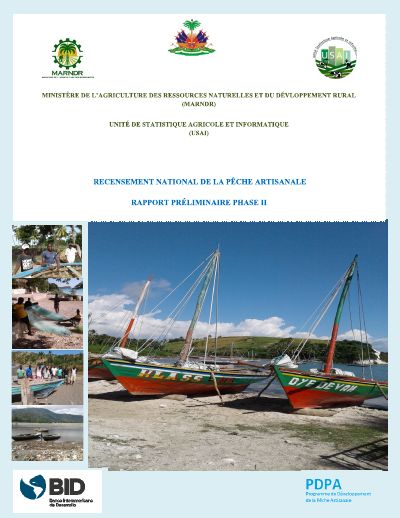
National Artisanal Fisheries Census: Preliminary Phase II Report
- The site count rose from 590 to 592 (four dropped, six added), led by Ouest (131), Sud (107) and Nord-Ouest (97).
- 238 sites (40.2%) report conflicts; 52.4% of reported conflicts are between fishers of the same site, and sector actors settle conflicts at 49.9% of sites.
- Only 119 sites (20.1%) have access to credit, mainly from fish traders (47.9%) and sabotay (42.9%); lack of credit is the top constraint at 75.3% of sites.
- The census estimates 64,832 fishers and 28,056 boats; dugout canoes are 51.1% of the fleet and fiberglass boats 2.6%.
- 410 sites (69%) report falling catches over five years, attributed mainly to inappropriate gear (83.9% of those sites), overfishing (55.9%) and ignored closed seasons (54.5%).
Phase II returned to every landing site identified in phase I with a longer questionnaire. The USAI split the coast into 51 survey areas of mostly 10 to 17 sites, trained enumerators in three locations and collected data on tablets from late April to early July, a period stretched by administrative delays and access problems. The site count moved from 590 to 592 after four sites were dropped and six found.
Conflicts are reported at 238 sites (40.2%), most often between fishers of the same site, and are usually settled by sector actors themselves; SEMANAH is almost absent. Beaches of sand (67.6% of sites) and pebbles (31.1%) dominate, and only 24 sites have a jetty or quay. Only 20.1% of sites have access to credit, mostly from fish traders (marchandes) and informal rotating savings (sabotay). Lack of credit is the leading constraint (75.3% of sites), followed by unequipped sites (63.2%). The census estimates 64,832 fishers and 28,056 boats. Net fishing is used at 74.8% of sites, and 69% of sites report that catches fell over the last five years, mostly blamed on inappropriate gear.
How to cite
Ministry of Agriculture, Natural Resources and Rural Development (MARNDR), 2019, National Artisanal Fisheries Census: Preliminary Phase II Report, https://haitistatagri.com/rapportPhase2.pdf
- Rights holder
- Ministère de l'Agriculture, des Ressources Naturelles et du Développement Rural (MARNDR)