
The Weaponization of Sexual Violence in Haiti: Impunity, Gangs, and Resistance
- Sexual violence in Haiti has evolved from a tool of state repression to a strategy of territorial control by armed groups.
- The collapse of Haiti's legal and security institutions has deepened the crisis, with the police unable to protect civilians.
- International responses have often been insufficient, delayed, and sometimes harmful, such as the MINUSTAH scandal.
- Haitian women and girls are not merely victims but leaders and organizers, providing vital services despite underfunding and insecurity.
- Combating this crisis requires systemic change, including funding survivor-led efforts and rebuilding the state with justice in mind.
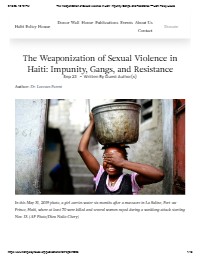
Sexual violence in Haiti has reached devastating levels, evolving from a tool of political repression to a systematic means of control by non-state armed groups. This crisis is shaped by historical legacies, including the colonial exploitation of enslaved women and the impunity of the Duvalier regime, as well as contemporary political failures, such as the collapse of state governance and the rise of gang violence. The article explores how sexual violence is used to enforce territorial dominance, silence dissent, and restrict access to humanitarian assistance. It also highlights the structural failures and international complicity that have allowed sexual violence to flourish, while emphasizing the resilience and resistance of Haitian women and grassroots movements working to combat SGBV and support survivors.
How to cite
Haïti Policy House, 2025, The Weaponization of Sexual Violence in Haiti: Impunity, Gangs, and Resistance, https://www.haitipolicyhouse.org/publications/haiti-sgbv-2025