
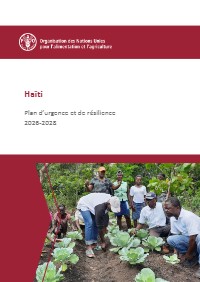
Haiti: Emergency and Resilience Plan 2026-2028
- 51% of Haiti's population is facing acute food insecurity.
- Internal displacement has rapidly increased, reaching 1.4 million people.
- The plan aims to restore the strategic potential of the agri-food sector.
- The plan promotes vital and immediate actions through improved emergency food production.
- The plan requires USD 107.9 million to reach 172,000 households.
The FAO's emergency and resilience plan for Haiti (2026-2028) addresses the country's severe humanitarian and security situation, characterized by widespread food insecurity and internal displacement. The plan aims to provide an integrated response that goes beyond emergency assistance, focusing on strengthening the agricultural sector as a key driver for stability, community resilience, and economic recovery. It promotes immediate actions to improve emergency food production and supports multi-year initiatives that offer alternatives to humanitarian aid dependence. The plan also seeks to enhance the capacity of households, rural communities, small businesses, and agro-food value chain actors to better prepare for climate and security shocks, while preventing protection risks related to food insecurity.
How to cite
Food and Agriculture Organization (FAO), Haiti: Emergency and Resilience Plan 2026-2028, https://openknowledge.fao.org/handle/20.500.14283/cd8190fr