
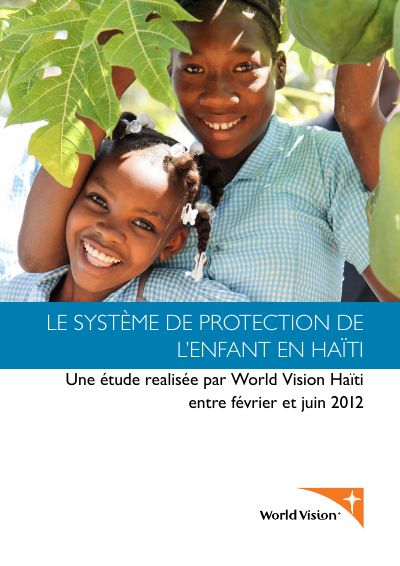
The Child Protection System in Haiti
- The study identifies seven predominant child protection problems in Haiti, including street children, child labor, early pregnancy and malnutrition.
- Haiti has a rich body of child protection law, but no national child protection policy and no Child Code.
- The IBESR budget for 2009-2010 was 0.04 percent of the national budget, a 7 percent decrease from 2007-2008.
- The police child protection brigade has 24 officers at its central office and a little over forty nationwide, and handled 713 cases in 2011.
- Only two of the five children's courts provided for by the 1961 law have been created.
- 75 percent of children's homes operate without IBESR authorization.
The study, published by World Vision Haiti on behalf of World Vision International, uses the ADAPT tool adapted to the Haitian context. It works at national and community levels through focus groups, adult workshops, key informant interviews and validation meetings. In total 265 children, 20 adults in focus groups, 26 key informants and 90 workshop participants took part. The report describes the legal framework, the services of the police child protection brigade, the courts, the Office of Citizen Protection, the social welfare institute (IBESR) and the informal actors such as family, school, religion, media and NGOs.
It identifies seven predominant protection problems, including street children, abandoned children, child labor, early pregnancy, limited access to education, violence and malnutrition. It finds limited resources, weak coordination, little data and poor knowledge of the laws, and it closes with recommendations for state and non-state actors.
How to cite
World Vision Haïti, 2012, The Child Protection System in Haiti, accessed via HaitiDocs, https://www.haitidocs.org/doc/world-vision-2012-systeme-protection-enfant-haiti
- Rights holder
- World Vision Haïti