
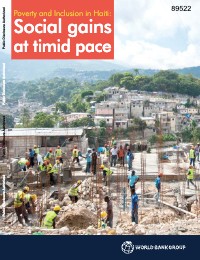
Poverty and Inclusion in Haiti: Social gains at timid pace
- Poverty remains high in Haiti, especially in rural areas.
- Modest improvements in poverty have occurred since 2000.
- Income inequality is the highest in the region.
- Vulnerability to poverty is extensive.
- Progress requires broad-based growth and improved rural access to opportunities.
This report examines poverty and inclusion in Haiti, noting that despite being rich in challenges and opportunities, Haiti remains the poorest country in Latin America. In 2012, almost 60% of the population was poor, with extreme poverty at nearly 24%. Rural areas are disproportionately affected, with three-quarters of households experiencing monetary poverty. While there have been slight improvements in monetary and multidimensional poverty since 2000, income inequality remains the highest in the region. Continued progress requires broad-based growth and a focus on improving access to basic opportunities in rural areas.
How to cite
World Bank, 2014, Poverty and Inclusion in Haiti: Social gains at timid pace, accessed via HaitiDocs, https://www.haitidocs.org/doc/wb-2014-poverty-inclusion-haiti-social