Teks Konple Dokiman an
Teks ki soti nan dokiman orijinal la pou endeksasyon.
CON ST
LE. ‘ \ à ~~ Le
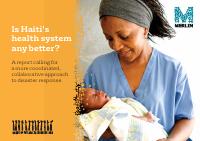
Areport calling for Noe :
amore coordinated, ; + \e'
collaborative approach | >) R 4
to disaster response. | \ & b
L Aut à 2 8. ; k Pa À
33 &@ sf C f À
aes V4 ’ ein 24. 7 {
Hf 5 » €
+: ca & Ë :
HANDS UP FOR HEALTH WORKERS. ORG |
qe At 2 A IUT fk
SO pe Fée) MS TN a Kk
oa V9 +0 Ct. F
>“ » .
v2 | = (A
Merlin is the UK's leadi 7 WF FF
in, > | Z
gagselhstiontn! : g charity if + Contents a | 4 ay
gin international health. We % F \ | ae
ees medical experts on the frontline a3? Executives aaa |
8 global emergencies, helping to save rs eHaitibeforethe
lives and revive health services in the CT 4 Sarthquake …….….....s À
woe à toughest places. ore *_ The national response ..6 3 =
rlin.org.uk 2. Theinternati : = | 4 À |
Our campaign Hands Up f BS x SEM … LAS 8 , à;
Hands Up for Health oy soft 1 2 r WU iy
Workers, calls for urgent and long-term ET". Crisis upon cris sl pe gf lie
investment in health workers in crisis >. One year on: » en pliant | PE =
countries as one of the surest routes to = ed lessons learned ............17 aoe \ D
a global health targets. Central to Rs Recommendations j , Ati
our i : Le i ed RER peer : à gt 408
he ith is the need for funded national I if Pe <9 ne OTTO A = Ÿ
alth workforce plans to ensure health LANCE Fe FR QE ‘ |
workers are trained, paid, supported =: a = FETES say Pera,
protected and equipped. Fi , Dr 5 EN. D DA CT
a rurw.handsupforhealthworker _ 0 > = dis 2 f a ones. 4
orkers.org a i “a _ CF 4
’ ( 4 Ver. NT : PRE. . *-
GO Se | Ê
À me study on itic tot di Ps i
m7 ? y à Are 5 dt Au |
PE = ¢ a 7 bye AT: à ae
Executive summary
The 7.0 magnitude earthquake in Haïti in January overwhelmed and unable to effectively respond -
2010 was the biggest urban disaster in modern undoubtedly costing many thousands of lives.
history. An estimated 230,000 people were killed The international health response:
and more than 1.5 million left homeless as the 5
. . coup or cooperation?
capital Port-au-Prince collapsed.
. Merlin's research into the role of national and
As we mark the one year anniversary, the scale of the ; . . .
: : : ea: international health workers signals a need to rethink
devastation witnessed in Haiti must be an urgent ae ; ; ;
how the humanitarian community works with national
wake up call for the world.
health systems.
Merlinis calling for support to national health workers to While welcome and vital, the international response
ensure fragile countries can respond to the growing ; ne
- . failed to support the existing health capacity, staging a
threat of disasters. We are also demanding more ‘ ; . du ;
oar ; take-over’ and undermining Haiti's capacity to respond
effective humanitarian responses which better support ; ae pas
and coordinate. The longer term implications for Haiti's
the long-term recovery of health systems. . .
health system are only now coming to light.
Saving lives starts with health workers One year on from the disaster, many of Haiti’s health
All disasters are a health issue with national health workers have flowed out of the national health system
workers at the heart of every response. When Chile was towards better paid jobs with international non-
hit with a massive earthquake one month after Haiti, its governmental organisations (INGO).
health infrastructure and robust disaster response plan Atthe same time, the availability of free health care from
were credited with ensuring that the death toll was not yas
higher INGOs has severely affected the viability of many
goer existing facilities which all relied, to some extent, on user
The sheer scale of the earthquake in Haiti would have fees. Haiti's national health system is still struggling to
challenged any government, let alone one of the poorest respond to the huge needs it continues to face.
countries inthe Western Hemisphere. Haiti's fragile and This report stresses how a strong health system offers
underfunded health system, its chronic shortage of . . . |
. . vital protection from disaster-related risks.
trained health workers and systemic lack of emergency
planning meant that the country was simply
handsupforhealthworkers.org 3
We have a respo nsibility to do Merlin’s Hands Up For Health Workers campaign is
° calling for:
whatever it takes to ensure that, —
+ All future humanitarian assessments to be based on
should a human catastrophe onthe a4 comprehensive analysis of national health worker
happen again, we work together to ‘ International humanitarian responses to complement
. . and support existing local and national health worker
mount a coordinated, effective capacity.
response. + Health to play a leading role in disaster risk reduction.
Our time is now
> | Atatime when disasters are on the increase, supporting
countries to understand the risks they face and working
4 Oe with them to prepare and plan their emergency
: ‘ response is vital.
' The risks of rapid urbanisation
i 2008 saw the number of people living in cities
: ; outweigh those living in rural areas for the first time
F D, : in human history. By 2050 roughly two-thirds of the
~~. 4 > : En & world’s population, around 6 billion people, will be
A LEP ? 4 living in cities compared to just 29% in 19501. Such
À —": . sf 1] rapid urbanisation inevitably increases the risks of
ph ae = » disasters striking in heavily populated, built-up
3 - 4 = ‘D areas. Haiti’s experience is one many believe will be
Ë bos o 24 repeated, with Kathmandu in Nepal flagged as
È , Aye another city at risk. Improving humanitarian
2 nal Fe, a me responses, and ensuring countries have emergency
Ü ee oy preparedness plans, has never been more vital.
stettelbloiogr 2 workers.ore " € e:
; + + k
Haiti before the earthquake - a fragile health care state
For decades the health sector had been systematically
and chronically underfunded, receiving less than 5% of Key facts
the overall national government budget. - Haiti was struck by a massive 7.0 magnitude
Only 40% of the population was served by any kind of earthquake at 4.53pm on 12 January 2010.
health service. With the majority of national health - Anestimated 230,000 people were killed, many
workers and facilities concentrated in urban areas, many within minutes and more than 1.5 million were
of Haiti's rural millions had little or no access to any kind left homeless.
of treatment or services at all. * The quake’s epicentre hit just 10 miles west of
The country also had the lowest number of health the densely populated capital Port-au-Prince and
workers per population and the lowest ratio of nurses to its 2 million inhabitants.
physicians of any country in the Americas. + Over 2 million people were in need of immediate
The health system itself was fragmented, with a large emergency aid.’
number of different partners working alongside each - 60% of government, administrative and
other with little coordination. In 2009 approximately economic infrastructure was destroyed
one third of health care infrastructure was public, one including the presidential palace and the UN
third private-for-profit and the remaining third run by headquarters.?
non-profit organisations.
Bad prospects, gaps in supplies and equipment andthe struggling to run services and was staffed by a
failure to pay wages on time meant that the public sector dissatisfied and underpaid workforce.
was steadily losing health staff, with many leaving the a |
national system for private or non-profit sectors. This lack of coordination, coupled with the acute
| | | | shortage of health workers, meant that when the
This kaleidoscopic system was only loosely coordinated earthquake struck, Haiti’s health system was simply
by a central Ministry of Health, which was itself overwhelmed.
handsupforhealthworkers.org 5
The national response
Haiti is a tragic example of the devastation an acute with the mounting piles of dead bodies on the streets of
natural disaster can cause when it strikes a densely the capital.
populated urban ares. The epicentre ofthe earthquake Clearly, there was alack of an overarching emergency
Are Porean Panes Capital of the poorest country in the planto help health workers respond to a national crisis.
esrern memispne4re. There were no emergency plans in place, no emergency
When the earthquake hit in the late afternoon of 12th rosters drawn up and no contingency planning to give
January 2010, many people were at home. Thousands health workers an idea of how they should muster
were immediately killed and many more trapped and during an emergency.
injured as the city collapsed aroundthem. It is Local health k tthe heart of th
estimated that nearly 70% of buildings fell throughout OCA RER TA WOEKERS At tine heart of TRE response
the city in a hail of concrete, glass and debris. Despite this vacuum of leadership, local health workers
sue played a crucial role attempting to meet the
Health workers became victims overwhelming health needs inthe immediate aftermath.
Many health workers lost their lives. A Ministry of Health Within hours, health workers not injured or searching
survey revealed that two thirds of health staff lost their for friends or family members were out in the destroved
homes completely and 245 lost a spouse or child. streets, helping the injured Y
ey on ntry, oe cled t witha rob aa neath ee Working with limited medical supplies and in damaged
wou ; ave strugg ed to cope with sucha catastrophe, facilities amid scenes of chaos, local health workers
especially with so many national health staff personally provided immediate assistance to some of the hundreds
affected. In the immediate aftermath of the earthquake, of thousands of injured
the Ministry of Health's fragile administrative control d ‘
unraveled. One INGO reported that 95% of
Reports from the ground suggest that national staff did state-employed nurses were back
not appear to have any kind of disaster protocol in place. . .
For the first three days, local health workers had no clear at work within one week.
instructions on where to send patients and how to deal
6 handsupforhealthworkers.org
lé .
te * g | <a
6. à
sis > DR al
As many hospitals and clinics had been destroyed, those ae Pa —
health workers who could not report to a previous place CE 4 t «4
of work set up ad hoc services wherever they were Rs 4 1
needed most. Le do. #
In these clinics, staff worked in almost unimaginable ; : x
traumatic and perilous conditions, the longer term 3 “ ln 4
psychological impact of which has yet to be assessed. fl % é — y
The stress of trying to respond to the scale and nature of FES / à | : \ : {
the injuries they faced took a huge personal toll on many. fe. De /
“I got Survivor Syndrome,” said one local health =v ww /' A R: Uf
manager. “Trying to do too much, thinking that destiny De. AO / Pi) / f
had saved me for a purpose, not listening to myself.” ye f Ÿ A | Ÿ VA
The impact on Haiti’s health system ra ' | *
The earthquake had a devastating impact on Haiti's 2% Ÿ À A y
already fragile health system. Eight hospitals, nine a | ‘Fe == À
health centres and clinics, 10 Ministry of Health 17 À of | : a
buildings and 19 university and training institutes est : Ss | \ "ERR —
were completely destroyed. These included the oe, Ba ts SS < £
Nursing Schoolin the grounds of the University Ae ” \ : NN d
Hospital which collapsed and killed students who 5 + “Staff w orke a wy 2
were inside taking exams. An additional 38 Ss © FRA 7 Ê
facilities, including 22 hospitals, were also seriously (are rf almost unimaginable a
damaged. The total cost to the health sectoris s@ traumatic and. j - _
estimated to be almost US$200 million. Vy » perilous conditions” _
Rs KL»
if + + <i Si
[2 J
À
The international response
The world responds There was little initial attempt to find out what local
Within hours of the earthquake hitting Haiti, he a workers were available or what services were N
apocalyptic scenes of devastation were being broadcast yop ‘
around the world. International focus on need not capability
After it became apparent that Haiti was facinga According to local reports, international medical teams
catastrophic humanitarian disaster, hundreds of INGOs, moved inand set up ad hoc operations without much '
international surgical teams and volunteer health consultation, permission or negotiation with the
workers flooded into the country. government or local health care providers.
Within two weeks over 135 INGOs had registered with Any assessments made were localised, focusing RK
the national Health Cluster, the coordinating body for exclusively on needs, when a combined assessment of P
health agencies. This number mushroomed to between local health worker capacity would have been far more
400 and 600 by mid February, presenting the Cluster effective.
ease era enges in coordinating the huge “Everybody came”, said one local NGO manager. “They E
8 ‘ installed themselves as they liked where they liked...” ?
International assumption of a ‘health vacuum Instead of finding themselves working alongside 4
Despite the fact that the epicentre of the earthquake incoming international teams, local NGOs and health
struck Port-au-Prince, where the majority of the workers were bypassed and sidelined by the wave of
country’s health workers and facilities were based, the international NGOs and clinical teams sweeping into
assumption of many of the international teams was that their city.
local health care provision was nonexistent or negligible. One Haitian surgeon reported going to the General
“Local NGOs were severely affected by the quake but they Hospital to offer her services only to be told the
still managed to mobilise in order to help others,” said international team had brought enough foreign é
one director of a Haitian NGO. “However INGOs thought personnel with them.
they were coming intoa complete vacuum - le vide total.” »
8 handsupforhealthworkers.org ;
|
7.
> . eG r - À “To have an
- ‘ ; amputation in any
a | culture or country
— creates a significant
4 = disability. Ina
—_ resource poor
6 , environment ofa
"a developing country,
L “Everybody came
L yoody | an amputated
: They installed extremityis
7 themselves as they Æ tantamount to a life
1,» liked where they a J Sayer eG
5 liked...” .
+ “I vw hardship and
‘4 Ne poverty, aside from
a - | à the social stigma.
: D NN People fear only
| SS death to having to
ÿ 4 | fa undergoan
A s A QUE D = amputation.”
a > > ” | Rs 4 : Extract from an email update
À (a at Yin We È from volunteer withthe
D, / x & Paediatric Orthopaedic Society
+ . "AR | ht 3 5 of North America
. 4 # | 7 ‘i à 6. ? $ Fi handsupforhealthworkers.org 9
Too quick to amputate
Was the international response suited to an
urban centre? The many amputations inthe emergency phase seemed
| | to pay little heed to the longer term implications of such
The planning and design of the first phase of the a drastic operation in a city reduced to rubble, where
international response appeared to be based ona sanitary living conditions were scarce.
predetermined model of what works in rural or
remote disasters areas, such as the Kashmir or “About a third of the in-patients had amputations,” said
Indonesian earthquakes, where health facilities and an orthopaedic surgeon and member of an international
health workers are less available. team. “30 days after the earthquake, the main surgical
| ; | procedures were management of post operative
As a result, international staff arrived as self- complications.”
sufficient and self-contained medical teams, failing
to account for the huge numbers of trained health The language barrier
workers and advanced health facilities based in Many of the international clinicians did not speak
Haiti's capital city. French, which also led to significant problems for
national health workers and patients.
Appropriate specialist skills? Patients complained that they were not told what was
The injuries sustained by the hundreds of thousands of happening to them. “Haitians would lie down not
people living in the urban sprawl of Port-au-Prince also did knowing whether they would lose a leg or have an
not fit the trauma profile of many rural disaster zones. injection”, said one NGO staff member interviewed for
Because of the overwhelming numbers of crush victims this report.
and injuries from falling debris, the need for specialist The language barrier also meant many national health
orthopaedic and plastic surgery was huge. Yet many of workers lost out on valuable opportunities to develop
the international teams did not include plastic surgeons their skill set, as captured by one anonymous health
who would have been Key to limb salvage. worker:
There have been claims that the poor working “Tt was frustrating not to understand the languages of
conditions and inexperience of some clinicians in the people who came to help us and not to be able to
treating these very specific earthquake related injuries learn from their skills. We communicated a lot with
led to too many unnecessary amputations and health hand gestures but rather than work together, it seemed
complications for patients down the line. easier for them to just get on with it.”
10 handsupforhealthworkers.org
- ee -
pa 4 LS >
É Bo Re: =a ]
: "44 j
| é 4
, 4 ne =
|: 5
‘
a es
__ ‘ ;
TL (
TIR 2 a
Li { , . : 7
: — ~~ handsupiggs ealthw| borg 11 ‘
+l
+
» a)
Caravelle clinic: *
ES
a look into how the international response Mme Jean-Baptiste erectedatentsothecliniccould ~* ‘ne
undermined and overwhelmed operate outside the damaged building. The INGO, sv
The Centre Medicale Communale de Caravelle (CMCC) without asking about the current staffing or * ef
clinic had been providing health services to the local management, invited local people who worked there * sal
community in Port-au-Prince for eight years before the to present CVs so they could be considered for > € ef
earthquake struck. employment. ” «.
In the hours after the disaster, the local health Although Mme Jean-Baptiste applied, the INGO e . FL
professional who ran Caravelle, Mme Ruth Jean- appointed anurse from another areatoruntheclinic. %# . x
Baptiste, found her clinic damaged but still Mme Jean-Baptiste was instead made Team D 4
standing. She immediately started providing Assistant and givena lower salary. Despite her “
what services she could, free of charge, to disappointment, she remained committed to her eo Al
the scores of injured people who came clinic, securing vaccine supplies from the local se
seeking help. authority. .‘ as
Two weeks later, whentheclinic’s After a few weeks the INGO running Caravelle oy
supplies had been exhausted decided to leave and other INGOs expressed an . +>
MY oscnalaconay interest in taking over. + ¢ =
visited and decided it This time Mme Jean-Baptiste and her management “30 i
“The INGO, would establisha committee chose which INGO to invite into their . ‘as
without cliniconthesite. facility. They signed a partnership agreement and . D ED
. notified the local authority of their collaboration. + a
asking about Mme Jean-Baptiste was appointed as Clinic ao +
: »>+
the current staffing Coordinator. À
or management, invited Reflecting on her experience, Mme Jean-Baptiste a 2
said, "Communication is like the grain of salt ina QQ
local people who worked meal. Everything appears to be there, but without . ET
there to present CVs.” the salt we cannot eat it.” . oy
12 handsupforhealthworkers.org a ef
. bat
(!!
ù
Crisis upon crisis
Ten months after the earthquake, the island was hit working in Haiti, the cholera outbreak was not swiftly
with a second major health emergency: for the first and effectively contained.
LE CEE CL CCC EEE ETC ECC ECOLE Let Despite the constant threat of disease due to the still
Ml Despite the large numbers of international agencies cramped and unsanitary living conditions of many
and health workers on the ground, an epidemic took displaced and homeless Haitians, there appeared to be
hold within weeks. no coordinated response plan in place to deal with an
4 By the end of November 2010, cholera had spread to CORSE SO) SUE nee see NE EEE,
_ eightofthe country’s ten provinces. By the beginning Cholera highlights Haiti’s chronic
of December the disease had killed over 1,880 Haitians health worker crisis
in just five weeks and saw nearly 84,400 people receive A Haitian Ministry of Public Health and Population
treatment in the country’s already overstretched and £37 aid : idine health
See rase survey of 37 aid agencies providing health care to
; cholera patients identified an acute shortage of health
Unknown disease overwhelms untrained local staff workers. At the beginning of December it was
Faced with a previously eradicated disease, local estimated that Haiti needed an additional 100 doctors,
health workers simply did not have the experience or 1,000 nurses, 2,200 support staff and 30,000
a training needed to react swiftly. community health workers to control the epidemic and
deal with the unfolding health crisis.
The cholera epidemic also placed huge logistical as well . .
: as health care challenges at a time when Haiti was Although reports suggest that newinfectionsare =
struggling to rebuild its shattered infrastructure. slowing, disease experts are warning that the epidemic
_.. could take up to a year to disappear.
Inthe initial stages of the outbreak there were not enough . ,
5 cholera clinics set up or water pumps providing clean There IS NOW anUreerit need for a comprehensive
water to areas at risk of infection established in time. national training and education programme to ensure
. . health workers canidentify, treat and containthe
How was the epidemic allowed to spread? disease in the event of future outbreaks.
There have been questions raised about how, with the
large numbers of international health agencies
handsupforhealthworkers.org 13
te
+ - Ni Lu
7 e The longer term implications
“ a of the emergency response
\ Lae It is too early to determine whether the international
é ‘ € response to the disaster has had a positive effectonthe
: oy future functioning of Haiti's health system or the
Se + <2 revitalisation of its workforce. The immediate benefits
ees Re ‘+ ay however are obvious.
D. oUs Health care in Port-Au-Prince is now more available and
‘ eee considered of a higher quality than before the earthquake.
Q “ote . .
À JE While suspension ofuser fees has meant that more people
+ + a? canaccess health care than ever before, this has also had
ad ja negative repercussions on other areas of the health sector.
*:
te 2 À aa There are ongoing hopes that international support will
se help Haiti tackle some of the longstanding issues in the
% , C “he health sector suchas developing new training pro-
. i +“ &§ aye grammes, training new staff and introducing new skill-sets.
j 7 Issues too are coming to light
+ + ak There are fears that the dominance of the INGO sector
. ie É could hinder the long-term recovery of Haiti's reeling
a tas] health system. Some international teams are still
. ù ay working largely independently of the Ministry of Health,
a? | whichis struggling to coordinate the large numbers of
g = « international agencies still operating in public and
ë Ke KE À private health care facilities.
a »~ 8 Despite the large numbers of INGOs providing primary
Ë « © health care services in Haiti, there have been too few
3 ' ane signs of long-term strategies and partnerships designed
g e LV to build local health worker capacity beyond the
g , ef emergency phase.
14 handsupforhealthworkers.org ++ gh
w
Worryingly, more national health workers have been Given their national health system is struggling to
streaming out of the public and private sector towards recover, there is no guarantee they will be able to
better-paid and resourced INGO jobs. find regular and paid work afterwards.
The longer term impact of this brain drain is not known. Anew financing strategy now needs to
Inrecent months the government has been trying to cap be developed. Haiti's Ministry of
the salaries paid by international organisations to stop Health is currently working with
the steady flow of trained staff away from the national the World Heath
health system. Organisation to createa
system of performance-
Those national NGOs who do not have international based contracting.
support are also struggling to survive.
“There was nothing to help Haitian NGOs who had lost
everything...local organisations must be able to
participate as an equal partner,” said one NGO director.
“Some INGOs think that national NGOs are weak...those
who have lost everything are ina submissive position.”
One of the biggest challenges for Haiti’s health
workforce will be ensuring the necessary resourcing to
get the health system back on its feet. The suspension of
user fees has decapitalised many public and private
health care facilities, which previously relied on
charging for services.
With more health workers now working for
INGOs, many national health workers are
fearful of what will happen to their jobs
when the INGOs eventually leave.
15
L wa * Over 60% of hospitals destroyed in the
% L worst affected areas.
2 {din DE ; - Mass population displacement has put
} Æ nt ta | huge pressure on remaining health
, UE services.
\ & | ) = R - New pressures put on health services
à = a « ke such as the needs of amputees and
- 4 Ven — OR ag? people suffering from trauma and
; ee à ) — = LE +, psychological disorders.
L ( À À : ap Doe hi * Increased risk of malnutrition
> ’ | a
; | 38 F - Longer term effects of earthquake
\ | = ‘a such as increased risk of epidemic
“ | VE p ’
~*~ \ | bs ‘a poor living conditions and increased
7 Re illness due to more poverty.
i wees , _ ox - More coordination from the Ministry
be = 2 3 of Health required to manage the
Ê 9 € increased number of NGO health care
Ê : is providers.
a
n
a att
5 « rh)
16 handsje™gerMeaithworkers.org € at
+ +0 €
As we mark the one year anniversary ofthe Haiti effectively took overinstead of
earthquake there is an urgent need to act onthe lessons . k with ° ae
learned from the national and international response to attempting to work wit existing
this devastating disaster. staff or structures”
One clear message from local health workers is that
there should have been more and better coordination
between incoming international teams and national The need for appropriate and responsive
health staff and structures. interventions
Many national and local authorities felt sidelined and The planning and design of the international emergency
excluded from the humanitarian coordination and response failed to assess the existing health worker
decision making. The Health Cluster, which coordinated capacity, ignoring the fact that the vast majority of
information and action, seemed closed to national NGOs Haiti's health workers, health centres and hospitals were
and agencies despite the overwhelming contribution based in the capital. Many international teams assumed
such stakeholders can, and should, make. they were coming into a complete vacuum in health care
An international take over services.
In the weeks after the earthquake, international surgical Lack of national emergency planning
teams effectively took over instead of attempting to Ona national level, the lack of emergency planning
work with existing staff or structures, even at individual severely undermined national capacity to respond tothe
clinic level. catastrophe.
handsupforhealthworkers.org 17
The devastation that unfolded is a reminder of
the urgent need to take a long-term view of
disaster response and risk management when
it comes to health.
As the risk of more disasters on the scale of
the earthquake in Haiti grows, there needs to - Significantly increase investment in the health
be increased efforts to strengthen the system and health workforce;
effectiveness and y ot ae - Ensure the national health systemis centralto
Pare, resp Prep ‘ disaster risk reduction plans to secure effective
and timely crisis response.
- Integrate local health workers into emergency
Building up strong and robust health systems planning to ensure better use of their skills in the
must now become one of the key pillars of all event of a disaster.
disaster risk reduction.
Given the social and economic impact of - All future humanitarian assessments must
disasters, national governments must : : : :
Sane include a comprehensive analysis of national
prioritise risk reduction, emergency :
, health worker capacity as well as local needs.
preparedness and planning.
. . - Ensure active participation of national NGOs and
In order to do this health systems must receive _ : : :
. civil society in the Health Cluster, guaranteeing
the support and long-term investment they :
local knowledge and health worker expertise feeds
need to grow strong enough and resourceful : Le. :
a into emergency decision making.
enough to anticipate and respond to large
scale humanitarian emergencies. - Ensure all humanitarian responses contribute and
build towards the longer term development of the
health work force and health system.
18
« Ai
| | at ee
ns Ÿ 4 how
5: Vi
Us a —
a « Æ =~. > Ao > == ae .
ré nie à S
CET » al Sil | De. La = >
= I | i ¢ < Fr - it |
É (=| L av à \ . D 5 a= À | |
| 1 el | a, a. “oe |
k D > iy * i
| le" Footnotes: 5 =
819 « . . D. -
Eee el. (UN Habitat, Fa: = UN Under-Secretary-General, EE
SR _: Accra, 2025 April2008 ~ |) 4 . | }
4 , = > = , - - | the Là a 7 ——
tes à ».2. Pilkington,E, The Guardian, 15 January 2010; “Time a. Ae =
LA running out as aid fails to reach Haiti” At £
+ SAS À aa ü
cry 3. Office of the Special Envoy for Haiti - - > =
aS http: //www.haitispecialenvoy.org/key_statistics F g
+12 ‘ = = Ê
Yer 4, OCHA Haiti, 05 Decémber 2010; HaitiCholeraSituation _ D. LR à
a _. Report #21 MP : — aS
> +ès . Cm ees oa, Sr ae 3
DNA Haiti < ia | == eens &
f7_F& fait. PL
st £4 © Merlin 2010
vies, ies 207 Old Street, London, EC1V 9NR
FEU AS% Tel: +44 (0)20 7014 1600
DM EST Fax:+44 (0)20 70141601
sn VO +6 www.merlin.org.uk ; | .
MERLIN registered charity 1016607 HANDS UP FOR HEALTH WORKERS.ORG