
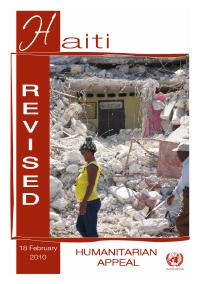
Apèl imanitè pou Ayiti 2010 (revize)
Rezime — Apèl imanitè konsolide revize 2010 pou Ayiti, pou US$1,4 milya pou ane a, ak bilan ofisyèl gouvènman an sou tranblemanntè a.
Dekouve Enpotan
- Bezwen finansye revize pou ane a te evalye a US$1,4 milya, ansanm ak premye apèl rapid sis mwa a.
- Estimasyon gouvènman an nan moman an te anviwon 217 300 mò ak 300 600 blese, chif ki diferan de bilan yo site apre.
- Twa milyon moun te afekte, 1,9 milyon ta pèdi kay yo epi plis pase 511 000 te kite vil ki te touche yo.
- Anviwon 1 000 òganizasyon imanitè t'ap travay nan peyi a: se pwoblèm kowòdinasyon apèl la ap adrese.
Deskripsyon Konple
Apèl imanitè konsolide revize pou Ayiti ki kouvri 2010, ki ranplase ak entegre premye apèl rapid sis mwa a yo te lanse apre tranblemanntè janvye a. Li prezante bezwen chak klistè ak estrateji pou anviwon 1 000 òganizasyon imanitè ki te nan peyi a, epi li pote estimasyon ofisyèl gouvènman an sou viktim ak domaj. Fè diferans ak yon apèl rapid, ke korpis la konsidere pasaje: sa a se apèl anyèl revize a, dokiman referans pou achitekti repons 2010 la.
Teks Konple Dokiman an
Teks ki soti nan dokiman orijinal la pou endeksasyon.
SAMPLE OF ORGANIZATIONS PARTICIPATING IN CONSOLIDATED APPEALS
ACF GOAL MACCA TEARFUND
ACTED GTZ Malteser Terre des Hommes
ADRA Handicap International Medair UNAIDS
Afghanaid HELP Mercy Corps UNDP
AVSI HelpAge International MERLIN UNDSS
CARE Humedica NPA UNESCO
CARITAS IMC NRC UNFPA
CONCERN INTERSOS OCHA UN-HABITAT
COOPI IOM OHCHR UNHCR
CRS IRC OXFAM UNICEF
CWS IRIN Première Urgence WFP
DRC Islamic Relief Worldwide Save the Children WHO
FAO LWF Solidarités World Vision
International
1. EXECUTIVE SUMMARY................................................................................................................................. 1
Table I. Summary of Requirements (grouped by appealing organization) ............................................ 5
Table II. Summary of Requirements (grouped by cluster) ..................................................................... 7
2. CONTEXT, RESPONSE TO DATE AND HUMANITARIAN CHALLENGES................................................. 8
2.1 CONTEXT ................................................................................................................................................... 8
2.2 HUMANITARIAN CHALLENGES AND ACHIEVEMENTS ....................................................................................... 10
2.3 OVERVIEW OF MAIN ELEMENTS OF RESPONSE TO DATE, KEY CHALLENGES AND GAPS ....................................... 14
3. NEEDS ANALYSIS ....................................................................................................................................... 21
3.1 PRE-EXISTING SITUATION AND UNDERLYING RISK AND VULNERABILITY ............................................................. 21
3.2 SOCIO-ECONOMIC PROFILE AND LOCATION OF EARTHQUAKE-AFFECTED PEOPLE .............................................. 22
3.3 CURRENT SITUATION ................................................................................................................................. 22
3.4 LOOKING FORWARD .................................................................................................................................. 27
3.5 THE PDNA AND EARLY RECOVERY IN THE REVISED FLASH APPEAL: ARTICULATION BETWEEN HUMANITARIAN
RESPONSE AND RECOVERY FRAMEWORKS ................................................................................................... 29
4. THE 2010 COMMON HUMANITARIAN ACTION PLAN............................................................................... 31
4.1 SCENARIOS.............................................................................................................................................. 31
4.2 STRATEGIC OBJECTIVES FOR HUMANITARIAN ACTION IN 2010 ........................................................................ 33
4.2.1 Priority clusters’ short-term objectives until May ............................................................................ 34
4.3 STRATEGIC MONITORING PLAN ................................................................................................................... 36
4.4 CRITERIA FOR SELECTION OF PROJECTS...................................................................................................... 39
4.5 CLUSTER RESPONSE PLANS ...................................................................................................................... 40
4.5.1 Emergency shelter & non-food items............................................................................................. 40
4.5.2 Camp coordination and camp management .................................................................................. 44
4.5.3 WASH............................................................................................................................................ 48
4.5.4 Health ............................................................................................................................................ 51
4.5.5 Food aid......................................................................................................................................... 58
4.5.6 Nutrition ......................................................................................................................................... 62
4.5.7 Agriculture ..................................................................................................................................... 67
4.5.8 Early recovery................................................................................................................................ 73
4.5.9 Protection ...................................................................................................................................... 76
4.5.10 Education....................................................................................................................................... 79
4.5.11 Logistics......................................................................................................................................... 82
4.5.12 Emergency telecommunications .................................................................................................... 86
4.5.13 Coordination and support services ................................................................................................ 87
4.6 ROLES AND RESPONSIBILITIES.................................................................................................................... 92
5. CONCLUSION .............................................................................................................................................. 95
ANNEX I. LIST OF PROJECTS (GROUPED BY CLUSTER), , WITH HYPERLINKS TO OPEN FULL
PROJECT DETAILS ..................................................................................................................... 96
ANNEX II. TOTAL CONTRIBUTIONS, COMMITMENTS, AND PLEDGES TO DATE PER DONOR...........114
ANNEX III. INTERNATIONAL FEDERATION OF RED CROSS AND RED CRESCENT SOCIETIES HAITI
EMERGENCY APPEAL ...............................................................................................................117
ANNEX IV. ACRONYMS AND ABBREVIATIONS .........................................................................................126
Please note that appeals are revised regularly. The latest version of this document is available
on http://www.humanitarianappeal.net.
Full project details, continually updated, can be viewed, downloaded and printed from
www.reliefweb.int/fts
iii
C U B A ÎLEDELA TORTUE
La Tortue
D O M I N I C A N
0 10 20 30 40 50
20°0'N R E P U B L I C
Canal de la Tortue Atlantic Ocean
Km Port-de-Paix Saint Louis du Nord
Anse-a-Foleur
Chansolme Monte Criste
Le Borgne
Jean Rabel Baie de
Cap- Mancenille
Mole St Nicolas Bassin Bleu Bas Limbe Haïtien
NORD OUEST Port Margot Quartier
Limbe Morin
Bombardopolis Pilate Fort Liberte
Gros Morne Acul du Nord Limonade Caracol
Baie de Henne
Plaisance N O R D Terrier
Anse Milot Trou Rouge Ferrier
Baie La Branle
de Henne Rouge Terre Neuve du Nord Dajabón
Dondon Ouanaminte
Perches
19°30'N
Marmelade Bahon NORD EST
Gonaïves Mont
Ernnery Vallieres
Baie de
Organise
la Tortue
Saint
Raphael La Carice
A RT I B O N I T E Victoire Mombin
Legend Elevation (meters) Saint Michel Crochu
Baie de Pignon
Grand-Pierre de l'Attatalaye
Capital city 2,500 - 3,000 L'Estere
First admin capital 2,000 - 2,500 Desdunes Dessalines Cerca
Grande Saline Cerca
1,500 - 2,000 Carvajal La Source
Towns Maissade
Port
1,000 - 1,500 Petite Riviere Hinche
800 - 1,000 Golfe de la Gonâve de l'Artibonite
International Boundary Thomassique
First admin boundary
600 - 800 Saint Marc H A I T I iv
400 - 600 CENTRE
Main roads 200 - 400 Verrettes
Thomonde
19°0'N
Minor roads 0 - 200
La Boucan
Chapelle carre
Disclaimer:The designations employed and the presentation of material on this map Canal de
do not imply the expression of any opinion whatsoever on the part of the Secretariat Saint-Marc Belladere
of the United Nations concerning the legal status of any country, territory,city or area ÎLEDE
or of its authorities, or concerning the delimitation of its frontiers or boundaries. Mirebalais
Reference System:UTM 18N, WGS84. Map datasource:United Nations Cartographic LA GONÂVE Anse-a-Galets
Lascahobas
Section,ESRI, Natural Earth, SRTM. Saut D'eau
Pointe-a-Raquette Archaie Cabaret
Bonbon Jérémie Cornillon
Abricot ÎLESCAYÉMITES Thomazeau
Canal de
Roseau PRESQU'ÎLEDES la Gonâve PORT-AU-PRINCE Croix des
HAITI - Reference Map
Etang
Dame Marie Corail BARADÈRES Gressier Bouquets Saumâtre
Moron Pestel Petit Trou de Nippes Lago
Leogane
Chambellan
18°30'N
Anse-a-Veau Carrefour Petion Ville Ganthier Enriquillo
Anse Grand Jimani
d'Hainault GRANDE Beaumont NIPPES Goave OUEST
ANSE Baraderes Petite Riviere de Nippes Kenscoff
L'Asile Miragoâne Petit Fond
Les Irois Verrettes
Maniche Goave
Tiburon Les Anglais Camp Perrin Cavaillon SUD EST
Aquin Belle Anse
Chardonnieres SUD Jacmel
La vallee de Jacmel
Port-a-Piment St Louis Thiote
Chantal
Coteaux du Sud Cayes Marigot
Jacmel Grand Gosier
Roche A Bateau Bainet Baie de
Les Cayes Jacmel
Arniquet Torbeck
ÎLEÀ VACHE
Port-Salut Caribbean Sea
St Jean Ile a Vache Anse a pitres
18°0'N 74°30'W 74°0'W
du Sud
73°30'W 73°0'W 72°30'W 72°0'W
1. EXECUTIVE SUMMARY
The strongest earthquake in Haiti in more than 200 years, measuring 7.0 on the Richter scale, rocked
the impoverished Caribbean nation on 12 January 2010 in the late afternoon. The earthquake struck
Ouest Province around an epicentre 17km south-west of Haiti’s capital, Port-au-Prince, which suffered
extensive damage. The nearby cities of Carrefour and Jacmel and other areas to the west and south
of Port-au-Prince were also affected, with the town of Léogâne reported to be 80% destroyed. The
exact number of people killed will probably never be known, and surveys and verification are ongoing,
but the most recent Government estimates place the figure at some 217,300 dead, and some 300,600
wounded. Over 97,000 houses were destroyed, and over 188,000 damaged to some degree. Three
million people have been affected, of whom the Government estimates 1.9 million have lost their
homes and over 511,000 have left the affected cities. All organisations and institutions –
Governmental, national and international – which would normally have responded to the needs were
all heavily affected through loss of personnel and equipment.
A massive international relief effort was rapidly
Haiti Revised Humanitarian Appeal
put in place in spite of extraordinary logistical Key parameters
challenges, particularly the earthquake’s
Duration 12 months (January-December
destruction of entry points into Port-au-Prince. 2010)
Damage to Port-au-Prince’s seaport forced aid Key Planting seasons: March, June
agencies to try to supply a city of three million milestones Rainy season: April-June and
using the sole runway at the capital’s airport, in 2010 August-November
plus some overland transport from the Harvests: June, October
Dominican Republic. The seaport was Hurricane season: June-
completely unusable for the first ten days of the November
aid operation and is still not functioning at Key issues • Shelter & sanitation before
normal capacity. A Flash Appeal, requesting of concern April rainy season to
mitigate morbidity from
US$562 million 1 (later adjusted to $577 million)
water-borne diseases
in emergency humanitarian assistance, was • Rubble removal
launched on January 15. As of February 16, it • Camp management
was 100% funded, although funds are not • Cash for work
evenly allocated and some sectors such as • Restoring livelihoods /
agriculture remain severely under-funded. economic activities,
particularly agricultural input
The need for a continued international support
humanitarian response is currently assessed as • Earthquake-related
disabilities
extremely high in terms of both scale and
• Protection concerns,
urgency. Some three million people require particularly sexual violence
humanitarian assistance of some kind, most of in temporary settlements
whom are estimated to require urgent, life- Total funding Funding requested
saving or life-sustaining response, while some requested per beneficiary
mainly require livelihood support without being at $1.4 billion $481
increased risk to life, health or safety. Two
million require food assistance. Host families
and communities are bearing much of the burden of supporting displaced people, and need a range of
assistance. Although some economic activity has resumed, the livelihoods of the majority of the
affected population seem to have been severely affected by the earthquake. Much is expected from
the Post-Disaster Needs Assessment (PDNA) in terms of identifying longer-term needs.
The emergency phase of humanitarian relief operations will endure for many months to come, and
challenges to the international humanitarian response remain significant, mainly operational
constraints which include logistics, communication and coordination among the very large number of
1
All dollar signs in this document denote United States dollars. Funding for this appeal should be reported to the Financial Tracking
Service (FTS, fts@reliefweb.int), which will display its requirements and funding on the CAP 2010 page.
1
humanitarian organizations (around 1,000) now on the ground. Protection and assistance needs of
internally displaced people (IDPs) in the border area and victims arriving in the Dominican Republic
are also a concern. Contingency planning is underway to prepare for the upcoming rainy and
hurricane seasons from April to November, and their related hydro-meteorological hazards such as
flooding, mudslides, and storm surges, as well as further aftershocks, taking into consideration
displaced populations and logistical impediments. Over 90% of the recent disasters in Haiti have been
linked to hydro-meteorological and climate-related hazards such as tropical cyclones, flash floods and
landslides, all of which have been further exacerbated by massive deforestation. The effect of the
rainy season, once it begins in earnest, and flooding on already damaged buildings and infrastructure
is causing serious concern.
While significant improvements have been made in the ability to reach those in need with food, water,
healthcare and shelter, humanitarian needs in Haiti remain immense. Until the situation stabilizes and
plans for recovery and reconstruction are clearer, plus bearing in mind the urgent need to prepare for
the rains and likely flooding, the current level of humanitarian response – relief and early recovery –
must increase and be expanded to more people and to yet-unreached parts of the country. The
overarching humanitarian objective is to provide an environment for safe and healthy living for
all affected people until reconstruction restores normality. The strategy to achieve this will
involve a mixture of accommodation and support in medium-term camps and settlements, support to
those dispersed to host communities and to their hosts, and support in situ in damaged towns for
those who can stay. To this end, the Humanitarian Country Team (HCT) in Haiti has revised the Flash
Appeal into a full humanitarian appeal with a planning and budgeting horizon of 12 months.
The Revised Humanitarian Appeal is a strategic and detailed plan aiming to assist the three million
people directly affected by the earthquake and to support host families in the departments that have
received the half million people that fled the capital. It also includes planning and preparedness ahead
of the impending rainy season, including for disaster risk reduction, and significant early recovery
priorities including further expansion of cash-for-work programmes. The overall objectives identified
for the Appeal are to:
1. Provide the full needed range of humanitarian support for at least 1,200,000 earthquake-
affected people who need shelter and other time-critical life-saving actions, especially in
water/sanitation/hygiene, health care, basic household items, food aid, nutritional support, and
protection, emphasising the key linkages among these sectors;
2. Re-establish existing or establish temporary new physical and social infrastructure and services
for three million earthquake-affected people in Haiti and the Dominican Republic, including
health, food security, economic livelihoods support, education, community spaces and
community groups;
3. Continue the strengthening of Government capacity for coordination at all levels and the rapid
scale-up of common services, including logistics, telecommunications, security, and
coordination in the face of current severe conditions, plus expected worse conditions in the
near future;
4. Put in place preparedness, disaster risk reduction, and contingency planning (each
mainstreamed throughout clusters) in anticipation of worsening conditions resulting from the
imminent rainy and hurricane season and their associated risks of flooding, mudslides and
storm surges.
The priority needs in the Appeal at the moment are:
• Shelter provision to IDPs through identification of safe sites, distribution of shelter materials, and
appropriate water and sanitation before the rainy season.
• Increasing cash-for-work to support livelihoods especially through rubble removal which
facilitates aid operations, return and reconstruction.
• Food aid, nutritional and agricultural support, with an increasing emphasis on food-for-work
specifically targeting rural and host communities to which IDPs have moved.
• Health, in particular primary health care and monitoring.
2
• Protection activities for IDPs, women, children and other vulnerable people who are at
heightened risk of various forms of exploitation, neglect or abuse.
• Education activities, emphasizing psycho-social support and limiting disruption to learning by
rapidly opening temporary schools.
• Logistics and emergency telecommunications to support efficient and timely aid delivery.
Revised financial requirements for one year have been assessed at $1.4 billion, including the original
six-month Flash Appeal amount. The Revised Humanitarian Appeal has expanded to include the
activities of 76 aid organizations. With the initial Flash Appeal having received 100% funding
(counting committed as well as paid funding), plus existing funding for some of the projects newly
presented in this revision, unmet requirements for this emergency in 2010 are $768 million.
Current figures on affected population – three million overall, of whom:
Killed 217,366
Wounded 300,572
Missing 383
In spontaneous settlements 1,237,032 (including 1,215,790 in/around Port-au-Prince)_
Displaced outside Port-au-Prince 511,405
Source: Civil Protection Directorate (Direction de la Protection Civile [DPC]) bulletin no. 13, 15 February 2010
3
Basic humanitarian and development indicators for Haiti (pre-earthquake)
9,761,929 people (Source: Institut Haïtien de
Population
Statistique et d'Informatique (IHSI) 2008)
$660
Gross national income per capita (Source: World Bank: Key Development Data &
Economic Statistics 2008)
status 54.9% for the years between 2000–2007 2
Percentage of population living on less
(Source: UNDP Human Development Report
than $1.25 per day
[HDR] 2009)
Ratio of female to male earned income 0,37 (Source: UNDP HDR 2009)
323/1,000: Male
Adult mortality (2007) 233 /1,000: Female
(source: World Health Statistics 2009)
670/100,000 live births
Maternal mortality
(UNICEF: Childinfo statistical tables)
79/1,000: Male
Under-five mortality (2007) 73 /1,000: Female
(source: World Health Statistics 2009)
Health
53: Male
Life expectancy at birth (2007) 55: Female
(source: World Health Statistics 2009)
Number of health workforce
4/10,000 in 2000
(MD+nurse+midwife) per 10,000
(source: World Health Statistics 2009)
population
Measles immunization coverage among 58% in 2007
one-year-olds (source: World Health Statistics 2009)
Prevalence of under-nourishment in total 58% (FAO Statistics: Prevalence of under
population nourishment 2004-2006)
Nutrition
Prevalence of underweight in 18.9% (The International Food Policy Research
children under five years Institute [IFPRI] Global Hunger Index 2001-2006)
5.4 million people undernourished (FAO SOFI
Food 2009)
Food security indicator
security 1.8 million people food-insecure (FEWS NET
October 2009)
Urban – 70%, Rural – 51%, Overall – 58%
Proportion of population with access to
(Joint Monitoring Project 2008, UNICEF/WHO
improved drinking water coverage
based on 2008 figures)
WASH Urban - 29%, Rural – 12%, Overall - 19%
Proportion of population with access to (Joint Monitoring Project 2008, UNICEF/WHO
improved sanitation coverage based on 2006 figures)
V: 2, C: 1.81 (out of scale 0-3, 3 being most
European Commission Humanitarian Aid
severe)
Office (ECHO) Vulnerability and Crisis
(Source: ECHO Global Needs Analysis [GNA]
Other Index score
2008-2009)
vulnerability
0.532: 149th of 182 countries (Medium Human
indices UNDP Human Development Index score
Development)
UNDP Gender Empowerment Measure th
149 out of 182 countries
(GEM)
2
Data refer to the most recent year available during the period specified.
4
Table I. Summary of Requirements (grouped by appealing organization)
Table I: Summary of requirements, commitments/contributions and pledges (grouped by appealing organization)
Haiti Flash Appeal (Revised) (January - December 2010)
as of 17 February 2010
http://www.reliefweb.int/fts
Compiled by OCHA on the basis of information provided by donors and appealing organizations Page 1 of 2
Appealing Organization Original Revised Funding % Unmet Uncommitted
Requirements Requirements Covered Requirements Pledges
Values in US$ A B C C/B B-C D
ACDI - 3,280,000 - 0% 3,280,000 -
ACF 700,000 17,062,000 11,894,185 70% 5,167,815 -
ACTED - 20,005,943 8,485,151 42% 11,520,792 -
ADRA-Haiti - 478,100 - 0% 478,100 478,000
Aide et Action - 1,109,385 - 0% 1,109,385 -
ARC - 300,000 - 0% 300,000 -
AVSF - 1,720,464 - 0% 1,720,464 -
AVSI - 2,724,836 - 0% 2,724,836 -
Bioforce - 414,433 - 0% 414,433 -
CARE International - 12,575,000 6,501,225 52% 6,073,775 -
CECOSIDA - 255,000 - 0% 255,000 -
CEHPAPE - 750,000 - 0% 750,000 -
CISP - 183,130 - 0% 183,130 -
COOPI - 1,380,000 - 0% 1,380,000 -
CW - 4,731,309 - 0% 4,731,309 -
Deep Springs International 400,000 472,592 - 0% 472,592 -
ERF (OCHA) - - 59,387,837 0% (59,387,837) -
FAO 23,000,000 45,199,880 1,750,000 4% 43,449,880 -
FHED-INC - 1,800,000 - 0% 1,800,000 -
Finnchurchaid - 3,000,000 937,951 31% 2,062,049 -
Floresta - 896,161 - 0% 896,161 -
FRATERNITE NOTRE DAME - 1,087,500 - 0% 1,087,500 -
Heartland Alliance - 915,867 - 0% 915,867 -
HHI - 4,998,180 - 0% 4,998,180 -
HI 5,850,000 10,782,000 1,227,758 11% 9,554,242 -
Hopital Albert Schweitzer - 3,390,000 - 0% 3,390,000 -
Hopital Sainte Croix - 575,000 - 0% 575,000 -
HWA - 2,534,389 - 0% 2,534,389 -
ILO 2,380,000 4,580,000 - 0% 4,580,000 -
IMC 2,200,000 6,195,279 3,800,607 61% 2,394,672 -
INTERSOS - 600,600 - 0% 600,600 -
IOM 29,175,000 123,278,171 39,623,913 32% 83,654,258 -
IRC 250,000 2,351,000 250,000 11% 2,101,000 -
IRD - 4,096,927 425,000 10% 3,671,927 -
IRD/MEBSH - 973,000 - 0% 973,000 -
JRS - 814,947 - 0% 814,947 -
MARCH - 480,080 - 0% 480,080 -
MDM Greece 400,000 900,000 577,201 64% 322,799 -
Mercy Corps - 1,192,688 125,000 10% 1,067,688 100,000
MERLIN 500,000 9,208,000 5,583,222 61% 3,624,778 -
The list of projects and the figures for their funding requirements in this document are a snapshot as of 17 February 2010. For continuously updated information on projects, funding
requirements, and contributions to date, visit the Financial Tracking Service (www.reliefweb.int/fts).
5
Table I: Summary of requirements, commitments/contributions and pledges (grouped by appealing organization)
Haiti Flash Appeal (Revised) (January - December 2010)
as of 17 February 2010
http://www.reliefweb.int/fts
Compiled by OCHA on the basis of information provided by donors and appealing organizations Page 2 of 2
Appealing Organization Original Revised Funding % Unmet Uncommitted
Requirements Requirements Covered Requirements Pledges
Values in US$ A B C C/B B-C D
NCA - 3,290,000 2,079,723 63% 1,210,277 -
OCHA 6,677,579 17,658,678 11,173,202 63% 6,485,476 890,336
OHCHR 530,000 1,800,000 1,832,612 100% (32,612) -
OI - 1,553,885 - 0% 1,553,885 -
OXFAM GB 3,000,000 5,440,950 5,440,950 100% - -
OXFAM Quebec - 50,025 - 0% 50,025 -
PIH - 10,000,000 10,000,000 100% - -
Plan 1,000,000 7,610,000 523,031 7% 7,086,969 4,416,575
Project K.I.D. - 3,579,425 - 0% 3,579,425 -
RedR UK - 414,433 - 0% 414,433 -
RI - 8,660,820 1,500,000 17% 7,160,820 -
Samaritan's Purse - 500,000 272,250 54% 227,750 -
SC 9,825,000 51,124,992 28,084,423 55% 23,040,569 -
Solidarités - 2,500,000 - 0% 2,500,000 -
Terre Des Hommes 800,000 1,600,000 1,039,608 65% 560,392 -
UCODEP - 252,000 - 0% 252,000 -
UN Agencies and NGOs (details not yet provided) - - - 0% - 8,000,000
UNAIDS 600,000 717,581 24,331 3% 693,250 -
UNDOCO - 950,000 - 0% 950,000 -
UNDP 35,600,000 103,898,043 19,895,767 19% 84,002,276 500,000
UNDSS 3,810,000 3,610,000 240,848 7% 3,369,152 -
UNEP 1,000,000 8,350,000 - 0% 8,350,000 -
UNESCO 1,900,000 4,050,000 520,000 13% 3,530,000 -
UNFPA 4,550,000 16,748,595 6,273,638 37% 10,474,957 -
UN-HABITAT 13,430,000 23,137,904 30,000 0% 23,107,904 -
UNHCR - 1,770,406 - 0% 1,770,406 -
UNICEF 119,975,000 172,757,000 167,201,813 97% 5,555,187 837,144
UNIFEM 800,000 1,700,000 199,020 12% 1,500,980 -
UNISDR - 1,000,000 - 0% 1,000,000 -
UNOOSA - 133,750 - 0% 133,750 -
UNOPS - 31,703,889 - 0% 31,703,889 -
UNOSAT 58,850 191,530 - 0% 191,530 -
WCH - 2,908,500 - 0% 2,908,500 -
WFP 279,849,225 586,858,812 250,837,023 43% 336,021,789 981,444
WHO 10,000,000 54,188,050 17,840,973 33% 36,347,077 -
WMO - 890,000 - 0% 890,000 -
World YWCA - 200,000 - 0% 200,000 -
WVI 3,800,000 12,456,791 8,153,849 65% 4,302,942 -
GRAND TOTAL 562,060,654 1,441,547,920 673,732,111 47% 767,815,809 16,203,499
The list of projects and the figures for their funding requirements in this document are a snapshot as of 17 February 2010. For continuously updated information on projects, funding
requirements, and contributions to date, visit the Financial Tracking Service (www.reliefweb.int/fts).
6
Table II. Summary of Requirements (grouped by cluster)
Table II: Summary of requirements, commitments/contributions and pledges (grouped by cluster)
Haiti Flash Appeal (Revised) (January - December 2010)
as of 17 February 2010
http://www.reliefweb.int/fts
Compiled by OCHA on the basis of information provided by donors and appealing organizations
Cluster Original Revised Funding % Unmet Uncommitted
Requirements Requirements Covered Requirements Pledges
Value in US$ A B C C/B B-C D
AGRICULTURE 23,000,000 70,640,554 4,965,682 7% 65,674,872 -
CAMP COORDINATION AND CAMP 1,300,000 73,044,540 5,987,750 8% 67,056,790 -
MANAGEMENT (CCCM)
CLUSTER NOT SPECIFIED - - 190,724,080 0% (190,724,080) 8,788,600
COORDINATION AND SUPPORT SERVICES 10,487,579 33,639,471 12,143,820 36% 21,495,651 890,336
EARLY RECOVERY 49,218,850 157,564,378 27,309,577 17% 130,254,801 2,796,618
EDUCATION 11,100,000 76,042,842 30,646,459 40% 45,396,383 1,148,309
EMERGENCY SHELTER AND NON-FOOD ITEMS 29,250,000 118,523,653 25,561,618 22% 92,962,035 -
EMERGENCY TELECOMMUNICATIONS 782,460 7,475,513 1,452,490 19% 6,023,023 -
FOOD AID 246,039,060 480,418,546 136,231,164 28% 344,187,382 -
HEALTH 33,900,000 134,067,349 75,307,109 56% 58,760,240 -
LOGISTICS 33,527,705 104,923,179 45,587,619 43% 59,335,560 481,444
NUTRITION 48,400,000 43,453,946 29,974,348 69% 13,479,598 500,000
PROTECTION 16,230,000 61,115,324 24,115,057 39% 37,000,267 1,549,648
WATER, SANITATION AND HYGIENE 58,825,000 80,638,625 63,725,338 79% 16,913,287 48,544
Grand Total 562,060,654 1,441,547,920 673,732,111 47% 767,815,809 16,203,499
NOTE: "Funding" means Contributions + Commitments + Carry-over
Pledge: a non-binding announcement of an intended contribution or allocation by the donor. ("Uncommitted pledge" on these tables indicates the balance of original pledges not
yet committed).
Commitment: creation of a legal, contractual obligation between the donor and recipient entity, specifying the amount to be contributed.
Contribution: the actual payment of funds or transfer of in-kind goods from the donor to the recipient entity.
The list of projects and the figures for their funding requirements in this document are a snapshot as of 17 February 2010. For continuously updated information on projects, funding
requirements, and contributions to date, visit the Financial Tracking Service (www.reliefweb.int/fts).
7
2. CONTEXT, RESPONSE TO DATE AND HUMANITARIAN
CHALLENGES
2.1 Context
The strongest earthquake in Haiti in more than 200 years, measuring 7.0 on the Richter scale, rocked
the impoverished Caribbean nation on 12 January at 4.53 p.m. (local time). The earthquake struck
Ouest Province (population 2.2 million), with the epicentre 17km south-west of Haiti’s capital, Port-au-
Prince. The nearby cities of Carrefour and Jacmel, as well as other areas to the west and south of
Port-au-Prince, were also affected, with the town of Léogâne reported to be 80% destroyed.
According to the Haitian Civil Protection Unit, 20 communes of the Ouest department, especially the
communes of Cabaret, Cite Soleil, Croix-de Bouquets, Tabarre, Carrefour, Grand-Goave, Gressier,
Léogâne, Petit-Goave, Delmas, Petion-Ville, and the capital city Port-au-Prince, were the hardest hit.
Ten communes of the South-east department also suffered extensive damage, with the worst damage
occurring in Jacmel. There was minor damage and impact in the departments of Nippes and Grande-
Anse.
Obtaining accurate figures on the numbers of people killed and wounded is still difficult, for a number
of reasons. Whilst these figures cannot yet be said to be definitive, according to the Government, the
earthquake has led to the deaths of at least 217,300 people (2% of the population of Haiti), with
300,572 reported as having suffered injuries of various kinds, including at least 1,000 people who had
at least one limb amputated. The affected population is estimated at three million (30% of the
population of Haiti), of whom over 1,200,000 are in need of shelter support. As a measure of how the
earthquake directly struck those who would normally offer emergency response, 102 UN staff died in
the earthquake. The table below gives the latest figures on affected populations and housing damage.
Damage statistics and population movements
People in Displaced Houses
Department Deaths Missing Wounded Families need of outside Destroyed Damaged
shelter PAP to*
Artibonite 162,509
Centre 90,997
Grande-
9 0 19 989 0 98,871 106 883
Anse
Nippes 12 39 4,279 33,350 257 4022
Nord 13,531
Nord-Est 8,500
Nord-Ouest 0 0 0 0 0 45,862 0 0
Ouest 216,904 369 299,803 242,310 1,215,790 32,253 89,310 153,000
Sud 25,532
Sud-Est 441 14 711 39,334 21,242 7,621 30,478
TOTAL 217,366 383 300,572 286,912 1,237,032 511,405 97,294 188,383
Source: DPC, 15 February 2010
*Note: in the absence of more precise disaggregated data, relief agencies are estimating a 50/50 split in the affected population
between men and women.
The initial relief efforts in Haiti were challenged in an unprecedented way as much capital
infrastructure was damaged or destroyed in the earthquake. Every significant entry point into Haiti
that was expected to function in a relief effort was damaged, and huge obstacles needed to be
overcome to initiate an emergency response. Extensive augmentation of the logistics infrastructure
was required to begin operations. The level of casualties sustained by the civil service and damage to
public buildings has affected national capacity to lead and coordinate the response, although in the
month after the earthquake, national and local authorities have been increasingly active and are key
partners to the relief effort.
8
9
The earthquake has significantly increased the number of food-insecure people in Haiti. Prior to the
earthquake, some 1.8 million people (nearly 20% of the population) were estimated to be food-
insecure. In 2008 civil unrest, high food prices, three hurricanes and one tropical storm depleted
household incomes, displaced thousands and ravaged infrastructure. The earthquake has severely
exacerbated already high levels of vulnerability. The outflow of people from the worst-hit areas (Port-
au-Prince, Carrefour, Léogâne, Delmas and Jacmel), combined with the severe damage to national
infrastructure, is beginning to have a measurable effect on lives and livelihoods across large areas of
the country.
2.2 Humanitarian Challenges and Achievements
While substantial quantities of
relief items have started reaching
Haiti by air, road and sea,
bottlenecks and the limited
capacity of the logistics supply
chain were a major challenge.
The basic operational fact was the
seaport being out of operation
because of earthquake damage.
This meant that Port-au-Prince, a
city of three million, had to be fed,
watered, and otherwise supplied
almost entirely via a single-
runway airport (plus some
overland transport from the
Dominican Republic, which
emerged as a key lifeline). Such
an operation had scarcely ever
Phuong Tran - Port Jeremie, one of Haiti's several ports from where thousands
been attempted in the history of of Haitians are boarding boats to travel to different parts of Haiti
disaster relief, and novel
challenges emerged. Along with relief supplies for earthquake victims, large-scale operational assets
and supplies had to be flown in, especially as many of the aid agencies’ pre-existing assets in Haiti
were themselves damaged beyond use. There was not enough tarmac space at the airport to park all
the offloading planes; incoming planes had to be held back until an offloaded plane took off and freed
a parking slot. Fuel ran short. In response, the humanitarian system and cooperating militaries
established a system of triaging incoming flights to ensure that the most urgent cargo landed first.
Logistical hubs were established in the seaport and airport of
Santo Domingo (capital of neighbouring Dominican
Republic) plus logistical support along the road from Santo
Domingo to Port-au-Prince. The US military in particular
focused on repairing the Port-au-Prince seaport, and was
able to restore limited operation within a few weeks. This,
combined with the dispatch of a floating dock plus ships
capable of offloading without docks, has relieved the
pressure on the airport and started to allow the entry of
materials up to the scale needed.
Despite these challenges, the humanitarian response was
able to rapidly scale up, including medical assistance, food,
water, sanitation, shelter, protection, immediate cash-for-
work (CfW) activities focusing on removal of debris, and
national capacity support, coupled with logistics
augmentation to facilitate the delivery and distribution of the
Phuong Tran - Port Jeremie relief aid.
10
Ousmane Watt – OCHA 10 February 2010
Ousmane Watt – OCHA 10 February 2010
11
In addition to the gradually-restored logistical entry points, this effort was able to use what little
Government capacity survived the earthquake, and the resources of the Haitian people themselves,
who in many cases formed the first line of humanitarian response and who were responsible for
saving unknown numbers of their compatriots from ruined buildings. The cumulative result of these
activities has been the saving of thousands of lives, including a record of 211 people saved from the
rubble by national and international search and rescue teams.
The initial response was largely concentrated in Port-au-
Prince, Jacmel and Léogâne, which was where the highest
numbers of people directly affected by the earthquake were.
Efforts are now underway to expand coverage to other
areas, in particular rural areas in departments such as
Artibonite, Centre, Nord Ouest, and Grande Anse where
substantial numbers of IDPs have arrived. According to
Government figures, the numbers of displaced people in
those four departments may be as high as 77% of the
estimated total number of people who were displaced from
Port-au-Prince and other earthquake-affected areas.
As of mid-February, 75% of affected people still require
shelter. Although food coverage has reached the two million
target, assistance needs to be continued to re-supply
populations whose rations have run out. There is further a
need to diversify the food basket to include daily staple foods
such as cooking oil and beans and to reach areas that have
Phuong Tran – Feb. 2010
so far not benefited from the distributions.
Water is being provided to at least 911,200 people out of a target population of 1,100,000,
representing coverage of 82%, but sanitation remains a major concern since 75% of the affected
population have not received hygiene kits and latrines are 95% short of the needs. A large number of
bilateral and multilateral health partners have responded quickly to the immediate medical needs of
wounded populations but major challenges remain to ensure availability of post-operative and trauma
care as well as epidemiological surveillance and targeted vaccination campaigns to avoid epidemics.
The Logistics Support System / Humanitarian Supply Management System (LSS/SUMA 3) operating
out of the PROMESS (Programme de Médicaments Éssentiels / Essential Drugs Programme)
warehouse, coordinated the acquisition and distribution of donations and other supplies received
through the Port-au-Prince airport. LSS/SUMA has also been set up in Jimani (Dominican Republic),
along the border with Haiti, to coordinate the arrival of humanitarian supplies transiting by land. The
health cluster plans to use this information to determine supply gaps and distribution priorities.
With the amount of needs and partners, essential drugs and material and medical equipment
screening, storage and delivery are challenges. As an example, just in the third week of January,
483,091 kg of pharmaceutical supplies and 4,990 kg of non-pharmaceutical health supplies, such as
rubber gloves and masks, arrived at Port-au-Prince airport.
In terms of lessons, the clear value of good coordination of international relief efforts has once again
been underlined. The lessons learned from previous disasters and applied through the process of
humanitarian reform are paying off, not least through the operation of the cluster system where
different UN agencies, NGOs, the Red Cross movement and the Government of Haiti have now
3
LSS/SUMA was developed as a joint effort of Latin American and Caribbean countries, with the technical cooperation of the Pan
American Health Organization (PAHO), and the Regional Office for the Americas of the World Health Organization (WHO). Its principal
objective is to improve the management of humanitarian assistance by strengthening national capacities for the effective management of
relief supplies, essentially helping national authorities to make order of the chaos often caused by uncoordinated humanitarian assistance,
so that these supplies arrive in a timely and effective manner to aid the affected population.
12
organized efforts sectorally. With well over 900 aid agencies working in Haiti as well as the United
Nations Stabilization Mission in Haiti (MINUSTAH) and other international deployed forces, it is only
together that effectiveness will be maximized by coordinating actions and working in partnership.
Other coordination mechanisms that proved themselves included: the launch of the Flash Appeal
within 72 hours after the earthquake, itself a major accomplishment; the rapid disbursement of funding
from the Central Emergency Response Fund (CERF); and the civil-military coordination framework
which includes the Government, MINUSTAH, other international deployed forces and humanitarian
actors.
One lesson learned is the need for a UN coordination structure for engineering and infrastructure in
this relatively unfamiliar urban environment. A large number of organizations are participating in
activities such as building assessments, demolition, debris management, road clearance, salvage,
emergency repairs, and electrical grid restart. The absence of a coordinating cell has led to very slow
mobilization of assistance, confusion and duplication. A solution is proposed in this revised appeal
with the creation of a coordination cell.
There has also been a process of dialogue between international actors, the Haitian Government and
the Haitian people affected by the disaster, which has produced a consensus that the right solution to
the shelter and other immediate needs is to keep people where they are for the time being and not to
create massive camps. Permanent shelter is at least a year off; in the interim, the consensus on the
ground – with the agreement of the Government – is that tents form only one part of the immediate
response.
In the first days after the crisis, the priority was on life-saving assistance – search and rescue, food,
water, health care. Nearly a month into the response, equipment and systems to allocate shared
resources amongst the various humanitarian agencies and NGOs and to both coordinate and prioritize
needs have improved, with shelter and sanitation identified among the most urgent priorities along
with rubble removal.
The role of the military in the humanitarian effort
In the immediate aftermath of the earthquake, the United
States of America (USA), Canada and an array of other
international military forces deployed to Haiti, in support of
the humanitarian relief effort and the Government of Haiti,
and committed to working in coordination with MINUSTAH.
MINUSTAH currently has approximately 7,000 troops and
2,000 police in theatre, with additional reinforcements
starting to arrive as of mid-February. The US have some
18,000 troops (part ashore, part on ships), and the
Canadians 2,000.
Civil-military coordination has been prioritized accordingly,
given the need to liaise effectively with MINUSTAH as well
as other international deployed forces lending their support
to humanitarian operations. Their assistance and
commitment to coordination have been vital. Several civil-
military arrangements with the USA, Canada and others
have been put in place at different levels at headquarters
and on the ground. Particularly important has been the Phuong Tran - rescue helicopter med-
evacking patients from Léogâne, Jan 2010
creation of the Joint Operations Tasking Centre (JOTC) in
Port-au-Prince, a clearing house for military support to humanitarian operations. The JOTC consists
of MINUSTAH, the US and Canadian military (amongst others), the Office for the Coordination of
Humanitarian Affairs (OCHA) and UN-civil-military coordination staff. Humanitarian organizations in
need of military escorts submit requests to JOTC, which the JOTC prioritizes based on inputs from
cluster leads. The operating principle of the JOTC is that MINUSTAH is the primary provider of
13
security support, with additional support provided by other deployed international forces as required.
To date the JOTC has been operating smoothly and effectively.
Effective civil-military coordination has been particularly important to maximize limited logistics
capacity to support relief efforts. The coordination mechanisms ensure that requests from the
humanitarian community are channelled in a coordinated and prioritized manner to allow for the most
efficient use of military resources, including air, land and sea transport. Liaison services include:
• The establishment of direct lines of communication and tasking procedures for US military
assets through the United States Agency for International Development (USAID) / Office of
Foreign Disaster Assistance (OFDA) and also with Canadian forces;
• The creation of a coordination platform to facilitate the arrival of incoming humanitarian flights
and incoming ships at the Port-au-Prince port;
• The setting-up of ground logistics at Port-au-Prince airport including cargo movement, clearing
and uplift.
Now that we are entering the second phase of the humanitarian relief operation, it is essential for the
humanitarian community to have a clear plan and a strategy for the way ahead, in order to effectively
respond to the diverse needs and vulnerabilities, build on the capacities of the affected population,
coordinate effectively with key relief actors including the Haitian Government, and inform the military
about its requirements for support. Joint planning is a key to this process, and the humanitarian and
donor community, together with OCHA as coordinating body, is engaging actively with MINUSTAH
and other international deployed forces in order to advise them on the type of support needed for the
months ahead. The Revised Humanitarian Appeal will be a fundamental tool to offer the military a
strategic humanitarian plan to plug into and support.
2.3 Overview of main elements of response to date, key challenges and gaps
Shelter & Non-Food Items (NFIs)
Main elements of response to date
• The national shelter need for those affected by the earthquake is estimated to be around 1.2 – 1.3 million
people. For planning purposes, this has been broken down into 15% with host families (180 to 195,000),
10% non-displaced on damaged homesteads (120 to 130,000), 65% in self-settled transitional settlements in
urban locations close to their original homes (780 to 845,000) and 10% in planned settlements outside of the
capital on new sites (120 to 130,000).
• The Shelter Cluster reports that as of 15 February 88,417 tarpaulins have been distributed along with 17,314
family-size tents. This has reached about 24% of the estimated 1.2 million in need of shelter support. As a
minimum, the shelter is recommending a target of one tent or two tarps per family of five.
• The table below shows an overview of non-food item (NFI) figures as of 15 February, according to the
Shelter and NFI Cluster. The cluster membership is now at 70 members, but far from all have regularly
reported on their activities.
HHs
Distribu Projected Remain- In Total
NFIs Need Cov- In Stock
-ted Coverage ing Need Pipeline Coverage
ered
Blanket 480,000 110,056 23% 200,303 65% 169,641 344,200 136%
Bucket/Jerry Can 480,000 124,227 26% 109,373 49% 246,400 266,578 104%
Cot 480,000 1,450 0% - 0% 478,550 - 0%
Hygiene Kit 240,000 87,501 36% 18,459 44% 134,040 43,763 62%
Kitchen Set 240,000 17,277 7% 40,426 24% 182,297 44,738 43%
Mat 480,000 16,104 3% 73,900 19% 389,996 121,440 44%
Mosquito nets 480,000 28,388 6% 121,159 31% 330,453 108,640 54%
Rope 240,000 28,511 12% 24,120 22% 187,369 100,504 64%
Tool Kit 48,000 5,850 12% 8,513 30% 33,637 9,500 50%
HH=Household, Ind=Individual
Source: Shelter/NFI Cluster, Haiti Earthquake Emergency Response, Distribution Update , 15 February 2010
Challenges and gaps in response
14
• The Government has decided on a policy of keeping 90% of the city’s population close to their homes.
• Provision of shelter material other than plastic sheeting is not feasible in most spontaneous camps due to
the density of the sites and lack of relocation space in the vicinity.
• The Shelter Cluster has committed capacity for universal coverage with plastic sheeting by 1 April and in
parallel to build up to 120,000 transitional shelters (620,000 people). While the distribution of plastic
sheeting needs to be accelerated to cover populations during the rains which could start as early as end of
February, the capacity for transitional, more hurricane-resistant shelter represents only 60% of needs. In
order to fill the gap for the remaining 40% of need in transitional shelter a mass procurement strategy was
proposed which may need support from external actors to be put in place. Resolving bottlenecks regarding
insufficient port handling capacity for large amounts of shelter materials warehousing and trucking and
secure distribution points, will be critical if this solution can be presented as a viable option. Engineering
assistance is urgently needed to clear drainage and new shelter sites.
Camp Coordination Camp Management (CCCM)
Main elements of response to date
• The CCCM Cluster focuses its efforts on displaced people who have spontaneously self-settled in urban
sites. As of 16 February, 334 such sites, occupied by 500,260 IDPs (97,659 families) have been mapped,
the overwhelming majority of which are in Port-au-Prince, but there are more.
• 18 of these sites have been identified with a population of more than 5,000 IDPs each (see response plan for
more details)
• Nine of these spontaneous settlements, which are being managed by cluster partners, have been identified /
approved by the government to become transitional settlements (see CCCM response plan).
• In order to proceed with reducing the population of the most hazardous sites before the rainy season, three
interlinked factors are critical: i) Rubble removal in the places of origin of people in sites; ii) Assessment of
existing houses (for return); iii) Identification of new sites in cooperation with the Government.
Challenges and gaps in response
• The identification of agencies willing to take on camp management responsibility is still being mapped out.
In addition, some agencies currently supervising camp management have indicated their intention to phase
out. More implementing organizations are therefore needed. The cluster is liaising with the DPC on the
issue of registration of displaced people. The most urgent need still pertains to the identification of safe sites
to decongest overcrowded and unsafe sites (e.g. Petionville Golf Club) which risk flooding and spread of
epidemics due to the lack of sanitation as soon as the rains start.
• Within the CCCM Cluster, the current strategy emphasizes distribution of transitional shelter material kits,
rather than tents, at spontaneous sites in urban areas, because tents do not last in tropical sun and heat and
require too much space in densely populated sites. The strategy now recommends distribution of shelter
material kits that include plastic sheeting and fixing materials at newly organized and planned settlements,
materials that can be easily transported to a new site or used in permanent shelter.
Water, Sanitation and Hygiene (WASH)
Main elements of response to date
• As of 16 February, the WASH Cluster reports that 850,000 people are being provided with safe drinking
water (on the basis of five litres/person/day) through water tankering / treatment in 300 sites across Port-au-
Prince, Léogâne, and Jacmel by WASH Cluster partners. Water coverage is actually greater than this figure,
however, since many other mechanisms to access water are now available through water supply network in
Port-au-Prince and Petit Goave and private sellers, etc. With a target of 1.1 million people with five
litres/person/day, the estimated gap in the worst-case scenario is now 188,800 people in need of the
minimum coverage. However, increasing the volume of water is also an issue.
• According to UNICEF (Cluster lead), more than 1,500 latrines have been constructed as of 16 February.
UNICEF has delivered 2,600 latrine slabs to cluster partners and there is a plan for continuous arrival of
latrine slabs to enable a constant distribution to partners through this acceleration period. Some 1,000
portable toilet installations will begin on 18 February..
• As of 15 February, 87,500 hygiene kits have been distributed by WASH and Shelter Cluster partners to
around 500,000 people.
Challenges and gaps in response
15
• Coverage is not sufficient, currently standing at 5% of the estimated population in need of WASH services.
• The WASH Cluster reports a major lack of capacity to undertake large-scale sanitation operations in time for
the rainy season. Several constraints were noted including lack of operational NGOs with sufficient capacity
to build sanitation facilities, an acute lack of trucks to extract excreta and service latrines. The lack of
available dumping sites for discharges is a major constraint and a group of experts is working with the
Direction Nationale de l’Eau potable et de l’Assainissement (National Directorate for Potable Water and
Sewage - DINEPA) to identify appropriate sites and to increase de-sludging capacity through capacities in
the Dominican Republic. Portable toilets alone are not sufficient and need to be combined with digging of
traditional trench latrines where possible. The cluster estimates that 25,000 latrines are urgently needed. A
procurement and distribution plan for 4,500 portable and/or “emptiable” latrines (which enable maintenance)
in Port-au-Prince along with necessary dislodging/vacuum trucks, is in place and will be implemented over
the coming weeks.
Health
Main elements of response to date
• During the first two weeks after the earthquake, 47 hospitals, two floating boats with helicopter transportation
capacities and at least 11 mobile clinics were operated by 55 agencies in the earthquake-affected zone to
meet the urgent needs in surgical interventions.
• According to Government records, 40,885 patients were treated and 3,201 surgeries performed.
• While needs for surgeries have subsided, the current focus of the Health Cluster has shifted towards post-
operative care and trauma injuries and care for disabled people.
• The scaling-up of mobile clinics to serve populations in various settlement sites is a further priority as agreed
to with the Government.
Challenges and gaps in response
• Major gaps include follow-up care of surgical patients (post operative care, rehabilitation) and provision of
mental health services besides re-launching of basic health care services in affected areas and for displaced
populations, including the management of communicable and chronicle diseases and reproductive heath
services.
• The provision of drugs, medical supplies and equipment to NGOs and other partners working in new
temporary health facilities remains a logistical challenge.
Food Aid
Main elements of response to date
• As of 16 February, the World Food Programme (WFP) and its partners have reached a total of 3.5 million
people with varying levels of food since the start of the response.
Challenges and gaps in response
• The main concerns to date have been dictated by the extent of the requirements - with the consequent
volume of aid arriving in country - the congestion at the airport, the fact that the port is not operational, and
the difficulties in dispatching due to the traffic in town. Moreover, all partners involved in food distribution
need to ensure escort and security at the distribution sites with consequent slowing of the distribution
operations.
• Food Aid Cluster partners conducted assessments in areas hosting IDPs and are working to scale up
assistance in these areas. The hosting areas lack water, shelter, food, medicine and medical staff.
• Prices of many commodities are higher than before the earthquake. Monitoring of food prices in Port-au-
Prince has indicated that the price of imported rice is 25% higher and wheat flour over 65% higher than
before the earthquake. Even those people in regions previously considered food-secure reportedly face
difficulties.
• In addition, assessments have identified needs in the five border districts with the Dominican Republic.
• Inter-agency efforts, including support from the Protection Cluster, to ensure women’s access to food
distributions have generally been successful.
• There is a need to address women’s safety after departure from food distribution sites, as well as the
physical effort required by women to transport distributed food (bags of rice).
• Finding sustainable and affordable means to cook food rations is a mounting challenge, particularly in urban
areas, with a clear need to replace charcoal and fuel wood with alternatives such as propane.
16
Nutrition
Main elements of response to date
• Some 88 community outpatient care centres or mobile units for the treatment of severe acute malnutrition
(SAM) are open or have re-opened throughout Haiti, while six mobile teams have reported they also offer the
programme. An additional 81 static sites and six mobile facilities are planned in the affected area and IDP-
receiving towns and villages. The Cluster has disseminated the locations of the health structures for referral
of SAM cases (with or without complications) to the outpatient and inpatient sites within and outside of Port-
au-Prince.
• Some 398 children under five have been enrolled in targeted supplementary feeding programmes, and 131
children afflicted with SAM have been admitted to the outpatient care centres (as per nine reports out of 40
cluster partners).
• 18 Infant and Young Child Feeding programmes are operating, many offering baby-friendly areas,
counselling and feeding corners for mothers and infants. Some 41 more programmes are planned
throughout the affected area. To date 7,828 caregivers have been given nutritional counselling through
community mobilization and education, and 1,165 mothers and infants have participated in baby-friendly
feeding tents within the camps in Port-au-Prince.
Challenges and gaps in response
• Using recent Centers for Disease Control (CDC) demographic ratios against the affected population in Haiti,
including IDPs, a projected global acute malnutrition (GAM) caseload of 27,200 children under five could be
used for interim planning purposes, of which 4,850 cases will be severe. There is insufficient information on
elderly and disabled beneficiaries, which makes it difficult to estimate their needs.
• Preliminary analysis along these lines indicates that the Nutrition Cluster partners must double service
delivery to meet current needs. With current affected population figures the levels of planned nutrition
response organized to date, and the level of funding received, the partners can respond to approximately
60% of the acute malnutrition treatment need.
Protection
Main elements of response to date
• The Protection Cluster brought together civil society organizations and international organizations in order to
ensure mutual understanding and a coordinated approach in responding to the protection concerns after the
earthquake. The cluster is also working with other clusters, including food, shelter and CCCM, to ensure
appropriate mainstreaming of protection throughout the humanitarian response.
• Two provincial protection clusters have been reinforced in Jacmel and in Gonaives.
• The Protection Cluster has worked closely with other clusters in the context of food distribution, shelter and
camp management seeking to ensure that individuals and groups with special protection needs, such as
children, women, the disabled and the elderly are given due consideration.
• The Area of Responsibility (AOR, essentially a sub-Cluster) on prevention and response to gender-based
violence (GBV) has started trainings for mobile teams to be deployed in the sites to provide support and
counselling to survivor of GBV. In addition, the GBV AOR working group is working with the National Police
and women’s organizations to reactivate the Concertation nationale contre les violences faites aux femmes.
• 21 child protection organizations participating in the Child Protection AOR are currently reaching some
150,000 children in 24 communes. Currently, there are some 700 spaces available for these children, and
the Government of Haiti will shortly assess and vet additional orphanages and interim care institutions with
UNICEF support, and identify additional spaces. Unaccompanied children face extreme risks and
vulnerability to violence, abuse and exploitation and require urgent attention. As of 12 February, UNICEF
reports that 536 Child Protection Kits have been delivered to 228 sites reaching an estimated 12,867
children. Unaccompanied children face extreme risks and vulnerability to violence, abuse and exploitation
and require urgent attention.
• As the number of separated or unaccompanied children is significant, a phased approached to registration
and provision of care arrangements is required, with children under five and the extremely vulnerable (such
as disabled children) being prioritized. The overwhelmingly large numbers of urgent action child protection
risks reported is greater than the current capacity to respond.
Challenges and gaps in response
• Additional main concerns identified so far include the need for large-scale psycho-social support; the
17
disparity of assistance provided to displaced people in visible sites and those in less accessible ones;
security in and around the displaced settlements; and access to assistance for people with special protection
needs, in particular older people and people with disabilities.
Agriculture
Main elements of response to date
• The Agriculture Cluster’s first rapid assessments found that commercial suppliers of seeds, fertilizers and
animal feed in the earthquake area have suffered damages or have stopped selling their products. This is
causing a shortage of needed inputs before the beginning of the spring (March) planting season.
• The Food and Agriculture Organization of the United Nations (FAO) undertook an aerial assessment of the
Grand Goave and Léogâne areas, confirming significant destruction of farm houses (from 20% to 60%). In
addition to losing their houses, it is assumed that farmers have also lost the tools, seeds and food reserves
that were stored inside them. The European Union Civil Protection team in coordination with OCHA is
undertaking field visits in the Grand Goave and Léogâne rural areas to complement the aerial assessment.
• The Coordination Nationale de la Sécurité Alimentaire (National Coordination of Food Security [CNSA]) is
monitoring the evolution of prices for the main food items through the food security network in the ten
departments.
• Catholic Relief Services (CRS) is conducting a rapid seed system assessment in the South Department over
the next two weeks to ascertain whether seed is available and could be distributed through a seed fair and
voucher system, or whether there is in fact a need for traditional seed aid.
• Through its assessment group, the cluster is gathering data on the urban population that is migrating to rural
areas, including areas of origin or areas that may provide other coping mechanisms. The initial data
collected by Floresta indicates an average increase of 42% in the size of households in survey areas (Grand
Goave / Léogâne 33%; Bainet 55%; and Fond Verettes-border 90%).
Challenges and gaps in response
• There is a gap of necessary resources in order to repair crucial agricultural infrastructures that will ensure a
successful spring harvest from the March planting. FAO together with the Ministère de l’Agriculture des
Ressources Naturelles et du Développement Rural (MARNDR) and the Agricultural Cluster actors is
pleading for urgent assistance to increase the absorption capacity of the rural areas by increasing the
incomes and opportunities generated. Projects such as cash for work for repairing main infrastructures are
planned. Failure to reactivate agriculture in affected or spill-over areas will compound the negative effects
on the ongoing humanitarian crisis.
Early Recovery
Main elements of response to date
• Approximately 66,672 people have been employed under the UNDP cash-for-work programme, indirectly
benefiting 333,360 people (on the basis of 5 persons per family). The programme is working to put 100,000
workers on street-clearing work as quickly as possible, ideally doubling that as conditions and funds allow.
• The programme gives priority to: (i) women-headed households; (ii) heads of households; (iii) those with
destroyed housing; (iv) households with a deceased family member.
• Environmental and linked human health protection support activities have commenced, with early work
focused on waste management and expanding to cover shelter, household energy, sanitation and food/cash
for work programmes.
• The Steering Committee for the United Nations Development Programme (UNDP) CfW programme (Ministry
of Planning, DINEPA and UNDP) has approved 12 out of 14 CfW projects submitted by national and
international NGOs (INGOs).
Challenges and gaps in response
• Preparation of PDNA with government and partners.
• WFP has planned food-for-work (FFW) activities for 350,000 people to be put in place once the initial
emergency phase with general food distribution is over. Exact modalities and coordination with the Early
Recovery Cluster are pending.
• The Early Recovery Cluster and UNICEF are also exploring the possibility of expanding CfW activities to
cover education, protection, health, and water and sanitation.
• The absence of a coordinating structure for engineering and infrastructure is causing a number of constraints
to the relief programme. Work is ongoing but often poorly prioritized, and many engineering resources
18
remain underused or misdirected.
Education
Main elements of response to date
• Schools (private and public) were supposed to have opened in non-affected areas on 1 February but
according to most reports did not due to real or perceived fears regarding structural integrity of buildings and
other concerns. This implies that some 2.9 million children are not attending classes, with commensurate
effects on their schooling.
• According to an initial audit by the Ministry of Education (MoE), some 2,500 to 4,600 schools were affected
by the earthquake to varying degrees, including total destruction. These figures are pending further
information from a planned assessment of three affected areas (including Port-au-Prince, other cities in West
department and cities in South department) and seven non-affected departments with displaced populations.
Challenges and gaps in response
• The MoE is aiming to ensure re-opening of schools before the end of March in all areas – using temporary
classrooms as an option for destroyed and damaged schools. There is the fear that if schools do not open
by 31 March, the school year will be too short for full completion. As schools begin to open however, it will
be difficult to monitor enrolment rates due to the lack of an effective monitoring and reporting mechanism for
the sector. This is complicated by the fact that only about 20% of primary schools pre-crisis were public, and
private facilities did not consistently engage with the formal sector. The MoE therefore has been unable to
confirm gross and net enrolment rates for several years. Recovery and development partners are intent on
enhancing the capacity of the MoE to expand education services and improve overall sector performance.
• The Cluster is finalizing a supply plan for the coming two months which will include the distribution of tents,
teaching and learning materials, and basic school equipment. It will also include a package for children
returning and accessing school for the first time.
• UNICEF initial estimate is to reach 500,000 children with school-based supplies and equipment, and a total
of 720,000 children with individual kits.
Logistics and Emergency Telecommunications
Main elements of response to date
• Logistics Cluster Coordination: establishment of two cells on 14 January in Port-au-Prince and Santo
Domingo, regular coordination meetings gathering some 150 organizations.
• Staging areas and transit hubs: two main staging areas in Santo Domingo and Port-au-Prince airports.
Transit hubs with warehouses established and used by some 20 organizations so far (Santo Domingo airport
2 2
(5,500 m ), Caucedo terminal at Santo Domingo seaport, Barahona & Port-au-Prince (6,700 m ), Jacmel,
Petit Goave, Jimani / Malpasse).
• Surface transport: 85 trucks and 30 vehicles transported so far 6,737 m of relief items and 1,400m from
3 2
Santo Domingo to Haiti. In Haiti, 45 trucks managed by Handicap International (HI) / Atlas Logistique as well
3
as 50 contracted trucks transported 3,199 m (531 MTs) of relief items for 43 humanitarian organizations
• Shipping: two vessels with own derricks for containers and/or roll-on-roll-off capabilities are operational for
deliveries to inaccessible coastal areas. Floating docks are being established at the Port-au-Prince port and
are expected to raise capacity to a possible 1,500 containers a day.
• Air operations: two passenger aircraft transport essential staff in and out of Port-au-Prince twice a day (2,200
passengers for 180 different organizations transported to date). Since 30 January, WFP is managing three
heavy-lift helicopters and three fixed-wing aircraft out of Santo Domingo for cargo deliveries into Haiti. An
Antonov-12 is available for regional charters on a cost-recovery basis.
• Customs and border crossing: facilitation and coordination with the authorities at Jimaní / Malpasse border
crossing point and negotiation of a six-month exemption of customs taxes for all relief cargo in transit for
Haiti arriving in Dominican Republic.
• A civil-military liaison structure has been put in place by the Logistics Cluster to liaise with MINUSTAH and
international military entities in Port-au-Prince to coordinate the use of logistics assets (establishment of
direct lines of communication, tasking procedures for US and Canadian Military assets, creation of a
coordination platform between WFP, the US Air Force and MINUSTAH to facilitate the arrival of incoming
humanitarian flights).
• Emergency Telecommunications Cluster (ETC) coordination: establishment of local ETC working groups in
Port-au-Prince and Santo Domingo and regular meetings have been held since 13 January, with broad
19
participation of UN and NGOs.
• A reliable very high frequency (VHF) and high frequency (HF) radio network that operates independently
from the public infrastructure has been established and provides broad security communications coverage in
across the country. The network currently has radio rooms in Port-au-Prince, Jacmel, Gonaives and Cap
Haitien that are operational 24/7 and is being used by more than 1,000 UN and NGO workers.
• The ETC response team was deployed within 24 hours of the earthquake, and in cooperation with
MINUSTAH has provided and continuously improved connectivity for voice, data, and Internet to the entire
humanitarian community. This includes Internet cafés and the installation of major Very Small Aperture
Terminal (VSAT) and wireless communications systems that provide comprehensive information technology
(IT) services across the Logs Base Camp and living quarters and offices in Camp Charlie. The ETC Cluster
has also installed a VSAT and wireless network in Jacmel which provides inter-agency communications
services, plus similar installations in Gonaives and Cap Haitien.
Challenges and gaps in response
• As constraints stemming from congestion at entry points, access to remote areas around Port-au-Prince,
and security concerns around safe transport and distribution of relief items are gradually addressed, the
main concern for the moment is the prioritization of incoming goods by cluster leads to ensure that the right
material is delivered on time.
Phuong Tran – Jacmel distribution
20
3. NEEDS ANALYSIS
3.1 Pre-existing situation and underlying risk and vulnerability
Already before the January 12 earthquake, Haiti had the unenviable status of being the least
developed country in the western hemisphere, characterized by widespread poverty and
unemployment, lack of access to acceptable and affordable food or to basic social services, a number
of human rights challenges and ongoing environmental degradation. Maternal mortality was at 670
per 100,000 live births, with under-five mortality registered at 83 and 77 per 1,000 for male and female
children respectively, indicators symptomatic of a poorly functioning health system.
Over 60% of the total population of Haiti lives in rural areas. 70% of the population live on less than
$2 per day and 56% on less than $1 per day. The ratio of female to male earned income is 0.37
(UNDP HDR 2009). More than 65% of people are engaged primarily in agriculture, although the
sector accounts for less than 25% of gross domestic product. The sector is characterized by low
productivity, resulting from a combination of poor technology and poor agricultural practices, limited
access to high quality seeds, very low levels of irrigated agriculture, high levels of environmental
degradation and poor soil quality resulting primarily from heavy deforestation and poor watershed
management, and extreme vulnerability to natural disasters, most commonly hurricanes.
Haiti is heavily food-deficit: over 50% of food consumed in the country is imported and a further 5% is
derived from food aid and assistance. Moreover, it is estimated that over 40% of the population are
chronically malnourished and hungry. Nationally, it is estimated that over 50% of household
expenditure is directed at food items, with higher percentages for poorer households in rural areas.
Before the earthquake, 1.8 million people were receiving food assistance.
The country is regularly struck by natural disasters, particularly flooding (riverine flooding, flash floods
or coastal flooding associated with tropical storms and hurricanes), mudslides and storm surges, and
hurricanes. All of these damage already weak critical infrastructure and ruin livelihoods and food
stocks. Despite there being a ‘National Plan of Risk and Disaster Management’ (developed in 2004),
there was little investment in disaster risk reduction, preparedness for the impacts of these events, or
capacity to absorb the inevitable shocks. Humanitarian need is thus in many ways a generalized and
chronic phenomenon in the country, pockets of which the earthquake has rendered more acute.
The economic context was therefore one of widespread severe poverty, linked in turn to an
environmental context of badly depleted resources, most importantly topsoil, making most rural
livelihoods unproductive and precarious. The vulnerability that prevailed in Haiti’s population before
the earthquake make it certain that community capacities and coping strategies will not suffice to avert
continued mortality, morbidity and living without dignity among earthquake-affected people (including
those who host displaced residents of damaged areas).
The human rights situation in Haiti was precarious, with a range of issues posing a threat to individual
rights and national stability. 4 GBV, particularly against women and girls, was a major problem: 27% of
women have been reported to be victims of some type of physical violence in Haiti. Children were
particularly vulnerable to exploitation and abuse relating to criminal gangs, trafficking for sexual and
other economic exploitation, and domestic service. Social safety nets were reportedly largely non-
existent and most basic services were run by private actors. Governance was weak at many levels,
and the Government’s capacity was moreover directly impaired by the earthquake damage. Critically,
identification systems were poor: many people had no formal identification document, and birth and
death registries were incomplete, making the task of pinpointing a more precise casualty figure very
difficult.
4
See for instance the Report of the Secretary General on the United Nations Stabilization Mission in Haiti, 1 September 2009, S/2009/439.
21
Despite high levels of disaster risk in Haiti and reference to earthquake risk in the 2004 Poverty
Reduction Strategy, no contingency planning foresaw an earthquake of this magnitude that would all
but destroy the capital city, and simultaneously incapacitate the Government and the UN mission in
country to the extent that it did, as well as constricting flows of assistance for three million people to
what could be handled by Port-au-Prince’s single runway and an arduous road trip from the Dominican
Republic. As many people have said, all the contingency planning that was done never envisaged the
Government, the UN, the Haitian Red Cross and the Red Cross and Red Crescent Movement, and
NGOs being themselves the victims of the disasters they had planned to handle.
3.2 Socio-economic profile and location of earthquake-affected people
The emergency has evolved in a variety of ways, only some of which could have been predicted. The
displacement of people out of Port-au-Prince, whilst certainly decongesting the devastated capital, has
contributed to increasing vulnerability in an already desperately poor country requiring the attention
and resources of an over-stretched Government and aid community. According to the government,
some 511,405 people have moved themselves from Port-au-Prince to outlying areas, some 162,500 of
whom are now staying in Artibonite department, and with the departments of South, Grand Anse,
Nippes and Central Plateau witnessing a 15 to 20% increase in the number of recent arrivals.
Prior to the earthquake, there were two general types of settlement and building: formal
neighbourhoods, such as Petionville, and informal settlements mostly inhabited by migrants and
newcomers to the city and which were overcrowded and insalubrious. Ironically, many of the
neighbourhoods which suffered the most in the earthquake were not Port-au-Prince’s poorest. This
was doubtless due to the fact that the accommodation in most of these poorer areas was of light
design – corrugated roofs, plastic sheeting, and wood – whilst construction in the business,
governmental, and more affluent neighbourhoods was of concrete and brick, very little of which was
built to resist earthquakes, and much of which collapsed. Where the poorer and slum areas did fare
very badly was along the ravines and hillsides.
The earthquake cut across all social and economic divisions, and there is currently no reliable
disaggregation of the number of casualties. Current estimates use a 50/50 split between men and
women. Socio-economic activities in the damaged areas covered a full spectrum. In rural areas, the
activity is predominantly subsistence farming, with farmers growing a small surplus for sale. These
communities, already very poor and vulnerable to the annual cycle of flooding, now have to deal with
an influx of people from the damaged cities.
In the Haitian communities along the border with the Dominican Republic, in an already very
vulnerable area, the arrival of displaced people has increased the population by around 15%.
Assessments by MINUSTAH indicate that up to 90% of the displaced people who have arrived in this
area, are currently living with host families – whether relatives or other families. This influx towards
rural areas has led to an increase in the local prices of basic commodities, such as rice, oil and sugar
and has added pressure to already over-stretched infrastructure and services in this area, including
primary health care and hospitals. It has also required mounting an increasingly large and complex
support operation run from the Dominican Republic (see below).
3.3 Current situation
In a crisis of this size, with problems and needs apparently everywhere at every time, it can be difficult
to attempt to establish some form of priority in the response, and to draw boundaries to humanitarian
action, especially in the Haitian context. However, some boundaries are emerging, which relate
closely to a series of imminent critical thresholds that require a mix of short- and medium-term
planning in several key clusters (see Section 4.2.1). The immediate post-earthquake emergency has
generally stabilized, in the sense that aid flows are beginning in most areas to scale up to needs,
though millions of people will depend on such aid for months to come, particularly the displaced.
22
However that stability will be threatened soon by the arrival of the rainy and hurricane seasons: there
is now a clear window before the start of the rains in which to make progress on responding to the
urgent humanitarian needs of the affected population, and in implementing time-critical early recovery
activities such as agricultural assistance to rural and host communities, many of which are now faced
with the difficulties of caring for hundred of thousands of displaced people.
In the time remaining before the start of the rains in April, and the hurricane season in June, a further
series of steps is needed, with increasing emphasis on time-critical early recovery as part of the
response to the earthquake, along with disaster risk reduction and preparedness activities to mitigate
the expected impact of the rains, landslides and flooding. Effort needs to be made to complete as
much clean-up of the city as possible, to restore some Government capacity allowing it to manage
more of the response, to take key preparedness activities such as the establishment of more durable
shelter solutions and early warning systems in contingency planning, and to manage the transition
from emergency assistance to recovery and reconstruction (or, in many senses, the simultaneous
implementation of both).
With regards to the current emergency phase, there is a clear delimitation of priority needs for
humanitarian assistance at this stage of the response, which are:
• Shelter and camp management: with only a short window remaining before the beginning of
the rainy season
• WASH: in particular sanitation and drinking water, and health, in particular primary health care;
• Food security, food aid, nutritional and agricultural support: with an increasing emphasis
on a movement to food-for-work, cash as a complement of food aid, and to supporting rural and
host communities to which IDPs have moved
• Nutrition security: with emphasis on protecting infant and young child feeding and intervening
to prevent deterioration of children’s nutritional status and to treat malnourished children
• Solid waste management combined with emergency support to livelihoods: through CfW
and rubble removal, allowing for return and some reconstruction
• Protection: with IDPs, women, children and other vulnerable people with special protection
needs at heightened risk of various forms of exploitation, neglect and abuse
• Education activities: emphasizing psycho-social support and limiting disruption to learning by
rapidly opening temporary schools
• Logistics and emergency telecommunications: remain overarching priorities to support the
ability of the humanitarian community to deliver relief aid in an efficient and timely manner to the
affected populations.
In the context of Haiti, there are strong interlinkages among these clusters, to the extent that a lack of
coordination or funding in one will impair the others. A very clear example comes from the need for
rubble removal: without the removal of debris it becomes much harder to assess structures and
neighbourhoods for potential return, meaning displaced people remain in overcrowded camps,
requiring increased shelter, WASH and health support.
Probably the most pressing need at this time is to shelter and house over one million people before
the start of the rains around April. The national shelter need for those affected by the earthquake is
estimated to be between 900,000 to 1,100,000 people. 5 For planning purposes, this has been broken
down into 15% with host families (135 – 165,000 people), 10% non-displaced on damaged
homesteads (90 – 110,000 people), 65% in self-settled transitional settlements in urban locations
close to their original homes (585 – 715,000 people) and 10% in planned settlements outside of the
capital on new sites (90 – 110,000 people). To respond to the shelter needs, a two-phase plan has
5 This figure is based on the latest government figures for total population displaced outside of the capital, plus an extrapolated estimate for
the total population living in self-settled transitional sites using an assessment of 300 sites from a total of 600 (containing 940,000 people)
undertaken by the Shelter Cluster, an initial rapid count in two locations in Port-au-Prince of families who are non-displaced, and a nominal
figure for those with host families which is based on an estimation that 50% of those who left the city found accommodation. The figure for
planned camps is based on the government’s statement to the Shelter Cluster on 23 January 2010 that they do not plan to relocate more
than 10% of those affected in urban areas to new sites out of town (110,000 people). The range reflects a 10-20% error factor. These
figures are under constant review as more information comes in, but represents the consensus view of all the clusters. Guiding Principles
for the Emergency and Transitional Shelter and Settlement Strategy in Support of the Government of Haiti (v5 28 January 2010).
23
been developed by the Shelter Cluster in coordination with the Government, diagrammed below.
Summary of the response
Summary of the planned response for displaced populations for non-displaced
populations
Rural self- Urban self- Host families Planned and Owners Tenants
settlement settlement self-settled
camps
Phase 1 Shelter within three months, before the hurricane season
Tarpaulins Phase 1 transitional shelter – tarpaulins, rope
with rope when available Priority given to displaced
Tents Household support items and cook sets Unsafe structures
Household Tents for prioritized groups demolished
support items Public information Public information
and cook sets
Phase 2 Full transitional shelter within 12 months
Phase 2 transitional shelter: roof of corrugated metal sheeting, Self-help
frame of timber or steel Phased Relocation
Support provided through carpenters, public information campaigns, materials assistance
and technical advice over seismic and hurricane resistance distribution Rent
Cash, vouchers and additional materials distribution will also be Technical assistance
considered advice
Durable housing in less vulnerable locations, built back safer
Source: Shelter/NFI Cluster, Haiti Earthquake Emergency Response, Distribution Update, 6 February 2010
A list of all spontaneous settlements has been compiled by the CCCM Cluster, which so far contains
334 sites, occupied by 500,260 people (97,659 families). The overwhelming majority of these sites
are in Port-au-Prince. 18 of these sites have a population of more than 5,000 people each and are
therefore being prioritized for interventions. With hundreds of thousands of people living in these self-
settled areas, plus a variety of settings from private gardens to pavements, alone or in groups,
situations of generalized poor sanitation are developing, or risk doing so. Adequate sanitation and
water facilities are critical in staving off the spread of communicable diseases, and maintaining the
overall health of the population, but at the moment it is clear that the capacity to meet minimum
international standards is not there, and no quick and easy solution presents itself.
By Sphere standards there should be one latrine per 20 affected people; though the WASH Cluster
has agreed on a target of 1 latrine/50 people. Even this target is currently far from being met. WASH
Cluster partners and the Government are limited in terms of where latrines can and cannot be placed,
as land rights and land use issues have to be dealt with, and the high water table prevents digging of
pit latrines in many locations. Some municipalities will not allow the digging of latrines, particularly in
central areas, so alternatives, such as latrines outside the camps so as to ease congestion, will have
to be found, and found quickly. Sanitation and vector control is now becoming a major concern in
many of the spontaneous settlements, which lack proper site planning.
The health risks are linked to those posed by the WASH situation, but also to the disruption of health
services, loss of life of health personal and to precarious living conditions of hundreds of thousand of
people living in crowded temporary shelters. The rainy season shortly coming is also likely to have
impact on health situation of those displaced who will remain accommodated precariously during
months. According to the Health Cluster, there are 91 identified functioning hospitals; 59 are in the
Port-au-Prince metropolitan area (four public hospitals, 34 NGO or privately-run hospitals and 21 field
24
hospitals). Fifty-six of the 59 facilities in Port-au-Prince have surgical capacity. A database of
hospitals is being created and will include information on essential drugs provided by PROMESS, the
number of beds, medical specialities, the type and quantity of medical human resources, and the
number of consultations. According to the Government, the most urgent immediate medical needs
imposed by the earthquake (trauma injuries and ensuing care) have now passed.
The priorities now are to provide sustained basic health services and psycho-social support to the
inhabitants of the self-settled sites, within which diarrhoea is now a rising concern, together with
providing primary medical care to the whole affected population (including conducting epidemiological
tracking of morbidity and mortality rates in the earthquake-affected areas), and specialised care to
those requiring it, including post-operative care and rehabilitation services. For example it is
estimated that of the three million total affected population, 63,000 are pregnant women, of whom 15%
(9,450 women) will require care for life-threatening pregnancy complications, and in particular access
to emergency obstetric care. Additionally, rehabilitative services for several thousand amputees, both
paediatric and adult, will be needed. Many of these will need at least one corrective surgery to
optimize patients for fitting of appropriate prostheses. Child amputees will need multiple refitting
during the growth years.
The members of the Food Aid Cluster have been coordinating and mobilizing to meet the immediate
needs of the most vulnerable people, and beginning to formulate strategies on how best to address
food assistance responses in the periods that follow the current emergency food distribution surge. In
addition, the Rapid Emergency Food Security Assessment (EFSA) is being conducted by the CNSA,
Action Contre la Faim (ACF), FEWS-Net, Oxfam, FAO and WFP. In eight days, the EFSA teams will
cover 119 areas, villages and camps in the earthquake-affected areas to map out the needs of the
population. Results are expected the last week of February.
The earthquake has significantly disrupted nutrition services and practices, dramatically increasing
food insecurity and, consequently, placing very large numbers of infants, young children, pregnant and
lactating women and other population groups (elderly, disabled and injured) at increased risk of
mortality and malnutrition, particularly acute malnutrition and micronutrient deficiencies. Prior to this
current crisis, chronic malnutrition in children under-five (stunting) was estimated at 32%, GAM
prevalence was 4.5% of which 0.8% of under-fives were severely acutely malnourished and 60% of
children (6 to 59 months) suffered from anaemia. In addition, the prevalence of low birth weight was
estimated at 25%, a strong indication of poor maternal nutritional status; 46% of women (15 to 49
years) suffered from anaemia. Whilst breast feeding was widely practiced, the rate of exclusive breast
feeding was estimated at 46%.
The need for nutrition coordination is highly evident to ensure all implementing agencies, in tandem
with the Government, are assessing and meeting nutrition priority needs to avert further loss of life and
ensure the nutritional requirements of vulnerable groups are being met. There is urgent need to scale
up therapeutic management of severely malnourished children, supplementary feeding for moderately
acutely malnourished children, infant and young child feeding promotion and support, and nutrition
support for pregnant and lactating mothers.
Assessment by the Agriculture Cluster has identified a range of direct and indirect damage to the
agriculture sector. Housing, irrigation systems, and tools were lost or damaged, but by far the greatest
impact of the earthquake on the agriculture sector resulted from indirect effects. The greatest of these
indirect effects is displacement, which is placing significant stress on the livelihoods of host
communities and families, leading to extreme coping strategies including the consumption of food
reserves, eating seeds, use of household cash savings and assets stripping. This, in turn, is putting
strains on the ability of households to purchase inputs for the next cropping season, creating the
potential for a vicious circle of reduced food production, reduced cash income and increased food
insecurity. The second of the indirect effects, and the one with potentially the longest-term impact, is
the collapse of agricultural input and output markets.
25
Field work by Agricultural Cluster partners indicates declines in farm gate prices, ranging from 10 to
30% in the three weeks after the earthquake, and a significant decline in demand (ranging from 20 to
40%). The assessments pointed to a range of factors driving the decline in demand. First and
foremost, the number of people in Port-au-Prince and their purchasing power has been significantly
reduced since the earthquake. Secondly, the earthquake has led to a liquidity crisis. Thirdly, given
the availability of food aid assistance in urban areas, people are looking to invest in asset recovery
and are reducing food purchases. Damage to small feeder roads, reduced availability of transport and
increased transportation costs, and damage to market intermediaries’ equipment have further limited
access to markets. Without immediate targeted and time-critical support, there is a significant risk of
substantial reduction in food production and consequent risks for food security. The Agriculture
Cluster has identified a series of needs and related possible response options, namely immediate
support to food production for 120,000 rural and 100,000 urban families, income generation and
diversification, and strengthened agricultural and food security coordination.
The Government has estimated that approximately 1.7 million people have been displaced by this
crisis. Displacement heightens vulnerabilities and raises risks of further abuse – people have not only
lost their homes and possessions, but also their livelihoods, and the family and social networks from
which they would normally receive some support. Pre-existing protection concerns have been
exacerbated by the new crisis. Additional priority protection issues, including security around the
settlements and access to assistance for vulnerable groups, in particular older people and people with
disabilities, have been identified. The self-settled sites make little or no allowance for the needs of
particular vulnerable groups, such as women, children, older people, and those suffering from chronic
illnesses such as HIV/AIDS or disabilities. The earthquake has left many children orphans, meaning
that they plus groups such as women-headed households are more susceptible to discrimination and
exploitation. In the aftermath of the earthquake, many networks of women's organizations and service
providers, including the Concertation Nationale contre les Violences Faites aux Femmes (the national
body responsible for addressing issues related to GBV), have found themselves grappling with the
loss of colleagues, and buildings or structures from which to work. This impact on the Government
and on other Haitian institutions has severely hampered the national capacity to address GBV and
other protection issues in Haiti.
The total number of children and youth under the age of 18 directly and indirectly affected by the
earthquake is estimated to be 1.26 million, including an estimated 450,000 children who have been
displaced. Within that total number, approximately 700,000 are primary-school-age children between
6 to 12 years old. The number of schools destroyed, damaged or otherwise affected by the disaster is
thought to be between 3,500 and 4,600. Large numbers of teachers and other education personnel
have been killed and injured in the earthquake and suffered severe losses. Although the school term
was supposed to have started on 1 February in the unaffected areas, it has proven difficult if not
impossible to resume schooling anywhere. For example, schools along the border area are reported
not to have opened because of doubts about their structural integrity.
Despite the activation of a fully functioning cluster structure for the coordination of organizations
involved in the relief response, as with other large-scale emergencies, uncoordinated donations of all
types of aid continue to arrive in the Dominican Republic and Haiti. In order for humanitarian aid to be
of the most benefit to affected populations, donations should be well planned with national authorities
and the humanitarian community coordinating the relief effort and fully compliant with national
requirements for the importation of goods. Relief cargo that lacks documentation and adequate
planning for onward delivery may impair the relief effort by taking up scarce resources such as aircraft
landing slots or storage space, and can place an additional logistics burden on organizations working
on the ground. Within the context of the Haiti earthquake response, the Logistics Cluster, in
coordination with all clusters in country has drafted guidance outlining practical measures that can be
taken to avoid the build-up of donations that lack an identified recipient entity, planned onward
delivery, and identification of content. 6
6
Click this link to view a Logistics Cluster guidance note meant to ensure that humanitarian aid is of the most benefit to affected
26
Operations coordinated through the Dominican Republic
Due to the unprecedented destruction of basic infrastructure and disruption of public services as well
as the impact on the capacities of international actors present in Haiti, the Dominican Republic has
become the main entry point for the relief operations. A staging area was established within days of
the earthquake with an alternate supply corridor with augmented logistics capacity to receive
humanitarian aid in the Dominican Republic and transport it to Haiti by air, road and sea. WFP, in its
role as Logistics Cluster lead, is providing coordinated logistics services to support the ability of the
humanitarian community to deliver assistance to the affected populations. This includes the set-up of
seven transit hubs, multiple storage facilities, a hundred dedicated trucks, two coastal vessels, a fleet
of seven aircraft for cargo and passengers, customs facilitation and cargo handling / consolidation /
tracking. All these services are currently available at no cost to all humanitarian actors.
In view of the arrival of wounded and other affected people from Port-au-Prince into border provinces
and the logistics challenges to provide assistance and protection in remote areas, there is an
understanding that relief operations in the immediate border area (within a stretch of 20km into Haitian
territory) will be supported by actors based in the Dominican Republic. The coordination
arrangements of humanitarian actors in the Dominican Republic have been structured to mirror the
clusters operating in Haiti. Prioritization of activities will be undertaken in close cooperation with the
humanitarian partners in Haiti. Following the influx of affected people who are seeking assistance and
protection, there is a need to improve or establish basic services in provinces on each side of the
border and some urban areas of the Dominican Republic receiving these people. In order to mitigate
spill-over effects to vulnerable populations in the Dominican Republic, monitoring and relevant
assistance need to be done.
Given the topography and the high level of deforestation, the Haiti border area is particularly
vulnerable to floods and other meteorological, hydrological and climate-related hazards. The
humanitarian community is seriously concerned about the danger represented by the upcoming rainy
and hurricane season due to start in a few months. Therefore, contingency planning needs to be done
in order to ensure that additional humanitarian needs can be averted or responded to. It is advisable
to strengthen the national preparedness and response structures in the Dominican Republic in order
to ensure effective humanitarian response at both national and international level in case of further
calamities.
Despite their limited resources, the local communities living on the Dominican side of the border, and
particularly the health services, have provided some assistance to the recently arrived Haitian
population, especially with medical care. The arrival of many wounded patients and their families, has
seriously stretched the resources and capacities in these locations. It is therefore critical that they
continue to be supported by the international community.
3.4 Looking forward
Nearly all people affected by the earthquake will need the kinds of aid outlined above, and detailed in
the following response plans. A significant portion of the affected population will require the full range
of multi-sectoral assistance to avert threats to their life, health, safety and dignity. That said, the
affected population is not a homogenous group, and as such sectoral responses will need to take into
consideration the different needs, vulnerabilities and capacities of diverse groups of people, including
the most vulnerable (i.e. single-headed impoverished households, people with injuries/disabilities,
people living with HIV/AIDS, separated children and youth, etc) when assessing needs and planning
and implementing response. Furthermore, Haitians affected by the crisis, who have until now shown
quite remarkable levels of resilience, will devise unforeseen coping strategies to address the
challenges that lay ahead. Aid efforts should not be blind to these, and should tap into and build on
these capacities, in the interest of delivering more targeted, effective and sustainable humanitarian
and recovery.
populations, and that the intentions of the international community to assist those in need are fully realized:
http://www.logcluster.org/ops/hti10a/briefing-unsolicited-donations.
27
The displacement of people across the countryside risks exacerbating their already vulnerable
situation, and that of their host communities. Assessments suggest that poor families with little
resilience have been displaced away from earthquake-affected urban and rural areas, often
abandoning crops, and are now being hosted by poor, vulnerable and food-insecure households –
many of whom are already at risk from the potential impacts of the hurricane season – in rural areas.
Food security, water and sanitation, and other livelihood support programmes will need to be put in
place quickly to ensure, amongst other things, a sufficient food supply in the coming weeks and
months. The situation of Haitian communities along the border with the Dominican Republic is even
more disastrous as the communities already were the poorest in Haiti before the earthquake.
At the same time as host communities have to accommodate large numbers of displaced people,
these predominately rural communities are facing a decline in the demand for their produce and
goods. The additional risk is that if these communities are not supported, and there is excessive focus
on the needs in and around the earthquake-affected areas, displaced people will return in search of
assistance, thereby putting renewed pressure on damaged infrastructure and scare resources. This
highlights even more the importance of early recovery beginning now, during this period of emergency
intervention, injecting cash into the economy of the most vulnerable families as an effective and
indispensable component of a response to a crisis, influencing and kick-starting street cleaning,
removal of rubble and other solid waste management, and providing direct support to national
institutions to lead and coordinate the recovery process. Early recovery interventions thus have the
capacity to help stabilize the situation, prevent further deterioration of local capacity, and foreshorten
the need for humanitarian assistance.
The current thinking on eventual reconstruction of damaged neighbourhoods is that, because they
were originally so overcrowded, it is neither possible nor advisable to rebuild them in the same way.
This calls for an integrated approach of reconstruction, but also of migration of people away from
Port-au-Prince to other areas or cities with absorption capacity. This would require incentives such as
employment, transport, schooling and health facilities to draw people away from Port-au-Prince. It is
necessary to ensure more appropriate planning to support the basic services necessary for
communities, access to livelihoods, and other infrastructure required to re-build their lives. Key in
building back a better community is to provide the affected populations with choice, including options
to re-settle outside of Port-au-Prince. Facilitating these choices would require provision of basic
services, transportation, livelihood opportunities to urban and rural areas outside the capital.
The challenge of environment within the relief programme is twofold. First of all, the environmental
baseline before the earthquake was extremely poor: Haiti is the most environmentally damaged
country in the Northern Hemisphere. Deforestation is near complete, soil erosion and depletion is
intense and urban environmental issues (crowding, waste, sanitation, pollution) were problematic. As
a result, Haiti was in continued food and energy deficit and was highly vulnerable to flooding of
damaged river catchments. The problem had become international with the Dominican Republic
being forced to defend its borderland forests and parkers from illegal Haitian timber cutters and
charcoal makers and was also tightly linked to the noted urban congestion problem – many of the
recently arrived and poorest city dwellers were farmers searching for alternative livelihoods.
Secondly, international experience (Southeast Asia, Darfur) shows that a multi-billion dollar relief
programme such as is starting up in Haiti will have significant environmental consequences unless this
is foreseen and mitigated. These consequences then affect Haiti for the long term, further adding to
the burden of recovery. A rapid environmental assessment conducted in Haiti the first week after 12
January foresaw the following issues: an explosion in the volume of debris; healthcare-generated
other and municipal waste; intense environmental health issues in camps; a jump in legal and illegal
deforestation to supply charcoal and construction; potential water shortages due to degraded
catchments; and missed opportunities in energy and waste reduction through the importation and use
of unsuitable and obsolete materials.
28
It is a feature of environmental issues that they cut across sectoral and cluster boundaries, so the
solutions must be cross-cutting as well. The clear need and the challenge is to assess and map out
the these multiple complex issues and then apply integrated solutions. This will require more than
technical tuning – it will require centralised coordination and real investments in environmental
protection to be integrated into many different clusters and sectors.
A final challenge is that the earthquake threat is not past: aftershocks are predicted to continue for
many months and the very latest input from scientists indicates the risk of a further major (7.0 or
stronger) earthquake focused on the Port-au-Prince region to be 4% within the next two years. The
region west of Miragoâne is exposed to a similar level of risk. This severe background risk has an
affect on virtually all aspects of relief and recovery: it leaves two million people vulnerable in
unsuitable and unsafe buildings, threatens the safety of the relief community, changes the risk balance
and strategy on shelter, and will radically affect recovery planning.
3.5 The PDNA and Early Recovery in the Revised Flash Appeal:
articulation between humanitarian response and recovery frameworks
The early recovery focus of this
revised Appeal is significant. The
immediate humanitarian response
planned in the initial Flash Appeal
already included time-critical
urban livelihoods support to
affected communities through
labour-intensive activities, street
cleaning and small rubble
removal, support to the restoration
of delivery of basic services and
support to national authorities.
Throughout the cluster response
plans, early recovery-focused
interventions represented
approximately 20% of the financial
requirements.
Phuong Tran – Engineers still need to survey structures and demolish unsafe
The scope of the early recovery ones
focus is now being broadened
across the spectrum of humanitarian clusters’ strategies. The early recovery inter-cluster focus, along
with critical disaster risk reduction interventions, concentrates on what can make a difference for
affected communities within the 12-month timeframe of this revised Flash Appeal. A set of clear
priorities representing opportunities for immediate recovery ought to be carefully designed and
implemented to avoid creating aid dependence and distorting or overshadowing economic markets
and social patterns whilst at the same time being foundational enough to then be sustained within
broader reconstruction planning.
1. Shelter: how to help affected families and people get a roof back or a safe enough shelter in the
short term to get through the coming months and the rainy season? Activities coordinated by
the CCCM and the Shelter / NFIs Clusters in particular aim at providing transitional shelter
options with two objectives: firstly, to offer alternatives to over congested camps, and secondly
to prepare evacuation sites.
2. Economic recovery and livelihoods support: how to obtain a level of economic support that
allows affected households to obtain food and essential goods, or restart small business to
rapidly restore some level of self-sufficiency? The Early Recovery Cluster’s strategy in
particular looks at creating immediate cash support (CfW interventions).
3. Basic services: how to support the rapid restoration of the delivery of and access to quality,
gender-sensitive health, education and social services? The Education, Health, Nutrition, and
29
Protection Clusters in particular are working on targeted assistance to either directly restore
these services or help national and municipal authorities do so.
4. Host communities: how to support those communities hosting the displaced population from
cities, including the worst-hit ones of Port-au-Prince, Gressier, Léogâne and Jacmel, with
economic and social support to cope with the additional burden, for instance in rural areas and
along the border with the Dominican Republic? The Agriculture, Early Recovery, and
Education Clusters in particular are working to support those communities and local authorities
throughout Haiti.
5. Small infrastructure, emergency rubble management and disaster preparedness: how to
manage the rubble of collapsed buildings, further assess those buildings still standing, to
continue cleaning debris from the streets, to clear the surface water drainage system not only in
the long run, but also with an immediate imperative to mitigate the risks and prepare for the
upcoming rainy / hurricane season and their associated risks of flooding, mudslides and storm
surges and at the same time protect the human rights of the affected people? The Shelter,
WASH, Early Recovery, and Protection Clusters are focusing on providing technical advice and
direct interventions.
6. National capacity support: how to best support national authorities and Haitian communities to
regain capacity and reinforce their leadership throughout the humanitarian and recovery
response process? The vast majority of the cluster response strategies include a capacity
support or building component, including the installation of management and ownership transfer
systems from the international community capacity to the national one as quickly as possible.
Links between the Revised Humanitarian Appeal and the Recovery Framework
The humanitarian response to the earthquake in Haiti is the first step of a broader and longer-term
recovery framework and reconstruction process, starting on the day the earthquake struck on 12
January. Early in the process, humanitarian priorities (relief and early recovery) based on rapid- and
multi-sectoral assessments are articulated in the Appeal for the mobilization of resources towards life-
saving and time-critical activities. The early recovery strategic interventions of the Appeal appearing
in each cluster’s response plan together represent the first iteration of a recovery framework,
incorporating activities that pave the way for sustainable recovery and longer-term reconstruction (see
graph below).
The next step in the recovery and
reconstruction process involves the ER in PDNA/RF Process
definition of a Recovery Framework
through a comprehensive PDNA.
The PDNA is a Government-led Damage / Losses
exercise that pulls together
information on the impacts of a
disaster from a broad range of
sectors, cross-cutting themes and Human Recovery Early Recovery
Priorities in Humanitarian
perspectives into one Appeal
comprehensive report. It draws on
and builds on the information Short term Med. term Long term
collected through the same rapid
assessments used for the Appeal,
combining it with complementary information on the value of the damages and losses as well as the
crisis-related human development needs among affected populations.
The Government of Haiti has requested that an initial, consolidated PDNA report is completed in time
for the proposed donor meeting in March or April 2010 (date to be confirmed). A more comprehensive
assessment report will follow shortly after, allowing for strategic analysis in the lead-up to the Appeal’s
Mid-Year Review (MYR) to determine what should remain in the 12-month humanitarian appeal and
what should be transferred under the umbrella of the PDNA / Recovery Framework. Needs identified
by the PDNA beyond national capacity may be used as an evidence base for the mobilization of
further international resources in support of recovery.
30
4. THE 2010 COMMON HUMANITARIAN ACTION PLAN
4.1 Scenarios
The purpose of identifying the most likely scenario is to ensure that the response plan looks beyond
current snapshots and bases its strategy on the most likely trajectory, allowing for the situation’s likely
evolution plus potential disruptions.
Most likely scenario
Haiti will remain in need of sustained humanitarian assistance for the next 12 months, at a minimum.
The normalization of Haitians’ life will largely depend on the ability of those rendered homeless to
obtain durable shelter before the rainy and hurricane season, and to restore destroyed opportunities,
food production and income opportunities. International humanitarian assistance will be generous, but
will not be enough to cover all assessed needs, and may suffer from uneven allocation of funding
across organizations and clusters. The earthquake’s effects can be classified into two broad
categories: direct effects through the destruction of houses, death of relatives, and destruction of jobs
and livelihoods, and indirect or spill-over effects, such as the burden of caring for displaced or injured
relatives, or those now suffering from permanent disabilities (amputees). Whilst many Haitians will be
able to find more durable shelter before the rainy season, the impact of the hurricane season and its
associated risks of flooding, mudslides and storm surges remain uncertain but is likely to be severe.
Core elements Effects on humanitarian needs and aid operations
• Slowness in repair, reconstruction, • 1,000,000 people require emergency or alternative shelter
and provision of alternative shelter, solutions, approximately 65% of whom are in self-settled sites
prompting renewed displacement. close to their homes.
• Displaced and homeless populations exposed to further
displacement and suffering.
• Renewed population displacement as a result of natural
disasters or conflict, including to the border areas with the
Dominican Republic.
• Continuing need to assist the Government of the Dominican
Republic in receiving and assisting people crossing the
international border.
• Conflict over land and resources between displaced and host
communities.
• Durable solutions for the long-term displaced are challenging,
requiring a participatory approach to determine the most
appropriate solutions (local integration, settlement elsewhere
in the country).
• Much infrastructure remains • Some social services, including local government, hospitals
inoperable in earthquake-affected and schools, are only able to function in difficult and
areas remains significant, and a challenging circumstances.
hazard to the population’s lives and • Hospitals and schools require additional support to provide the
livelihoods and to the resumption of needed services.
basic services.
• Worsening of condition of damaged
buildings.
• Slowness in rubble and debris
removal.
• Continuing difficulties in providing • Some resurgence of communicable diseases due to
WASH services to affected population, interruption of health services, water and sanitation.
particularly populations in self-settled • Increase in mortality and morbidity, including effects on
sites. nutrition and livelihoods.
• Crop failure. • A worsening in the overall health of the population from the
• Loss of income. impact of multiple shocks (food insecurity, malnutrition, price
• Increased presence of displaced increases, loss of basic services).
people in rural communities. • An increase in maternal mortality and morbidity, due to
• Little or no reconstruction of facilities reduced health services, unsafe home delivery, unplanned
providing basic social services. pregnancies.
• Disruption to ongoing health prevention and education
campaigns (measles, malaria, typhoid, HIV/AIDS, etc.).
• Increase in malnutrition.
31
Core elements Effects on humanitarian needs and aid operations
• Lack of access to basic medicine.
• Increase in people seeking medical attention across the
border.
• Increase in food and fuel prices as a • Increased human rights violations and protection concerns.
result of increased demand, including • Increase in protection concerns, including sexual and domestic
in the Dominican Republic. violence, human trafficking and exploitation.
• Decreased access to food. • Adoption of negative coping strategies to meet basic needs,
• Shortage of basic commodities. particularly by the most vulnerable segments of the population,
• Worsening social conditions. including the elderly, orphaned children, women-headed
• Political or other violence. households, those suffering with HIV/AIDS.
• The threat to women and children in particular of sexual
violence, exploitation and trafficking, including across the
border into the Dominican Republic, is likely to increase as the
loss of homes, livelihoods and income begins to affect families.
Accordingly, separated women and children will require
particular care and attention from the relief effort.
• Reconstruction starts in earnest in •
second half of 2010, but the amount
that can be implemented will not
significantly diminish humanitarian
needs in 2010.
• Heavy rains and floods as of April, • Destruction of weak infrastructure, etc as a result of possible
with one or more hurricanes as of floods. Access to existing populations of concern rendered
June. difficult/impossible because of flooding/damage to roads.
• Aftershocks reducing in frequency but • Pre-positioning of stocks essential.
continuing until at least Dec 2010. • New displacement occurs to zones outside of earthquake-
• Small risk of a further major affected areas, including to the border areas with the
earthquake, this time striking either the Dominican Republic.
Port-au-Prince or Miragoâne region. • Increase in food insecurity with loss of harvests and livestock.
• Two major sets of landslides threaten • Government requests further international assistance.
the Port-au-Prince - Petionville trunk • The Humanitarian Country Team (HCT) required to decide on
road and the Jacmel –Léogâne road. the feasibility of extending assistance to new populations of
• lack of preparedness and early concern.
warning, weak disaster capacity. • Access to existing populations of concern rendered difficult /
impossible because of flooding / damage to roads; pre-
positioning of stocks is essential.
• MINUSTAH together with local police • Large-scale disturbances.
forces, is able to maintain law and • Looting of relief stocks.
order. • Increased protection violations.
• Isolated outbreaks of violence in • MINUSTAH unable to assist humanitarian operations.
earthquake-affected areas, some • Restriction of humanitarian space.
related to delivery of relief assistance • Increased operational and security restraints.
(especially food and shelter). • Possible reduction in delivery of aid.
• Continuing slow pace of relief
distribution.
• Elections.
• Continued low capacity of the • Government capacity may be overwhelmed by disease
government to provide basic services, outbreaks, social unrest, or natural disasters.
pay salaries and prepare for and • International support required in priority relief areas.
respond to natural disasters. • International military intervention required to maintain law and
order.
• Sustained relief efforts from and through the Dominican
Republic is required.
• Assuming good early recovery • Some life-sustaining aid flows can be reduced.
funding, livelihoods are partially
restored in mid-2010.
Due to time pressure, and the apparent scale of the disaster, only the most-likely scenario is
presented in detail. However, elements of the worst-case scenario are important to mention for their
relevance to preparedness and disaster risk reduction.
32
Worst-Case Scenario
Core Elements
• Haiti is struck by another earthquake before the end of the year.
• The hurricane season is as bad, if not worse, than that of 2008, causing greater than expected damage and
displacement from affected areas.
• There is a major influx of people to the Dominican Republic seeking assistance.
• Little or no progress is made on core elements of preparedness and early warning for natural disasters.
• Range, scope and speed of recovery and reconstruction programmes move slower than expected and fail to
meet high expectations.
Humanitarian Implications
• Food production capacity within the whole country deteriorates, increasing malnutrition.
• Insufficiency of shelter and access to basic services such as health care, leading to increased morbidity and
mortality.
• A deteriorating security situation restricts humanitarian space for aid workers, reducing the delivery of aid to
the affected population.
4.2 Strategic objectives for humanitarian action in 2010
The overarching humanitarian objective is to provide an environment for safe and healthy living for all
affected people until reconstruction restores normality. The strategy to achieve this will involve a
mixture of accommodation and support in medium-term camps and settlements, support to those
dispersed to host communities and to their hosts, and support in situ in damaged towns for those who
can stay.
Based on the currently assessed needs and gaps in response in Haiti (and necessary actions in the
Dominican Republic), and on the likely evolution of this crisis until June when this appeal will undergo
a MYR, the HCT has determined the following strategic goals for humanitarian and early recovery
action:
• Save and prevent the loss of lives;
• Assist displaced populations and host families and communities, especially in rural areas;
• Establish a broad partnership among the humanitarian community and engage with all
stakeholders, including the Government and the civil society;
• Work with recovery- and reconstruction-related actors to prevent the depletion of household
assets, restore livelihoods and lay the foundation.
Based on these priorities, the following overall objectives have been identified for the 2010 Revised
Flash Appeal:
1. Provide the full needed range of humanitarian support for at least 1,200,000 earthquake-
affected people who need shelter and other time-critical life-saving actions, especially in
water/sanitation/hygiene, health care, NFI, food aid, nutritional support, and protection,
emphasising the key linkages among these sectors;
2. Re-establish existing or establish new (temporary, though taking advantage of opportunities for
sustainability) physical and social infrastructure and services for approximately three million
earthquake-affected people in Haiti and the Dominican Republic, including health, food security,
economic livelihoods support, education, community spaces and community groups;
3. Continue the strengthening of Government capacity for coordination at all levels and the rapid
scale-up of common services, including logistics, telecommunications, security, and
coordination in the face of current severe conditions, plus expected worse conditions in the
near future;
4. Put in place preparedness, disaster risk reduction, and contingency planning (each
mainstreamed throughout clusters) in anticipation of worsening conditions resulting from the
imminent rainy and hurricane season and their associated risks of flooding, mudslides and
storm surges.
At all times, humanitarian actors will ensure the equitable receipt of humanitarian assistance by all
demographic groups, such as women and children, older individuals, and people suffering from the
physical and mental trauma of the earthquake.
33
The most vulnerable groups identified for assistance are:
• Over one million people displaced by the earthquake and requiring immediate shelter and
WASH support;
• Two million people requiring food assistance;
• 1.47 million women and children for nutritional support, including 360,000 children under five;
• 1.5 million children and teachers for educational support;
• 69,000 people living with HIV/AIDS who have been rendered homeless or otherwise affected by
the earthquake, and who risk serious disruption in their treatment, including 5,000 children and
35,000 women.
The situation in Haiti following the earthquake remains fluid and to a certain extent, unpredictable.
This stems from the recognition that the country will shortly have to go through its rainy and hurricane
season, and that much of the earthquake-affected population is still liable to move in order to seek
better shelter and support. Whilst the population is now largely calm, this may very well change
should key elements of the response – durable shelter, water and sanitation, and food – not be
forthcoming, or subject to breaks or delays in service. The medium- to longer-term future of Haiti
remains clouded in uncertainty. The level of reconstruction and rehabilitation required is vast. Much
is expected of the PDNA, and the expected subsequent reconstruction process, in order to better
define the boundaries of humanitarian assistance.
4.2.1 PPRIORITY CLUSTERS’ SHORT-TERM OBJECTIVES UNTIL MAY
(The HCT identified the top-priority clusters as Shelter and NFIs, CCCM, WASH, Health, Food Aid,
Nutrition, and Early Recovery including Agriculture.)
Short term objective (next two –
Cluster Indicator Target / Outcome
three months)
• 100,000 displaced and non- • Number of families • Provide 100,000
displaced families receive receiving waterproof families with waterproof
waterproof cover before 1 May. cover before May. cover, thereby ensuring
Shelter
Cluster members will strive to minimum standards of
and NFIs
provide support to the rest of the cover before the rainy
affected populations responding season.
to ongoing needs analysis.
• Identification of agencies to run • Number of agencies • International protection
the 19 or more priority sites identified. and assistance
containing 5,000 or more IDPs. • Number of camp standards for IDPs in
• Establish committees of the committees camps and camp-like
concerned communities to involve established. situations are
them in site management. • Number of people maintained
• Proceed with reducing the moved out of sites •
population of the most hazardous identified as
sites before the rainy season, the hazardous.
success of which depends on
CCCM three interlinked factors: (1) rubble
removal in the places of origin of
people in sites; (2) assessment of
existing houses (for return); (3)
Government cooperation for
identification of sites.
• Support and technical assistance
provided to CCCM partners, such
as camp managers and relevant
Government of Haiti authorities as
per needs.
34
Short term objective (next two –
Cluster Indicator Target / Outcome
three months)
• Provide 1,100,000 people in • Number of people • 1,100,000 people are
urgent need of WASH facilities provided with WASH provided with urgent
with five litres/person/day for safe facilities. WASH support.
WASH
drinking water, one emergency • Incidences of diarrhoea
latrine for 50 people, one and waterborne
emergency bathing facility for 100 diseases kept to a
people, and one basic hygiene kit minimum.
for each family.
• The action priority until May is • Weekly count of • The overall measure to
primary health care and mobile cases of reduce the incidence of
clinics to reduce morbidity and communicable communicable diseases
mortality in homeless diseases. • Outbreaks detected and
overcrowded populations with • Weekly count of responded to in a timely
poor sanitation and in affected consultations. manner.
area. • Caseload of people in
Health • Ensure proper care of wounded need of post-operative
and disabled. care and rehabilitation
• Ensure provision of basic health services estimated.
services including for chronic • Displaced and affected
diseases and mental health. populations have
access to essential
primary health care
services.
• Scale down on large-scale food • Number of people • Actual number of
distributions, whilst scaling up benefiting from large- women, men, girls and
targeted food distributions scale food boys receiving food and
(specific vulnerable groups, such distributions. non food assistance by
Food Aid
as school feeding), and food for • Number of people activity as percentage of
work. benefiting from food planned beneficiaries.
for work and school
feeding.
• Scaling up of critical nutrition • Number of children • A minimum of 50%
response activities, including receiving therapeutic severely malnourished
detection and treatment of severe treatment. children receive
acute malnutrition; prevention of community-based
malnutrition through promotion of therapeutic treatment, of
Nutrition breastfeeding and appropriate which 10% will benefit
infant feeding practices, from treatment in health
supplementary feeding facilities. Full coverage
programmes, Vitamin A of all severely
supplements, etc. malnourished children
as soon as possible.
• Seed and planting material • Number of • Production increases
distribution to those areas and households receiving directly attributable to
households where this is known to seeds and planting seed and planting
be in short supply. material. material distribution.
Agriculture • Targeted agricultural input support • Number of targeted • Quantity increases in
to urban households to increase households receiving selected vegetables in
self-sufficiency in food production, inputs and training. urban markets.
stimulate urban markets and
support incomes.
35
Short term objective (next two –
Cluster Indicator Target / Outcome
three months)
• Immediate creation of • Number of people • Cleared sites for safe
employment and livelihood benefiting from CfW (re-)settlement of
opportunities. This will be initiatives. displaced people.
achieved through: • Number of women- • Repaired and
• Large-scale Cash-for-Work. headed households functioning to surface
• Emergency provision of safety net and other vulnerable water drainage.
opportunities, with particular focus groups benefiting • Improved road access
on women-headed households, from emergency to and through affected
the disabled and the elderly. safety-net areas.
Early
Recovery • Emergency large-scale provision opportunities. • Basic early warning
of self-help micro-grants. • Tons of debris and system for risks
• Clear highly-populated affected rubble cleared. associated with hydro-
areas of Port-au-Prince and • Number of people meteorological hazard is
Jacmel, Miragoâne, Léogâne, receiving hydro- set up and disseminates
Petit Goave, Grand Goave and meteorological warnings to the
Cabaret of rubble and warnings. authorities and the
accumulated debris. population.
• Disaster risk reduction and
emergency preparedness.
• Identify main protection concerns • Number of people • Vulnerable groups are
and vulnerable groups. receiving information identified and
• Ensure protection concerns and about assistance assistance targeted to
the most vulnerable are taken into strategies. them.
account in strategies for the • Percentage of • System established to
distribution of aid. identified vulnerable inform population of
• Identify partners to assist in the cases in camps options available and
distribution of relevant and timely receiving assistance. assistance provided.
information to the general public • Number of national • Referral networks
Protection on assistance being provided institutions or NGOs operational and
• Increase capacity of local actors carrying out accessible to
to participate in relief and protection monitoring population.
recovery. and delivering
• Re-establish critical referral services.
networks for GBV and Child • Number of GBV and
Protection. other human rights
violations cases
reported and
monitored.
• Opening of schools in non- • Number and • All children and youth
affected areas and affected areas. percentage of have immediate access
• Temporary schooling for children earthquake-damaged to quality education and
and youth directly and indirectly schools repaired, support.
affected by the earthquake. rebuilt or constructed.
• Psycho-social support for • Number of temporary
teachers and from teachers to safe learning spaces
Education
learners. established.
• Support to education authorities. • Number of teachers
trained in psycho-
social methodologies.
• Number of education
authority facilities
repaired.
4.3 Strategic monitoring plan
Members of the HCT and their partners will monitor progress and refine objectives and indicators for
the identified goals regularly throughout 2010. The Humanitarian Coordinator (HC) and the HCT,
supported by OCHA, will furthermore undertake a MYR of the revised appeal around June 2010.
Changes will be incorporated in the MYR or through periodic reviews should the exigencies so
demand. OCHA-Haiti will support the HCT and cluster leads with monitoring through the consistent
collection and analyses of information.
36
Each cluster will further implement sector-specific monitoring mechanisms and if needed revise the
sector objectives in the priority areas identified. Continuous inter-cluster collaborative monitoring on
thematic and operational issues will bolster the overall monitoring plan by agencies or specific
clusters/sector working groups.
OCHA will distribute all relevant and available information, including financial data, to NGO partners,
Government, donors, UN agencies and other humanitarian stakeholders. OCHA will also update
regularly an aggregated ‘Who does What Where’ (3W) database on humanitarian activities in close
coordination with cluster lead 3W focal points. In addition, the HCT seeks to strengthen the
monitoring of funding levels, actual implementation of projects, and challenges encountered.
On the basis of progress achieved and further evolution of the humanitarian context, the HCT will
adjust the revised appeal as necessary. (Projects and their funding requirements will be adjusted
continually on line, and can be seen on www.reliefweb.int/fts.) Adherence to Sphere standards will be
systematically monitored and will be a key ingredient of monitoring and evaluation.
A. Strategic Indicators and data collection system
Strategic priority
Proposed indicators (disaggregated to the extent Target/outcome
possible by gender)
1. Provide the full needed range of humanitarian support for at least 1,200,000
1 earthquake-affected people who need shelter and other time-critical life-saving actions,
especially in water/sanitation/hygiene, health care, NFI, food aid, nutritional support, and
protection, emphasising the key linkages among these sectors
• Crude mortality rate in affected areas below emergency levels. • At least 1,200,000 earthquake-
• Under-five mortality rate in affected areas below emergency affected people in Haiti and in the
levels. Dominican Republic have access to
• Number of earthquake-affected populations provided with clean safe drinking water and sanitation,
water and sanitation facilities against targeted caseload. shelter, primary healthcare, nutrition
• Number of earthquake-affected populations receiving adequate support and regular and adequate
health services against targeted caseload. food.
• Number of amputees fitted with appropriate prostheses against
number of targeted caseload.
• Number of people receiving rehabilitative services against
targeted caseload.
• Number of people receiving food rations/number of meals ready
to eat distributed against targeted caseload.
• Malnutrition rates below emergency levels.
• Number of shelter and NFIs distributed against targeted
caseload with a particular focus on ensuring protection for
women and girls (bathroom lighting, dignity kits).
• Number of women and adolescent girls receiving health
services or psycho-social support in relation to GBV.
• Number of sites that have established community leadership
structures, including women and girls that can coordinate with
humanitarian service providers.
• Number of children receiving assistance.
• Percentage of female population benefiting from humanitarian
assistance.
• Number of women-friendly community spaces.
• Percentage of data provided by agencies and NGOs
disaggregated by age and gender.
• Number of HIV-affected people receiving assistance.
• Number of people with disabilities provided with adequate
humanitarian assistance.
37
Strategic priority
Proposed indicators (disaggregated to the extent Target/outcome
possible by gender)
Re-establish existing or establish new (temporary, though taking advantage of
opportunities for sustainability) physical and social infrastructure and services for
2 approximately three million earthquake-affected people in Haiti and the Dominican
Republic, including health, food security, economic livelihoods support, education,
community spaces and community groups
• Number of urban and rural men and women receiving high- • More than 500,000 people (40%
quality agricultural inputs. women) from affected communities
• Number of classrooms repaired/rehabilitated/newly are provided with short-term
established/temporarily set up. employment opportunities, safety
• Number of population benefiting from cash/food-for-work, by nets, or grants opportunities over a
gender. 12-month period, indirectly benefiting
• Tonnage of rubble removed, sorted out and recycled in a sound up to 2.5 million people.
environmental manner.
• Number of schools refurbished.
• Number of teachers and community workers trained on psycho-
social issues.
• Number of pre-school and child-friendly spaces Number of
children receiving assistance.
• Percentage of female population benefiting from humanitarian
assistance.
• Number of women-friendly community spaces.
• Percentage of data provided by agencies and NGOs
disaggregated by age and gender.
• Number of HIV-affected people receiving assistance.
• Number of people with disabilities provided with adequate
humanitarian assistance.
Continue the strengthening of Government capacity for coordination at all levels, and the
3 rapid scale-up of common services, including logistics, telecommunications, security, and
coordination in the face of current severe conditions, plus expected worse conditions in
the near future
• Volume of tonnage of cargo facilitated/moved, including from the • Effective coordination mechanisms to
Dominican Republic. avoid overlaps, competition and harm
• Ratio of requests for logistic services accommodated. between projects are in place at
• Percentage of requests to transport humanitarian cargo through different levels and with all relevant
common logistics services fulfilled. stakeholders.
• Number of logistics staging areas and hubs established to
facilitate efficient logistics response to affected populations as
per Concept of Operations.
• The number of UN agencies and other humanitarian
organizations utilizing the air services.
• Emergency telecommunications services provided to the
humanitarian community.
Put in place preparedness, disaster risk reduction, and contingency planning (each
4 mainstreamed throughout clusters) in anticipation of worsening conditions resulting from
the imminent rainy and hurricane season and their associated risks of flooding, mudslides
and storm surges.
• Contingency planning for the upcoming rainy and hurricane • Emergency response materials pre-
season is completed. positioned, contingency planning
• Number of IDPs on sites vulnerable to flooding relocated. exercises conducted and early
• Number of IDPs sites prepared for rainy season. warning capacities for disasters
• Quantity of relief goods pre-positioned. caused by hydro-meteorological
• An interim geo-hazard and building hazard management plan is hazards developed.
completed and implemented. • Concerted plans and mappings of
interventions owned by public
authorities are prepared and
implemented leading to enhanced
coordination and maximized use of
resources.
• Effective early recovery coordination
mechanisms to avoid overlaps,
competition and harm between
projects are in place at different levels
and with all kinds of stakeholders.
38
4.4 Criteria for selection of projects
• The project must be consistent with the cluster strategy, and must contribute towards the
achievement of one or several of the strategic objectives agreed upon by the HCT for the
humanitarian operation in 2010.
• The project must present a clear target in specified operational areas and should not duplicate
activities implemented by other organizations.
• The implementing agency must have a recognized capacity to implement the project.
• The appealing organization must be part of existing coordination structures (cluster working
group member).
• The implementation of the project or part thereof must be feasible within the 12-month
timeframe.
• The project must be cost-effective in terms of the number of beneficiaries and the needs to
which the project intends to respond.
• Wherever possible, the project shall include national NGOs and other national partners.
• Activities undertaken by actors from the Dominican Republic are closely coordinated between
the clusters in Santo Domingo and those in Port-au-Prince in order to avoid gaps and overlaps.
• The project must demonstrate that it is based on sound assessment of different vulnerabilities
and capacities of the affected population, including the most vulnerable, and that it adopts as
much as possible participatory elements, both in the design and implementation of the
intervention.
(Note: in the revision process, many projects not counted in the original flash appeal but which have
already received partial or full funding are now counted in this Revised Flash Appeal, together with
their funding. The reason is so that the appeal becomes a full humanitarian framework that
comprehensively maps the actions of nearly all key organizations, plus a valid barometer of funding
requirements and funding to date.)
No formal prioritization scheme has been adopted at this time, for several reasons. The emergency is
still too fluid, several thresholds too imminent, and the range of responses in the face of significant
uncertainty too large to be able, at this time, to apply a formal prioritization. That said, there is clear
acknowledgement that at this stage of the response the priorities for action must be in providing
shelter and WASH services to displaced people and people living in self-settled sites, and in providing
them with sufficient food. Considering as well the massive reconstruction and recovery needs, an
implicit prioritization is nevertheless emerging of needs and associated projects and programming,
along the following lines at this time:
• All activities concerning shelter and camp management aiming at accomplishing activities under
Phase I (by the end of May);
• All activities concerning WASH-related activities aiming at accomplishing activities under the
Cluster’s short-term targets (by the end of May);
• All activities aimed at earthquake-related clean-up activities, particularly CfW, which assist
affected Haitians in rebuilding their lives and livelihoods;
• All activities aimed at preparedness and contingency planning for the upcoming rainy and
hurricane seasons, including projects that increase Government capacity;
• Activities, particularly shelter, NFIs and agriculture, supporting host communities in integrating
displaced populations.
39
4.5 Cluster Response Plans
As per the general cluster approach, cross-cutting issues such as environment, HIV, gender and
disaster risk reduction will be mainstreamed into the individual cluster strategies and work plans, with
regular coordination across the clusters. Gender equality and other cross cutting issues will be
addressed in sectoral responses, and needs assessments will include gender analysis and collection
and analysis of sex and age disaggregated data as well as data on those with specific priority needs
(including physical and mental disability). Assessment teams will be gender balanced, and responses
will take into account different needs, potential barriers, and ensure equal access to services for
women, girls, boys and men in planning and implementation of sector activities.
For environment-related projects, however, the scale of the needs and the potential fragmentation of
investment is so great that a centralised process will be established to cost-effectively assist all
clusters, share best practice and monitor performance. To assist all clusters a central Technical
Assistance Facility which was already established by the UNEP in Haiti prior to January 12 will be
expanded to provide a pool of expertise in areas such as waste, energy, forestry, hydrology and soil
erosion. This resource will be centrally funded and so available free of charge in the first instance to
the estimated 900+ humanitarian actors in Haiti. The environmental needs and performance of each
cluster will be centrally monitored using a “scorecard” system, benchmarked against performance
standards to be agreed with each cluster lead. This central resource in project terms will be located in
the Early Recovery Cluster due to its foreseen crossover to the recovery process.
4.5.1 EMERGENCY SHELTER & NON-FOOD ITEMS
Cluster Lead Agency International Federation of Red Cross and Red Crescent Societies (IFRC)
Cluster Partners International Organization for Migration (IOM), IFRC (supporting the Haitian Red
Cross), GOAL, UNICEF, L'Association des hôpitaux privés d'Haïti (Haiti Private
Hospitals Association– AHPH)/Clinics, Concern Int'l, Inter Help, Ananda Marge
Universal Relief Team (AMURT), Dash Clinic, DPC, Feed The Children, Islamic Relief,
Killick, Med Centre, Maison Enfants de Dieu, ThirstNoMore, Haitian Red Cross
supported by the Turkish Red Crescent, Civil Protection Portugal, Fraternité Notre
Dame, Adventist Development and Relief Agency (ADRA), Project Concern Intl,
Cooperative for Assistance and Relief Everywhere (CARE), Agency for Technical
Cooperation and Development (ACTED), HI, Save the Children (SC), World Concern
International, The Salvation Army, CRS, IRS, CITIMED, INTERSOS, Médecins Sans
Frontières (MSF) HOLLAND, Elim Relied Agency, Mercy Corps, ACF, International
Relief and Development (IRD), International Rescue Committee (IRC), World Vision
(WVI), Canaan Joint Aid Mission, Eglise Adventiste Du Temple, Institution Maranatha,
MINUSTAH / Police Nationale d’Haïti (National Police of Haiti – PNH), Operation
Blessing, Orphelinat Yahweh Children Shekina, Paroisse St Mathieu, Solidarités
Number of Projects 25
Cluster Objectives The overall objective of this cluster is to achieve safe and dignified shelter for those
families affected, both directly and indirectly, by the earthquake
• Phase 1: provide waterproof cover for those with unsafe / destroyed houses or
hosting other families within three months.
• Phase 2: support transitional shelter with a lifetime of up to three years for those
with unsafe homes.
• Phase 3: Support durable construction.
Beneficiaries 1,000,000 people over 12 months
Funds Requested $118,523,653
Note that additional to these funds, IFRC is appealing for funds for the
coordination of the Shelter & NFI Cluster and its operations through the IFRC
Emergency Appeal which can be found in Annex III
Contact Information Shelterhaiti2010@gmail.com tel: 34 85 0312
Needs Analysis
Following the earthquake, people have sought shelter with host families, or in self-built temporary
shelters. As space in cities is limited, many people have moved to spontaneous settlements in public
spaces, or co-located with host families. According to government figures from 14 February 2010 over
511,000 people have left Port-au-Prince, putting significant pressures on host families in other, often
40
poorer, parts of the country. In addition, some 500,260 people remain displaced in spontaneous and
planned settlements in Port-au-Prince.
Material supply to Haiti has been interrupted, whilst core shelter materials such as relief quality plastic
sheeting, timber and corrugated iron sheeting all need to be imported. The quality of tents delivered
has been highly variable, and relatively few will last the hurricane season. Of the damaged houses,
many remain habitable but families are justifiably concerned at having to sleep inside them, with mixed
public information messages confusing the situation. Fuel considerations are also significant, in
particular for food preparation. In Haiti, this is a key issue that must be addressed, given the rampant
environmental degradation as wood is cut down for charcoal.
Objectives
The overall objective of this cluster is to achieve safe and dignified shelter for those families affected,
both directly and indirectly, by the earthquake. Two main phases have been identified:
• Phase 1: Shelter within three months, before the hurricane season: 100,000 displaced and
non-displaced families receive waterproof cover before 1 May. Cluster members will strive to
provide support to the rest of the affected populations responding to ongoing needs analysis;
• Phase 2: Full transitional shelter within 12 months: 100,000 targeted families, both
displaced and non-displaced, are living in safe transitional shelters with an expected lifetime of
up to three years before the rains of 2011. A further 100,000 hosting families in rural areas
receive material shelter support within the same time frame. This activity should start with
immediate effect.
• Shelter programming will become increasingly targeted, and consider health, protection and
WASH, livelihoods and recovery. It will be aimed at supporting transition to durable solutions.
• Plans for durable shelter for the entire affected population are developed within 12 months.
• A system to deliver accurate public information on shelter-related issues is operational within
two months.
• Risk mapping, and vulnerability and capacity analysis should be completed for all sites. All
construction methods used should reduce vulnerability.
• Key groups, including the most vulnerable, are consulted in the analysis and design of shelter
and NFI response and the findings are used to ensure the design of equitably accessible,
targeted and culturally appropriate services; women, and adolescent girls and boys are included
on reconstruction teams, committees, and those participating in related training opportunities
include a diverse range of groups.
• The objective for coordination is to ensure that governmental and humanitarian stakeholders in
the response participate in a single coordination structure. The capacities of the armed forces
and the private sector are recognized by this coordination structure.
• Working with other clusters to advocate that plans for rubble clearance are developed,
prioritizing drainage and demolition of unsafe structures, and recycling of materials as
appropriate.
Indicators
Phase 1
• Percentage of families receiving NFI support within three months.
• Percentage of families receiving waterproof cover within three months.
• Percentage of families whose houses have been assessed for seismic, rain and hurricane risk.
Phase 2
• Percentage of families receiving support with hurricane-resistant shelter before 2011.
• Percentage of families receiving support for durable housing before 2011.
• Proportion of families included in plans before 2011 for durable housing.
• Targeting criteria have developed and implemented.
• Families have access to accurate public information on shelter-related hazards.
41
Sectoral monitoring plan
• Protection issues will be closely monitored through field reporting by partners and the protection
cluster.
• Detailed distribution and pipeline data will be maintained and publicly updated on a regular
basis by the cluster coordination team. Members of the cluster are expected to report their
plans, activities and detailed distribution data.
• Technical assessments of existing, damaged housing will use emergency building code
standards described by the Government of Haiti. These will ensure that families do not put
themselves at risk by future events such as landslides, wind, tidal surge, floods, and
aftershocks.
• Monitoring of public outreach materials to beneficiaries on building back safer.
• Population displacements will be monitored on a regular basis through triangulated government
data and field reports. Prioritization of locations for intervention will adapt to changing
population flows and needs.
• The impacts of adverse weather, and potential flood / wind / tidal surges / landslides, as well as
significant aftershocks will be closely followed using techniques such as remote sensing, aerial
photography and triangulated field reporting.
• The public health context (e.g. increased incidences of fire injuries, respiratory infections and
diarrhoeal diseases) will be closely monitored through the cluster system and shelter impacts
monitored.
Table of proposed coverage per site (some sites still being assigned)
SITE / AREA ORGANIZATIONS
Port au Prince IOM, ACTED (focus on Carrefour Feuilles and Portail Léogâne), ACF (NFI
in Canape Vert, Croix Deprez, Centre Ville, Vallee Bourdon),
Jacmel
Léogâne, Gressier ACTED, ACF (NFI in Gressier)
Petit Goave, Grand Goave Handicap (Petit Goave), ACTED (Grand Goave)
Les Mornes Handicap
Carrefour
Artibonite
North
South west
Border areas with DR IOM
42
43
4.5.2 CAMP COORDINATION AND CAMP MANAGEMENT
Cluster Lead Agency International Organization for Migration (IOM)
Cluster Partner ACTED, INTERSOS, United Nations Office for Project Services (UNOPS),
Feed the Children
Number of Projects 12
Cluster Objectives Objective 1: Provide support to the earthquake-affected displaced
population and host communities by ensuring dignified and safe living
conditions.
Objective 2: Ensure IDPs in settlements receive effective and well-
coordinated humanitarian services to meet their protection and assistance
needs.
Beneficiaries Over 1,000,000 people over 12 months
Funds Requested $73,044,540
Contact Information Giovanni Cassani, CCCM Cluster Lead (gcassani@iom.int)
Needs Analysis
There are three broad categories of people in need of shelter:
(i) Non-displaced living at or near the site of damaged or destroyed homes (approximately
100,000);
(ii) People residing with host families in both urban and rural settings;
(iii) Those that have spontaneously self-settled in urban sites (approximately 500,000 to 700,000).
The CCCM Cluster focuses on the third category and has so far identified 334 sites occupied by
500,260 individuals (97,659 families). Additionally, 18 sites identified with a population of more than
5,000 IDPs have been identified (see below). In the beginning, the cluster focused on assisting IDPs
where they are. However, due to critical conditions in several sites and overcrowding (Champ de
Mars, Petionville Golf Club), the HCT agreed on a new strategy that focuses on decongestion of sites
through relocation. However, 45 hectares would be needed to relocate people from congested sites
(according to Sphere standards) and there is an urgent need to identify more sites for planned
settlements. So far, only nine sites have been identified by the Government (five in Port-au-Prince
and three outside) to become transitional settlements, each with a reported capacity to house up to
10,000 people each. Compliance with Sphere standards is currently not realistic in the Haiti context,
and should therefore not be an impediment to improve living conditions for the population in over-
crowded sites.
There is need for a more consistent data flow regarding camps and camp-like situations, both for Port-
au-Prince area and for other regions. A large number of spontaneous settlements require updated
profiles regarding basic demographics, services’ coverage, infrastructure and other specific needs.
According to available data and observation in the field, the majority of the camps are congested
preventing or limiting delivery of immediate basic services.
Sites need to be found that take the following into consideration: flood risk, congestion, clearance of
rubble, and proximity to services. There is a clear need of more agencies undertaking camp
management activities. Population per site is quite fluid and numbers can change within a short time.
The forthcoming rainy season will likely increase the risks related to public health and shelters in
camp-like situations. There is a great need to work on risk mapping of hazardous sites and
emergency preparedness in case of heavy rains or hurricanes.
Strategy and proposed activities
Short-term objectives have been identified for the CCCM Cluster which are achievable by May (in line
with Phase I of the Shelter Cluster) as follows:
• Identification of agencies to run the 18 or more priority sites containing more than 5,000
individuals each;
• Establish committees of the concerned communities to involve them in site management;
• Proceed with reducing the population of the most hazardous sites before the rainy season, the
success of which depends on three interlinked factors:
o Rubble removal in the places of origin of people in sites;
44
o Assessment of existing houses (for return);
o Government cooperation for identification of sites.
It is necessary to scale up camp management mechanisms within Haiti to ensure the vulnerable
population is protected and assisted. This will include activities such as consolidation of a common
strategy on camp management, support to agencies directly involved in camp management,
development of population tracking and profiling tools, identification of gaps in assistance and
protection issues, promoting a environment that prevents sexual exploitation and abuse including by
establishing a system for identification and referral.
CCCM will support the efforts of the Government and national civil society. The CCCM Cluster will
continue to identify and assess the settlements (both formal and self-settled) to track population
movements and contribute to meeting protection needs. In coordination with other clusters, the
CCCM Cluster will advocate improvement of service provision targeting for efficient and effective
assistance. Close coordination with all other clusters including shelter, WASH, protection, food and
health will be maintained at all phases of the response. Additionally, the population tracking / profiling
will provide IDP figures for all other types of assistance and support eventual recovery and durable
solutions plans/efforts.
CCCM actions will also include:
• Guidance to cluster members and shelter agencies for safe and well-planned camp
identification and set up;
• Guidance to cluster members for effective and efficient camp management and, where
appropriate, camp consolidation and closure;
• Participatory assessments;
• Information-gathering on and analysis of humanitarian needs;
• CCCM will conduct profiling exercises to understand affected people’s intentions and support
their durable solutions process;
• Collect information from various sources to maintain a master list (map) with all settlement sites;
• Preparing a prioritized list of the sites that need immediate intervention (mostly due to size or to
the unsuitability of the location);
• Working with the Government to identify suitable sites for so as to be able to decongest existing
overcrowded settlements;
• Preparing CCCM training for cluster members and Government counterparts;
• Working with the Government on registration and profiling.
The CCCM Cluster will help ensure that displaced people are assisted to return to their homes in
dignity. CCCM activities will help the Government and humanitarian partners to prioritize their
interventions enabling them to provide a more targeted and coordinated assistance.
Expected Outcomes
• International protection and assistance standards for IDPs in camps and camp-like situations
are maintained.
• Settlement sites are identified, assessed and regularly monitored, in coordination with local and
international partners.
• Delivery of humanitarian services in each camp and camp-like situation or site is timely and
efficiently coordinated.
• An effective information management system to gather, analyse, and disseminate information
at the inter- and intra-site/camp levels is established.
• Support and technical assistance provided to CCCM partners, such as camp managers and
relevant Government of Haiti authorities as per needs.
• Strengthened overall coordination of the humanitarian response.
45
Indicators
• Number of agencies reporting regularly to the cluster.
• Number of camp and camp-like situations assessed by partners and CCCM.
• Number of priority sites closed or upgraded.
• Number of partners trained (including Government of Haiti).
Table of coverage per site/location
1. List of spontaneous sites identified / approved by the government to become transitional
settlements.
Type of
Planned Sites Population Managed by Ongoing work/Needs
shelter
Registration, site
Parc St Claire, Delmas 864 Tents Islamic Relief
cleaning
Levelling and creating
Parc Colofer, Delmas 615 Tents Portuguese Civil Defence
drainage
Place de la Paix, Delmas 20,000 Makeshift Salvation Army Need shelter material
Improving shelters;
Aviation/Parc de la Paix 15,000 Makeshift IFRC/Haitian Red Cross Relocating people from
other sites
Haitian Red Cross
Carradeux, Tabarre 1,240 Tents supported by the Turkish Need latrines
Red Crescent
Plastic
Paroisse Cite Militaire, Need more shelter
4,500 sheeting and CESAL / AVSI
Cite Soleil material
structures
Airport 350 Tents DPC Improving sanitation
American Refugee Latrines, shelter, NFI by
Fonds Parisiens 1,200 Tents
Committee (ARC) 30 January
Request made to JOTC
Temporary
for site survey, drainage
Terrain Acra, Delmas 8,000 shelter with ARC
improvement, levelling
plastic sheeting
and clearance
Total: nine sites 51,769 people
2. Priority list of the biggest spontaneous sites (each containing over 5,000 individuals) that
might require emptying in whole or in part because of overcrowding or relocation because
prone to flooding/mud slides.
Site Name Individuals Families Camp Management Agency
Champs Mars (French Embassy) 16,000 3,200 -
Place de la Paix / Delmas 2 16,305 3,261 Salvation Army
Ancien Aeroport Militaire 15,000 3,000 IFRC/HRC
Terrain Golf / Delmas 48 20,000 4,000 JPHRO-CRS
Canape Vert (Poste de Police et terrain basquet) 12,000 2,400 -
Automeca 11,000 2,200 -
Venus et Environs 10,000 2,000 Concern
Martissant - Cite la Joie 10,000 2,000 -
Carrefour (Centre sportif) 8,000 1,600 GRC
Universite Adventiste (Diquini) (1) 14,000 2,600 ADRA
Boliman Brant 15,006 2,822 Concern
Delmas 89 A impasse Oseille 7,500 1,500 -
Terrain Pere Solina 7,000 1,400 -
Route Fort Mercredi 5,538 923 Concern
Bo Marche 5,000 1,000 -
Camp de Boulos 9,000 1,800 -
Terrain Acra 8,000 1,600 ARC
Fondation Anciens St Loius
St. Louis Gonzague 10,320 2,064 Gonzague
Total 199,669 39,370
Sectoral monitoring plan
• List of site and agencies responsible per site/per sector.
• Regular multi-sectoral reports from partners and from CCCM mobile monitoring teams.
46
47
4.5.3 WASH
Cluster Lead Agency United Nations Children’s Fund (UNICEF) in support of Direction
Nationale de l’Eau potable et de l’Assainissement (DINEPA)
Cluster Partners UNICEF, SC, ACF, Oxfam, CARE, IRC, Solidarités, NCA, COOPI, PAHO,
UN HABITAT, IOM, Deep Springs International, IRD
Number of Projects 23
Cluster Objectives 1. To ensure safe and equitable access to WASH services/facilities for
men, women, boys and girls of Haiti that have been directly or indirectly
affected by the earthquake (regardless of their geographic locations),
during the emergency and medium term phases.
2. To strengthen national capacities/authorities with regards to WASH
response and coordination in the framework of the earthquake and
upcoming cyclones season.
3. To ensure sector wide emergency preparedness in the perspective of
the upcoming cyclones seasons.
Beneficiaries 1,100, 000 people
Funds Requested $80,638,625
Contact Information For Haiti: ssow@unicef.org
Needs Analysis
As a result of the earthquake, it is estimated that 1,100,000 people are in urgent need of safe drinking
water, latrines, bathing facilities, NFIs (including hygiene kits), removal of solid waste, and drainage.
While water continues to be needed regardless of geographic locations, sanitation in high density
settlements/camps in Port-au-Prince remains a huge priority and an equally huge challenge.
No fewer than 20,000 emergency latrines along with hand-washing facilities, 10,000 emergency
bathing facilities and 190,000 hygiene kits are required in this very first phase. In terms of
vulnerability, preliminary findings from a multi-sectoral rapid assessment in Port-au-Prince revealed
that the groups most at risk for the WASH sector are the elderly, widows, unaccompanied children,
disabled people and pregnant women. With the upcoming rainy season and the geographical setting
of Port-au-Prince there is a serious risk of a diarrhoea outbreak if the sanitation problem is not
addressed in the coming two to three months. Disaster risk mapping should be completed for all sites.
All construction methods used should reduce vulnerability.
In the medium term (three to 12 months), increasing the standard access (coverage) to the WASH
facilities will be the priority so as to allow people to move from life saving to recovery. Contingency
planning is also underway to prepare for the imminent rainy season.
In Haiti, the DINEPA has proactively taken the leadership of the WASH Cluster with support from
UNICEF, and has done well so far in coordinating and supporting the WASH response by bringing
together a wide range of partners including the private sector, other national authorities such as
municipalities, national and international organizations, the UN, and the Red Cross and Red Crescent
movement. While this is an encouraging step, the reality is also that DINEPA needs support in terms
of financial resources to strengthen its capacities to deal with emergencies. Therefore, UNICEF will
continue its capacity-building support to DINEPA by providing financial and human resources for
WASH coordination and response.
Similarly, the Dominican Republic Government has demonstrated readiness to respond, although its
resources are not enough to cover all the needs of those affected and currently in the Dominican
Republic, and there is little capacity to be able to deal with a large influx of people coming into the
country. As a result, the WASH Cluster will work together to establish a joint work plan to respond to
WASH-related scenarios in the border areas. Given the size and scale of the problems to be
resolved, effective coordination amongst government departments, UN agencies, INGOs and NGOs is
critical in ensuring the effective delivery of assistance to those most in need.
48
Strategy and proposed activities
Two main phases, covering the short and medium term are planned.
• Short term (two-three months until May): providing 1,100,000 people in urgent need of WASH
facilities with 5l/p/d for safe drinking water, one emergency latrine for 50 people, one emergency
bathing facility for 100 people, and one basic hygiene kit for each family.
• Medium term (3-12 months): coverage/standards will be set to comply at least with those from
Humanitarian Charter and Minimum Standards in Disaster Response (Sphere). To ensure a
quality response and facilitate coordination, each site/spontaneous camp will have only one
reference/focal point agency that will ensure that a complete/comprehensive package (WASH)
is provided to the affected population.
To meet these objectives, WASH Cluster partners will work to implement the following activities:
First phase (two-three months)
• Continued assessment and monitoring of WASH needs (of the affected) and response both in
Haiti and in DR.
• Production (pumping and treatment) and distribution of safe drinking water through water
tankering.
• Installation of temporary water storage facilities such as bladders, polyethylene tanks, etc.
• Rehabilitation of existing water infrastructures such as the water supply networks (emergency
repairs), hand pumps, metallic/concrete reservoirs, etc.
• Construction/installation and maintenance of emergency latrines (pit latrines, trench latrines,
mobile latrines, etc) for men, women, boys and girls.
• Construction/installation and maintenance of emergency bathing facilities for men and women.
• Construction/maintenance of drainage facilities.
• Distribution of culturally appropriate standardized hygiene kits in coordination with Shelter
Cluster.
• Distribution of standardized hygiene kits in coordination with Shelter Cluster.
• Provision of hygiene education/promotion focused on identifying key risks, ensuring the
participation of men, women, boys and girls in water, sanitation and hygiene interventions and
promoting effective use of facilities, goods and services provided.
• Support the existing and concerned Government structures (both in Haiti and DR) to lead sector
needs assessments, monitoring and evaluation of WASH response.
• Support the DINEPA (Haiti) for WASH Cluster Coordination leadership and Emergency
Preparedness.
• Coordination structures at a local level (DR) will be organized in collaboration with the relevant
authorities.
• Development and early implementation of a solution for the safe disposal or treatment of the
large volume of septic tank and latrine pit contents generated by the temporary and transitional
settlements. Throughout WASH interventions ensure that the dignity and security of boys, girls,
women and men are respected and protected by prioritizing consultation with women and girls
in planning of WASH responses, by building separate facilities for males and females and
ensuring that they are located and designed to ensure security and privacy.
Second phase (3-12 months)
• Continued assessment and monitoring of WASH needs (of the affected) and response both in
Haiti and in DR.
• Rehabilitation of existing water infrastructures such as the water supply networks, hand pumps,
metallic/concrete reservoirs, etc.
• Construction of new water points (boreholes, wells, etc).
• Extension of the water supply network.
• Construction of sustainable low-cost latrines for men, women, boys and girls.
• Upgrading of existing latrines through rehabilitation and de-sludging.
• Installation of hand washing facilities.
• Distribution of standardized hygiene kits in coordination with Shelter Cluster.
49
• Provision of hygiene education/promotion focused on identifying key risks, ensuring the
participation of men, women and children in water, sanitation and hygiene interventions and
promoting effective use of facilities, goods and services provided.
• Support the existing and concerned Government structures (both in Haiti and Dominican
Republic) to lead sector needs assessments, monitoring and evaluation of WASH response.
• Support the DINEPA (Haiti) for WASH Cluster Coordination leadership and Emergency
Preparedness.
• Coordination structures at a local level (Dominican Republic) will be organized in collaboration
with the relevant authorities.
• Capacity-building/training of staff from WASH Cluster partners as well as other relevant
stakeholders following needs assessments.
• Establishment of emergency preparedness measures such as contingency stocks in the
framework of the upcoming cyclones season.
Expected Outcomes
Earthquake-affected people (right holders) regardless of their geographical locations (Haiti, DR, urban
areas, rural areas, relocation camp, spontaneous settlement, etc) have:
• Access to sufficient quantities of safe drinking water;
• Access to latrines and bathing facilities that promote dignity and safety and the means to clean
and maintain them;
• Safe disposal facilities for solid waste and maintain adequate drainage in their local
environment;
• Awareness of the public health risks they face and enabled (access to materials, services, etc)
to take action to protect themselves against them;
• Access to facilities that are safe and reduce risk posed by aftershocks, hurricanes and floods.
• WASH contingency stocks are available within WASH Cluster partners stocks to re-act to
potential suffering resulting from upcoming cyclones season.
WASH response is well coordinated by the Government authorities with support from UNICEF and
wider WASH Cluster partners.
The sector is well documented in terms of identifying needs, gaps, agency responses and future
requirements and there is adequate reporting and effective information sharing in the sector.
Collective WASH response strategies and action plans are developed and are adequately reflected in
relevant appeals and reconstruction plans.
Table of proposed coverage per site
Organization Location
Dominican Republic & border area, inclusive WASH Cluster coordination in the
UNICEF
Dominican Republic
UNICEF Haiti (WASH Cluster coordination)
Haiti (Dominican Republic border area, Malpasse-Croix de Bouquet corridor, Port-au-
UNICEF
Prince)
Sanitation & hygiene (with water points in second half of 2010) – Haiti: Port-au-Prince
SC
and environs, Jacmel, Léogâne, Petit Goave
Haiti: Port-au-Prince (Carrefour and Petionville, Carfour Feuille, Delmas and other
Oxfam sites yet to be identified), Government relocation camps outside of Port-au-Prince
(possibly), affected areas outside of Port-au-Prince to be identified
Solidarités Haiti: Port-au-Prince (Bas Delmas, Bourdon, Pegguyville), Petit Goave (rural areas)
IRC Haiti: Martissant and Bel air, Léogâne and Jacmel
CARE Wat-San – Haiti: Petionville, Carrefour, Léogâne
NCA Haiti: Bel Air, Cite Soleil & other areas of Port-au-Prince
COOPI Haiti – IDPs in temporary camps
PAHO/ WHO Dominican Republic & border area
Haiti – IDP sites (spontaneous & planned [to be determined with CCCM]) (60,000
IOM
families)
IOM Haiti
50
Organization Location
Deep Springs
Haiti: villages and rural areas
International
Haiti: Central area of Port-au-Prince, Champs de Mars, Canapé Vert, Croix de Prez,
ACF
Stadium, and the Léogâne-Gressier axis
UN HABITAT, UNEP Solid waste disposal – Haiti: Port-au-Prince
IRD Sanitation – Haiti: Grande Riviere and Gros Morne sections of Léogâne Commune
Aide et Action Dominican Republic: border areas (Pedernales, Commander, Jimani and Dajabon)
Oxfam-Québec Sanitation – Haiti: Belladere
Sectoral monitoring plan
Given the scope of the WASH Cluster response, a stand-alone monitoring project will be implemented
so as to provide a comprehensive picture on the response and the gaps. Additionally, the project will
also monitor the WASH Cluster coordination activities and tools and how they contribute to enhance
response delivery. The project will be implemented by UNICEF and DINEPA.
4.5.4 HEALTH
Cluster Lead Agency Pan-American Health Organization/World Health Organization
(PAHO/WHO)
Cluster partners PAHO/WHO, UNAIDS, UNICEF, UNFPA, IOM, SC, WV, International
Medical Corps (IMC), MERLIN, Médecins du Monde (MDM), International
Rescue Committee (IRC)
Number of Projects 44
Cluster Objectives 1. Effective coordination of the health sector response, needs and
disaster risk assessment, monitoring & evaluation under the authority
of the National Health Authority (NHA).
2. Ensure outbreak control and effective disease surveillance.
3. Ensure adequate water supply and environmental health.
4. Reactivation of basic health care services for a more integrated health
system based on primary health care.
5. Ensure treatment and rehabilitation of injured patients.
6. Ensure availability of essential drugs and medical supplies.
Beneficiaries Earthquake-affected population in the whole country
Funds Requested $134,067,349
Contact Information Dr. Henriette Chamouillet, PWR Haiti
E-mail: chamouihen@hai.ops-oms.org
Needs Analysis
Short-term needs (until May):
The January 2010 earthquake in Haiti caused massive mortality and countless injured who require
surgery and trauma care. Many of the victims became disabled and will need specialized care.
Homeless people gathered under improvised shelters or public spaces leading to overcrowding that,
combined with poor living conditions, facilitates the spread of air-, water- and vector-borne diseases as
well as the potential for epidemic diseases. The population has been strongly emotionally-affected
and will require mental health and psycho-social support. The whole health system has been deeply
affected in its infrastructure and organization affecting the capacity of the system to respond to the
pressing health needs of the population. Livelihoods were lost, availability of food decreased, with
particularly adverse effect on vulnerable groups including children. People with chronic diseases and
HIV have been faced with the interruption of their treatment. SGBV is a looming risk. The rainy and
hurricane seasons will start in the coming months, thus further complicating an already disastrous
situation. The immediate risks include diarrhoea and waterborne diseases. Priority actions until May
will focus on primary health care and mobile clinics to reduce morbidity and mortality among homeless
people living in overcrowded conditions with poor sanitation. Specific preventive measures aiming at
reducing the incidence of diarrhoea include the provision of adequate sanitation and in particular
latrine building.
51
Overall needs
Coordination, needs assessment, monitoring and evaluation
Health services are being provided by all functional health centres in Port-au-Prince, other affected
areas and areas hosting displaced populations. More than 246 teams, including local organizations
and teams from different countries and INGOs, are supporting government efforts to treat the injured
and ill. This tremendous influx of human resources and supplies has generated a substantially
increased need for coordination, with health partners as well as with local authorities. Good decision-
making depends on the availability of information on needs, trends, risks, local and external resources.
It is essential that the support and assistance for the relief phase be linked to sustenance of essential
health services. The revitalization and recovery of the health system needs to take place in a
coordinated, coherent and comprehensive manner, so that no critical gaps are left during the transition
from relief to early recovery.
In order to harmonize the reactivation of services and efforts to better rebuilding the health system, it
is key to work in coordination with and under the leadership of the NHA. Indeed, the vision and
leadership of the NHA with regard to the post-disaster needs assessment (PDNA) exercise must help
to align efforts of key players in order to make the best possible use of the resources available to
rebuild a more efficient and equitable health system.
Outbreak Control and Disease Surveillance
Population displacement results in spontaneous, overcrowded resettlement areas, raising the risk of
transmission of certain communicable diseases, such as vaccines preventable diseases, in particular
measles and diphtheria, but also meningitis, HIV, TB, acute respiratory infections and diarrhoeal
diseases. Un vaccinated children against measles have accumulated since last catch up campaign,
because of low routine vaccine coverage’, so that reintroduction of measles is a concern which would
take a heavy death toll given the poor nutritional status and low accessibility of curative care. A
vaccination campaign in response to a diphtheria epidemic’s which took place from august to
November 2009 with concentration of cases in metropolitan was interrupted by the earth quake.
Tuberculosis (TB) and AIDS are among the leading causes of morbidity and mortality in Haiti. The
country has the highest HIV and TB incidence in the Americas. In the acute phase of this emergency,
the potential interruption to anti-TB and HIV treatment services and loss of patient follow-up is likely to
be a significant problem.
Patients who have been injured during the earthquake or who will get injured as a consequence of the
environmental hazards resulting from destruction are at risk of tetanus, which is already highly
endemic in Haiti, both in its neonatal and post-neonatal forms. In addition, displaced populations may
be at an increased risk of malaria and dengue due to an increased exposure to vectors.
Epidemiologic surveillance, outbreak prevention, disease control measures and immunization are
therefore essential.
Water supply and environmental health
More than a million people are living roofless and many will remain poorly sheltered at the arrival of
the rainy season in an environment of poor sanitation related to poor waste and excreta management
and risk of water contamination.
The structural damage to the already weak water, sanitation and electricity systems, the interruption in
service that occurred in water provision and solid waste collection and the increase in the number of
patients and therefore the quantity of medical waste, solid waste and excreta in health care facilities
have resulted in an increased environmental risk to health through inadequate quantity and quality of
water, inadequate sanitation and the disruption in the cold chain systems (morgues, storage of
medicines and food). Providing safe water is all the more essential for medical use, for hygiene and
for human consumption. Diarrhoea is already a major contributor to the high rates of under-five
mortality; PAHO/WHO estimates that diarrhoea accounted for 16% of under-five deaths in Haiti before
the earthquake of the 12 January 2010.
52
Damage to water infrastructure of health services, poor management of waste, including health care
waste, can potentially expose health care workers, waste handlers, patients and the community at
large to infection, toxic effects and injuries as well as increasing the risk of polluting the environment.
The collection of solid waste and medical waste is essential to control the spread of vectors, and the
collection of sewage limits the spread of infectious and water-borne diseases.
The current situation promotes the proliferation of vectors and therefore vector-borne diseases
(mosquitoes, rodents and flies).
Basic health care services
The destruction of health infrastructure and the displacements of population following the earthquake
have increased the need of support with regard to the delivery of basic health care services in all
health facilities, not only those directly affected by the earthquake. The capacity of the national health
institutions must be repaired and strengthened, health facilities need to be re-equipped. It is
necessary to ensure that comprehensive secondary and tertiary health services (system and
structures) are available nationwide. Services must be reactivated as soon as possible in a new
health system based on primary health care.
People affected by the earthquake currently living in overcrowded conditions and in a poor
environment have a higher risk of airborne and waterborne diseases and particular attention should be
paid on reducing avoidable excess mortality associated with this displacement situation.
The capacity for diagnosis and treatment is an essential component of the provision of health services.
It is important to have functional laboratories with the capacity for clinical testing and epidemiological
surveillance. In the same aspect the accessibility of blood for those patients who are in need should
be strengthened by reinforcing the national capacity in blood collection, testing and adequate use of
blood.
Key reproductive health interventions should prioritize safe delivery, acute care of the newborn, family
planning and clinical management of rape. These interventions are critical components of the Minimal
Initial Service Package (MISP) for reproductive health, an international standard which identifies life-
saving interventions which must be implemented even in the acute phase of an emergency and
sustained beyond this phase.
Non-communicable diseases (NCDs) are recognized as an important health concern in Haiti. Chronic
conditions, including cancer, cardiovascular diseases, diabetes, chronic respiratory disease and
neuro-psychiatric disorders, account for an increasing proportion of the disease burden. The priorities
during the acute phase of this emergency are to minimize treatment interruptions.
Psycho-social support is essential for people who have lost their families and their property. It is
important to ensure that mental health patients continue to receive assistance and that culturally
sensitive psycho-social support is available at community level. Mental health and psycho-social
needs are expected to increase significantly not only in the short term but also in the long term.
Particular attention should be given to vulnerable groups such as children, women, those who suffered
amputations, health care workers, and others.
Mobile clinics will be of increased importance, particularly as the rainy and hurricane season are
rapidly approaching. Homes and shelters established after the earthquake are at risk to be flooded,
just as much as the PHC clinics.
Development, retention and scaling-up of human resources are areas that need to be addressed as a
key element to ensure quality health care provision.
53
Treatment and rehabilitation of injured patients
The UN Convention on the Rights of People with Disabilities, which was ratified by Haiti on 23 July
2009 requires the provision of specific health services needed by people with disabilities, including
early identification and intervention as appropriate, and services designed to minimize and prevent
further disabilities.
It is imperative for a country like Haiti that is facing such catastrophic effects resulting from the
earthquake to count on a specialized institute on medical rehabilitation. Indeed institute-based
rehabilitation (IBR) – or medical rehabilitation – will play a role not only in the immediate but also in the
mid- and long-run response. Rehabilitation capacity needs to be strengthened within the health sector
at all levels: hospital / rehabilitation centres, primary care and community levels. Referral mechanisms
and linkages between these levels need to be developed to ensure optimal outcomes. Medical
rehabilitation is focused on restoring abilities, and should begin as soon as possible after emergency
trauma care has been provided and continue until the person return to his/her community.
The functional recovery of people with injuries often involves complex rehabilitative measures,
including not only coordinated input from a team of rehabilitation professionals (physiatrists,
physiotherapists, occupational therapists, prosthetists, and orthotists) but also the involvement of
orthopedic surgical teams that often needs to re-op cases that were treated during the emergency. In
Haiti, there is no such rehabilitation medical institute, so, special efforts might be deployed to put in
place one as soon as possible. Such a national institute for rehabilitation will contribute to reinforce
the health system in order to better cope with the mid and long-run needs of the thousands who have
been handicapped by the aftermath of the earthquake.
Beside institutional rehabilitation services, development of some community-based rehabilitation
(CBR) services for early identification, referral and support will be essential. The essential psycho-
social support that is to be offered to patients in the process of rehabilitation must to go hand in hand
with the reactivation of the basic health services.
Essential drugs and medical supplies
A large number of hospitals and other health facilities lost their stock of medicines and medical
supplies during the earthquake. The loss of these stocks as well as the need for additional essential
drugs and medical supplies due to the number of wounded after the earthquake needs to be
addressed. In addition, a large number of the response agencies that arrived in Haiti did not come
prepared to face the scale of the disaster and are obtaining their medicines and medical supplies from
the PAHO/WHO Essential Medicine Programme (PROMESS). Furthermore, as the central medical
store PROMESS is also receiving donations from different bilateral donors that provide supplies to
PROMESS that are to be further distributed, there is a need to increase the operational capacity of
PROMESS to be able to respond to this new challenge. In addition, during the emergency period, it is
very important for PROMESS to get an estimate of the needs not only in Port-au-Prince, but
throughout the country. PROMESS is strengthening its relationship with partners in health involved in
the supply chain management, and will try to bring all partners on board, in close collaboration with
MoH. The development of a strategy to push deliveries to the field must be accompanied by rapid
assessment of institutions and organizations beneficiaries of the aid.
Objectives and activities
The overall objective of the intervention is to save lives and prevent further deterioration of public
health conditions in the earthquake-affected areas. The Health Cluster will work with the NHAs to
ensure a coordinated response to mitigate the avoidable morbidity, mortality and disability of the
Haitian population related to the earthquake and subsequent population displacement. In line with the
other priority clusters, the Health Cluster has identified the priority short-term objectives and related
activities as follows.
54
1) Effective coordination of the Health Cluster response, needs and disaster risk
assessment, monitoring & evaluation, under the authority of the NHA
Activities
• Coordination of international health assistance within the Health Cluster.
• Support the Disaster Response Commission set up by the national Government.
• Promote the establishment of an Emergency Operation Centre within the MoH.
• Carry out rapid health assessments.
• Conduct health assessments on needs, damage, impact and gaps in the assistance including
monitoring and evaluation.
• Monitor mortality and morbidity trends, set up early warning systems.
• Map local resources available as well as external support including the foreseen length of that
support.
• Assess risks and initiate disaster risk reduction activities.
Indicators
• Information available for decision-making: disaggregated information on institutional assessment,
trends, service provision, mapping and state of local health structures, activities and location of
international cooperation, and early warning system.
• Percentage of steering role functions reaching “good capacity”, as measured by established
guidelines, by the MoH&P (baseline n/a, target 20%).
2) Ensure outbreak control and disease surveillance
Activities
• Re-establish the capacity of prevention and control of communicable diseases through the
establishment of an emergency communicable disease surveillance system (Early Warning Alert
and Response Network) and strengthen the routine disease reporting system.
• Strengthen the HSIS.
• Ensure immunization including mass vaccination campaign against measles, diphtheria, and
tetanus and prepare response to outbreaks of communicable diseases.
• Ensure vector-borne and zoonotic disease control activities.
Indicators
• Sentinel sites reporting rate on communicable diseases occurrence (baseline n/a, target 60%).
• Vaccines coverage (MR, DPT, DT) (baseline n/a, 90% of targeted populations).
• Percentage of targeted families (in temporary settlements) provided with a mosquito net
(baseline 0, target 95%)
3) Ensure adequate water supply and environmental health
Activities
• Follow-up on the provision of safe water of sufficient quantity in health care facilities.
• Ensure that good health care waste management techniques are adhered to.
• Follow-up on the provision of adequate sanitation health care facilities.
• Technical cooperation for the incorporation of integrated vector control management techniques
into health care facilities.
• Technical cooperation for hygiene promotion and health education in health care facilities.
Indicators
• Percentage of public hospitals with water quality test results that reach guidelines values 80% of
the time (baseline n/a, target 60%).
• Percentage of public hospitals where hygiene education training activities are carried out
monthly (baseline 0, target 60%).
• Percentage of public hospitals with a sanitation strategy (baseline 0, target 50%).
• Percentage of public hospitals with a comprehensive health care waste management strategy
defined (baseline 0 target 60%).
• Percentage of hospitals where integrated vector control management training is carried out
(baseline 0, target 80%).
55
• Number of departments in which a human rabies surveillance system is established (baseline 0,
target 5).
4) Re-activation of basic health care services for a more integrated health system base in
primary health care
Activities
• Proper and timely management of communicable diseases, particularly water and air-borne.
• Emergency basic repairs to health facilities/temporary health facilities.
• Strengthening non-affected health facilities to serve the affected population.
• Ensure continuity of primary health care services, including reproductive health (including
emergency obstetric and neonatal care; maternal and child health, and prevention and
management of sexual violence) and including treatment against tuberculosis and HIV/AIDS.
• Support the management of chronic diseases.
• Support the provision of mental health and psycho-social support according to internationally
agreed guidelines (Inter-agency Standing Committee [IASC]).
• Establish and strengthen mobile clinics for primary health care.
• Support human resources to ensure health delivery and re-equipping affected health facilities.
• Support diagnosis and treatment services (blood bank, laboratory, X-Ray, imagery).
• Prevention, screening and treatment of acute malnutrition.
Indicators
• Percentage of public network hospitals providing basic health services, as recommended by
WHO (baseline 16, target 60).
• Number of mobile clinics activated and distributing PHC packages (baseline 0, target 80).
• Proportion of institutional deliveries (baseline 24%, target 30%).
• Percentage of biomedical investigation lists that are undertaken by national public health
laboratory (baseline, target 80%).
• Percentage of biomedical investigation lists that are undertaken by the departmental public
health laboratories (baseline, target 50%).
• Quantity of blood collected from voluntary donors (baseline 75%, target 90%).
5) Effective treatment and rehabilitation of injured patients
Activities
• Support the treatment of injuries and emergency services including referrals of patients.
• Ensure the access to a free orthopaedic unit (follow-up of patients).
• Ensure the proper functioning of at least one specialized institute on medical rehabilitation (IBR).
• Set up community-based rehabilitation services (CBR).
• Ensure the availability of assistive devices and technologies such as wheelchairs, and
prostheses.
• Support mid- and long-term training for human resources rehabilitation specialists (physiatrists,
physiotherapists, occupational therapists, prosthetics, and orthotists) as well as orthopaedic
surgeons and nurses.
Indicators
• Percentage of people with physical impairment that have had access to rehabilitation services
(baseline 0, target 60%).
6) Ensure availability of essential drugs and medical supplies
Activities
• Provide essential medicines, surgical and trauma kits, essential medicines and health supplies
based on assessments.
• Ensure the proper functioning and development of the PAHO managed Haiti's central
procurement agency for drugs and pharmaceutical supplies (PROMESS).
Indicators
• Number of hospitals with most critical drugs and medical supplies on hand (based on established
list) based on on-site assessments (measured quarterly) (baseline = n/a, target = 100).
• Value of medicines and medical supplies distributed.
56
• Percentage of hospitals and departmental depots that meet international standards of good drug
management.
Throughout health interventions, it is important to ensure that gender equality and other cross-cutting
issues are addressed including by: ensuring needs assessments include gender analysis and
collection and analysis of sex and age disaggregate data as well as data on those with specific priority
needs (including physical and mental disability); ensure gender balanced assessment teams; ensure
response design takes into account the different needs, potential barriers, and ensure equal access to
health services; ensure women and adolescent girls and boys are included in planning and
implementation of health sector activities; implement MISP for RH in crises including providing non-
stigmatizing care for survivors of sexual violence; ensure that communication strategies are developed
and implemented to highlight the specific health risks affecting women, men, boys and girls including
specifically targeting adolescent girls and boys; ensure coordination with other sectors and
incorporation of cross cutting issues, ensure health services are accessible to women and children
(girls especially) (e.g. setting up private consultations rooms for women and girls, recruiting female
staff were possible). Ensure that communities (women, men, boys and girls) are aware of how and
where to access needed health services.
Table of coverage per site
A link to the list of health sites and coverage per site is available from the Health Cluster page on
OneResponse: http://oneresponse.info/Disasters/Haiti/Health/Pages/default.aspx.
Sectoral monitoring plan
Health Cluster meetings are taking place on a daily basis, the sub-groups of the Health Cluster (basic
health services and clinics, hospitals, information management) meet twice a week. Several working
groups are established in order to address special health topics, also organized by regions. A
situation report and Health Cluster Bulletin which provide information about the health situation and
progress made is regularly issued. Assessments and field visits are ongoing.
57
4.5.5 FOOD AID
Cluster Lead Agency World Food Programme (WFP)
Cluster Partners ACDI/VOCA, ACF, ADRA, ACTED, Caritas Haiti, CESVI, Concern, Convey of Hope,
CRS, CARE, Goal, Government of Haiti, Haitian Red Cross, Islamic Relief
Organization, IMC, Love Child, Médecins Sans Frontières, Première Urgence, Oxfam,
Samaritan’s Purse, SC, The Salvation Army, Terres des Hommes (TdH), UNICEF,
World Relief Haiti, World Vision and Welthungerhilfe (GAA)
Number of Projects 6
Cluster Objectives The Cluster has aimed to meet the immediate food needs of the most vulnerable
populations through the provision of ready-to-eat foods. Following this, and running in
tandem with relief efforts, the Cluster aims to provide targeted food assistance to
vulnerable communities in hospitals and orphanages through mobile distributions and
organized community kitchens for the provision of wet feeding. A gradual transition
from general food distributions to food- and CfW activities is planned, as relief gives
way to recovery.
Beneficiaries 2,000,000 people
Funds Requested $480,418,546
Contact Information alberto.mendes@wfp.org, foodcluster@yahoo.com
Beneficiaries
Category
Female Male Total
IDPs in host families/ communities 250,000 150,000 400,000
People with destroyed shelter 550,000 450,000 1,000,000
Individuals with medical conditions 65,000 35,000 100,000
Children under-five 300,000 200,000 500,000
Totals 1,165,000 835,000 2,000,000
Needs Analysis
The immediate strategy for the first one-two week period was to provide ready to eat foods for the
most vulnerable people. In tandem with this, the cluster members have established community
cooking facilities to allow for the cooking of general food rations, and have moved to a systematic fixed
site distribution network. The programmatic focus of activities will move towards relief and recovery as
the operational situation permits.
The Food Aid Cluster made a strategic decision to move from high-energy biscuits (HEBs) and meals
ready-to-eat (Mares) to large-scale rice distributions after the immediate emergency response.
Subsequently, a fixed site distribution network has been established with the aim of providing a two-
week food ration to an estimated two million Haitians through 16 distribution points across Port-au-
Prince. As the food availability situation stabilizes, Food Aid Cluster members are planning to
undertake more targeted activities including food and cash-for-work (CfW) activities to support early
recovery and rehabilitation activities in both the urban and rural affected areas. In specific terms, the
approach of the Food Cluster encompasses the activities outlined below.
In addition to ongoing assessment activities, it is expected that a full survey and assessment of the
situation of orphaned children and the impact of the earthquake on the capacity of residential
orphanages, half-way houses and street shelters will be made to ensure the ability of these institutions
to cope with the additional pressure created by the larger number of beneficiaries for such institutions,
including ways in which the members of the Food Cluster can support such institutions.
Meet immediate food needs and increase household consumption
Food Cluster partners have been distributing food to an estimated two million people affected by the
earthquake. Initially provided through mobile ad-hoc distributions in areas where populations have
temporarily settled, food assistance is now being provided through 16 fixed sites, under the leadership
of the Haitian Government and in close cooperation with MINUSTAH, the US military and a group of
partner NGOs. Outside Port-au-Prince, earthquake-affected people in Léogâne and Jacmel are also
receiving a combination of cooked meals and food rations. As soon as possible, food assistance will
become increasingly prioritized to particularly vulnerable groups, and vouchers will be introduced as
reliable market systems are established. Affected but able-bodied people requiring continued support
58
will be reached through more conditional forms of assistance such as food or CfW activities.
Support recovery through the restoration of key infrastructure and rural livelihoods
Food Aid Cluster actors will support food and CfW activities. In the urban areas, these will be focused
on the immediate restoration and protection of livelihoods, including the removal of debris from
schools, dwellings, streets, drainage lines, as well as labour support to the separation of debris at
dumping sites, and repair of roads and other broken infrastructure. In rural areas, a combination of
cash and food-for-work (FFW) is needed to help rehabilitate rural roads, small-scale irrigation facilities,
food storage and support other efforts to prevent further soil erosion, taking into account that these low
resilient communities are further strained by the influx of earthquake-affected people from the capital.
Government estimates that 500,000 people have left the city, many heading to Artibonite, itself a
disaster-prone and severely degraded area. In addition to traditional food and CfW management
structures, a Technical Assistance Facility (United Nations Environment Programme [UNEP]) will
provide design and on site assistance to ensure waste management and catchment rehabilitation
works are well designed and implemented.
Reduce and prevent child malnutrition
Malnutrition is a pressing concern in Haiti (see Nutrition Response Plan). Food Aid Cluster partners
will seek to deliver the best possible nutrition through their food rations, and will introduce appropriate
complementary feeding programmes for nutritionally at risk populations. This will involve: provision of
a blanket ration of Plumpy Doz to children under-two to prevent an increase in acute malnutrition and
to support growth; treatment of moderately malnourished children under-five through a supplementary
feeding ration consisting of a ready to use supplementary food, supplementary plumpy; distribution of
micronutrient powder (aka sprinkles) to children 24-59 months and pregnant and lactating women to
supplement their daily diet in order to meet nutritional requirements, and prevent an increase in
micronutrient deficiencies. These activities will be done in close coordination with other agency
health, water and sanitation and nutrition training activities.
Facilitate social stabilization
Food Aid Cluster partners will undertake emergency school feeding to ensure that over 800,000
children enrolled in schools have access to food. This effort to attract children to school, keep them
there and help them learn will contribute to the stabilization of the situation and a sense of normalcy,
while also providing hope to struggling households through the investment in their future. WFP and
other Food Cluster partners successfully scaled up school feeding in Haiti in 2008 to provide a critical
safety net for vulnerable populations affected by the high food prices and recovering from natural
disasters, and can do so again to support the earthquake recovery.
Objectives
• Save lives in emergencies and reduce acute malnutrition caused by shocks to below
emergency levels.
• Reach vulnerable groups and communities whose food and nutrition security has been
adversely affected by the earthquake.
• Protect livelihoods and enhance self reliance in emergencies and early recovery.
Food aid beneficiary selection has been coordinated with the Government, local authorities, UN
agencies, NGOs, community associations and local leaders. Targeting criteria focuses on: families
living in makeshift shelters; families living with host families; families who lost their homes; and female,
or child-headed households. General food distributions are being provided as a family ration for five
members to eligible families living in their communities or still in shelters, according to these selection
criteria.
Food Aid Cluster activities aim to provide assistance to two million people made food-insecure due to
the earthquake. Initial provision of assistance has focused on ready-to-eat food (meals-ready-to eat
and HEB) distributions. In tandem with these relief activities, the Food Aid Cluster has distributed
relief food items to hospitals and orphanages as well as organized community kitchens for the
provision of wet feeding.
Indicators
Improved food consumption over the twelve-month-period for targeted earthquake-affected
households, assessed based on the following indicators:
59
• Household food consumption score;
• Actual amount of food distributed by commodity type and activity as a percentage of planned
distributions;
• Actual number of women, men, girls and boys receiving food and non food assistance by
activity as percentage of planned beneficiaries.
Table of proposed coverage per site
Site/Area Organization
ACF, ADRA, ACTED, Caritas, Concern, CRS, CARE, Goal, Government of Haiti,
Haitian Red Cross, MSF, Oxfam, SP, SC, TdH, Welthungerhilfe (GAA), WFP, WV,
Greater Port-au-Prince DR Government, International Relief (IR), World Relief Haiti, The Salvation Army,
Convey of Hope, Agricultural Cooperative Development International / Volunteers in
Overseas Cooperative Assistance (ACDI/VOCA), Première Urgence (PU)
Orphanages International Medical Corps (IMC), SP, UNICEF, WFP
Léogâne Welthungerhilfe (GAA), WFP, ACTED, SCF, ACF, CARE
Departments with IDPs
(South, North, North Est, ACF, CRS, CARE, Goal, Government of Haiti, Haitian Red Cross, MSF, Oxfam, SP,
Central Plateau, Grand SC, WFP, WV, Cooperazione e Sviluppo (CESVI), ACDI/VOCA
Anse, Nippes, etc.)
DR border areas American Refugee Committee (ARC), Love Child, UNICEF, WV, WFP
Jacmel, Grand/Petit Goave ACDI/VOCA, Welthungerhilfe (GAA), WFP
UNEP Technical assistance facility for cash and FFW schemes
Sectoral monitoring plan
Food Cluster meetings are taking place on a regular basis at the PaP level, with further Food Cluster
subgroups organised to address the needs in specific areas. The Food Cluster members all have
robust M&E systems which are being used to capture and assess output level indicators, as well as
commodity tracking systems to provide timely and accurate information on food movements, storage
and distributions. Assessments and field visits are ongoing. A Haiti emergency response lessons
learnt exercise is planned.
60
61
4.5.6 NUTRITION
Cluster Lead Agency United Nations Children’s Fund (UNICEF)
Cluster Partners ACTED, ACDI-CIDA, ACDI-VOCA, ACF, ADRA Int'l, AOPS, AR, AVSF,
AVSI, CARE, Caritas-Haïti, CEPAM, CFM, CMMB, CNP / HSC, CNSA,
CNSA/DDASE, CONCERN, Coop Frances, CPNANu, CROSE, CRS,
DDASE, Diakonie Katastrophenhilfe, FHI, FONDEFH, FSB, FTC,
GHESKIO, HAS, HelpAge International, HP, IADBID, IMC, Inter Aide, Irish
Aid, ITECH, IYCN/ CARE, IYCN/PEPFAR, LaC, MDM F, MDM Swiss,
MDM-C, MEDAIR, MFK, MSF B, MSF-F. MSF-H, MSF-S, MSPP (MoH),
OPS/OMS, OutReach, PAM, PESADEV, PiH, PSF, PSI, RI, Salvation
Army, Save the Children, Scientology, SDSH/MSH, Terre des Hommes, US
Army, USAID, USAID/PEPFAR, WC, WFP/PAM, WHI, World Bank, WVI
Number of Projects 12
Cluster Objectives 1. To ensure rapid and comprehensive needs assessments are carried
out to identify nutrition priorities, target groups and numbers in need of
assistance and that these assessments form the basis for coordinated
nutrition interventions.
2. To ensure timely, appropriate, reliable and effective nutrition
responses at scale in Haiti through the coordinated actions of cluster
implementing partners.
3. Integrate nutrition cluster coordination (NCC) and actions with other
core clusters to maximize coverage and impact especially in food,
water, sanitation and hygiene (WASH), protection and health.
4. To ensure that the existing capacity of national institutions is fully
utilized in the response and those capacities are strengthened to
respond to nutrition needs.
5. To ensure strategies and plans of action, take full account of nationally
adopted and internationally agreed standards and best practices.
6. To ensure results and impact based monitoring, reporting, external
communication and evaluation.
7. To ensure that gaps in emergency response are identified and
communicated to country and global Nutrition Cluster partners as soon
as these are identified and that appropriate action is taken.
8. To develop medium to long-term strategy for nutrition-relevant
recovery with all cluster partners when time permits.
Beneficiaries 1,326,920 children and women
Funds Requested $43,453,946
These are estimated based on 2003 census data and nutrition surveys carried out in the 2008-2009
period. The following estimates form the basis for nutrition-related programme planning.
Category Beneficiaries Beneficiaries (if this is not the
same as affected population)
Female Male Total Female Male Total
Total under-five 241,800 161,120 402,920
Of which 0-12 months 42,260 28,400 71,000
Of which under-two yrs 99,000 66,000 165,000
Women of reproductive age 750,000 750,000
Pregnant women 60,000 60,000
Lactating mothers 114,000 114,000
Total 1,326,920
Needs Analysis
Pre-crisis, the nutritional status of children and women in Haiti was poor. Chronic malnutrition in
children under-five (stunting) was estimated at 32%, GAM prevalence was 4.5% of which 0.8% of
under-fives were severely acutely malnourished and 60% of children (6-59 months) suffered from
anaemia. In addition, the prevalence of low birth weight was estimated at 25%, a strong indication of
poor maternal nutritional status and 46% of women (15-49 years) suffered from anaemia. Whilst
breast feeding was widely practiced, the rate of exclusive breast feeding was estimated at 46%. An
estimated 1.8 million people were highly food-insecure pre-crisis and childhood infections and
communicable diseases were widespread.
62
The earthquake has significantly disrupted nutrition-related services, dramatically increased food
insecurity, disrupted livelihoods, increased the risk of infection and communicable diseases, disrupted
feeding practices and, consequently, has placed very large numbers of infants, young children,
pregnant and lactating women and other population groups (elderly, disabled and injured) at increased
risk of mortality and malnutrition particularly acute malnutrition and micronutrient deficiencies. The
need for nutrition coordination is highly evident to ensure all implementing agencies, in tandem with
the Government are assessing and meeting nutrition priority needs to avert further loss of life and
ensure the nutritional needs of vulnerable groups are being met. There is urgent need for the scale up
of therapeutic management of severely malnourished children, supplementary feeding for moderately
acutely malnourished children, infants and young child feeding promotion and support, and nutrition
support for pregnant and lactating mothers.
Objectives
The Haiti emergency response will target the population directly affected by the earthquake in Port-au-
Prince, Léogâne, Jacmel and in other areas of the country, estimated at three million living in
temporary settlements, in residential child care facilities, institutions such as hospitals and nursing
homes and with host families. Within the areas that are most affected, both IDPs and affected
residents are in need of nutrition services. Within the two most affected Departments, Ouest (pre-
earthquake population 3,724,442 - 2010 projection) and Sud Est (pre-earthquake population 555,375 -
2009), a total of 577,246 infants, children and pregnant and lactating women have been affected.
Based on a GAM prevalence of 4.5% and SAM prevalence of 0.8%, in the affected population of
children aged 6-59 months prior to the emergency, there are an estimated 15,967 children with acute
malnutrition of which an estimated 2,839 have SAM and in infants under < 6m of age, 1,549 have
acute malnutrition and 275 have SAM. These children are at a very high risk of mortality if left
untreated.
A Nutrition Cluster has already been activated and is coordinating the efforts of approximately 38
implementing partners. The strategic planning, priority setting and meetings of the NC have the active
oversight of Ministry of Health (MoSPP) senior nutrition staff. At the global level, regular meetings are
held with cluster partners to coordinate efforts, share information and support the country cluster. Key
guidance and statements have been generated from global level for adaptation at country level. Two
specialist cluster sub-groups are actively coordinating on infant and young child feeding and treatment
of severe acute malnutrition (in patient and community based). In addition to the cluster in Port-au-
Prince sub-clusters have been activated in the two other main affected areas, Léogâne and Jacmel
where significant needs are also evident.
The main target population group is children under-five, pregnant and lactating women as well as
orphans and unaccompanied children. Where other nutritionally vulnerable groups are identified, for
example the elderly and disabled, these groups will also be targeted. Areas of priority are as follows:
• Children (U5s) in residential care centres;
• Children (U5s) in temporary settlements (camps);
• Children (U5s) in hospitals;
• Pregnant and lactating women;
• Disabled/injured and elderly people.
In order to ensure the treatment of existing cases of acute malnutrition and to prevent an increase in
the prevalence of acute malnutrition, the immediate focus is on the scaling up of critical nutrition
response programmes as follows:
• Supplementary feeding (wet and dry/blanket and targeted);
• Active case-finding (screening) of children with acute malnutrition alongside blanket
supplementary feeding programmes;
• Treatment of acute malnutrition including in-patient care of those children requiring treatment of
severe acute malnutrition with complications and treatment programming in the community
(community management of acute malnutrition or CMAM) including the mapping of referral
centres for the treatment of SAM;
63
• Infant and young child feeding including the protection and support for breastfeeding,
complimentary feeding and, where needed, support for non-breast-fed infants;
• Vitamin A supplementation, (and zinc/oral rehydration salt [ORS] and de-worming);
• Control and coordination of breast milk substitutes donations;
• Capacity-building in infant feeding and treatment programming;
• Household support programmes (for example, provision of cooking sets in order to secure food
utilization);
• Nutritional assessment and screening aimed at identifying the needs of other potentially
nutritionally vulnerable groups, particularly the disabled, the injured and the elderly.
In addition to the above, the response will continue to map, monitor and assess the coverage of
services for the target population groups and ensure that this information is disseminated and used to
identify critical gaps in programming. Continuous mapping and monitoring of nutritional services and
partners’ capacity will form the basis of strategic supplies planning, identification of unmet needs and
to mobilise resources at global and country level to respond to unmet needs.
Where populations are located in large settlements (displaced populations), the implementation of
interventions will have a more structured approach and benefit from assigning lead agencies to cover
specific nutrition areas of expertise. Recognizing that in the initial first three months that not all needs
will be met and that once population movement has reduced, other important areas of programming
can be implemented, the focus will also include the following:
• Increase the number of implementing partners supported to identify needs and carry out
nutrition-related activities;
• Support and work with civil society and community-based groups to help cover the unmet
needs and to share information with those affected to increase awareness of the range and
location of nutrition-related services that they can access;
• Expand the referral systems for detected cases of severe and moderate acute malnutrition;
• Develop capacity of government staff and national organizations through training and increased
awareness of the guidance for the key nutrition activities including infant and young child
feeding, CMAM and in-patient treatment of SAM. This will be approached strategically with
WHO taking the lead on assessment of training needs and capacity development issues;
• In order to identify gaps that are not addressed and better tailor make nutritional programme
response a comprehensive nutritional assessments will be done which will include also host
families where significant numbers of displaced people are located;
• Surveillance programme will be designed and sentinel sites will be identified (health facilities,
mobile clinics, baby tents, etc) to technical support for the analysis and interpretation of data;
• Micronutrient supplementation for pregnant and lactating women and children aged 6-59
months as well as micronutrient supplementation running parallel to the general food
distribution programmes of WFP and implementing partners.
Efforts will also be placed on establishing more integrated and sustainable approaches to protecting
the nutritional status of the most vulnerable and will include integration of nutrition related services in
health clinics (child growth monitoring, counselling etc), with food security and livelihoods programmes
to ensure households with the most nutritionally vulnerable are targeted and with a longer-term
strategic focus on maternal and infant and child feeding to increase the prevalence of exclusive breast
feeding, awareness of appropriate complimentary feeding and care of pregnant and lactating mothers.
Indicators
Deliverable in first three months
• Nutrition information surveillance systems in place in worst-affected areas.
• A minimum of 50% severely malnourished children receive community-based therapeutic
treatment, of which 10% will benefit from treatment in health facilities and full coverage of all
severely malnourished children as soon as possible.
64
• Of the estimated 71,000 children under-one, caregivers of 30% (35,500), (19,500), apply
appropriate feeding practices as a result of counselling, with special attention on behaviour
changes influences by males in the household followed by 100% coverage within six months.
• Up to 50% of moderately malnourished children receive treatment, with 100% receiving
treatment within six months.
• 70% of all children aged 6-35 months receive supplementary feeding rations and micro-
nutrients. An estimated 400,000 children aged 6-7 years receive vitamin A supplementation
within six months.
• 90% of children aged six months to five years receive the package of interventions provided in
the first round of Child Health Days/vaccination campaign, including screening for acute
malnutrition, vitamin A supplements and deworming.
• Special nutrition support assessed and provided to meet the needs of the elderly and the
disabled and injured.
• Nutrition support is provided to 90% of children in residential care centres.
• Treatment of diarrhoea is provided including zinc.
• Comprehensive nutritional assessment carried out identifying magnitude and geographical
location of nutritional burden and the response capacities of government and operational
agencies.
• The Nutrition Cluster partners have worked closely with other key clusters including food
aid/security, protection, health and WASH to support integrated programming particularly in
baby friendly tents, institutions, camps and in-patient facilities.
• 300 baby friendly tents ensuring mothers are provided with appropriate infant feeding
counselling, nutritional support and protection to optimize infant and child nutritional status and
their own nutrition-related needs.
Deliverables in 12 months
• Of the estimated 71,000 children < 1 year of age, caregivers of at least 60% apply appropriate
feeding practices, including achieving an exclusive breastfeeding rate of at least 50%.
• Out of an estimated 60,000 pregnant women and 114,000 lactating women, 100% are receiving
full micronutrient supplementation (Vit A, folic acid, iron) as well as other nutrition supplements
as required.
• 80% of the estimated 403,000 children under-five are screened with mid-upper arm
circumference (MUAC) for acute malnutrition.
• All severely malnourished children in affected populations receive community base treatment of
which 20% will benefit from treatment in health facilities. All treated children are automatically
enrolled onto supplementary Feeding Programme (SFP) to ensure continued nutritional support.
• At least 80% of estimated 4,850 severely malnourished children in affected populations receive
community-based treatment of which 20% will benefit from treatment in health facilities. All
treated children are enrolled onto SFP to ensure continued nutritional support.
• At least 80% of the estimated 27,200 moderately malnourished children in affected population
receive supplementary food and appropriate treatment and there is active case finding and
referral where required.
• 90% of children aged six months to five years receive the package of interventions provided in
the second round of Child Health Days, including screening, vitamin A supplements and
deworming.
• All children aged 6-59 months receive micronutrient powders (sprinkles). The nutrition response
capacity of national government (200 health and nutrition workers) is assessed and
strengthened to address the main nutrition-related needs over the medium term.
• All operational agencies are fully informed and programmes are guided by existing and newly
developed operational guidance, standards and protocols for treatment programmes, infant
feeding counselling, management of breast milk substitutes. HIV and infant feeding and all
other nutrition-relevant actions.
• All operational agencies are coordinating their efforts to ensure the main nutrition-related needs
are adequately assessed and monitored and appropriate actions are taken at scale.
65
Outcomes
The overall aim of the nutrition response is to ensure that the nutrition status of the affected population
does not deteriorate and associated mortality is avoided through community-based and centre-based
programmes, the risk of increased acute malnutrition amongst children under-five is prevented and
those children already malnourished are treated. Infant and young child feeding counselling services
are provided and the micronutrient status of children under-five and pregnant and lactating women is
optimized and their daily food needs are met. Other potentially vulnerable groups such as the elderly
and hospitalized injured are identified and met. A strategy for revitalizing and building
national/resident nutrition capacity is in place.
Table of proposed coverage per site
SITE / AREA ORGANIZATIONS
Greater Port-au-Prince ACF, ADRA, ACTED, Concern, CRS, CARE, Goal, Government of Haiti, Haitian
Red Cross, ICRC, MSF, Oxfam, SP, SC, TdH, Welthungerhilfe (GAA), WFP,
WV, World Relief Haiti, ACDI/VOCA
Orphanages IMC, SP, WFP
Léogâne Welthungerhilfe (GAA), WFP, ACTED, SCF, ACF, CARE
DR Border Areas ARC, Love Child, WV, WFP, Dominican Republic Government,
Jacmel, Grand/Petit Goave ACDI/VOCA, Welthungerhilfe (GAA), WFP
66
4.5.7 AGRICULTURE
Cluster Lead Agency Food and Agriculture Organization of the United Nations (FAO)
Cluster partners MARNDR, CNSA, CARE, IRD, FLORESTA, ACDI VOCA, CROSE,
AVSF, Diakonie, Welthungerhilfe, other NGOs active in rural areas
Number of Projects 26
Cluster Objectives The overall objective of the Agricultural Cluster in Haiti is to ensure that
th
following the 12 January earthquake, Food Security is safeguarded
over the next 12 months on an increasingly sustainable basis. This will
be achieved through a range of measures which include:
• Seed and planting material distribution to those areas and
households where it is known to be in short supply;
• Livestock support for income generation;
• CfW programmes to replace and rehabilitate agricultural
infrastructure whilst simultaneously increasing food access through
the market;
• Targeted agricultural input support to urban households to increase
self-sufficiency in food production;
• Enhanced coordination of agencies supporting agricultural and food
security recovery.
Beneficiaries Over 200,000 farming families, displaced population in rural areas, and
urban affected people.
Projects will target women-headed households (over 50,000), most
vulnerable (food-insecure, elderly) and earthquake handicapped (about
40,000).
Funds Requested $70,640,554
Contact Information Agricluster.haiti@gmail.com
Beneficiaries
People in Women-headed
Estimated no. of women
need of households
Department Displaced to amongst the displaced
shelter Vulnerable
population
individuals, food-
insecure, elderly,
handicapped
Artibonite 162,509 81,255 10,000
Centre 90,997 45,499
Grande-Anse 0 98,871 49,436
Nippes 33,350 16,675 15,000
Nord 13,531 6,766
Nord-Est 8,500 4,250
Nord-Ouest 0 45,862 22,931 15,000
100,000 Port-au-
Prince
Ouest 1,215,790 32,253 16,127
35,000 Ouest & rural
areas
Sud 25,532 12,766 15,000
Sud-Est 212,42 - - 20,000
Households
TOTAL 1,237,032 511,405 255,703
(210,000)
Source: DPC, 15 February 2010
Needs Analysis
Following the earthquake, the majority of initial assessments focused primarily on urban areas.
However, subsequent assessments in rural areas revealed a range of direct and indirect impacts and
related needs. Agriculture Sector partners – including the MoA, Natural Resources and Rural
Development and the National Food Security Committee, the FAO and a large number of international
and national NGOs and community-based groups – examined direct and indirect damage to the
sector, impacts on agricultural factor input and output markets and the overall effect on livelihoods and
food security, in particular of the most poor and food-insecure rural households.
67
Direct damage to the Agriculture Sector
• Housing and irrigation. In addition to cities (Port-au-Prince, Léogâne, Jacmel) surrounding rural
areas suffered significant damage to farmers’ houses, varying from 30-60% damage, depending
on the proximity to the earthquake epicentre (West, South East, Nippes and Grande-Anse
departments). In particular, there was widespread destruction of cement and brick houses on the
irrigated plains around Léogâne, Petit Goave and Grand Goave and in the mountain areas of
Bainet, La Vallee, Cote-de-Fer, Jacmel, Cayes-Jacmel and Marigot. Irrigated areas are
characterized by higher income levels than surrounding rain-fed mountain agricultural areas. In
many cases, households lost vital farming tools, seeds and food reserves under the debris. In
dryland areas, characterized by higher poverty levels than the irrigated plains, houses are typically
constructed from a mix of adobe and wood. In many instances, the adobe was damaged, though
housing structures often remained standing but will require substantial repair. Given that
remittances are typically much lower in rural areas especially amongst poor households,
replacement of lost assets and house repairs will be financed by agricultural incomes. In addition,
field assessments showed partial damage to primary, secondary and tertiary irrigation structures,
most commonly through localized earth and debris blockages.
Indirect damage to the Agriculture Sector
By far the greatest impact of the earthquake on the agriculture sector resulted from indirect effects. In
particular:
• Displacement By mid-February, official government estimates indicated that almost 462,000
people have migrated from the worst-affected urban areas, in particular Port-au-Prince and
Léogâne. Ongoing assessments undertaken by Agriculture Cluster partners would seem to
confirm that significant numbers of displaced people are staying with host families in rural areas.
In total, it is estimated that up to 150,000 households, typically poor and food-insecure, are
hosting displaced men, women and children, throughout the country, in particular in Artibonite and
Grand-Anse. Most of the people forced to leave urban areas are poor and less resilient, who, in
turn, migrate to food-insecure and poor households within rural communities, and have caused
increases in household size, ranging from 40% (Sud-Est, Centre and Artibonite) to over 120%
(Nippes and Grand Anse).
The displacement is placing significant stress on the livelihoods of host communities and families,
leading to extreme coping strategies including the consumption of food reserves, eating seeds,
use of household cash savings and assets stripping. This, in turn, is putting strains on the ability
of households to purchase inputs for the next cropping season, creating the potential for a vicious
circle of reduced food production, reduced cash income and increased food insecurity.
• Collapse of agricultural input and output markets. In both rain-fed and irrigated areas,
assessments with farm households, market intermediaries and retailers, indicated the virtual
collapse of agricultural markets. In many areas, in particular the poorest farmers, expressed
concerns about the non-availability of seeds for the March planting season (seeds for maize,
green beans, and black and red beans), although, seed assessments undertaken in the south
have suggested that sufficient quantities of local seeds may still be available in local markets.
Throughout the country however, access to high quality planting material remains weak, although
this was a persistent problem before the earthquake. Assessments indicate however, that seed
suppliers, like many other economic actors, have been severely affected by the earthquake with
many of them suspending their activity.
More significantly for the Agricultural Sector, has been the effect of the earthquake on agricultural
output markets. Field work by Agricultural Cluster partners indicates declines in farm gate prices,
ranging from 10-30% in the three weeks after the earthquake, and a significant decline in demand
(ranging from 20-40%). Intermediaries and retailers have reported that food prices in larger urban
centres have experienced only modest increases whilst price increases in smaller market centres
have been slightly higher (e.g. flour has increased by over 40% and bread by over 100%
respectively in Nippes). The main problem affecting agricultural households however, has been
68
the dramatic decline in demand: many farmers in the highly productive irrigated plains around
Léogâne for example, reported that they were unable to sell their produce, including pigeon pea,
maize, black and red beans and fresh vegetables, in traditional markets.
The assessments pointed to a range of factors driving the decline in demand. First and foremost,
the number of people in Port-au-Prince and their purchasing power has been significantly reduced
since the earthquake. Secondly, the earthquake has led to a liquidity crisis. Thirdly, given the
availability of food aid assistance in urban areas, people are looking to invest in asset recovery
and are reducing food purchases. Damage to small feeder roads, reduced availability of transport
and increased transportation costs, along with damage to market intermediaries’ equipment have
also further limited access to markets.
The effects are threefold: lower food production, falling agricultural incomes and reduced availability
of food resulting from tightened agricultural output markets. These pressures will transmit into
significant stresses on both agricultural livelihoods - in particular of the poorest rural households – and
increased food insecurity in rural areas. In addition, in those areas and communities hosting large
numbers of displaced men, women and children the impacts will be felt by both host families and
displaced people.
Without immediate targeted and time-critical support, there is therefore significant risk of substantial
reduction in food production and consequent risks for food security. The agriculture sector has
identified a series of needs and related possible response options:
The key priorities are to:
(a) Enable those living in and dislocated to rural areas meet food production and income needs from
now onwards including the next two planting seasons;
(b) Support the food needs of urban populations on a more sustainable and cost-effective basis as
food aid is scaled-down;
(c) Ensure that humanitarian actions in the Agricultural Sector are well coordinated.
Immediate support to crop production in rural and urban areas: Urgent support is needed to increase
food production for 120,000 rural households, in particular, for both the March planting (primarily
maize, beans, sweet potatoes, green beans, red beans) and for the August planting season (primarily
millet, yam, cow pea, pigeon pea) and with emphasis in areas with high levels of displacement. In
particular, support should focus on the supply of high quality planting material in those areas where
further seed assessments indicate that they are not available in sufficient quantity. In addition,
targeted urban agriculture input support should be provided to 100,000 households in Port-au-Prince.
Cash for agricultural infrastructure rehabilitation and improved land management: Host households
require additional income to support additional displaced people. Similarly, IDPs require income to
both support themselves and to begin replacing lost assets. In addition, increased liquidity will help
stimulate local and national food markets. For this reason, there is a need for coordinated cash-for-
work schemes targeted at the agricultural sector. Strong emphasis will be placed on using cash-for-
work to strengthen preparedness within the agricultural sector for the forthcoming hurricane season
through, for example, rehabilitation of productive agricultural infrastructure and land management
practices. It is proposed that the CfW schemes should be directed primarily to displaced people in
rural areas.
Strengthened agricultural and food security coordination: Effective humanitarian response for the
agriculture sector will be built around strong leadership and coordination. Initial sectoral coordination
has led to a series of integrated assessments and the development of a single needs-based strategy.
There will be a need to build stronger collaboration around the theme of food security, in particular,
through linking agricultural responses with food aid and shelter needs, in order to ensure a
coordinated overarching response for food security. It will also be necessary to establish strong links
with early recovery, in particular CfW activities, to ensure that they reinforce the growth of agricultural
69
markets, and the rehabilitation and recovery of productive infrastructure in rural areas. This will
ensure that these investments will produce maximum stimulus and benefit to the agriculture sector in
particular and food security in general. Experience in Haiti and elsewhere has demonstrated that
effective sectoral leadership and coordination can only occur when sufficient investment is made to
ensure that the required capacity is available.
Objectives
The overall objective of the Agricultural Cluster in Haiti is to ensure that food security is safeguarded
over the next 12 months on an increasingly sustainable basis. This will be achieved through five key
intervention areas:
• Seed and planting material distribution to those areas and households where it is known to be
in short supply;
• Livestock support for income generation;
• CfW programmes to replace and rehabilitate agricultural infrastructure whilst simultaneously
increasing food access through the market;
• Targeted agricultural input support to urban households to increase self-sufficiency in food
production, stimulate urban markets and support incomes;
• Enhanced coordination of agencies supporting agricultural and food security recovery.
The outputs of these measures will be:
• Seeds and tools distributed to over 100,000 rural families;
• Vegetables produced by home/urban gardens for 100,000 urban families;
• Additional income generated through agricultural activities in rural areas for over 30,000 people;
• Over 50,000 CfW/days in rural areas supported that: (i) inject cash in rural households
(displaced and hosts); (ii) enhance production capacity of rural infrastructure; and, (iii) reduce
the risk of disasters linked to hurricanes through adequate preparation and cleaning of key
infrastructures (water discharges, channels, drainages, rural roads gullies, ravines).
High quality inputs procured, whenever possible, in country (tools, seeds), will allow for the genetic
preservation of local varieties. Purchases of seeds outside Haiti, in line with guidelines prepared by
the MoA, Natural Resources and Rural Development, will ensure improved yields and increased food
production per unit of land, thereby alleviating part of the pressure created by the displacement of
population to the rural areas.
The main impact of the interventions will improved food availability resulting from increased
agricultural production by poor, vulnerable rural households and urban families that lost their income
sources and newly vulnerable earthquake-affected people who have generated their own food and
income. New job opportunities in the rural areas through CfW and food selling, will help prevent asset
stripping (animals, tools, land 7) and reduce the burden of displaced population on host households in
rural areas. Increased food production will reduce the risk of long-term food aid dependency and
should ease food prices in local markets, which in turn, will improve food access by food-insecure
households. In addition, urban households whose livelihoods have been seriously disrupted by the
earthquake will have improved access to nutritious vegetables produced by urban gardening initiatives
that will provide micronutrient rich fresh vegetables and sources of income for beneficiary farmers.
Project implementation will be undertaken by Cluster member organizations. However, there will be
inter-cluster collaboration and common areas of work, particularly with regard to Nutrition, Food Aid,
Shelter and Early Recovery and cross-cutting themes such as gender and environment. It is expected
that coordinated interventions will be planned and implemented with partners from other clusters,
including for example, Shelter (e.g. IOM, IFRC, NRC), Food Aid (e.g. WFP), Nutrition (e.g. UNICEF),
Gender (e.g. GenCap) and Early Recovery (UNDP).
Indicators
7
UNFPA bulletin #9 and field assessments undertaken by agricluster.
70
A series of process and outcome indicators will provide necessary qualitative and quantitative data
that will feed the monitoring system in place and allow project managers to take corrective measures
should projects need adjustments.
Measured
Intervention area Process indicators Outcome indicators Assumptions
by
Seed and planting Number of Production increases
material distribution households receiving directly attributable to
to those areas and seeds and planting seed and planting
households where material. material distribution. MARNDR,
this is known to be in FAO and Water available
short supply. Targets: NGOs (Not drought),
Haricot noir – increased hurricane season
by 25%; short cycle not affecting crops,
maize by 20%. stable exchange
Targeted agricultural Number of targeted Quantity increases in rate, not social
input support to households receiving selected vegetables in tensions, political
urban households to inputs and training. urban markets. stability and not
increase self- outbursts of
sufficiency in food # of home gardens in violence.
FAO
production, stimulate Port-au-Prince
urban markets and (extrapolated from a
support incomes. sample from two
neighbours covered by
the project).
CfW programmes to Number of targeted Km of irrigation canals NGOs
replace and individuals covered rehabilitated; # ravines
rehabilitate by the schemes. rehabilitated kms of
agricultural drainages cleaned of
infrastructure whilst debris and sediments;#
simultaneously of trees planted.
increasing food
access through the
market.
Livestock support for Number of targeted Production of selected MARNDR,
income generation. households actually livestock. FAO and
reached. NGOs
Livestock market activity
in selected areas.
Enhanced Number of Coverage of critical FAO
coordination of coordination geographical and
agencies supporting meetings. thematic areas achieved
agricultural and food with no duplication or
security recovery. gaps.
The proposed areas that will be covered by monitoring efforts of cluster agencies are based on both
the assessed needs and gaps in existing support on the one hand, and the capacity of Agriculture
Cluster partners to deliver and monitor projects and activities. The responsibility of project
performance monitoring will be shared among the different cluster partners. Each organization will be
required to establish a partnership with one or more local NGOs active in the project area in order to
ensure improved understanding of local situations and heightened impacts and strengthened project
outcomes. These partnerships will also contribute directly to increased transparency and
accountability to the monitoring process.
71
Geographical coverage for monitoring
SITE / AREA ORGANIZATIONS
South East AVSF, Veterimed, CROSE, ACDI VOCA, SI, FAO
South World Concern
North West World Concern, AAA, CARE
Nord Floresta
North East FAO, VSF
Ouest FAO
Artibonite CARE
Grand Anse PADI
La Gonave Concern Worldwide
Nippes OXFAM
Sectoral monitoring plan
The sectoral monitoring plan is based on three main principles:
• Comparative advantage of the different organizations with regard to technical expertise;
• The capacity, geographical reach and technical area of cluster partners based on the 3W
mapping and related assessment of cluster actors;
• The process and outcome indicators described earlier.
The sectoral monitoring plan will be an evolving plan that will gather data at field level of the different
actors performance, the achievements and the results obtained in relation to the objectives and the
expected impacts. Project monitoring will be two-pronged: (i) from individual organizations with regard
to project donors; and, (ii) from the Cluster Coordination Unit with regard to the Government of Haiti
and the UN Humanitarian Coordinator and the UNCT in general. The results from the monitoring will
influence project managers and will be fed into the project review process at two main points: at mid-
term (from four to six months after project inception and taking into account harvest time for crop
indicators) and at projects end.
In order to have an effective monitoring system in place, the Cluster Coordinator will undertake
regional meetings with the focal organizations for each of the ten departments. In the monitoring
process, the organizations will send their reports to the donors and to the Cluster Coordination Unit
that will provide guidance to the different organizations in terms of the necessary data to report to the
UN and the Government of Haiti. The Cluster Coordinator will liaise with other clusters, mainly Early
Recovery, Nutrition and Shelter to ensure that the indicators and monitoring system in place provide
useful information for coordination and comprehensive livelihoods restoration at national level.
72
4.5.8 EARLY RECOVERY
Cluster Lead Agency United Nations Development Programme (UNDP)
Cluster Partners UNDP, UNEP, United Nations Development Fund for Women (UNIFEM),
United Nations Organization Satellite (UNOSAT), International Labour
Organization (ILO), United Nations Human Settlements Programme (UN
HABITAT), SC, IOM, World Meteorological Organization (WMO)
Number of Projects 30
Cluster Objectives 1) Immediate creation of employment and livelihood opportunities.
2) Rubble removal, sorting and recycling.
3) Disaster Risk Reduction and emergency response.
4) Emergency support to key authorities’ coordination capacities.
5) Humanitarian corridor: improvement and preparedness for rainy season.
6) Environmental impact mitigation.
Beneficiaries 500,000 people (40% women) from affected communities are
provided with short-term employment opportunities, safety nets, or
grant opportunities over a 12-month period, indirectly benefiting up
to 2.5 million people
Funds Requested $157,564,378
Contact Information laurent.marion@undp.org, +50937662160
Needs Analysis
The 12 January 2010 earthquake has caused the death of more than 217,000 people and the
displacement of around 1,000,000 people into makeshift and organized camps throughout the city of
Port-au-Prince, as well as in surrounding departments, such as Artibonite, Centre and Sud Ouest.
Hundreds of thousands of families have lost their main breadwinner, while thousands of people will
live with severe permanent disabilities. This tragedy has also caused the disruption of livelihoods for
hundreds of thousands of people throughout the country, and the destruction of a very large number of
private establishments, micro, small-scale, medium and large enterprises.
The large displacement of people outside of Port-au-Prince has contributed to alleviate the pressure
on the metropolitan area and public authorities are looking at ways to support displaced populations
where they have settled. However, this large influx of population in provincial cities and rural areas is
placing a strain on host communities that also needs to be addressed.
The earthquake has also caused the destruction of numerous houses and buildings throughout the
affected cities. Public sources quote up to 200,000 buildings in Port-au-Prince, while a UNOSAT
assessment released at the beginning of February 2010 estimates that the earthquake has affected
more than 30% of the buildings just within the boundaries of the municipality of Port-au-Prince. Entire
neighbourhoods have been wiped out, and numerous building are hanging ruins that are posing
security hazards to the population that lives amidst them. Affected buildings will need to be identified,
demolished, rubble collected, sorted and recycled in a strategic and environmentally sound manner.
This is a daunting task.
The upcoming rainy and hurricane season and their related risk of flooding, which will certainly affect
vulnerable communities, is also placing a compounding threat on already affected and fragile
communities. Displaced communities in particular, are at risk. Immediate support to the Civil
Protection Directorate is required to enable them to perform their annual disaster risk reduction
activities in anticipation of the rains and hurricanes season.
Public authorities are gradually recovering from the aftermath of the earthquake, and are positioning
themselves to respond to the immense challenges ahead. However, an immediate support to
strengthen their coordination, decision-making and risk management capacity is needed in order to
enable them to better coordinate relief and recovery operations and lead the reconstruction process.
73
Objectives
1. Increase the self-reliance, coping, resiliency and recovery capacity of critically-affected
households, including displaced and host communities, through the immediate creation of
employment and livelihood opportunities. This will be achieved through:
a. Large-scale CfW programmes as a step to restore and stabilize people’s livelihoods,
reduce dependency on humanitarian assistance, restart the economy and contribute to
stabilization;
b. Emergency provision of safety net opportunities to the most vulnerable segments of the
affected communities, with particular focus on women-headed households, the disabled
and the elderly;
c. Emergency large-scale provision of self-help micro-grants to restart micro and small
enterprises that were destroyed/disrupted by the January 2010 earthquake.
2. Highly-populated affected areas of Port-au-Prince and Jacmel, Miragoane, Léogâne, Petit
Goave, Grand Goave and Cabaret are cleared of rubble and accumulated debris; demolition
of buildings, collection, sorting and recycling of rubble operations are handled in a sound
environmental and strategic manner, that paves the way for timely reconstruction efforts.
3. Lives, livelihood, shelters and basic social infrastructure of communities - likely to be affected
by rainy and hurricane seasons - are protected through immediate support to the elaboration
and implementation of disaster risk reduction and emergency response plans, as well as
protective works. This should include the establishment of basic Early Warning System
capacities for risks associated with hydro-meteorological hazard to disseminate warnings to the
authorities and the population. This will also include a substantive programme on earthquake
(seismic) analysis, risk assessment and land risk zoning and an equivalent process for flood
risk zoning.
4. The coordination, information management, decision-making and crisis management capacity
of key public institutions is immediately supported, enabling them to have the adequate
capacity to plan and coordinate emergency and recovery operations, and contribute to the
recovery and reconstruction process.
5. Environmental impacts are mitigated, natural resource-based livelihoods protected and
solutions developed for relief-related household energy. This will be achieved through a
centralized Technical Assistance Facility providing multi-disciplinary expertise and full-scale
technical installations in a number of settlements. Target interventions include:
• Improving waste management, sanitation and security solutions across the relief
programme through the introduction of internationally proven but locally novel
technologies (e.g. biogas, solar water heating, solar lighting);
• Improving food security and reducing deforestation through the large-scale introduction of
sustainable and affordable alternatives to inefficient charcoal and fuel wood stoves;
• Improving the technical quality and impact sustainability of FFW and CfW schemes which
include debris removal, erosion and drainage control, reforestation and revegetation;
• Demonstrating on a large scale and at the earliest possible stage the practical and cost
benefits of adopting appropriate energy and environmental technologies in the recovery
process.
Indicators
1) More than 500,000 people (40% women) from affected communities are provided with short-
term employment opportunities, safety nets, or grant opportunities over a 12-month period,
indirectly benefiting up to 2.5 million people.
2) Tons of rubble removed, sorted out and recycled in a sound environmental manner, number of
kilometres of streets cleared of debris, number of km of drainage channels cleaned of
accumulated solid waste.
3) Risk mapping of communities in areas prone to flooding and hurricanes conducted. Canals
cleaned, gabions and embankments installed in 13 priority basins throughout the country.
74
4) Emergency response materials pre-positioned and contingency planning exercises conducted.
5) Number of people receiving hydro-meteorological warnings.
6) Concerted plans and mappings of interventions owned by public authorities are prepared and
implemented leading to enhanced coordination and maximized use of resources.
7) Effective early recovery coordination mechanisms to avoid overlaps, competition and harm
between projects are in place at different levels and with all kind of stakeholders.
8) Percentage, number, value and coverage of environmentally friendly or neutral projects and
installations compared to the total for the relief programme.
9) Extent of implementation of the Government-endorsed seismic, geological and building hazard
management plan.
Sectoral monitoring plan
All information collected on partners’ interventions and plans will be shared with direct public authority
counterparts and with the CPD, which has been appointed as the lead focal point for information
collection and liaison with humanitarian and development partners. The information will be analysed
at the cluster level to identify gaps, priorities, and sequencing, and to inform relevant stakeholders.
1) Output 1 – immediate creation of employment and livelihood opportunities: information on all
partners’ interventions and results (including number of workdays created and number of
indirect beneficiaries disaggregated by gender) is collected and mapped on a fortnight basis by
the Cluster.
2) Output 2 – rubble removal and debris clearance: information on all partners’ interventions in the
clearance of small debris is collected on a daily basis by DINEPA and by the municipalities.
Partners report on results on a fortnight basis to the Cluster.
3) Output 3 – disaster risk reduction and emergency preparedness response: information on all
partners’ interventions in this sector will be collected on a daily basis by the CPD. Partners will
report on results on a fortnight basis to the Cluster.
4) Output 4 – emergency support to key authorities’ coordination capacities: all partners to provide
quarterly reports on the support provided to key authorities to support their coordination,
decision-making and crisis management capacities.
Ousmane Watt – OCHA 10 February 2010
75
4.5.9 PROTECTION
Cluster Lead Agencies United Nations Stabilization Mission in Haiti (MINUSTAH) Human Rights
Section of the Office of the High Commissioner for Human Rights (OHCHR)
Sub-cluster Leads UNICEF (Child Protection AOR)
UNFPA (Prevention and Response to GBV AOR)
Cluster Partners Revised Flash Appeal/CAP implementing partners:
OHCHR/MINUSTAH, UNHCR, UNFPA, UNAIDS, UNICEF, ILO, UNIFEM, IOM,
CECOSIDA, Heartland Alliance, IMC, HI, SC, CISP, ADRA, TdH, AVSI, IRC, Mercy
Corps, Children’s forum, ARC
Additional Protection Cluster Members:
CARE International, Groupe d'Appui aux Rapatriés et Réfugiés (GARR), Réseau
National de Défense des Droits Humains (RNDDH), HelpAge International, CBM,
Internews, WV, CRS, Action Aid, WFP, Ministère de la Protection Civile
Number of Projects 55
Cluster Objectives 1. Set policies, strategies and ensure rights-based standards for protection
interventions.
2. Re-establish a referral pathway for survivors of GBV, and advocate for gap
filling where services are lacking.
3. Establish more standardized systems for monitoring and reporting on protection
issues including child protection and GBV.
4. Ensure that women and girls have access to basic NFIs and community spaces
that reduce their vulnerability to GBV.
5. Identify good practices, tools, and guidelines and ensure timely dissemination
among the Protection Cluster members;
6. Develop an understanding of protection in Haiti and in the context of natural
disaster by raising the awareness and build the capacity of all relevant actors,
including the Government of Haiti, civil society stakeholders, humanitarian
agencies, and donor agencies.
7. Advocate for protection concerns, including child protection and GBV and
mainstream human rights in the humanitarian response. Focus on cross-
cutting issues including age, gender, diversity, HIV/AIDS and mental health and
psycho-social support to receive appropriate attention and response within and
across the clusters.
8. Work with the humanitarian community to ensure the full application of the
Guiding Principles on Internal Displacement, with a particular focus on the full
participation of affected communities.
Beneficiaries Three million people, in particular IDPs both in settlements and in host families,
separated children, survivors of GBV and people with special needs (e.g. people
living with disabilities and older people)
Funds Requested $61,115,324
Contact Information Louis Gentile gentile-minustah@un.org + 509 37477448
Lizbeth Cullity cullity@un.org
haiticell@ohchr.org
Needs Analysis
Prior to the earthquake, the human rights situation in Haiti was precarious with widespread poverty
and unemployment, combined with a lack of access to acceptable and affordable food, housing,
education, and healthcare, and the ongoing deterioration in the environment, posing a threat to
individual rights and national stability. There were serious concerns regarding the rule of law with
weak institutions and ongoing impunity. Arbitrary arrest and detention, ill-treatment during detention,
long periods of pre-trial detention, prison overcrowding and abuse of authority were prevalent.
Gender-based violence, particularly against women and girls, was a key issue, and children were
particularly vulnerable to exploitation and abuse relating to criminal gangs, trafficking for sexual and
other economic exploitation, and domestic service. Social safety nets were reportedly largely non-
existent and most basic services were run by private actors.
The humanitarian crisis that has unfolded as a result of the earthquake has exacerbated human rights
concerns and additional priority protection issues have arisen. The Government’s capacity to protect
the population has been severely hampered, as protection institutions such as the DPC, the justice
system and the Office de la protection du Citoyen suffered serious damage and a number of staff from
the former were killed. The MINUSTAH capacity to respond was also hampered due to the damage to
its facilities and loss of life. In addition, grass-roots organizations and civil society are facing
enormous resource limitations and challenges to address the crisis.
76
The humanitarian response to the crisis was relatively swift and large in scope. Difficulties in
coordination and distribution of aid, however, have been a problem but considerable progress is being
made on a daily basis. Nevertheless concerns continue to be many and varied. Among these, some
of the key protection concerns which need to be considered and addressed urgently include:
• Internal displacement of the population and lack of information on the profile of the affected
population;
• Multiple human rights challenges, including lack of safety and security in the spontaneous
settlements and a deterioration of the Rule of Law given destruction of courts, police stations,
and prisons and the diminished number of active police forces and justice officials, instances
of lynching, which had been a serious concern in Haiti prior to the earthquake;
• Urgent need for mental health and psycho-social support services; adults and children face
challenges with their return to regular community life, psycho-social support services with
trained counsellors and community mobilizers are key assets to assist communities;
• Lack of access to basic services including access to information for the affected population
and in particular for people with special needs including disabled and elderly people;
• Destruction and lack of documentation of Haitian citizens (including civil registration, land
titles, adoption papers);
• Family separation/missing people;
• Separated children (children not with their parents or other relatives, children in alternative
care; irregular adoption);
• Needs of people with disabilities (children and adults in need of medical treatment and
psycho-social support, those in need of prosthetics);
• Risk of increased violence within communities stemming from the deteriorating living
conditions, including serious risk of GBV particularly against women and children;
• Increased risk of complications related to maternal and child health given the poor hygiene,
water and sanitations conditions.
The response strategy for the Protection Cluster will focus on:
1. Protection monitoring to address key protection issues (as stated above)
a. Collection of data and information on protection and human rights violations.
b. Dissemination of relevant information to Government and other key stakeholders.
c. Set up a case management system and ensure proper referral of documented cases
including child protection, GBV, and displacement-related issues.
2. Prevention and response to violence, abuse and exploitation directed towards children
a. Support unaccompanied children, encouraging family reunification where possible, and
alternative care for children who have been separated from their parents.
b. Putting in place Child-Friendly Spaces (CFSs) to provide protection, recreational and
referral support to children and youth, encouraging routine and a return to regular daily life.
c. Support for children’ and youth’s psycho-social needs.
d. Reinforcement of pre-existing child protection and social welfare programmes, and building
back better providing short, medium, and long-term assistance to particularly vulnerable
children and their families, focusing on community-based activities and on a strengthened
social welfare system.
3. Prevention and Response to GBV
a. Ensure a multi-sectoral coordinated response to GBV.
b. Improving livelihood opportunities for survivor of GBV and women at risk (focusing on
women-headed households) to improve economic opportunities through vocational and skill
building activities.
c. Provision of psycho-social support and dissemination of information related to sexual and
reproductive health and referral system in particular through mobile teams.
d. Reinforcing the institutional capacity of Governmental and non-governmental Women’s
Networks and support to the reestablishment of the Concertation Nationale contre les
Violences Faites aux Femmes, to ensure equal access and benefit from humanitarian
assistance and early recovery and contingency planning efforts.
77
4. Ensure an equal access to assistance and improve advocacy and dissemination of
information to the affected population and in particular for people with special needs
a. Promote protection mainstreaming and provide technical guidance to humanitarian actors
on ensuring that their actions reinforce, rather than undermine, the protection of the
affected population.
b. Develop community-based platforms to advocate for equal access to and quality of
humanitarian assistance in areas affected by the earthquake and receiving communities.
c. Establish networks and information points where the local population can access baseline
information on their rights, service delivery and on general government and humanitarian
response.
d. Raise public awareness on key protection concerns regarding people with special
protection needs and on gaps identified in the delivery of assistance.
5. Support to and strengthening national protection actors including Government, civil
society and communities
a. Contribute to the re-establishment and restoration of national protection mechanisms.
b. Reinforcement of the Rule of Law through an improved access to justice at a community
level and improved knowledge on the procedures to recover civil documentation
c. Enhance the capacity of local communities to address their own protection needs.
Indicators
1. Number of documented cases, adequately referred to the relevant institutions and solved
through the protection monitoring system.
2. Reduction of over-all human rights violations, including arbitrary detention, extra-judicial killings,
instances of excessive use of force.
3. Number of girls/boys, female/male youth and women/men, including survivors of GBV, receiving
protective services, including psycho-social services.
4. Access to legal services for the affected population, including survivors of GBV and
documentation-related issues.
5. Number of hosting communities that have received service delivery/infrastructure work to
address the displacement related challenges.
6. Number of people advised on how to recover their documentation.
7. Number of capacity-building activities conducted for governmental counterparts and civil society
organizations.
Table of proposed coverage per site
SITE / AREA ORGANIZATIONS
Port-au-Prince/Ouest OHCHR/MINUSTAH, UNFPA, IRC, UNAIDS, UNICEF, SC, UNIFEM, IMC, HI,
Department CECOSIDA, Heartland Alliance, IOM, ILO, CISP, ADRA, ARC, Mercy Corps
Léogâne + surrounding areas OHCHR/MINUSTAH, TdH, UNICEF, SC, CARE International, IMC, Hl
Petit Goave/Grand Goave SC, TdH, IMC
Jacmel/South Dept. OHCHR/MINUSTAH, UNICEF, SC, UNIFEM, CECOSIDA, AVSI
Gonaives/Artibonite OHCHR/MINUSTAH
Cap Haitien OHCHR/MINUSTAH, CECOSIDA
Center OHCHR/MINUSTAH
Les Cayes/South Dept. OHCHR/MINUSTAH, TdH, AVSI
Jeremie/Grand-Anse OHCHR/MINUSTAH
Border crossings into DR OHCHR/MINUSTAH (Quanaminthe), Heartland Alliance (Malpasse, Belladere,
and Ounamanthe), UNHCR (Jimani), ARC (Fond Parisien, Ganthier), UNICEF
Dominican Republic UNHCR, UNFPA, UNICEF
Sectoral monitoring plan
Individual agencies and organizations will monitor project-specific indicators, disaggregated by sex
and age, and make ongoing evaluations and assessments of project objectives. With the lead of
78
MINUSTAH Human Rights Section, OHCHR and the Child Protection and GBV AORs, collective and
joint monitoring of protection activities will be undertaken during the MYR and on a regular basis
through the protection monitoring system. The Cluster Lead Agency and the Child Protection and
GBV coordinators can request individual members for updates on the implementation of the projects
during the year.
All organizations submitting proposals to the Protection Cluster will work in collaboration with partners
and will support community mobilization. The projects aim to strengthen the national protection
capacity including government counterparts, civil society, community and family support, and to
increase the capacity and referral to existing services.
The Protection Cluster, including AORs for Child Protection and for Prevention and Response to GBV,
and the Mental Health and Psycho-social Support Working Group, will provide technical support and
guidance to organizations (within the Protection Cluster and at the inter-cluster level) to promote the
effectiveness and harmonization of approaches. Protection Cluster members acknowledge relevant
principles and guidelines including the Guiding Principles on Internal Displacement, the Framework on
Durable Solutions for IDPs, the IASC Operational Guidelines on Human Rights and Natural Disasters,
IASC Guidelines on Prevention of GBV in Emergencies, IASC Guidelines on Accompanied and
Unaccompanied Children and IASC Guidelines on Psycho-social Support and Mental Health.
4.5.10 EDUCATION
Cluster Lead Agencies United Nations Children’s Fund (UNICEF) and Save the Children (SC)
Cluster Partners Plan International, Finn Church Aid/Lutheran World Federation (LWF), WV,
Concern Worldwide, UNESCO, Unity and Cooperation for the Development
of the People (UCODEP), RI, WFP
Number of Projects 21
Cluster Objectives Directly and indirectly affected learners return to school and successfully
complete the current school year, including access for out of school
children. Technical and material assistance is provided to schools to
restore a normal school environment. Psycho-social support is provided to
young children, students, teachers and caregivers as necessary. Most
affected young children have access to safe spaces where quality play
materials and early learning activities are available, including pre-schools
and home based care. Administrators’ and educators’ capacity in education
management is strengthened at all levels.
Beneficiaries 1,359,124 children and teachers
Funds Requested $76,042,842
Contact Information susan@savethechildren.ch; rwright@unicef.org
Needs Analysis
The total number of children and youth under 18 directly and indirectly affected by the earthquake is
estimated to be 1.26 million. Within that number, approximately 700,000 are primary school age
children between 6 to 12 years old. The number of schools affected by the disaster is thought to be
between 3,500 and 4,600. High numbers of teachers and other education personnel have been killed
and injured in the earthquake and suffered severe losses. It is estimated that 450,000 children are
displaced as a result of the earthquake, both within Haiti and in border areas with the Dominican
Republic. Students and young children were severely affected by the earthquake on both sides of the
border through damaged infrastructure and distress caused to children, their families, teachers and
caregivers.
It was announced officially through a Government communiqué that schools in the non-
affected/indirectly affected areas re-opened on 1 February 2010. Nonetheless, parents still fear to
send their children to school, and most of the schools still remain closed. It is anticipated that
schooling in the affected areas will restart throughout March 2010 in order not to lose valuable time in
the current school year. However, due to the high likelihood of imminent natural disasters in Haiti,
both hurricanes and earthquakes/aftershocks, the Government is cautioning schools not to start repair
works or open schools until they have been given the go ahead following certification by experts.
79
Children and youth displaced by the earthquake, both in Haiti and those who are now in border areas
with the Dominican Republic, are particularly vulnerable. Immediate needs in the border areas include
access to quality education for all children, especially girls and the most vulnerable, the need to
rebuild security and confidence for children and their caregivers, and psycho-social recovery and life-
skills rebuilding. The decentralized Dominican Republic education system needs to be strengthened
through capacity-building and social mobilization activities at all levels of the system given the impact
that the influx of displaced Haitian population may have on the education system there.
In the specific context of Haiti, education will play a major role, not only for ensuring children go back
to school and continue their education, but also for those who were already out of school. According
to available data, almost 50% of school-aged children were out of school before the disaster. Many
schools (80% and more) were managed by the private sector in Haiti. In addition, health issues have
diminished children’s learning capacity and have contributed to high repetition and drop-out rates.
Therefore, there is an additional need to reach through formal or non-formal education all affected
children.
Of the estimated 800,000 people with disabilities in Haïti prior to the earthquake, 200,000 of them
were children. The Government estimates that 300,000 people are thought to have been injured in
the earthquake, many of whom will suffer from long-term disabilities. It is vital that education provision
after the earthquake take their needs, concerns and abilities into account in order to promote access,
inclusion and the full participation of people with disabilities.
In the context of the earthquake, other recurrent disasters, combined with the on-going food crisis,
already deprived and vulnerable children and youth are at risk of dropping out of school altogether or,
at a minimum, having their schooling interrupted. There is clear evidence that education is key to
children and youths’ survival and opportunities following humanitarian crises, and therefore must not
be interrupted. In addition, schools provide children with a place of safety and sense of normality,
which is crucial to their psychological recovery.
Young children (from birth to age six) are particularly vulnerable in situations of crisis, instability and
violence. Young children affected by this earthquake need urgent access to a minimum level of
quality services that promote and enable their continued overall development.
Priority needs within the education sector within the short-term (the next three months) are as follows:
1. Opening of schools in non-affected areas and affected areas (foreseen during March 2010);
2. Temporary schooling for children directly and indirectly affected by the earthquake;
3. Coordination and planning for reconstruction of school buildings both in affected and non-
affected areas;
4. Psycho-social support for teachers and from teachers to children;
5. Needs assessment and analysis to gain a fuller picture of the prioritized education-related
needs for the Haitian population and to inform medium to longer-term planning.
Objectives
The overall goal of the Education Cluster is to ensure that all children and young people have
immediate access to quality education and support to continue their normal development within a safe
and caring environment, both within Haiti and in border areas with the Dominican Republic.
In order to achieve that goal, the following objectives have been prioritized:
• To provide urgent teaching/learning supplies, equipment including recreational items, furniture
and materials damaged/destroyed by the earthquake;
• To establish immediate and short-term safe and accessible spaces for young children (0-6
years) near temporary educational primary school facilities, ensuring that young children have
access to pre-school or home-based care including play materials where they can interact with
peers and caregivers in caring and enabling environments, and receive urgent psycho-social
support (in coordination with child protection sub-cluster and Ministry of Social Affairs).
80
• To carry out urgent and safe repair and rehabilitation of school structures to a certain standard
(including basic services such as water and sanitation, cleaning, basic repair, access for people
with disabilities) for the safety and health of students and teachers owing to severe damage to
existing schools and other education facilities;
• To implement emergency training (including psycho-social support, SGBV, disaster risk
reduction and other emergency themes) support to education personnel, caregivers and
communities;
• To adjust the school curriculum and activities to incorporate urgent emergency themes and life
skills relevant to the current disaster situation, such as Disaster Risk Reduction including
disaster preparedness, hygiene, health, HIV/AIDS, protection from violence and abuse, conflict
resolution, and accelerated learning packages; promote a national curriculum (framework)
implemented in all schools;
• To rehabilitate the most damaged education offices and facilities of the Ministère de l’Education
Nationale de la Formation Professionnelle (MENFP) and relevant education authorities (local
and central levels). Support to assist the government on re-establishing the education
management capacity at the central, regional, and local levels. To strengthen the Education
Management Information System (EMIS) as well as pre- and in-service teacher training
mechanisms and structures;
• To provide strong coordination support (SC and UNICEF) to avoid gaps or duplication between
agencies working in support of national actors.
Indicators
• Number and percentage of earthquake-damaged schools repaired, rebuilt or constructed.
• Number of temporary safe learning spaces established for schools and for ECD activities.
• Number and percentage of boys and girls benefiting from basic learning and play materials.
• Number and percentage of teachers, PTAs, community leaders trained in psycho-social, child-
centred methodologies and disaster risk reduction.
• Number and percentage of MENFP and other relevant education authority facilities repaired.
Table of proposed coverage per site
SITE / AREA ORGANIZATIONS
Port-au-Prince/Ouest Department Concern Worldwide, UNICEF, SC, RI, WV, UNICEF
Léogâne and surrounding areas Finnish Church Aid, LWF, Plan International, UNICEF
Petit Goave/Grand Goave Finnish Church Aid, LWF, UNICEF
Jacmel/South department Fraternité Notre Dame, Plan Haiti, RI, SC, Plan Haiti, Rl, UNICEF
Departments hosting IDPs (Gonaives/
Artibonite, Cap Haitien, Centre, Les Concern Worldwide, UNICEF, SC
Cayes, Grand Anse)
Jimani, Dajabón, Elias Piña, as well as
UNICEF, SC, Aide et Action, WV, UCODEP
in the urban setting of Santo Domingo
Sectoral monitoring plan
To ensure the overall quality of project implementation, project staff within responsible agencies will
monitor activities using already established mechanisms. The cluster will monitor overall progress
against objectives and indicators through its network of cluster partners working closely with the
MENFP. Monitoring will take place periodically, with a shifting focus from inputs in the initial three
months to outcomes and impact by the end of this Appeal period. For this purpose, a common
framework for monitoring will be developed within the Education Cluster, closely linked to the
monitoring efforts of Government partners and other clusters. Baselines will be established through
existing documentation and needs assessments currently underway.
81
4.5.11 LOGISTICS
Cluster Lead Agency United Nations World Food Programme (WFP)
Cluster Partners WFP, Hl/Atlas Logistique, Bioforce, RedR, humanitarian community
Number of Projects 4
Cluster Objectives • Facilitate the provision of life-saving and immediately needed key relief
items to the affected population.
• Enhance the coordination, predictability, timeliness and efficiency of the
emergency logistics response under the Cluster approach.
• Support of the humanitarian community to carry out their role by
providing direct logistics services, support equipment, facilities,
infrastructure repair and capacity-building.
Beneficiaries Humanitarian community in Haiti and the Dominican Republic
Funds Requested $104,923,179
Contact Information Matthew Hollingworth, Global Logistics Cluster Coordinator;
Matthew.Hollingworth@wfp.org
Needs Analysis
As a result of the earthquake there has been extensive damage to infrastructure. Port-au-Prince is
without critical infrastructure such as electricity, water and telecommunications. The port has been
severely affected. Governmental buildings, many offices of the United Nations and other humanitarian
actors have also been damaged.
While substantial quantities of food, medicine, shelter and life-saving relief items are now reaching
Haiti by air, road and sea, bottlenecks and the limited capacity of the logistics supply chain are
becoming the major challenge for the Logistics Cluster. Due to the magnitude of the damage, the
humanitarian response in Haiti requires a major augmentation of the logistics supply chain and assets
as well as the coordination of the related overall response.
The main gaps and bottlenecks identified by the humanitarian community in Haiti are related to:
• Severe congestion at the primary entry points including Port-au-Prince port, airport and border
crossing points from the Dominican Republic;
• Cargo consolidation and limited secure storage capacity;
• Transport capacity from multiple points to an increasing number of distribution points;
• Road access to severely affected remote areas;
• Rapidly expanding requirement for logistics coordination and information sharing;
• Emergency equipment for logistics and operations support;
• Safe and secure office and accommodation solutions for humanitarian personnel;
• Need for urgent light logistics infrastructure rehabilitation to provide greater access and
transport capacity.
Optimizing and complementing the logistics capabilities of the humanitarian community is therefore
essential to ensure the uninterrupted supply of life saving items in support of the most vulnerable
affected people in Haiti.
Response strategy
a) Provision of common logistics services to support the humanitarian community’s
response
Given the extent of the infrastructure damage and the large volumes of relief items arriving and being
distributed in Haiti, the Logistics Cluster is facilitating the provision of a wide range of logistics services
to the humanitarian community:
1. Establishment of logistics staging areas and forward hubs with augmented storage capacity
available to the humanitarian actors both in Haiti and the Dominican Republic. Each facility will
provide temporary storage as well as cargo handling, consolidation and tracking;
2. Provision of coastal transport services, where required, for deliveries to inaccessible areas;
3. Augmentation and provision of surface transport capacity:
• Primary transport from the Dominican Republic to Haiti using a fleet of long haul trucks;
• Mobilization of container trailers and handling equipment to augment turn around capacity
82
from entry points in the Dominican Republic to main storage facilities, and transport inside
Haiti;
• Primary and secondary road transport in Haiti using: i) the existing WFP-owned inter-
agency fleet of all-terrain trucks managed by WFP partners, Hl – Atlas Logistique, as per
an ongoing agreement within the Logistics Cluster; ii) a WFP contracted fleet of trucks
operating inside and around Port-au-Prince; iii) a fleet of trucks directly contracted and
managed by Hl to operate within Jacmel area;
• Procurement of all-terrain trucks (6-15 MTs capacity) to supplement the capacity in Haiti.
All these services are available at no cost to all humanitarian actors, subject to funding availability.
b) Enhance coordination, predictability, timeliness and efficiency of the emergency logistics
response under the Cluster approach
WFP, in its role as Logistics Cluster lead, coordinates the logistics response based on the
humanitarian priorities set by the humanitarian country team. The Logistics Cluster provides
coordination (including port and airport decongestion), information management, customs facilitation
and geographic information system (GIS)/mapping services. The Logistics Cluster also liaises with all
humanitarian partners and the relevant authorities to facilitate logistics and operational interaction for
the use of military assets in country, in concert with the “Joint Operations Tasking Centre”.
c) Provision of humanitarian air transport
Based upon a request from the United Nations Country Team, WFP mobilized a fleet of seven aircraft
for cargo and transportation of aid workers from the Dominican Republic to Haiti, as well as inside
Haiti. Two fixed-wing cargo aircrafts facilitate rapid movement food and NFIs from the region to Haiti
as well as distribution inside Haiti. Three helicopters ensure the delivery of life-saving items and
personnel to reach isolated locations inaccessible by road. Two passenger aircrafts operate between
Santo Domingo and Port-au-Prince and other Haitian airports daily.
d) Support the humanitarian community to carry out their role by providing operational
support equipment, facilities, infrastructure repair and capacity-building
WFP is mobilizing operations support machinery and equipment to facilitate the operational capability
of the humanitarian community in Haiti. Through the Logistics Cluster, WFP has also negotiated the
supply of fuel, and is making available reliable and sufficient quantities of fuel to support road transport
activities.
WFP, in coordination with the local authorities, will ensure that light logistics infrastructure
rehabilitation and road spot repair are undertaken to facilitate the access to the most inaccessible
affected areas. The rehabilitation of the damaged inter-agency workshop and setting up an additional
one will be undertaken to support the deployment of the trucks operating in Haiti for inter-agency
purposes.
Acting on the request from the Resident Coordinator in Haiti, WFP is also deploying short and
medium-term facilities for the humanitarian workers in Port-au-Prince.
Bioforce & RedR will provide on-the-job training to humanitarian organizations’ local staff through
coaching, workshops and technical support in warehouse and stock management, fleet management
and maintenance, driver and mechanics and any other aspects of supply chain management as
requested.
Expected Outcomes
• Uninterrupted delivery of live-saving relief-items to the affected population for all humanitarian
actors.
• Coordinated, predictable, timely and efficient emergency logistics response under the cluster
approach.
• Emergency and medical evacuations ensured as required.
83
• Capability of the humanitarian community to respond and operate in the affected area
improved.
• Surge capacity, emergency equipment as well as safe and secure office space and
accommodation quarters immediately accessible.
• Improved logistics performance by the respective organizations through the training of national
staff.
Indicators
1. Percentage of request for inter-agency short term storage fulfilled.
2. Percentage of operations support equipment requests (boats, generators, prefabs, storage
tents) fulfilled.
3. Percentage of requests to transport humanitarian cargo through common logistics services
fulfilled.
4. Area of inter-agency storage space made available. Target: 20,000 m².
5. No. of logistics staging areas & hubs established to facilitate efficient logistics response to
affected populations as per Concept of Operations. Target: 6
6. Percentage of requests to consolidate and prioritize humanitarian cargo through common
logistics services fulfilled.
7. Percentage of request for metric tons (food or NFIs) transported fulfilled.
8. 100% utilization of contracted hours and effective utilization of aircraft capacity.
9. Number of UN agencies and other humanitarian organizations utilizing the air services. Target:
40
10. 100% response to medical and security requests for evacuations by air.
11. 1,000 national and international staff trained.
Sectoral monitoring plan
The Logistics Cluster is an overarching support sector aiming at facilitating the implementation of
programmatic activities. As a result, while the monitoring plan to evaluate the project uses multiple
measurable indicators, the methodology is reliant on the results of the organizations and clusters
supported. Logistics Cluster members’ feedback will be continuously taken into consideration and the
overall strategy adapted to the requirements as required. Monitoring tools include:
1. Internal and external regular situation reports;
2. Training databases and evaluation reports;
3. Haiti emergency response lessons learnt;
4. Logistics Cluster and humanitarian actors partners’ surveys;
5. Logistics Cluster Web portal traffic;
6. Projects evaluations;
7. For inter-agency cargo movement and storage tracking, the recently developed RITA will be
used to ensure comprehensive data collection, analysis and reporting through the Logistics
Cluster;
8. For passenger and cargo booking made through the WFP/UNHAS setups, a dedicated
communication system is in place to monitor the location and flight progress of the
WFP/UNHAS operated aircraft through the air tracking system;
9. The Flight Management Application (FMA) system is in place. The system enables monitoring
of usage the service by the various agencies, load factors, flight routing and provide
operational data for management overview;
10. WFP Air Safety Unit will monitor the safety level of the operators in line with UN Aviation
Standards.
11. The project will be implemented using the WFP management structures and support systems
in place in Haiti.
84
85
4.5.12 EMERGENCY TELECOMMUNICATIONS
Cluster Lead Agency United Nations World Food Programme (WFP)
Cluster partners WFP, UN Department of Field Services (MINUSTAH) , ETC partners
(OCHA, UNICEF, TSF, Ericsson, WV, NetHope)
Number of Projects 1
Cluster Objectives The ETC will provide basic IT and communications services in the new
inter-agency locations and restore those in damaged offices where possible.
In addition, a reliable VHF/HF radio network independent from public
infrastructure will be provided in the vicinity of Port-au-Prince and linked to
other areas of the country, and extended to cover the key areas in
Dominican Republic supporting the Haiti operations. To enhance the
existing UN radio network needs and expanded to provide security
communications services for the safety of humanitarian workers in all areas
of operation and complement the public infrastructure as it is being restored.
To achieve this the objective of the ETC is to:
• Provide comprehensive IT and telecommunications services for WFP
and Logistics operations;
• Provide emergency telecommunications and data-communication
networks and services to WFP, Logistics and the humanitarian
community; and,
• Train staff in efficient and appropriate use of telecommunications
equipment and services.
Beneficiaries Clusters and humanitarian agencies
Funds Requested $7,475,513
Contact Information Dane.Novarlic@wfp.org, Tel. 37857133
Needs Analysis
Assessments have been conducted but are of a highly technical nature not relevant for other clusters
and not applicable to ETC as a service cluster.
Objectives
The ETC will:
• Provide emergency telecommunications and data-communication networks and services to
WFP, Logistics and the humanitarian community;
• Provide comprehensive IT and telecommunications services for WFP and Logistics operations;
and,
• Train staff in efficient and appropriate use of telecommunications equipment and services.
The outcomes will be:
• Availability and support of IT and telecommunications services that support the humanitarian
community to provide uninterrupted delivery of live saving relief items to the affected population
for all humanitarian actors;
• Coordinated, predictable, timely and efficient emergency telecommunications response under
the Cluster approach;
• An exit strategy to ensure the smooth hand-over of IT and telecommunications services at for
post emergency activities.
In specific practical terms this will include:
• Operational and cost effective IT MOSS-compliant facilities and common emergency
telecommunications network providing security voice and data communications;
• Common security communications and data communications within all common operational
bases in and around the Port-au-Prince area;
• Optimal use of existing MINUSTAH IT and network facilities by humanitarian organizations.
Indicators
The key performance indicators for the ETC are:
• ETC Project Plan prepared and approved based on initial assessment;
• ETC services clearly defined and communicated to humanitarian community;
86
• ETC services provided in a timely, predictable and effective manner and to both UN and NGO
communities;
• Training programmes on use of ETC services provided – and number of individuals and group
training programmes;
• Local ETC Working Group established and regular meetings held;
• Response team included graduates of the IT Emergency Preparedness and Response
Management training programme from UN agencies and NGOs;
• Stand-by partners deployed;
• Number of local humanitarian organizations included in the common networks;
• Inter-agency/intra-cluster information management (IM) facilities established to serve ETC
community.
Table of proposed coverage per site
Comprehensive ETC services will be delivered to the following locations:
Haiti
• Port-au-Prince: Log Base, Camp Charlie, Port, boat in port, all other key distribution locations to
be determined
• Léogâne: Léogâne centre, MINUSTAH base
• Saint Marc
• Cap Haitien
• Gonaives
• Jacmel
Dominican Republic
• Santo Domingo
• Barahona
• Jimani
• Other locations to be determined
Sectoral monitoring plan
A well planned monitoring plan is in place which among other activities includes the following:
• Regular situation reports of progress, gaps and challenges published;
• Regular local ETC meetings to discuss services, requirements, and plans;
• Regular ETC teleconference with global and local ETC representatives;
• Project evaluation completed which included a user survey.
4.5.13 COORDINATION AND SUPPORT SERVICES
The relief operation following the earthquake that struck Haiti has been of an extraordinary scale for
Haiti, not only in terms of the affected population, its peculiar urban setting, but also in view of the
number of actors involved in the response. Over 900 relief organizations, donors and public Haitian
offices are involved in the response, in support of the Government of Haiti. A swift and effective
response was required to address urgent humanitarian needs and coherent coordination helps to
ensure that assistance is delivered quickly and effectively to those most in need and restore critical
government services.
Initial response to the emergency was driven by the need to save lives in the short term. The
humanitarian community now needs to take stock of the short-fall of coverage in relation to
humanitarian needs and to quickly agree sectoral and overall strategies which will move rapidly
towards substantially increased coverage of humanitarian needs. In addition, the upcoming hurricane
season requires urgent action to be informed by risk analysis and contingency planning to ensure
minimum preparedness and longer-term planning for the likelihood of hydro-meteorological
emergencies and recurring seismic after shocks.
87
The humanitarian cluster system was set up and the response is organized through 12 clusters and
two sub-clusters (see below role and responsibilities section). The Government of Haiti (GoH) has
appointed specific Ministry counterparts to co-lead each cluster and is intensifying its involvement in
the response planning and implementation at all levels. Coordination was also strengthened with
other partners from the NGO community with the establishment of an NGO coordination cell and the
private sector. Particular focus was put on reinforcing coordination with ministries and with local
authorities (mayors’ offices).
Coordination capacity needs to be especially strengthened in four critical areas including technical
advice, strategy development, information management and field/hub level coordination in relief
activities as priority area of focus, and in planning preparedness The Humanitarian Country Team
(HCT) is now convening twice a week since 1 February under leadership of the Humanitarian
coordinator (once a week, the GoH co-chairs the HCT). Seven UN agencies and seven NGOs as well
as observers from the NGO coordination cell participate in the HCT to improve humanitarian
coordination and policy making as well as ensuring real and equal partnership between UN actors and
other humanitarian partners. In addition to reinforcing all aspects of OCHA’s mandate (inter-cluster
coordination, information management and analysis, mapping, civil-military liaison), over the first
weeks of the response, the Humanitarian Coordinator’s functions were strengthened and in particular
support to the Government, donor coordination, civil military coordination, advocacy and media
outreach. Humanitarian strategic coordination was also strengthened with the establishment of a
Deputy Humanitarian Coordination and a Senior Humanitarian Advisor.
Coordination with the MINUSTAH is functioning well, not only at the strategic but also at the
operational level. MINUSTAH established its own coordination architecture which aims at providing in-
country support for the Government-led crisis response effort as well as high level steerage for aid and
security responders. A strategy to support humanitarian coordination was undertaken between the
DSRSG/HC, the PDSRSG and OCHA to define the coordination structure within the UN to be
established. The result was the creation of the Emergency Operation Management Centre or EOMC
(chaired by PDSRSG and DSRSG and under the direct supervision of the SRSG) and the Joint
Operation and Tasking Centre (JOTC), which aims to be a 'one stop' centre for humanitarian actors to
seek assistance from the UN and other international military or police capacities to plan and deliver aid
as fast and effectively as possible to those in most need. The JOTC, which is supported and run by
the UN, receives requests for logistics, engineering or security support from the Government of Haiti
and the humanitarian ‘cluster’ groups. It matches these requests from the pool of available UN or
international military or police and helps plan, organize and report on implementation. The JOTC is
lead by one director with support from MINUSTAH and OCHA. JOTC became operational on 29
January and is now receiving a growing number of daily requests (25+ as of today). International
partners are responding, and in some cases have cooperated to provide a joint response to a request.
Coordination should to address the needs of those not directly affected by the earthquake but who
have experienced the arrival of close to 500,000 IDPs who have left PaP. It was early on recognized
that there is a need for this and has led the development of the humanitarian community’s field
capacity. Eight clusters are operational in Léogâne: camp coordination and camp management (IOM)
early recovery (UNDP); education (UNICEF); health (Save the Children); food (WFP); protection
(UNICEF shelter/NFI (IFRC) and WASH (DINEPA). Coordination support to more than 21 partners,
organized in seven clusters: early recovery, education, food, health, protection, shelter/NFI and WASH
is on going in Jacmel. The Food Cluster has been activated in Gonaives. Coordination and
administrative hubs are established in the Dominican Republic in support of the clusters in Haiti.
Close coordination is needed to address the needs of those at the border with the Dominican Republic
who are supported by the humanitarian clusters in the Dominican Republic. There are now 10
clusters in the Dominican Republic: Logistics (WFP), Health (PAHO/WHO), WASH (UNICEF),
Nutrition (UNICEF/WFP), Education (UNICEF), Agriculture (FAO), Early Recovery (UNDP),
Food(WFP), Emergency Telecommunications (WFP), Protection (lead to be decided; sub-cluster on
SGBV and child protection led respectively by UNFPA and UNICEF), and Shelter/NFIs (IFRC).
88
Strategy and Objectives
As the humanitarian operation moves forward, essential services are needed such as field
coordination, information management and communication, preparedness and contingency planning,
and advocacy for the populations and humanitarian community in each of these areas. Review and
adjustment of current inter-agency and cluster coordination mechanisms to strengthen consultation,
transparency, and accountability in line with humanitarian best practice, including strengthening of
clusters and principles of partnership, should also be carried out. Clusters should also prepare to
support the government in the longer term dovetailing with sector working groups and linking and
feeding in the PDNA process, factoring in seismic-resilient practices and land use sensitive to
hurricane risks. Effective communication to the affected population on humanitarian assistance as
well as preparedness measures is also a priority. It is important that the strategy and structures put in
place match the need and reflect innovative and cooperative approaches that reach beyond traditional
actors within the humanitarian community so that an effective link is established to longer term
sustainable development, laying the foundations for exits strategy for external relief.
Activities
• Increase support to the clusters through further information-gathering and ability to support field
coordination, identify concerns and advocate on humanitarian issues.
• Ensure adequate monitoring capacity in areas impacted by population movements to identify
humanitarian assistance needs and risks associated with the IDPs and host community
vulnerabilities and the approaching rainy season.
• Ensure inclusive, accountable planning, and information-sharing to support coordination
structures and facilitate an efficient and effective response to humanitarian and early recovery
needs which factors in resilience to forthcoming hurricane and after shocks.
• Promote high-level advocacy for the integration of risk reduction measures as part of immediate
preparedness needs
• Strengthen needs assessment and see how the current needs assessments will feed in the
MYR of the Flash Appeal and the PDNA
• Ensure smooth coordination and adequate planning with MINUSTAH for the short, medium and
longer terms for humanitarian operations support
• Carry out civil-military coordination functions at the strategic and operational level
• Ensure and refine strategic joint planning and advocacy to promote principled humanitarian
action and early recovery.
• Ensure collection, processing, analysis, and dissemination of information related to needs,
responses, and gaps in partnership with government and cluster leads and other partners.
• Provide cross-cluster analysis and the active communication of information and humanitarian
analysis with thorough regular reporting, briefings, maps and information products targeted at
decision makers.
• Mobilise resources through advocacy and donor relations functions and link up with the PDNA,
through the development of national strategy for transition from relief to development, factoring
in the principle of ‘build back better’
• Strengthen relationships with NGOs, civil society, and government counterparts, and promote
national ownerships as situation evolves.
Expected Impact
Inclusive humanitarian coordination mechanism is maintained and further strengthened.
• Cluster system including inter-cluster coordination is strengthened and response capacity
enhanced or current and future disaster response, notably in advance of the hurricane and
rainy seasons and recurring after-shocks
• Strategic response and preparedness plans in the Revised Humanitarian Appeal are agreed,
implemented and monitored.
• Information products developed, maintained, and disseminated.
• Needs and Concerns of affected populations highlighted and advocated.
• Government of Haiti’s capacity in preparing for the Hurricane season and potential major
disasters in the longer term strengthened.
89
• Strengthened partnership between all partners, including local authorities and private sector.
• Humanitarian support is based on accurate up-to-date data and responds better to real needs.
• Key advocacy messages to humanitarian actors, government counterparts and the civil society
and the global media coverage ensures support to the common humanitarian project cycle and
a good outreach to humanitarian donors and the mobilization of the necessary resources.
• Good relationships with the MINUSTAH, the United States and Canadian forces enabling to
facilitate an effective cooperation between the military and the humanitarian actors and the
organization of military escorts to ensure a safe delivery and distribution of humanitarian assets.
• Ensure a smooth transition from humanitarian assistance to recovery, with seismic and
hurricane risk resilience built in and national capacities to oversee the transition strengthened,
based on effective linkages between clusters and PDNA and sectoral working groups carried
out, and longer term support of clusters clarified.
• Balanced coverage of the assessed humanitarian needs through accurate and transparent
resource management and the targeted and needs based allocation of funds to priority and
under-funded activities
• Cross-cutting issues (gender, age, environment, HIV/AIDS, disaster risk reduction) are
effectively mainstreamed into all aspects of humanitarian response.
Overview of Humanitarian Coordination Mechanisms
Forum Chair Objective(s) Inputs/Preparation Outputs
HC • Set overall • Sit rep • Clear and agreed
humanitarian • Maps upon strategic
HCT strategy • Dashboard decisions to be
• Cluster analysis communicated to inter
• Inter-cluster analysis Cluster Coordinators
RC • Set UN strategies • Recommendations on • Communicate safety
• Safety and security internal UN structures and security concerns
decisions and functions to to HCT through HC
UNCT support humanitarian
effort (safety and
security issues, base
camps)
OCHA • Recommend • Cluster reports • Inter-cluster analysis
strategy • Cluster strategic and paper
• Highlight decisions operational plans • Recommendations for
INTER- needed by HCT • minutes of cluster HCT
CLUSTER • Set overall meetings
operational vision
• Raise humanitarian
concerns
Agencies, • Cluster strategies • Matrix for information • Reports for inter
Cluster • Operational gathering cluster level (Overview
Coordina- coordination among • Risk assessments and of cluster situation
tors cluster partners supply Maps • Gap analysis)
CLUSTER
• Information • Reports from cluster • Needs assessment
management partners • Strategic and
• gap analysis • Decisions from HCT operational plans
and inter-cluster
HC • Ensure coordinated • Sit rep • Key action points from
strategy between • Maps meeting
humanitarian and • Dashboard communicated to
PM Meeting government • Cluster analysis HCT, Cluster
• Inter-cluster analysis Coordinators
• Recommendations
PDSRSG • Oversight and • Briefing papers on • High-level steerage for
coordination their strategic priorities (for Government and relief
Coordination
relief, recovery and first meeting: food, actors
Support
reconstruction shelter and
Committee
activities communications)
(CSC)
• Advise the HLCC as
requested
90
Forum Chair Objective(s) Inputs/Preparation Outputs
SRSG/ • Overview of G11 • Decisions from HCT • Analysis on how
DSRSG members strategic • Overview of humanitarian efforts
objectives Humanitarian situation feed into G11 priorities
G11
• Dovetailing Cluster and ER priorities and planning.
and Sector group
plans
HC (weekly) • Funding priorities for • Analysis of • Shared vision of
Humanitarian ECHO humanitarian humanitarian situation funding priorities
Donors – (daily) programmes • Analysis of cluster • Vision on donor
(ECHO, DFID, • Support for cluster leadership priorities
USAID, AECID) coordination • Analysis of funding
needs
OCHA • Information sharing • Maps • More complete vision
• Cluster briefings of partners actions
Humanitarian • Security briefings and plans
Forum • Inter-cluster analysis • Informed partners
• Information from
partners
EOMC, • Coordinated • Requests funnelled • Coordinated tasking of
DSRSG requests for use of through clusters military assets
JOTC office military assets to
support the
humanitarian effort
MINUSTAH, • Coherence of UN • Agencies’ key • Coordinated key
OCHA, (and NGO and donor messages messages, with
under new strategy • Media monitoring and seismic and hurricane
to be considered by early warning of resilient practices
Public
CSC) messaging, emerging (negative) promoted
Information
Coordination
including with Govt issues • Coordinated guest
messaging, appearances at local
disseminating risk and NY-based press
resilience, build back briefings
better messages
Internews, • Effective • Public messaging for • Daily radio
OCHA communication to affected population programmes
CDAC
the affected • Daily SMS campaign
(Communica-
tions with
population on • Other joint outreach
humanitarian campaigns via print,
Disaster-
assistance TV, film, mobile
Affected
Populations) messaging (i.e. vans
with loudspeakers)
and live entertainment
91
4.6 Roles and responsibilities
Relevant
Cluster members and other humanitarian
Cluster governmental Cluster lead
stakeholders
institution
MARNDR, CNSA, CARE, IRD, FLORESTA,
ACDI VOCA, CROSE, AVSF, Diakonie,
Agriculture MARNDR FAO
Welthungerhilfe, other NGOs active in rural
areas
The Government of Haiti, national NGO
Camp Coordination
partners, CCCM, protection and shelter clusters
and Camp MICT – DPC IOM
and other stakeholders. ACTED, INTERSOS,
Management
UNOPS, Feed the Children
UNDP, UNEP, UNIFEM, UNOSAT, ILO,
MPCE, DPC,
Early Recovery UNDP UNHABITAT, UNOPS, USGS, NSF, Save the
DINEPA
Children, IOM and WMO.
Plan International, Finn Church Aid/LWF, WV,
Education MENFP UNICEF/SC
Concern Worldwide, UNESCO, UCODEP, Rl
IOM, GOAL, UNICEF, AHPH/Clinics, Concern
Int'l, Inter Help, AMURT, Dash Clinic, DPC,
Feed The Children, IR, Killick, Med Centre,
Maison Enfants de Dieu, ThirstNoMore, Turkish
Red Crescent, Civil Protection Portugal,
Fraternité Notre Dame, ADRA, Project
Concern, Partner Red Cross National Societies
supporting the Haitian Red Cross, CARE,
Emergency Shelter
MICT IFRC* ACTED, Hl, SC, World Concern International,
and Non-Food Items
The Salvation Army, CRS, IRS, CITIMED,
INTERSOS, MSF HOLLAND, Elim Relied
Agency, Mercy Corps, ACF, IRD, IRC, WV,
Amurt, Canaan Joint Aid Mission, Eglise
Adventiste Du Temple, Institution Maranatha,
MINUSTAH/PNH, Operation Blessing,
Orphelinat Yahweh Children Shekina, Paroisse
St Mathieu, Solidarités
WFP, UN Department of Field Services
Emergency
n/a WFP (MINUSTAH) , ETC partners (OCHA, UNICEF,
Telecommunications
TSF, Ericsson, WV, NetHope)
ACDI/VOCA, ACF, ADRA, ACTED, Caritas
Haiti, CESVI, Concern, Convey of Hope, CRS,
CARE, Goal, Government of Haiti, Haitian Red
Food CNSA WFP Cross, ICRC, Islamic Relief Organization, IMC,
Love Child, MSF, PU, Oxfam, SP, SC, The
Salvation Army, TdH, UNICEF, World Relief
Haiti, WV and Welthungerhilfe (GAA)
PAHO/WHO, UNAIDS, UNICEF, UNFPA, IOM,
Health MoSPP WHO/PAHO
SC, WV, IMC, MERLIN, MDM, IRC
WFP, Hl / Atlas Logistique, Bioforce, RedR,
Logistics DPC WFP
Humanitarian Community
ACTED, ACDI-CIDA, ACDI-VOCA, ACF, ADRA
Int'l, AOPS, AR, AVSF, AVSI, CARE, Caritas/
Haïti, CEPAM, CFM, CMMB, CNP / HSC,
CNSA, CNSA/DDASE, CONCERN, Coop
Frances, CPNANu, CROSE, CRS, DDASE,
Diakonie Katastrophenhilfe, FHI, FONDEFH,
FSB, FTC, GHESKIO, HAS, HelpAge
International, HP, IADBID, IMC, Inter Aide, Irish
Nutrition MoSPP UNICEF
Aid, ITECH, IYCN/ CARE, IYCN/PEPFAR, LaC,
MDM F, MDM Swiss, MDM-C, MEDAIR, MFK,
MSF B, MSF-F. MSF-H, MSF-S, MSPP (MoH),
OPS/OMS, OutReach, PAM, PESADEV, PiH,
PSF, PSI, RI, Salvation Army, Save the
Children, Scientology, SDSH/MSH, TdH, US
Army, USAID, USAID/PEPFAR, WC,
WFP/PAM, WHI, World Bank, WVI
92
Relevant
Cluster members and other humanitarian
Cluster governmental Cluster lead
stakeholders
institution
OHCHR/MINUSTAH, UNHCR, UNFPA,
OHCHR UNAIDS, UNICEF, UNIFEM, IOM, CECOSIDA,
(UNICEF for Heartland Alliance, IMC, Hl, SC, CISP, ADRA,
Protection DPC Child Protection TdH, AVSI, IRC, Mercy Corps, Children’s
and UNFPA for forum, ARC, CARE International, GARR,
GBV) RNDDH, HelpAge International, CBM,
Internews, WV, CRS, Action Aid, WFP
UNICEF, SC, ACF, Oxfam, Care, IRC,
Solidarités, NCA, COOPI, PAHO, UN
WASH DINEPA UNICEF
HABITAT, IOM, Deep Springs International,
IRD
*
Note that the IFRC is appealing for funds for the coordination of the Shelter & NFI Cluster and its operations through the IFRC
Emergency Appeal which can be found in Annex III.
Dominican Republic
In order to increase the coordination of the humanitarian response between both countries, the
following cluster coordination arrangements were set up, mirroring the clusters that were created in
Haiti. However, only those clusters were activated that are needed for the specific response from the
actors based in the Dominican Republic. The clusters in the Dominican Republic are in contact with
the clusters in Haiti in order to ensure that prioritization of activities responds to the needs of the
affected population.
Roles and responsibilities in the Dominican Republic
Relevant government Cluster members and other humanitarian
Cluster Cluster lead
institution stakeholders
Instituto para el Desarrollo de la Empresa
Asociativa Campesina (IDEAC), Vetermon,
CORO, Inter-American Institute for
Cooperation on Agriculture
Agriculture SEA/IDIAF FAO
(IICA), Banco Agricola, USAID, USDA,
Fundacion Sur Futuro, Vision Mundial,
Cooperative Systems Deployment Impact
Assessment (CODIA), Sanatura
Ministry of Economy,
Planning and
IOM, FAO, UNEP, WV, Oxfam, Plan
Development, Ministry
Early Recovery UNDP International, Caritas, PADF, CODAP,
of Environment and
Dominican Red Cross, community leaders
Natural Resources,
local governments
UNICEF, Save the Children, UCODEP,
USAID, Faculté Latino-américaine de
Sciences Sociales Republique Dominicaine
(FLASCORD), Fundación HHS ,
FEDOCININ, AECID, Visión Mundial,
Ministry of Education, Aide et Action, FUND
INTERED, América Latina - Formación
Académica (Latin America - Academic
Training) - Organización de Estados
Education SEE UNICEF
Iberoamericanos (ALFA-OEI), United
Nations International Training and Research
Institute for the Advancement of Women
(UN-INSTRAW), Insituto Dominiano de
Desarrollo, Sociedad Salesiana,
Entreculturas - Fe y Alegría, Scouts
Dominicana / Organisation Mondiale des
Mouvements Scouts (World Organisation of
the Scout Movement - O.M.M.S)
WV and others (cluster meetings started
Food SESPAS WFP
second week of February)
93
Relevant government Cluster members and other humanitarian
Cluster Cluster lead
institution stakeholders
COPRESIDA, UNIBE, Clinton Foundation,
USAID, HARVAD OMI, Project HOPE,
COE/SESPAS, Amb. of Brazil, AED, IMC,
WFP, Logistics heart to heart, Medico
Health SESPAS PAHO/WHO International, Colectiva Mujer y Salud,
COIN, SINATRAE, AMERICARES,
COSALUD, WV, UNFPA, Comisión Salud,
UNICEF, DIGECOM, Instituto Dominicano
de Desarrollo Integral, PROGRESSIO
Counterpart International, Welthungerhilfe
(GAA), Concern Worldwide, OCHA,
Americares, UNFPA, CRS, Compassion
International, Mercy Corps, IRC, Goal,
Logistics COE WFP
Vivario, WV, CARE, SC, AECID, UNICEF,
YMCA, UNHCR, Project Hope, UNDP, ACF,
Oxfam, FAO, Plan International, MERLIN,
Tearfund, Shelterbox, Rl
PAHO/WHO, WFP, FAO, Comisión
Nutrition SESPAS UNICEF Nacional de Lactancia Materna, WV, SC,
CRS, CIAC, Pastoral, Materno Infantil
Dominican Red Cross, UNDP Dominican
Government (incl. Foreign Affairs,
SESPAS, and Defensa Civil); the Haitian
Embassy; Dominican Red Cross, INGOs
(including CRS, WV, Plan International, and
Lead to be SC); national NGOs including cross-border
decided. Sub- civil society networks and children’s NGO
cluster leads: consortium; the Plataforma Sociedad Civil
CONANI, Ministerio de UNICEF – (Red Ayuda Haiti), the donor community,
Protection
la Mujer Child UN/international organizations (especially
Protection, IOM, UNDP, UN International Research and
UNFPA – Training Institute for the Advancement of
Gender/SGBV Women (INSTRAW), and Joint UN
Programme for HIV/AIDS (UNAIDS); public
and private hospitals, Catholic Church and
other faith-based organizations, and Haitian
student volunteers mobilized to support and
accompany medical evacuees.
Ministerior Interior y de
Policía, Women’s AECID, Brazilian Emb, UNHCR, UNFPA,
Shelter Secretariat, Dirección IFRC Red de religiosos contra la trata, COIN,
Generál de Plataforma de ayuda Haiti
Cooperación
Department of
Telecommunications WFP UNDSS, UNICEF
Telecommunications
CORAAPLATA, SEE, INAPA, Oxfam,
DIGECOOM-SEEPYD, WV, AECID, Amb.
WASH SESPAS UNICEF
of Brazil, CAASD, DIGESA, IMPA/UASD,
PAHO/WHO
Due to the specific situation of this cross-border response, the generic Terms of Reference were
adapted. The generic Terms of Reference of the clusters in the Dominican Republic are the following:
a) To coordinate the response of actors in the Dominican Republic (UN agencies, NGOs,
Government of the Dominican Republic);
b) To coordinate (in relation with Haiti corresponding clusters) the response in Haiti in the border
areas (the response being provided by actors from the Dominican Republic and/or by actors
from Haiti);
c) To coordinate preparedness and contingency planning exercise;
d) To liaise with the corresponding clusters in Haiti to identify their needs and organize the
supplies/logistics to Haiti.
94
5. CONCLUSION
While the national and international aid effort has now mostly scaled up to reach those requiring help,
the work has only begun. The immensity of destruction and necessary duration of humanitarian action
while recovery and reconstruction unfold reinforce the need for the international community to support
this 12-month plan and appeal.
The Appeal is a collective humanitarian planning document, developed through the clusters, and
selecting projects on the basis of need plus carefully discerned ability on the part of each proposing
agency to implement the projects.
The early recovery focus of this revised Appeal is significant, and unquestionably belongs in this
humanitarian plan: in today’s Haiti, humanitarian and recovery are intimately connected. The
humanitarian response is the first step of a broader and longer-term recovery and reconstruction
process, and must continue even as those processes unfold. The comprehensive PDNA and ensuing
recovery and reconstruction framework will be closely synchronized with the plans and actions in this
Revised Flash Appeal.
A more comprehensive assessment report will follow shortly, allowing for strategic analysis in the lead-
up to the Appeal’s mid-year review, to determine what should remain in the 12-month humanitarian
appeal and what should be moved to the umbrella of the PDNA/Recovery Framework. However, it
must be said that this Revised Flash Appeal, even with its large-scale funding request, is devoid of
outright reconstruction projects: it is a humanitarian plan that needs to be supported with humanitarian
urgency and comprehensiveness.
The existence of a country-based pooled fund – the Emergency Relief Response Fund – enabled over
20 donors and private sector organizations to channel their funds through a common, un-earmarked
financing mechanism. In the first weeks of the emergency the Fund reached over USD 70 million in
contributions. Now close to 80% of that has been allocated to UN agencies and NGOs, addressing
gaps and needs, with decisions made by humanitarian partners on the ground. The Fund remains
available for further contributions.
The international community should be proud of its prompt and generous contributions to the Flash
Appeal. Continued commitment is needed and must be strengthened in support of this Appeal,
symbolized by the engagement of the UN Special Envoy for Haiti, former President Clinton, in this
Revised Humanitarian Appeal and its follow-up in mobilizing further resources.
The UN is and should be the main coordinating body, and – even though significant assistance is
provided outside this Appeal, as always – coordination with the actors outside the framework of the
Appeal is essential to make humanitarian assistance as effective as possible.
Accountability and transparency are paramount with any aid operation, especially one of this size.
Organizations will show all contributions they receive for the projects they put forward in this appeal on
a public website (the UN’s humanitarian Financial Tracking Service or FTS). In the appeal’s mid-year
review, clusters will report on specific outputs collectively accomplished, versus the targets they set in
this document (and update continually as new information emerges) according to needs. Lastly, a key
dimension of the international community’s common accountability to help Haiti is to help Haitians
build back better without delay, in a way that reduces risk in future disasters.
95
ANNEX I. LIST OF PROJECTS (GROUPED BY CLUSTER), WITH HYPERLINKS TO OPEN FULL PROJECT
DETAILS
Project Code (click on any project Original Revised Funding Unmet Uncommitted
Appealing %
code to open on-line sheet of full Project title Requirements Requirements Requirements Pledges Location
Agency Covered
project details) ($) ($) ($) ($) ($)
AGRICULTURE
Support to Agriculture Cluster Coordination in
HTI-10/A/31371/R/123 FAO 500,000 765,000 - 0% 765,000 - HAITI
Haiti
Rapid restoration of food production capacity of
HTI-10/A/31372/R/123 FAO the worst-affected households(merged with HTI- 10,000,000 - - 0% - - HAITI
10/A/32011)
Emergency assistance to restore food
production and ensure dietary diversification for
HTI-10/A/31375/R/123 FAO 4,500,000 - - 0% - - HAITI
urban and rural families through backyard
gardens(merged with HTI-10/A/31897/R)
Emergency assistance for the immediate
HTI-10/A/31376/R/123 FAO restoration of critical production and post- 8,000,000 8,000,000 - 0% 8,000,000 - HAITI
harvest agriculture infrastructures
HTI-10/A/31499/123 FAO Awaiting allocation to specific project/sector - - - 0% - - HAITI
Rebuilding Agricultural Production Systems and
HTI-10/A/31711/R/5861 IRD Livelihoods for Haitian Farmers Victimized by - 3,064,160 225,000 7% 2,839,160 - HAITI
Earthquake in Rural Léogâne
Monetary support to displaced families in rural
CARE communities of three departments (West,
HTI-10/A/31728/R/5645 - 4,200,000 2,342,596 56% 1,857,404 - HAITI
International Northwest and Artibonite) and farming
households that host them.
FRATERNITE
HTI-10/A/31772/R/13753 NOTRE Irrigation project in Jacquot - 227,500 - 0% 227,500 - HAITI
DAME
Emergency support to agricultural livelihoods of
HTI-10/A/31865/R/6458 ACTED the worst affected households in the urban, - 2,000,000 648,086 32% 1,351,914 - HAITI
peri-urban and rural IDP host areas
Support to agricultural production in the North
West province of Haiti to increase the
availability of food and promote income
HTI-10/A/31891/R/5850 HWA - 1,406,389 - 0% 1,406,389 - HAITI
generation for producers in response to the
migration of IDPs from the areas directly
affected by the 12th January earthquake.
Emergency Relief Project for increasing food
HTI-10/A/31894/R/13756 WCH security and reinserting the rescues from the - 1,714,500 - 0% 1,714,500 - HAITI
earthquakes in South and South East of Haiti.
Emergency Program to support agricultural
production in the North West of Haiti in
HTI-10/A/31895/R/13756 WCH response to the earthquake of January 12, 2010 - 1,194,000 - 0% 1,194,000 - HAITI
and in response to urban migration to the
countryside
96
Project Code (click on any project Original Revised Funding Unmet Uncommitted
Appealing %
code to open on-line sheet of full Project title Requirements Requirements Requirements Pledges Location
Agency Covered
project details) ($) ($) ($) ($) ($)
Vegetable production on earth boxes gardens in
HTI-10/A/31897/R/123 FAO - 11,479,880 - 0% 11,479,880 - HAITI
the temporary settlements of Port au Prince.
Re-establishment of the agriculture and food
HTI-10/A/31899/R/123 FAO - 1,270,000 - 0% 1,270,000 - HAITI
security information system and network in Haiti
Emergency response support to farming-
HTI-10/A/31900/R/123 FAO communities hosting displaced persons due to - 1,530,000 - 0% 1,530,000 - HAITI
the Haitian earthquake crisis
Post-emergency action and support to
agricultural production in the South East: fast
HTI-10/A/31905/R/13731 AVSF recovery of productive capacities, creation of - 1,203,464 - 0% 1,203,464 - HAITI
activities and economic exchanges, income
generation and employment for families
HTI-10/A/31907/R/13731 AVSF Support to network of dairies, Letagogo - 517,000 - 0% 517,000 - HAITI
Increase agricultural production through
improved seeds, farming practices for
HTI-10/A/31909/R/6450 ACDI - 3,280,000 - 0% 3,280,000 - HAITI
individuals returning to rural areas in the
Southeast Dept.
Emergency Farm Input Distribution, Soil and
Water Conservation and Reforestation-
HTI-10/A/31916/R/13763 Floresta - 896,161 - 0% 896,161 - HAITI
Léogâne/Grand Goave/Fonds
Verrettes/Cornillon
Agricultural Revitalization Project in response to
the earthquake and for the integration of
HTI-10/A/31918/R/13767 CEHPAPE - 750,000 - 0% 750,000 - HAITI
displaced populations in the municipalities of
Gressier, Léogâne, Petit and Grand Goave
Strengthening Food Security Following the
HTI-10/A/31919/R/8498 CW Influx of Displaced People to La Gonave and - 2,214,500 - 0% 2,214,500 - HAITI
Saut d’Eau
Emergency program to support agricultural
production in the South and in Grand-Anse in
HTI-10/A/31920/R/13768 IRD/MEBSH response to the earthquake of January 12, 2010 - 973,000 - 0% 973,000 - HAITI
and for the population that has migrated to the
cities in the countryside
Support’s projects and Assistance to people
HTI-10/A/32006/R/13790 FHED-INC - 1,800,000 - 0% 1,800,000 - HAITI
following the earthquake aftermath
Support to agriculture production and food
HTI-10/A/32011/R/123 FAO security of earthquake affected families, migrant - 21,000,000 1,750,000 8% 19,250,000 - HAITI
families and rural host families
DOMINICAN
Effective coordination and leadership of the REPUBLIC and
HTI-10/A/32028/R/123 FAO Dominican Republic Agriculture Cluster support - 175,000 - 0% 175,000 - CROSS-
in response to the Haitian earthquake crisis BORDER
ACTIVITIES
Urgent support to veterinary services in post-
HTI-10/A/32038/R/123 FAO - 980,000 - 0% 980,000 - HAITI
earthquake Haiti
Sub total for AGRICULTURE 23,000,000 70,640,554 4,965,682 7% 65,674,872 -
CAMP COORDINATION AND CAMP MANAGEMENT(CCCM)
97
Project Code (click on any project Original Revised Funding Unmet Uncommitted
Appealing %
code to open on-line sheet of full Project title Requirements Requirements Requirements Pledges Location
Agency Covered
project details) ($) ($) ($) ($) ($)
HTI-10/CSS/31454/R/298 IOM Camp coordination support 250,000 6,142,500 3,500,000 57% 2,642,500 - HAITI
Camp management in temporary settlements
HTI-10/CSS/31455/R/298 IOM and self settled camps (merged into project HTI- 600,000 - - 0% - - HAITI
10/CSS/31812)
Registration Process (merged into project HTI-
HTI-10/CSS/31458/R/298 IOM 200,000 - - 0% - - HAITI
10/CSS/31812)
Displacement Tracking and Mapping (merged
HTI-10/CSS/31459/R/298 IOM 250,000 - - 0% - - HAITI
into project HTI-10/CSS/31812)
Environmental Public Health in IDP Settlements
HTI-10/CSS/31699/R/298 IOM - 1,949,519 - 0% 1,949,519 - HAITI
in Priority Locations in Haiti
Camp Management in formal and spontaneous
HTI-10/CSS/31810/R/6458 ACTED - 1,600,000 - 0% 1,600,000 - HAITI
settlements
HTI-10/CSS/31812/R/298 IOM Camp management - 47,500,000 2,487,750 5% 45,012,250 - HAITI
HTI-10/CSS/31825/R/5767 UNOPS Community Watch Camp Monitors - 6,491,797 - 0% 6,491,797 - HAITI
IDP Camp Technical Assessment, Survey and
HTI-10/CSS/31854/R/5767 UNOPS - 1,156,724 - 0% 1,156,724 - HAITI
Planning Services
Emergency Preparedness and Disaster Risk
HTI-10/CSS/31958/R/298 IOM Management for Post-Disaster Displacement in - 7,000,000 - 0% 7,000,000 - HAITI
Haiti
Camp Management for IDPs in identified
HTI-10/CSS/31993/R/5660 INTERSOS - 600,600 - 0% 600,600 - HAITI
settlement
Concern Consolidated Camp Management and
HTI-10/CSS/31994/R/8498 CW - 603,400 - 0% 603,400 - HAITI
Planning Project (ConCaMP)
Sub total for CAMP COORDINATION AND CAMP MANAGEMENT(CCCM) 1,300,000 73,044,540 5,987,750 8% 67,056,790 -
COORDINATION AND SUPPORT SERVICES
Humanitarian Coordination and Advocacy for
HTI-10/CSS/31378/R/119 OCHA 6,677,579 17,658,678 11,173,202 63% 6,485,476 890,336 HAITI
Haiti Response
DOMINICAN
Establishment and maintenance of the REPUBLIC and
HTI-10/CSS/31574/R/776 UNDP humanitarian corridor from Dominican Republic - 101,543 101,543 100% - - CROSS-
to Haiti BORDER
ACTIVITIES
Addressing urgent preparedness needs for
based on regional early warnings, disaster risk
HTI-10/CSS/31700/R/6791 UNISDR - 1,000,000 - 0% 1,000,000 - HAITI
reduction in relation to recurrent after-shocks
and forthcoming Hurricane Season
Coordination and support services for the Haiti DOMINICAN
earthquake affected areas and communities, REPUBLIC and
HTI-10/CSS/31818/R/124 UNICEF including the Santo Domingo Humanitarian Hub - 10,000,000 628,227 6% 9,371,773 - CROSS-
in the Dominican Republic, and for UNICEF BORDER
Global and Regional response. ACTIVITIES
Satellite derived geo-information to support
HTI-10/CSS/31937/R/13094 UNOOSA - 133,750 - 0% 133,750 - HAITI
relief efforts and early recovery
98
Project Code (click on any project Original Revised Funding Unmet Uncommitted
Appealing %
code to open on-line sheet of full Project title Requirements Requirements Requirements Pledges Location
Agency Covered
project details) ($) ($) ($) ($) ($)
DOMINICAN
Strengthen humanitarian advocacy regarding REPUBLIC and
HTI-10/CSS/32041/R/776 UNDP the support offered by the Dominican Republic - 185,500 - 0% 185,500 - CROSS-
to affected persons in Haiti BORDER
ACTIVITIES
HTI-10/CSS/32042/R/13822 UNDOCO Support to UNRC/HC - 950,000 - 0% 950,000 - HAITI
Reinforcement of MINUSTAH/DSS security
HTI-10/S/31464/5139 UNDSS 1,920,000 1,920,000 - 0% 1,920,000 - HAITI
structure to support EQ and recovery operations
Provide psycho-social support, stress
HTI-10/S/31465/5139 UNDSS 1,120,000 1,120,000 - 0% 1,120,000 - HAITI
counselling
HTI-10/S/31466/R/5139 UNDSS Staff training 500,000 300,000 - 0% 300,000 - HAITI
DOMINICAN
REPUBLIC and
HTI-10/S/31467/5139 UNDSS Reinforce the DO in the safe haven DR 270,000 270,000 - 0% 270,000 - CROSS-
BORDER
ACTIVITIES
HTI-10/S/31531/R/5139 UNDSS Awaiting allocation to specific projects - - 240,848 0% -240,848 - HAITI
Sub total for COORDINATION AND SUPPORT SERVICES 10,487,579 33,639,471 12,143,820 36% 21,495,651 890,336
EARLY RECOVERY
Strengthening of Haitian geospatial information
HTI-10/CSS/31384/R/7475 UNOSAT 58,850 191,530 - 0% 191,530 - HAITI
capacity
Support to early recovery strategic planning and
HTI-10/ER/31382/R/776 UNDP 1,000,000 1,000,000 - 0% 1,000,000 - HAITI
coordination
Cash for Work for Early Recovery and
HTI-10/ER/31387/R/776 UNDP 34,600,000 80,250,000 19,794,224 25% 60,455,776 500,000 HAITI
Stabilization
Organization of labour-intensive emergency
HTI-10/ER/31389/R/5104 ILO public works in support to humanitarian 2,380,000 2,380,000 - 0% 2,380,000 - HAITI
operations
UN- (WITHDRAWN) Emergency solid waste
HTI-10/ER/31391/7039 2,000,000 - - 0% - - HAITI
HABITAT collection systems in affected urban areas
UN- Technical Support to Government and
HTI-10/ER/31393/R/7039 180,000 780,000 - 0% 780,000 - HAITI
HABITAT Municipal Recovery Coordinators
Cash for Work: Facilitating return and restoring
HTI-10/ER/31415/R/298 IOM livelihoods through rehabilitation, reconstruction 8,000,000 5,000,000 1,255,230 25% 3,744,770 - HAITI
and rubble Removal
Co-ordinating Disaster Debris Management
HTI-10/ER/31460/R/5126 UNEP 400,000 - - 0% - - HAITI
(WITHDRAWN)
Rapid multi-hazard and vulnerability
HTI-10/ER/31461/R/5126 UNEP 300,000 - - 0% - - HAITI
assessment of Haiti (WITHDRAWN)
Post Disaster Needs Assessment (Environment
HTI-10/ER/31462/R/5126 UNEP 200,000 - - 0% - - HAITI
sector) (WITHDRAWN)
Sustainability of Recovery Programmes
HTI-10/ER/31463/R/5126 UNEP 100,000 - - 0% - - HAITI
(withdrawn)
99
Project Code (click on any project Original Revised Funding Unmet Uncommitted
Appealing %
code to open on-line sheet of full Project title Requirements Requirements Requirements Pledges Location
Agency Covered
project details) ($) ($) ($) ($) ($)
TAF for Energy and Environment in Relief and
HTI-10/ER/31636/R/5126 UNEP - 6,350,000 - 0% 6,350,000 - HAITI
Early Recovery
HTI-10/ER/31701/R/6079 SC Livelihoods Opportunities for Families in Haiti - 6,540,000 - 0% 6,540,000 - HAITI
HTI-10/ER/31793/R/5103 UNESCO Emergency Support to Haiti Media - 400,000 - 0% 400,000 - HAITI
Early Recovery of Haiti’s Warning Services for
HTI-10/ER/31800/R/5103 UNESCO - 750,000 - 0% 750,000 - HAITI
Coastal Hazards
Revival of livelihoods of earthquake-affected
HTI-10/ER/31813/R/6458 ACTED - 2,946,563 918,121 31% 2,028,442 - HAITI
populations
Livelihood revitalization for earthquake-affected
HTI-10/ER/31855/R/5767 UNOPS communities of Martissant and Carrefour - 3,701,104 - 0% 3,701,104 - HAITI
Feuilles District
Livelihood revitalization for earthquake-affected
HTI-10/ER/31864/R/5767 UNOPS - 3,701,104 - 0% 3,701,104 - HAITI
communities of Jacmel
Emergency Engineering Sub Cluster
HTI-10/ER/31866/R/5767 UNOPS - 1,082,038 - 0% 1,082,038 - HAITI
Coordination, Liaison and Emergency Works
HTI-10/ER/31874/R/5126 UNEP Haiti Seismic Programme - 2,000,000 - 0% 2,000,000 - HAITI
Emergency response to earthquake-affected
HTI-10/ER/31883/R/5186 ACF - 4,423,600 2,788,002 63% 1,635,598 - HAITI
population - Haïti
Rubble Clearance in Jacmel and surrounding
HTI-10/ER/31884/R/5524 Plan - 3,910,000 163,319 4% 3,746,681 2,296,618 HAITI
areas
HTI-10/ER/31885/R/8502 WVI Early Recovery project - 3,646,439 50,000 1% 3,596,439 - HAITI
Hopital
Integrated Community Services: Early
HTI-10/ER/31886/R/13755 Albert - 3,000,000 - 0% 3,000,000 - HAITI
Economic Recovery for IDPs and Host Families
Schweitzer
Rehabilitation of rural infrastructures through
HTI-10/ER/31913/R/5186 ACF - 2,552,000 2,340,681 92% 211,319 - HAITI
Cash for work activities
Protection of lives through proper preparation
HTI-10/ER/31924/R/776 UNDP - 7,000,000 - 0% 7,000,000 - HAITI
for the hurricane season
Protecting livelihoods of vulnerable and
HTI-10/ER/31926/R/776 UNDP - 10,000,000 - 0% 10,000,000 - HAITI
marginalized people by providing micro-grants
HTI-10/ER/31927/R/776 UNDP Disaster and Debris Waste Management - 1,070,000 - 0% 1,070,000 - HAITI
Meteorological and Hydrological Early Warning
Services to Support Emergency Contingency
Planning for Safety of Population and Early
HTI-10/ER/31928/R/8313 WMO - 890,000 - 0% 890,000 - HAITI
Recovery Activities During the 2010 Rainy and
Hurricane seasons in Haiti (March December
2010)
DOMINICAN
Emergency area-based response to the
REPUBLIC and
livelihoods, environmental and local governance
HTI-10/ER/31947/R/776 UNDP - 4,000,000 - 0% 4,000,000 - CROSS-
impact of the Haitian earthquake in border
BORDER
areas
ACTIVITIES
Sub total for EARLY RECOVERY 49,218,850 157,564,378 27,309,577 17% 130,254,801 2,796,618
100
Project Code (click on any project Original Revised Funding Unmet Uncommitted
Appealing %
code to open on-line sheet of full Project title Requirements Requirements Requirements Pledges Location
Agency Covered
project details) ($) ($) ($) ($) ($)
EDUCATION
Education Sector Coordination and needs
HTI-10/E/31399/R/124 UNICEF 125,000 - - 0% - - HAITI
assessment --- merged with HTI-10/E/31405/R
Education Sector Coordination and needs
HTI-10/E/31399/R/6079 SC 125,000 - - 0% - - HAITI
assessment --- merged with HTI-10/E/31405/R
Emergency education support to secondary and
HTI-10/E/31400/R/5103 UNESCO 900,000 2,900,000 520,000 18% 2,380,000 - HAITI
higher education and education authorities
Emergency Support to National Education
HTI-10/E/31401/R/5103 UNESCO 600,000 - - 0% - - HAITI
Authorities -merged with HTI-10/E/31400/R
Psycho-social Support through Teacher
HTI-10/E/31402/R/5103 UNESCO 400,000 - - 0% - - HAITI
Training - merged with HTI-10/E/31400/R
Psycho-social Support to Primary School
Children through Teacher Training with Primary
HTI-10/E/31403/R/6079 SC 500,000 - - 0% - - HAITI
School Teachers ---- merged with project HTI-
10/E/31405/R
Temporary schooling in safe, protective
environment, for 80,000 earthquake-affected
HTI-10/E/31404/R/6079 SC 350,000 - - 0% - - HAITI
children -- merged with project HTI-
10/E/31405/R
HTI-10/E/31405/R/6079 SC Education for Children in Haiti 600,000 6,320,000 1,789,712 28% 4,530,288 - HAITI
Restoring quality education and ECD services
HTI-10/E/31406/R/124 UNICEF 7,000,000 50,000,000 27,279,433 55% 22,720,567 - HAITI
in Haiti
Emergency Education support to Pre-school
HTI-10/E/31407/R/5524 Plan 500,000 2,000,000 - 0% 2,000,000 1,148,309 HAITI
and Primary School Children
DOMINICAN
Supporting Haiti Earthquake affected in REPUBLIC and
HTI-10/E/31712/R/8356 UCODEP Educational field in the border area of - 252,000 - 0% 252,000 - CROSS-
Dominican Republic BORDER
ACTIVITIES
Emergency Education Facilities, Supplies and
Finnchurch-
HTI-10/E/31734/R/5390 Psychosocial Support for Affected Schools in - 3,000,000 937,951 31% 2,062,049 - HAITI
aid
Léogâne
Reconstruction of schools and teacher training
HTI-10/E/31742/R/13754 OI - 1,553,885 - 0% 1,553,885 - HAITI
in Haiti
Restoring and Improving Education for
HTI-10/E/31751/R/6971 RI - 4,163,999 - 0% 4,163,999 - HAITI
Earthquake-Affected Communities
DOMINICAN
REPUBLIC and
Quality education and ECD services for
HTI-10/E/31769/R/124 UNICEF - 950,000 119,363 13% 830,637 - CROSS-
earthquake affected children
BORDER
ACTIVITIES
Psycho-educational post-disaster recovery for DOMINICAN
children and adolescents through the promotion REPUBLIC and
HTI-10/E/31773/R/8502 WVI of returning to school and school-community - 72,225 - 0% 72,225 - CROSS-
capacity building for child protection education BORDER
in risk management. ACTIVITIES
101
Project Code (click on any project Original Revised Funding Unmet Uncommitted
Appealing %
code to open on-line sheet of full Project title Requirements Requirements Requirements Pledges Location
Agency Covered
project details) ($) ($) ($) ($) ($)
FRATERNITE
Repair and reconstruction of kindergarten,
HTI-10/E/31774/R/13753 NOTRE - 385,000 - 0% 385,000 - HAITI
DAME primary, and secondary schools in Jacquot
HTI-10/E/31784/R/8498 CW Support to basic education post-earthquake - 1,913,409 - 0% 1,913,409 - HAITI
Provide access to pre- and primary school
HTI-10/E/31799/R/6217 JRS - 814,947 - 0% 814,947 - HAITI
children in planned settlements in PaP
DOMINICAN
Attention to inequalities by ethnic and racial REPUBLIC and
Aide et
HTI-10/E/31929/R/7224 issues, immigration and gender among other - 459,385 - 0% 459,385 - CROSS-
Action
related forms of intolerance and exclusion BORDER
ACTIVITIES
Early Childhood Care and Education (ECCE) in
HTI-10/E/31935/R/8502 WVI - 700,000 - 0% 700,000 - HAITI
Emergencies
DOMINICAN
REPUBLIC and
Emergency Educational Response in the
HTI-10/E/31957/R/6079 SC - 557,992 - 0% 557,992 - CROSS-
Dominican Border
BORDER
ACTIVITIES
Sub total for EDUCATION 11,100,000 76,042,842 30,646,459 40% 45,396,383 1,148,309
EMERGENCY SHELTER AND NON-FOOD ITEMS
Needs Assessment (merged into project HTI-
HTI-10/S-NF/31408/R/298 IOM 150,000 - - 0% - - HAITI
10/S-NF/31777)
Procurement, transport, and distribution of
HTI-10/S-NF/31409/R/298 IOM 12,000,000 6,400,000 9,790,781 153% -3,390,781 - HAITI
essential NFIs
Provision of Self-Help Repairs and Protection
HTI-10/S-NF/31410/R/298 IOM Support (merged into project HTI-10/S- 1,000,000 - - 0% - - HAITI
NF/31777)
Immediate Improvement to temporary shelter
HTI-10/S-NF/31411/R/298 IOM conditions (merged into project HTI-10/S- 900,000 - - 0% - - HAITI
NF/31777)
Procurement, transport and distribution of
HTI-10/S-NF/31412/R/298 IOM essential NFIs (merged into project HTI-10/S- 750,000 - - 0% - - HAITI
NF/31409)
Alternative shelter support for the displaced
HTI-10/S-NF/31413/R/298 IOM 1,000,000 - - 0% - - HAITI
(merged into project HTI-10/S-NF/31777)
Settlement Support (merged into project HTI-
HTI-10/S-NF/31414/R/298 IOM 500,000 - - 0% - - HAITI
10/S-NF/31777)
UN- Evidence Based Damage Situation Analysis
HTI-10/S-NF/31416/R/7039 1,500,000 1,500,000 - 0% 1,500,000 - HAITI
HABITAT and Outreach
Resource Centres for Improving Neighbourhood
UN-
HTI-10/S-NF/31417/R/7039 Vulnerability Mitigation and Providing Guidance 2,800,000 10,750,000 - 0% 10,750,000 - HAITI
HABITAT
for Reconstruction
UN- Support for Emergency Shelter from Salvaged
HTI-10/S-NF/31418/R/7039 4,800,000 100,000 30,000 30% 70,000 - HAITI
HABITAT Building Materials
102
Project Code (click on any project Original Revised Funding Unmet Uncommitted
Appealing %
code to open on-line sheet of full Project title Requirements Requirements Requirements Pledges Location
Agency Covered
project details) ($) ($) ($) ($) ($)
UN- Technical Assistance and Monitoring Support to
HTI-10/S-NF/31419/R/7039 150,000 150,000 - 0% 150,000 - HAITI
HABITAT the Emergency Shelter Response
Emergency shelter, basic needs and food
HTI-10/S-NF/31420/5349 HI distribution assistance through camp 3,000,000 3,000,000 - 0% 3,000,000 - HAITI
management or direct distribution
Strengthening the response capacity of shelters
providing services to victims of gender-based
HTI-10/S-NF/31468/R/5105 UNIFEM 700,000 - - 0% - - HAITI
violence and their families (project merged with
P-HR-RL/31486)
HTI-10/S-NF/31528/R/298 IOM Awaiting allocation to specific projects - - 7,832,353 0% -7,832,353 - HAITI
DOMINICAN
Shelter and Non Food Items assistance to REPUBLIC and
HTI-10/S-NF/31576/R/298 IOM Haitians Earthquake Victims in the border area - 436,151 436,151 100% - - CROSS-
with Dominican Republic BORDER
ACTIVITIES
UN- Transitional Camps to be Further Developed
HTI-10/S-NF/31651/R/7039 - 3,940,000 - 0% 3,940,000 - HAITI
HABITAT into Permanent Settlements
Vulnerable Neighbourhood and Housing
UN-
HTI-10/S-NF/31681/R/7039 Security Assessment, Urgent Demolitions and - 3,920,000 - 0% 3,920,000 - HAITI
HABITAT
Transitional Camps at Neighbourhood Level
Emergency Shelter and Non-food Items for
HTI-10/S-NF/31710/R/6079 SC - 12,124,000 1,061,853 9% 11,062,147 - HAITI
Children and Families in Haiti
Transitional shelter and CFW support in Petit
HTI-10/S-NF/31765/R/5349 HI - 3,450,000 - 0% 3,450,000 - HAITI
Goave and the Mornes
Provision of comprehensive shelter assistance
HTI-10/S-NF/31777/R/298 IOM - 41,500,000 - 0% 41,500,000 - HAITI
to earthquake-affected communities in Haiti
HTI-10/S-NF/31816/R/6458 ACTED Transitional shelter and non-food items support - 7,859,380 2,430,320 31% 5,429,060 - HAITI
Immediate Transitional Shelters for Earthquake
HTI-10/S-NF/31827/R/5767 UNOPS - 15,571,122 - 0% 15,571,122 - HAITI
Affected IDPs in Haiti
Transitional Shelter support for the People
CARE
HTI-10/S-NF/31934/R/5645 Affected by the Haiti Earthquake of January - 5,625,000 2,679,872 48% 2,945,128 - HAITI
International
2010
HTI-10/S-NF/31952/R/5167 COOPI Emergency shelter for Haitian IDPs - 630,000 - 0% 630,000 - HAITI
Emergency response to earthquake-affected
HTI-10/S-NF/31974/R/5186 ACF - 1,568,000 1,300,288 83% 267,712 - HAITI
population - Haïti
Sub total for EMERGENCY SHELTER AND NON-FOOD ITEMS 29,250,000 118,523,653 25,561,618 22% 92,962,035 -
EMERGENCY TELECOMMUNICATIONS
Common Information and Communications
Technology (ICT) infrastructure and support and
HTI-10/CSS/31421/R/561 WFP Emergency Telecommunications Cluster 782,460 7,475,513 1,452,490 19% 6,023,023 - HAITI
support to the humanitarian community’s
response to the Haiti earthquakes.
103
Project Code (click on any project Original Revised Funding Unmet Uncommitted
Appealing %
code to open on-line sheet of full Project title Requirements Requirements Requirements Pledges Location
Agency Covered
project details) ($) ($) ($) ($) ($)
Sub total for EMERGENCY TELECOMMUNICATIONS 782,460 7,475,513 1,452,490 19% 6,023,023 -
FOOD AID
Food Assistance to Earthquake Affected
HTI-10/F/31422/R/561 WFP 246,039,060 475,288,986 133,783,470 28% 341,505,516 - HAITI
Populations in Haiti
Food Assistance for Children and Families in
HTI-10/F/31698/R/6079 SC - 1,019,000 - 0% 1,019,000 - HAITI
Haiti
Provision of emergency life saving food rations
HTI-10/F/31752/R/8502 WVI to 350,000 disaster survivors and vulnerable - 1,420,160 1,520,160 107% -100,000 - HAITI
household in Haiti
Emergency response to earthquake-affected
HTI-10/F/31785/R/5186 ACF - 1,190,400 432,900 36% 757,500 - HAITI
population - Haïti
Food assistance for most vulnerable population
HTI-10/F/31823/R/6458 ACTED - 1,000,000 222,384 22% 777,616 - HAITI
affected by the earthquake
Provide life-saving food for vulnerable Haitians
Samaritan's
HTI-10/F/31873/R/6116 and support essential rehabilitation and - 500,000 272,250 54% 227,750 - HAITI
Purse
stabilization measures
Sub total for FOOD AID 246,039,060 480,418,546 136,231,164 28% 344,187,382 -
HEALTH
HTI-10/H/31365/122 WHO Awaiting allocation to specific project/sector - - 6,997,276 0% -6,997,276 - HAITI
Availability of adequate drugs and medical
HTI-10/H/31423/R/122 WHO 3,200,000 4,400,000 3,341,249 76% 1,058,751 - HAITI
supplies
Surveillance, preparedness and response to
outbreaks of communicable diseases in
HTI-10/H/31424/R/122 WHO 1,300,000 2,000,000 177,024 9% 1,822,976 - HAITI
temporary and permanent health facilities of
affected areas
HTI-10/H/31425/R/122 WHO Re-activation of basic health services 3,500,000 20,784,000 6,128,524 29% 14,655,476 - HAITI
Coordination, assessment, disaster risk
HTI-10/H/31426/R/122 WHO 1,000,000 3,100,000 480,000 15% 2,620,000 - HAITI
reduction, and monitoring and evaluation
Essential health services for women and
HTI-10/H/31428/R/124 UNICEF 8,500,000 19,000,000 20,462,195 108% -1,462,195 - HAITI
children
HTI-10/H/31435/R/6079 SC Health for Children and Families in Haiti 1,000,000 8,600,000 10,925,545 127% -2,325,545 - HAITI
Reproductive Health Services to communities
HTI-10/H/31436/R/6079 SC affected by earthquake --- merged with project 500,000 - - 0% - - HAITI
HTI-10/H/31435/R
HTI-10/H/31438/R/298 IOM Emergency psychosocial assistance 950,000 1,600,001 557,880 35% 1,042,121 - HAITI
Emergency Health Referrals, Assisted Returns
and Accompanied Transitions for Patients and
HTI-10/H/31439/R/298 IOM 1,500,000 2,000,000 - 0% 2,000,000 - HAITI
Vulnerable Populations in Priority Locations in
Haiti
HTI-10/H/31440/R/8502 WVI Primary Health Care and Outbreak Prevention 2,000,000 3,542,967 3,542,967 100% - - HAITI
104
Project Code (click on any project Original Revised Funding Unmet Uncommitted
Appealing %
code to open on-line sheet of full Project title Requirements Requirements Requirements Pledges Location
Agency Covered
project details) ($) ($) ($) ($) ($)
Outbreak prevention (project merged with HTI-
HTI-10/H/31441/R/8502 WVI 800,000 - - 0% - - HAITI
10/H/31440/R)
Minimum Initial Service Package (project
HTI-10/H/31442/R/8502 WVI 1,000,000 - - 0% - - HAITI
merged with HTI-10/H/31440/R)
Health Care for Earthquake-Affected
HTI-10/H/31443/R/5160 IMC 2,200,000 1,673,866 1,673,866 100% - - HAITI
Populations in Haiti
HTI-10/H/31444/5179 IRC Provision of emergency supplies 250,000 250,000 250,000 100% - - HAITI
Rebuilding the HIV response in Haiti through
evidence based gathering and strengthening
networks of PLHIV / Ensure support and
HTI-10/H/31445/R/5109 UNAIDS access to HIV treatment, care and prevention 500,000 593,250 - 0% 593,250 - HAITI
including PMTCT to displaced populations and
PLHIV affected by the earthquake in the border
region of Haiti & the Dominican Republic.
HTI-10/H/31469/R/122 WHO Environmental health post-earthquake 1,000,000 3,140,000 - 0% 3,140,000 - HAITI
Support to public health and health care
HTI-10/H/31470/R/5195 MERLIN 500,000 9,208,000 5,583,222 61% 3,624,778 - HAITI
services
MDM Emergency health response in CHOSCAL
HTI-10/H/31471/R/13719 400,000 400,000 577,201 144% -177,201 - HAITI
Greece hospital and communities in Cite Soleil
Ensuring Essential Reproductive Health
HTI-10/H/31472/R/1171 UNFPA 500,000 4,328,150 306,020 7% 4,022,130 - HAITI
Services to Earthquake Affected Populations
Providing Emergency Reproductive Health Kits
HTI-10/H/31473/R/1171 UNFPA 1,000,000 1,000,000 600,000 60% 400,000 - HAITI
to Earthquake Affected Populations
Contribute to joint needs assessment of needs
HTI-10/H/31474/R/1171 UNFPA 300,000 300,000 - 0% 300,000 - HAITI
of vulnerable persons/groups
Emergency intervention for life saving health
HTI-10/H/31484/R/5349 HI support to injured people in Haiti affected by the 2,000,000 3,822,000 1,227,758 32% 2,594,242 - HAITI
earthquake
DOMINICAN
Prevention of occupational HIV, mother to child REPUBLIC and
HTI-10/H/31571/R/5109 UNAIDS transmission, blood safety and continue - 24,331 24,331 100% - - CROSS-
treatment for people living with HIV BORDER
ACTIVITIES
DOMINICAN
Emergency Reproductive Health Services for REPUBLIC and
HTI-10/H/31573/R/1171 UNFPA Haitian Population displaced on the Dominican - 1,819,000 303,666 17% 1,515,334 - CROSS-
Republic’s border area. BORDER
ACTIVITIES
DOMINICAN
REPUBLIC and
Dominican Republic public health response to
HTI-10/H/31575/R/122 WHO - 6,400,000 716,900 11% 5,683,100 - CROSS-
the population affected by the Haiti earthquake
BORDER
ACTIVITIES
MDM Provision of Primary Health Care services to
HTI-10/H/31623/R/13719 - 500,000 - 0% 500,000 - HAITI
Greece earthquake-affected population in Haiti
105
Project Code (click on any project Original Revised Funding Unmet Uncommitted
Appealing %
code to open on-line sheet of full Project title Requirements Requirements Requirements Pledges Location
Agency Covered
project details) ($) ($) ($) ($) ($)
Strengthening reproductive health services and
HTI-10/H/31628/R/13723 MARCH HIV prevention services in earthquake affected - 480,080 - 0% 480,080 - HAITI
areas
CARE Mainstream GBV prevention and response into
HTI-10/H/31629/R/5645 - 350,000 139,200 40% 210,800 - HAITI
International WASH, Health, Shelter and NFI interventions
Improving Institutional Capacity to Address
HTI-10/H/31750/R/5160 IMC - 1,051,674 1,051,674 100% - - HAITI
Psychosocial and Mental Health Needs in Haiti
Coordinated Information Management for
identification, Service Provision and Referral of
HTI-10/H/31762/R/5349 HI - 160,000 - 0% 160,000 - HAITI
persons with injuries and other vulnerable
persons
FRATERNIT
HTI-10/H/31770/R/13753 E NOTRE Primary health care in Jacquot - 475,000 - 0% 475,000 - HAITI
DAME
Supporting the delivery of key interventions and DOMINICAN
building capacity at health facility and REPUBLIC and
HTI-10/H/31787/R/124 UNICEF community level to address the essential health - 1,915,000 240,611 13% 1,674,389 - CROSS-
needs for women and children, including the BORDER
pregnant and new born in DR ACTIVITIES
Construction, relocation and operationalization
HTI-10/H/31868/R/122 WHO of a new facility for PROMESS, the Central - - - 0% - - HAITI
Warehouse for Medicines and Medical Supplies
Ensure Availability of Post-Earthquake
HTI-10/H/31870/R/122 WHO - 5,150,000 - 0% 5,150,000 - HAITI
Rehabilitation
Control Vaccine Preventable Diseases in
HTI-10/H/31871/R/122 WHO - 2,557,850 - 0% 2,557,850 - HAITI
earthquake-affected areas
Support to the Ministry of Health (MoH) in
HTI-10/H/31872/R/122 WHO - 3,600,000 - 0% 3,600,000 - HAITI
emergency and transition phase
Supporting health care provision through the
establishment of mobile clinics and medical
HTI-10/H/31901/R/5850 HWA - 1,128,000 - 0% 1,128,000 - HAITI
centres in some of the IDP catchment zones in
the Port-au-Prince area
Hopital
Protect the health of residents and internally
HTI-10/H/31906/R/13755 Albert - 390,000 - 0% 390,000 - HAITI
displaced persons in the Lower Artibonite Valley
Schweitzer
Hopital Protect the health of residents directly impacted
HTI-10/H/31910/R/13758 - 575,000 - 0% 575,000 - HAITI
Sainte Croix by the earthquake
Re-activate Basic Health Care Services in
HTI-10/H/31911/R/13318 PIH - 10,000,000 10,000,000 100% - - HAITI
Primary Health Care
Restoring basic health services in Port au
HTI-10/H/31942/R/5179 IRC - 451,000 - 0% 451,000 - HAITI
Prince and surrounding areas
Re-activation of Specialized Health Care in the
HTI-10/H/32027/R/122 WHO - 2,300,000 - 0% 2,300,000 - HAITI
Metropolitan Area
106
Project Code (click on any project Original Revised Funding Unmet Uncommitted
Appealing %
code to open on-line sheet of full Project title Requirements Requirements Requirements Pledges Location
Agency Covered
project details) ($) ($) ($) ($) ($)
The Harvard Humanitarian Initiative-Love A
Child Disaster Recovery Center Comprehensive
Rehabilitation and Reintegration Program in
HTI-10/H/32030/R/13813 HHI - 4,998,180 - 0% 4,998,180 - HAITI
Fond Parisien, Haiti a multi-national and inter-
agency collaboration and partnership for health,
child protection, reproductive health and shelter.
Sub total for HEALTH 33,900,000 134,067,349 75,307,109 56% 58,760,240 -
LOGISTICS
Logistics Augmentation and Coordination for
HTI-10/CSS/31447/R/561 WFP Relief Operations in Response to the 21,457,301 72,385,916 29,996,878 41% 42,389,038 481,444 HAITI
Earthquake in Haiti
Provision of Humanitarian Air Services in
HTI-10/CSS/31448/R/561 WFP 11,570,404 31,708,397 15,590,741 49% 16,117,656 - HAITI
response to the Earthquake in Haiti
Support to organizations intervening in the
vicinity of Jacmel (storage, transport), in Haiti
HTI-10/CSS/31449/R/5349 HI 500,000 - - 0% - - HAITI
after the earthquake of January 12th 2010
(Withdrawn)
Capacity Building of Humanitarian Personnel –
HTI-10/CSS/31953/R/13139 RedR UK - 414,433 - 0% 414,433 - HAITI
Logistics
Capacity Building of Humanitarian Personnel –
HTI-10/CSS/31953/R/13143 Bioforce - 414,433 - 0% 414,433 - HAITI
Logistics
Sub total for LOGISTICS 33,527,705 104,923,179 45,587,619 43% 59,335,560 481,444
NUTRITION
Emergency nutrition surveillance and
HTI-10/H/31437/R/6079 SC therapeutic care to children under 5yr of age --- 400,000 - - 0% - - HAITI
merged with project HTI-10/H/31708/R
Nutrition programme support to the Earthquake
HTI-10/H/31450/R/124 UNICEF 48,000,000 30,400,000 25,050,118 82% 5,349,882 500,000 HAITI
Response in Haiti
Nutritional support for children under five and
pregnant and lactating women at-risk in
HTI-10/H/31673/R/5768 AVSI - 633,868 - 0% 633,868 - HAITI
temporary settlements in Cite Soleil, Port-au-
Prince
HTI-10/H/31708/R/6079 SC Emergency Nutrition for Children in Haiti - 3,064,000 845,288 28% 2,218,712 - HAITI
Implementing Early Childhood Development
Programs to Improve the Effectiveness of
HTI-10/H/31754/R/5160 IMC - 525,837 58,826 11% 467,011 - HAITI
Nutrition Interventions in Haiti (ERF via Nutrition
Cluster)
Reduction and Prevention of Malnutrition
HTI-10/H/31756/R/5160 IMC among Earthquake-Affected Children in Haiti - 1,016,241 1,016,241 100% - - HAITI
(ERF via Nutrition Cluster)
107
Project Code (click on any project Original Revised Funding Unmet Uncommitted
Appealing %
code to open on-line sheet of full Project title Requirements Requirements Requirements Pledges Location
Agency Covered
project details) ($) ($) ($) ($) ($)
Nutritional support for children under five in the
HTI-10/H/31803/R/5768 AVSI - 430,000 - 0% 430,000 - HAITI
South Department
Emergency earthquake response – Nutrition
HTI-10/H/31960/R/5186 ACF - 2,768,000 1,814,744 66% 953,256 - HAITI
and Protection
DOMINICAN
Rescue and recovery of children under five
REPUBLIC and
affected by malnutrition and prevention of
HTI-10/H/31972/R/8502 WVI - 750,000 750,000 100% - - CROSS-
malnutrition through education and support to
BORDER
mothers, and pregnant and lactating women.
ACTIVITIES
DOMINICAN
Nutrition Programme Response and REPUBLIC and
HTI-10/H/31973/R/124 UNICEF Coordination in Dominican Republic in support - 2,000,000 251,291 13% 1,748,709 - CROSS-
to the Earthquake Response in Haiti BORDER
ACTIVITIES
DOMINICAN
Strengthen food and nutrition services for the 10
REPUBLIC and
hospitals located along the Haitian/Dominican
HTI-10/H/31975/R/122 WHO - 371,000 - 0% 371,000 - CROSS-
border and inside the Dominican border that
BORDER
have been caring for Haitian patients
ACTIVITIES
DOMINICAN
REPUBLIC and
Nutrition Cluster Coordination support to the
HTI-10/H/32013/R/124 UNICEF - 1,495,000 187,840 13% 1,307,160 - CROSS-
Earthquake Response in Haiti
BORDER
ACTIVITIES
Sub total for NUTRITION 48,400,000 43,453,946 29,974,348 69% 13,479,598 500,000
PROTECTION
HTI-10/P-HR-RL/31377/R/120 UNHCR OHCHR/UNHCR Earthquake Intervention Haiti - 470,406 - 0% 470,406 - HAITI
HTI-10/P-HR-RL/31377/R/5025 OHCHR OHCHR/UNHCR Earthquake Intervention Haiti 300,000 670,000 399,510 60% 270,490 - HAITI
HTI-10/P-HR-RL/31379/R/5025 OHCHR Support to national protection actors 200,000 960,000 200,000 21% 760,000 - HAITI
HTI-10/P-HR-RL/31380/R/124 UNICEF Child Protection, GBV and MHPS coordination 750,000 1,500,000 1,185,078 79% 314,922 - HAITI
Prevention and response to family separation,
HTI-10/P-HR-RL/31383/R/124 UNICEF 2,000,000 7,000,000 6,096,047 87% 903,953 - HAITI
trafficking, smuggling, illegal movement
Community-based child protection,
HTI-10/P-HR-RL/31385/R/124 UNICEF psychosocial support and prevention and 4,500,000 7,500,000 5,644,099 75% 1,855,901 - HAITI
response to GBV
Building Back Better for Children: Support to
HTI-10/P-HR-RL/31386/R/124 UNICEF government structures and systems for 1,000,000 4,400,000 2,001,055 45% 2,398,945 - HAITI
improved child protection
HTI-10/P-HR-RL/31388/R/124 UNICEF Psychosocial support and GBV 1,500,000 - - 0% - - HAITI
(WITHDRAWN) - Protecting the Vulnerable
HTI-10/P-HR-RL/31390/R/5349 HI Persons – Monitoring, Referral and Response 350,000 - - 0% - - HAITI
to Key Protection Concerns
108
Project Code (click on any project Original Revised Funding Unmet Uncommitted
Appealing %
code to open on-line sheet of full Project title Requirements Requirements Requirements Pledges Location
Agency Covered
project details) ($) ($) ($) ($) ($)
Provision of psycho-social support to affected
HTI-10/P-HR-RL/31392/R/1171 UNFPA populations at community level, with a special 500,000 500,000 - 0% 500,000 - HAITI
focus on women, youth and the elderly
Protection of the rights of affected people from
marginalized and especially vulnerable groups,
HTI-10/P-HR-RL/31394/R/1171 UNFPA 400,000 1,231,710 - 0% 1,231,710 - HAITI
such as People living with HIV, people with
disabilities, young people and elderly people
HTI-10/P-HR-RL/31395/R/1171 UNFPA Prevention and response to GBV 550,000 710,500 628,213 88% 82,287 - HAITI
Provision of hygiene supplies for earthquake
HTI-10/P-HR-RL/31396/R/1171 UNFPA 1,000,000 3,210,000 - 0% 3,210,000 - HAITI
affected populations
Emergency Protection, Psychosocial and
Terre Des
HTI-10/P-HR-RL/31451/R/5762 Nutrition Assistance, Léogâne-Petit Goave- 800,000 1,600,000 1,039,608 65% 560,392 - HAITI
Hommes
Grand Goave-Les Cayes and surroundings
Ensuring GBV coordination in the aftermath of
HTI-10/P-HR-RL/31452/R/1171 UNFPA 300,000 321,000 342,662 107% -21,662 - HAITI
the earthquake
HTI-10/P-HR-RL/31477/R/5025 OHCHR Community Information Centres 30,000 170,000 30,000 18% 140,000 - HAITI
HTI-10/P-HR-RL/31485/R/5109 UNAIDS Protection of People Living with HIV (PLHIV) 100,000 100,000 - 0% 100,000 - HAITI
Security for Women and their Families:
HTI-10/P-HR-RL/31486/R/5105 UNIFEM Ensuring a Gender-Responsive Humanitarian 100,000 1,700,000 199,020 12% 1,500,980 - HAITI
and Early Recovery Response
Emergency response in Child Protection in
HTI-10/P-HR-RL/31487/R/5524 Plan Croix des Bouquets and Jacmel following the 500,000 1,000,000 359,712 36% 640,288 574,156 HAITI
January 2010 devastating earthquake
Child protection, GBV and MHPSS coordination
HTI-10/P-HR-RL/31488/R/6079 SC 100,000 - - 0% - - HAITI
--- merged into HTI-10/P-HR-RL/31490/R
Prevention and response to family separation ---
HTI-10/P-HR-RL/31489/R/6079 SC 300,000 - - 0% - - HAITI
merged into HTI-10/P-HR-RL/31490/R
HTI-10/P-HR-RL/31490/R/6079 SC Protection for Children in Haiti 350,000 6,460,000 3,998,904 62% 2,461,096 - HAITI
Support to government structures and
institutions responsible for key aspects of child
HTI-10/P-HR-RL/31491/R/6079 SC 300,000 - - 0% - - HAITI
protection --- merged into HTI-10/P-HR-
RL/31490/R
Psychosocial support --- merged into HTI-10/P-
HTI-10/P-HR-RL/31492/R/6079 SC 300,000 - - 0% - - HAITI
HR-RL/31490/R
HTI-10/P-HR-RL/31563/R/5025 OHCHR Awaiting allocation to specific projects - - 1,203,102 0% -1,203,102 - HAITI
DOMINICAN
REPUBLIC and
Prevention of Gender based Violence and
HTI-10/P-HR-RL/31572/R/1171 UNFPA - 358,985 358,985 100% - - CROSS-
Response to Women Needs
BORDER
ACTIVITIES
Building Capacity of Haitian Media to Raise
HTI-10/P-HR-RL/31617/R/13721 CECOSIDA - 255,000 - 0% 255,000 - HAITI
Awareness of Child Protection Issues.
Emergency Protection interventions for
HTI-10/P-HR-RL/31640/R/5768 AVSI unaccompanied and separated minors in - 1,040,968 - 0% 1,040,968 - HAITI
Martissant – Port-au-Prince
109
Project Code (click on any project Original Revised Funding Unmet Uncommitted
Appealing %
code to open on-line sheet of full Project title Requirements Requirements Requirements Pledges Location
Agency Covered
project details) ($) ($) ($) ($) ($)
Protection and assistance for particularly DOMINICAN
vulnerable groups within the displaced REPUBLIC and
HTI-10/P-HR-RL/31702/R/120 UNHCR population and support to host communities to - 1,300,000 - 0% 1,300,000 - CROSS-
enhance protection capacities (Dominican BORDER
Republic and Haiti border area) ACTIVITIES
Heartland Psycho-Social Service Delivery to Communities
HTI-10/P-HR-RL/31715/R/13726 - 417,060 - 0% 417,060 - HAITI
Alliance and Orphanages
Emergency Child Protection interventions in the
HTI-10/P-HR-RL/31724/R/5768 AVSI - 620,000 - 0% 620,000 - HAITI
South Department
Improved Caregiving Interventions for Orphans,
HTI-10/P-HR-RL/31748/R/5160 IMC Separated, and Unaccompanied Children in - 857,295 - 0% 857,295 - HAITI
Residential Centers
Protecting the Vulnerable – Monitoring, Referral
HTI-10/P-HR-RL/31763/R/5349 HI - 350,000 - 0% 350,000 - HAITI
and Response to Key Protection Concerns
Prevention of Gender Based Violence at
community level in the North East and South
HTI-10/P-HR-RL/31767/R/5524 Plan - 700,000 - 0% 700,000 397,492 HAITI
East with a focus on Jacmel and Croix des
Bouquets
Monitoring, Reporting and Responding to
HTI-10/P-HR-RL/31771/R/5179 IRC Human Rights Violations and Protection - 300,000 - 0% 300,000 - HAITI
Concerns in earthquake-affected areas in Haiti
DOMINICAN
Dominican Republic. Protecting women, youth REPUBLIC and
HTI-10/P-HR-RL/31778/R/1171 UNFPA and people with special needs impacted by the - 2,830,150 - 0% 2,830,150 - CROSS-
Haiti earthquake BORDER
ACTIVITIES
DOMINICAN
Prevention and response to family separation, REPUBLIC and
HTI-10/P-HR-RL/31779/R/124 UNICEF child trafficking, smuggling, exploitation, illegal - 2,420,000 304,062 13% 2,115,938 - CROSS-
movement and Child Protection coordination BORDER
ACTIVITIES
Protection and Legal Advice Centre in the
HTI-10/P-HR-RL/31780/R/5179 IRC - 350,000 - 0% 350,000 - HAITI
“Commune de Port au Prince’, Haiti
Child Protection and Trafficking Prevention at
Heartland
HTI-10/P-HR-RL/31781/R/13726 Malpasse, Belladere, and Ounamanthe Border - 498,807 - 0% 498,807 - HAITI
Alliance
Crossings
Preventing sexual abuse and exploitation,
HTI-10/P-HR-RL/31783/R/298 IOM - 350,000 - 0% 350,000 - HAITI
irregular migration and trafficking in persons
Psychosocial support to children affected by the
HTI-10/P-HR-RL/31786/R/5816 CISP earthquake in Delmas and Croix-des-Bouquets - 183,130 - 0% 183,130 - HAITI
districts of Port-au-Prince
HTI-10/P-HR-RL/31788/R/6993 ADRA-Haiti Psycho-Social Resiliency Project - 478,100 - 0% 478,100 478,000 HAITI
Mercy Psycho-Social Support for Children Affected by
HTI-10/P-HR-RL/31790/R/5162 - 692,688 125,000 18% 567,688 - HAITI
Corps the Haiti Earthquake
Project PlayCare Sites Deployment for Child Protection
HTI-10/P-HR-RL/31802/R/13751 - 1,298,325 - 0% 1,298,325 - HAITI
K.I.D. and Psycho-Social Support
110
Project Code (click on any project Original Revised Funding Unmet Uncommitted
Appealing %
code to open on-line sheet of full Project title Requirements Requirements Requirements Pledges Location
Agency Covered
project details) ($) ($) ($) ($) ($)
Project Comprehensive Maternal Child Health and
HTI-10/P-HR-RL/31804/R/13751 - 102,300 - 0% 102,300 - HAITI
K.I.D. Respite Centers
Assembly, Shipment, and Distribution of Child
Project
HTI-10/P-HR-RL/31805/R/13751 Friendly Spaces, Psychosocial Support Kit for - 868,875 - 0% 868,875 - HAITI
K.I.D.
Haiti
Project Comprehensive (Medical, Psychosocial,
HTI-10/P-HR-RL/31806/R/13751 - 892,625 - 0% 892,625 - HAITI
K.I.D. Educational) Pediatric Amputee Support Clinic
Project
HTI-10/P-HR-RL/31809/R/13751 Respite For Disaster Care Workers - 102,300 - 0% 102,300 - HAITI
K.I.D.
Improving livelihood opportunities for vulnerable
HTI-10/P-HR-RL/31814/R/5586 ARC - 300,000 - 0% 300,000 - HAITI
women
DOMINICAN
Protection Support for Haitian displaced REPUBLIC and
HTI-10/P-HR-RL/31921/R/776 UNDP population in Dominican Republic and border - 291,000 - 0% 291,000 - CROSS-
region BORDER
ACTIVITIES
Improve Protection and health and
Project
HTI-10/P-HR-RL/31936/R/13751 Psychosocial Outcomes for Pediatric Amputees - 315,000 - 0% 315,000 - HAITI
K.I.D.
and Mothers with Newborns.
DOMINICAN
REPUBLIC and
Protection for persons at risk and assistance to
HTI-10/P-HR-RL/31938/R/298 IOM - 400,000 - 0% 400,000 - CROSS-
victims of trafficking
BORDER
ACTIVITIES
Mercy Psycho-Social Support at the Community Level
HTI-10/P-HR-RL/31950/R/5162 - 500,000 - 0% 500,000 100,000 HAITI
Corps for Children Affected by the Haiti Earthquake
World
HTI-10/P-HR-RL/31951/R/13750 Mobilising Haitian Women's Leadership - 200,000 - 0% 200,000 - HAITI
YWCA
Protecting children from child labour during the
HTI-10/P-HR-RL/31956/R/5104 ILO - 2,200,000 - 0% 2,200,000 - HAITI
Early Recovery phase - Haiti
Mainstreaming gender throughout the Haiti
HTI-10/P-HR-RL/31965/R/1171 UNFPA earthquake humanitarian response, in particular - 139,100 - 0% 139,100 - HAITI
among clusters
Sub total for PROTECTION 16,230,000 61,115,324 24,115,057 39% 37,000,267 1,549,648
WATER, SANITATION AND HYGIENE
WASH Emergency Response to the affected
HTI-10/WS/31373/R/124 UNICEF 46,200,000 32,615,500 32,615,500 100% - 48,544 HAITI
persons in Haiti Earthquake
HTI-10/WS/31374/R/124 UNICEF WASH Cluster Coordination Activities 400,000 600,000 75,387 13% 524,613 - HAITI
Public Hygiene Facilities (merged into project
HTI-10/WS/31475/R/298 IOM 440,000 - - 0% - - HAITI
HTI-10/S-NF/31476)
Emergency support for IDPs through provision
HTI-10/WS/31476/R/298 IOM 685,000 3,000,000 1,115,760 37% 1,884,240 - HAITI
of water and sanitation facilities
HTI-10/WS/31478/R/5186 ACF Emergency Earthquake Response – WASH. 700,000 4,560,000 3,217,570 71% 1,342,430 - HAITI
111
Project Code (click on any project Original Revised Funding Unmet Uncommitted
Appealing %
code to open on-line sheet of full Project title Requirements Requirements Requirements Pledges Location
Agency Covered
project details) ($) ($) ($) ($) ($)
UN- Emergency Solid Waste Collection Systems in
HTI-10/WS/31479/R/7039 2,000,000 1,997,904 - 0% 1,997,904 - HAITI
HABITAT Affected Urban Areas
Immediate relief and early recovery for the
HTI-10/WS/31480/R/5120 OXFAM GB 3,000,000 5,440,950 5,440,950 100% - - HAITI
earthquake-affected in Haiti
Emergency Water, Sanitation, and Hygiene
HTI-10/WS/31481/R/6079 SC 5,000,000 6,440,000 9,463,121 147% -3,023,121 - HAITI
Response for those affected by the earthquake
Deep Expanding Access to Household Water
HTI-10/WS/31483/R/13282 Springs Treatment and Hygiene for Earthquake-Affected 400,000 472,592 - 0% 472,592 - HAITI
International Populations
Provision of Emergency Sanitation and Hygiene
for 3500 Earthquake-Affected Households
HTI-10/WS/31703/R/5861 IRD - 1,032,767 200,000 19% 832,767 - HAITI
(28000 pax) in the Grande Riviere and Gros
Morne Sections of Léogâne Commune, Haiti
Water Sanitation and Hygiene support for the
CARE
HTI-10/WS/31726/R/5645 People Affected by the Haiti Earthquake of - 2,400,000 1,339,557 56% 1,060,443 - HAITI
International
January 2010
Improving Sanitation, Hygiene, and Access to
HTI-10/WS/31753/R/5160 IMC Water for Earthquake-Affected Populations in - 1,070,366 - 0% 1,070,366 - HAITI
Haiti
Provision of emergency Watsan relief to
HTI-10/WS/31819/R/6458 ACTED - 4,600,000 4,266,240 93% 333,760 - HAITI
earthquake-affected populations in Haiti
DOMINICAN
WASH support for Earthquake victims in REPUBLIC and
HTI-10/WS/31820/R/124 UNICEF Dominican Republic and in the areas bordering - 961,500 120,808 13% 840,692 - CROSS-
Haiti BORDER
ACTIVITIES
DOMINICAN
WASH support for Earthquake victims in REPUBLIC and
HTI-10/WS/31875/R/122 WHO Dominican Republic and in the areas bordering - 385,200 - 0% 385,200 - CROSS-
Haiti BORDER
ACTIVITIES
HTI-10/WS/31876/R/5167 COOPI Water and sanitation emergency activities - 750,000 - 0% 750,000 - HAITI
Provision of Emergency Water Supply,
HTI-10/WS/31877/R/5527 NCA Sanitation & Hygiene Promotion in Central Port - 3,290,000 2,079,723 63% 1,210,277 - HAITI
au Prince.
Meeting Critical water and Sanitation needs for
HTI-10/WS/31878/R/5179 IRC - 1,000,000 - 0% 1,000,000 - HAITI
Communities affected by earthquake in Haiti
WASH response to emergency needs of
HTI-10/WS/31879/R/5633 Solidarités - 2,500,000 - 0% 2,500,000 - HAITI
populations affected by earthquake.
DOMINICAN
REPUBLIC and
Aide et
HTI-10/WS/31932/R/7224 Environmental health - 650,000 - 0% 650,000 - CROSS-
Action
BORDER
ACTIVITIES
Sanitation project for the district of Belladere-
OXFAM
HTI-10/WS/31963/R/12721 Haiti as an effort to relief the displaced persons - 50,025 - 0% 50,025 - HAITI
Quebec
of the earthquake in the border area
112
Project Code (click on any project Original Revised Funding Unmet Uncommitted
Appealing %
code to open on-line sheet of full Project title Requirements Requirements Requirements Pledges Location
Agency Covered
project details) ($) ($) ($) ($) ($)
Hygiene Promotion with Water and Sanitation
HTI-10/WS/31997/R/8502 WVI - 2,325,000 2,290,722 99% 34,278 - HAITI
Facilities in and around Port-au-Prince
Emergency Rapid Intervention in Sanitation and
HTI-10/WS/32016/R/6971 RI - 4,496,821 1,500,000 33% 2,996,821 - HAITI
Hygiene for Earthquake-Affected Communities
Sub total for WATER, SANITATION AND HYGIENE 58,825,000 80,638,625 63,725,338 79% 16,913,287 48,544
FLEXIBLE FUNDING, CLUSTER NOT YET SPECIFIED
HTI-10/SNYS/31364/124 UNICEF Awaiting allocation to specific project/sector - - 44,940,699 0% -44,940,699 288,600 HAITI
HTI-10/SNYS/31366/561 WFP Awaiting allocation to specific project/sector - - 70,013,444 0% -70,013,444 500,000 HAITI
HTI-10/SNYS/31368/298 IOM Awaiting allocation to specific project/sector - - 12,648,008 0% -12,648,008 - HAITI
ERF
HTI-10/SNYS/31381/R/8487 Emergency Relief Response Fund (ERRF) Haiti - - 59,387,837 0% -59,387,837 - HAITI
(OCHA)
HTI-10/SNYS/31497/1171 UNFPA Awaiting allocation to specific project/sector - - 3,734,092 0% -3,734,092 - HAITI
(details
Awaiting allocation to specific
HTI-10/SNYS/31522/R/5826 not yet - - - 0% - 8,000,000 HAITI
agencies/projects/sectors
provided)
Sub total for CLUSTER NOT SPECIFIED - - 190,724,080 0% -190,724,080 8,788,600
Grand Total 562,060,654 1,441,547,920 673,732,111 47% 767,815,809 16,203,499
113
ANNEX II. TOTAL CONTRIBUTIONS, COMMITMENTS, AND
PLEDGES TO DATE PER DONOR
HAITI REVISED HUMANITARIAN OUTSIDE OF THE FRAMEWORK OF
APPEAL THE HAITI REVISED FLASH APPEAL
Donor Funding Uncommitted Funding Uncommitted
pledges pledges
($) ($) ($) ($)
Private (individuals & organisations) 214,133,509 5,927,475 653,696,061 79,765,172
United States 131,540,547 - 469,860,794 -
Canada 59,050,322 - 22,280,766 -
Saudi Arabia 50,000,000 -
Spain 39,551,874 - 5,411,256 -
United Nations Central Emergency Response Fund (CERF)* 27,976,462 -
Japan 21,500,000 - 3,827,154 45,000,000
Sweden 18,771,348 - 7,066,444 278,940
France 16,951,618 - 16,961,039 -
Norway 15,525,121 - 9,705,372 -
Denmark 10,761,449 - 5,526,511 -
United Kingdom 9,311,920 - 23,695,294 -
Australia 8,600,117 - 4,361,511 -
Brazil 6,834,782 - 50,000 10,000,000
Germany 6,493,507 - 6,980,494 7,612,085
European Commission (ECHO) 5,691,746 840,336 9,651,232 154,535,521
Finland 4,689,754 - 3,027,253 -
Italy 3,591,056 - 5,950,938 -
Congo, The Democratic Republic of 2,500,000 -
Carry-over (donors not specified) 2,219,169 -
Allocations of unearmarked funds by UN agencies 1,683,977 - - -
Nigeria 1,500,000 -
Switzerland 1,456,311 - 8,504,854 -
Netherlands 1,443,001 - 3,607,503 -
Korea, Republic of 1,200,000 - - 8,800,000
Austria 1,120,448 - 577,200 -
Luxembourg 1,001,612 - 721,500 -
Gabon 1,000,000 -
Tunisia 1,000,000 -
Belgium 860,750 - 2,094,877 -
Ireland 853,068 - 1,803,751 1,499,452
New Zealand 712,251 - 719,942 719,942
China 700,000 1,000,000 9,339,457 5,000,000
Algeria 500,000 - 500,000 -
Turkmenistan 500,000 -
Greece 288,600 - 635,619 -
Czech Republic 268,557 - 865,801 -
Burkina Faso 200,000 -
Poland 200,000 - 1,831,169 -
Monaco 144,000 -
Botswana 128,100 -
Benin 118,250 -
Bulgaria 100,000 - 101,010 -
114
HAITI REVISED HUMANITARIAN OUTSIDE OF THE FRAMEWORK OF
APPEAL THE HAITI REVISED FLASH APPEAL
Donor Funding Uncommitted Funding Uncommitted
pledges pledges
($) ($) ($) ($)
Kazakhstan 100,000 -
Macedonia, Former Yugoslav Republic of 100,000 - 36,075 -
Liechtenstein 97,087 97,088
Moldova, Republic of 90,000 -
Romania 72,150 -
Malta 70,028 - 129,870 -
Andorra 69,920 -
Montenegro 68,700 -
Cambodia 60,000 -
Iceland 56,000 - - -
Brunei Darussalam 50,000 -
Colombia 50,000 - - -
Philippines 50,000 - - -
Singapore 50,000 - 352,100 -
Viet Nam 50,000 -
Bahamas 25,000 -
Mexico - 8,000,000 - -
Hungary - 288,600 144,300 -
Indonesia - 50,000 1,700,000 -
Russian Federation 5,700,000 -
India 5,000,000 -
United Arab Emirates 4,384,650 2,703,542
Ghana 3,000,000 -
Turkey 2,250,000 -
Guyana 1,893,000 -
Portugal 1,443,001 -
Morocco 1,000,000 33,000,000
Bahrain 1,000,000 -
Kuwait 1,000,000 -
Senegal 1,000,000 -
Suriname 1,000,000 -
Trinidad and Tobago 1,000,000 -
Croatia 629,755 -
Mauritius 500,000 -
Estonia 356,421 -
Slovakia 324,675 -
Slovenia 243,188 -
Saint Lucia 185,185 -
Pakistan 171,695 -
Cyprus 144,300 -
Thailand 120,000 -
Grenada 100,000 -
Saint Vincent and the Grenadines 100,000 -
Sierra Leone 100,000 -
British Virgin Islands 80,000 -
Bosnia and Herzegovina 73,780 -
Liberia 50,000 -
115
HAITI REVISED HUMANITARIAN OUTSIDE OF THE FRAMEWORK OF
APPEAL THE HAITI REVISED FLASH APPEAL
Donor Funding Uncommitted Funding Uncommitted
pledges pledges
($) ($) ($) ($)
Antigua and Barbuda 37,037 -
Lithuania 20,896 -
European Commission - 432,900,432
Union of South American Nations - 100,000,000
World Bank - 100,000,000
Dominican Republic - 4,976,499
Equatorial Guinea - 2,000,000
Gambia - 1,000,000
Ukraine - 500,000
Armenia - 100,000
Rwanda - 100,000
Serbia - 100,000
Argentina
Bangladesh
Barbados
Bolivia
Chile
Cuba
Ecuador
Egypt
El Salvador
Georgia
Iran (Islamic Republic of)
Israel
in-kind contributions or pledges
Jamaica
with no monetary value specified
Jordan
Lebanon
Malawi
Nicaragua
Panama
Paraguay
Peru
Qatar
South Africa
Syrian Arab Republic
Uruguay
Venezuela
Grand Total 673,732,111 16,203,499 1,314,624,730 990,591,585
*The CERF channels funds from donors.
NOTE: "Funding" means Contributions + Commitments.
Pledge: a non-binding announcement of an intended contribution or allocation by the donor. ("Uncommitted pledge" on these tables indicates the balance of
original pledges not yet committed.)
Commitment: creation of a legal, contractual obligation between the donor and recipient entity, specifying the amount to be contributed.
Contribution: the actual payment of funds or transfer of in-kind goods from the donor to the recipient entity.
FTS only records grants. These tables therefore do not reflect (interest-free) loans to Haiti.
116
ANNEX III. INTERNATIONAL FEDERATION OF RED CROSS AND
RED CRESCENT SOCIETIES
Emergency appeal n° MDRHT008
GLIDE EQ-2010-000009-HTI
Haiti: Earthquake Operations update n° 5
9 February 2010
NOTE: THIS DOCUMENT REPRESENTS A SUMMARY OF THE INTERNATIONAL
FEDERATION’S OPERATIONS UPDATE NO. 5 ISSUED ON 9 FEBRUARY 2010. THE FULL
DOCUMENT (WITH BUDGET) IS AVAILABLE ON THE FEDERATION’S PUBLIC WEBSITE AT
PAGE: http://www.ifrc.org/docs/appeals/10/MDRHT00805.pdf
Appeal target (current): This Operations Update covers the period of 29 January – 8 February 2010,
and communicates a revised budget for CHF 218.4 million (USD 203m or EUR 148m) in cash, kind,
or services to support the Haitian National Red Cross Society (HNRCS) to assist up to 80,000
beneficiary families with basic non-food items and emergency shelter solutions; in addition, the
Appeal foresees provision of emergency health care, fulfilment of basic needs in water and sanitation
and livelihoods support for vulnerable populations in the earthquake-affected region. The Appeal
coverage listed on the donor response report found on the International Federation web page will not
be updated immediately as the revised budget is not yet reflected in the financial systems. However,
the current unofficial coverage, including pledges yet to be registered, is of approximately 39 per cent
in relation to the revised budget.
Of the total budget of CHF 218.4 million required for the operation, the International Federation
solicits CHF 2.07 million to support its interagency coordination of the Shelter and Non-Food Items
(NFI) Cluster.
Appeal history:
• CHF 500,000 (USD 491,265 or EUR 338,880) was allocated from the International
Federation’s Disaster Relief Emergency Fund (DREF) to jump-start response activities and
mobilization of Federation personnel. Non-earmarked funds to replenish DREF are
encouraged.
• A Preliminary Emergency Appeal for CHF 10.1m was launched on 12 January 2010 to
support the Haitian National Red Cross Society (HNRCS) to immediately deliver life-saving
assistance to some 20,000 families (some 100,000 beneficiaries) for 9 months.
• A Revised Preliminary Emergency Appeal with a Revised Budget of CHF 105.7 million to
assist up to 60,000 families (300,000 people) for 3 years was issued on 26 January 2010.
• This Operations Update presents a Revised Plan of Action for the six-month emergency
phase of the operation together with a Revised Budget to support the efforts of the HNRCS in
emergency response, as well as to implement a recovery plan for the three-year duration of
this operation. A comprehensive recovery plan will be developed after the completion of a
recovery assessment which will begin in the coming days.
Summary: The humanitarian relief needs after the 12 January 2010 earthquake in Haiti continue to
be widespread and merit continuous urgent action. Despite the difficulty in ascertaining the exact
figures of numbers of dead, destruction and damage, approximately 700,000 people survive in
conditions without adequate shelter. The internally displaced population has been estimated at
between 800,000 and one million people which is putting an array of pressures on receptor regions
which were not affected by the earthquake. Demands for shelter, sanitation and hygiene, childcare,
food and healthcare, particularly hospital capacity to attend post-surgical patients, remain high.
The HNRCS tirelessly continues its emergency relief actions which began immediately following the
earthquake. Currently participating and coordinating with a wide-range of actors to ensure efficient
117
and effective humanitarian response, it is the host to the International Federation and over 35 sister
National Societies which are, or have been, in Haiti to support this operation. The level of mobilized
support (human, material and financial resources) has made this operation the largest humanitarian
operation ever carried out in a single country. More than 70 National Societies are actively involved in
supporting the HRCNS in cash, kind, or services.Twenty-one Emergency Response Units (ERU),
composed of 230 people representing 16 National Societies, have been deployed in Haiti. The
International Committee of the Red Cross (ICRC), present in country before the earthquake, has
dedicated its energies to conducting relief efforts as well as employing its skills in restoring family
links and military-civilian relations in the context of the emergency response.
The combined Movement response is attending to the humanitarian needs of the most vulnerable
earthquake affected population. As of 5 February 2010, the Movement has provided health treatment
for at least 13,000 people. To date, 37,054 families (185,270 people) have received non-food relief
items; furthermore, 17,007 households have received tarpaulins and rope, a shelter tool kit has been
provided to 1,645 households and 925 households have received a tent. A total of 15 million litres of
safe drinking water has been distributed and sanitation interventions are being carried out in 9
transitional settlements.
This Operations Update incorporates revised relief objectives based on the recently revised Plan of
Action for the relief phase of the Haiti Earthquake Operation to be carried out over six months.
However, distribution of non-food items will take place in a maximum of three months. The current
objectives more precisely respond to the relief needs of the most vulnerable in the earthquake-
affected population.
For the International Federation the main priorities in the immediate months are as follows:
- Secure access to non-food items and cash transfers that enable families to resume essential
household activities.
- Ensure adequate shelter.
- Improve water and sanitation conditions.
- Provide curative and preventive basic health care, community-based health education and
psychosocial support.
- Strengthen disaster preparedness in anticipation of the forthcoming rainy and hurricane
seasons while building the foundations for the early recovery of the most affected population.
The Haiti Earthquake Operation will distribute non-food items and emergency shelter materials to
80,000 families (400,000 people), representing approximately 23.5% per cent of an estimated overall
total of 1.7 million people who were affected by the earthquake. Complementary to the essential non
food items, targeted households will benefit from cash transfers, and some 300,000 people from
water, sanitation and hygiene activities. While the relief objectives have been reformulated to provide
humanitarian support for more people, the orientation of this operation remains constant. Bilateral
support by Participating National Societies (PNS) will boost the quantity and quality of relief actions
and enable expanded reach and impact.
The Red Cross Red Crescent Haiti Response Summit was held in Montreal, Canada on 9 and 10
February 2010 and achieved a better understanding the current context and situation of the Haiti
operation, agreeing to a consolidated Movement position on priority action areas in relation to relief,
recovery and support to the HNRCS, and established approaches and mechanisms for enhancing
Movement Coordination and relations with others in the Haiti operation.
This operation ensures coordinated humanitarian response with the Haitian government, interagency
actors, non-governmental organizations and other groups, including the affected communities
themselves. At the request of the UN Emergency Relief Coordinator, the International Federation will
be taking on the leadership of the Shelter and Non Food Items (NFI) Cluster.
The International Federation offers its sincere gratitude to the National Societies, governments,
private donors and individuals who have contributed to this Appeal. Their support contributes to
achieving the Appeal’s objectives and strategic aim to save lives, protect livelihoods, and strengthen
recovery from disasters.
118
Coordination and partnerships
The International Federation coordinates and cooperates with aid agencies, governments and other
actors to respond to the humanitarian needs of the most vulnerable people affected by the earthquake.
Coordinated interagency work continues to be conducted through the cluster system, the coordination
mechanism of UN agencies, NGOs and other international organizations around particular sectors in a
humanitarian crisis. Based on the United Nations Flash Appeal, there are currently 12 clusters active in
Haiti, with decentralized coordination mechanisms now functioning outside of Port-au-Prince. The
cluster system also functions in Jacmel (Sud-Est department) and Leogane (Ouest department). Given
the challenges to information sharing due to the massive presence of diverse organizations providing
humanitarian aid, the cluster system facilitates more effective coordination.
At the request of the UN Emergency Relief Coordinator, the International Federation will be taking on
the leadership of the Shelter and Non-Food Items (NFI) Cluster. A dedicated International Federation-
led shelter coordination team is being deployed, with the support of contributing National Societies and
cluster agencies, to take over this role from the International Organization for Migration (IOM) on 10
February 2010. Unearmarked funds to the International Federation’s Appeal (to date or in the future)
will not be allocated to shelter cluster coordination, which has a separate budget and financial code
linked to the Appeal. Further funding is required to cover the cost of this additional activity; funds will be
allocated to shelter cluster coordination when the partners expressly indicate their interest to do so.
The International Federation is soliciting CHF 2.1 million for the coordination of the Shelter Cluster
through the project linked to this Appeal.
In Haiti, the active clusters and their respective lead agencies are as follows:
• Agriculture and Food Security – Food and Agriculture Organization of the United Nations
(FAO)
• Camp Coordination and Camp Management – International Organization for Migration (IOM).
• Early Recovery – United Nations Development Programme (UNDP).
• Education – UNICEF.
• Emergency Shelter and Non-Food Items- International Federation.
• Emergency Telecommunication – United Nations World Food Programme (WFP) and
UNICEF.
• Food Aid – WFP.
• Health – World Health Organization (WHO) and Pan-American Health Organization (PAHO).
• Logistics – WFP.
• Nutrition – UNICEF
• Protection – Office of the High Commissioner for Human Rights (OHCHR) and UNICEF for
child protection and UNFPA for Gender Based Violence.
• Water Sanitation and Hygiene (WASH) – Direction Nationale d’Eau potable et Assainissement
– Ministère de Travaux Publics with the support of UNICEF.
Internal coordination within the Movement is continually strengthened. The level of mobilized support
(human, material and financial resources) has made this operation the largest humanitarian operation
ever carried out in a single country. The Memorandum of Understanding (MoU) between the HNRCS,
the International Committee of the Red Cross (ICRC), and the International Federation is in its final
stage. The MoU will have an annex, “Framework for Movement cooperation in the Haiti earthquake
operation”, which individual PNS will be able to endorse.
The ICRC has amplified its pre-earthquake activities in Haiti, as explained below. The International
Federation and the ICRC are collaborating within the Field Assessment and Coordination Team
(FACT).
Many PNS are involved in assessment efforts in different affected regions. The International
Federation is encouraging the coordination of these assessments through the establishment of joint
assessment teams when possible and employing standard procedures and methodologies.
119
A proposed three-level Movement coordination mechanism is being discussed which delineates
responsibilities and tasks. The proposal includes the possibility of having a Movement Platform to take
strategic orientation decisions and develop and endorse the operational strategy. The proposal also
includes a second level in which a Task Force, or Cooperation Management Group maintains an
overview of activities, assesses changing humanitarian needs and monitors the joint response to
needs, as well as a third level organized into particular operational areas. This proposal is scheduled to
be discussed during the Red Cross Red Crescent Haiti Response Summit (detailed below).
Composed of technical staff from the HNRCS and Movement partners, the Technical Working Group
with 22 participants met on 31 January 2010 to arrange coordinated joint assessments between PNS
and to determine the use of similar assessment methodologies. This meeting, combined with a TWG
health meeting, discussed urgent health issues and urged increased Movement response. The ERU
Movement Coordinator has been facilitating and disseminating the results of the coordination, which
have been positively received.
The Federation’s FACT in Haiti has been instrumental in providing the people to respond in the
emergency phase in leading assessment and coordination efforts, and has begun the second staff
rotation. Support is also being provided with personnel from the Americas Zone Office and a Regional
Intervention Team member. Working closely with the FACT, the Federation’s Emergency Response
Units (ERUs) have provided vital technical support in a range of sectors. As of 4 February 2010, 21
Emergency Response Units (ERU) had been deployed in Haiti. Composed of 230 people representing
16 National Societies, this is the largest deployment of ERUs in the history of the International
Federation. The following table provides details on these ERU deployments:
ERU Deployments (as of 5 February 2010)
ERU Type Number of National Societies
Personnel
Field Hospital (including Wat/San M15) 51 German/Finnish
Rapid Deployment Hospital 30 Norwegian/Canadian/Magen David Adom
Basic Health Care (Fixed) 16 Japanese
Basic Health Care 18 Finnish/French/Swedish
Basic Health Care 9 German/Swiss
Basic Health Care 9 French/Qatari
Relief/Shelter 7 American
Relief/Shelter 6 Benelux/French
Relief/Shelter 6 French/Finnish
Relief/Shelter (Shelter Focus) 4 Danish
Logistics 6 British/Spanish (operating in Santo Domingo)
Logistics 6 Swiss
Water and Sanitation M15* 7 French
Water and Sanitation M15* 6 Spanish
IT /Telecom 4 Spanish
IT/Telecom 5 Danish/American
Mass Sanitation M20** 7 Austrian
Mass Sanitation M20** 6 British
Mass Sanitation M20** 6 Spanish
Base Camp 14 Italian
Base Camp 7 Danish
21 ERUs 230 16 National Societies
* M15 refers to a Water and Sanitation Module 15 which provides treatment and distribution of water up to 225,000 litres
daily for 15,000 people, with storage capacity of a maximum of 200,000 litres daily.
** Mass Sanitation M20 or Mass Sanitation Module 20 refers to the provision of basic sanitation facilities (latrines, vector
control and solid waste disposal) for up to 20,000 people as well as the start of hygiene and health promotion programmes.
In addition to the Federation and the ICRC, the American, Canadian, French, German and Spanish
Red Cross Societies were present in Haiti before the earthquake. As of 1 February 2010, the ICRC, the
120
International Federation and the following sister National Societies are, or have been, in the field
participating in this operation: American Red Cross, Andorra Red Cross, Australian Red Cross,
Austrian Red Cross, Belgian Red Cross-Flanders, British Red Cross, Colombian Red Cross Society,
Costa Rican Red Cross, Croatian Red Cross, Chinese Red Cross, Danish Red Cross, Dominican Red
Cross, Ecuadorian Red Cross, Finnish Red Cross, Grenada Red Cross Society, Kuwait Red Crescent,
Icelandic Red Cross, Italian Red Cross, Iranian Red Crescent, Luxembourg Red Cross, Irish Red
Cross, Japanese Red Cross Society, Magen David Adom, Mexican Red Cross, Monaco Red Cross,
Netherlands Red Cross, Norwegian Red Cross, Red Cross Society of Panama, Portuguese Red
Cross, Republic of Korea National Red Cross, Swedish Red Cross, Swiss Red Cross and Turkish Red
Crescent.
A combined base camp, run by two ERUs from the Red Cross Societies of Italy and Denmark, is now
operational. This camp, situated close to the airport in a location referred to as Hilton field, has ensured
that the Movement has a central and highly functional base from which to coordinate its relief and
recovery actions. Approximately 250 people are currently hosted at the base camp. Due to the
overwhelming Movement response, the base camp sleeping tents now are filled to capacity, although
there is space for free camping. Office space is currently being set up, but services are still basic. Both
ERUS now provide a meal service. Discussions are currently underway to determine the best
approach to ensure meals for the HNRCS volunteers active in the operation.
Many PNS also have had field visits of the leadership of their National Societies. Since the beginning
of the operation, the National Societies of Iceland and Norway have hosted their respective Secretaries
General. The President of the French Red Cross (FRC) and a delegation of three other FRC
representatives, arrived in Santo Domingo on 1 February 2010 and are in Haiti for a week to work with
staff and analyze actions in earthquake affected areas.
Programmed before the Haiti earthquake with Norwegian Red Cross support, the Continental
Directors’ Meeting for Disasters/ Relief and/or Risk Management of the National Societies in the
Americas was held in Panama from 25 to 29 January 2010. With the participation of nearly 30 National
Societies, those who responded to the emergency in Haiti were able to share their experiences. Due to
the generous actions on the part of National Societies and the people in their countries surpassing the
logistic capacities of the International Federation in this emergency response, the issue of non-solicited
humanitarian aid was discussed. At the continental level, the Zone Office for the Americas is currently
systematizing the combined Movement actions in the Americas for evaluation and to ensure lessons
learned in future emergency responses.
National Society Capacity Building
The guidance and tireless actions of the Haitian National Red Cross Society (HNRCS) leadership,
volunteers and staff continue to make a large impact on the response to the humanitarian needs of the
earthquake affected population in Haiti. Continuing its remarkable emergency relief operation which
began immediately following the earthquake, the HNRCS is participating and coordinating with a wide-
range of actors to ensure efficient and effective humanitarian response.
The HNRCS has demonstrated a commitment to the Movement Principles in hosting, supporting and
facilitating the relief efforts of all Movement actors. HNRCS volunteers and Movement members jointly
implement relief activities. The volunteer presence has ensured clear and appropriate communication
with the affected communities, as well as contributing to safe and efficient relief distributions.
The HNRCS President has requested that PNS support in Haiti also include training at the technical,
management, and governance levels of the HNRCS. There is a major a need to train staff and
volunteers in order strengthen capacities in key technical departments and ensure strengthening of
emergency response capabilities. PNS with the capacity to offer this support will initiate dialogue with
the HNRCS about future actions within this aim. One of the Appeal’s objectives, further detailed below,
is the strengthening of the National Society. This is a principal issue on the agenda in the summit in
Montreal mentioned in the next section.
The International Federation and other Movement members are committed to supporting the HNRCS
with material and human resources during this operation. This includes seconding HNRCS staff in
coordination with the HNRCS governance bodies and where necessary. This combined and
multipronged support will assure the sustainability of the joint actions conducted by the HNRCS and
the Movement during the three years programmed for this Appeal.
121
Red Cross and Red Crescent action
The Red Cross Red Crescent Haiti Response Summit was successfully organized in Montreal, Canada
on 9 and 10 February 2010, achieving the objectives of better understanding the current context and
situation of the Haiti operation, agreeing to a consolidated Movement position on priority action areas
in relation to relief, recovery and support to the HNRCS, and establishing approaches and mechanisms
for enhancing Movement Coordination and relations with others in the Haiti operation.
As of 5 February 2010, the Movement has provided health treatment for at least 13,000 people. One
thousand to 1,300 people daily receive attention in basic health care units and mobile clinics. 37,054
families (185,270 people) have received non-food relief items, and total of 14 million litres of safe
drinking water has been distributed. Approximately 1 million litres of water are distributed daily for
200,000 people and sanitation intervention is provided to 9 transitional settlements. 17,007 households
received tarpaulins and rope, whilst a shelter tool kit has been provided to 1,645 households and 925
households have received a tent.
While still fully engaged in relief actions, work to facilitate early recovery actions is also underway. The
Recovery Scoping Mission took place between 1 and 5 February, meeting with State and non-State
actors, as well as international institutions, to strategize and progress in the definition of the
Movement’s comprehensive recovery assistance plan. The Terms of Reference of the Recovery
Assessment Team itself have been issued and members of the team are being identified. The findings
of the Scoping Mission and the Recovery Assessment Team mission to take place between 12 and 26
February, will determine how the early recovery approach implemented during the relief phase can lay
the foundations for the transition to longer term programming, taking into consideration the vast
numbers of people severely affected by the earthquake and factors such as the forthcoming rainy
season. The early recovery approach will require a strategy that addresses the needs of directly and
indirectly affected people.
ICRC Response
The International Committee of the Red Cross (ICRC), present in Haiti before the earthquake, has
dedicated its energies to conducting relief efforts, which have included training and providing support
for humane treatment of the dead, which complements its previous work in the country.
The ICRC has activated its Restoring Family Links (RFL) initiative to assist those separated by this
disaster with information regarding their loved ones and restore contact. As of 8 February 2010, this
action has facilitated 3,930 “safe and well” messages and 22,642 “anxious for news” messages on its
web site. Together with the HNRCS, the ICRC has established a fixed antenna at the HNRCS
headquarters and created three RFL mobile units to assist people looking for their loved ones,
particularly working in some of the largest transitional settlements and pre-earthquake squatter
settlements in Port-au-Prince. The ICRC and the HNRCS continue to inform the population about the
availability of its tracing service through radio spots and street broadcasts. Since needs are clearly
diminishing in Port-au-Prince, coordination with the different relief areas is occurring so that future
requests are referred to the RFL team. A decision has been made to shift from mobile teams to fixed
antennas in Delmas, Carrefour and Petionville (Port-au-Prince arrondissement) and temporary antennas in Petit
Goave, Mirebalais, Gonaives and a fixed antenna in Cap Haitien. The radio broadcasting of people’s names who
have been transferred to the Dominican Republic for medical reasons will be followed up so that these people can
look for missing family members.
As the only agency carrying out active tracing for unaccompanied minors (UAM), the ICRC is
coordinating with case managers responsible for children in interim-care facilities or placed with foster
families. The capacity of interim-care facilities is extremely limited with more than half of its 150 beds
being used. The ICRC participates in the Child Protection Sub-Cluster and is in the process of
researching options for foster care and assessing all possible community care options.
The ICRC and the HNRCS already have registered 24 unaccompanied minors and provided them with
RFL services. The RFL team in Port-au-Prince also is undertaking active tracing for 20 more cases of
children being looked for by their families. UNICEF and other child-protection agencies in Haiti are
referring cases of unaccompanied and separated children to the ICRC and HNRCS for addressing
their RFL needs. The RFL team is also following a number of family reunifications between children in
Haiti and their families abroad.
122
The ICRC maintains visits to detention centres to support the humanitarian needs of detainees and
authorities. The main concerns for current detainees are those found in the pre-earthquake period -
access to food and difficulties for families to reach the police stations where they are held.
The ICRC has conducted distributions for 239 families located in the transitional settlement adjacent to
the delegation. Special efforts to avoid disturbances during distributions have been taken.
Continuing to strengthen HNRCS’s capacities, the ICRC provides materials to HNRCS first-aid posts,
supporting twelve HNRCS committees, and running seven water points. The first aid clinics are located
in Canapé Vert, Croix-des-Prez, Bicentennaire, Centre Ville, Carrefour Sports Centre, Place Jérémie
and two in Route des Frères. The seven water points are located in Cité Soleil, Bellecour, Lintheau,
Place Fierté, the Soeur de Rosalie dispensary and three transitional settlements which ensure water
availability for approximately 25,000 people. The ICRC’s work in the three transitional settlements also
includes sanitation actions focusing on collection of solid waste.
The ICRC, in cooperation with the French Water and Sanitation ERU and the Spanish Red Cross, is
involved in technical assessments to repair Cité de Soleil’s destroyed water network.
The ICRC is responsible for relations between military and police bodies for all of the Movement’s
activities related to this operation. This role is essential to ensuring the continued provision of relief aid,
water and medical care to the affected population.
Furthermore, the planning for the holding of the Red Cross Red Crescent Haiti Response Summit has
been effective thanks to the central participation of the ICRC.
Progress towards objectives
This Operations Update incorporates revised relief objectives based on the recently revised Plan of
Action for the relief phase of the Haiti Earthquake Operation to be carried out over six months,
although it is expected that distribution of non-food items will take place in a period of a maximum of
three months. Based on combined assessments carried out by the HNRCS, International Federation
and other Movement members, and supplemented by interagency information, the current objectives
more precisely respond to the relief needs of the most vulnerable in the earthquake-affected
population. It is, however, important to note that while the relief objectives have been reformulated to
provide humanitarian support for more people, the orientation of this operation remains constant. The
Haiti Earthquake Operation aims to assist 80,000 families with the distribution of non-food items,
representing approximately 400,000 people, approximately 23.5 per cent of an estimated overall total
of 1.7 million who are severely affected following the devastating earthquake.
The International Federation has expanded its objectives to provide non-food relief items and
emergency shelter solutions to 80,000 beneficiary families (400,000 people), thus increasing by 33 per
cent the quantity of initially projected beneficiary families. Relief distributions have increased 60 per
cent from an average number of 1,500 families reached per day to more than 2,500 families. Water,
sanitation and hygiene and health care further increase the numbers of people who will be assisted;
the Red Cross and Red Crescent medical and surgical care facilities cover a population of as many as
500,000, whilst Basic Health Care units cover a total population of 150,000 in the area of primary
health care. Furthermore, up to 300,000 people will benefit from the Movement’s water, sanitation and
hygiene activities. Additionally, bilateral support by Participating National Societies (PNS) will boost the
quantity and quality of relief actions and enable expanded reach and impact.
Given the fast approaching rainy season in May and in view of the forthcoming hurricane season which
in recent years has severely affected Haiti which is vulnerable to the passage of tropical storms and
major hurricanes, there is a need to incorporate disaster risk reduction programming into the
earthquake response operation without delay. As a result, the emergency shelter solutions which are
being sought will take into account flood and landslide hazards as well as wind hazards, given that is it
likely that temporary shelter will continue to be used at the time when the hurricane season hits.
Community and institutional preparedness focusing on the strengthening of the capacities of the
HNRCS will be addressed before the onset of the hurricane season, including the updating and
adaptation of the Hurricane Contingency Plan developed in 2009 by the HRCNS with the support of the
International Federation and Partner National Societies, as well as the development of basic early
123
warning systems, coordinated evacuation plans, the identification of safe havens and stocking and
positioning of basic relief supplies. The risk management strategy is currently being assessed and
developed taking into account issues such as food security and livelihoods, also recognizing that Haiti
is very vulnerable to multiple hazards
The livelihoods objective of the Revised Preliminary Appeal has been removed. The planned actions
under this objective have been integrated into the Relief and Shelter objectives since the focus will be
on cash-for-work and cash transfer programming to promote comprehensive relief support for targeted
families. Cash distribution methodologies are now being studied and designed to provide additional
relief assistance to the affected families, drawing upon the HNRCS experience with this methodology.
This type of programming will target the basic and unmet needs for relief items in IDP settlements, host
family communities, and rural areas. Cash transfers are based on the respect for human dignity which
permits each family to determine its additional priorities during the emergency phase.
The revised relief objectives are supported by information sharing and ongoing joint analysis between
Movement members and draw upon the strong commitment to accountability and transparency of
Strategy 2020. An integral part of this plan involves a flexible coordination mechanism to support the
components of the Movement to respond effectively and efficiently to the identified needs of the
targeted population.
The Federation is currently analyzing and defining the most appropriate solutions for the field
structures to be set up to support the implementation of the earthquake operation and to ensure
optimum service delivery and efficiency. Federation-wide presence is expanding outside Port-au-
Prince, as the operation is decentralized to areas including Jacmel and Leogane. Presence in other
zones, particularly where there are IDPs, is being assessed, and could include areas not directly
affected by the earthquake.
To improve operational management, a Federation country office is being established and for the
management of the operation two inter-related units are being structured: an operational unit and a
support services unit.
The International Red Cross and Red Crescent Movement, led by the Haitian National Red Cross
Society (HNRCS), has the general objective in the relief phase to provide a significant response to the
humanitarian needs resulting from the earthquake through the mobilization of the full capacities of the
combined Movement partners present in Haiti. While presented as an independent objective below, the
actions to strengthen the HNRCS’s skills and capacities to manage and implement an integrated multi-
sectoral disaster response which focuses on the most vulnerable communities are cross-cutting in all
the Appeal’s objectives.
The revised plan of action guides the relief actions which have the objective of providing quality
services to targeted beneficiaries, implementing an integrated approach linking all programme areas in
the services provided to beneficiaries, and employing a livelihoods approach that forms the basis of the
recovery phase from the operation’s inception. This operation is committed to joint assessment and
analysis with affected communities in which their participation and decisions inform their own needs
and appropriate solutions.
As the situation continues to evolve rapidly, obtaining consolidated data and visibility of future
scenarios is extremely difficult. The revised objectives with the relief phase of the plan of action will be
implemented over a period of six months. Efforts are also directed at the further identification of
orientations and activities for the early recovery phase and relief activities will be complemented with a
longer-term perspective and allow the components of the Movement, including PNS, to plan their
support.
124
How we work
All International Federation assistance seeks to adhere to the Code of Conduct for the
International Red Cross and Red Crescent Movement and Non-Governmental Organizations
(NGO's) in Disaster Relief and the Humanitarian Charter and Minimum Standards in Disaster
Response (Sphere) in delivering assistance to the most vulnerable.
The International Federation’s vision is to The International Federation’s work is guided
inspire, encourage, facilitate and promote at by Strategy 2020 which puts forward three
all times all forms of humanitarian activities strategic aims:
by National Societies, with a view to 1. Save lives, protect livelihoods, and
preventing and alleviating human suffering, strengthen recovery from disaster and crises.
and thereby contributing to the maintenance 2. Enable healthy and safe living.
and promotion of human dignity and peace 3. Promote social inclusion and a culture of
in the world. non-violence and peace.
Contact information
For further information specifically related to this operation please contact:
• In Panama: Mauricio Bustamante, Acting Head of the Pan American Disaster Response Unit
(PADRU), phone (507) 316 1001; fax (507) 316 1082; email: mauricio.bustamante@ifrc.org.
• In Panama: Isabelle Sechaud, Field Logistics Unit Manager for the International Federation,
phone: (507) 667 07 378 email: isabelle.sechaud@ifrc.org
• In Panama: Nelson Castaño, Disaster Risk Management Coordinator for the Americas and
temporary Operations Coordinator in Haiti, phone +507 6679-1306 email:
nelson.castano@ifrc.org
• In Dominican Republic and Haiti: Alexandre Claudon, Regional Representative for the Latin
Caribbean; e-mail: alexandre.claudon@ifrc.org.
• In Panama: Maria Alcázar, Resource Mobilization Coordinator for the Americas; cell phone:
(507) 66781589; email: maria.alcazar@ifrc.org
• In Geneva: Pablo Medina, Operations Coordinator for the Americas; phone: (41 22) 730 42
74; fax: (41 22) 733 03 95; email: pablo.medina@ifrc.org
125
ANNEX IV. ACRONYMS AND ABBREVIATIONS
3W Who does What Where
ACF Action Contre la Faim (Action Against Hunger)
ACDI - CIDA Agence canadienne de développement international - Canadian International
Development Agency
ACDI/VOCA Agricultural Cooperative Development International / Volunteers in Overseas
Cooperative Assistance
ACTED Agency for Technical Cooperation and Development
ADRA Adventist Development and Relief Agency
AECID Agencia Española de Coopercíon Internacional para el Desarrollo (Spanish Agency
for International Cooperation)
AED Academy for Educational Development
AHPH l'Association des hôpitaux privés d'Haïti (Private Hospital Association of Haiti)
AIR H. (undefined)
AMERICARES AmeriCares
AMPAP Metropolitan Area of Port-au-Prince
AMURT Ananda Marge Universal Relief Team
AOPS Associations des Oeuvres Privées de Santé
AOR area of responsibility
AR (undefined)
ARC American Refugee Committee
ART antiretroviral treatment
AVSF Agronomes et vétérinaires sans frontières
AVSI Associazione Volontari per il Servizio Internazionale
CAASD Santo Domingo Water and Sewer Corporation
CARE Cooperative for Assistance and Relief Everywhere (International)
CBM Christian Blind Mission
CBOs community-based organizations
CBR community-based rehabilitation
CCCM Camp Coordination and Camp Management
CDC Centers for Disease Control
CECOSIDA Centre de Communications Sur le SIDA
CEPAM Center for Women's Promotion and Action
CERF Central Emergency Response Fund
CESAL (not an acronym; name of Spanish NGO)
CESVI Cooperazione e Sviluppo
CFM (undefined)
CFS child-friendly space
CfW cash-for-work
CHF CHF International (NGO)
CIAC children involved in armed conflict
CIDA Canadian International Development Agency
CISP childhood immunization support programme
CMAM community management of acute malnutrition
CMMB Catholic Medical Mission Board
CNES Centre National d’Etudes Spatiales
CNP child nutrition programme
CNSA Coordination Nationale de la Sécurité Alimentaire (National Coordination of Food
Security - CNSA)
CODAP Coordination Office for Donor-Aided Projects
CODIA Cooperative Systems Deployment Impact Assessment
COE Centro de Operaciones de Emergencias
COIN Centro de Orientacion Integral (Centre for Integrated Training and Research)
COMCEN communication centre
CONANI Consejo Nacional de la Niñez
COOPI Cooperazione Internazionale
COOPMUNA Cooperativa de Municipios Asociados
COPRESIDA Consejo Presidencial del SIDA
CORAAPLATA Puerto Plata Water Supply and Sanitation Corporation
COSALUD El Colectivo por la Salud Popular
CP child protection
CROSE Coordination Régionale des Organisations du Sud-Est
CRS Catholic Relief Services
DDASE Direction Départementale Agricole du Sud-Est
126
DIFID (United Kingdom) Department for International Development
DIGESA Direccion General de Salud Ambiental (General Directorate for Environmental Health)
DINEPA Direction Nationale de l’Eau potable et de l’Assainissement (National Directorate for
Potable Water and Sanitation
DPC Direction de la Protection Civile (Civil Protection Directorate)
DPSPE Direction de Promotion de la Santé et de Protection de l’Environnement
DPT diphtheria, pertussis, tetanus
DR Dominican Republic
DRR disaster risk reduction
DSRSG Deputy Special Representative of the Secretary-General
DT diphtheria and tetanus
EC European Commission
ECD early childhood development
ECHO European Commission Humanitarian Aid Office
EFSA Emergency Food Security Assessment
EMIS Education Management Information System
EOMC Emergency Operation Management Centre
ER early recovery
ERF Emergency Response Fund
ERRF Emergency Relief Response Fund
ETC Emergency Telecommunications Cluster
EWARN Early Warning Alert and Response Network
FAO Food and Agriculture Organization of the United Nations
FEWS NET Famine Early Warning System Network
FFW food-for-work
FHI Food for the Hungry International
FLASCO RD Faculté Latino-américaine de Sciences Sociales Republique Dominicaine
FMA Flight Management Application
FONDEFH Fondation pour le développement et l’encadrement de la Famille Häitienne
(Foundation for the Development of the Haitian Family)
FSB Federation of Small Businesses
FTC Feed the Children - Haiti
FTS Financial Tracking Service
FUNOCOJ Fundación Opción Comunitaria y Juvenil
GAA German Agro Action (now called Welthungerhilfe)
GAM global acute malnutrition
GARR Groupe d'Appui aux Rapatriés et Réfugiés
GBV gender-based violence
GDP gross domestic product
GDACS Global Disaster Alert and Coordination System
GEM gender empowerment measure
GHESKIO Haitian Group for the Study of Kaposi's Sarcoma and Opportunistic Infections
GNA global needs analysis
GNI gross national income
GoH Government of Haiti
GVC Gruppo di Volontariato Civile
HARVARD OMI Harvard Operational Medicine Institute
HAS Humanitarian Air Service
HC Humanitarian Coordinator
HCT Humanitarian Country Team
HDR Human Development Report
HEB high-energy biscuit
HF high frequency
hh household
HHS Health and Human Services
HI Handicap International
HIV/AIDS human immuno-deficiency virus/acquired immuno-deficiency syndrome
HP (undefined)
HSC Hôpital Sacré Coeur
HSIS Health Services Information System
IASC Inter-Agency Standing Committee
IBR institute-based rehabilitation
ICRC International Committee of the Red Cross
ICT information and communication technologies
127
ID Initiative Development
IDEAC Instituto para el Desarrollo de la Empresa Asociativa Campesina
IDP(s) internally displaced person (people)
IFRC International Federation of Red Cross and Red Crescent Societies
IFPRI International Food Policy Research Institute
IHSI Institut Haïtien de Statistique et d'Informatique (Haitian Institute of Statistics and informatics)
IICA Inter-American institute for Cooperation on Agriculture
ILO International Labour Organization
IM information management
IMC International Medical Corps
INAPA Rural Department of the National Water Agency in the Dominican Republic
INDESP Instituto Nacional de Desenvolvimento do Desporto
INEE Inter-Agency Network on Education in Emergencies
INGOs international non-governmental organizations
INTEC Institute of Technology (Santo Domingo)
InterAction The American Council for Voluntary International Action
IOM International Organization for Migration
IR Islamic Relief
IRC International Rescue Committee
IRD International Relief and Development
IRIN Integrated Regional Information Network
ISDR International Strategy for Disaster Reduction
IT information technology
I-TECH International Training and Education Centre on HIV
IYCN Infant and Young Child Nutrition
JOTC Joint Operation and Tasking Centre
LEMA Local Emergency Management Authorities
LSS/SUMA Logistics Support System / Humanitarian Supply Management System
LWF Lutheran World Federation
M&E monitoring and evaluation
MARNDR Ministère de l’Agriculture, des Ressources Naturelles et du Développement Rural
MAST Ministère des Affaires Sociales et du Travail
MDM Médecins du Monde
MEBSH Mission Evangelique Baptiste du Sud d'Haïti
Medair (not an acronym; name of an NGO)
MENFP Ministry of National Education and Professional Training
MERLIN Medical Emergency Relief International
MFK Meds and Food for Kids
MHPSS mental health and psycho-social support
MICT Ministère de l’Intérieure et des Collectivités territoriales
MINUSTAH United Nations Stabilization Mission in Haiti
MISP minimal initial service package
MoE Ministry of Education
MoH&P Ministry of Health and Population
MoSA Ministry of Social Affairs
MOSS Minimum Operating Security Standard
MPCE Ministry of Planning and External Cooperation
MR measles rubella vaccine
MREs meals ready-to-eat
MSF Médecins sans Frontières (Doctors Without Borders)
MSH Management Sciences for Health
MoSPP Ministère de la Santé publique et de la Population (Ministry of Public Health and
Population)
MTs metric tons
MTPTC Ministère des Travaux Publics, Transports et Communications (Ministry of Public
Works, Transportation and Communications)
MYR Mid-Year Review
NCA Norwegian Church Aid
NCC Nutrition Cluster Coordination
NCDs non-communicable diseases
NFI(s) non-food item(s)
NGO(s) non-governmental organization(s)
O.E.I. Organización de Estados Iberoamericanos
OCHA Office for the Coordination of Humanitarian Affairs
128
OFDA Office of Foreign Disaster Assistance (USAID)
OHCHR Office of the High Commissioner for Human Rights
OMS Organisation Mondiale de la Santé (WHO)
OPS/OMS Organización Panamericana de la Salud (PAHO) /Organisation Mondiale de la Santé
ORS oral rehydration salt
OXFAM Oxfam
PADF Pan American Development Foundation
PADI (undefined)
PAHO Pan-American Health Organization
PAM Programme Alimentaire Mondial (WFP)
PAP Port-au-Prince
PDNA Post-Disaster Needs Assessment
PDSRSG Principal Deputy SRSG
PEP post-exposure prophylaxis
PEPFAR US President’s Emergency Plan for AIDS Relief
PESADEV Perspectives pour la Sante et le Développement (Prospects for Health and
Development)
PHC primary health care
PHPIEGO Johns Hopkins Programme in Education for Gynecology and Obstetrics
PiH Partners in Health
PLWHA people living with HIV/AIDS
PMTCT prevention of mother-to-child transmission
PNH Police Nationale d'Haïti (National Police of Haiti)
PROGRESSIO Catholic Institute for International Relations (working name)
PROMESS Programme de Médicaments Essentiels (Essential Drugs Programme)
PSF Pharmaciens Sans Frontières
PSI Population Service International
PTA Parent-Teachers’ Association
RC Resident Coordinator
RF Recovery Framework
RI Relief International
RITA Relief Items Tracking Application
RNDDH Réseau National de Défense des Droits Humains
ROLAC (OCHA) Regional Office for Latin America and the Caribbean
RUTF ready-to-use therapeutic food
SAR search and rescue
SC Save the Children
SD standard deviation
SDSH Santé pour le Développement et la Stabilité d'Haïti
SEEPYD Secretaría de Economía, Planificación y Desarrollo
SESPAS Secretariat of Public Health and Social Welfare
SFP supplementary feeding programme
SGBV sexual and gender-based violence
SINATRAE National Union of Nursing Workers
SJRM Jesuit Service for Refugees and Migrants
SMCRS Metropolitan Service for Solid Waste Collection
SNGRD Système National de Gestion Des Risques et des Désastres
SP Samaritan’s Purse
SRSG Special Representative of the Secretary-General
TB tuberculosis
Tdh Terre des Hommes
TSF Télécoms Sans Frontières
UASD Universidad Autonoma de Santo Domingo
UCODEP Unity and Cooperation for the Development of the People
UN United Nations
UN-HABITAT United Nations Centre for Human Settlements
UNAIDS United Nations Programme on HIV/AIDS
UCODEP Unity and Cooperation for the Development of the People
UGR University of Grenada
UNCT United Nations Country Team
UNDP United Nations Development Programme
UNDSS United Nations Department of Safety and Security
UNEP United Nations Environment Programme
129
UNESCO United Nations Educational Scientific and Cultural Organization
UNFPA United Nations Population Fund
UN-HABITAT United Nations Human Settlements Programme
UNHAS United Nations Humanitarian Air Service
UNHCR United Nations High Commissioner for Refugees
UNIBE Universidad Iberoamericana
UNICEF United Nations Children’s Fund
UNIFEM United Nations Development Fund for Women
UNOPS United Nations Office for Project Services
UNOSAT United Nations Organization Satellite
US or USA United States of America
USDA United States Department of Agriculture
USAID United States Agency for International Development
UNV United Nations Volunteers
VETERMON Veterinarians Without Borders (Spain)
VHF very high frequency
VOSCOCC Virtual On-Site Operations Coordination Centre
VSAT Very Small Aperture Terminal
WASH water, sanitation and hygiene
WC World Concern
WFP World Food Programme (Programme Alimentaire Mondial)
WHI World Hope International
WHO World Health Organization
WV(I) World Vision (International)
YMCA Young Men’s Christian Association
130
OF FI CE F O R T HE C O O RD I N A T I ON OF HU MA NI T AR IA N AF FAI R S
(OCHA)
UNITED NATIONS PALAIS DES NATIONS
NEW YORK, N.Y. 10017 1211 GENEVA 10
USA SWITZERLAND
Kijan pou site
OCHA, Apèl imanitè pou Ayiti 2010 (revize), konsilte atravè HaitiDocs, https://www.haitidocs.org/doc/ocha-2010-haiti-humanitarian-appeal