
Annex to the Budget Framework Letter: Government's Major Undertakings (Kreyol)
Summary — Annex to the budget framework letter, detailing the government's priority undertakings.
Full Description
Annex to the budget framework letter, detailing the government's priority undertakings.
Full Document Text
Extracted text from the original document for search indexing.
[page 1]
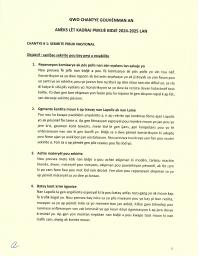
GWO CHANTYE GOUVÈNMAN AN
ANÈKS LÈT KADRAJ PWOIË BIDJÈ 2024-2025 LAN
CHANTYE # 1: SEKIRITE PIBLIK NASYONAL
Objektif : ranfdse sekirite pou bay peyi a estabilite
1. Reparasyon komisarya ak pùs polis nan zdn vyolans lan sakaje yo
Nou prevwa fè jef nan bidjè a pou fè komisarya ak pôs polis yo vin tou nèf.
Konstriksyon sa yo dwe reponn ak bezwen anplwaye yo ak jistisyab yo yon fason pou
yo santi yo an sekirite, pou yo jwenn bon rezilta k ap dire sitou nan zèn difisil yo, sa vle
di katye ki sibi plis vyolans yo. Konstriksyon sa yo dwe ka reziste devan katastwf tout
kalite. Yo dwe gen bon ekipman yon fason pou ka reponn lè gen aksyon rapid k ap fèt,
san deranje sekirite pèsonn.
2. Ogmante kantite moun k ap travay nan Lapolis ak nan Lame
Pou nou ka kwape pwoblèm ensekirite a, n ap rekrite epi kontinye fôme ajan Lapolis
yo ak pèsonèl fs lame a. Ap gen fomasyon espesyal pou montre moun yo jan pou yo
jere kriz, goumen kont teworis, mete ld lè gen ijans, gen konpetans pou yo fè
entèvansyon nan zùn ki gen konfli yo. Bidjè sa a dwe pèmèt konstriksyon ki adapte
pou fème ajan yo avèk bon jan enstalasyon. Nou prevwa tou kreye yon fon pou soutni
sekirite a. Fon sa a ap pèmèt gen plis resous pou fds ldd yo.
3. Achte materyèl pou sekirite
Nou prevwa mete kdb nan bidjè a pou achte ekipman ki modèn, tankou machin
blende, dwon, materyèl pou siveyans, ekipman pou powteksyon pèsonël, ak lot zam
ki pa zam fann fwa pou met lod nan dezdd. Yon plan pou reparasyon ekipman sa yo
ap pèmèt materyèl sa yo dire pi lontan.
4. Batay kont krim dganize
Nan Lapolis la gen anpil inite espesyal ki la pou batay anfas rezo gang yo ak moun kap
fè trafik ilegal yo. Nou prevwa bay inite sa yo plis mwayen pou ÿo bay pi bon rezilta;
mwayen sa yo ap pèmèt inite sa yo mennen bon jan ankèt, itilize gwo teknoloji pou
ranmase enfomasyon sou zak kriminèl yo epi kouri dèyè dganizasyon k ap jere dosye
kriminèl yo. Ap gen yon montan enpètan nan bidjè a pou kwape tout moun ki nan
trafik zam, dwdg ak komès moun.
&
[page 2]
5. Mete pi bon kondisyon travay pou polisye ak solda yo
Pou fès sekirite yo bay bon sèvis, fk yo byen nan po yo. Se pou sa n ap mete mwayen
nan bidjè a pou ajiste salè, gen pi bon asirans sante, mete sou pye yon pwogram pou
akonpaye mantal anplwaye yo. Nou prevwa ankouraje ajan ki nan zôn ki bay plis danje
Yo yon fason pou yo pa dekouraje nan travay y ap fè yo.
6. Mete sou pye dganizasyon k ap travay sou sekirite nan komin yo
Batay kont ensekirite a konsène komin Yo nan premye plan. Bidjè a ap prevwa mwayen
pou Konsèy sou sekirite nan komin yo, ki dwe gen ladan, otorite lokal, manm fds ldd
yo ak reprezantan sosyete sivil yo. Dydb komite sa yo se ranfose kapasite pou nou
anpeche vyolans, wè aklè kote menas yo ap Soti, dganize aktivite ki gen pou wè ak
sekirite nan tèt kole ak otorite nasyonal yo, yon fason pou ka bay bon jan repons sou
teren an.
7. Ranfdse kolaborasyon nou ak patnè etranje yo sou sa ki gen pou wè ak sekirite
Fèk gen angajman ki pran ak patnè etranje yo sou sa ki gen pou wè ak sekirite. Bidjè a
ap soutni tout pwogram fomasyon ak ldt peyi ki nan antouraj nou yo, dganizasyon
entènasyonal, tankou Oganizasyon Nasyonzini, INTERPOL, menm jan ak tou lot peyi
etranje. Sa vle di tou, n ap ka pataje enfomasyon epi resevwa sipd ak materyèl pou
nou goumen kont krim k ap fèt sou plizyè peyi anmenm tan.
8. Devlope yon kad pou pwoteje popilasyon an
Nou dwe fè plis jefo pou sekirite peyi a, san nou pa neglije pati ki konsène dwa moun
yo. Nou prevwa mete kôb nan bidjè a pou fdme Ajan fùs lod yo sou kesyon dwa moun
ak kèman pou jere sitiyasyon kriz yo. Se pou sa n ap mete yon sistèm k ap pèmèt moun
ki nan kondisyon pi fèb yo kapab pote plent sizanka yo ta fè yo abi.
3. Enfdmatize epi modènize systèm sekirite a
Nou pa ka mete sou kote modènizasyon enfomatik si nou vle jan nou ap jere sekirite
a bay rezilta. Bidjè a ap prevwa bon jan resous pou enfomatize aksyon sekirite yo,
tankou, sistèm kamera siveyans, Baz done ki konekte youn ak lt pou nou ka sènen
delenkan yo epi jwenn pi bon mwayen pou inite vo sèvi ak teknoloji ki alamdd pou yo
kominike youn ak lèt.
10. Ranfèse konstriksyon lajistis yo pou bay sekirite a jarèt
Aktivite pou bay sekirite ak aktivite pou bay lajistis dwe mache men nan men si nou
vle jwenn bon rezilta. Dwe gen kredi nan bidjè a pou fè pwosesis pou jije kriminèl yo
ale pi vit, diminye kantite tan moun yo pase nan prizon anvan yo jije epi fè kondisyon
de
[page 3]
prizonye yo ap viv la vin miyd pandan y ap kontwole kantite prizyonye yo pou evite
abse sou klou nan sa ki gen pou wè ak sekirite.
Li enpôtan pou nou bay finansman aktivite sa Vo priyorite paske se yo ki baz pou sektè
ekonomik ak sosyal yo reprann souf. Objektif nou se retabli sekirite a ki se sèl
kondisyon pou peyi a gen yon chanjman ki djanm.
CHANTYE # 2 : REMETE EKONOMI AN SOU RAY EPI REPRANN TRAVAY
REKONSTRIKSYON PEYI A
Objektif : Relanse ekonomi an epi amelyore konstriksyon ki pi enpôtan yo
Pou nou relanse ekonomi an, fdk nou fè envestisman ki byen reflechi, ki pi enpôtan anmenm
tan tou n ap fè refom ekonomik pou bay pwodiksyon nasyonal la jarèt epi kreye dydb ki gen
nen nan figi yo. Fùk resous yo itilize yon fason pou ekonomi an vanse, fdk li rezistan epi fok li
fèt avèk e pou tout moun. Ekzekisyon bidjè a dwe respekte priyorite ki te prevwa yo.
1. Repare konstriksyon ki ijan yo
Pou ekonomi an reprann fom kè li, fok nou kKomanse repare konstriksyon ki pi ijan yo,
n ap pale de wout, rezo elektrik yo ki nan zdn estratejik tankou Pdtoprens, Latibonit
ak lèt zn katastwôf natirèl ak vyolans ravaje. Nou p ap ka rive fè moun ak machandiz
Sikile nan peyi a lib e libè si nou pa fè konstriksyon ki modèn.
2. Devlopman piti, mwayenn ak gwo biznis
Devlopman piti, mwayenn ak gwo biznis se poto mitan kwasans ekonomi peyi a. Fèk
biznis sa yo jwenn akonpayman ak finansman pi fasil, sitou pou sila yo ki nan agrikilti,
lapèch ak biznis twal yo. Aktivite sa yo dwe fèt san fds kote, yon fason pou fanm ak jèn
gen menm chans, pou tout moun jwenn. Fdk nou bay yon konsiderasyon espesyal pou
pwojè devlopman k ap fèt nan Gran No ak Gran Sid.
3. Modènize konstriksyon ekonomik ak sosyal yo
Pou nou fè tout biznis peyi a rive vann isit kou lotbà dlo fok nou modènize konstriksyon
ekonomik ak sosyal yo. Fdk resous yo byenitilize, san fùs kote. Pou sa fèt, se pou tout
mwayen kominikasyon yo refèt pou peyi a ka fè fas kare ak konkirans entènasyonal
yo.
4. Fé pwosesis pou enfomatize sèvis Leta yo ale pi vit.
Pwosesis pou enfomatize sévis Leta yo, sitou pou enstitisyon ki la pou rantre lajan yo,
dwe vanse an priyorite, sa ki ka pèmèt nou fè tout tranzaksyon ekonomik yo vin pi
senp, pou sèvis Leta yo bay pi bon rezilta epi diminye posiblite pou koripsyon. N ap
mete kôb nan bidjè a pou kreye platfôm enfomatik ak bon jan sekirite, pou sèvis leta
vin otomatik ; tout sa ap fè popilasyon an jwenn pi bon sèvis kit se moun k ap fè biznis,
Z. 2
[page 4]
kit se konsomatë. Nou gen pou nou ranfose sistèm enfomatik ki deja la pou jere moun
k ap travay nan administrasyon Leta yo.
5. Sistèm pou bay antrepriz kriz la frape yo jarèt
Nou gen yon pwogram, ansanm ak Bank Santral, pou remanbre finans antrepriz kriz la
frape yo, pou pèmèt ÿo reprann aktivite yo. N ap bay yo ankourajman pou yo enterese
envesti epi kreye dydb sitou nan sektè ki pran plis frap yo.
6. Ranfdse koneksyon ki genyen nan sektè ki bay plis rannman yo
Pou nou ankouraje pwodiksyon lokal la yon fason pou nou ka vann ldtbd dlo, nou dwe
ranfose koneksyon ki genyen nan sektè ki bay plis rannman yo tankou agrikilti, lapèch
ak pwodui atizanal yo. Envestisman n ap fè yo dwe konsantre yo sou ogmante kapasite
nou pou pwodiksyon yo bay plis rannman, pou teknik n ap itilize yo pi alamdd epi pou
espas ki pou depo machandiz yo ak mwayen pou nou transpôte yo reponn pi byen.
7. Htilize lajan Leta a san gaspiyay
Fôk gen kontwôl serye sou jan lajan Leta a ap depanse. Jan resous yo ap separe a dwe
gen konsekans sou popilasyon an kit nan sa ki pou wè ak ekonomi an, anmenmtan sou
byenèt sosyete a. Nou gen pou nou bese ra planche depans ki pa twd enpôtan yo
tankou lwaye Leta a ap peye bèf pou kabrit. Benefis nou sipoze jwenn yo ap finanse
pwojè k ap bay bon rezilta sou popilasyon an.
8. Replase anplwaye Leta yo nan lôt enstitisyon selon konpetans yo
Pou Leta a bay pi bon sèvis, li nesesè pou nou replase anplwaye Leta yo nan lt
enstitisyon selon konpetans yo. Pou leta a bay popilasyon an pi bon rezilta, pèsonèl li
dwe pi byen jere.
3. Fè Ladwan ak Diresyon Jeneral Enpo vin pi modèn
Resèt fiskal yo dwe ogmante. Pou sa fèt, fôk Ladwan ak Diresyon Jeneral Enpo vin pi
modèn. Bidjè a prevwa mete kdb pou enfomatize enstitisyon sa yo nan fason y ap jere
tèt yo, anplwaye yo, ak yon pwogram fomasyon pou resèt leta yo sispann fè wout
kwochi epi pèmèt Leta antre plis kdb.
10. Repare konstriksyon ekonomik yo nan zdn ki pi enpôtan yo
Pou nou remete pwodiksyon nasyonal la sou pye, fk nou repare konstriksyon
ekonomik yo sitou nan zèn ki pi enpôtan yo tankou Pôtoprens ak Latibonit. Sa vle di
repare wout prensipal yo, pon yo ak tout ldt mwayen kominikasyon yo.
& :
[page 5]
11. Repare konstriksyon wout andeyà yo pou agrikiltè yo gen kontak dirèk ak moun k
ap achte epi vann machandiz yo
Anpil ef pral fèt pou nou repare konstriksyon wout andeyà yo pou agrikiltè yo gen
kontak dirèk ak moun k ap achte epi vann machandiz yo. Pwojè konstriksyon sa yo ap
pèmèt popilasyon k ap viv nan pwovens yo pwofite tout avantaj ekonomik ki genyen
epi fè kou transpà yo fin pi fèb.
12. Bay fanm ak jèn moun sipù pou yo granmoun tèt yo
Gen anpil demach ki pral fèt pou bay fanm ak jèn moun zouti tankou ledikasyon,
konesans ak finansman. Tout sa ap ba yo plis konpetans pou chache travay e jwenn
plas yo nan ekonomi peyi a.
13. kwape zak koripsyon ak tout sa ki gen pou wè ak blanchi lajan
Pou nou fè moun ki vle envesti nan peyi a reprann konfyans fok peyi a aliyen | ak
ekzijans GAFIC yo ki se yon enstitisyon k ap kontwole mouvman lajan nan Karayib la.
Se pral zewo tolerans pou moun ki nan koripsyon avèk anpil refom pou nou ranfdse
enstitisyon k ap goumen kont moun k ap blanchi lajan yo
Tout enstriksyon sa yo ki gen pou wè ak remanbre ekonomi peyi a ak konstriksyon nou
Yo, dwe tabli bon jan baz pou ekonomi an rekdmanse ogmante ak patisipasyon tout
moun, pou li rezistan epi kenbe pou lontan. Refom solid ak gwo envestisman enpôtan
dwe makônen pou ekonomi an reprann rapid vit, pandan n ap atake pwen fèb
popilasyon an.
CHANTYE # 3 SEKIRITE ALIMANTE, SEVIS MINIMOM POU TOUT MOUN
Obiektif : fè yon jan pou tout moun jwenn manje, dlo potab, edikasyon ak swen sante
Pwoblèm ensekirite alimantè a ak difikilte popilasyon an pou l jwenn sèvis minimom yo fè kriz
imanitè a vin pi grav. Bidjè a dwe bay yon repons ki koresponn ak nesesite pou bay sekirite
alimantè a jarèt, fè sistèm edikasyon ak sante yo vin pi djanm epi pou popilasyon an jwenn
sèvis minimdm yo tankou dlo potab ak sèvis pwdpte nan tout peyi a. Pou sa fèt, fok nou :
°_ Envesti nan pwodiksyon nasyonal, k ap fè popilasyon an jwenn manje et pèmèt nou
goumen kont grangou ak malnitrisyon ;
e Fè bidjè a finanse Pwogram pou akonpaye ti pwodiktè agrikôl yo pandan n ap fè yo
jwenn, semans, angrè ak zouti epi fè yo jwenn finansman san grate tèt. Gen yon politik
nou mete sou pye pou bay elèv lekol yo manje. Dokiman sa a ap sèvi referans pou nou
fè sa anmenm tan | ap pèmèt nou fè fas kare ak move kondisyon tan an, jwenn teknik
pou pwodiksyon agrikdl la toujou rete djanm ;
C2
RS qu.
[page 6]
°__N ap prevwa lajan pou nou kreye Magazen pou nou estoke manje prensipal yo pou
nou ka prevwa lè gen rate nan epèk kriz pou pri yo pa monte bwa j
e Bay lapèch ak elvaj pwason jarèt. Yon pati nan bidjè dwe finanse konstriksyon pou
lapèch, semans ti pwason nan basen ak letan yo yon fason pou elvaj pwason yo pran
jarèt epi pou popilasyon an jwenn bon jan vitamin :
® Distribye manje. N ap chache lajan pou nou ka distribye manje premye nesesite bay
moun ki plis nan bezwen yo, sitou sila yo ki oblije sove kite kay yo ak gwoup moun
pwoblèm malnitrisyon manje a frape pi di.
Pou nou konbat vye maladi epi fè popilasyon an viv tankou moun, fèk tout moun ka jwenn
dlo potab ak materyèl pou fè pwôpte nan peyi a.
® Repare konstriksyon pou distribisyon dlo potab : n ap mete kredi nan bidjè a pou nou
repare konstriksyon pou distribisyon dlo potab, sitou nan zon kriz la pi sakaje yo, kit
nan pwovens kit se nan vil yo. Sa vle di tou n ap mete ponp, pui, ak tout ldt systèm
pou nou distribye dlo potab :
e__Fè pwomosyon pou pwèpte ak lasante. Bidjè a dwe prevwa mwayen pou finanse jan
y ap trete dlo potab ak lapwôpte. Mezi sa Yo ap pèmèt nou kontre vye maladi, anpeche
yo kontamine anpil moun.
Fè yon jan pou tout moun ka jwenn swen sante pi fasil: Youn nan pi gwo priyorite nou se
fè yon jan pou tout moun jwenn swen sante pi fasil, sitou sila yo k ap viv nan kondisyon ki
pi difisil yo.
© Nap louvri tout sant sante kite fèmen Yo : n ap mete bon jan mwayen nan bidjè a pou
nou répare sant sante ki p ap fonksyone yo pandan ke n ap asire nou ke medsen ak
enfimyè yo kalifye epi medikaman n ap plis bezwen yo disponib ;
e Ranfôse kontriksyon nan domèn sante yo. N ap fè envestisman pou nou mete lopital
ak sant sante yo tou nèf sitou sa ki nan zdn Pwovens yo ak nan vil ki gen anpil moun
yo nan objektif pou tout moun ka jwenn swen sante minimdm pou sa ki konsène
manman pitit ak ti moun ;
® __N ap fème epi anplwaye medsen ak enfimyè. N ap prevwa lajan pou pwofesyonèl la
Sante yo yon fason pou moun ki nan ziltik yo ka jwenn sèvis sante ;
® __N ap mete sou pye yon pwogram sante mobil. N ap mete kb pou klinik mobil ka rive
jwenn popilsayon k ap viv pi lwen vil yo. Anmenm tan n ap fè vaksinasyon ak
prevansyon maladi tankou kolera ak lawoujdl.
Fè yon jan pou tout moun ka jwenn ledikasyon pi fasil: ledikasyon se poto mitan
devlopman. Se li ki pèmèt kdd lonbrik nou koupe ak lamizè epi ki pèmèt popilayson k ap
vini an pi rezistan
®_ Youn nan priyorite bidjè a se repare ak rebati lekol ki pran frap yo sitou nan zdn kote
lekôl sa yo sèvi pou abrite moun k ap kouri pou gang yo ;
æ ;
[page 7]
® NN ap chache lajan pou elèv lekl ki nan kondisyon difisil yo jwenn founiti bon mache
ou byen gratis pou tout moun ka gen menm chans jwenn bon ledikasyon ;
e__N ap mete kdb nan bidjè a pou nou bay refôm ki te koèmanse dejà yo jarèt. N ap bay
yon atansyon espesyal pou lekèl ki pa anrejistre nan sistèm nan ak lekd| pwofesyonèl
vo, von fason pou jenn gason ak jenn fanm gen plis posiblite jwenn travay ;
® __N ap mete kdb nan bidjè a pou nou finanse lokal pou fèmasyon pwofesè pou yon ti
bout tan yon fason pou plis timoun, sitou sa ki oblije sove kite lakay yo, kontinye jwenn
ledikasyon.
Bay moun ki nan kondisyon pi difisil yo posiblite pou yo entegre sosyete a. Gouvènman an
8en yon responsablite moral pou nou bay moun ki nan kondisyon pi difisil yo posiblite pou
yo entegre sosyete a.
® _N ap mete yon liy espesyal nan bidjè a pou pwoteje fanm ka sibi vyolans ak timoun y
ap abize. N ap kreye sant dakèy pou resevwa viktim yo epi ba yo sipd mantal ;
® _ Ap gen kredi nan bidjè a pou distribiye lajan bay fanmi ki nan kondisyon difisil yo pou
yo ka gen mwayen pou fè fas kare ak kondisyon kriz nan peyi a :
e _Ap gen kredi nan bidjè a pou sekirite sosyal, pou asirans maladi pou moun afè pa bon
yo pou pwoteje yo lè sistèm finansye a ap bay pwoblèm sitou lè gen aksidan ak maladi
brid sou kou.
CHANTYE # 4: KONFERANS NASYONAL, REFOM KONSTITISYON AK ELEKSYON
Objektif : dganize Konferans Nasyonal pou fè diskisyon sou refom konstitisyon an epi
prepare eleksyon
Kriz politik n ap viv jounen jodi a mande Pou nou panse jan n ap dirije peyi a yon lot jan.
Konferans Nasyonal la se yon espas k ap pèmèt tout aktè yo patisipe nan diskisyon sou refom
konstitisyon an ki se poto mitan preparasyon eleksyon yo. Pou pwosesis la reyisi fok sa parèt
klè km priyorite nan bidjè a ;
Konferans Nasyonal la dwe pèmèt tout pitit peyi a chita ansanm pou diskite sou ki fason n ap
rebrase konstitisyon an pou Leta a ka jere pi byen. Bidjè a dwe prevwa tout sistèm y ap mete
anplas yo pou tout aktè yo mobilize epi travay san voye wdch kache men.
Se bidjè a kap finanse konferans nasyonal la pou tout moun ka patisipe san pati pri, nan tout
rakwen peyi a ansanm ak ayisyen k ap viv ldtbà dlo. Pou sa fèt, fèk nou :
® Brase lide ak tout dganizasyon nan tout rakwen peyi a, fè konferans pou tout moun
patisipe ;
e _Kreye espas pou diskisyon fas a fas ak sou platfom entènèt ki fèt pou sa, itilize laprès
pou mete tout moun okouran epi patisipe ;
a :
[page 8]
© Ekri dokiman epi dganize diskisyon yo nan de (2) lang ofisyèl peyi a pou tout moun ka
konprann epi bay patisipasyon yo ;
e Mete lajan disponib pou pèmèt sosyete sivil la, sektè relijye, sektè prive ak patnè
entènasyonal yo ka patisipe pi byen ;
®__N ap bezwen patisipasyon tout mout sa vo pou refom konstitisyon an fèt selon lalwa
epi bay bon rezilta ;
e _ Avèk sitiyasyon ensekirite a, fdk gen mwayen nan bidjè a pou pwoteje espas kote y ap
fè reyinyon ak konferans yo. Pou sa fèt, fok Otorite yo antann yo avèk enstitisyon ki
la pou bay sekirite Yo pou tout moun ka patisipe san kè sote.
Refôm konstitisyon an pa dwe depaman ak bon jan ledikasyon pou popilasyon an sou
enpôtans sa k ap fèt la. Sinon se lave men siye atè. Fdk bidjè a prevwa finanse tout
demach ki gen pou wè ak kominikasyon epi enfomasyon pou tout sitwayen konprann sa
klè
© Fèk bidjè a finanse tout pil aktivite ki gen pou wè ak enfomasyon sou medya ki abitye
fè sa kit se radyo ak televizyon, ki se medya ki sou entènèt yo. N ap fè sa pou tout
moun ka jwenn aksè ak tout dokiman teknik sou refèm konstitisyon an ;
®__ Pou nou fè kanpay kominikasyon YO, n ap bezwen dokiman tankou depliyan, videyo
epi son k ap eksplike a klè defi nou gen pou leve ak konstitisyon tou nèf la, enpôtans
eleksyon yo epi ki wèl chak sitwayen gen pou yo jwe ;
® Gen yon pati nan bidjè a ki pral finanse dirèkteman kanpay enfomasyon ak
sansibilizasyon jenn fanm ak jenn 8aSon, moun andeyà yo nou konn mete sou kote
anpil fwa lè n ap pale de konstitisyon peyi a. N ap mete kredi nan bidjè a pou Ministè
ayisyen kap viv ltb dlo yo ak Ministè afè etranjè pou yo patisipe nan aktivite sa yo
san mank. Sa pral mande tou pou gen chita pale ki fèt ak elèv lekdl, inivèsite ak sant
kominotè yo.
Eleksyon k ap vini yo dwe fèt nan tout transparans ak patisipasyon tout moun, nan respè
lalwa; se sa ki ap garanti yon estabilite politik pou yon bon bout tan. Fdk pwosesis pou fè
eleksyon yo jwenn bon jan finansman epi fèk biwo vèt yo gen bon jan sekirite.
Bidjè a dwe prevwa finansman pou fè Konsèy Elektoral la djanm pou li ka fè eleksyon ak
transparans, san fds kote. Sa vle di:
e Konstriksyon ak materyèl pou eleksyon yo dwe disponib nan tout peyi a, menm nan
ziltik ;
e Pèsonèl ki pral okipe | de zafè eleksyon yo dwe jwenn bon fèmasyon pou yo ka byen
jere biwo vôt yo nan respè tèt yo ak respè lwa sou eleksyon yo ;
e Aplike teknoloji pou evite magouy nan vèt ki gen pou fèt yo epi pou garanti
transparans nan rezilta yo ;
a
7
[page 9]
e Fok gen garanti sou jan kanpay enfomasyon ak Sansibilizasyon yo ap finanse pou mete
popilasyon an sou sa. Fok nou fè popilasyon an konprann enpôtans patisipasyon yo
antan ke sitwayen, dwa ak devwa yo genyen pou yo ka vote, sitou sila yo yo te konn
mete sou kote.
Fok nou mete sou plas yon sistèm pou nou gen kontwdl Konferans nasyonal la ak
Ôganizayon eleksyon yo ki dwe gen transparans epi jwenn bon jan finansman.
e N ap mete yon kès espesyal anplas pou finanse komite ki la pou sipèvize jan konferans
nasyonal la ap dewoule selon rekdmandasyon nou jwenn yo. Se reprezantan tout
sektè yo ki konpoze komisyon sa a ki gen responsablite veye si refom ÿo ap fèt nan
tout transparans.
Refom konstitisyon an, konferans nasyonal la ak dganiszation eleksyon yo se pa ki pi enpôtan
pou peyi a byen dirije jan lalwa mande | la. Se pou sa nou bay enstriksyon pou bidjè a gen
resous pou sa epi pou yo depanse san voye wèch kache men, epi pou yo bay bon jan rezilta.
Si nou vle mete baz pou yon peyi kote dwa moun respekte tout bon vre, fdk tout sosyete a
sou de (2) pye militè li pou pwosesis la fèt san kachkach liben.
CHANTYE# 5: RESPÈ DWA MOUN AK JISTIS POU TOUT MOUN
Objektif: fè lajistis ak respè dwa moun vin pi djanm anmenm tan n ap goumen kont
koripsyon
Fè respè dwa moun tounen pran plas li nan peyi a, se baz pou nou fè popilasyon an reprann
konfyans nan enstitisyon Leta yo epi bay garanti tout moun ka jwenn jistis san fs kote.
® NN ap rebati tribinal ak prizon pou jij yo gen bon kondisyon travay epi pou la jistis bay
nan bon ti mamit epi evite moun rete nan prizon san jijman pandan anpil tan ;
® N ap bay inite k ap batay kont koripsyon ansanm ak lot enstisyon kontwôl yo plis
bourad pou nou ka gen kontwbl lajan Leta k ap fè wout kwochi epi gen bon kontwàl
sou jan Leta ap jere.
®__N ap ranfèse konpetans majistra ak anplwaye k ap travay nan sektè lajistis la. N ap ba
yo fomasyon pou yo jere koripsyon, krim ki fèt sou brase lajan ak respè dwa moun h
°_Fè yon jan pou popilasyon an jwenn jistis sitou pou fanm, jenn gason ak jenn fi ;
® _ Konstwi epi repare tribinal ak Komisarya nan zôn kriz ak vyolans yo plis frape yo epi fè
yon jan pou konstriksyon disponib rapid vit ;
®_ Pase men nan sistèm lajistis la yon fason pou moun Sispann fè anpil tan nan prizon san
Yo pa jije epi bay jistis tout bon vre, san fos kote 5
e _Kreye kondisyon pou nou ka akonpaye fanm ki viktim vyolans.
CA |
a
How to cite
Ministry of Economy and Finance (MEF), 2024, Annex to the Budget Framework Letter: Government's Major Undertakings (Kreyol), https://budget.gouv.ht/storage/app/uploads/public/66e/dba/36c/66edba36c6ebe549480824.pdf