
Jèn Travayè Migran Ayisyen
Rezime — Etid Fafo sou migrasyon travay jèn ayisyen nan zòn riral, kote jwenn travay vle di kite kominote lakay yo.
Dekouve Enpotan
- Jèn nan zòn riral gen tikras chemen pou monte sosyalman lakay yo, kidonk migrasyon travay se chemen nòmal pou jwenn travay, se pa yon eksepsyon.
- Li li mouvman moun kite Pòtoprens apre tranblemanntè a nan limyè ansyen chema migrasyon travay ant andeyò ak vil yo.
Deskripsyon Konple
Li egzamine migrasyon travay jèn ayisyen ki grandi nan zòn riral, kote posiblite pou monte sosyalman nan kominote lakay yo fèmen anpil epi travay peye jwenn lòt kote. Sou baz Ankèt sou Jenès Ayiti a, li swiv kiyès ki migre, kote yo ale ak nan ki kondisyon, epi li mete sa nan kontèks deplasman tranblemanntè janvye 2010 la te lakòz.
Teks Konple Dokiman an
Teks ki soti nan dokiman orijinal la pou endeksasyon.
Young Haitian Labour Migrants Henriette Lunde
Henriette Lunde
Haitian youth growing up in rural areas are faced with few opportunities
Young Haitian Labour Migrants
Young Haitian Labour Migrants
for social mobility in their local communities. Employment is mainly
limited to the highly unpredictable agricultural sector and institutions Risks and opportunities in Haiti and
offering higher education are concentrated in urban areas. The lack of
local opportunities pushes many rural youth to search for employment in the Dominican Republic
elsewhere, either in Haiti itself or across the border in the Dominican
Republic.
With its labour intensive plantation economy and booming construction
sector, the Dominican Republic has a high demand for cheap, manual
labour. Cross-border migration offers opportunities to Haitian youth, but
it also involves a high level of risk. This report is based on interviews with
experienced and potential youth migrants and analyses the different sets
of factors which impact the decision to migrate, and looks at how Haitian
youth perceive and experience the risks, as well as the opportunities, arising
from migration.
Fafo
P.O.Box 2947 Tøyen Fafo-report 2010:24
N-0608 Oslo ISBN 978-82-7422-739-2
www.fafo.no/english/ ISSN 0801-6143
Order no. 20168
20168-omslag.indd 1 11.06.2010 14:47:01
Henriette Lunde
Young Haitian Labour Migrants
Risks and opportunities in Haiti and
in the Dominican Republic
Fafo-report 2010:24
© Fafo 2010
ISBN 978-82-7422-739-2 (paper edition)
ISBN 978-82-7422-740-8 (web edition)
ISSN 0801-6143
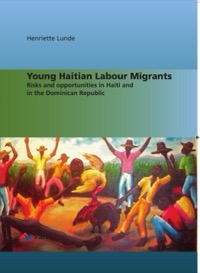
Cover photo: ©“Cockfight” painted by Rene Exume
Reprinted with permission from: Aderson Couloute Exume,
Exume Fine Art Consulting
Cover design: Fafo Information office
Printed in Norway by: Allkopi AS
Contents
Preface������������������������������������������������������������������������������������������������������������� 5
Executive summary �����������������������������������������������������������������������������������������7
Introduction����������������������������������������������������������������������������������������� 9
The Haiti Youth Project����������������������������������������������������������������������������������� 9
Objective ������������������������������������������������������������������������������������������������������� 10
Rationale������������������������������������������������������������������������������������������������������� 10
A note on the judicial aspects of youth migration������������������������������������� 12
Outline ���������������������������������������������������������������������������������������������������������� 13
Methodology ������������������������������������������������������������������������������������ 15
Ethical considerations������������������������������������������������������������������������������������17
Country background�������������������������������������������������������������������������� 19
Pervasive and widespread poverty�������������������������������������������������������������� 19
Weak education sector and high unemployment��������������������������������������� 20
Environmental degradation affecting rural livelihood�������������������������������21
Life across the border – the Dominican Republic����������������������������������������21
Why do youth migrate in search of work?�������������������������������������� 25
Individual factors ����������������������������������������������������������������������������������������� 25
Family factors������������������������������������������������������������������������������������������������ 26
Community factors���������������������������������������������������������������������������������������� 28
Why are not all youth migrating?��������������������������������������������������������������� 30
Haitian youths’ perceptions of labour migration �������������������������� 31
“Haiti offers nothing!”�����������������������������������������������������������������������������������31
“If you have education and contacts, you go to Port-au-Prince.
If not you go to the Dominican Republic”�������������������������������������������������� 32
”Everyone can find work in the Dominican Republic,
but no one wants to” ���������������������������������������������������������������������������������� 34
“Girls who migrate to the Dominican Republic will become prostitutes” 36
“Sometimes parents close their eyes a bit…”�����������������������������������������������37
“If you have no past, you have no future”��������������������������������������������������� 39
“You just have to start somewhere!”����������������������������������������������������������� 40
Vulnerabilities, but also opportunities ��������������������������������������������������������41
3
Specific risks related to migration to the Dominican Republic����� 43
Risks of illegal border crossing��������������������������������������������������������������������� 43
Being left by a vyewo����������������������������������������������������������������������������������� 44
Being caught by border guards or robbed by bandits������������������������������� 45
Vulnerability of migrant girls ���������������������������������������������������������������������� 45
Illegal working status����������������������������������������������������������������������������������� 46
Forced repatriation����������������������������������������������������������������������������������������47
Conclusion����������������������������������������������������������������������������������������������������� 49
List of references �������������������������������������������������������������������������������������������51
4
Preface
On January 12, 2010, Haiti was struck by one of the worst natural disasters of our time.
A devastating earthquake killed approximately 250,000 people, left 1.3 million home-
less and destroyed the capital Port-au-Prince and surrounding areas. The earthquake
hit one of the world’s poorest and weakest states at the worst possible location, right
at the heart of the capital where the population density was the highest and most of
the country’s functioning infrastructure was concentrated. The massive destruction
has reshaped Haiti’s social, economic, and political landscape, as well as its physical
landscape, and marked the country for decades to come. In the immediate aftermath
of the disaster, an estimated 25 percent of the population of Port-au-Prince, or around
half a million people, left the ruined capital and relocated to other parts of the country.
Many of them were migrants from the rural areas, who have now returned to their
areas of origin.
This report was written before the earthquake and is based on data collected during
spring 2008. Since then the context has changed dramatically, but the topic of migration
remains highly relevant. This report analyses how migration and relocation are among
the few coping strategies available to Haitian youth in a socioeconomic environment
offering very few opportunities. In particular, the report focuses on labour migration
from rural areas in Haiti to the Dominican Republic. Prior to the earthquake, the rural
parts of Haiti were the most impoverished, despite widespread urban poverty. Lack
of access to education and employment made searching for work in Port-au-Prince or
across the border in the Dominican Republic a preferable alternative for many, even if
it involves well-known risks and hardship. As the report will show, Port-au-Prince was
the preferred destination for rural migrants. However, access to a pre-existing network
of contacts, willing to assist on arrival, was deemed necessary to succeed as a migrant
in the capital. For youth without the necessary social capital, labour migration to the
Dominican Republic remained an alternative to idleness in their local communities.
Approximately one-third of all buildings in Port-au-Prince were destroyed in the
earthquake, including the National Palace, the Parliament, the UN headquarters,
hospitals, schools and prisons. At the international donors’ conference in New York,
March 31, more than 5 billion USD were pledged to the rebuilding of Haiti over the
next 18 months. The major reconstruction process will lead to a high labour demand,
at least in the short and medium term. The prospect of employment is likely to pull
large numbers of Haitian youth, in particular young men, to the capital. But in a
5
patrimonial society such as Haiti, gaining access to the booming labour market will
depend on the social networks of the youth and their households. For rural youth
unable to establish a connection to a potential patron, the Dominican Republic may
still remain the most viable alternative. The displacement of hundreds of thousands
from Port au Prince back to the rural areas, stretched already scare resources even
more, and is likely to push more young people across the border to search for work in
the Dominican Republic.
As this report makes clear, illegal cross-border migration to the Dominican Republic
is a risky endeavour, exposing the young migrants to considerable hazard. However,
seen in light of what they are leaving behind, many of them still find it to be their best,
and in some cases only, option. After the earthquake, the situation for Haitian youth
has deteriorated further, also in the rural areas. Young Haitians are not well served by
initiatives aimed at reducing illegal migration, which diminish available alternatives.
Rather, measures should be taken to ensure safer migration and a more protective en-
vironment for the youth involved. The aim of this report is to shed light on the young
migrants’ rationales for engaging in labour migration as well as their own perception
of the risk involved.
Several people have contributed to the making of this report. First and foremost the
author wishes to express her gratitude to all the respondents, who generously shared
their experiences and stories on which this report is built. The author is also grateful to
Janet Bauman from Save the Children, Techelet Anger from Oxfam, Carmel Merisca
from GARR and Alice Ziffer from FLACSO for helping facilitate the fieldwork in
Maissade, Belladere, Fond Verrettes and Santo Domingo/San Cristobal respectively.
Many thanks to colleagues at Fafo, Anne Kielland, Morten Bøås and Anne Hatløy, for
valuable comments during the process of report writing, to David Sachs for proofread-
ing the report and to Agneta Kolstad at the Fafo publication department for work
on the layout and for preparing the report for publication. Fafo also wishes to thank
the Norwegian Ministry of Foreign Affairs for providing the funding that made this
research possible.
March, 2010
Henriette Lunde
6
Executive summary
Haitian youth in rural areas are faced with few opportunities for social mobility in their
local communities. Possibilities for earning a livelihood is mainly limited to working
in the agricultural sector, and the practice of small-scale peasant farming makes it hard
for youth without access to farmland to find paid employment. Even for rural youth
with access to land, agriculture is a highly uncertain livelihood; agricultural output is
steadily decreasing due to environmental degradation and prices on locally produced
food are kept artificially low due to market competition from subsidized import. In
order to access higher education and work opportunities outside of the agricultural
sector rural youth look to the urban areas, primarily the capital Port-au-Prince. Suc-
ceeding as a migrant in Port-au-Prince is highly dependent upon having contacts,
usually relatives who have already migrated, at the destination who are able and willing
to assist with housing and access to the labour market. According to the rural youth
interviewed for the study, a certain level of education is also essential to find work and
become integrated in urban life.
For uneducated youth without existing networks, the relocation costs related to
migration to the capital become so high, and the chances of succeeding so slim, that
rural youth choose rather to engage in high risk illegal migration to the Dominican
Republic. In particular, this is the case for male youth. The type of work Haitians in
the Dominican Republic typically engage in, agriculture and construction, combined
with a high risk of sexual exploitation and abuse, make cross-border migration a less
preferable alternative for female than for male youth. In addition, a widespread percep-
tion that female migrants are involved in prostitution makes cross-border migration
socially stigmatising for Haitian girls.
Male youth are also facing a high level of risk when engaging in illegal migration
to the Dominican Republic. Young migrants frequently report harassment by their
employers, withholding of salaries, robbery, detention at the border and forced re-
patriation. Experienced and potential migrants alike are well aware of the hazards
involved in illegal migration. However, despite a high level of risk and difficult working
conditions, the option of migrating to the Dominican Republic represents one out
of only a few alternatives for social mobility available to rural youth. Seen in light of
what they are leaving behind, many of them still find migration to be their best, and
in some cases only, option. As long as young people find themselves marginalized and
without employment opportunities in their own country, cross border migration will
7
remain an important coping strategy for Haitian youth and their households. Rather
than diminishing the scope of livelihood strategies available to youth through initiatives
aimed at reducing illegal migration, measures should be taken to ensure safer migration
and a more protective environment for the youth involved
8
Introduction
The Haiti Youth Project
Children and youth constitute the majority of the Haitian population. Almost sixty
percent of people living in Haiti are below 25 years of age (Lunde, 2009). More than
one in five Haitians are in the age span from 15 to 24, and defined as youth accord-
ing to the UN. ‘Youth’ in developing countries is a term frequently understood as
equalling young men, who are often presented in a surprisingly crude manner, both
in academic and policy discourses. A large youth population, combined with a weak
economy, which offers few employment opportunities, is in general thought to make
a country more prone to internal conflict and political violence (Urdal, 2006). Idle
youth, above the age of 15, are also presented in policy-oriented literature as a poten-
tial security threat (UNOWA, 2006). Some writers go even further in describing the
assumed detrimental consequences of a youthful population. In his report to the UN
Secretary General on the prospect for economic growth in Haiti, Paul Collier identi-
fies the country’s “youth tsunami” as one of the main threats to the country’s stability
and economic development (Collier, 2008).
Framing the issue of development and stability as a problem of youth per se is
misleading in the sense that it takes the focus away from the underlying problem – the
lack of opportunities with which the young generation growing up must contend. In
order to bring to the surface a constructive debate it is necessary to recognise that the
lack of security is not caused by the presence of young people, but by the constrained
socioeconomic context they find themselves forced to navigate (see Vigh, 2006). The
narrow focus on youth unemployment also ignores the type of work young people
carry out, their wage levels and working conditions, as well as alternative livelihood
strategies in which they engage, such as migration (Thorsen, 2009).
This article is based on the assumption that the Haitian youth population first and
foremost represents a large pool of untapped human resources, which, faced with social
and economic exclusion, may stir social strife. The opportunities presented to these
young people, who comprise the majority of Haitian citizens and who are right now
shaping their roles for a future life in the Haitian society, will greatly influence whether
Haiti will prosper and grow, or relapse into economic decline and political violence.
One way for youth to cope with local constraints and lack of opportunities is to
migrate. This report focuses on labour migration among Haitian youth and is a part
9
of the larger Haiti Youth Project, financed by the Norwegian Ministry of Foreign
Affairs. Recognizing the importance of youth as key actors in development and peace
processes, the Haiti Youth Project analyses different areas of youth participation and
involvement, and does so from the view point of the youth themselves.
The Haiti Youth Project combines a qualitative and a quantitative approach. For
the qualitative work, three core areas of youth participation were explored in separate
fieldworks; youth and education, youth and armed groups, and the topic for this report
– youth and labour migration. The preliminary findings from the qualitative studies
were further explored in a nationwide youth survey. A tabulation report presenting
the statistical findings from the Haiti Youth Survey was published in English in 2009
and in French the following year, and an analytical report is forthcoming.
Objective
A high number of Haitian youth leave their area of origin in order to search for oppor-
tunities elsewhere. Their decision to migrate is generally triggered by socioeconomic
factors such as a severely constrained labour market, a poorly developed education
sector and pervasive household poverty (World Bank, 2006a). Still, the processes
leading up to the decision to leave, the expectations about what migration will bring,
and the experiences of being a young labour migrant, are as plentiful and varied as the
youth themselves.
The aim of this study is to improve the knowledge about young people’s real life
experiences with labour migration. The study aims to understand different sets of fac-
tors which impact the decision to migrate, and how both potential and experienced
migrants not only perceive the risks but also the opportunities arising from migration.
A particular emphasis is placed on risks related to illegal migration to the Dominican
Republic.
Rationale
This report is based on the assumption that labour migration is one in a limited set
of coping strategies available to Haitian youth and their families. Migration, beyond
doubt, involves risks for the persons involved, and youth are in general more vulnerable
to exploitation than adults due to their lack of experience and often less developed
networks. However, migration also presents young people with a new set of opportu-
nities and potentially empowers them by giving them a chance to support themselves
10
and acquire important life skills. Even migration into an exploitative situation may be
beneficial relative to other options available.
A crucial part of the narrative of youth migration, that until recently has been given
very little attention, is the risk young people are facing by not migrating (Kielland,
2008). Policies which have ignored living conditions on the departure side of the mi-
gration path, have been based on the general normative assumption that the best place
for a child to be is their parental home, not taking into account that not all parental
households are able or willing to protect their children from danger. Interventions
developed under these kinds of policies run the risk of doing more harm than good.
In Haiti as elsewhere, policy interventions have been directed towards hindering the
migration of youth and returning youth migrants to their area of origin without having
a thorough understanding of why the youth left in the first place. In some cases the
youth are not welcomed back by their families, in other cases the youth are not willing
to return and stay, for the exact same reasons that they left in the first place. Despite
the high level of risk involved, migration may still come across as the option perceived
to be best for the individual youth, or for the household as a unitary actor. Migration
and relocation can be important social risk reduction strategies, both for individual
children and youth, and their households. Experience from West-Africa shows that
constraining children’s mobility without introducing alternative security measures
increases young migrants’ vulnerability as they continue to migrate, but in a more
clandestine and insecure manner (Busza et al., 2004; Castle and Diarra, 2002).
This report emphasizes the need for an understanding of the context they are
migrating from, as well of the context they are migrating to, what kind of specific risks
youth are exposed to as a result of migration and what kind of protection measures
may be installed to make migration safer.
11
A note on the judicial aspects of youth migration
In the Haitian case, as elsewhere, there are grey zones between cross-border migration
and the more legally challenging phenomena of human smuggling and trafficking. 1
For the last decade, the concern with trafficking has been dominating the narrative
of policy makers, intergovernmental organisations and international donors, and as
a result also the work conducted by national and international non-governmental
organisations. Framing potentially harmful migration as trafficking has been a safe
way to attract funding and media attention – often at the expense of a more thorough
understanding of the strategic role migration plays in society, at the household level
and among the youth in question (Kielland and Bjørkhaug, 2009, see also Bøås and
Mc Neil, 2004).
Rather than focusing on young migrants as victims per se and the middlemen assist-
ing them as ill-intended traffickers, this study goes beyond the simplified presentation of
good/bad, innocent/guilty, victim/perpetrator. Young migrants are recognised as social
actors, capable of making rational decisions and interacting with their environment.
Vulnerability is not understood as an inherent value in children, but as a structural
position in which youth might find themselves (de Berry, 2004). Haitian youth have
often very limited options, and the less they have to lose, the more likely it is that they
make choices involving a high risk of exploitation and harm. Importantly, however,
making risky choices does not automatically turn their relocation into trafficking.
Instances occur, also in Haiti, when children and youth are indeed forced or de-
ceived to leave their households and end up as victims of trafficking (Smucker and
Murray, 2004). More frequently, youth are crossing borders or finding jobs with the
help of middlemen, making them the willing objects of the legally speaking quite
different practice of human smuggling. The middlemen, who may lead youth into
labour situations which border on the exploitative, are usually experienced migrants
with the necessary knowledge and contacts to assist in such a situation. Only in very
rare instances would one find that they are members of cynical trafficking and human
smuggling organizations, as one might be led to believe is the case by reading the many
reports written on trafficking in children.2 More often they are fellow community
1
The Palermo Protocol or United Nations Protocol to “Prevent, Suppress and Punish Trafficking in
Persons, Especially Women and Children”, defines human trafficking as: “the recruitment, transportation,
transfer, harbouring or receipt of persons, by means of the threat or use of force or other forms of coercion, of
abduction, of fraud, of deception, of the abuse of power or of a position of vulnerability or of the giving or
receiving of payments or benefits to achieve the consent of a person having control over another person, for
the purpose of exploitation. Exploitation shall include, at a minimum, the exploitation of the prostitution
of others or other forms of sexual exploitation, forced labour or services, slavery or practices similar to slavery,
servitude or the removal of organs.”
2
See for instance Unicef/IOM (2002), Unicef UK (2003), Smucker and Murray (2004).
12
members or in other ways parts of the migrant’s social network, who provide the neces-
sary assistance in exchange for an economic compensation. Even when middlemen do
take advantage of the limited choices of young migrants, and exploit their situation to
their own benefit, and even when youth are led into situations of considerable risk, it
may not suffice to legally define the situation as trafficking.
Outline
The rest of the report is structured as follows. The next chapter presents the meth-
odology used for collecting the data that forms the empirical basis for this report. It
also includes an overview of respondents, as well as a note on ethical considerations in
general, and on conducting research involving children and youth in particular. Chapter
three gives a brief overview of the socioeconomic conditions in the migrants’ areas
of origin in rural Haiti and in their main destination area, the Dominican Republic,
with a special focus on factors relevant to youth migration. Chapter four presents a
theoretical framework for understanding why young people engage in labour migra-
tion. The general explanations are categorised into individual factors, family factors
and community factors, which in combination or alone, shed light on the rationale
behind youth migration. Chapter five voices the thoughts and experiences of the
Haitian youth themselves, and presents recurring themes from individual and group
interviews, including their perception of the risks and opportunities stemming from
migration. The specific risks related to illegal migration to the Dominican Republic
are discussed in chapter six. The final chapter presents recommendations for achieving
better protection of the young migrants, as well as for increasing the set of opportuni-
ties available to Haitian youth in their own home areas.
13
14
Methodology
The fieldwork that this report is based on took place over five weeks in Haiti and the
Dominican Republic in March and April, 2008. Four different areas were visited in
Haiti and three in the Dominican Republic. In Haiti, Maissade, in Département du
Centre, and Fond Verrettes, close to the border in Département de l’ Ouest, were se-
lected. Both are rural areas offering the local youth few opportunities related to work
or education, and were selected to represent typical areas from where young migrants
leave in search of work both domestically and to the Dominican Republic. The two
capitals, Port-au-Prince and Santo Domingo, and the Dominican town San Cristobal
west of Santo Domingo, were included as main destinations for many of the Haitian
Source: the University of Texas, http://www.lib.utexas.edu/maps/americas/haiti.gif
15
youth migrants. Rural areas in the Dominican Republic were not visited, but seasonal
migrants involved in agricultural work across the border were interviewed in their
home areas in Haiti. Interviews were also conducted in the border towns Belladere on
the Haitian side and Elias Pinas on the Dominican side of the border. The fieldwork
was conducted in cooperation with University Quisqueya in Port-au-Prince, which
provided general research assistance throughout the field operation.
During the fieldwork interviews were made both with experienced and potential
youth migrants. Some of the experienced migrants had several successful seasonal
migrations behind them, and plans to re-migrate. Others had migrated once, returned
with bad experiences and were not willing to go back. The potential migrants had not
yet migrated, but were living in areas where the level of migration among youth is high.
The potential migrants considered it likely that they would do so in the future – either
because they wanted to or because they did not see any other alternatives. Interviews
were also made with youth who were not considering migration as a potential strategy.
In addition, different aspects of youth migration were discussed with family members
of experienced and potential migrants and key members of the local communities,
including political and religious leaders and school teachers.
An important part of the fieldwork was to explore the potential risks and vulner-
abilities related to migration together with the youth. Through guided discussions the
study investigated some possible ways in which youth can protect themselves against
these risks. This was done in individual interviews and focus groups, as well as in larger
open youth meetings. In the groups and meetings the youth were encouraged to share
their own experiences as well as stories they had heard from others, and also to suggest
some hypothetically dangerous situations that they might encounter as migrants. After
identifying potential threats, the participants discussed what they could do themselves
and what could be done by others to minimize their vulnerability to different risks.
Special attention was given to the dangers related to the illegal cross-border migration
to the Dominican Republic.
A number of meetings were also held with relevant governmental and non-govern-
mental actors. In Port-au-Prince a meetings was held with the Director General of le
Ministère de la Jeunesse, des Sports et à l’Action Civique (MJSAC), the Minister of
Youth, as well as other prominent members of the MJSAC. Meetings were also held
with the Groupe d’Appui aux Rapatries & Refugies (GARR), and the Church Dialogue
in Haiti (MISSEH). In Belladere meetings were held with the local GARR commit-
tee assisting deported migrants and the l’Office National de la Migration (ONM). A
reception centre for deportees run by ONM was also visited.
The fieldwork in Belladere and Elias Pinas was facilitated by Oxfam, while the field-
work in Maissade was facilitated by Save the Children. In Santo Domingo meetings
were held with Facultad Latinoamericana de Ciencias Sociales (FLACSO), Centro de
Investigaciones y Estudios Sociales (CIES) and El movimiento de Mujeres Dominico-
16
Haitiana (MUDHA), and the fieldwork in Santo Domingo and San Cristobal was
facilitated by FLACSO.
Ethical considerations
Most of the respondents for this project were in their late teens and early twenties,
some even younger, and projects involving such young respondents involve a particular
responsibility for ensuring their protection. The principle of the “the best interest of the
child” is established by the UN Convention on the Rights of the Child and has been
an ethical guideline throughout the project. The project has also strived to respect the
three generally agreed-upon guiding principles for conducting qualitative research;
namely informed consent, confidentiality and to ‘do no harm’ (Kvale, 2002). All re-
spondents have been informed about the objectives of the project, their role in it, and
their right to refuse answering questions they are uncomfortable with or to withdraw at
any time. Confidentiality has been respected and no real names are used in this report
or in the original data material. To ‘do no harm’ in an absolute sense implies a complete
understanding of a context and the ability to predict any situation that a respondent
may find uncomfortable or stressful (Bøås, et.al. 2006). Some of the topics discussed
were sensitive and the respondents were sharing own experiences that were painful to
them. It is difficult for an outsider to assess whether the respondents were relieved to
share their stories or if reliving the situations was a burden to them. In the few instances
when this appeared to be the case, the conversation was guided towards safer topics.
No respondent was pressured to talk about experiences he or she did not voluntarily
share, and respecting the respondents was given priority over information needs.
The stories told in qualitative interviews, as storytelling in general, are tainted
by the social context in which they are told and how the respondent interprets the
situation. The respondents were made aware that the findings will be used to advise
national and foreign governments on issues related to youth migration, vulnerability
and risks, as well as national NGOs and the international community on policies to
better protect youth migrants. It is therefore reasonable to believe that the negative
aspects of migration and the risk involved were given a more prominent place in the
youth’s stories at the expense of the more positive experiences with migration.
17
18
Country background
Youth migration in Haiti responds to a range of socioeconomic factors in areas of both
origin and destination. This chapter looks at some of the most relevant socioeconomic
background variables for Haiti and the Dominican Republic, respectively.
Haiti is a small, mountainous country, covering the western one-third of the
Caribbean island Hispaniola, the remaining land belonging to the Dominican Republic.
At the time of the latest national census of 2003, the total population was of around
8.4 million people (IHSI, 2003). The country has a demographic profile typical of a
low-income country. Close to half the population is younger than 20 and more than
one-third is younger than 15 years old (Lunde, 2009).
Pervasive and widespread poverty
Haiti is known to be the only country in the world with a last name: “Haiti – the poorest
country in the Western Hemisphere”. It is a stigmatising appendix threatening to cling
to the small Caribbean nation for still some time. Relative to other countries in Latin
America and the Caribbean, Haiti scores low on most indicators for socioeconomic
development. In the Human Development Report 2007/2008 Haiti is ranked as
number 146 out of a total of 177 countries, and is the only Caribbean country defined
as a “least developed country” (UNDP, 2008). In comparison, the second lowest rank-
ing country in Latin America and the Caribbean, Guatemala, is listed as number 118.
The Dominican Republic is placed as number 79.
Three-quarters of the Haitian population is poor (defined as living on less than
USD 2 per day) and half of the population lives in extreme poverty (defined as living
on less than USD 1 per day) (IHSI/Fafo, 2003 and Sletten and Egseth, 2004). Most
of the extremely poor are found in the rural areas.
State institutions are concentrated in the capital, sarcastically referred to as the
“Republic of Port-au-Prince” by people in the rural areas. This perception is created
by a strong centralisation both of infrastructure and decision-making processes. The
metropolitan area around the capital has been prioritised both by national authorities
and the international community, at the expense of the other regions which suffer from
economic underdevelopment and a lack of investments in basic infrastructure, such
19
as schools, hospitals and roads. Without investments, work opportunities are limited,
and people are left to work in the agricultural (nearly two-thirds of the active labour
force) and informal sectors (IHSI/Fafo, 2003).
Weak education sector and high unemployment
The lack of public investments is also evident in the education sector. According to
the Haitian government’s own figures, only eight percent of Haitian primary schools
are state-run (MENFP, 2007). The remaining 92 percent are private, the vast majority
of them not receiving any public subsidies. The private schools are financed through
school fees, making it difficult for cash-strapped households to afford sending all, or
even some, of their children to school.
The situation creates a market for schools that are more designed for making money
than for educating children. Often the classes are overfilled and the teachers unquali-
fied. Low quality teaching makes the children ill-equipped for passing their final exams.
Many families are also unable to pay the fees for the end of the year exams and their
children are forced to drop out or repeat the same class. The high repetition rates fur-
ther increase school costs and create an education investment trap where the poorest
households get no return on the money they invest in educating their children, and
become even poorer as a result. The education investment trap works as a disincentive,
discouraging Haitian parents from enrolling their children in school (Lunde, 2008).
More than 60 percent of Haitian youth, aged 10-24 have not completed six years of
primary education, and the problem is most serious in the rural areas where only one
in four within this age group have completed a minimum of six years of schooling
(Lunde, 2009). Due to the high rate of repetition and late entry, many Haitian youth
are delayed on their educational path, but also for the oldest segment of youth the
educational level is dramatically low. One-third of 20-year-olds have not completed
grade six and eleven percent of them have never been enrolled in school.
The fact that education is out of reach for a large part of the young generation has
a direct influence on youth’s involvement in labour migration. Since so many chil-
dren and youth do not attend school at all, and many of those who do drop out early,
youth enter the labour market at an early age. The high number of job-seeking youth
creates a stiff competition for the few jobs available, tempting many to look for work
in the capital or in the market for manual labour across the border in the Dominican
Republic.
20
Environmental degradation affecting rural livelihood
The population in the Haitian capital is rapidly growing, and the investments in in-
frastructure and employment opportunities are nowhere close to keeping up with the
population growth. The results are evident in the expanding slum areas where urban
poverty spreads. Despite rapid and increasing urbanisation, the majority of the popu-
lation still lives in the rural areas and where agriculture is the main economic activity.
The life of the Haitian peasantry has always been strenuous, and is continuously getting
harder as a result of environmental degradation. Most the land is barren and yields a
low return. As late as in the 1950s, half the country was covered with tropical forest.
Today only two percent of Haiti is forest. The lack of vegetation causes irreversible
soil erosion, and every year 40 million tons of fertile topsoil is washed into the sea
(MENFP, 2007). The main reason for the rapid deforestation is the extensive use of
charcoal for household purposes. More than 90 percent of Haitian households have
charcoal or wood as their primary source of energy for cooking (IHSI/Fafo, 2001).
The production and sale of charcoal is also an important source of income for the
poorest households.
In addition to the steadily diminishing amount of fertile soil, deforestation causes
deadly mudslides and periodic flooding, as the island is regularly hit by hurricanes
and tropical storms. Over the last hundred years hurricanes and tropical storms have
increased both in strength and frequency (Oxfam, 2009). Due to its geographical loca-
tion, high level of poverty and lack of national disaster preparedness, Haiti is extremely
vulnerable to climatic changes. The hard weather conditions make agriculture a risky
and unpredictable livelihood. At times whole harvests are lost, leaving peasants without
food or a cash crop to sell at the market. The unpredictability of rural life makes the
peasant population increasingly dependent upon diversifying risks by searching for
alternative sources of income.
Life across the border – the Dominican Republic
Despite diplomatic attempts at improving the relationship between the two neighbour-
ing countries, the level of antagonism between Haiti and the Dominican Republic is
still high. The Dominicans have not forgotten the brutal Haitian military occupation
from 1821 to 1844, and some argue that the fear of a new Haitian invasion is still a
potent myth in the collective psyche of Dominicans (Ferguson, 2003). Dominican
culture traditionally represents whiteness, Catholicism and Hispanic heritage. The
popular picture of Haitian culture in the Dominican Republic on the other hand is
one of blackness, voudou and African heritage (Howard, 2001). The image of Haiti as
21
‘the other’ and subordinate has been essential to Dominican nation building. Historic
racial fear and hatred are factors used to explain the Dominican dictator Trujillo’s
1937 slaughter of Haitians living on the Dominican side of the border river, Massacre
River3 (Heinl and Heinl, 2005). During three days, some 15,000 to 20,000 Haitians
were systematically butchered with machetes. The incident, often called the Parsley
Massacre,4 has not surprisingly created a deep-rooted distrust in the Haitian collective
psyche towards Dominicans.
The socioeconomic gap between Haiti and the Dominican Republic is large and
growing. While around half of the Haitian population live on less than USD 1 per day,
only three percent of the Dominican population live under such dire circumstances.
Average Haitian life expectancy is just below 60 years and one in five Haitians do not
celebrate their fortieth birthday. In comparison, the Dominicans statistically can look
forward to an additional lifespan of 12 years. While 87 percent of Dominicans above
15 years of age are able to read and write, the corresponding numbers for Haiti is 60
percent literacy (or semi-literacy) for women and 70 percent for men (Lunde, 2009).
In the period from 1990 to 2005, the Dominican Republic experienced a 3.9
percent growth in their gross domestic product (GDP), while Haiti in the same pe-
riod experienced a negative growth of 2 percent. The purchasing power parity (PPP)
adjusted GDP for the Dominican Republic in 2005 was five times higher than Haiti’s.
Since then, Haiti has been struck hard by the global increase in food and fuel prices
because of its low domestic production and high dependency on imported goods.
The Dominican Republic has on the other hand experienced an economic boom – in
particular in their tourist industry. The country’s access to cheap Haitian labour, for
instance in the construction sector, is one of the reasons why the economic growth
has been possible (Wooding and Moseley-Williams, 2004).
Large-scale agricultural production has traditionally been the cornerstone of the
Dominican economy, and the country is well known for its production and export of
sugarcane. The plantations are highly labour-intensive, and a profitable production
depends upon access to cheap manual labour. Haitians have been migrating across
the border to work on the Dominican sugarcane plantations since they first were es-
tablished by the end of the 19th century. In the 1950s, during the regime of François
“Papa Doc” Duvalier, Haiti entered a bilateral agreement with the Dominican Republic
for providing labour to the sugarcane industry. The Haitian government was paid per
3
Massacre River gets its name from an incident in 1728 when Spanish colonialist caught and killed a band
of boucaniers, outlaws who were sustaining themselves as hunters and pirates.
4
‘The Parsley Massacre’ got its name because Trujilo’s men at the border used sprigs of parsley to separate
Haitians from Dominicans. Dark skinned people were told by the soldiers to identify the plant they held
up. Haitian Creole uses a flat, wide ‘R’ and Haitians have problems pronouncing the thrilled ‘R’ in the
perejil, the Spanish word for parsley. Those who failed to use the right pronunciation were categorized
as Haitians and fell victims to the soldiers’ machetes.
22
worker recruited, an arrangement that developed into highly exploitative practices.
In the 1980s, the agreement was terminated, and since then labour migration from
Haiti to Dominican plantations has been unregulated but remained high. Work visas
are expensive and difficult to obtain, and most of the border crossing today happens
illegally.
Haitians still cross the border in large numbers every year to work on the Dominican
plantations. Furthermore, there has been an influx of Haitians migrating to work in
other economic sectors in the Dominican Republic. In particular a large market for
unskilled, manual labour in the growing construction industry has opened up. This
has led to a shift with more Haitian migrating to urban areas, in addition to the tradi-
tional agricultural areas. An increasing number of Haitian girls are working as domestic
servants in urban Dominican households or in the border area. Haitian youth are also
engaged in cross-border trade, and activities in the informal sector.
23
24
Why do youth migrate in search of work?
Data from the Haiti Living Condition Survey shows a higher migration rate among
youth than among adults (IHSI/Fafo 2001). Why do youth migrate more? That youth
are more likely to migrate than other parts of the population is not specific to Haiti
and explanations should be sought both on a general and on a country specific level.
The 2007 World Development Report divides the general explanations regarding the
likelihood of youth migration into three intertwined categories; individual factors,
family factors and community factors (World Bank, 2006b).
Individual factors
At the individual level migration is seen as a personal investment in future earn-
ings. Opportunity costs related to relocation are likely to be lower for youth. Entering
competitive labour markets in the home communities is often harder for young people,
wages are often lower for the young, and it requires time, labour training and social
investments to reach the wage level that can be expected by older employees. Youth
are normally physically stronger and healthier than adults, improving their ability to
sustain for instance the strenuous journey and illegal border crossing to enter the Do-
minican Republic as well as the hard labour conditions in exile. While migrating youth
are frequently pictured as vulnerable, Chiswick (1999) underscores that economic
migrants are in general “more able, ambitious, aggressive, entrepreneurial, or otherwise
more favourably selected than similar individuals who remain in their place of origin.”
Following this train of thought, youth migrants are not necessarily the most vulner-
able, but can indeed be viewed as quite the opposite, the most able: people who have
the necessary resources to change their course of action and search for opportunities
elsewhere.
Youth are also less likely to have started their own families and hence have fewer do-
mestic responsibilities, which might create an impediment to migrate. To the contrary,
being financially able to establish a family on one’s own is an important motivation for
Haitian youth to enter into labour migration.
The relative importance of these individual factors to the migration decision de-
pends on two conditions. First, what are the available alternatives to migration? In the
25
extreme case, local constraints force the migration decision because there is simply no
other way to survive. Even if these restraints are somehow relaxed, there may still be
very few (and risky) survival options locally, something that might force even those
less able to migrate, and those more able to risk exploitation and failure as long as
migration offers a glimpse of hope.
Secondly, how is the migration decision made? Theories of maximizing personal
benefits assume agency, which assumes that a person is free to pursue what he/she
perceives to be best for him/her. Young people are often not allowed full agency over
decisions important to them, and in addition need to consider the preferences of
other household members. Assuming that the migration decision is the outcome of
household bargaining, personality features will influence the youth’s bargaining power.
However, the outcome will still depend on the relative bargaining power and preference
structure of the others who take part in the decision making process. Hence, family
factors are important to understanding why youth become work migrants.
Family factors
At the family level, migration is not seen as solely an individual decision, but as an
outcome influenced by the household’s needs. In a context of poverty, households
constantly strive to increase joint current and future income, and reluctant youth may
be given the responsibility to support this aim through migration. Some parents en-
courage their children to leave, hoping they will be able to send remittances or return
with money and goods. Others are not expecting any capital return but simply that
the youth will be self-sufficient and not dependent upon household resources. When
migration is a result of a family decision, rather than an individual decision, the young
person leaving the household to search for work elsewhere is not necessarily the one
with the highest expected individual gain from migrating. Additional factors like the
youth’s tasks and responsibilities in the household and the likelihood that the person
leaving will remit money to the household are also taken into consideration. Rather
than being a decision based on individual gain, the decision that a household member
will migrate is based on the total expected gain for the household as an economic unit.
The relocation decision of a youth may thus not necessarily be the most preferable op-
tion for the individual in question, but serves the overall preference of the household to
which he or she belongs. Household vulnerability may in this way become redistributed
among members, and at times, young household members may end up more exposed
in order to reduce the exposure of the rest.
Non-enrolment in school is the most important individual factor predicting the
likelihood of a child being placed in another family or sent across the border to work.
26
Other important factors are acute poverty, family size, a single-parent household, a
child born outside of marriage (pitit deyo) or a household crisis like the death or illness
of a parent (Smucker and Murray, 2004). However, child relocation is not necessarily
a response to a household crisis. Data from Benin and Burkina Faso shows that child
relocation is not a result of binding poverty, but that most children migrate from
households of average wealth (Kielland, 2008). The reason given is that the richest
families can afford to delay sending their children off until they get older, while the
poorest lack the resources and personal connections necessary to organise the reloca-
tion of their children. According to Kielland, child mobility is better explained by the
fear of poverty than by poverty itself (Kielland, 2009).
Weak access to safety nets makes rural households vulnerable to local risks and
shocks, in particular those that strike whole local communities. Diversification of
both the risk exposure of household members and the household income sources is
important to strengthen informal social protection schemes. Findings from a previ-
ous study on youth and education in Haiti suggest that parents are likely to prioritise
getting one or a few children as much formal education as possible, rather than pro-
viding some basic education for all the children (Lunde, 2008). For rural households,
diversifying children’s education and skills development helps to spread future income
risks (Lilleør, 2008a, 2008b).
Migration can thus be interpreted as a coping strategy responding to shocks or
binding poverty or as a mitigation strategy where vulnerable households use youth
labour migration to spread risk in preparation of potential new shocks like bad harvests,
natural disasters, unemployment or death in the family (Holzmann and Jørgensen,
2000). Sending some children to school, have some working at home and some in
Port-au-Prince and the Dominican Republic may as such improve the social safety
of a household. Sending a household member to search for work in the Dominican
Republic is beneficial to the household for two reasons; first of all it is easier for a
person with little or no education to find paid work in the Dominican Republic than
in Haiti. Secondly, an income from the Dominican Republic makes the household
less susceptible to regionally covariate risks like harvest failures or risks linked
to unstable political situation in Haiti.
That a household member leaves to search for work elsewhere also sends the signal
to the local community that the household has the resources necessary for relocation,
and presumably also a social network at the destination willing to help the migrant
establish him- or herself. A migrant youth then reflects the social capital of the
household (Kielland, 2009). Despite the many stories of failure, there is also always
the chance that the young migrant will be the one who succeeds and returns home
with wealth and social status. The possibility of future household wealth can make
assistance from others more easily accessible in the time of crisis, and as such improve
the social security of the household.
27
In household bargaining approaches, a household is not seen as holding one joint
preference structure, but rather as a collection of individuals with different preferences
(Alderman et al. 1995). Within such an approach, the ability of each member to pursue
his or her preferences – the relative bargaining power of each individual – may matter to
the migration outcome. It has been suggested that mothers use their bargaining power
to protect children from risky outcomes (Quisumbing and Maluccio, 1999), and also
that children may take part in the bargaining game, affecting the migration outcome
by their individual preferences (Iversen, 2002). The extent to which the migration
decision serves the preferences of the young migrant thus depends on both the level
of altruism of the other household members and the relative bargaining power of the
migrant. Young household members may also strengthen their relative bargaining
power by drawing on the support from family members outside of the household such
as uncles and grandparents (Thorsen, 2009)
Community factors
Finally, community factors that help explain youth migration can be divided in two
categories. The first group is related to opportunity costs, while the second deals with
relocation costs.
The opportunity costs of a migrant are defined by options available in the home
community, as well as the individual migrant’s ability to access these options. That
is, there may be opportunity shortages applicable to all members of the community,
while other restrictions may apply only to certain individuals due to group affiliations.
Opportunity costs may thus, as earlier mentioned, be different for youth and other
adults, for boys and girls, for the educated versus the uneducated or discriminate
members based on family, social or ethnic divides. Community factors that work as
triggers for all or some community members normally relate to job opportunities,
local wage levels, education opportunities/school quality, leisure opportunities and
access to infrastructure.
The opportunity costs of rural youth are lower than those of adults as they often lack
access to farmland. Livelihood opportunities in rural areas of Haiti are predominately
limited to the agricultural sector, which is based on small-scale peasant farming. The
vast majority of peasants are entitled to land, either through formal ownership, renting
of land or sharecropping. The production is highly labour intensive and during the most
intensive periods, peasants go together in konbits or work groups to help cultivate each
28
other’s plots.5 The men participating in a konbit expect to get well fed while working
and will get the favour returned when it is time to cultivate their plot, but there is no
cash payment involved. The agricultural production is mainly for subsistence and cash
crop sold on the local market and there are no upstream or downstream agricultural
activities offering employment opportunities. The small-scale peasant production does
not encourage the use of hired labour and therefore labour migration within the rural
areas is rare. The lack of market for hired farmhands makes it difficult for rural youth
to create a livelihood for themselves independent of their family household.
Relocation costs related to migration, such as travel related costs, boarding and
finding a reliable employer at the destination site, are strongly related to the size and
quality of the individual’s social network of experienced migrants. Networks that may
help reduce relocation costs can be family based, but may also exist at the community
level. Repeated and chain migrations from a community help build a collective knowl-
edge that may be accessible also to potential new migrants (for free or for a fee), and
notably help to create adequate financial and logistical planning, find transportation,
find reliable facilitators where necessary, warn against particular dangers, help find
housing, help identify a reliable employer, help mediate in the case of a labour conflict,
and so on. Thus this collective knowledge considerably reduces both risks and costs of
migration. In Haiti most illegal migrants pay a vyeow, an experienced migrant acting
as middleman, to help them cross the border and to establish contact with a reliable
employer in the Dominican Republic.
The down side to mass migration from a particular community is the substantial
peer pressure such trends produce. When illegal cross-border migration becomes ‘nor-
malized’, as for instance in some of the rural areas in the border region, strong expecta-
tions may be placed on the youth that they should leave and search for a livelihood
elsewhere. This pressure may be felt from peers, family or from the community as a
whole. Under such circumstances, youth may feel pressured to migrate against their
own will and to accept higher levels of risks than they are comfortable with. A culture
of migration can develop, with migration becoming a rite of passage for youth, and
with those not migrating being considered lazy and unenterprising (Massey et.al. 1998).
According to GARR, a local NGO working on issues related to Haitian – Dominican
migration, there exists a strong perception among Haitian youth that one has to ‘go
abroad and seek one’s future’. Haiti has nothing to offer and the only way to ‘realise
oneself ’ is to leave the country. In the areas where cross-border migration is most preva-
lent, going to the Dominican Republic to search for work can be seen as a symbolic rite
of passage into adulthood for the local boys. They leave the area in a group of other
migrants. They face the risk of hazardous border crossing, harassment, hard working
5
On the practice of konbit, see “When the Hands are Many: Community Organization and Social Change
in Rural Haiti” (Smith, 2001).
29
conditions, detention and forced repatriation, and return to their home region with
experience, and hopefully money earned. Labour migration also facilitates entering
adulthood directly by giving the young men a possibility to earn money necessary for
getting married, establishing their own households and supporting a family.
Why are not all youth migrating?
In areas where future opportunities are perceived to be as bleak as they do in some parts
of Haiti, it becomes relevant to ask why some youth are not migrating. Two concerns
are important here: the relative costs and risks involved in staying versus in leaving.
Many rural Haitian youth are not given much opportunity to invest in their lives while
in their home communities, and the opportunity costs of leaving thus seem negligible.
They do, however, leave behind the safety net of family, friends and home community,
potentially leaving them more vulnerable in a new setting. Domestic responsibilities
also make it difficult for many youth to leave their households. The relocation costs
related to migration may become a decisive obstacle to some. The journey requires
transportation, food and lodging. Going to the Dominican Republic requires money
for a passport and a visa in order to cross legally, or more realistically, a contact that
can assist you to cross the border illegally for a fee. Crossing the border illegally means
days of walking in difficult terrain at the risk of being caught by Dominican border
guards patrolling with dogs, or attacked by criminals specialized in robbing migrants
in the border area. Neither the act of migrating nor the type of work awaiting them
is an alternative for someone who does not have the needed physical strength and a
willingness to take risks. The migration decision hence at the individual level depends
on the risks and opportunities presented if staying at home, the access to networks
that may help reduce relocation costs and risks related to migrating and the personal
ability and courage of the young migrant.
30
Haitian youths’ perceptions of labour
migration
This chapter is empirically based on interviews with experienced and potential youth
migrants and presents how they perceive and communicate the opportunities and risks
associated with migration. It also brings forward some of the views of other community
members in the rural locations on the phenomenon of youth labour migration. The
perceptions presented are based on trends and recurring themes that came up during
individual interviews and group discussions. Notably, the communities visited were
selected especially for their high level of migration.
The discussions on migration in the typical ‘sending areas’ in rural Haiti revolve
around two main destinations: the capital, Port-au-Prince, and the Dominican Re-
public. None of the rural respondents expressed any wish to migrate to other places in
Haiti, neither to neighbouring rural areas nor to other larger towns, like Cap Haitian
or Les Cayes. This is consistent with a notion of Port-au-Prince as the centre of all
activity and opportunities in Haiti.6 Port-au-Prince is the preferred destination, but
is only seen as an option to the few, while finding work in the Dominican Republic is
portrayed as an alternative to everyone.
“Haiti offers nothing!”
Haitian youth strongly feel that they are being marginalized and excluded from ac-
cess to opportunities in their own country. There is a deeply entrenched resentment
towards the government and very little trust in politicians and authorities in general.
Many of the interviews revealed a high level of frustration. A young man in Maissade,
who had several successful seasonal cross-border migrations behind him, expressed his
frustration like this; “Look at me! I’m big! I can work! But here I have no opportunities,
no chances. I would rather go to Port-au-Prince than to the Dominican Republic, but
there are better chances of work in the Dominican Republic. The Dominican Republic is
6
When youth relocate to pursue their education, rather than to work, a much wider range of domestic
destinations is relevant. Often they will move to a nearby urban or semi-urban location where members
of their family or other members of their social network are already staying.
31
a country that is being developed! That is why I go there. Haiti offers nothing!” The claim
that Haiti has nothing to offer was a recurrent theme during the interviews. “I want
to work in Haiti”, another cross border migrant stated, “I would do any kind of work to
avoid having to go and face the humiliation in the Dominican Republic”.
As will be discussed in the next chapter, illegal migration exposes the young migrants
to a number of risks. The youth who have been migrating to the Dominican Republic
tell stories of abuse and humiliation, and the youth who have not yet crossed the bor-
der are well aware of the risks that are awaiting them. Nevertheless, the Dominican
Republic offers something, and anything is better than nothing.
A teenage boy in Maissade explained it like this: “To go to the Dominican Republic
you first have to cross illegally. Then you’re facing humiliating treatment. Some don’t
get paid and some are tortured in prison. There’s a lot of racism towards Haitians in the
Dominican Republic. It is common that migrants come back without money because it
has been taken from them and with scars from beatings and machetes.”
Fafo: “Do youth return to the Dominican Republic after having had these kinds
of experiences?”
“Going back is not what they want - to leave their house, their family, and go into a
foreign country. But despite the humiliation, they have to go back to the Dominican
Republic. When they come here, they realize that they have nothing. The crops are
not producing; the land doesn’t give anything back. It is not that it is better in the
Dominican Republic, it is just less dire. Here there is nothing.”
When the young people feel that they are leaving nothing behind, the opportunity
costs of migrating are considered to be very low. Unable to pursue their education or to
find paid work, the only option they see is to move where opportunities are found. For
rural boys without education and a well-established social network this predominately
involves menial work in the Dominican Republic where there is a demand for their
most important resources: their physical strength and willingness to work long hours
under hard conditions for low pay.
“If you have education and contacts, you go to Port-au-
Prince. If not you go to the Dominican Republic”
Among the respondents interviewed for this study there was a strong consensus on the
lack of opportunities for rural, uneducated youth in the capital. In order to succeed in
Port-au-Prince, two assets were highlighted as essential; you need to have an education
and you need to have personal contacts who can assist you on arrival. All the rural youth
respondents expressed a preference for working in Port-au-Prince rather than in the
Dominican Republic, but they perceived their chances of actually finding work to be
32
a lot higher across the border. Stories of previous migrants who had left to search for
work in the capital but returned broke and unsuccessful persuaded others not to follow.
An elderly woman in Fond Verrettes explained it like this: “Youth go to Port-au-Prince,
take an education and find nothing. Then they come home and find nothing. Then they
go to the Dominican Republic.” She makes it clear that the Dominican Republic is not
the local youth’s preferred destination, but it is the only place where they know they
will find paid employment.
Education was deemed necessary for rural youth to so succeed in Port-au-Prince,
despite the fact that migrants are often involved in informal activities that do not de-
mand education beyond basic literacy and numeracy. One of the reasons for this may
be that education, and in particular knowledge of French, helps bridge the clear urban
– rural divide which exists. Being educated is associated with being French-speaking,
‘civilized’ and urban, in contrast to being Creole-speaking, rural and ignorant. Creole
is the informal, everyday language that all Haitians understand, while French is still
the formal language used in newspapers, official documents as well as in most Haitian
schools. Many of the text-books used for instruction also emphasize French history and
culture, widely differing from the everyday reality of Haitian school children. The lack
of integration between the academic environment and the life of ordinary Haitians
contributes to maintaining the distinction between the ‘civilized’ and the ‘ignorant’
and the strong class divide which exists in Haitian society.
Being educated increases your social capital and your chances of establishing a
relation to a patron. Haiti is a patrimonial society where who you know is more im-
portant than what you know. Education in itself is not sufficient to gain access to the
job market. A teenage girl in Maissade emphasised the need for personal contacts in
order to succeed in Port-au-Prince. “People leave for Port-au-Prince, but there are no
opportunities. They search for work, but they only find crime. That is not what they are
looking for. They have dreams, they want a family. If you don’t have a marraine-parrain7
in Port-au-Prince or an education, you rather go to the Dominican Republic. You don’t
need an education in the Dominican Republic because you know that you will do manual
labour. Even for going to Port-au-Prince, education in itself is not enough. You also need
a marraine-parrain who can give you a job.”
The opportunities available to young people are dependent upon their location
in the social structure. Social networks, based on family relations or a patron-client
relation, are a young person’s most important assets when trying to influence their
7
A marraine-parrain literally means a Godmother-Godfather but in practical terms it is a person in their
network with influence that can either make a favourable decision for them or plead their case to the per-
son who can. Another important concept in Haitian social reality is moun pa’m, which translates directly
as ‘person for me’. Whereas a marraine-parrain is primarily an exchange-based patron-client relationship,
moun pa’m is a person who is more emotionally related to you and who will help you out because of, for
instance, obligations to one’s family, without expecting any direct or immediate compensation.
33
individual situation. Youth who migrate to Port-au-Prince primarily do so as a part
of a chain migration and follow in the footsteps of previous migrants, usually family
members, who facilitate their arrival. The rural-urban migration does not so much
constitute a break in the young person’s social relations, as a reorientation within their
existing social network. Food and lodging are far more expensive in Port-au-Prince
than in the rural areas and young migrants rely on family or friends for assistance.
Gaining entry to the labour sector is hard. Formal sector employment is out of reach
for most rural youth but the informal sector is highly competitive as well. One needs
to find a place for oneself, and the way to do it is through personal contacts that are
already connected and integrated. For youth who do not have anyone able and willing
to assist them on arrival, the relocation costs for establishing in Port-au-Prince become
high and their chances of succeeding slim. For these youth, crossing the border to the
Dominican Republic represents a more viable alternative.
”Everyone can find work in the Dominican Republic, but
no one wants to”
Work in the Dominican Republic is generally perceived as being available to everyone
who can make it across the border. The work offered is typically unskilled, heavy, man-
ual labour, which is unattractive to Dominicans. The Haitian workers are paid lower
wages than their Dominican counterparts and, as illegal immigrants, they are deprived
of all labour rights. They can be hired and fired at the whim of their employers, and they
have no legal protection. The low cost and low commitment make the Haitian workers
attractive to many Dominican employers, who benefit from the Haitians’ vulnerable
position. The youth themselves described crossing the border to do unskilled work in
the Dominican Republic as an opportunity, but also as a last option given the lack of
alternatives. “We go to find life, but we don’t really find it,” said a girl in her early twen-
ties in Fond Verrettes, who was trading in the border area. “The people that go spend
an eternity on making a little money, and in the end the Dominican Republic gets richer
and Haiti grows poorer. All the profit stays in the Dominican Republic.”
Despite resentment towards a country offering them ‘nothing’ and the promising
prospect of finding work across the border, the discriminating treatment Haitian
workers often are exposed to in the Dominican Republic creates a barrier against going
there. The experience of humiliation and social segregation tends to be stronger for
girls, who are often working alone in domestic homes, than for boys who more often
work on construction sites or on plantations where Haitians make up a large part of
the work force. “As a Haitian, you are worth nothing”, a 17-year-old girl summarized
her experience from three years of working as a domestic in the Dominican Republic.
34
She had worked in a number of different households until she was deported almost
a year before the interview. She was still living in the border town Belladere, where
she had been dropped off by Dominican border authorities, and was not planning to
return to the Dominican Republic.
Youth in the Haitian countryside hence are ambivalent towards migrating to the
Dominican Republic. Illegal Haitian migrants make up the subordinate class in the
Dominican society, and returning migrants speak about racism and bad treatment. The
illegal border crossing in itself exposes the youth to risks that at times are life threaten-
ing. In a focus group with experienced and potential youth migrants in Madame Joset,
all those present knew of stories of youth who had been robbed, beaten, arrested and
deported while working illegally in the Dominican Republic. Several of those present
had firsthand experience of being beaten and thrown in jail by Dominican border
guards, of being physically abused by employers and of having their money taken away
from them. Still, this does not prevent them from returning. “Here it is misery,” one of
the young migrants said. “We have no choice. Here it is no opportunities, there it is. Why
should we not go? If they catch us, they catch us.”
This notion of events being out of their control, and acceptance of a high level of
risk as a fact of life, was common among the migrants interviewed for this study. “If
God is with you, God is with you and you’ll be fine”, one of the respondents replied to
the question concerning which protective measures he took when crossing the border.
The same resigned attitude was expressed when discussing the risk of catching HIV,
known to have a very high prevalence in the Dominican sugarcane plantations. “We
live over there”, said one of the most experienced migrants, a man in his early twen-
ties who had crossed more than fifteen times, “If we catch AIDS, we catch AIDS. The
Dominican prostitutes say that they can do it both with and without condoms. We don’t
really care.” For some of the migrants, the high risk-exposure they are living with seems
to have led to a resignation that may come across as recklessness. With very limited
ability to reduce own vulnerability, they leave their destiny to faith and avoid taking
precautionary measures to reduce even the risks over which they may actually have
an influence.
“Girls who migrate to the Dominican Republic
will become prostitutes”
It became clear during the interviews that girls who engage in illegal work migration are
easily socially stigmatised by their local communities. Some respondents expressed the
belief that girls who migrate to the Dominican Republic would end up as prostitutes,
regardless of their intentions on departure. Others claimed that although the girls
35
knew that they would become involved in prostitution, they did not see other options.
According to organisations working with migration related topics both in Haiti and in
the Dominican Republic many Haitian girls are involved in prostitution in Dominican
cities, but there are no reliable estimates regarding the extent.
The number of girls involved in formal prostitution is, however, likely only to be a
small share of the girls who at some point have chosen to participate in transactional
sex during the actual migration or in order to enter the job market. In a patrimonial
society like Haiti, personal relations are commodified and favours are given based
on what you can return in exchange. In a bargaining situation, women may use sex
as a ‘bargaining chip’ to access resources, which they need. However, the agency of a
woman dependent upon the favour of a patron is very restricted and their vulnerability
is frequently exploited. A previous study in the Haiti Youth Project brought attention
to the fact that women are pressured into providing sex in exchange for entrance in a
school for their children, as well as access to higher education for themselves (Lunde,
2008). Pressure for sexual favours is a considerable problem for Haitian women in
many life situations. As migrants, removed from the traditional safety nets of family,
friends and a local community, women are structurally vulnerable. With a high level
of dependency on other people and weak bargaining power, female migrants are at
high risk of experiencing sexual pressure and abuse.
A young female respondent in her early twenties had migrated from the rural areas
in Artibonite, and was now living in the Dominican border town Elias Pinas where
she was trading petty goods at the market. In the border area, Haitians can move back
and forth across the border quite unrestricted, although deportations do happen also
here. The real border control, however, takes place some kilometres after one has passed
the actual border between Haiti and the Dominican Republic. This girl wanted to
move further into the Dominican Republic, where the work opportunities are better
and the salaries higher. Despite having contacts that could help her across the border
and the money necessary to do so, she was not willing to cross illegally. “The girls who
cross illegally,” she said, “do so to become prostitutes. I don’t want that destiny for myself.”
Instead she was saving up enough money to pay for a passport and a visa, which with
her current income was likely to take her several years.
The perception that female migration is linked to prostitution may have been
strengthened by the anti-trafficking campaigning in the rural areas, which emphasises
migration as a route into sex trade. For the Haitian girls who want to cross the border
to find regular work, the social stigma and suspicion that follows, increases their relo-
cations costs and becomes an impediment to migrate.
There is also a common perception that girls who cross illegally run a high risk
of suffering sexual abuse from border guards and military personnel. The girls are
also vulnerable to abuse from household members when working as live-in domestic
servants, regardless of whether they find themselves in the Dominican Republic or in
36
Haiti. During the fieldwork for this study migrant girls were not asked directly whether
they had experienced first-hand sexual exploitation. Nevertheless, several respondents
brought up rapes and sexual abuse as a risk of migration. In a mixed focus group in the
Maissade area, two girls present had migrated to Port-au-Prince and returned. None
had been in the Dominican Republic. When asked why they went to Port-au-Prince
instead of the Dominican Republic, one of the girls replied: “Because of pride. If some-
thing happens to me in Haiti, I can retaliate. I’m in my own country.” A male participant
in his early twenties expanded on her comment: “The girls know they will get raped in
the Dominican Republic. That is why they go to Port-au-Prince instead.” The girls present
did not comment upon his statement, but some confirmed by nodding.
“Sometimes parents close their eyes a bit…”
Youth migration is not always the sole decision of the individual youth, but may also
reflect the needs of the household. As discussed previously, an individual’s influence
on the migration decision depends upon his or her level of agency and the individual’s
bargaining power relative to other household members. Youth members may feel a
responsibility to contribute to the household economy and may feel pressured without
being forced. Others are left no choice. One respondent, a 16-year-old girl interviewed
in Maissade, explained it like this: “You can see them in the rural areas, some as young
as ten, many around twelve. They are walking in their big boots on their way to the
Dominican Republic to work on the bateyes [sugarcane plantations]. Some are sent by
parents who cannot support them. Others leave because they are so old that they feel they
should be contributing to the household. They see their friends go and return with money
for their family, and decide to leave themselves.”
Youth who migrate because of family factors, or social risk management strategies
of the household, are not necessarily more vulnerable than youth who migrate on
their own initiative. Often the household will arrange with members or friends of
the family, who will facilitate the actual migration and be aware of the conditions the
youth live and work in. Higher degrees of involvement on the part of family members
in the decision may also result in higher degrees of commitment from the household
to ensuring protection of the youth.
However, parents are not always acting in the best interest of the individual youth.
At times young people in the household are pressured into exploitative and high-risk
migration in order to serve the needs of other family members or the household as a
unit. Haiti has a long tradition of child relocation as a mean to reduce the social risk
of the household. Children are distributed among family members according to their
life situations, both regarding their need for the help of a child in their household
37
and regarding their ability to provide for an extra household member. Children from
poor families are also at times placed with non-relatives, who, according to the social
contract, will send them to school in exchange for domestic work. These children are
much more vulnerable than children and youth living with relatives and are often
denied schooling and end up as unpaid and exploited domestic workers, or restaveks.8
In Maissade, a respondent argued that the children who would previously have ended
up as restaveks now were sent to the Dominican Republic instead. “They are sending
them to the Dominican Republic to work”, a 16-year old girl explained. “Many parents
are willingly sending children who they cannot support”.
When asked if parents know about the risks they are exposing their children to by
sending them to the Dominican Republic, the girl replied: “Some are aware of certain
dangers, but they don’t know the full circumstances. They also close their eyes a bit because
they do need their children to bring back money”.
Expectations from family members may also push youth to re-migrate, even after
negative experiences. This is in particular the case when the household has pooled
resources to finance the cost of migration for one of its members. “Some youth are not
aware of the danger of crossing the border, but most of them are conscious. Many of them
go to the Dominican Republic, make a little money, and are caught, robbed and beaten.
They come back to Maissade broke and hungry, but still they decide to go back. If the
youth come home without money it creates problems in the household because the family
was expecting the money. They create problems for the children and they have to return
to the Dominican Republic.”
A priest in Maissade argued that despite the many risks involved in illegal cross bor-
der migration, parents still encourage their children to cross in the interest of the child:
“In Haiti they may get one meal a day, in the Dominican Republic they may get three. Then
it doesn’t feel like humiliation even though they are humiliated. For that reason parents
encourage their children to leave, because they see opportunities on the other side”.
But even though cross border migration is ‘normalized’ in some rural areas, parents
sending their children to the Dominican Republic may still experience social stigma if
something happens to their children while migrating. A woman in Maissade had sent
her son across the border to work, and on his way back robbers killed him. Instead of
sympathies, the woman was met with massive blame and accusations from members
of the local community. She was told that it was her fault that he got killed, since she
was the one who had sent him over there to die. If she did not find his body, she could
blame herself. Without knowing the details of this particular woman’s social standing
in the local community, it cannot be excluded that there are additional factors con-
8
For more information about restaveks and unpaid child domestic workers in Haiti, see “Les fondements
de la pratique de la domesticité des enfants en Haïti”, (Sommerfelt, 2002) and “Restavec: from Haitian
slave child to middle-class American” (Cadet, 1998).
38
cerning the strong social punishment to which she was subject during her period of
mourning. However, this story suggests that there is a collective, implied acceptance
for allowing or promoting illegal migration as long as nothing goes wrong. When
things do go wrong, on the other hand, the parents are met with social sanctions for
exposing their children to risk.
“If you have no past, you have no future”
In a focus group with seven religious leaders in Maissade, all of them expressed concern
for the consequences of youth migration at the community level. Their concerns were
related to the risks associated with migration for the individual youth, as well as the
social impoverishment of the local community due to the youth exodus leaving few
of the next generation to carry on their history, traditions and way of life. “If you have
no past, you have no future”, a local priest explained. “The future is going away with the
youth and there is no one to carry the past we are trying to give them. We are losing our
history and ourselves to migration.”
Local community leaders were also concerned that the young people were becom-
ing morally corrupted while spending time in the Dominican Republic. According
to them, many young people get infected with HIV while working on the Domini-
can sugarcane plantations and bring the virus back the local villages on their return.
They were also arguing that some of the youth become involved in crime, and return
with weapons and an attitude difficult to cope with both for their families and other
community members. One of the leaders told about a local school teacher who had
been threatened by a migrant in his class. The young former migrant had refused to
acknowledge the teacher’s authority and told him, “I can just kill you and return to the
Dominican Republic”. The lack of respect for authorities exhibited by youth who have
been involved in migration was a general concern, as well as the migrants’ influence
on other youth in the area. “The local youth are under the influence of youth who have
been migrating”, one of the priests said. “They get bad habits and end in drugs, violence
and delinquency. Their parents can’t support or supervise them (…). The churches are
overflowing with parents not able to care for their children”. It is likely that some of the
youth pick up bad habits while migrating. However, the concern that local community
leaders feel about a threat to their authority posed by the returning youth is also at-
tributable to the young migrants’ emancipation and increased social standing among
their peers as a result of the migration experience. The youth who migrate prove that
they are able to withstand hardship and defy the many risks involved. The successful
ones also manage to make a living for themselves, which empowers them to challenge
39
the authority of those who were not able to create opportunities for a livelihood for
them and left them with a country “offering nothing”.
“You just have to start somewhere!”
Not only rural youth migrate to the Dominican Republic to do manual labour. There
is also an increasing number of urban, educated Haitian youth searching for oppor-
tunities across the border. This group of youth is more likely to migrate legally and to
look to the urban areas. In Dominican towns and cities they may be doing unskilled,
manual labour as construction work side by side with rural Haitian youth, but the urban
migrants showed a different attitude towards the work they were doing. Rather than
seeing the construction work as a goal in itself, they describe it as ‘a step on the ladder’.
In the Dominican city San Cristobal, Haitian ‘middle-class’ youth had started their own
football team. Most of the players were working in the construction sector, but they
had no plans continuing doing so. “Most of us work in construction, but for many this is
just a step on the ladder. They’ll start in construction, make a little money, and then they
invest and start selling clothes or something like that. You just have to start somewhere!”
said a man in his early twenties. He had finished secondary education in Haiti, and
wanted to attend a Dominican University when he had saved enough money.
The group of young Haitians who had started the football team was actively net-
working and helping newcomers getting access to the Dominican job market. When
questioned whether they were also assisting rural Haitians coming to San Cristobal,
they replied: “It is important to understand the distinction between the urban and the
rural side. We are on the other side in Haiti. We are educated. But we guide all Haitians,
regardless of level of education. We are all networking”. Keeping the strong Haitian class
divide in mind, it is clear that the privileged migrants are creating new, alternative
networks of patronage in the Dominican Republic in which the uneducated, rural
youth will find themselves at the bottom. Rather than identifying themselves with their
fellow Haitians, middle class youth tend to seek protection through assimilation in
Dominican cities. Knowledge of Spanish and light skin are the most important factors
to be able to fully integrate in the Dominican society. To avoid the stigma of being a
Haitian migrant and the harassment that follows, many middle class Haitians go to the
extent of hiding their nationality, pretending to be from Martinique or Guadeloupe
instead. As such they are avoiding contact with other Haitians, trying to negotiate a
new, less stigmatising identity for themselves.
40
Vulnerabilities, but also opportunities
During the interviews and discussions, the many risks involved in cross-border migra-
tion were emphasised by the respondents. But migration also offers opportunities,
and if you are not playing, you are not winning. “They tell about working long and
hard shifts and difficulties, but we also see that they have money,” said a 16-year-old
schoolgirl in Maissade. The same message was communicated by other respondents.
Despite the risks involved, successful migrants returning with money, nice clothes and
livestock bought across the border is the main motivation for others to follow. With
the money they make from migration they are able to assist their household of origin
or put aside money for establishing a family on their own. In villages with a high level
of cross-border migration, visible symbols of social mobility like nicely carved doors
on otherwise run-down houses send a strong signal of success. In a context where
youth are lacking local opportunities for social mobility, it is better to take the risk and
endure the hardship and humiliation, than to face social stagnation and be a nobody
in the local community.
Most of the youth migrants interviewed who had returned with money, had kept
part of it for themselves and shared the rest with their households. Some of the youth
were still in school, but worked on the Dominican sugarcane plantations during their
summer holiday to earn money for their school fees. Others were saving money in order
to be able to get married and start a family. Several of the youth migrants emphasised
that earning their own money from labour migration made it possible to earn a living
independent of their families, or a shift from being provided for to being a provider.
As such the act of migration represents a way into adulthood for youth who find the
regular paths of social mobilisation closed to them. The young migrants also stressed
that they were gaining work experience and learning skills that will prove useful in
their future working life. In particular language skills were emphasised as important for
finding work, not only in the Dominican Republic but also in the border area where
they can act as middlemen between Dominican and Haitian traders.
The humiliation that migrants experience while working in the Dominican Re-
public are to some extent counteracted by the increase in social status that they enjoy
when they return to their local communities. In particular, the ability to support the
family household increases the social standing both of the migrant and the migrant’s
family. The young men are perceived as courageous by their peers for facing the well-
known risk of illegal border crossing, and admired when they return with money and
experience. However, as previously mentioned, local elders express concern that the
migrants are exposed to immoral influences and that they have a bad influence on their
peers. In particular female migrants are the objects of much social suspicion.
41
42
Specific risks related to migration to
the Dominican Republic
The previous chapter shows that both youth with experience from migration and youth
who have not migrated are highly aware that migration is a risky business. This chapter
explores the specific risks that youth are exposed to as migrants, and the strategies ap-
plied by the youths and their families in order to reduce their vulnerability.
Risks of illegal border crossing
The vast majority of rural youth migrants cross the border illegally. Some are smug-
gled in cars or in the back of Dominican trucks, but most cross the border by foot.
The terrain in the border area is challenging and the migrants choose hard paths and
walk at night to avoid being caught by the Dominican border guards. The migrants
interviewed in Maissade said that they spent from five to eight days walking to get to
the sugarcane plantations on the Dominican side. The crossing by foot is unsafe and
accidents do happen. In a focus group in the same area young migrants told of friends
and peers who had had hurt themselves, and one local boy had drowned while attempt-
ing to cross the border river. Others had been attacked and robbed by criminals, been
left by their guide or separated from their group, or hurt themselves while walking and
climbing in difficult terrain.
During the group interviews considerable time was allocated to discussing strategies
for risk reduction. The youth are well aware of the risk they are exposing themselves
to, but feel that they have limited opportunities to protect themselves and that their
destiny is left to faith. The most important strategy to reduce the risks related to the
actual border crossing is to travel with a guide who knows the route well. Some expe-
rienced migrants have specialized in helping other migrants across the border. They
know the terrain and often have contacts among the border guards who are willing
to let them pass in exchange for a ‘fee’. In Creole these middlemen are called vyewos.
The Creole word vyewo is rooted in the Spanish word viejo, “old one”, and refers to a
Haitian who speaks Spanish and knows his way around in the Dominican Republic.
43
Often the vyewo will also assist in putting the fresh migrants in contact with an em-
ployer on the Dominican side.
Being left by a vyewo
The youth, who are setting out to cross the border for the first time, are dependent
upon a good vyewo who are willing to care for them and guide them well. But also
migrants who have crossed several times will buy the services of a middleman rather
than taking the chance to cross on their own. Usually the migrants will go together in
a group to pay a vyewo to help them cross.
Youth in areas where migration is widespread all know someone who can share
necessary information with them and take them across. As long as there are enough
available jobs on the other side of the border, peers will provide important information
about when to go, places to stay, how to get in touch with an employer and probably also
which employers to avoid. In particular knowing a reliable vyewo is crucial. According
to the respondents in Madam Joset, it was difficult only a few years ago to get in touch
with a vyewo locally and lack of personal contact with a vyewo was a limiting factor for
cross-border migration. These days the situation is different. Many in the village have
crossed the border numerous times and finding someone with the experience, and
who is able and willing to act as a vyewo, is not a problem. Once an opportunity only
available to people belonging to a particular network, this network has now grown to
include all the youth in the area.
The vyewos are known to sometimes take the young migrants’ money and then leave
them along the route and let them find their own way. Alone in unknown territory the
migrants may walk for days without necessary supplies before either returning home
more marginalized and impoverished than they left, or, reaching the border, attempt-
ing to cross on their own, often to be caught by Dominican immigration authorities.
They are also vulnerable to attacks from criminals operating in the border area. Several
of the young migrants interviewed in Maissade had experienced being dropped by a
vyewo. Respondents in the other typical sending areas knew about instances where
this happened. According to the youth, being left by a vyewo is a calculated risk when
engaging in illegal cross-border migration: “It happens a lot. It is a risk you have to be
willing to take”.
The risk of being dropped along the route is substantially decreased when travelling
with a vyewo belonging to the migrant’s social network, where obligations between
groups and families and fear of social sanctions regulate the incentive for exploita-
tion. As more people are able to act as vyewos, fewer youth find it necessary to expose
themselves to the risk of travelling with a stranger. The practice of chain migration
44
and increased seasonal migration is as such decreasing the youth’s relocation costs by
making it safer to cross the border.
Being caught by border guards or robbed by bandits
The young migrants expressed fear of being attacked by criminals while crossing the
border. Groups of thieves and robbers have specialized in attacking illegal Haitian
migrants in the border area and several of the respondents who were regularly crossing
had experienced being robbed. “They wait for us in the border area, and they attack us
while we sleep. They take all our money and if we don’t have any money they physically
abuse us,” one of the regular migrants from Maissade related. Another male respondent
from the same area claimed that the bandits in the border are cooperating with the
Dominican border authorities. “When they catch Haitians, first they rob them. Then
they tie them together like animals and hand them over to the military. If we try to escape,
they shoot at us.”
The migrants are being attacked by criminals both when entering and leaving the
Dominican Republic, but are particularly vulnerable when they are returning back
to Haiti with the money they have made on the Dominican sugarcane plantations or
construction sites. In the rural areas there are still few money transfer agencies, and
most of the migrants carry their salaries back across the border – either as money, or in
forms of farm animals bought on the Dominican side. Beyond travelling at night and
together with an experienced vyewo who can show them the best route, the migrants
have very limited strategies for protecting themselves against attacks from criminals.
“We just have to be fast and then return home. We have no weapons to defend ourselves. If
God is with you, God is with you”, an 18-year old migrant summed up his protection
strategies.
The migrants also experience confiscation of their salaries and other properties by
the Dominican border guards. The border guards are known to treat illegal Haitian
migrants roughly, and stories of detention, physical abuse and confiscation of property
were frequently told by migrants. “When we are caught, we are beaten and thrown in
jail. The border guards take all our stuff. We are almost always caught, but we still return.
What else can we do?” Theft, detention and abuse are all risks the migrants are willing
to take and considered a part of the hardship they have to endure in order to have a
chance at improving the social and economical situation they face at home.
45
Vulnerability of migrant girls
Young girls are particularly vulnerable when crossing the border illegally. Anecdotal
evidence spoke of migrant girls being raped and abused both by criminals in the border
area, immigration authorities and employers. During the interviews direct questions
were not asked about rapes or other forms of sexual abuse. However, discussions in
focus groups documented a clear and strong perception that sexual abuse of Haitian
girls is widespread, both in the Dominican Republic and when crossing the border to
the Dominican Republic. While sexual exploitation and abuse are also serious concerns
for Haitian girls in their home communities, the lack of a protective environment, the
conditions involved in the actual border crossing and their inferior position in the
Dominican Republic adds to their level of vulnerability.
The fear of sexual abuse is not the only reason why girls prefer domestic migration
rather than engaging in illegal cross-border migration. The type of work that Haitians
traditionally do in the Dominican Republic also matters. Although Haitian migrants
are now employed in a wide range of economic sectors in the Dominican Republic,
the majority are still working on agricultural plantations or in the construction sector,
both typically male dominated sectors of work. The demand for girls as domestic serv-
ants in urban areas of Haiti also makes it easier for girls to migrate internally and they
more often stay with urban relatives or other members of their household’s network
within Haiti. There is also a demand for Haitian girls in the domestic and service sector
across the border, but the fear of sexual abuse, along with the fear of the social stigma,
which arises from being associated with sexual abuse, appears to impede young women’s
pursuit of these opportunities. As discussed in the previous chapter, women and girls
who cross the border are likely to be associated with prostitution, which means that
cross-border migration could have a high social cost for girls. According to Bridget
Wooding, associate researcher at FLACSO, one strategy Haitian female youth employ
to avoid the stigma is to first migrate to another location in Haiti, and then cross the
border to the Dominican Republic from there. By splitting the migration into two
steps, the girls first leave the social control of their home areas, and are then later able
to cross the border without their local community knowing.
Illegal working status
Most of the young men who migrate illegally to the Dominican Republic find work
in the agricultural sector or in the construction industry. The few female migrants
interviewed had been working as domestics or were involved in trade in the border
region. Without a work permit and legal entry into the country, the Haitian workers
46
are in a vulnerable situation and susceptible to abuse. Haitian migrants are paid less
than a Dominican worker doing the same job, and find themselves in a position where
they have very little, if any, bargaining power relative to their employers. The hardest
and riskiest jobs in agriculture and construction are almost exclusively performed
by Haitians. Dominicans are not interested in these jobs, which are physically heavy,
poorly paid and considered very low status. Despite the Dominican industries’ absolute
dependence upon the Haitian labour force, the Haitian workers are in no position
to organize to achieve better working conditions and higher salaries. Any attempt to
organize opposition will lead to the worker(s) getting fired and most likely handed
over to the authorities for deportation.
Constantly faced with the risk of deportation, young migrants are at the mercy of
their employers. Some employers take advantage of the vulnerable situation of the
migrants to make them work more hours for less pay, and also by refusing to pay their
wages by the end of the contract period. This is known to happen, for instance, on the
plantations. Instead of paying salaries at the end of the harvest season, employers may
withhold the money and report their workers to the authorities. The young Haitians
are then deported without a dime to show for their hard work, while the employers
keep the profit. The same withholding of wages was said to be happening with girls
working as domestics in Dominican homes.
Experienced youth migrants also spoke of incidences of fake deportations. Dur-
ing the fake deportation, the border guards take the migrants close to the border and
threaten to repatriate them, but then agree to let them go if they pay a ‘fine’.
In short, illegal migration is a gamble where some win, and some lose. The capabili-
ties of the migrant, the strength of their social network and their ability to navigate
within their new social context affect the likelihood of winning, although there is
also a considerable element of sheer luck. Nevertheless, with experience, the migrants
become better at identifying risks and language skills make them better equipped to
negotiate their terms and conditions by, for instance, changing employers. Enduring
the struggle and hardship increases the chances of success.
Forced repatriation
Deportation is a real threat to all illegal migrants, and something many of the youth par-
ticipating in the study had experienced, some several times. If caught by the Dominican
authorities, the Haitians are put on busses that then take them to the border and deposit
them on the Haitian side. The Haitian border town Belladere receives most of the
migrants, but deported migrants are also dropped off in other towns along the border.
When the migrants are caught, they do not get a chance to inform friends and family
47
or gather their belongings. Often they experience that what little they are carrying gets
confiscated. Without money and property many deported migrants are settling in the
border area while waiting for an opportunity to re-enter or return home.
A young woman interviewed in Belladere exemplifies the vulnerability of the de-
portees. She was around twenty years old and had just been deported together with
her three-year-old daughter and a two-month old infant. The woman had worked
as a domestic in the Dominican Republic for a year, and was living there with her
Haitian husband, who was a construction worker. The day she got deported she was
working in the house as normal, and the owners of the house were not at home. When
the migration authorities searched the house, they found her and the children. The
three of them were dragged out of the house and put on the bus waiting to go the
border. The woman was not given a chance to put on her shoes, much less inform her
husband that she and the children were being sent out of the country. Two days later
she was still barefoot, lacking possession of anything other than the clothes she and
the children were wearing. She had not been able to contact her husband and tell him
where they were.
In Belladere two organizations were working with assisting deportees at the time
of the fieldwork. One was the governmental Haitian Office of National Migration
(ONM) and the other was Groupe d’Appui aux Rapatries & Refugies (GARR), a
local NGO. Both were attempting to assist deportees with the most basic necessities
upon arrival: a bed for the first night, food, soap and a toothbrush, and to facilitate
transport back to their home area in Haiti. Some deportees were helped by these offers,
but lack of resources made it impossible to meet the needs of the busloads of deported
migrants that every day were dropped at the Haitian-Dominican border. Although
the deportees are entitled to some assistance from the Haitian government, what they
actually receive is very limited.
Most of the deportees are not even aware that possibilities for assistance exist. In
order to receive help one needs a deportation paper issued by the Dominican authorities
confirming that one has been deported. This procedure was initiated by the organiza-
tions working in the border area in order for them to be able to separate those who
qualify for support from those who do not. In theory this is a good way of identifying
the real deportees, but in practice many illegal migrants are being deported without
receiving the required document. The document is issued by Dominican authorities
in the capital Santo Domingo, and is distributed to migration officers around the
country. The further from the capital the migrants are apprehended, the less likely it
is that the local authorities are in possession of the right papers. Most migrants are
not aware of the importance of the official document. Without the knowledge that
it entitles them to certain benefits, some refuse to accept it while others lose it before
they reach the border.
48
Haitian youth who were interviewed in the Dominican cities San Cristobal and Santo
Domingo argued that it was easier to avoid deportation in the urban areas than if work-
ing on the plantations. On the plantations, the majority of the workers are Haitians
and the immigration authorities conduct frequent raids. When working in the cities it
is easier to hide and blend in with the rest of the population, especially if one is fairly
light-skinned and speaks Spanish.
49
50
Conclusion
Young people in the Haitian countryside are marginalized and presented with few
opportunities in their home communities. Many are not enrolled in school, either
because their families cannot afford it, are not willing to prioritise the cost of school
fees or simply because there is no school available. Youth with some education and
personal contacts, who can help them enter the labour market, may have a chance to
find work in Port-au-Prince, while for uneducated youth the solution is often to search
for work in the Dominican Republic.
It is intuitively appealing that the Dominican Republic with its relatively high
standard of living compared to Haiti and high demand for labour would be an attrac-
tive option for young Haitians. The findings from this report do not support such a
notion. Rather than being a preferred option, Haitian youth describe work migration
to the Dominican Republic as the worst available course of action – something they
do because they have to, rather than because they want to. Experienced and potential
migrants alike, associate illegal cross-border migration with a high level of risk, but
feel rejected by their own country that is ‘offering them nothing’. Engaging in illegal
migration is a gamble. But despite the numerous risks and hardship involved in illegal
migration, it at least offers something - a possibility of social and economic mobility
that is not present in their home communities.
Haitian youth are well informed about the risks involved in illegal migration. The
problem is not a lack of awareness, but a lack of viable alternatives. As long as the doors
to the educational system and the labour market remain closed to them, making a living
as an illegal migrant remains the better alternative relative to what is available to them
at home. Initiatives aimed at simply preventing illegal migration will not eliminate the
root causes of migration and risk further disadvantaging the youth and their families.
Instead, the focus should be on creating opportunities in the Haitian countryside which
would diminish the need to participate in high-risk migration, as well as to improve
the protection of youth migrants.
Both parents and the youth themselves grant high importance to education. Despite
the low quality of the education that is offered in the rural areas and the very limited
work opportunities that follow, education is, together with personal contacts, perceived
as the most important means to social mobility. None of the respondents interviewed
for this study had dropped out of school in order to become labour migrants. Some of
them had never been enrolled, while others had quit school because their families were
51
no longer able to pay their school fees or because the local school was only teaching
the lowest grades. Improving access to affordable education, also above the primary
level, would make high-risk migration less relevant as an alternative. An improvement
in the education sector needs to be linked to the present and future requirements for
employment in such sectors as infrastructure and social service provision. Creation
of employment opportunities in the rural areas will reduce the incentive for youth
to engage in high-risk migration. Investments in agriculture and fisheries will also
improve food security, and make Haiti less vulnerable to fluctuations in global food
prices. To the extent that high risk youth migration is a part of a household’s social risk
strategy scheme, priority must be given to improve the social safety arrangement of
the households, for example through measures such as cash transfers, crop insurance
and possibilities for diversifying household income.
Measures also need to be taken to ensure better protection of the youth who chose
to migrate. A political process aimed at making it easier for Haitians workers to obtain a
work visa for the Dominican Republic is long overdue. The country is dependent upon
the Haitian labour force for their work intensive industries and relaxing the impedi-
ments on border crossing and work permits for Haitians would increase the protection
of migrants, as well as better regulate the Dominican labour market. Political pressure
should also be put on Dominican authorities to ensure better treatment of illegal mi-
grants. Proper training and monitoring of border guards are important measures to
reduce the unacceptable high level of abuse the migrants are experiencing.
52
List of references
Alderman, H., P.A. Chiappori, J. Haddad, J. Hoddinott and R. Kanbur (1995), “Unitary
versus collective models of the household: is it time to shift the burden of proof ?”
Research Observer, Vol. 10, No. 1, pp. 1–20.
Busza, J., S. Castle and A. Diarra (2004), “Trafficking and Health”. British Medical
Journal, No. 328, pp. 1369–1371.
Bøås, M., K.M. Jennings & T.M. Shaw (2006), “Dealing with Conflicts and Emergency
Situations”. In: V. Desai & R. Potter, eds., Doing Development Research, pp.
70–78. London: Sage Publications.
Bøås, M. and D. McNeill (2004), “Introduction: power and ideas in multilateral
institutions – towards an interpretive framework”. In: M. Bøås and D. McNeill,
eds., Global Institutions and Development – Framing the world?, pp. 1–12.
London: Routledge.
Cadet, J-R. (1998), Restavec – from Haitian slave child to middle-class American. Austin:
University of Texas Press.
Castle, S. and A. Diarra (2002), The International Migration of Young Malians:
Tradition, Necessity or Rites of Passage? London: London School of Hygiene
and Tropical Medicine.
Chiswick, B.R. (1999), “Are Immigrants Favorably Self-Selected?” The American
Economic Review, Vol. 89, Issue 2, pp. 181–185.
Collier, P. (2008), Haiti: From Natural Catastrophe to Economic Security – A Report
for the Secretary-General of the United Nations. Oxford University: Department
of Economics. http://www.focal.ca/pdf/haiticollier.pdf
De Berry, J. (2004), “The Sexual Vulnerability of Adolescent Girls during Civil War
in Teso, Uganda”. In: J. Boyden & J. De Berry, eds., Children and Youth in the
Front Line: Ethnography, Armed Conflict and Displacement, pp. 5–36. New
York: Berghahn Books.
Ferguson, J. (2003), Migration in the Caribbean: Haiti, the Dominican Republic and
Beyond. London: Minority Group Right International.
53
IHSI (2003), Le 4ième Recensement Général de la Population et de l’Habitat. Port-au-
Prince: Institut Haitien de Statistique et d’Informatique.
IHSI/Fafo (2001), Enquête sur les Conditions de Vie en Haïti – Volume II. Port-au-
Prince: Institut Haitien de Statistique et d’Informatique.
IHSI/Fafo (2003), Enquête sur les Conditions de Vie en Haïti – Volume I. Port-au-Prince:
Institut Haitien de Statistique et d’Informatique.
Heinl, R.D. and N.G. Heinl (2005), Written in Blood: The History of the Haitian
People 1492 – 1995. Lanham: University Press of America.
Holzmann, R. and S. Jørgensen (2000), Social Risk Management: A new conceptual
framework for social protection, and beyond. Social Protection Discussion Paper
No. 0006, The World Bank.
Howard, D. (2001), Coloring the Nation: Race and Ethnicity in the Dominican Republic.
Oxford: Signal Books.
Iversen, V. (2002), “Autonomy in Child Labour Migrants”. World Development, Vol.
30, No. 5, pp. 817–834.
Kielland, A. (2008), Child Labor Migration in Benin; Incentive, Constraint or Agency?
Saarbrücken: VDM Verlag.
Kielland, A. (2009), “Child Mobility as Household Risk Management”. Forum for
Development Studies, Vol. 36, No. 2, pp. 257–274.
Kielland, A. and I. Bjørkhaug (2009), “Child Mobility in West Africa: strategy, poverty
or crime? On the conflict between academia and a politically ‘framed’ develop-
ment agenda”. Forum for Development Studies, Vol. 36, No. 2, pp. 229–256.
Kvale, S. (2002), Det kvalitative forskningsintervju. Oslo: Gyldendal Akademiske.
Lilleør, H.B. (2008a), Human Capital Diversification within the Household: findings
from rural Tanzania. CAM Working Paper No. 2008-04.
Lilleør, H.B. (2008b), Can Future Uncertainty Keep Children out of School? CAM
Working Paper No. 2008-06.
Lunde, H. (2008), Youth and Education in Haiti: disincentives, vulnerabilities and
constraints. Fafo-paper 2008:26. Oslo: Fafo.
Lunde, H., ed. (2009), Haiti Youth Survey – Volume I: Tabulation Report. Fafo-report
2009:53. Oslo: Fafo.
54
Massey, D.S. et.al. (1998), Worlds in Motion: Understanding International Migration
at the End of the Millennium. Oxford: Oxford University Press.
MENFP (2007), La Stratégie National d’Action pour l’Education pour Tous. Port-au-
Prince: Ministere de l’Education Nationale et de la Formation Profession-
nelle.
Oxfam (2009), Haiti: a Gathering Storm – climate change and poverty. Oxfam Inter-
national, available online: http://publications.oxfam.org.uk/oxfam/display.
asp?K=e2009120318461003
Quisumbing, A. and J.A. Maluccio (1999), Intra-household Allocation and Gender
Relations: New Empirical Evidence. Policy Research Report on Gender and
Development, Working Paper series, No. 2. Washington, DC: World Bank.
Sletten, P. og W. Egseth (2004), Poverty in Haiti. Fafo-paper 2004: 31. Oslo: Fafo.
Smith, J.M. (2001), When the Hands are Many: Community Organization and Social
Change in Rural Haiti. Itacha New York: Cornell University Press.
Smucker, G.R. and G.F. Murray (2004), The Uses of Children: a study of trafficking in
children in Haiti. Port-au-Prince: USAID/Haiti Mission.
Sommerfelt, T., ed. (2002), Les fondements de la pratique de la domesticité des enfants
en Haïti. Fafo/ Ministère des Affaires Sociales et du Travail.
Thorsen, B. (2009), “From Shackles to Links in the Chain : theorising adolescent
boys’ relocation in Burkina Faso”. Forum for Development Studies, Vol. 36, No.
2, pp. 301–328.
UNDP (2008), Fighting climate change: Human solidarity in a divided world. Human
Development Report 2007/2008, United Nations Development Programme.
UNICEF UK (2003), End Child Exploitation: Stop the Traffic! London: Unicef UK.
http://www.londonscb.gov.uk/files/resources/cpp/unicef__stop_the_traffick.
pdf
UNICEF/IOM (2002), Tráfico de Niños Haitianos hacia República Dominicana. July
2002, 8.
UNOWA (2006), Youth Unemployment and Regional Insecurity in West Africa. Dakar:
United Nations Office for West Africa (UNOWA).
Urdal, H. (2006), “A Clash of Generations? Youth Bulges and Political Violence”.
International Studies Quarterly, Vol. 50, pp. 607–629.
55
Vigh, H. (2006), Navigating Terrains of War: Youth And Soldiering in Guinea-Bissau.
Methodology and History in Anthropology, vol. 13. New York: Berghahn
Books.
Wooding, B. and R. Moseley-Williams (2004), Needed but Unwanted: Haitian immi-
grants and their descendants in the Dominican Republic. CIIR briefing. London:
Catholic Institute for International Relations.
World Bank (2006a), Social Resilience and State Fragility in Haiti – a country social
analysis. World Bank Report No. 36069–HT.
World Bank (2006b), World Development Report 2007: Development and the Next
Generation. Washington: The World Bank.
56
Young Haitian Labour Migrants Henriette Lunde
Henriette Lunde
Haitian youth growing up in rural areas are faced with few opportunities
Young Haitian Labour Migrants
Young Haitian Labour Migrants
for social mobility in their local communities. Employment is mainly
limited to the highly unpredictable agricultural sector and institutions Risks and opportunities in Haiti and
offering higher education are concentrated in urban areas. The lack of
local opportunities pushes many rural youth to search for employment in the Dominican Republic
elsewhere, either in Haiti itself or across the border in the Dominican
Republic.
With its labour intensive plantation economy and booming construction
sector, the Dominican Republic has a high demand for cheap, manual
labour. Cross-border migration offers opportunities to Haitian youth, but
it also involves a high level of risk. This report is based on interviews with
experienced and potential youth migrants and analyses the different sets
of factors which impact the decision to migrate, and looks at how Haitian
youth perceive and experience the risks, as well as the opportunities, arising
from migration.
Fafo
P.O.Box 2947 Tøyen Fafo-report 2010:24
N-0608 Oslo ISBN 978-82-7422-739-2
www.fafo.no/english/ ISSN 0801-6143
Order no. 20168
20168-omslag.indd 1 11.06.2010 14:47:01
Kijan pou site
Fafo Institute for Applied International Studies, 2010, Jèn Travayè Migran Ayisyen, https://fafo.no/publikasjoner/fafo-rapporter/young-haitian-labour-migrants