
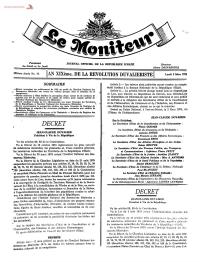
Dekrè ki ankouraje prospeksyon minyè sou tout teritwa Repiblik la, 3 mas 1976 (Le Moniteur, 131èm Ane No. 19)
- The permit system runs from the mining prospection permit through the mining concession, with separate regimes for hydrocarbons research, mineral and thermal springs, quarries and energy sources.
- Three companion decrees of the same date build the revenue base of the Institut National des Ressources Minérales.
- INAREM is given the purchase of alluvial gold throughout the territory, which is the legal ancestor of the artisanal gold question.
- The decree was repealed by the mining decree of 27 March 2026, except for hydrocarbons, geothermal deposits and groundwater.
The decree of 3 March 1976 encouraging mining prospection throughout the territory of the Republic, and adapting existing legal structures to the realities of the mining industry. It governed Haiti's mining sector until the decree of 27 March 2026 repealed it, and it remains in force for hydrocarbons, geothermal deposits and groundwater.
The text runs across nine chapters: general provisions, mines and the mining prospection permit (article 35 onward), the mining concession, the hydrocarbons research permit, mineral and thermal springs, quarries, energy sources, relations between permit and concession holders and the State, sanctions and penalties, and transitional articles.
This issue of Le Moniteur carries three further decrees on the same day, all building the revenue base of the Institut National des Ressources Minérales: a 10 percent levy for INAREM on values collected within its competence; a charge of 25 centimes de gourdes per cubic metre of quarry material and river sand for INAREM's special account; and the assignment to INAREM of the purchase of alluvial gold throughout the territory.
Kijan pou site
Prezidans Repiblik Ayiti (PRH), Dekrè ki ankouraje prospeksyon minyè sou tout teritwa Repiblik la, 3 mas 1976 (Le Moniteur, 131èm Ane No. 19), https://ufdc.ufl.edu/UF00076854/08401