
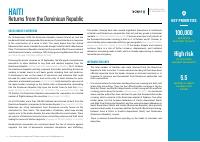
(2023-11) ACAPS Anticipatory Note: Haiti - Returns from the Dominican Republic (3 November 2023)
Summary — ACAPS analyses the humanitarian consequences of the Dominican Republic's closure of its border with Haiti on 15 September 2023, triggered by the dispute over a canal drawing on the shared Massacre River. More than 100,000 Haitians had returned or been deported by late October, amid reports of harassment and violence by Dominican security forces. The note anticipates aggravated livelihood, food security, shelter, health, and protection needs in a country where 5.2 million people were already in need.
Key Findings
- More than 100,000 Haitians returned from the Dominican Republic between the 15 September 2023 border closure and 24 October, driven by harassment from Dominican security forces and intensified deportations (around 22,000 forced removals in August alone).
- Border closures cut off livelihoods for tens of thousands of Haitian vendors who relied on binational markets; over 25 percent of Haiti's imports come from the Dominican Republic and 85 percent of bilateral trade moves overland, so prolonged closure threatens livelihoods nationwide.
- Returnee inflows will pressure an already severe crisis: 5.2 million people in need, 4.35 million facing IPC Phase 3 or worse food insecurity through February 2024, and nearly 200,000 IDPs not counting the new returns.
- Healthcare facilities, including clinics in Malpasse cut off from Port-au-Prince by gang violence, limited services after losing Dominican medical supplies, while increased cross-border movement raises risks of cholera spread, trafficking, and violence against migrants.
- The 2023 Humanitarian Response Plan was only 26 percent funded as of 14 September 2023, and insecurity at border crossings such as Malpasse was already preventing humanitarian access to forcibly returned migrants.
Full Description
This anticipatory note, published on 3 November 2023, examines the current and anticipated impacts of the border dispute between Haiti and the Dominican Republic over the construction of a canal on Haiti's Maribaroux Plain drawing on the shared Massacre River. The Dominican Republic closed its land, air, and sea borders on 15 September 2023 and suspended visa issuance to Haitians; a partial reopening on 11 October allowed limited trade in essential goods, but Haiti kept the Ouanaminthe crossing closed. By 24 October, more than 100,000 Haitians had returned from the Dominican Republic, citing harassment by Dominican security forces, alongside intensified deportations (around 22,000 forced removals in August alone, roughly twice the usual monthly number). The note is based on a review of secondary sources and flags major information gaps on the number, entry points, and settlement locations of returnees.
The analysis anticipates that continued closures will aggravate an already complex emergency: 5.2 million people in need, 4.35 million facing Crisis (IPC Phase 3) or worse food insecurity through February 2024, nearly 200,000 IDPs, and a cholera outbreak with nearly 65,000 suspected cases in a year. Sector-by-sector, it documents lost vendor livelihoods at binational markets (over 25 percent of Haiti's imports come from the Dominican Republic, with 85 percent of bilateral trade overland), medical supply shortages that forced clinics in Malpasse to limit services, elevated risks of trafficking and violence against returnees, and pressure on shelter and WASH systems where only 55 percent of the population has clean drinking water. Compounding factors include gang control of roughly 90 percent of Port-au-Prince, 40 percent year-on-year inflation as of July 2023, a third consecutive year of recession, and a 2023 Humanitarian Response Plan funded at only 26 percent as of mid-September.
Notes
ACAPS thematic/anticipatory analysis