
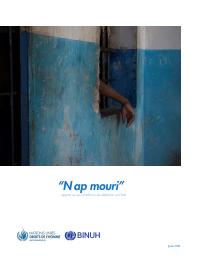
(2021-06) "N ap mouri": Report on Detention Conditions in Haiti
Summary — Joint BINUH-OHCHR report on Haiti's prisons and police holding cells, documenting extreme overcrowding, inadequate food, water and health care, prolonged pretrial detention, and the disproportionate impact on women, children, and other vulnerable detainees.
Key Findings
- Haiti's prisons and police cells suffered extreme overcrowding far beyond capacity, with chronic shortages of food, clean water, and health care. Prolonged and largely unlawful pretrial detention reflected a paralysed justice system. Women, children, older persons, and persons with disabilities faced heightened vulnerability in detention. Conditions in many facilities amounted to cruel, inhuman, or degrading treatment.
Full Description
This June 2021 joint report by BINUH and the UN Human Rights Office (OHCHR), titled "N ap mouri" ("We are dying"), documents conditions of detention across Haiti's prison and police-cell system. It describes extreme overcrowding well beyond design capacity, chronic shortages of food and clean water, and severely inadequate access to health care, alongside prolonged and often unlawful pretrial detention driven by a paralysed justice system. The report examines the material conditions of detention, the treatment of detainees, and the particular vulnerabilities of women, children, older persons, and persons with disabilities held in these facilities. It reviews the legal framework, the responsibilities of the prison administration and the national police, and the weakness of oversight and monitoring mechanisms. Drawing on visits and interviews, it concludes that conditions in many facilities amount to cruel, inhuman, or degrading treatment, and issues recommendations to the Haitian authorities on decongestion, judicial reform, and respect for detainees' rights. An annex records the Haitian State's response to the findings.
Notes
Joint BINUH-OHCHR thematic report [FR/HT]; recovered from ReliefWeb attachment; ayitistats wave B