

Plan de gestion de l'Aire Protégée de Ressources Naturelles Gérées des Trois Baies (AP3B) 2017 - 2027
Resume — Ce document est le plan de gestion de l'Aire Protégée de Ressources Naturelles Gérées des Trois Baies (AP3B) en Haïti, couvrant la période 2017-2027. Il décrit les stratégies de conservation de la biodiversité, d'utilisation durable des ressources et de développement communautaire au sein de l'aire protégée, en tenant compte des impacts du changement climatique.
Constats Cles
- L'AP3B est la plus grande aire marine protégée d'Haïti, couvrant 75 406 hectares.
- La zone protège un complexe marin unique de récifs coralliens, d'herbiers marins et de forêts de mangroves.
- Des siècles d'activité humaine ont considérablement modifié le paysage.
- Le plan de gestion vise à équilibrer la conservation de la biodiversité avec les besoins des communautés locales.
- Le changement climatique constitue une menace globale importante pour la zone.
Description Complete
Le plan de gestion de l'Aire Protégée de Ressources Naturelles Gérées des Trois Baies (AP3B) en Haïti vise à guider la transition d'un environnement exploité de manière non durable vers une aire protégée caractérisée par une gestion environnementale rationnelle, une viabilité économique et un équilibre social. Le plan aborde la nécessité de maintenir et de restaurer la biodiversité tout en répondant aux besoins des communautés locales. Il souligne l'importance d'intégrer l'aire protégée dans les contextes régionaux, nationaux et internationaux existants, en tenant compte de facteurs tels que l'utilisation des ressources, la propriété foncière et la gouvernance. Le plan décrit également l'environnement physique, les ressources biologiques et les ressources culturelles de l'AP3B, et identifie les menaces et les problèmes qui pourraient compromettre sa gestion, y compris les impacts du changement climatique. Il propose un système de zonage et des programmes de gestion pour assurer la protection à long terme et l'utilisation durable des ressources.
Texte Integral du Document
Texte extrait du document original pour l'indexation.
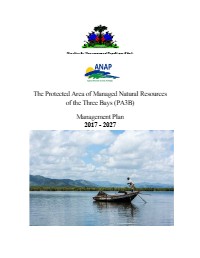
The Protected Area of Managed Natural Resources of the Three Bays (PA3B) Management Plan 2017 - 2027 Ministère de l’Environnement Republique d’Haiti Management plan of the Three Bays Protected Area ii Prepared by: William D. Henwood, Serge Aucoin and Mel Turner Global Parks / International Conservation Caucus Foundation March, 2017 for The National Agency of Protected Areas (ANAP), Haiti and the Caribbean Marine Biodiversity Program implemented by Fondation pour la Protection de la Biodiversité Marine (FoProBiM), and The Nature Conservancy (TNC). This management plan was made possible by the generous support of the American people through the United States Agency for International Development (USAID). Cover Photo: Fishermen pole their boats in Baie Liberte. Photo credit: © Tim Calver for The Nature Conservancy Management plan of the Three Bays Protected Area iii ACKNOWLEDGEMENTS The authors are particularly indebted to Jean Wiener, Founder/Director of the Fondation pour la Protection de la Biodiversité Marine (FoProBiM) based in Caracol (Haiti) and Maxene Atis, Conservation Coordinator of The Nature Conservancy Caribbean Program in Miami (Florida) for their support and guidance in the preparation of this management plan. Thanks are also due to FoProBiM staff in Haiti, most notably Claude Patrick Millet and Widlin Florvil in Cap-Haïtien and Caracol who were especially helpful in the field. Many thanks are also to be extended to all the local stakeholders, community groups, NGOs, and government officials, particularly the Minister of Environment Pierre Simon Georges, the director of the National Protected Areas Agency (ANAP) Michelet Louis and assistant director Prenor Coudo, who participated in consultative meetings and provided important input and support. Appreciation is extended to Sonide Simon and her staff for their assistance in conducting the stakeholders’ workshop in Caracol in May 2016, a meeting with government agencies and partners in Port-au-Prince in June 2016 and a subsequent stakeholders meeting at the Universite d’Etat d’Haiti Campus de Limonade in January, 2017. Finally, this project would not have been possible without support through the International Conservation Caucus Foundation (ICCF) and its affiliate Global Parks in Washington, DC; San Juan, Puerto Rico; and Vancouver, British Columbia, Canada. Management plan of the Three Bays Protected Area iv LIST OF ACRONYMS ANAP Agence nationale des Aires Protégées BI Birdlife International CBD Convention on Biological Diversity CEPF Critical Ecosystem Partnership Fund CEPROBAC Coordination Environnementale pour la Protection de la Baie de Caracol CCVI Climate Change Vulnerability Index CMBP Caribbean Marine Biodiversity Program CIAT Comité Interministériel d'Aménagement du Territoire CITES Convention on International Trade in Endangered Species of Wild Flora and Fauna CLME Caribbean Large Marine Ecosystem Project CNIGS Centre National de l'Information Géo-Spatiale DR Dominican Republic EBA Endemic Bird Area EBSA Ecologically or Biologically Significant Marine Area ESA U.S. Endangered Species Act FoProBiM Fondation pour la Protection de la Biodiversité Marine GDP Gross Domestic Product GEF Global Environment Facility IBA Important Bird Area IDB Inter-American Development Bank ICCF International Conservation Caucus Foundation ICRI International Coral Reef Initiative IPCC International Panel on Climate Change ISPAN Institut de Sauvegarde du Patrimoine National IUCN International Union for Conservation of Nature KBA Key Biodiversity Area LDC Least Developed Country MIDA Multi-International Designated Areas MMA Marine Managed Area MOE Ministry of Environment MOT Ministry of Tourism MPA Marine Protected Area NBSAP National Biodiversity Strategy and Action Plan NGO Non-Governmental Organisation PA3B Protected Area of Managed Natural Resources of the Three Bays PIC Parc Industriel de Caracol PMA PA3B Management Authority Management plan of the Three Bays Protected Area v PPT Parts Per Thousand SCUBA Self Contained Underwater Breathing Apparatus SEMANAH Service Maritime et de Navigation d'Haïti (SEMANAH) SIDS Small Island Developing State SPAW Specially Protected Areas and Wildlife SAP Strategic Action Plan TNC The Nature Conservancy UGeBFo Unité de Gestion de la Baie de Ft. Liberté UN United Nations UNESCO United Nations Education, Scientific and Cultural Organization UNEP United Nations Environment Programme UNDP United Nations Development Programme USAID United States Agency for International Development UTE Unité Technique d’Exécution WCR Wider Caribbean Region WHC World Heritage Convention WRI World Resources Institute Management plan of the Three Bays Protected Area vi TABLE OF CONTENTS Page Acknowledgements ii List of Acronyms iii Table of Contents v List of Tables and Figures viii Executive Summary ix 1.0 Introduction 1 1.1 Purpose and Scope of the Management Plan 2 1.2 The Management Planning Process and Methodology 3 1.3 Key Indicators of Success 5 2.0 Regional, National, and International Context 6 2.1 Location and Administrative Boundary 6 2.2 Socio-Economic Context of the Region and Local Communities 7 2.2.1 Economic Activities 7 2.2.2 Transportation Infrastructure 10 2.2.3 Demographic Trends 10 2.3 Land Tenure and Ownership 12 2.4 Boundary Related Issues 12 2.5 Legal and Policy Framework and Management Authority 13 2.6 Regional and Global Biological Significance 13 2.7 International Agreements and Obligations 15 2.8 The Implications of IUCN Category VI 15 3.0 Physical Environment and Biological Resource Descriptions 17 3.1 Physical Environment 17 3.1.1 Climate, Weather Systems and Trends 17 3.1.2 Geology, Relief and Soils 18 3.1.3 Hydrology and Oceanography 20 3.1.4 Natural Hazards 22 3.2 Biological Resources 22 3.2.1 Overview of Terrestrial and Freshwater Habitats and Ecosystems 23 3.2.1.1 Freshwater Fauna 26 3.2.1.2 Avian Species 26 3.2.1.3 Terrestrial Reptiles and Amphibians 26 3.2.1.4 Terrestrial Mammals 26 3.2.2 Overview of Marine Habitats and Ecosystems 26 3.2.2.1 Mangroves, Seagrass and Coastal Wetlands 27 Management plan of the Three Bays Protected Area vii 3.2.2.2 Coral Reefs 30 3.2.2.3 Marine Benthic Invertebrates 31 3.2.2.4 Marine Fish and Megafauna 31 3.3 Unique, Rare, and Species at Risk 32 4.0 Historical and Cultural Values 36 4.1 Features of Historical and Cultural Interest 36 5.0 Threats and Issues Analysis with Key Findings 39 5.1 Prognosis for Climate Change Related Impacts for PA3B 39 5.1.1 Implications for Community Growth and Development within PA3B 42 5.2 Description of Major Threats to PA3B 45 5.2.1 Overfishing 46 5.2.2 Wood Harvesting and Charcoal Production 47 5.2.3 Land-based Sources of Pollution 48 5.2.4 Unsustainable Coastal Development 49 5.2.5 Agriculture 50 5.2.6 Aquaculture and Caged Fish Farming 51 5.2.7 Invasive Species 51 5.2.8 Salt Production 52 5.2.9 Hunting 53 5.2.10 Sport Fishing 54 5.2.11 Mining 54 5.2.12 Proposed Sisal Plantation 54 5.2.13 Proposed Dump Site in Limonade 55 5.2.14 Other Risks: The Caracol Industrial Park (PIC) 55 5.3 Toward an Ecotourism Development Strategy for PA3B 57 5.3.1 An Initial Focus on Fort Liberté 58 5.3.2 Benefits of Multiple National and International Designated Areas 59 5.3.3 Consideration of a World Heritage Site 60 6.0 Vision, Zoning and Management Programs 62 6.1 A Vision for PA3B 62 6.2 The Zoning Plan 62 6.2.1 Description and Rationale for the Zoning Plan 63 6.2.1.1 The Restoration Zone 63 6.2.1.2 The Conservation Zone 64 6.2.1.3 The Sustainable Use Zone 65 6.2.1.4 The Community Management Zone 65 6.2.1.5 The Cultural Conservation Zone 69 6.2.3 Implementation of the Zoning Plan 69 Management plan of the Three Bays Protected Area viii 6.3 Management Programs, Goals, Objectives and Actions 71 6.3.1 The Biodiversity Conservation Program 72 6.3.1.1 Objectives and Actions 72 6.3.2 The Sustainable Resource Use Program 76 6.3.2.1 Objectives and Actions 77 6.3.3 The Environmental Education and Awareness Program 81 6.3.3.1 Objectives and Actions 81 6.3.4 The Cultural Resource Conservation Program 83 6.3.4.1 Objectives and Actions 83 6.3.5 The Ecotourism Program 86 6.3.5.1 Objectives and Actions 86 6.3.6 The Community Management Program 89 6.3.6.1 Objectives and Actions 90 6.3.7 Governance, Co-management and Enforcement Program 92 6.3.7.1 Objectives and Actions 92 6.3.8 The Infrastructure Program 94 6.3.8.1 Objectives and Actions 95 6.3.9 The Monitoring Program 95 6.3.9.1 Objectives and Actions 96 7.0 A Model for Cooperative Management of PA3B 97 8.0 An Implementation Plan for Phase I (2017-2022) 98 REFERENCES 108 APPENDICES APPENDIX 1 The Presidential Decree 116 APPENDIX 2 Summary of Results of Community, Stakeholder and Government Consultations 120 APPENDIX 3 International Agreements and Obligations 126 APPENDIX 4 Plants Surveyed 129 APPENDIX 5 Wetland Plant Species Surveyed 130 APPENDIX 6 Freshwater Fauna Surveyed 131 APPENDIX 7 Birds Surveyed 132 APPENDIX 8 Reptiles and Amphibians Surveyed 133 APPENDIX 9 Marine Benthic Invertebrates Surveyed 134 APPENDIX 10 Marine Megafauna 136 APPENDIX 11 Marine Fish Surveyed 137 Management plan of the Three Bays Protected Area ix LIST OF TABLES AND FIGURES Figures Page Figure 1: PA3B boundary limits, administrative departments and communities 6 Figure 2: Agricultural lands within PA3B 8 Figure 3: Existing road network in PA3B and the surrounding region 10 Figure 4: Projections of the population base for slow and high growth scenarios 11 Figure 5: Bathymetric map of PA3B 19 Figure 6: The four watersheds of PA3B 20 Figure 7: Land cover and land use within PA3B 25 Figure 8: Vegetation types in PA3B 28 Figure 9: Aquatic and benthic habitats in PA3B 29 Figure 10: Cultural sites in Northern Haiti within PA3B 36 Figure 11: Depiction of the construction of the fort of La Navidad 37 Figure 12: An early map showing the possible location of La Navidad and wreck site of the Santa Maria 37 Figure 13: Fort La Bouque built in 1736 at the entrance to Fort Liberté Bay 38 Figure 14: A French fortification at the mouth of the Massacre River 38 Figure 15: Hurricane Matthew in 2016 40 Figure 16: Coastal flooding for a 50-year return storm event 41 Figure 17: Main land uses and areas of high risk of flooding in Bord de Mer de Limonade 43 Figure 18: Main land uses and areas of high flooding risk in Caracol 44 Figure 19: Main land uses and areas of high flooding risk in Jacquezy 44 Figure 20: Preferred location for consolidating new urban development in the PIC area 56 Figure 21: The Zoning Plan for PA3B 68 Figure 22: A Proposed Model for Cooperative Management of PA3B 93 Tables Table 1: International Recognition of the PA3B Area 14 Table 2: Principle watersheds and their characteristics 21 Table 3: PA3B habitat types and area 22 Table 4: Land cover within PA3B 23 Table 5: Marine classification and estimated benthic habitat area in PA3B 30 Table 6: Coastal marine mammals and sea turtles at risk 32 Table 7: Surveyed coral species at risk in PA3B 32 Table 8: Surveyed marine fish species at risk in PA3B 33 Table 9: Surveyed freshwater fish species at risk in PA3B 34 Table 10: Surveyed terrestrial reptile and amphibian species at risk in PA3B 34 Table 11: Surveyed terrestrial plant species at risk and expected to occur in PA3B 35 Table 12: Surveyed birds at risk in PA3B 35 Table 13: The Proposed Zoning System for PA3B 66 Table 14: The Size and Relative Proportion of Zones Within PA3B 69 Table 15: The Implementation of Phase I (2017-2022) 94 Management plan of the Three Bays Protected Area x EXECUTIVE SUMMARY The Protected Area of Managed Natural Resources of the Three Bays (PA3B) (Aire Protégée de Ressources Naturelles Gérées des Trois Baies - AP3B) was created by Presidential Decree on March 21, 2014 as Haiti’s largest marine protected area. Encompassing an area of 75,406 hectares, the PA3B protects a unique marine complex of fringing and barrier coral reefs, seagrass beds, mangrove forests, deep offshore waters, and adjoining coastal plains known for their diverse aquatic and brackish water habitats, and dry tropical forests. The area has witnessed centuries of human activity dating from pre- Columbian times and the occupation of indigenous Taino people, to the arrival of Christopher Columbus and the sequence of world-altering events through Spanish and French colonization and the Haitian Revolution. These many centuries of human occupation have created a seascape and landscape that are highly altered from their natural state, and as required by the Presidential Decree, the management of the marine and terrestrial environments of PA3B will focus on the maintenance and restoration of their biodiversity and ecological integrity while responding to the needs of the communities within the protected area’s borders. Therein lies the central challenge of this management plan – to guide the transition from a highly and unsustainably utilized environment, with its attendant poverty and poor living conditions, to a protected area characterized by sound environmental management, economic viability, and social balance. In its description of the regional, national, and international context for PA3B, this plan emphasizes the need for the protected area to ‘find its place’ among a host of pre-existing conditions, not the least of which are the presence of several communities and a range of economic activities that have existed for long periods of time. These conditions create challenges with respect to uncertainty about ongoing resource use, land ownership and boundary delineation, and an appropriate form of governance. In addition to the PA3B’s regional and national significance, the area’s international importance is recognized as is its potential to become a natural and cultural resource of global renown through possible designation as a national park and/or a World Heritage Site. This plan progresses through a description of the physical environment and biological resources of PA3B, both marine and terrestrial, noting, in particular, the special and unique features and those of conservation concern that will require directed management attention over the coming years and decades. The extensive and often unrecognized cultural resources of PA3B are also described with the view of increasing their profile in the management framework for PA3B and in accordance with their international caliber and significance. Management plan of the Three Bays Protected Area xi The management plan directly addresses all of the threats and issues that had previously been identified through a comprehensive analysis of conditions that may constrain or compromise PA3B’s management into the future. As an overarching concern, the plan addresses the need to prepare for what now appears to be the inevitable impacts of climate change. Within that context, a number of threats and issues are described and ‘key findings’ identified that, in turn, form the basis of both the Vision and the Zoning Plan, and drive the development of nine management programs and their goals, objectives, and strategic actions. A long-term Vision is presented for PA3B that is a reflection of both the Decree and the management of PA3B as an IUCN Category VI protected area. Accordingly, PA3B will provide for a range of levels of protection and conservation as well as sustainable human uses and activities that are compatible with the conservation of nature. The Vision is: The ecologically rich and fragile marine, coastal, and terrestrial resources in the PA3B, most notably the complex of coral reefs, seagrass beds, mangrove forests, aquatic habitats and tropical dry forests, with their associated archaeological and historic features, are assured their long-term protection and the maintenance of their biological diversity in perpetuity, while, in this spirit, providing for the sustainable use of select resources in support of local communities. The plan presents a Zoning System for the management of PA3B that includes five zones. The resulting zoning plan seeks a balance between the conservation and protection of natural resources and their continued sustainable use and includes: • Regeneration Zones • Conservation Zones • Sustainable Use Zones • Community Management Zones • Cultural Conservation Zones The Regeneration and the Conservation zones, will apply equally in both the marine and terrestrial environments. The other three zones, Sustainable Use, Community Management and Cultural Conservation, are solely terrestrial. Much of the terrestrial Restoration Zone is dedicated to the protection of the coastal fringe adjacent to fragile marine environments and to the recovery of the Tropical Dry Forest. In the marine environment, the Restoration Zone includes the mangrove forests, most seagrass beds and a significant portion of the nearshore marine waters and coral reefs. A relatively small portion of the offshore waters will also be placed in the Restoration Zone. The remaining portions of the marine waters within PA3B are included in the Conservation Zone where limited fishing can continue to occur. Management plan of the Three Bays Protected Area xii The Sustainable Use Zone is restricted to the agricultural lands and the salt pans along the coast to provide for their continued use but with limits on their expansion and the scope of activities and management practices to ensure sustainability. The Community Development Zone recognizes those communities within PA3B’s boundaries and the need for their ongoing management, especially given the possible impacts of climate change and sea level rise. The Cultural Conservation Zone contains significant cultural resources and are identified as ‘spot zones’ to recognize specific features, such as the fortifications at Fort Liberté, pre-Columbian archaeological sites or shipwreck sites on the coral reef. The table below illustrates the size and relative proportion of the zones within the whole of PA3B. Size and Proportion of Zones Within PA3B* Total Size 75,405 (100%) Marine Environment 57,930 (77%) Terrestrial Environment 17,475 (23%) Zoning Proportions – Marine Environment Marine Regeneration Zone 25,560 (45%) Marine Conservation Zone 31,380 (55%) Zoning Proportions – Terrestrial Environment Terrestrial Regeneration Zone 7,815 (45%) Terrestrial Conservation Zone 2,600 (15%) Sustainable Use Zone 6,640 (38%) Community Management Zone 375 (2%) * Size and proportion figures are approximate. The spot zones in the Cultural Conservation Zone are not included. The plan presents a total of nine management programs with approximately 120 specific actions to be implemented, to the extent possible, over the life of the plan. The nine management programs include: 1. Biodiversity Conservation 2. Environmental Education and Awareness 3. Sustainable Resource Use 4. Cultural Resource Conservation 5. Ecotourism 6. Community Management 7. Governance, Co-management and Enforcement 8. Infrastructure 9. Monitoring Through these programs, the plan presents an assembly of management actions necessary to realize the ultimate goal of achieving the recovery and restoration of the PA3B’s ecosystems, as well as the many ancillary goals of effectively recognizing its cultural resources, creating the means for a cooperative management regime with stakeholders and Management plan of the Three Bays Protected Area xiii communities, promoting ecotourism and others. The plan has a time horizon of ten years (2017-2027) with an interim five-year review, but it is recognized that the successful implementation of a number of programs and actions will extend well into the future. The plan will be undertaken in phases based on continued consultations with communities and stakeholders and the availability of human, technical and financial resources. An implementation plan for Phase I (2017-2022) is provided that targets those actions that should be initiated immediately and over the first five years at an estimated cost of approximately US$12.5 million. 1.0 INTRODUCTION Haiti is an active participant in a regional initiative designed to improve the conservation and protection of the marine environment in the wider Caribbean. The 5-year, US$12.5 million Caribbean Marine Biodiversity Program (CMBP) was announced by the United States Agency for International Development (USAID) in 2015 with the overall objective of reducing threats to marine and coastal biodiversity in seven priority marine managed areas (MMAs) in four priority seascapes located in Haiti, the Dominican Republic, Grenada, St. Vincent and the Grenadines and Jamaica. These seascapes are recognized as the “jewels in the crown of marine resources in the Caribbean” and feature high biodiversity ecosystems such as coral reefs, mangroves and seagrass beds. CMBP supports the effective governance of these marine resources in order to: achieve sustained biodiversity conservation; maintain critical ecosystem services; strengthen fisheries management; maintain economic benefits and sustainable livelihoods derived from a healthy marine environment; and realize tangible improvements in human wellbeing for communities adjacent to and dependent on these marine managed areas (USAID, 2015). In Haiti, the priority seascape is known as the “Protected Area of Managed Natural Resources of the Three Bays” (PA3B) on Haiti’s north-east coast. The Government of Haiti created the PA3B, the largest protected area in its history, by Presidential Decree on March 21, 2014 (see Appendix 1). The PA3B is 75,406 ha in size, and contains some of the most extensive and healthiest fringing and barrier coral reefs, seagrass beds, mangrove forests and other marine coastal habitats in the country. Many of the fish and other marine life in this area serve as critically important sources of protein for local communities. The marine habitats also provide local communities with critical coastal protection. While the CMBP is primarily funded by USAID (US$10 million), The Nature Conservancy (TNC) is also a major funder, contributing US$2.5 million, and serves as the leader of a non-government (NGO) consortium to implement the Program. Also providing support is the local implementing partner in Haiti, the Fondation pour la Protection de la Biodiversité Marine (FoProBiM) , which, with the assistance of the US-based International Conservation Caucus Foundation and its affiliate Global Parks, was charged with the responsibility of preparing this management plan for the PA3B. Global Parks is a volunteer organization based in Washington, DC providing protected area experts to assist government and non-government organizations on protected area issues. The plan is prepared for Haiti’s National Agency of Protected Areas (ANAP) which will be responsible for the ongoing management and administration of PA3B. Management plan of the Three Bays Protected Area 2 1.1 Purpose and Scope of the Management Plan The management of PA3B as a protected area will represent dramatic change for Haiti’s north-east coast and for its communities and ecosystems. The purpose of this management plan is to facilitate that change over the next decade and beyond by guiding the transition from a coastal and marine ecosystem that has been settled for centuries and that is in continuing ecological decline with communities facing a fragile and uncertain future, to a protected area characterized by sound environmental management, economic viability and social balance. This mission is mandated by the Presidential Decree to create the PA3B, Article 1 of which outlines in specific terms what is expected: “The marine complex, coastal and terrestrial, located in the eastern half of the northern coast of Haiti is declared a protected area under the name of "protected area of managed natural resources of the Three Bays” ( Aire Protégée de Ressources Naturelles Gérées des Trois Baies ). It is composed of natural systems for which the long-term protection must be ensured and the biological diversity maintained, while responding to the needs of the communities dependent on these systems.” Fulfilling this vision is a significant conservation challenge. The management of PA3B needs to lead the restoration and regeneration of Haiti’s environment in the north-east region, and in so doing, help to alleviate poverty, improve living conditions, support alternative livelihoods and provide improved governance, administration and financial sustainability. As an overarching concern, it also needs to prepare for what now appears to be the inevitable impacts of climate change. Accordingly, the management plan pursues the implementation of a number of initiatives simultaneously, all of which are necessary for long-term environmental and social health of PA3B. There are numerous threats to coastal and marine ecosystems that threaten their long-term ecological integrity. There are economic activities, in particular fishing and agriculture, that are not sustainable as currently practiced. Community development and growth are unregulated, living conditions are poor, security of food and water is low and prospects for future livelihoods are uncertain. The local governance regime lacks strength and leadership, there is little or no law enforcement, and little coordination exists among the various communities and levels of government. The effective management of PA3B needs to address all of these issues and more, and be a cooperative effort among ANAP, local stakeholders and potential NGO partners to strengthen the management of PA3B and the conservation of its natural resources. Management plan of the Three Bays Protected Area 3 While generally following the IUCN’s Guidelines for Management Planning of Protected Areas (Thomas and Middleton, 2003), the structure of this management plan is a close reflection of the structure preferred by ANAP (ANAP, 2016). The timeframe for this management plan is for a ten-year period – 2017 to 2027 – with a five-year review. The purpose of the five-year review is to re-visit the management plan with an in-depth consultation program to review progress on the plan’s implementation and revise direction as necessary without undertaking a full management planning process. The plan presents a comprehensive assembly of management programs and actions necessary to achieve the ultimate goal of achieving the recovery and restoration of the PA3B’s ecosystems. It is recognized that all cannot be accomplished during the ten-year timeframe of the plan and that its implementation will likely extend well into the future. The plan should be undertaken in phases based on continued consultations with communities, stakeholders and government officials and on the availability of human, technical and financial resources. The full effect of the plan will likely take decades to emerge and strategies for implementation will evolve over time as conditions change. A plan for the implementation of Phase I (2017-2022), for those programs and actions that should be initiated immediately and over the first five years, is outlined in Section 8. 1.2 The Management Planning Process and Methodology In 2012 a process for developing a management plan for the area which would become the PA3B began with the formation of a Steering Committee (Comité de Suivi) in Port-au- Prince among agencies of the Government of Haiti and the main donors involved in the funding and implementation of PA3B. This committee met regularly and provided senior level guidance for the management planning process and coordination of preliminary initiatives that would lead to the management of the PA3B. This committee is composed of representatives of key entities, chaired by the National Agency of Protected Areas (ANAP), and includes the United States Agency for International Development (USAID), the Inter-American Development Bank (IDB), the Ministry of Environment (MOE), the United Nations Development Programme (UNDP), Marine and Navigational Services of Haiti (SEMANAH), the Technical Execution Unit (UTE) of the Ministry of Economy and Finance, and Haiti’s Inter-ministerial Committee for Territorial Planning (CIAT). Other institutions and government departments occasionally participate depending on the agenda to be addressed. In 2014 and 2015, with the inception of the USAID-sponsored CMBP and the IDB- sponsored ecological baseline assessment ANAP, in collaboration with TNC, FOPROBIM and members of the Steering Committee held consultations with local stakeholders in an attempt to create a local Stakeholder’s Committee for the park (Comite d’Appui). Management plan of the Three Bays Protected Area 4 The process has been assisted through the completion of a number of studies by TNC and financed by USAID and the IDB during 2015 and early 2016. These include: • Baseline Ecological Inventory (Kramer et al., 2016a) • Threat Assessment (Schill et al., 2016) • Fisheries Sector Assessment (Miller, 2015) • Fisheries Sector Action Plan (Miller, 2016) • Stakeholders’ Assessment (TNC, 2015) • Ecological Monitoring Plan (Kramer et al., 2016c). In early 2016, arrangements were made with Global Parks to initiate the management planning process beginning with a desktop review of these and other background materials and an initial field visit during the week of April 4-9 to understand context and the needs of local communities and stakeholders. Information gaps were identified and information gathered, to the extent possible, to fill these gaps. An interim report and background materials were prepared for stakeholder consultations and meetings with the Steering Committee held in May and early June 2016. A stakeholder workshop was held in Caracol, Haiti on May 31, 2016; and attracted 71 participants representing a number of economic sectors from several local communities, including fishers, merchants, charcoal producers, salt producers, religious leaders and government officials. The focus of the workshop was to continue to inform participants about the establishment of PA3B and to introduce a draft vision and management objectives including a proposed zoning system and proposed targets for resource conservation. The management objectives addressed the topics of Resource Conservation and Protection; Sustainable Resource Use; Heritage (Cultural) Conservation and Presentation; Recreation and Tourism; Collaboration with Local Communities; and Governance and Law Enforcement. Five group sessions were held to further define the vision for the Park where the stakeholders outlined what they deemed important to be actualized in PA3B. They also raised concerns, offered suggestions and prioritized the principles within the management objectives. Participants found the workshop to be highly relevant and useful and an essential step in the development of the management plan. Highlights from this workshop are provided in Appendix 2 and a detailed report on the outcomes of the workshop is available from TNC (Simon, 2016a). The meeting with government agencies and partners (Comite de Suivi) was held in Port- au-Prince on June 2, 2016; and was attended by 11 participants from Haiti’s Ministry of Environment, the Technical Execution Unit of the Ministry of Economy and Finance, and key institutions including the United Nations Environment Programme and the Inter- American Development Bank. The meeting addressed the same material as was discussed Management plan of the Three Bays Protected Area 5 at the stakeholders' workshop as well as provided a brief summary of the results of the workshop. It adopted a round table approach that allowed participants to ask questions for clarification, provide constructive criticism and suggest amendments. Highlights from this workshop are provided in Appendix 2 and a detailed report on the outcomes of the meeting is available from TNC (Simon, 2016b). In late 2016, ANAP established the local stakeholder’s committee. However, this committee has yet to become fully functional. The first draft of the plan was completed in September, 2016. Further inter-agency reviews and meetings with local stakeholders were held by through the autumn months leading to the preparation of a revised version of the plan. for further consultation with stakeholders and community organizations and the Steering Committee. A meeting was held on January 25, 2017 hosted by FoProBiM and TNC at the Université d’Etat d’Haiti Campus du Limonade with approximately 120 people, representing numerous stakeholders, communities and organizations as well as ANAP. A report on the outcomes of this meeting has been prepared; the highlights of concerns presented during the meeting and discussion are provided in Appendix 2. 1.3 Key Indicators of Success The Presidential Decree for PA3B and the Vision that is derived from it (see Section 6) clearly outline the conditions upon which the success of this and subsequent management plans can be determined, through asking two key questions: • Are the fragile resources of PA3B being managed to ensure their long-term protection and the maintenance of their biological diversity in perpetuity? • Are the resources of PA3B continuing to provide for the support of local communities in a sustainable way? The timeframe for this management plan is ten years, with a five-year review, and over that time, a monitoring program will be put in place designed to inform protected area managers about trends in the use and condition of natural resources in PA3B that, in turn, will provide guidance in answering these questions (see Section 6.3.9). The monitoring program will not only assist protected area managers in measuring resources’ response to management initiatives, but also raise awareness among the communities and stakeholders about the importance of PA3B and measure changes in their attitudes on specific issues such as management of fisheries, the protection of mangroves or community planning. The key indicators for monitoring the marine, freshwater and terrestrial environments in PA3B are outlined in the Ecological Monitoring Plan for PA3B (Kramer et al, 2016b). In the marine environment, they include monitoring for water quality, the quality and health Management plan of the Three Bays Protected Area 6 of shallow marine environments including such parameters as habitat loss, coral cover, seagrass productivity and the health of marine species, especially reef fish species and their abundance, diversity and size. In freshwater environments, monitoring focuses on hydrology, water quality, sediment quality and aquatic biology. The monitoring of terrestrial ecosystems, where the greatest losses in habitat and species has occurred, measures climatic factors, habitat health and species presence and absence for flora and fauna. It is here where the monitoring plan needs to pay particular attention to measuring stakeholder’s awareness of the importance of the remaining terrestrial resources and any changes in their attitudes about specific management initiatives to help restore terrestrial ecosystems. 2.0 REGIONAL, NATIONAL AND INTERNATIONAL CONTEXT 2.1 Location and Administrative Boundary The PA3B is located on the north-east coast of Haiti with the boundary and local communities illustrated in Figure 1 (see Appendix 1 —Article 3 for boundary coordinates). The PA3B has a boundary perimeter of approximately 170 kilometers (km) encompassing 75,406 hectares (ha) (Section 3.2 —Table 3). The east-west boundary extends for over 40 km from Rivière du Massacre (bordering the Dominican Republic border, where it is known as 'río Dajabón') to the Grande Rivière du Nord to the west. The north-south boundary extends from the 12-mile (19.3 km) territorial sea limit inland to the 10-metre topographic contour line. Figure 1: PA3B boundary limits and communities. Management plan of the Three Bays Protected Area 7 The western boundary is near Cap-Haïtien, Haiti’s second largest city and capital of the Departement du Nord, served by Hugo Chávez International Airport and the Port international du Cap-Haïtien. The eastern boundary includes Fort Liberté, the capital of the Departement du Nord-est, and is directly adjacent to the 'Parque Nacional Manglares de Estero Balsa' in the Dominican Republic (DR), near the city of 'San Fernando de Monte Cristi', national parks 'Parque Nacional Submarino de Monte Cristi', Parque Nacional el Morro, 'Parque Nacional Manglares del Estero Balso', marine refuge 'Cayos Sietes Hermanos' and wildlife refuge 'Laguna Saladilla'. 2.2 Socio-Economic Context of the Region and Local Communities PA3B spans across the administrative boundaries of the Department du Nord-est and the Department du Nord whose combined population is approximately 500,000. With Haiti’s population growth rate of 2.5%, this population is anticipated to increase to 600,000 – 800,000 people by 2030 (ERM, 2015; IDB, 2012b), depending on development scenarios (see Section 2.2.3). Most of this growth would occur around the Caracol Industrial Park (PIC) and in Limonade, Trou-du-Nord, Terrier Rouge and Fort Liberté, and could have significant implications for the management of PA3B. Several regional plans have been prepared to attempt to guide this impending population growth in Haiti’s north-east in a rational manner and will be an important ally to this management plan as PA3B copes with the impacts of rapidly increasing development around its boundaries (IDB, 2012b; ERM, 2015). 2.2.1 Economic Activities Overall, the area within the region surrounding PA3B is rural, exhibiting mostly traditional land use patterns of small to medium-sized family farming operations combined with larger plantations. These rural areas are supported by the four main towns of Limonade, Trou-du- Nord, Terrier Rouge and Fort Liberté, the largest communities within the region, along with smaller, mostly coastal fishing communities of Bord de Mer de Limonade, Caracol, Madras, Jacquezy, Phaeton and Derac. A total of 25.5% of the population are involved in the ‘informal employment sector’, 18% in agriculture, 13.4% in fishing, 12.5% raising livestock, 11.5% in formal employment (including in the PIC), 9.4% in the trade of charcoal and wood and 0.8% in salt production (unpublished BRL, 2016). Within the protected area, approximately 3,000 fishers use the waters for their daily subsistence and almost 1,000 fishers live in the protected area. Some 800 boats, most propelled by oar and sail, provide access to the fishing grounds. Another 233 boats and 480 fishers occur in the neighboring province of Monte Cristi (Dominican Republic), with occasional reports of fishing within territorial waters of Haiti. The waters of PA3B are Management plan of the Three Bays Protected Area 8 heavily overfished by net, line, traps and spear and the species caught are generally undersized. However, the need for subsistence fishing continues to exist. In addition, other species such as the American eel and sea cucumbers are being harvested for offshore markets and a tilapia aquaculture project initiated in Lagon aux Boeufs in the past could happen again in the near future (Miller, 2015). Overfishing has affected the seagrass, coral reef, and mangrove ecosystems of the PA3B and has resulted in the depletion of the fisheries including macro-invertebrate species such as conch, lobster, and sea cucumbers. All of these impacts will need to be addressed, likely through enforced selected area, species and/or time closures, gear restrictions and alternative fish production, including mariculture and aquaculture, if the protected area is to meet basic conservation goals and continue to provide livelihoods for the communities. There are 12 fishing associations operating in the protected area and FoProBiM has established two stakeholder groups (CEPROBAC and UGeBFo) to provide oversight to their fishing activities, to build capacity, and to provide input into the protected area’s management (Miller, 2015). With respect to agriculture, much of the terrestrial component of the protected area is or has been devoted to agriculture over many decades. Figure 2 shows the extent of the agricultural area within and adjacent to the protected area. Management plan of the Three Bays Protected Area 9 Figure 2: Agricultural lands within PA3B and within watershed drainages that flow into PA3B (Kramer et al., 2016b) Most of the agriculture practiced in the protected area is subsistence in nature where fruits and vegetables (e.g. plantain, cassava) and livestock are produced primarily for personal and local consumption. There are also commercial scale operations in the form of larger plantations of sisal, banana, citrus fruits and sugar cane. The majority of farmers are reported to own their land (ERM, 2016). The grazing of cattle and goats primarily occurs on the areas that were once used for sisal production, mostly on the two peninsulas that form the northern part of Fort Liberté Bay. Charcoal production within the protected area focuses on the mangroves and the upland species, primarily the aggressive successional needle bush ( Acacia farnesiana ) that has rapidly spread across much of the area formerly used for sisal production. Botanists at this time are actively debating whether A. farnesiana is native or an introduced invasive species. Regardless, its aggressive nature is of concern and may hinder the restoration of a more heterogeneous native vegetation over the short term. The harvesting of mangroves is prohibited by the Arrêté Ministériel of July, 2013 and will be reinforced within PA3B by zoning, access restrictions and enforcement as the protected area becomes managed on a day-to-day basis. Charcoal production using the rapid growing woody species Acacia farnesiana in appropriately zoned areas may be considered in an effort to support livelihoods and communities as well as managing local biodiversity. Management plan of the Three Bays Protected Area 10 Relatively few households are involved in salt production, with most activity occurring in Madras, Caracol, Jacquezyl and Derac. Salt ponds, occupying some 140 ha, are constrained by climatic conditions and flooding, poor prices, and an unskilled labour force (ERM, 2015). The Caracol Industrial Park (PIC) is anticipating the need for about 20,000 workers once it reaches full capacity in 2020. Presently, approximately 9,000 people are employed in the garment, sisal and paint industries in the PIC. The potential impact of the industrial park on PA3B as it relates to the liquid and solid wastes generated by the industrial park has been assessed in the past and will continue to be monitored into the future (Koios Associates LLC, 2011; ENVIRON, 2011; Wiener et al., 2013; Titan Engineering Inc., 2013). Tourism presently plays a minor role in the protected area but the very designation of the protected area and the significant natural and cultural values, coupled with the international air access to Cap Haitian, will focus attention and interest in the future. The potential role of tourism, in both type and location, as well as recreation for the local communities is addressed in the management plan. 2.2.2 Transportation Infrastructure The protected area is accessed by the National Road #6 (RN6) paved highway from Cap Haitian on the west to the DR border to the east as shown in Figure 3. Currently Cap Haitian can be accessed by air with American Airlines from the east coast of the United States and from other regional airlines in the Caribbean. Paved roads lead to the main villages and gravel roads to various other areas along the coast, including the beach access at the mouth of Rivière du Massacre at the eastern end of the protected area to the Grande Rivière du Nord at the western end. There are many kilometers of tertiary roads on either side of the sea entrance to Fort Liberté Bay that resulted from the former sisal operation. Management plan of the Three Bays Protected Area 11 2.2.3 Demographic Trends Demographically, Haiti has a very young population with 50% of the population under 20 and 40% below 15 years of age. The population is becoming increasingly clustered in urban settlements where 40% of Haitians now live. Rural poverty is driving urban migration and rapid urbanization. This trend is reflected in local communities in the north- east, with most migration to urban areas from local rural areas rather than other parts of Haiti (ERM, 2015). Most local communities have seen dramatic growth since 1985, led by Bord de Mer de Limonade, Caracol and Jacquezy. Caracol tripled in size over the 25 years between 1985 and 2010. The development of the PIC has had a marked impact on this growth where almost 20% of PIC employees live in Caracol and the local housing project, whereas the remaining 80% live in other towns throughout the two departments (IDB, 2012b). Figure 3: Existing road network in PA3B and the surrounding region (Schill et al 2016). Management plan of the Three Bays Protected Area 12 Detailed population projections have been made for these communities using ‘slow growth’ and ‘high growth’ scenarios, depending on the progress of several development projects. The results of these projections are found in Figure 4 below. Population projections for the communities within PA3B are particularly alarming, especially given the anticipated impacts of climate change and the associated risk of inundation (see Section 5.1.1) (IDB, 2012B). 2.3 Land Tenure and Ownership Most of the land designated within the PA3B is public, however, there are many hectares of private land The Presidential Decree ensures that public lands within the PA3B cannot be sold or otherwise disposed of and that any interventions for land use change must be approved by the Minister of the Environment. The Decree also guarantees that those private lands within the Protected Area will remain in the possession of their owners, although they do remain subject to defined public rights-of-way and the management plan (see Appendix 1). Figure 4: Projections of the population base for slow and high growth scenarios (IDB, 2012b) Management plan of the Three Bays Protected Area 13 To date, however, there is little detailed information currently available on the distribution of public and private lands within PA3B. This remains an important data gap and one that should be filled during the first five-year period of this management plan through the ongoing work of Haiti’s National Centre of Geographic and Spatial Information (CNIGS). 2.4 Boundary Related Issues The terrestrial boundary for PA3B follows the 10-metre topographic contour in a deliberate effort to encompass lands adjacent to the more natural and high biodiversity components of PA3B to enable more effective management of the impacts that may come from these lands. These impacts primarily include, but are not limited to, land-based sources of water pollution from sewage, chemicals and pesticides (see sections 5.2.3 and 5.2.4). As discussed in Section 2.3, some of these lands are privately owned although the distribution of private and public lands is not known. The boundary for the PA3B also includes a small portion of the PIC and seven small communities, including Bord de Mer de Limonade, Caracol, Jacquezy, Phaeton, Fort Liberté, Dérac and Gillote-Meillac-Nan Contrée. The management of these communities, even though shared with local governments, may take too much time and energy away from managing PA3B, and it may be useful to consider the possible removal of these communities and the included portion of the PIC from the protected area. Further, as the boundary follows a contour line, it becomes quite convoluted and difficult to identify on the ground, thereby possibly encumbering effective management and law enforcement. It will likely become necessary within the first decade of this management plan to undertake a review of the terrestrial boundary, in accordance with ANAP’s manual for boundary delineation (ANAP, 2016), with the view of: 1) incorporating only those lands necessary for effective management of the Protected Area; 2) demarcating a simpler boundary using identifiable straight lines and landscape or man-made features where possible; and 3) properly posting the boundary for enforcement and management purposes. 2.5 Legal and Policy Framework and Management Authority The PA3B exists by virtue of the Presidential Decree creating The Protected Area of Managed Natural Resources of the Three Bays, adopted at the National Palace in Port-au- Prince, Haiti on February 13, 2014 (see Appendix 1). The subsequent declaration by Order in the Official Journal of the Republic of Haiti was published on March 21, 2014. The ongoing management and administration of the Protected Area falls under the jurisdictional authority of Haiti’s National Agency of Protected Areas (ANAP), itself Management plan of the Three Bays Protected Area 14 created through the General Decree on Environmental Management in 2005. ANA