

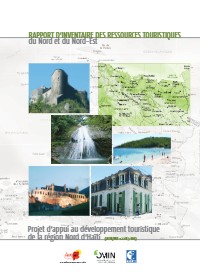
Inventory Report of Tourism Resources - Tourism Development Support Project for Northern Haiti Region
Summary — An inventory report documenting tourism resources and potential in northern and northeastern Haiti, prepared to support the development of tourism as an economic driver for the region.
Key Findings
- Northern Haiti has unique tourism resources with significant potential for alternative tourism development including ecotourism, adventure tourism and agrotourism.
- The region contains major attractions including the National Historic Park (Citadelle Henry, Sans-Souci Palace), military architecture, natural resources and geological formations.
- Tourism infrastructure and services exist but need development, including accommodation, entertainment, banking and health facilities.
- The region has potential for cultural tourism through patron saint festivals, sanctuaries, voodoo ceremonies, songs, dances and local gastronomy.
- Tourism could become a major economic driver and employment source for both urban and rural areas in the region.
Full Description
This comprehensive inventory report presents an analysis of tourism resources in northern and northeastern Haiti, conducted as part of a tourism development support project. The study aims to document the significant tourism potential of the region, including its magnificent landscapes, rich architectural heritage, and vibrant local culture. The report identifies various tourism resources including the National Historic Park (Citadelle Henry, Sans-Souci Palace), military architecture, natural resources, geological formations, and local folklore and customs.
The methodology involved field work and systematic categorization of resources into three main groups, with hierarchical evaluation of tourism potential. The study emphasizes that the northern region has unique tourism resources and great potential for alternative tourism development, including ecotourism, adventure tourism, and agrotourism. The region offers numerous attractions such as geological formations, natural resources, protected areas, biodiversity, historical monuments, and local traditions.
The report also examines tourism infrastructure and services, including accommodation, entertainment, banking services, health facilities, and dining options. It provides detailed presentation sheets for major resources and includes maps of the tourism destination. The document serves as a tool for various stakeholders including researchers, local communities, tourism operators, and funding agencies to measure business opportunities, identify heritage elements, and develop tourism products.
The ultimate goal is for the tourism industry to become one of the main economic activities in the region and an important source of employment in both urban and rural areas. The inventory is designed to be updated regularly as business opportunities arise and serves as a foundation for tourism development planning and resource protection measures.